Yoita Castle (Niigata Prefecture) Complete Guide | History, Highlights, and Access Information for the Mountain Castle Associated with Naoe Kanetsugu
What is Yoita Castle?
Yoita Castle is a Sengoku period mountain castle located in Yoita, Nagaoka City, Niigata Prefecture. Built on a mountain 104m above sea level with a relative height of 85m, this castle is widely known as the residence of Naoe Kanetsugu, a renowned general who served as a chief administrator for Uesugi Kagekatsu.
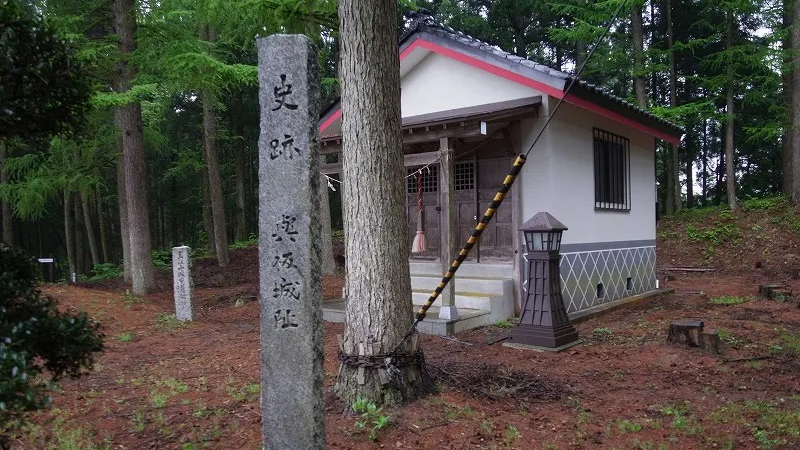
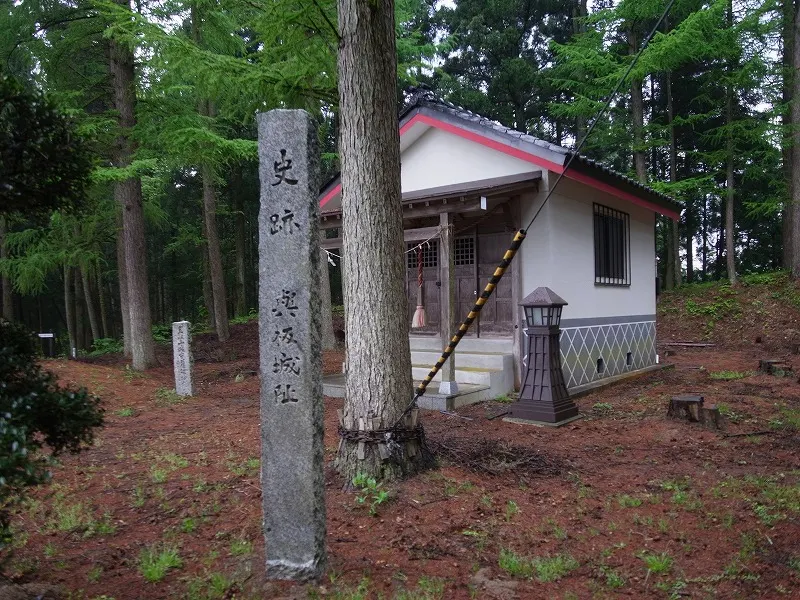
Currently protected as a Niigata Prefecture designated historical site, the Shiroyama Inari Shrine is located on the site of the main castle (honmaru). The castle ruins offer a spectacular panoramic view of the Chuetsu region, making it popular not only with history buffs but also with hikers and those who enjoy leisurely walks.
Other Names for Yoita Castle
Yoita Castle is also known as “Naoe Castle,” “Naoeyama Castle,” and “Yoita Castle.” This name originates from the fact that the Naoe clan ruled this area for generations, and the name “Naoe Castle” became particularly well-known along with the fame of Naoe Kanetsugu.
History of Yoita Castle
Relocation from Hon-Yoita Castle to Yoita Castle
The Naoe clan originally had their base at Hon-Yoita Castle, located about 2 km north of the current Yoita Castle. Hon-Yoita Castle was the Naoe clan’s initial residence, and three generations of the Naoe clan—Naoe Kagetuna, Nobutsuna, and Kanetsugu—operated from here.
During the Tensho era (1573-1592), it is believed that during the time of either Naoe Kagetuna or Nobutsuna, the base was moved to the current Shiroyama, which offered superior defenses. This relocation was aimed at meeting the military demands of the Sengoku period and improving the efficiency of domain management. The new Yoita Castle is located almost in the center of the Nishiyama Hills, becoming a strategically important point overlooking the Chuetsu region.
Naoe Kanetsugu and Yoita Castle
Naoe Kanetsugu was born in 1560 and rose to prominence as a close confidant of Uesugi Kagekatsu. In 1581, he was adopted by Naoe Kagetuna and inherited the Naoe family. He led a group of direct retainers known as the “Yoita-shu,” based at Yoita Castle.
Kanetsugu played an active role as the chief administrator, overseeing all aspects of the Uesugi family’s internal affairs, diplomacy, and military. He played a particularly important role in diplomatic negotiations with Toyotomi Hideyoshi and in the development of Echigo Province. Yoita Castle gained nationwide recognition after being depicted as the protagonist in the NHK Taiga drama “Tenchijin.”
Abandonment and Aftermath
In 1598, when Uesugi Kagekatsu was transferred to Aizu with a 1.2 million koku domain by order of Toyotomi Hideyoshi, Naoe Kanetsugu also moved to Aizu, and Yoita Castle was abandoned. Later, this area became a shogunate territory, and during the Edo period, the Yoita Jinya (fortified residence) was established here.
In 1804 (Bunka 1), during the time of Ii Naosuke, the Yoita Jinya was elevated to the status of a castle lord and functioned as the new Yoita Castle (Yoita Jinya). After the Meiji Restoration, many of the castle facilities were dismantled, and some buildings were relocated and preserved.
Structure and Layout of Yoita Castle
Basic Structure of the Castle
Yoita Castle is a typical mountain castle built on the summit of Shiroyama Mountain. The entire mountain utilizes the natural terrain to form the castle’s shape, and further artificial construction has been added, resulting in a magnificent structure.
The central part of the castle has a linear layout with the main keep (Honmaru), second enclosure, and third enclosure arranged in a line from north to south. Each enclosure is clearly demarcated by deep moats, enhancing its defensive capabilities.
Main Enclosure (Honmaru)
Located on a mountaintop at an altitude of 104m, the main enclosure (Jitsujo) forms the core of Yoita Castle. Currently, the Shiroyama Inari Shrine is enshrined here, and a stone monument inscribed with the words “Shomōji Shin Ichiji” (meaning “One character of desire”) stands here. This inscription is known to represent the spirit of Naoe Kanetsugu.
From the main enclosure, one can see the plains of the Shinano River basin and the surrounding mountains, suggesting its function as a military observation post.
Second and Third Enclosures
The second and third enclosures, located south of the main enclosure, are separated by deep moats. These enclosures are thought to have been used as living quarters for retainers and storage areas for supplies.
Moats were extremely important defensive structures, playing a crucial role in preventing enemy incursions. These moats remain clearly visible today, allowing visitors to appreciate the castle construction techniques of the Sengoku period.
Eastern Enclosure and Osen Shimizu Spring
To the east of the main castle lies a large enclosure, where the remains of a well called Osen Shimizu (Ofune Shimizu) are located. This spring is said to be the place where Ofune, the wife of Naoe Kanetsugu, drew water and brewed tea.
Ofune was known as a wise wife who supported Kanetsugu with her unwavering devotion. Osen Shimizu still flows today, making it a valuable historical site that evokes the lifestyle of that time.
Sennin-tame (Thousand-Man Gathering Place)
Further south of the third enclosure is a large, flat area called “Sennin-tame” (Thousand-Man Gathering Place). It is presumed that this area was used as a gathering place and training ground for troops, playing an important role in large-scale military operations.
Highlights of Yoita Castle Ruins
Shiroyama Inari Shrine
The Shiroyama Inari Shrine, located on the castle ruins, is the spiritual center of Yoita Castle. The path leading to the shrine is well-maintained and used as a route to the castle. The view from the temple grounds is magnificent and well worth a visit.
Earthworks and Moats
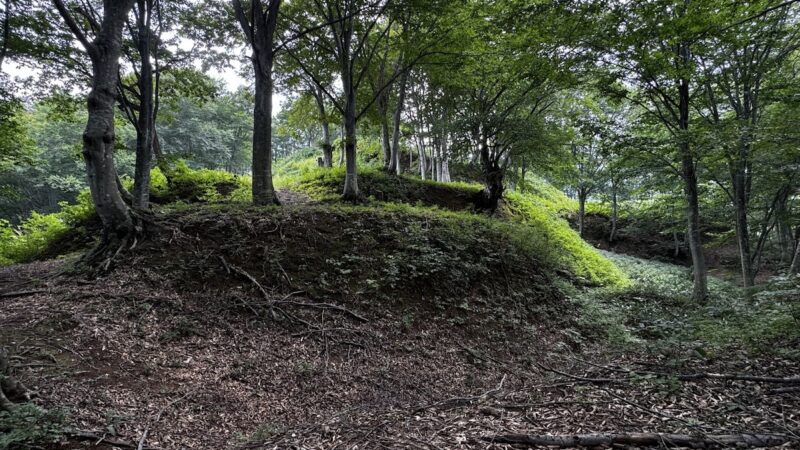
Yoita Castle retains well-preserved earthworks and moats from that era. The deep moats separating each enclosure, in particular, speak to the advanced castle-building techniques of the Sengoku period. These remains offer a true taste of mountain castle exploration.
Osen Shimizu
Many tourists visit this place as it symbolizes the marital love between Naoe Kanetsugu and Ofune-no-kata. The area around the spring is well-maintained, and an explanatory sign is installed. It’s a spot where you can feel the romance of history.
View
From the summit of the castle mountain, a spectacular view unfolds, overlooking the Shinano River, the Nagaoka Plain, and even the distant Sea of Japan. On clear days, the mountains of the Echigo Mountains can also be seen, making it a popular spot for photography.
Relationship with Hon-Yoita Castle
Overview of Hon-Yoita Castle
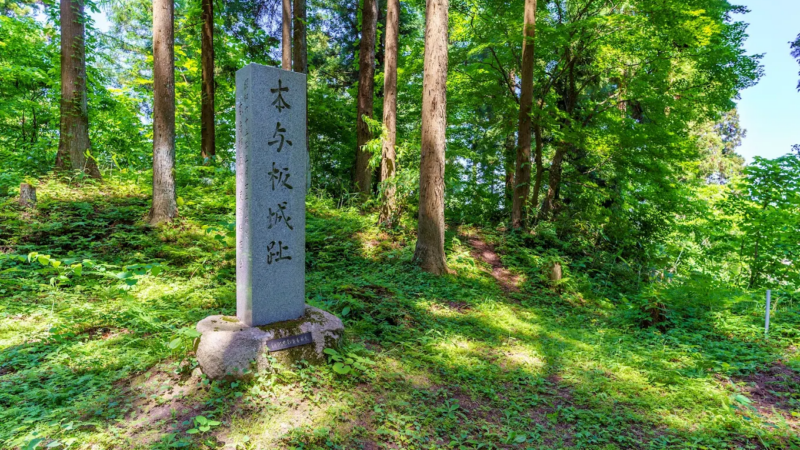
Hon-Yoita Castle is the former castle of the Naoe clan, located approximately 2 km north of Yoita Castle. This castle was the initial base of the three generations of the Naoe clan: Naoe Kagetuna, Naoe Nobutsuna, and Naoe Kanetsugu. Remains of the castle still exist today.
Hon-Yoita Castle is an older castle than Yoita Castle and is an important historical site that tells the story of the Naoe clan’s history before they moved their base of operations. Visiting both Hon-Yoita Castle and Yoita Castle together will allow for a deeper understanding of the Naoe clan’s history.
Background of the Relocation
The relocation from Hon-Yoita Castle to Yoita Castle is believed to have been for military and economic reasons. Yoita Castle’s location offered strategic advantages, including a wider view and control of a key transportation hub. It is also believed to have aimed to promote the development of the castle town.
Yoita Jinya and Otemon Gate
History of Yoita Jinya
During the Edo period, the Yoita Domain was established in Yoita, and the Yoita Jinya functioned as the domain’s administrative center. In 1804 (Bunka 1), during the time of Ii Naosuke, it was elevated to the status of a castle and treated as such.
Relocated Main Gate
The main gate of Yoita Jinya (Yoita Fortified Residence) was relocated to Honganji Niigata Betsuin in 1871 (Meiji 4) and is still preserved there today. This gate is one of the few remaining structures of Yoita Castle (Yoita Jinya) and holds significant historical value. It is a historical site you should definitely visit when you come to Niigata City.
Naoe Kanetsugu Museum and Surrounding Facilities
Kanetsugu Ofune Museum
At the foot of Yoita Castle is the “Kanetsugu Ofune Museum.” This museum, which reopened after renovations in 2009, allows visitors to learn in detail about the life and achievements of Naoe Kanetsugu, his relationship with Ofune, and the activities of the Yoita group.
The exhibits are extensive, and valuable materials such as armor and letters are on display. Visiting before or after visiting Yoita Castle will provide a deeper understanding.
Yasaka Shrine
Yasaka Shrine, one of the entrances to Yoita Castle, is a center of local faith. The hiking trail from the shrine to the castle ruins is well-maintained, and you can reach the castle ruins in about 30 minutes.
Access Information
Access by Public Transportation
If using JR
- Take the Echigo Kotsu bus bound for “Yoita Bus Depot” from the Oteguchi bus stop at JR Shin’etsu Main Line “Nagaoka Station”
- Get off at the “Yoita” bus stop and walk for approximately 15 minutes to the castle entrance
- Since the number of buses is limited, it is recommended to check the timetable in advance.
Access by Car
If using the Expressway
- Approximately 15 minutes from the Hokuriku Expressway “Nakanoshima Mitsuke IC”
- Approximately 25 minutes from the Kan’etsu Expressway “Nagaoka IC”
Parking Information
- You can use the Kanetsugu Ofune Museum parking lot (free)
- There is also some parking space near Yasaka Shrine
- It is not possible to drive directly to the base of the castle mountain, so you must climb on foot.
Time Required for Climbing the Castle
- From the castle entrance to the actual castle ruins: Approximately 20-30 minutes on foot
- Total time for viewing the entire castle ruins: Approximately 45 minutes to 1 hour
- If you are not confident in your physical fitness, we recommend planning your visit with ample time.
Notes on Visiting
Clothing and Equipment
Since Yoita Castle is a mountain castle, the following equipment is recommended:
- Footwear: Hiking boots or trekking shoes (sneakers are acceptable)
- Clothing: Comfortable clothing, warm clothing appropriate for the season
- Items to Bring: Drinking water, towel, insect repellent (summer)
Precautions During Visit
- The path to the castle is well-maintained, but it can become slippery in rainy weather.
- The remains such as moats are deep, so please watch your step.
- In summer, there are many insects such as mosquitoes and horseflies, so insect repellent is recommended.
- In winter, snow may make it difficult to climb the castle.
Visiting Hours
- The castle ruins are open 24 hours a day, but for safety reasons, daytime visits are recommended.
- Kanetsugu Ofune Museum opening hours: 9:00 AM – 5:00 PM (closed on some days)
Nearby Tourist Attractions
Hon-Yoita Castle Ruins
Located approximately 2km north of Yoita Castle, this was the former castle of the Naoe clan. Visiting it together with Yoita Castle provides a comprehensive understanding of the Naoe clan’s history.
Tourist Attractions in Nagaoka City
- Kawai Tsuginosuke Memorial Museum: A museum dedicated to Kawai Tsuginosuke, a senior retainer of the Nagaoka Domain during the late Edo period.
- Yamamoto Isoroku Memorial Museum: Introduces the life of Yamamoto Isoroku, Commander-in-Chief of the Combined Fleet.
- Nagaoka War Damage Museum: A facility that conveys the history of the Nagaoka air raids.
Nearby Castles
- Tochio Castle: A mountain castle associated with Uesugi Kenshin (Tochio area, Nagaoka City).
- Nagaoka Castle Ruins: The site of the Nagaoka Domain’s residence (now part of the city).
Cultural Property Designation of Yoita Castle
Yoita Castle Ruins are protected as a Niigata Prefecture Designated Historic Site. This designation ensures the preservation and proper management of the remains, and efforts to pass on this historical heritage to future generations continue.
In the local town of Yoita, Yoita Castle is considered a source of local pride, and efforts are being made to preserve it and raise awareness. Events related to Naoe Kanetsugu are held annually.
The Significance of Visiting Yoita Castle
Yoita Castle is a valuable historical site where you can trace the footsteps of Naoe Kanetsugu, a famous general of the Sengoku period. The defensive structures unique to mountain castles and remains that evoke the life of the time are well-preserved, making it a must-see spot for history buffs.
Furthermore, the view from the castle hill is magnificent, allowing you to enjoy the rich nature of Echigo. The fact that you can enjoy historical exploration and hiking at the same time is another major attraction of Yoita Castle.
The bond between lord and vassal Uesugi Kagekatsu and Naoe Kanetsugu, the love between Kanetsugu and Ofune-no-kata, and the strong unity of the Yoita retainers—all these elements contribute to its appeal. Yoita Castle is steeped in human drama, deeply moving visitors.
When you visit Niigata Prefecture, be sure to stop by Yoita Castle and experience the romance of the Sengoku period and the history of Echigo. By gazing upon the same view that Naoe Kanetsugu saw from the same spot, you’ll feel a closer connection to history.