Hojo Castle (Niigata Prefecture) Complete Guide: The Residence of Hojo Takahiro, Who Betrayed Uesugi Kenshin, and the Stage of the Otate Rebellion
Hojo Castle (Kitajo-jo), located in Kashiwazaki City, Niigata Prefecture, is a mountain castle that played an important role in Echigo Province during the Sengoku period. It is known as the residence of Hojo Takahiro, a powerful retainer of Uesugi Kenshin who repeatedly betrayed his lord, and was the site of fierce battles during the Otate Rebellion. This article thoroughly explains the charm of this castle, from its history to its current remains and access methods.
Overview and Location of Hojo Castle
Hojo Castle is a mountain castle located in Chikubushima, Hojo, Kashiwazaki City, Niigata Prefecture, built on a hill approximately 140 meters above sea level. Situated in a natural stronghold surrounded by the Sabaishi River and its tributary, the Nagatori River, it boasts a strategically superior location with panoramic views of the surrounding area.
The castle’s elevation difference is approximately 110 meters, making it a medium-sized medieval mountain castle, yet it was an important strategic point in Kariwa District, Echigo Province. Designated as a Kashiwazaki City Historic Site on December 1, 1973 (Showa 48), the remains of the castle, including baileys, earthworks, moats, and vertical trenches, remain in good condition.
Origins of the Hojo Clan: A Prestigious Family Continuing from Oe Hiromoto
Deep Connections with the Mori Clan
The Hojo clan, who built Hojo Castle, trace their origins back to Oe Hiromoto, a well-known retainer of the Kamakura Shogunate. Oe Hiromoto was a close confidant of Minamoto no Yoritomo and contributed to the establishment of the shogunate’s political system. His fourth son, Mori Suemitsu, was granted Mori Manor in Sagami Province and adopted the name Mori.
Mori Tsunemitsu, the fourth son of Mori Suemitsu, was granted Nanjo in Sahashi Manor, Kariwa District, Echigo Province, and entered Echigo. This lineage of Mori Tsunemitsu became the Echigo Mori clan, and later adopted the name “Hojo” from the name of their base of operations. In other words, the Hojo clan was related to the Mori clan of Aki Province (a family of the later Sengoku daimyo Mori Motonari), and was a prestigious family sharing Oe Hiromoto as a common ancestor.
Development of the Hojo Clan in Echigo
The Mori clan, who settled in Echigo, expanded their power from the Nanboku-cho period to the Muromachi period, establishing their base in Hojo, Kariwa District. Located in the central part of Echigo Province and a crucial transportation hub connecting the Joetsu and Chūetsu regions, the Hojo clan grew into a powerful local lord.
The exact construction date of Hojo Castle is unclear, but it is believed to have been built by the Hojo clan during the mid-to-late Muromachi period. Initially, it is presumed to have been a simple fort, but during the turbulent Sengoku period, it was developed into a full-fledged mountain castle.
Hojo Takahiro and Uesugi Kenshin: A Cycle of Betrayal and Forgiveness
The Figure of Hojo Takahiro
When discussing the history of Hojo Castle, the existence of its lord, Hojo Takahiro, is indispensable. Takahiro was a local lord of Echigo Province during the Sengoku period and served as a powerful retainer of Nagao Kagetora (later Uesugi Kenshin). While known as a warrior of great strategic brilliance, he was also a complex figure who repeatedly took actions that raised questions about his loyalty to his lord.
Takahiro, as the head of the Hojo clan, controlled the entire Kariwa district and possessed considerable military power. Therefore, while he was an important retainer for Uesugi Kenshin, his actions had to be constantly monitored.
Defection to Takeda Shingen in 1554
Hojo Takahiro’s first betrayal of Uesugi Kenshin occurred in 1554. In this year, Takahiro secretly sided with Takeda Shingen, a powerful daimyo of Kai Province, and rebelled against Kenshin. At that time, Nagao Kagetora (Kenshin) was expanding his power as deputy governor in Echigo Province, but many opposing forces still existed within the province.
Upon learning of Takahiro’s defection, Kenshin immediately attacked Hojo Castle. Surrounded by Kenshin’s forces, Takahiro resisted but was ultimately forced to surrender. However, Kenshin, regretting Takahiro’s talent, pardoned his crime and welcomed him back as a retainer. This lenient treatment is known as an episode demonstrating Kenshin’s great character.
Defection to Hojo Ujiyasu during the Eiroku Era
Although Hojo Takahiro was pardoned once, his loyalty to Kenshin continued to waver. During the Eiroku era (1558-1570), he is said to have secretly sided with Hojo Ujiyasu (Odawara Hojo clan), a powerful daimyo of Sagami Province. While the Odawara Hojo clan and the Echigo Hojo clan were not directly related by blood, it is believed that Takahiro sought to strengthen his own position by allying himself with Hojo Ujiyasu, a powerful daimyo in the Kanto region. During this period, Uesugi Kenshin repeatedly launched military campaigns in the Kanto region and was in fierce conflict with Hojo Ujiyasu as the Kanto Kanrei (governor of Kanto). Takahiro’s defection was a serious act of betrayal that could have a significant impact on Kenshin’s Kanto strategy.
However, even then, Kenshin did not completely abandon Takahiro. Through Kenshin’s military pressure and diplomatic maneuvering, Takahiro returned to Kenshin’s fold.
Why Did Hojo Takahiro Continue to Betray?
There are several theories as to why Hojo Takahiro repeatedly betrayed Kenshin.
Firstly, it was his desire to maintain his independence as a local lord. Local lords in the Sengoku period, while under the control of powerful daimyo, tried to secure as much freedom as possible in governing their own territories. Takahiro may have opposed Kenshin’s increasing control as his power expanded, and sought to enhance his negotiating power by forming alliances with other daimyo.
Secondly, there was the political situation within Echigo Province. The power base of the Nagao clan (Uesugi clan) was not necessarily solid, and anti-Nagao forces existed within the province. It is thought that Takahiro acted to secure the most advantageous position while assessing the circumstances of the time.
Thirdly, there was Takahiro’s own ambition. As a capable general, Takahiro may not have been content with merely being a vassal, but sought greater power.
The Otate Rebellion and the Fall of Hojo Castle
The Death of Uesugi Kenshin and the Succession Struggle
On March 13, 1578 (Tensho 6), Uesugi Kenshin, the Dragon of Echigo, died suddenly at Kasugayama Castle. Kenshin had no biological children, and had two adopted sons, Uesugi Kagekatsu and Uesugi Kagetora, as potential successors. Kagekatsu was Kenshin’s nephew (son of his sister), while Kagetora was the seventh son of Odawara Hojo Ujiyasu and Kenshin’s adopted son.
After Kenshin’s death, a fierce succession struggle erupted between these two adopted sons. This became the “Otate Rebellion,” a civil war that divided Echigo Province in two.
Hojo Kagehiro’s Choice and Fate
Hojo Kagehiro (Mori Tango-no-kami Kagehiro), son of Hojo Takahiro, sided with Uesugi Kagetora in the Otate Rebellion. Kagetora was from the Odawara Hojo clan, and for Kagehiro, who also bore the “Hojo” name, supporting Kagetora, who shared the same surname, may have been a natural choice.
Furthermore, Kagetora’s side had the powerful backing of the Odawara Hojo clan in the Kanto region, and initially, Kagetora’s side was seen as having the upper hand. Kagehiro, as a key general on Kagetora’s side, fought against Uesugi Kagekatsu’s side from Hojo Castle.
The Turning Point of the War and the Siege of Hojo Castle
Initially, the Otate Rebellion was going well for Kagetora’s side, but when Kagekatsu’s side succeeded in forming an alliance with Takeda Katsuyori, the tide of the war turned dramatically. With the support of the Takeda clan, Kagekatsu’s forces gradually expanded their power, putting pressure on Kagetora’s side.
In February 1579, Hojo Kagehiro was killed in battle at Fuchu (present-day Naoetsu, Joetsu City). Having lost its commander, Hojo Castle came under fierce attack from Uesugi Kagekatsu’s forces.
In 1581, Hojo Castle finally fell after a siege by Kagekatsu’s army. This fall significantly weakened the Hojo clan’s power, effectively ending their rule in Kariwa District.
Hojo Castle After the Otate Rebellion
After the Otate Rebellion, Hojo Castle came under the control of Uesugi Kagekatsu, but its importance as a castle declined. There are few clear records regarding the castle’s subsequent use, and the exact date of its abandonment is uncertain.
After Toyotomi Hideyoshi’s unification of Japan, Echigo Province came under the rule of Uesugi Kagekatsu, and a governing system centered around Kasugayama Castle was established. It is believed that during this process, smaller mountain castles like Hojo Castle gradually fell into disuse.
Structure and Remains of Hojo Castle
Layout and Defensive Facilities
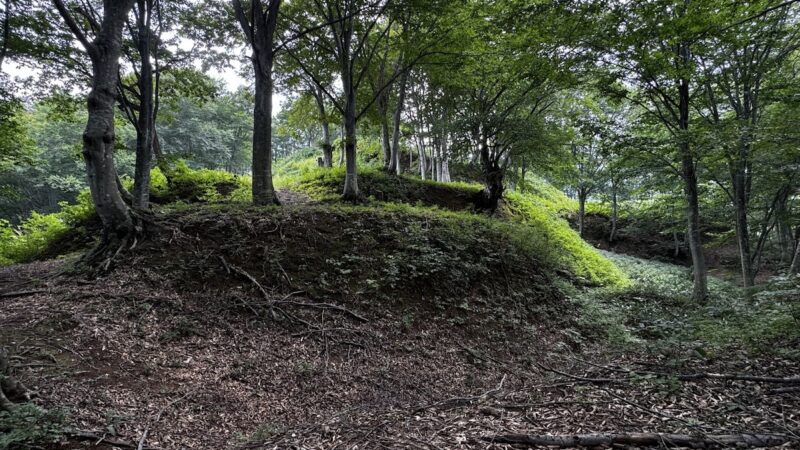
Hojo Castle has the typical structure of a medieval mountain castle. The main enclosure (honmaru) is located at the mountaintop, surrounded by multiple smaller enclosures arranged in a stepped pattern, creating a linear layout.
The following are the main defensive facilities that can be identified:
Enclosures (Kuruwa): Multiple flat areas are arranged in a stepped pattern around the main enclosure. These enclosures were used for soldier garrisons, supply storage, and command posts.
Earthworks: Earthworks surround the enclosures, preventing enemy intrusion and protecting the interior from external views and attacks. Traces of earthworks remain in various places even today.
Horikiri: A moat dug to divide a ridge, it was an important defensive structure that hindered enemy advances. Multiple horikiri have been confirmed at Hojo Castle, enhancing the castle’s defensive capabilities.
Tatebori: A moat dug vertically along a slope, it served to prevent enemies from climbing the slope. Tatebori were constructed in various places on the slopes of Hojo Castle.
Relocated Castle Gates
A particularly noteworthy relic of Hojo Castle is the castle gate that has been relocated and still exists today.
Otemon: The Otemon, which was the main entrance to Hojo Castle, was relocated to Senshoji Temple (in Kashiwazaki City) and is still used as the temple’s main gate. This gate is a valuable relic that conveys the grandeur of Hojo Castle to this day.
Karametemon: The Karametemon, which was the back entrance to the castle, was relocated to Fukoji Temple (in Kashiwazaki City). This gate also exists today as the main gate of a temple and is an important historical document for understanding castle architecture from the Sengoku period.
These relocated gates survived destruction after the castle was abandoned, by being taken in by local temples. Existing castle gates from the Sengoku period are rare nationwide, enhancing the historical value of Hojo Castle.
Remains Observed at the Site
The following remains can be observed at the current Hojo Castle site:
- Main Enclosure: This was the central part of the castle, a flat area on the mountaintop. Although now covered with trees, the shape of the flat surface remains clearly visible.
- Group of Enclosures: Multiple enclosures surrounding the main enclosure remain as part of the topography.
- Earthworks: Earthworks surrounding each enclosure remain in partially good condition.
- Moats and Vertical Ditches: Moats and vertical ditches built along the ridges and slopes are clearly visible.
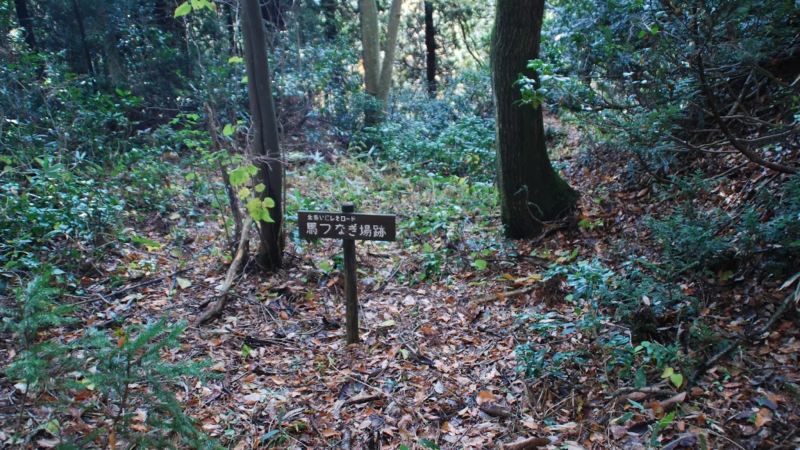
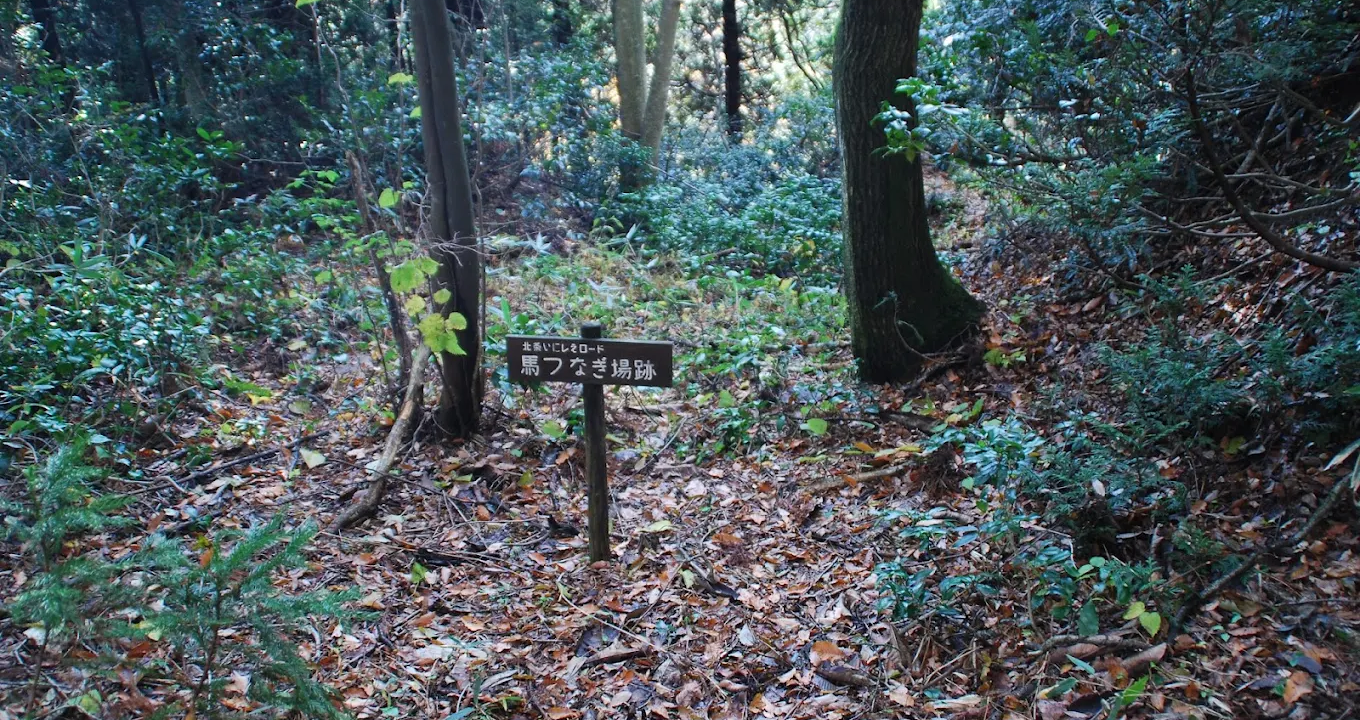
The castle ruins are now a forest, but the city of Kashiwazaki has installed information boards and explanatory signs to help visitors understand the remains.
Historical Significance of Hojo Castle
An Example illustrating the Actions of the Local Lords of Echigo Province
The history of Hojo Castle provides an important example for understanding the actions of the local lords of Echigo Province during the Sengoku period. Hojo Takahiro’s repeated betrayals and Uesugi Kenshin’s lenient response illustrate the complex relationship between Sengoku daimyo and local lords.
Uesugi Kenshin possessed powerful military strength and strong leadership, but his control over Echigo Province was not always perfect. The local lords acted primarily in their own interests, repeatedly switching between submission and rebellion depending on the situation. Kenshin controlled these local lords through both military force and diplomacy, maintaining the unity of Echigo Province.
Regional Influence in the Otate Rebellion
During the Otate Rebellion, Hojo Castle functioned as an important base for Kagetora’s side. The death of Hojo Kagehiro and the fall of Hojo Castle were decisive factors in the defeat of Kagetora’s side.
This civil war engulfed the entire province of Echigo, forcing many local lords to choose between supporting Kagekatsu or Kagetora. Many of the forces that sided with Kagetora, like the Hojo clan, either fell into decline after the rebellion or were forced to pledge allegiance to Kagekatsu.
The Otate Rebellion significantly weakened the Uesugi clan and contributed to their subsequent decline. Had this civil war not occurred, the Uesugi clan might have played a greater role during the Oda-Toyotomi regime.
Genealogy of the Oe Hiromoto-lineage Mori Clan
The fact that the Hojo clan is a branch of the Mori clan, which traces its ancestry to Oe Hiromoto, demonstrates the extensive kinship network within Japanese samurai society. The samurai genealogies formed during the Kamakura period continued to hold significant importance even into the Sengoku period.
While Mori Motonari of Aki Province achieved great success as a Sengoku daimyo, his relatives, the Echigo Mori clan (Hojo clan), fell into decline after the Otate Rebellion. The histories of these two clans, who shared the same ancestors but followed different destinies depending on the circumstances of the region and era, illustrate the complexity of the Sengoku period (Warring States period).
Access
Here’s how to access the Hojo Castle ruins.
Location
Chikubushima, Hojo, Kashiwazaki City, Niigata Prefecture
Access by Public Transportation
Using the JR Shin’etsu Main Line:
- Get off at JR Kashiwazaki Station
- Take the Echigo Kotsu bus “via Hojo” from the station (approx. 20 minutes)
- Get off at the “Hojo” bus stop, then walk approximately 20 minutes to the castle entrance.
Access by public transportation is somewhat inconvenient, and the number of buses is limited, so it is recommended to check the timetable in advance.
Access by Car
Using the Hokuriku Expressway:
- Approximately 15 minutes from Kashiwazaki IC via National Route 252
- There are a few parking spaces near the castle ruins.
Access by car is the most convenient. However, parking spaces are limited, so caution is advised during busy times. ### Points to Note When Visiting the Castle
- As it is a mountain castle, comfortable clothing and walking shoes are essential.
- The path to the castle is well-maintained, but there are steep slopes, so caution is necessary.
- Insect repellent is recommended during the summer months.
- While information boards are installed, reviewing a map of the castle layout beforehand will enhance your understanding.
- The climb to the castle takes approximately 20-30 minutes one way.
Related Historical Sites in the Surrounding Area
When visiting Hojo Castle, we recommend also visiting the following related historical sites:
Senshoji Temple: The main gate of Hojo Castle has been relocated here. It is located in the center of Kashiwazaki City and is easily accessible.
Fukoji Temple: The rear gate of Hojo Castle has been relocated here. This is also located within Kashiwazaki City.
Nanjo Mori Residence Site: The site of a residence where a member of the Hojo clan lived, located near Hojo Castle.
Kasugayama Castle Ruins: This is one of Japan’s most famous mountain castles, renowned as the residence of Uesugi Kenshin. Located about an hour’s drive from Hojo Castle, visiting both together provides a deeper understanding of the relationship between the Uesugi and Hojo clans.
Hojo Castle’s Charm and Highlights
The Vivid History of the Sengoku Period
The greatest appeal of Hojo Castle lies in its embodiment of the complex human relationships and political situation of the Sengoku period. The dramatic history of betrayal and forgiveness of lords, succession struggles, and the castle’s fall stimulates the imagination of visitors.
Walking through the castle ruins, imagining the moment Hojo Takahiro rebelled against Kenshin, the Otate Rebellion where Hojo Kagehiro fought on Kagetora’s side, and the final fall of the castle, conveys the tension of the Sengoku period.
Well-Preserved Remains
Because Hojo Castle escaped development, the structure of this Sengoku period mountain castle remains remarkably well-preserved. Seeing the defensive structures such as earthworks, moats, and vertical trenches firsthand allows you to understand the castle-building techniques and defensive concepts of the time.
In particular, the moats and vertical trenches showcase the pinnacle of Sengoku period castle-building techniques, skillfully utilizing the terrain, making them a must-see for castle enthusiasts.
Stunning Views
From the mountaintop at an altitude of 140 meters, you can enjoy a panoramic view of the Sabaishi River basin and the Kashiwazaki Plain. This view speaks volumes about why Hojo Castle was chosen as a strategically important location.
On a clear day, you can even see the Sea of Japan, giving you a real sense of Hojo Castle’s geographical importance in Echigo Province.
Points to Consider When Visiting Hojo Castle
Spring to Autumn is the Best Season
Because the Hojo Castle ruins are located in a mountainous forest, the best time to visit is from spring to autumn when there is no snow. Especially in May, with its fresh greenery, and November, with its vibrant autumn foliage, the beauty of nature and the atmosphere of the castle ruins combine to create a magnificent landscape.
Estimated Time Required
Allow approximately 1.5 to 2 hours for the round trip from the castle entrance to the main enclosure and viewing the ruins. Those who wish to carefully observe the ruins are advised to allow more time.
Deeper Understanding Through Prior Study
Before visiting Hojo Castle, acquiring basic knowledge about the life of Uesugi Kenshin and the Otate Rebellion will significantly deepen your understanding at the site. Knowing the details of the Otate Rebellion, in particular, will clarify the meaning of Hojo Kagehiro’s choices and the fall of Hojo Castle.
Summary
Hojo Castle is an important historical site that conveys the movements of local lords in Echigo Province during the Sengoku period and the Otate Rebellion, an internal conflict within the Uesugi clan. The dramatic history of Hojo Takahiro’s repeated betrayals, Hojo Kagehiro’s death in battle, and the fall of the castle speaks to the harsh realities of the Sengoku period.
The history of the Hojo clan, a prestigious family descended from Oe no Hiromoto, yet tossed about by the tides of the times, vividly portrays the lives of people who lived through the turbulent Sengoku period.
The well-preserved remains of the castle, including baileys, earthworks, moats, and vertical trenches, serve as valuable learning materials for understanding Sengoku period castle construction techniques. Furthermore, the castle gates relocated to Senshoji and Fukoji temples are precious cultural assets that convey the architecture of that era.
If you have the opportunity to visit Kashiwazaki City, be sure to visit the Hojo Castle ruins. It is a fascinating historical site where you can feel the history of Echigo Province during the Sengoku period firsthand. The view of Echigo from the mountaintop is the same scenery that Hojo Takahiro and Hojo Kagehiro must have seen, and it will make you feel a connection to history that transcends time and space.