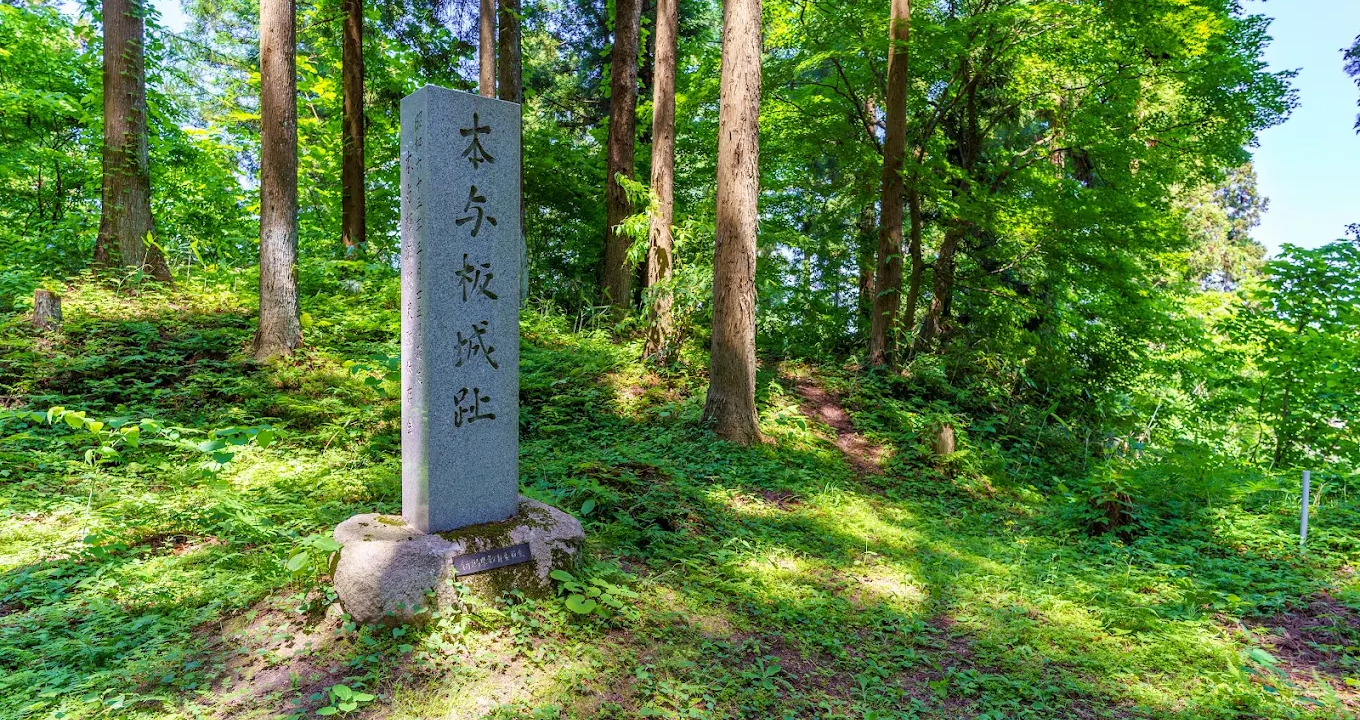
Motoyoita Castle (Niigata Prefecture) Complete Guide | A Thorough Explanation from the Residence of Three Generations of the Naoe Clan to the Relocation to Yoita Castle
Motoyoita Castle, located in Motoyoita, Yoita-machi, Nagaoka City, Niigata Prefecture, is a mountain castle that served as the residence of Naoe Kanetsugu, a famous general of Echigo during the Sengoku period, and his predecessors. Currently preserved as a Niigata Prefecture designated historical site, it is an important historical site indispensable to understanding the Sengoku history of Echigo. This article provides a detailed explanation from every angle, including the history of Motoyoita Castle from its construction to its abandonment, the changes in its lords, existing remains, and access information.
Basic Information and Location of Motoyoita Castle
Motoyoita Castle is a mountain castle built in the mountainous area of Motoyoita, Yoita-machi, Nagaoka City, Niigata Prefecture, situated on a mountain ridge at an altitude of approximately 120 meters and a relative height of approximately 60 meters. From the castle ruins, one can see a panoramic view of the Yoita River basin, a tributary of the Shinano River, and the castle is strategically located in a crucial position for monitoring a vital transportation hub connecting the Echigo Plain and the mountainous region.
The castle is a medium-sized mountain castle, with a layout consisting of multiple baileys arranged around a central enclosure. Kosei-ji Temple is located at the foot of the mountain, and it is believed that a residence once stood in this vicinity, but no clear remains survive today.
Geographical Importance
The Yoita region, where Hon-Yoita Castle was built, is located along the road leading from the center of Echigo Province towards Aizu, and was also a hub for water transport utilizing the Shinano River system. Controlling this area was extremely important for controlling logistics and military movements within Echigo Province.
Construction and Early History of Hon-Yoita Castle
Construction Period and Kagozawa Nyudo
The exact construction period of Hon-Yoita Castle is unclear, but it is said to have been built in 1334 (Kenmu 1) by Kagozawa Nyudo, a member of the Nitta clan. This period coincided with the early Nanboku-cho period, a time of fierce conflict between the Southern and Northern Court forces within Echigo Province.
The Nitta clan was a samurai family based in Kozuke Province (present-day Gunma Prefecture) and a central figure on the Southern Court side. It is believed that Kagozawa Nyudo built the castle in this location as part of a strategy to expand the Southern Court’s influence within Echigo Province.
The Iinuma Clan Era
After the Nanboku-cho period, Hon-Yoita Castle became the residence of the Iinuma clan, important retainers of the Uesugi clan, the shugo (military governor) of Echigo Province. The Iinuma clan ruled this area for generations, functioning as important vassals supporting the Uesugi clan’s rule of Echigo.
Among the Iinuma clan, Iinuma Yorikiyo is particularly well-known. In 1514, during a conflict between the provincial governor Uesugi Fusayoshi and the deputy governor Nagao Tamekage in Echigo Province, Iinuma Yorikiyo sided with Uesugi Fusayoshi. However, he was defeated in this conflict, resulting in the decline of the Iinuma clan.
The Entry and Development of the Naoe Clan
Seizure by Naoe Kagetuna
During the Tenbun era (1532-1554), Naoe Kagetuna, acting on orders from Nagao Kagetora (later Uesugi Kenshin), defeated Iinuma Yorikiyo and entered Hon-Yoita Castle. This event marked a crucial turning point in strengthening the Nagao clan’s (later Uesugi clan’s) control over Echigo Province.
Naoe Kagetuna was originally from the Naoe clan, based in Naoetsu, and rose to prominence as a warrior serving Nagao Kagetora (Uesugi Kenshin). By capturing Hon-Yoita Castle, the Naoe clan gained control of the Yoita region and established their position as important retainers of the Uesugi clan.
The Naoe Clan’s Three Generations of Residence
Hon-Yoita Castle served as the residence of three generations of the Naoe clan: Naoe Kagetuna, his son Naoe Nobutsuna, and his adopted son Naoe Kanetsugu. This period coincides with the time when Echigo Province was at its most prosperous under Uesugi Kenshin and Kagekatsu.
Naoe Kagetuna served as a close confidant of Nagao Kagetora (Uesugi Kenshin) and governed the Yoita region from Hon-Yoita Castle. During Kagetuna’s time, the Naoe clan significantly improved their position within Echigo Province.
Naoe Nobutsuna was Kagetuna’s son and succeeded his father as lord of Hon-Yoita Castle. It is believed that the construction of Yoita Castle, described later, took place during Nobutsuna’s time. He fought on the side of Uesugi Kagekatsu during the Otate Rebellion of 1578 but was killed in action that same year. Naoe Kanetsugu inherited the Naoe family as the second husband of Nobutsuna’s wife (Fune/Ofune-no-kata). Kanetsugu was a renowned general known for his helmet bearing the character “愛” (ai), and he served as a chief administrator for Uesugi Kagekatsu. During Kanetsugu’s time, the family’s main castle had already moved to Yoita Castle, but Hon-Yoita Castle continued to function as an important subsidiary castle.
Relocation to Yoita Castle and its Reasons
Construction of the New Castle, Yoita Castle
During the time of Naoe Nobutsuna, a new castle, Yoita Castle, was built approximately 2 kilometers north of Hon-Yoita Castle. The exact date of construction is unknown, but it is believed to have been during the Tensho era (1573-1592).
Yoita Castle was located at a higher elevation than Hon-Yoita Castle (104 meters above sea level, 85 meters relative height), offering a wider view of the plains. Furthermore, the distance from the foot of the mountain to the main keep was moderate, resulting in a castle with a balanced combination of defensive and convenient features.
Background of the Relocation
There are several theories regarding the reason for moving the main castle from Hon-Yoita Castle to Yoita Castle.
- Improved Defensiveness: Yoita Castle had superior terrain, allowing for stronger defenses.
- Shift of Political Center: Changes in the political situation within Echigo Province necessitated a relocation of the base to a more appropriate location.
- Development of the Castle Town: The terrain around Yoita Castle was more conducive to the development of a castle town.
- Changes in Military Strategy: A new castle layout was needed to adapt to the tactical changes of the late Sengoku period.
Even after the Naoe clan relocated to Yoita Castle, Hon-Yoita Castle continued to function as a subsidiary castle. This indicates that the two castles complemented each other.
Remains and Highlights of Hon-Yoita Castle
Existing Remains
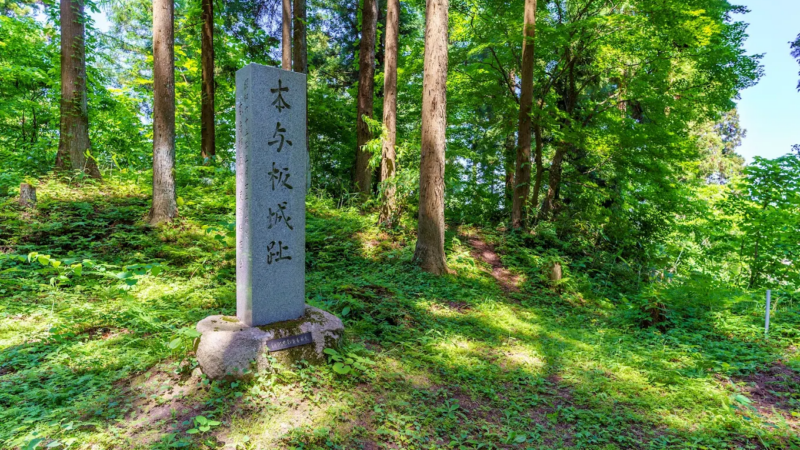
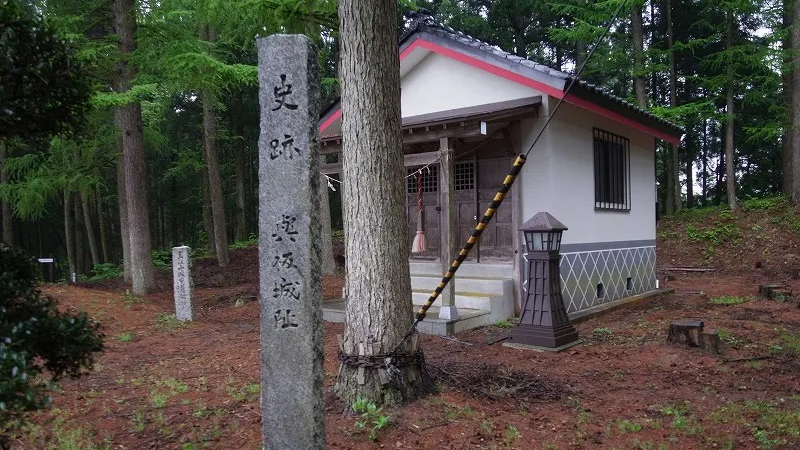
Hon-Yoita Castle still retains remains that exhibit the characteristics of a Sengoku period mountain castle. The main remains are as follows:
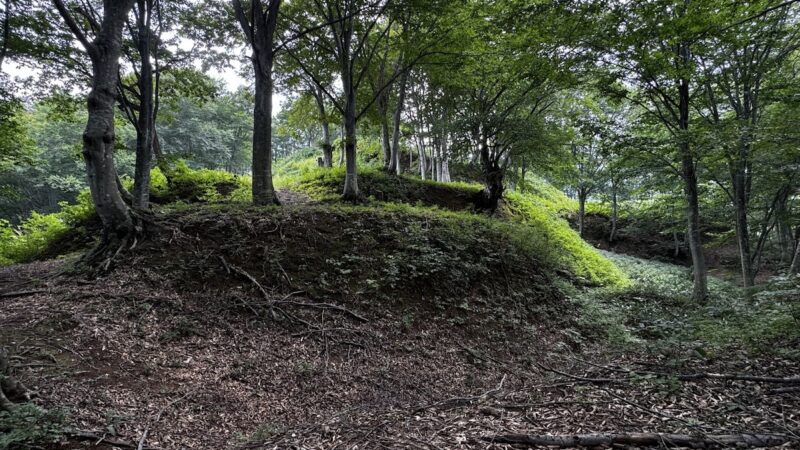
Main Enclosure (Honmaru Site): Located at the highest elevation of the castle’s central area. Currently a flat space, traces of former buildings can be seen.
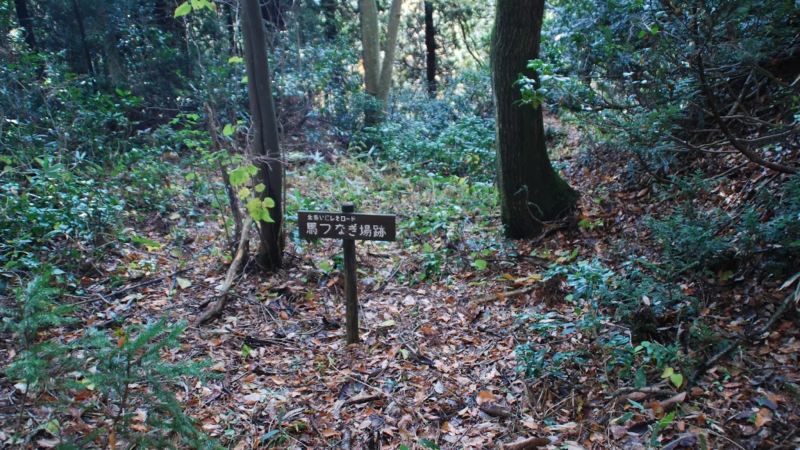
Enclosure Site: Multiple enclosures surround the main enclosure. These enclosures were defensive spaces used for troop garrisons and storage of supplies.
Moat: A moat dug across the ridge, an important defensive structure to prevent enemy intrusion. Multiple moats have been identified at Hon-Yoita Castle.
Earthwork: An earthen wall built around the enclosures, serving to enhance defense and clearly define the boundaries of the enclosures.
Site of the Foothill Residence
It is said that a foothill residence existed near the southwest of Kosei-ji Temple. Mountain castles served as wartime bases, and it was common to live in foothill residences during peacetime. However, no clear remains currently exist, and detailed research through archaeological excavations is needed.
Relationship with Enmanji Temple
Enmanji Temple is located east of Hon-Yoita Castle, and it is believed that this temple also had a deep connection to the castle. In medieval castles, nearby temples often served as the lord’s family temple or functioned as refuge in emergencies.
The Otate Rebellion and Hon-Yoita Castle
The Death of Uesugi Kenshin and the Succession Struggle
In March of Tensho 6 (1578), Uesugi Kenshin, the hero of Echigo, died suddenly. Kenshin had no biological children, and his adopted sons, Uesugi Kagekatsu and Uesugi Kagetora, claimed the title of successor, leading to the outbreak of the civil war known as the Otate Rebellion.
The Death of Naoe Nobutsuna
During the Otate Rebellion, Naoe Nobutsuna fought on the side of Uesugi Kagekatsu. He served as an important general for Kagekatsu, based at Hon-Yoita Castle and Yoita Castle, but was killed in battle that same year.
After Nobutsuna’s death, his wife (Ofune-no-kata) remarried Higuchi Kanetsugu (later Naoe Kanetsugu), and Kanetsugu inherited the headship of the Naoe family. This event marked the beginning of the historical exploits of Naoe Kanetsugu, later known as the “warrior of love.”
The Role of Hon-Yoita Castle
During the Otate Rebellion, Hon-Yoita Castle functioned as one of Kagekatsu’s important bases. Securing the Yoita region was essential for maintaining military superiority within Echigo Province, and the two-castle system of Hon-Yoita Castle and Yoita Castle played this role.
The Era of Naoe Kanetsugu
Kanetsugu’s Succession to the Naoe Family
After the death of Naoe Nobutsuna, Higuchi Kanetsugu (later Naoe Kanetsugu) inherited the Naoe family. Kanetsugu originally served as a close attendant to Uesugi Kagekatsu at Sakado Castle, but through his marriage to Nobutsuna’s wife, he became the head of the prestigious Naoe family.
As Chief Administrator to Uesugi Kagekatsu
Naoe Kanetsugu served as chief administrator (karo) to Uesugi Kagekatsu, excelling in all aspects of domestic affairs, diplomacy, and military matters. During Kanetsugu’s time, the main castle had already moved to Yoita Castle, but Hon-Yoita Castle remained under the control of the Naoe clan and functioned as a subsidiary castle.
Kanetsugu is known for his helmet bearing the character “愛” (ai, meaning love) as a crest, and is highly regarded as a renowned general skilled in both military and literary arts. He was highly praised by Toyotomi Hideyoshi and granted a territory of 300,000 koku, far exceeding the Uesugi family’s stipend.
Transfer to Aizu and Abandonment of Hon-Yoita Castle
Transfer of the Uesugi Clan to Aizu
In 1598 (Keicho 3), by order of Toyotomi Hideyoshi, Uesugi Kagekatsu was transferred from Echigo to Aizu (present-day Fukushima Prefecture). While his stipend increased to 1.2 million koku, he had to leave Echigo, his ancestral home.
The Abandonment of Hon-Yoita Castle
Following the Uesugi clan’s transfer to Aizu, Naoe Kanetsugu also moved to Aizu, and both Yoita Castle and Hon-Yoita Castle were abandoned. At this point, Hon-Yoita Castle closed its approximately 260-year history as a castle.
After its abandonment, the castle site gradually returned to nature, and while the structures were lost, the basic layout, such as earthworks and baileys, remained as part of the topography.
Access and Visiting Information for Hon-Yoita Castle
Access by Public Transportation
By JR:
- Get off at JR Shin’etsu Main Line “Nagaoka Station”
- Take the Echigo Kotsu bus bound for “Yoita Bus Depot” from the Nagaoka Station Oteguchi bus stop (approx. 30 minutes)
- After getting off at the “Yoita” bus stop, it’s about a 20-minute walk to the castle entrance.
Access by Car
By Expressway:
- Approximately 15 minutes from the Hokuriku Expressway “Nakanoshima Mitsuke IC”
- Approximately 25 minutes from the Kan’etsu Expressway “Nagaoka IC”
Parking Information:
There is no dedicated parking lot around the castle ruins, but there are a few parking spaces near Kosei-ji Temple. However, consideration must be given to avoiding disturbing the temple grounds and other visitors. Using the parking lots of public facilities in the Yoita area and walking from there is also recommended.
Precautions for Visiting the Castle
Since Hon-Yoita Castle is a mountain castle, the following preparations are necessary for visiting.
- Attire: Comfortable clothing and walking shoes (hiking boots recommended)
- Estimated Time: Approximately 15-20 minutes one way from the entrance to the main enclosure; about 1 hour including sightseeing
- Season: Spring to autumn is the best time. Climbing is difficult in winter due to snow.
- What to Bring: Drinking water, towel, insect repellent (summer)
Points to Note When visiting Hon-Yoita Castle, paying attention to the following points will help you understand the castle’s history more deeply.
- Arrangement of Enclosures: Understand the castle’s defensive structure from the arrangement of enclosures centered around the main enclosure.
- Depth of Moats: Confirm the scale of the moats dug to prevent enemy intrusion.
- View: Experience the area the castle monitored from the view from the main enclosure.
- Utilization of Terrain: Observe how the natural terrain was utilized for defense.
Comparison of Hon-Yoita Castle and Yoita Castle
Comparing Hon-Yoita Castle with the later-built Yoita Castle is important for understanding it.
Differences in Location
- Hon-Yoita Castle: Elevation approximately 120m, relative height approximately 60m
- Yoita Castle: Elevation 104m, relative height 85m
Yoita Castle has a greater relative height and utilizes steeper terrain.
Characteristics of the Castle Layout
Hon-Yoita Castle has characteristics of a mountain castle from the Nanboku-cho period to the early Sengoku period, and has a relatively simple layout. On the other hand, Yoita Castle, built in the late Sengoku period, has a more complex and highly defensible layout.
Historical Role
Hon-Yoita Castle served as the first base of the Naoe clan, playing a crucial role in establishing their control over the Yoita region. Later, as the clan developed, Yoita Castle became their main base, centering on larger-scale military and political activities.
Historical Significance of Hon-Yoita Castle
Position in the Governing System of Echigo Province
Hon-Yoita Castle was one of the important bases in the Uesugi (Nagao) clan’s rule of Echigo Province. By controlling the Yoita region, they secured transportation routes connecting the Echigo Plain and mountainous areas, strengthening their military and economic control within the country.
Foundation for the Development of the Naoe Clan
The Naoe clan’s control of the Yoita region from Hon-Yoita Castle laid a crucial foundation for the later success of Naoe Kanetsugu. Without Hon-Yoita Castle, the Naoe clan’s rise in status in Echigo and Kanetsugu’s historical achievements might not have occurred.
Value in the History of Castles in the Sengoku Period
Hon-Yoita Castle retains a typical form of a mountain castle from the Sengoku period, making it a valuable historical resource for studying the castle construction techniques and defensive philosophies of the time. In particular, the fact that it was later relocated to Yoita Castle is a good example of the development process of castles during the Sengoku period.
Nearby Tourist Attractions
When visiting Hon-Yoita Castle, visiting the related historical sites in the surrounding area will allow for a more fulfilling historical exploration.
Yoita Castle Ruins
Located approximately 2 kilometers north of Hon-Yoita Castle, the Yoita Castle Ruins were the residence of Naoe Kanetsugu. Accessible from the entrance to Yasaka Shrine, the site of the main keep features a stone monument inscribed with the characters “Shomōji Shin Ichiji” (meaning “I desire Shinji”). Visiting both Hon-Yoita Castle and Yoita Castle will provide a deeper understanding of the history of the Naoe clan.
Kōsai-ji Temple
Located at the foot of Hon-Yoita Castle, Kōsai-ji Temple is near the site believed to be the former residence. There may be historical documents or legends indicating a connection to the Naoe clan.
Enmanji Temple
Enmanji Temple, located east of Hon-Yoita Castle, is also a temple deeply connected to the castle. It was also a religious center of the Yoita region during the medieval period.
Historical Sites in Nagaoka City
Nagaoka City has numerous historical sites related to the Uesugi and Nagao clans. If you have time, visiting Nagaoka Castle ruins and Tochio Castle ruins will give you a broader understanding of the Sengoku period history of Echigo.
Preservation and Utilization of Hon-Yoita Castle
Protection as a Prefectural Designated Historic Site
The Hon-Yoita Castle ruins are protected as a Niigata Prefecture designated historic site, safeguarding them from development. The historic site designation officially recognizes the importance of the castle ruins and provides a foundation for passing them on to future generations.
Future Challenges
There are several challenges in the preservation and utilization of Hon-Yoita Castle.
- Preservation of Historical Remains: Continuous management to protect the remains from natural erosion and changes in vegetation.
- Promotion of Research and Investigation: Clarification of the castle’s actual state through archaeological excavations.
- Strengthening Information Dissemination: Increasing recognition as a tourist resource.
- Improved Access: Creating an environment where visitors can safely ascend to the castle.
Contribution to Regional Revitalization
Hon-Yoita Castle is a core element of the historical identity of the Yoita region. Taking advantage of the Naoe Kanetsugu boom, utilizing it as a local tourist resource has the potential to contribute to regional revitalization.
Summary: Hon-Yoita Castle Tells the Story of Echigo’s Sengoku Period History
Hon-Yoita Castle is a mountain castle with a history spanning approximately 260 years, from its construction during the Nanboku-cho period to its abandonment in the early Edo period. It transitioned from the residence of the Iinuma clan to the base of the Naoe clan, and particularly as the residence of three generations of Naoe Kagetuna, Nobutsuna, and Kanetsugu, it left an important mark on the Sengoku period history of Echigo.
Although the castle itself has long been abandoned, the remaining structures convey the castle-building techniques and defensive philosophies of the time. Furthermore, its history of relocation to the later-built Yoita Castle is a valuable example illustrating the development of castles during the Sengoku period.
Hon-Yoita Castle was the foundation of the Naoe clan, which produced the renowned general Naoe Kanetsugu. Understanding its history is crucial for comprehending the Sengoku period history of Echigo, and indeed, the history of medieval Japan. If you have the opportunity to visit Niigata Prefecture, be sure to visit this historic mountain castle. The baileys and moats remaining in the quiet mountains still convey the spirit of the Sengoku period.