Kijioka Castle (Saitama Prefecture) Complete Guide | From History, Remains, and Access to the Latest Excavation Information
Kijoka Castle (also known as Kijigaoka-jo or Kijigaoka-jo), located in Hachimanyama, Kodama-cho, Honjo City, Saitama Prefecture, is a castle built in the early Sengoku period by the Yamauchi Uesugi clan, the Kanto Kanrei (governor of the Kanto region). Currently, it is maintained as “Shiroyama Park,” and its remains, including large earthworks and moats, are well-preserved as a Saitama Prefecture designated historical site. This article will comprehensively cover the charm of Kijioka Castle, from its historical background and highlights to the latest excavation information and a visitor’s guide.
Overview and Basic Information of Kijioka Castle
Kijoka Castle is a medieval mountain castle located at 446 Hachimanyama, Kodama-cho, Honjo City, Saitama Prefecture. It is also known as “Hachimanyama Castle,” and its name originates from the old place name, Kijioka.
The castle grounds span approximately 270 meters east-west and 430 meters north-south, and it is a flatland castle built on an isolated hill. Although the elevation is relatively low, it is strategically located overlooking the surrounding plains and functioned as an important base controlling the Kamakura Road.
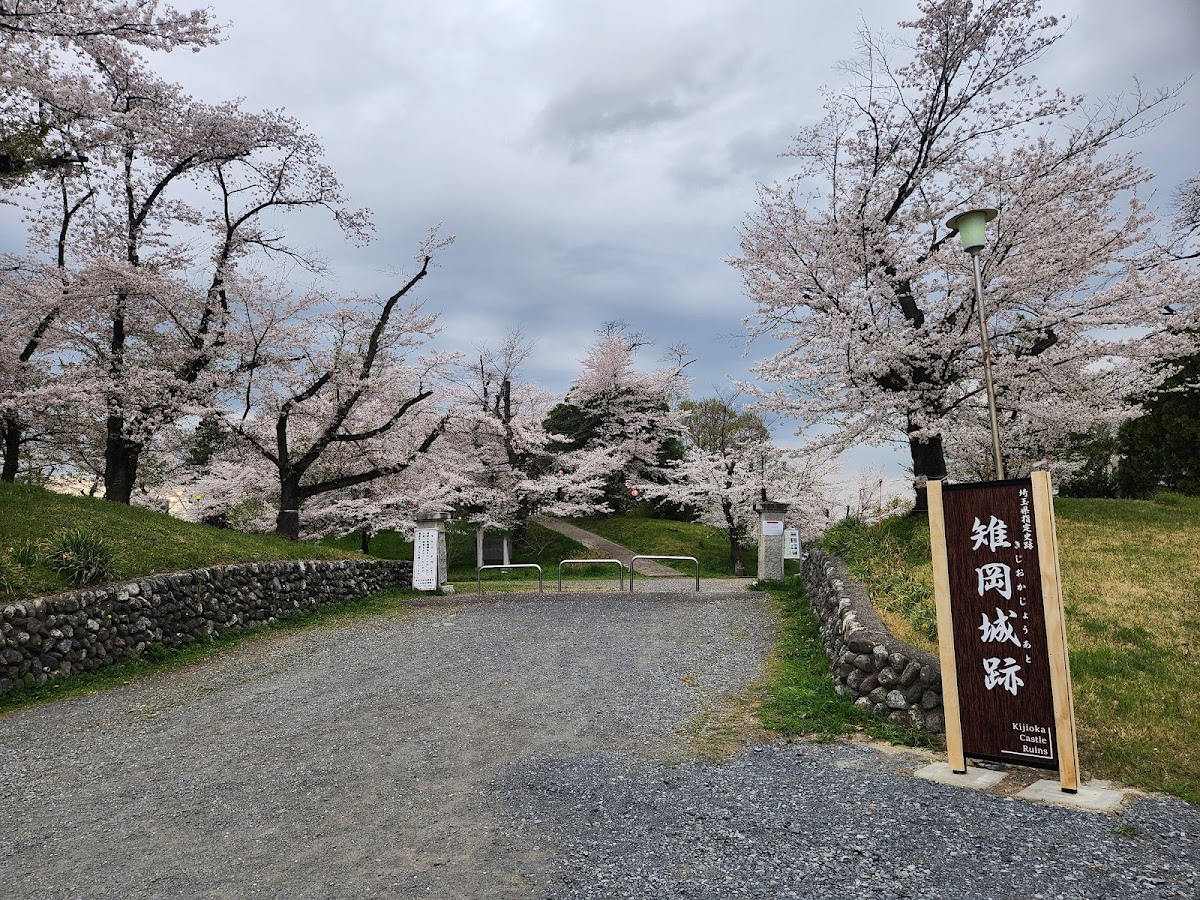
Currently, the Kijioka Castle ruins are designated as a Saitama Prefecture cultural property (historic site), and remnants such as large earthworks, dry moats, and water moats remain within the castle grounds. It is also known as a famous cherry blossom viewing spot in spring, with approximately 300 Somei Yoshino cherry trees in full bloom, and is a beloved place of relaxation for local residents.
Basic Data
- Location: 446 Yawata-yama, Kodama-cho, Honjo City, Saitama Prefecture, and other locations
- Alternate Name: Yawata-yama Castle
- Castle Structure: Hilltop Castle
- Construction Period: Late Muromachi period (early Sengoku period)
- Builder: Yamauchi Uesugi clan (various theories exist)
- Main Lords: Natsume Sadamoto, Matsudaira Iekiyo (vassal of the Later Hojo clan)
- Year of Abandonment: Keicho 6 (1601)
- Designated Cultural Property: Saitama Prefecture Designated Historic Site
- Current Status: Developed as Shiroyama Park (Kijioka Castle Ruins Park)
History of Kijioka Castle
Historical Background Before Construction
It is estimated that a samurai residence existed on the site where Kijioka Castle was built until the 14th century (late Kamakura period to Nanboku-cho period). Archaeological investigations have confirmed evidence of early samurai settlement in this area, suggesting that it was a militarily and politically important location even before it was developed into a castle.
Kodama County has been known as a transportation hub since ancient times, and in particular, as the area through which the Kamakura Road passed, it was on an important route connecting Musashi Province and Kōzuke Province. It is believed that these geographical conditions led to the later construction of the castle.
Construction by the Yamanouchi Uesugi Clan
Several historical sources describe the full-scale construction of Kijioka Castle. The most plausible theory, found in the book “Kōzuke no Kuni Shi,” states that “it was built by Yamanouchi Uesugi Akisada during the Muromachi period, but due to the narrow terrain, he moved to Hirai Castle in Kōzuke Province and entrusted its defense to his retainer, Natsume Bungo-no-kami Sadamoto.”
The Yamanouchi-Uesugi clan, who served as the Kanto Kanrei (governor of the Kanto region), needed to strengthen their control over the area from northern Musashi Province to Kozuke Province as they sought to expand their power in the Kanto region in the 15th century. Kijioka Castle was initially planned as the residence of the Kanto Kanrei, but due to limitations in size and terrain, it proved too small. Therefore, the larger Hirai Castle (Fujioka City, Gunma Prefecture) was chosen as the Uesugi clan’s main base.
As a result, Kijioka Castle was given to Natsume Bungo-no-kami Sadamoto, a vassal, and took on the role of a frontline base protecting a strategic transportation point along the Kamakura Road. In the political landscape of Kanto during the early Sengoku period, Kijioka Castle functioned as an important base for maintaining the Yamanouchi-Uesugi clan’s sphere of influence.
Under the control of the Later Hojo clan
In the 16th century, the political situation in Kanto changed dramatically. The Later Hojo clan, based in Odawara, rapidly expanded its power, and the Yamanouchi-Uesugi clan gradually found themselves at a disadvantage.
Kijioka Castle also came under the control of the Later Hojo clan and was positioned as a branch castle of Hachigata Castle (Yorii-machi, Saitama Prefecture). Hachigata Castle was one of the most important bases in the Later Hojo clan’s control of northern Kanto, and Kijioka Castle functioned as a fortress that played a part in its defense network.
During this period, it is highly likely that the castle’s structure and defensive facilities were also modified, and some of the remains seen today are thought to date from the Later Hojo period.
The Siege of Odawara and the Entry of Matsudaira Iekiyo
In 1590, Toyotomi Hideyoshi launched the Siege of Odawara, and the Later Hojo clan was destroyed. While detailed records of Kijioka Castle’s role in this battle are not available, it is presumed that it played some role in the course of the war as a branch castle of Hachigata Castle.
After the Siege of Odawara, Kanto became the territory of Tokugawa Ieyasu, and Matsudaira (Takeya) Iekiyo entered Kijioka Castle with a stipend of 10,000 koku. Matsudaira Iekiyo was a hereditary vassal of the Tokugawa family and ruled the Kodama region for approximately 10 years.
Iekiyo dedicated himself to developing the castle town and governing the territory, contributing to the stabilization of the region during the transition from the turmoil of the Sengoku period to an era of peace.
Abandonment of the Castle and its Aftermath
Due to his achievements in the Battle of Sekigahara (1600), Matsudaira Iekiyo was promoted to a 30,000-koku domain in Yoshida, Mikawa Province (present-day Toyohashi City, Aichi Prefecture) in 1601. With this transfer, Kijioka Castle was abandoned, bringing its history as a castle to an end.
After its abandonment, the castle ruins were left neglected for a long time, but the remains such as earthworks and moats were relatively well preserved. In modern times, cherry trees were planted by local residents, and the area was gradually developed into a park. Today, it is known as “Shiroyama Park,” a place of relaxation where historical heritage and nature harmonize.
Structure and Layout of Kijioka Castle
Kijioka Castle is a flatland castle built on an isolated hill, characterized by its layout that skillfully utilizes the natural terrain. The castle grounds extend approximately 270 meters east-west and 430 meters north-south, boasting a considerable size for a medieval castle.
Main Enclosure (Honmaru)
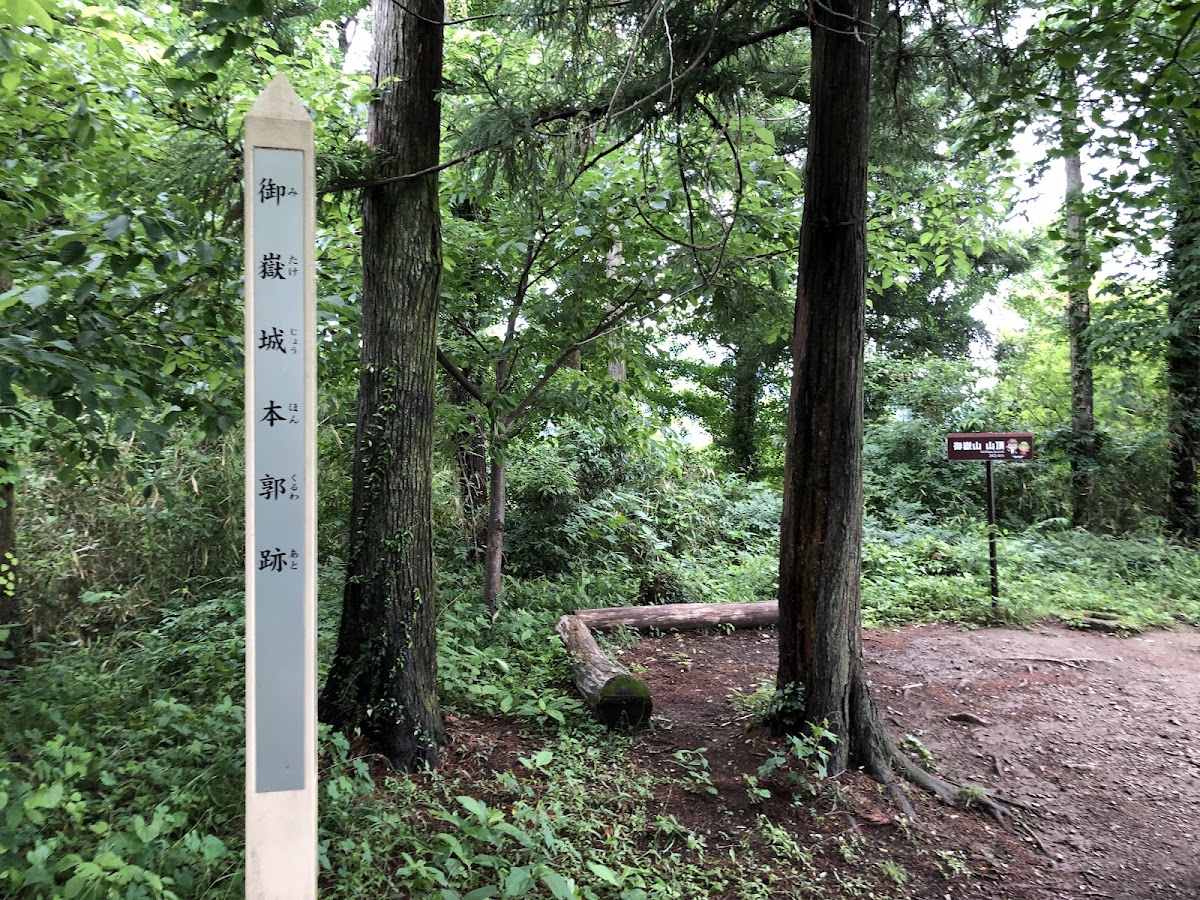
The main enclosure (Honmaru) is located in the center of the castle, and is believed to have been the location of the lord’s residence and command post. The main enclosure is surrounded by earthen ramparts, a feature designed to enhance its defensive capabilities.
The main enclosure is relatively large, suggesting it also served as a sufficient living space. Even today, the flat surface of the main enclosure is clearly visible, allowing us to imagine its appearance in its heyday.
Earthen Ramparts
One of the greatest highlights of Kijioka Castle is the extensively preserved earthen ramparts. These ramparts, built throughout the castle grounds, reach several meters in height, demonstrating the advanced castle-building techniques of the Sengoku period. Earthen ramparts not only prevented enemy intrusion but also served various defensive functions, such as protection from arrows and firearms, and obstruction of sight. The well-preserved earthen ramparts are valuable historical remains for understanding the castle structure of the time.
The tops of the earthen ramparts are leveled, suggesting the possibility of defensive structures such as watchtowers and walls being installed there. Furthermore, a close examination of the earthen rampart structure reveals traces of the civil engineering techniques of the time, such as rammed earth construction.
Moats (Dry Moats and Water Moats)
It has been confirmed that both dry moats and water moats existed at Kijioka Castle. Moats were one of the most important defensive structures for a castle, playing a crucial role in physically preventing enemy intrusion.
Dry moats were placed throughout the castle, some reaching depths of several meters. The bottoms of dry moats were not flat, but rather had V-shaped or U-shaped cross-sections, a design intended to make it difficult for enemy soldiers to move along the bottom.
Water moats were moats filled with water using spring water or rainwater, providing a stronger defensive capability. Even today, some moats still contain water, evoking their former appearance.
The arrangement of the moats is closely related to the castle’s layout, and they were systematically excavated to block major entry points. The defensive system combining moats and earthworks represents a typical structure of medieval castles.
Enclosures (Kuruwa)
Multiple enclosures are arranged around the main enclosure, forming a hierarchical defensive structure. Each enclosure is demarcated by earthworks and moats, designed to function as an independent defensive unit.
The arrangement of the enclosures is devised according to the terrain, allowing for three-dimensional defense utilizing elevation differences. Furthermore, the passages connecting the enclosures (koguchi) are designed with features such as curves to avoid becoming defensive weak points.
Entrances (Koguchi)
The entrances to the castle, the koguchi, are the most important defensive points. The entrance to Kijioka Castle is not a simple, straight passage, but rather a complex network of earthworks and moats.
The structure is designed to allow enemy soldiers to easily be attacked from the sides and above as they pass through the entrance, enabling effective defense even with a small number of defenders. This type of entrance structure is an important element demonstrating the development of castle-building techniques during the Sengoku period.
Highlights of Kijioka Castle
Currently, the Kijioka Castle ruins are maintained as Shiroyama Park, and are popular not only with history enthusiasts but also with general tourists and local residents. Here, we introduce some highlights that you should definitely pay attention to when you visit.
Well-Preserved Earthworks and Moats
The greatest attraction of Kijioka Castle is undoubtedly the well-preserved large-scale earthworks and moats. Despite more than 400 years having passed since the castle was abandoned, it is rare to find a castle ruin in Saitama Prefecture where the remains are so clearly visible.
In particular, the earthworks around the main enclosure are tall and wide, allowing you to experience the power and presence of a Sengoku period castle. There are places where you can walk along the top of the earthen ramparts, allowing you to view the castle grounds from the perspective of the defending soldiers of the time.
The moats are also well-preserved in depth and width, giving you a real sense of the castle’s strong defenses. Depending on the season, some parts of the moats are filled with water, allowing you to observe the state of the water-filled moats.
Charm as a Cherry Blossom Spot
Kijioka Castle Ruins are also famous as a cherry blossom spot, with approximately 300 Somei Yoshino cherry trees planted within the castle grounds. From late March to early April, the cherry blossoms in full bloom adorn the castle ruins, attracting many visitors for cherry blossom viewing.
The combination of historical earthen ramparts and moats with cherry blossoms creates a unique landscape unlike any other. The view of the cherry blossoms from atop the ramparts is particularly breathtaking and is a popular spot for photography.
During cherry blossom season, local residents hold cherry blossom viewing parties, making it a place for community interaction. It is a fine example of how historical heritage can be integrated into modern life and become a beloved place for people.
Information Boards and Panels
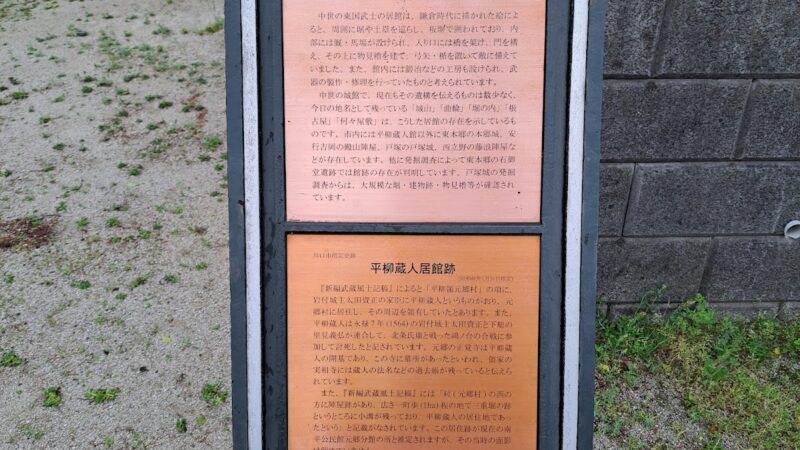
Within Shiroyama Park, there are information boards and panels explaining the history and structure of Kijioka Castle. Reading these while strolling through the park will deepen your understanding of the castle ruins.
The information boards include maps of the castle’s layout and a historical timeline, making it easy for first-time visitors to grasp the overall picture of the castle. The locations of major remains are also indicated, allowing for efficient sightseeing.
Views
Because Kijioka Castle is built on an isolated hill, the views from within the castle are one of its highlights. You can see the surrounding plains, and appreciate the strategic importance of why the castle was built in this location.
On clear days, you can see distant mountains, giving you a sense of the vastness of the Kanto Plain. During the Sengoku period, the castle lords likely gazed upon this view while planning their territorial management and strategies.
Excavation and Latest Information on Kijioka Castle
Recently, the first full-scale archaeological excavation by Saitama Prefecture has been conducted at the Kijioka Castle site, yielding new insights. This excavation aimed to elucidate the castle’s history and structure in more detail.
Results of the Excavation
The excavation is revealing specific details about the castle’s structure and changes that were previously unknown from historical documents alone. In particular, the following results have been reported:
Confirmation of Remains: Detailed investigation of the earthworks and moats has confirmed the construction period and traces of renovations. Analysis of the soil layers revealed that the earthworks were reinforced multiple times, supporting the conclusion that the castle was used and maintained over a long period.
Excavated Artifacts: The excavation has yielded artifacts such as ceramic fragments, roof tiles, and metal objects. These artifacts provide important clues to understanding life within the castle and identifying the period when the castle was functional. In particular, the dating of the ceramics has allowed for a more accurate estimation of the castle’s usage period.
Detection of Building Remains: In some excavation areas, structures believed to be postholes and foundation stones have been detected. This is providing information about the layout, size, and structure of buildings within the castle grounds.
Excavation Report Panel Exhibition
The results of the excavation are open to the public, and events such as the “Excavation Report Panel Exhibition” are held. These exhibitions display photographs of the excavation, actual artifacts, and panels summarizing the findings, making the latest research results easy to understand.
These panel exhibitions are sometimes held at facilities in Saitama Prefecture and Honjo City, providing a valuable learning opportunity for those interested in Kijioka Castle. Information on upcoming events is announced on the official websites of Saitama Prefecture and Honjo City, so please check them if you are interested.
Expectations for Future Investigations
The excavation of the Kijioka Castle site has only just begun, and further investigations are expected to reveal even more information.
In particular, there are still various theories regarding the castle’s construction period and builder, and it is hoped that archaeological evidence will shed light on these mysteries. Furthermore, the existence and extent of the castle town will likely be subjects of future research.
Continued investigation and research are expected to further enhance the historical value of Kijioka Castle and deepen its recognition as an important cultural resource of the region.
Access and Visiting Guide
For those planning a visit to Kijioka Castle Ruins (Shiroyama Park), we provide information on access methods and points to note during your visit.
Location
Address: 446, Yawata-yama, Kodama-cho, Honjo City, Saitama Prefecture, and other locations
Access by Public Transportation
From JR Hachiko Line “Kodama Station”:
- Approximately 20-25 minutes on foot from Kodama Station
- Approximately 5 minutes by taxi
By Bus:
- Honjo City’s community bus may operate, but the number of services is limited, so it is recommended to check the timetable in advance.
Access by Car
From the Kan-Etsu Expressway:
- Approximately 10 minutes from the Honjo-Kodama Interchange
From National Route 254:
- Approximately 5 minutes from the Kodama town center, following the signs
Parking
Shiroyama Park has a free parking lot. There is space for several dozen regular cars, but during peak seasons such as cherry blossom season, early visits are recommended.
Visiting Hours and Fees
- Visiting Hours: Open 24 hours a day as a park
- Admission Fee: Free
- Estimated Time Required: Approximately 1 to 1.5 hours for a thorough visit
Points to Note When Visiting
Clothing and Equipment:
- The castle ruins are uneven, so comfortable walking shoes are essential when viewing the earthworks and moats.
- Insect repellent and a hat are recommended during the summer months.
- The ground can be slippery after rain, so caution is advised.
Safety Considerations:
- Some slopes of the moats and earthworks are steep, so extra caution is needed, especially if you are visiting with small children.
- There are areas without signs or fences, so please take responsibility for your own safety.
Manners:
- The castle ruins are a valuable cultural asset. Please refrain from damaging the earthworks or other historical remains.
- Please take all your trash with you.
- During peak seasons such as cherry blossom season, please be considerate of other visitors.
Best Season
Spring (Late March to Early April): This is the cherry blossom season, attracting the most visitors. Enjoy the beautiful collaboration of historical heritage and cherry blossoms.
Fresh Green Season (May): Less crowded than cherry blossom season, this is a beautiful time for exploring the castle ruins.
Autumn (October to November): The autumn foliage is beautiful, and the cool weather makes for a pleasant stroll.
Winter (December to February): Fewer visitors, allowing for a quiet and peaceful visit to the castle ruins. The fallen leaves make it easier to observe the structure of the remains.
Nearby Tourist Attractions
When visiting Kijioka Castle Ruins, combining your visit with a tour of nearby tourist attractions will make your trip even more fulfilling.
Honjo Town Center: With a history of flourishing as a post town on the Nakasendo road, old streetscapes and temples and shrines remain.
Historical Sites in Kodama Town: Kodama Town also has numerous historical temples, shrines, and sites, making it ideal for historical walks.
Hachigata Castle Ruins: An important stronghold of the Later Hojo clan, located about 30 minutes away by car. This castle ruin is closely related to Kijioka Castle, and visiting both will deepen your understanding of the Sengoku period history of the Kanto region.
Significance of Visiting Kijioka Castle
Kijioka Castle Ruins are not merely historical relics, but a cultural resource that continues to thrive within the local community. Visiting the castle ruins has the following significance:
As a Place for Historical Learning
Kijioka Castle Ruins embody the Sengoku period history of the Kanto region, from the Kanto Kanrei Yamauchi Uesugi clan to the Later Hojo clan and then to the Tokugawa clan. By actually seeing the ruins and standing on the site, you can learn living history that cannot be obtained from textbooks or books alone.
In particular, defensive structures such as earthworks and moats are valuable teaching materials for understanding the castle-building techniques and tactics of the time. It can be said that it has high educational value as a place where you can learn about the structure of a medieval castle firsthand.
As a Regional Cultural Resource
Kijioka Castle Ruins are an important part of the cultural identity of Kodama-cho, Honjo City. As a symbol of the region’s history, it is a source of pride for the residents.
The fact that it has been developed into Shiroyama Park and is a popular spot for cherry blossoms is a good example of how historical heritage is organically integrated into modern life. Visitors can see a community development that harmonizes history and modernity.
Position in Saitama Prefecture’s Castle History
While Saitama Prefecture has many medieval castle ruins, Kijioka Castle is one of the important castle ruins, with well-preserved remains and a large scale.
As a castle associated with the Yamanouchi Uesugi clan, the Kanto Kanrei (governor of the Kanto region), and as a branch castle within the sphere of influence of the Later Hojo clan, Kijioka Castle is indispensable for understanding the medieval history of Saitama Prefecture. Visiting it along with other castle ruins in the prefecture will provide a comprehensive picture of Saitama’s castle history.
Summary
Kijikaoka Castle (Honjo City, Saitama Prefecture) is a historical castle built in the early Sengoku period by the Yamanouchi Uesugi clan, the Kanto Kanrei, and passed down to the Later Hojo and Tokugawa clans. Currently, it is maintained as Shiroyama Park, and its remains, such as large earthworks and moats, are well-preserved.
Not only is it recognized as a Saitama Prefecture designated historical site with cultural value, but it is also a popular spot for local residents to relax, boasting approximately 300 cherry trees. Recent, the first full-scale archaeological excavation has yielded new insights, and further research is expected.
With relatively easy access and free admission, this spot is recommended not only for history buffs but also for families and tourists. It’s a place that can be enjoyed for a variety of purposes, including those interested in the Sengoku period history of the Kanto region, those who want to see the remains of a medieval castle, and those who want to visit a famous cherry blossom viewing spot.
By visiting the Kijioka Castle Ruins, you can experience the rich history and culture of Saitama Prefecture and feel the spirit of the Sengoku period. Why not visit this fascinating castle site at least once?
Map
The address of Kijioka Castle Ruins (Shiroyama Park) is 446, Yawata-yama, Kodama-cho, Honjo City, Saitama Prefecture. It is approximately a 20-25 minute walk from Kodama Station on the JR Hachiko Line and about a 10 minute drive from the Honjo-Kodama Interchange on the Kan-Etsu Expressway.
Searching for “Kijikaoka Castle Ruins” or “Shiroyama Park, Honjo City” on your car navigation system or smartphone map app will display the exact location. You can also search for “Kijikaoka Castle Ruins” on online map services such as Google Maps.
There are signs posted at the site, so it’s relatively easy to find once you reach the vicinity. There’s also a parking lot, making it convenient to visit by car.