Complete Guide to the History and Highlights of Mitake Castle (Kamikawa Town, Saitama Prefecture) | Remains and Access Information for Kanasana Mitake Castle
What is Mitake Castle?
Mitake Castle is a Sengoku period mountain castle located in Watase, Kamikawa Town, Kodama District, Saitama Prefecture. Built on the summit of Mount Mitake (elevation 343.4m, relative height approximately 200m) behind Kanasana Shrine, it is also known as Takami Castle. Furthermore, because there is another castle with the same name, Mitake Castle, in Ome City, Tokyo, it is also called Kanasana Mitake Castle to distinguish it.
This castle, located on the border between Musashi Province and Kozuke Province, was a strategic point and the site of fierce battles between the Hojo and Takeda clans during the Sengoku period. Even today, the remains of the castle, such as cliffs, moats, and baileys, are well-preserved on the mountaintop, making it one of the most noteworthy mountain castles in Saitama Prefecture and highly regarded by castle enthusiasts.
History of Mitake Castle
Construction Period and the Rule of the Anbo Clan
There are various theories regarding the construction period of Mitake Castle, but it is generally believed to have been built in 1480 (Bunmei 12) by Anbo Yoshikane. The Anbo clan was a powerful local lord that controlled the northwestern part of Musashi Province and served as vassals of the Yamanouchi Uesugi family.
The Anbo clan ruled this region for generations, and Mitake Castle functioned as the residence of Anbo Yasuhiro (also known as Anbo Yasutomo). The castle played an important role as a base for expansion into Kozuke Province and as a defensive base for northern Musashi Province.
The Conquest by Hojo Ujiyasu and the Era of the Hirasawa Clan
During the mid-Sengoku period, the Hojo clan rapidly expanded its power in the Kanto region. In 1552 (Tenbun 21), Hojo Ujiyasu attacked Mitake Castle, forcing Anbo Yasuhiro to surrender. This capture brought Mitake Castle under the control of the Hojo clan.
The Hojo clan appointed Hirasawa Buzen-no-kami Masazane (also known as Nagai Masazane) as the castle lord. As a senior retainer of the Hojo clan, Hirasawa was entrusted with the frontline defense against the Takeda clan, who were invading from western Kozuke Province. During this period, Mitake Castle functioned as a crucial base for the Hojo clan’s western defense.
Conflict with the Takeda Clan
In 1570 (Genki 1), the Takeda clan of Kai Province captured Mitake Castle. At that time, Takeda Shingen was seriously expanding into Kozuke Province, and conflict with the Hojo clan was intensifying. The fall of Mitake Castle secured the Takeda clan’s invasion route from Kozuke Province to Musashi Province.
However, this rule did not last long. In 1571 (Genki 2), when the Kō-Sō Alliance was revived, Ontake Castle was returned to the Hōjō clan. A political reconciliation between Takeda Shingen and Hōjō Ujimasa led to an adjustment of the border between the two forces, and Ontake Castle returned to the Hōjō’s control.
The End of the Sengoku Period and the Abandonment of the Castle
In 1590 (Tenshō 18), when Toyotomi Hideyoshi launched the Odawara campaign, the Hōjō clan was destroyed. It is believed that Ontake Castle, like other Hōjō branch castles, surrendered at this time. Later, during the Edo period, it lost its function as a castle and was abandoned.
The Layout and Structure of Ontake Castle
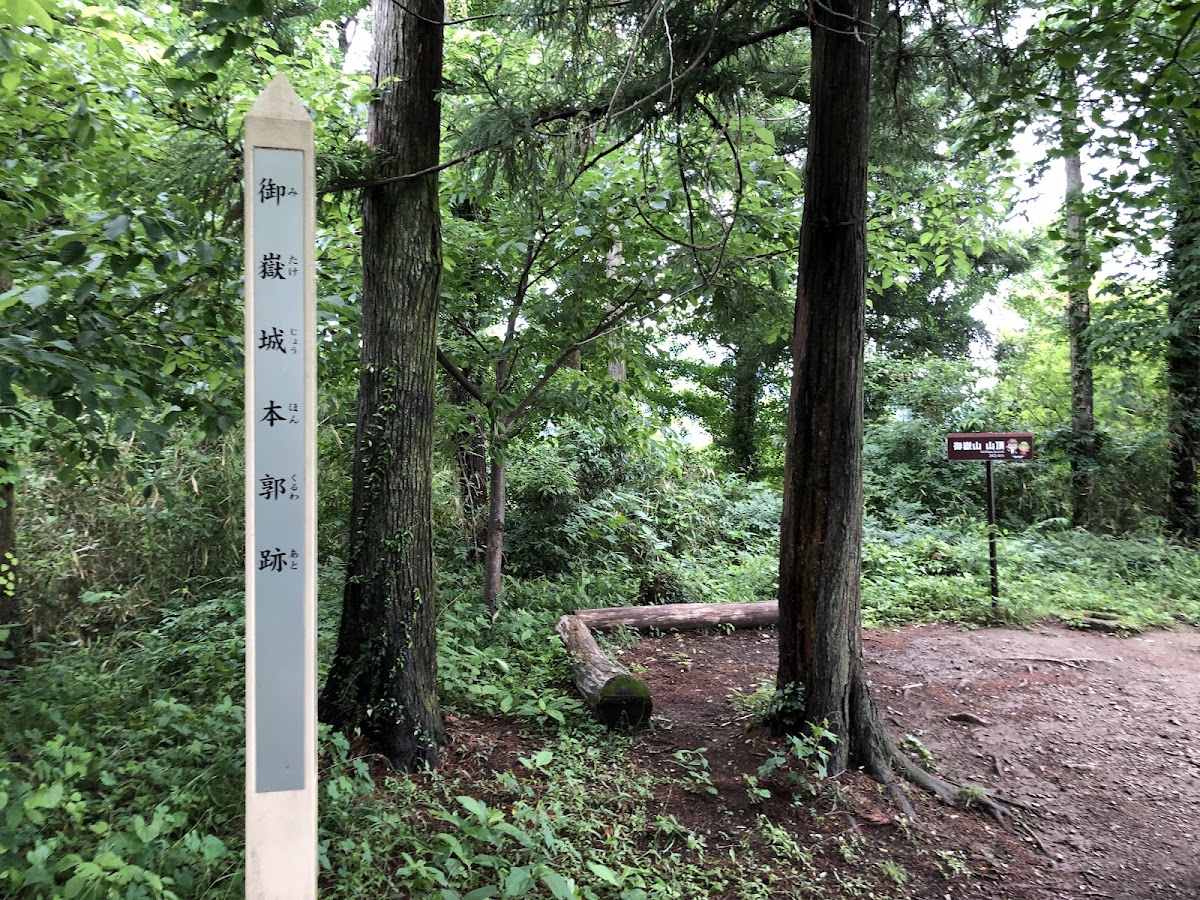
Characteristics of the Main Enclosure (Honmaru)
The main enclosure, the heart of Ontake Castle, is located at the summit of Mount Ontake. The mountaintop is leveled into a nearly square shape, and clear cliffs surround it. While the main enclosure isn’t particularly large, its layout makes maximum use of the mountaintop terrain.
From the main enclosure, there are panoramic views in all directions, especially to the east, offering a sweeping view of the Kanto Plain. This excellent visibility was crucial for early detection of enemy movements.
Layout of Enclosures
Ontake Castle’s layout consists of enclosures extending along the ridges to the east, west, north, and south, centered around the main enclosure. Enclosures are arranged in a stepped fashion along each ridge, forming a multi-layered defensive structure.
The eastern group of enclosures is particularly large, and a viewing platform has now been installed in the eastern enclosure. From this platform, one can see the Kanna River basin and the direction of Kōzuke Province, gaining a real appreciation for its strategic importance at the time.
Belt enclosures are positioned on the slopes from north to west, functioning as a defensive line protecting the main enclosure.
Moats and Cut Ridges
A notable feature of Ontake Castle’s defensive structures is the presence of moats that cut off each ridge. Deep moats were strategically placed at key points on the ridges extending from the main enclosure, serving to prevent enemy incursions.
Cut Ridges can also be seen in various places within the castle grounds, forming steep slopes created by carving into the natural terrain. Some of these cut ridges reach several meters in height, demonstrating the advanced civil engineering techniques of the Sengoku period.
Access Route and Entrance
The main access route to the castle was a mountain path leading from the back of the grounds of Kanasana Shrine. This path is still maintained as a walking trail today, and along the way there is a large rock called Ontake’s Mirror Rock.
While the clear remains of the entrance (koguchi) are difficult to discern, traces of earthworks remain at the entrances to the enclosures, suggesting the possibility of defensive structures such as masugata (square enclosures) and staggered entrances existing in the past.
Highlights of Ontake Castle
Well-Preserved Remains
The greatest appeal of Ontake Castle is the well-preserved structure of this Sengoku period mountain castle. Numerous remains remain, allowing us to imagine the castle’s appearance at the time of its construction, including the steep cliffs around the main enclosure, the trenches on each ridge, and the terraced arrangement of the enclosures.
The trench on the northwest ridge, in particular, is deep, offering a glimpse into the defensive techniques of the mountain castle. The steep cliffs of each enclosure also clearly show elevation differences, making them popular spots for photography.
Ontake’s Mirror Rock
Located along the path to the castle, Ontake’s Mirror Rock is a massive single rock that has been an object of worship since ancient times. It is said to have been named for its smooth, mirror-like surface.
Near this Mirror Rock are the ruins of Horakuji Temple, which once flourished as a place of mountain worship. It is a valuable site for understanding the medieval use of mountains where castles and religious practices coexisted.
Observation Deck in the East Enclosure
From the observation deck located in the East Enclosure, you can enjoy a panoramic view of the vast Kanto Plain. On a clear day, you can see the distant Chichibu Mountains, the Kanna River flowing below, and even as far as Ueno Province (Gunma Prefecture).
This excellent view speaks to the castle’s function as a base for surveillance and defense. During the Sengoku period, the castle lords likely monitored enemy movements from this location.
Relationship with Kanasana Shrine
Kanasana Shrine, the entrance to Mitake Castle, is a historic shrine that has long been revered as the second-ranked shrine of Musashi Province. It has a unique form, lacking a main hall and considering Mount Mitake itself as its sacred object.
The shrine grounds have a parking lot, making it an ideal base for exploring the castle ruins. Combining a visit to the shrine with a stroll through the castle ruins will allow for a more fulfilling historical exploration.
Access Information
Access by Car
Approximately 15 minutes from the Honjo-Kodama Interchange on the Kan-Etsu Expressway to reach Kanasana Shrine. The shrine has a free parking lot with space for about 20 cars.
When using a car navigation system, searching for “Kanasana Shrine” is recommended. The address is “750 Ninomiya, Kamikawa-machi, Kodama-gun, Saitama Prefecture.”
Access by Public Transportation
From JR Takasaki Line’s Honjo Station or Jinbohara Station, take the Asahi Bus bound for “Kamikawa Town Hall,” get off at the “Ninomiya” bus stop, and walk approximately 10 minutes to reach Kanasana Shrine. However, bus services are limited, so it is necessary to check the timetable in advance.
Ascent Route
A hiking trail is maintained from the back of the Kanasana Shrine grounds. It is a hiking course of approximately 30-40 minutes to the main enclosure, and the path is relatively gentle.
The trail passes by Ontake’s Kagami-iwa (Mirror Rock) and the ruins of Horaku-ji Temple before reaching the summit. While the path is well-maintained, it’s recommended to wear appropriate clothing and footwear for mountain castle hiking. Particular caution is needed after rain, as the path can become slippery.
Points to Note and Recommended Seasons
Clothing and Equipment
Ontake Castle is a full-fledged mountain castle, so trekking shoes or hiking shoes are essential. While sneakers are possible, choose shoes with non-slip soles.
In summer, be sure to bring insect repellent and drinking water. In winter, the sun sets early, so visiting from morning to early afternoon is recommended.
Recommended Seasons
Spring (April-May) and autumn (October-November) are the best seasons to visit. The weather is mild, and you can enjoy the fresh greenery and autumn foliage. Autumn, in particular, offers clear air and spectacular views from the observation deck.
In summer, due to the heat and numerous insects, early morning visits are recommended. While there is little snowfall in winter, strong northerly winds can lower the perceived temperature, so warm clothing is necessary.
Estimated Time Required
It’s advisable to allow 2-3 hours for the visit to Kanasana Shrine, the castle ruins exploration, and the descent. If you wish to carefully observe the remains, it is recommended to allow 3-4 hours.
Related Historical Sites in the Surrounding Area
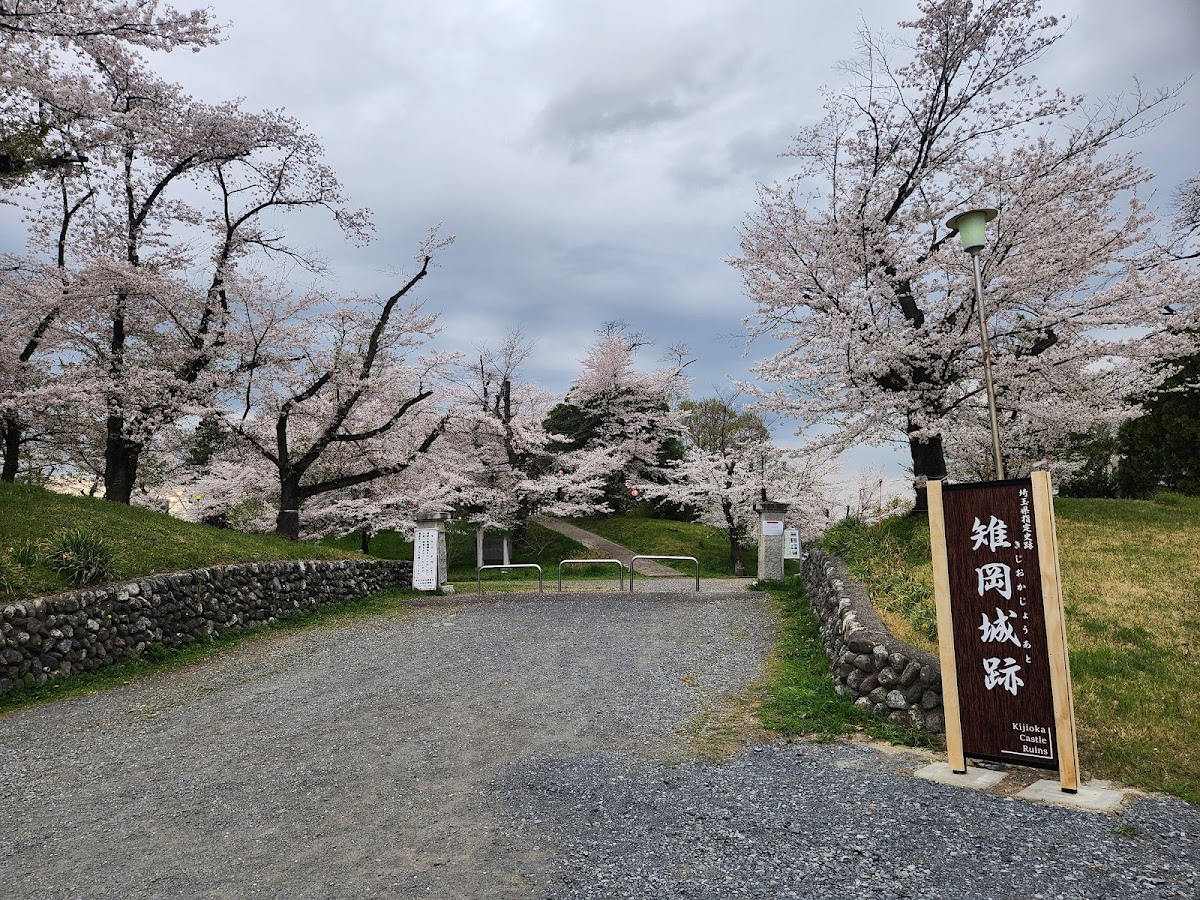
Kijioka Castle
Located approximately 5km southeast of Ontake Castle, Kijioka Castle is also known as the residence of the Anbo clan. It formed a defensive network in this region through cooperation with Ontake Castle.
Hirai Kanayama Castle
On the opposite bank of the Kanna River, on the Kozuke Province side, Hirai Kanayama Castle lies. It functioned as an auxiliary castle for Hirai Castle, the base of the Yamanouchi Uesugi clan, and was in a confrontational relationship with Ontake Castle. Visiting both castles will provide a deeper understanding of the history of battles in the border region.
Hachigata Castle
Approximately 20km to the northeast lies Hachigata Castle, an important stronghold of the Hojo clan. It is a nationally designated historical site, and during the time when Mitake Castle was under Hojo control, a coordinated system was established between Hachigata Castle and Mitake Castle.
Historical Significance of Mitake Castle
Role as a Border Point
Mitake Castle is located on the border between Musashi Province and Kozuke Province, and was a strategic stronghold that monitored and controlled the transportation routes connecting the two provinces. The Kannagawa River basin has long been a vital transportation hub, and controlling this area meant military superiority in northern Kanto.
Balance of Power Between Sengoku Daimyo
The history of the changing rulers between the two major powers, the Hojo and Takeda clans, is a good example of the balance of power and changes in diplomatic relations during the Sengoku period. The political developments surrounding the formation, collapse, and subsequent renegotiation of the Kō-Sō Alliance are particularly interesting, as they directly influenced the affiliation of this small mountain castle.
Trends of Local Powerful Clans
The change of castle lords from the Anbo clan to the Hirasawa clan illustrates the survival strategies of local powerful clans during the Sengoku period. The history of Mitake Castle reveals the efforts of local lords who sought to maintain regional control while remaining subordinate to larger powers.
Evaluation in Castle Research
Mitake Castle is highly regarded academically as a mountain castle within Saitama Prefecture. Its location at an elevation of 200m, the clear preservation of its remains, and the clear correspondence with historical documents make it an excellent subject for research.
In particular, its layout, with baileys spread across the ridges on all four sides, is a typical example of a Sengoku period mountain castle that made maximum use of mountainous terrain, and has attracted attention from castle researchers.
Summary
Mitake Castle (Kanasana Mitake Castle) in Kamikawa Town, Saitama Prefecture, is a valuable historical site where you can fully experience the history of the Sengoku period and the charm of a mountain castle. It boasts a turbulent history with changing rulers from the Anbo, Hojo, and Takeda clans, well-preserved remains such as cliffs and moats, and easy access from Kanasana Shrine—all elements that castle enthusiasts shouldn’t miss.
The view of the Kanto Plain from the 343m-high summit offers a precious opportunity to relive the scenery seen by the castle’s lords of the time. Please visit Mitake Castle for a fulfilling experience combining moderate hiking and historical exploration.
Mitake Castle offers three delights: the history of battles in the border region during the Sengoku period, the structural beauty of a mountain castle, and the enjoyment of historical walks in nature. As a hidden gem of Saitama Prefecture, it’s a historical site that we hope many people will visit.