Ryogaya Castle (Saitama City, Saitama Prefecture) Complete Guide: The History of Sasaki Moritsuna and the Castle Ruins from the Late Heian Period
What is Ryogaya Castle?
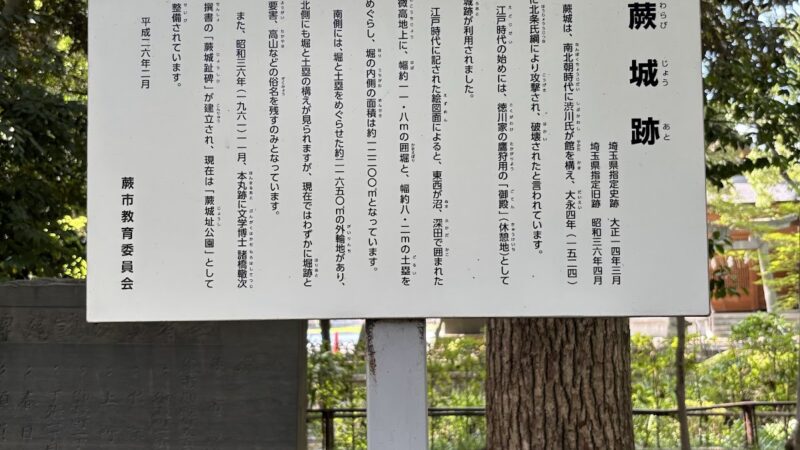
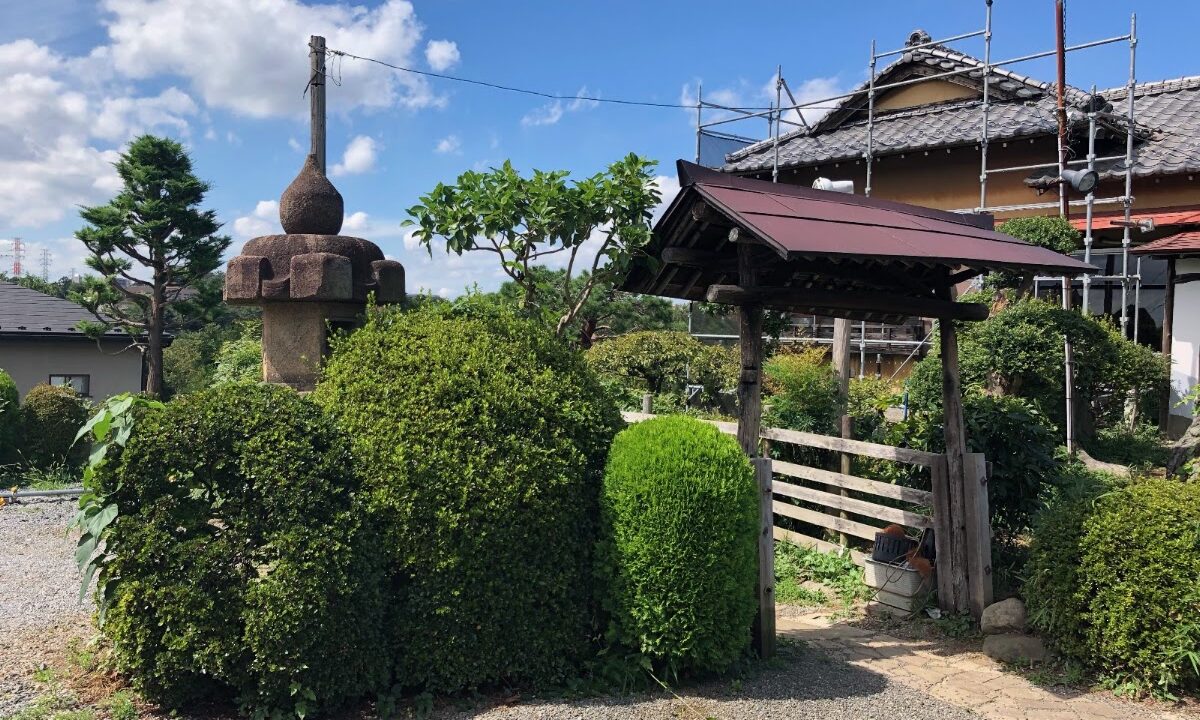
Ryogaya Castle was a Japanese castle located in Otakubo, Minami Ward, Saitama City, Saitama Prefecture. Situated in the central part of the former Urawa City, it functioned as a strategic point in Musashi Province from the late Heian period to the Sengoku period. While most of the remains have now disappeared, the castle site is now occupied by the eel restaurant “Korakuen,” whose sign clearly reads “Ryogaya Castle Ruins.”
Classified as a flatland castle, Ryogaya Castle possessed a unique topographical feature, utilizing the surrounding lakes and marshes as natural moats, and played a crucial role as a defensive stronghold in Musashi Province during that era.
History of Ryōgatani Castle
Late Heian Period: Construction by Sasaki Moritsuna
The construction of Ryōgatani Castle dates back to 1180 (Jishō 4), at the end of the Heian period. This year marked a historical turning point when Minamoto no Yoritomo raised an army to overthrow the Taira clan, and it is said to have been built by Sasaki Saburō Moritsuna (also written as Moritsuna).
Sasaki Moritsuna was a member of the Sasaki clan of Ōmi Province and a warrior who played an important role in Minamoto no Yoritomo’s uprising. In Yoritomo’s conquest of the Kanto region, building castles at key locations in Musashi Province was strategically crucial. Ryōgatani Castle is thought to have been built as part of this effort, with the purpose of controlling a strategic point along the Kamakura Road.
Muromachi Period: Residence of Sasaki Mochikiyo
In the Muromachi period, Ryōgatani Castle became the residence of Sasaki Mochikiyo. The Sasaki clan was a prominent family based in Omi Province, but the existence of this castle confirms that they had also extended their influence into Musashi Province.
During the Muromachi period, Musashi Province was the stage for the conflict between the Kanto Kanrei Uesugi clan and the Koga Kubo Ashikaga clan, as well as the complex power struggles among local lords. It is presumed that Ryogaya Castle also changed its role in response to these political changes.
Sengoku Period: From the Iwatsuki Ota Clan to the Hojo Clan
During the Sengoku period, Ryogaya Castle functioned as a fort for the Iwatsuki Ota clan. The Ota clan, based at Iwatsuki Castle, held significant power in northern Musashi Province, and Ryogaya Castle is thought to have been one of their branch castles.
However, the situation changed dramatically when the Odawara Hojo clan’s influence extended to Musashi Province. Chiba Kunitane, a vassal of the Hojo clan, came to control Otakubo, and Ryogaya Castle also fell under his control. The fact that the residence of the Kiuchi clan, a senior retainer of the Chiba clan, remained in Otakubo confirms that this region was within the Chiba clan’s sphere of influence.
While there are no clear records indicating that Chiba Kunitane directly used Ryogaya Castle as his residence, it is undeniable that this castle played a certain role within the Hojo clan’s control of the Kanto region.
Abandonment of the Castle: After Toyotomi Hideyoshi’s Siege of Odawara
It is believed that Ryogaya Castle was abandoned after Toyotomi Hideyoshi’s Siege of Odawara in 1590 (Tensho 18), which led to the downfall of the Hojo clan. After Tokugawa Ieyasu’s entry into the Kanto region, the layout of castles in Musashi Province was significantly reorganized, and many small and medium-sized castles ceased to exist. Ryogaya Castle was one of them, disappearing from the stage of history.
Structure and Geographical Characteristics of Ryogaya Castle
Characteristics as a Flatland Castle
Although Ryogaya Castle is classified as a flatland castle, it was not built on completely flat land. From the current seating area of Kōrakuen restaurant, one can look down on Kamiya Marsh (now a retention pond), suggesting that this location was once on a slightly elevated area.
Defense System Utilizing Lakes and Marshes
The most significant defensive feature of Ryōgaya Castle was its use of the surrounding lakes and marshes as a natural moat. The area around present-day Minami Ward in Saitama City was once a vast lake and marshland, making the castle a strategically important location surrounded by water.
It is believed that multiple marshes, including Kamiya Marsh, formed the castle’s defensive line, making enemy intrusion difficult. This topographical advantage is likely one of the reasons why the castle was maintained in this location from the late Heian period through the Sengoku period.
Relationship with the Kamakura Road
Ryōgaya Castle is presumed to have been located near the Kamakura Road. The Kamakura Road was an important main road connecting Kamakura with Musashi and Kōzuke Provinces, and was an extremely important route both militarily and economically. Positioning a castle to monitor roads and control traffic as needed was a fundamental strategy in medieval castle design.
Current Status of Ryōgaya Castle Site
Status of Remains
Unfortunately, the remains of Ryōgaya Castle have almost completely disappeared. Castle remains such as earthworks, moats, and baileys cannot be confirmed, and due to urbanization, it is difficult to imagine its former appearance.
However, the surrounding topography and the existence of Kamiya Marsh (a retention pond) allow us to imagine the former lake area and how the castle utilized the terrain.
Current Status of Kōrakuen and the Castle Site
Currently, the eel restaurant “Kōrakuen” operates on the site of Ryōgaya Castle. The restaurant’s sign clearly states “Ryōgaya Castle Site,” indicating that this is a historical castle site. Kōrakuen’s website also provides information about the former Ryōgaya Castle site, allowing visitors to reflect on the castle’s history while enjoying a meal.
Current Status of Kōrakuen and the Castle Site
Currently, the eel restaurant “Kōrakuen” operates on the site of Ryōgaya Castle. The restaurant’s sign clearly states “Ryōgaya Castle Site,” indicating that this is a historical castle site. Kōrakuen’s website also provides information about the former Ryōgaya Castle site, allowing visitors to contemplate the castle’s history while enjoying a meal. From the tatami room inside the restaurant, you can overlook the Kamiyanuma area, offering a rare opportunity to appreciate the geographical advantages of the location in the past.
Access and Visiting Guide
Access by Public Transportation
Nearest Station: JR Keihin-Tohoku Line/Musashino Line, Minami-Urawa Station
It’s about a 20-minute walk from the west exit of Minami-Urawa Station. The route from the station is relatively flat, passing through a residential area to reach the castle ruins.
Walking Route:
- Exit the west exit of Minami-Urawa Station
- Head west, passing through the residential area
- Head towards the Otakubo area
- Look for the Korakuen sign to arrive.
Access by Car
Korakuen has a parking lot, but it’s recommended to check in advance before visiting. It’s accessible from the Metropolitan Expressway and National Route 17, and is relatively close to the center of Saitama City.
Points to Note When Visiting
Since the Ryogaya Castle Ruins are currently on private property (the grounds of Korakuen restaurant), please note the following points when visiting:
- Visit during restaurant business hours
- You may take photos of the exterior, but please avoid entering the premises without permission
- If you are dining at the restaurant, you can ask the staff about the history of the castle ruins
- You may take photos of the sign, but please be considerate of other customers
Estimated Visiting Time
Since no remains are left, 10 minutes is sufficient if you only want to check the exterior and take photos of the sign. If you plan to dine at Korakuen and view the former topography, it is recommended to allow about an hour.
Nearby Castles and Historical Spots
Iwatsuki Castle (Iwatsuki Ward, Saitama City)
Iwatsuki Castle, which has close ties to Ryogaya Castle, is famous as the base of the Ota clan. It is currently maintained as Iwatsuki Castle Ruins Park, and remains such as earthworks and moats are well preserved. Visiting Ryōgaya Castle in conjunction with this tour will help you understand the castle network in Musashi Province during the Sengoku period.
Urawa Castle (Urawa Ward, Saitama City)
Also located in Saitama City, Urawa Castle is an interesting historical site as a medieval Musashi Province castle. Similar to Ryōgaya Castle, few remains exist due to urbanization, but it is an important place for understanding the region’s history.
Castles in the Kōnosu City Area
To the north, there are scattered medieval Musashi Province castles such as Minoda Castle and Kawadadani Castle. A wide-area castle tour including these castles is an attractive route for history enthusiasts.
Historical Significance of Ryōgaya Castle
Minamoto no Yoritomo’s Uprising and the Kantō Samurai Clan
The most important historical significance of Ryōgaya Castle is its direct connection to the turning point in Japanese history: Minamoto no Yoritomo’s uprising. Its construction by Sasaki Moritsuna symbolizes the movements of the Kantō samurai clan during the transition from the Taira clan’s regime to the samurai regime.
Its Place in the History of Castles in Musashi Province
Ryōgatani Castle, which existed for approximately 400 years from the late Heian period to the Sengoku period, is a prime example of the evolution of castles in Musashi Province. The process of transforming from a samurai residence in the late Heian period to a military base in the Sengoku period can be considered a microcosm of the entire history of Japanese castles.
Center of Regional Control
As the residence and castle of the feudal lord in the Ōtakubo region, Ryōgatani Castle was the center of regional control. The fact that this area maintained a certain level of importance despite changes in rulers—from the Sasaki clan to the Ōta clan and then the Chiba clan—demonstrates its high geographical and economic value.
Materials and Research on Ryōgatani Castle
Historical Documents
Detailed historical documents concerning Ryōgatani Castle are limited, but fragmentary information can be obtained from the following sources:
- *Azuma Kagami*: The actions of the Sasaki clan during Minamoto no Yoritomo’s uprising
- *Odawara Shūsho Ryōyakuchō*: The territories of the Chiba clan during the Hōjō era
- Ancient documents remaining in local temples and shrines
Archaeological Investigations
To date, no full-scale excavations have been conducted, so many aspects of the castle’s detailed structure and scale remain unknown. There is a possibility of new discoveries in future investigations accompanying surrounding development.
Place Name Research
The place name “Ryōgatani” itself tells the history of this region. “Ryō” means the lord’s territory, and “tani” indicates a topographical feature. Place name research can also provide insights into land control in the medieval period.
Significance of Visiting Ryogaya Castle
Urbanization and Historical Preservation
Ryogaya Castle is a classic example of a castle whose remains have been lost due to urbanization. However, that is precisely why it is worth visiting. You can cultivate the ability to read history from a single sign or the subtle undulations of the terrain.
Understanding Local History
While Saitama City in present-day Saitama Prefecture is strongly associated with a modern-day development, it is actually a region with a rich history dating back to the Heian period. Visiting Ryogaya Castle provides an opportunity to learn about the region’s deep historical layers.
Castle Tours that Engage Your Imagination
Unlike visiting castles with surviving remains, Ryogaya Castle requires the use of imagination. Imagining its former appearance based on the surrounding terrain, water systems, and road locations is excellent training for deepening your understanding of history.
Summary
Ryogaya Castle was a castle located in Otakubo, Minami Ward, Saitama City, Saitama Prefecture, dating from the late Heian period to the Sengoku period. Built in 1180 by Sasaki Moritsuna, the castle came under the control of Sasaki Mochikiyo during the Muromachi period, then the Iwatsuki Ota clan during the Sengoku period, and finally under the rule of Chiba Kunitane, a vassal of the Hojo clan. It was abandoned in 1590 with the fall of the Hojo clan.
Although no remains of the castle exist today, the site is preserved as part of the grounds of the eel restaurant “Korakuen,” and signs indicate its historical significance. Easily accessible, about a 20-minute walk from Minami-Urawa Station, the castle’s former defensive system, utilizing the surrounding lakes and marshes, can be imagined from the topography.
As a castle from the time of Minamoto no Yoritomo’s uprising in Musashi Province, and as a base for regional control from the late Heian period to the Sengoku period, Ryogaya Castle holds an important place in the history of castles in Saitama Prefecture. Why not visit the traces of history that remain, even amidst the ruins lost due to urbanization?