Complete Guide to Kisai Castle (Saitama Prefecture): A Thorough Explanation of History, Highlights, and Access
Kisai Castle (Kisai-jo) was a Japanese castle that once existed in the Kisai area of Kazo City, Saitama Prefecture. As an important base in the Kanto region during the Sengoku period, it was the stage for battles between famous generals such as Ashikaga Shigeuji and Uesugi Kenshin. Currently, the remains of the earthworks remain and are preserved as a Kazo City designated historical site. A replica keep has also been constructed and is open to the public as a local history exhibition room. This article provides a detailed explanation of Kisai Castle’s history, structure, highlights, and access methods.
Basic Information on Kisai Castle
Kisai Castle is a flatland castle located at 633-2 Negoya, Kazo City, Saitama Prefecture. It is also known by other names such as “Kisai Castle,” “Negoya Castle,” and “Yamane Castle.”
Location and Management Information
- Location: 633-2 Negoya, Kazo City, Saitama Prefecture
- Castle Structure: Flatland Castle (Numa Castle)
- Construction Period: Details unknown (existed in the mid-15th century)
- Year of Abandonment: Kan’ei 9 (1632)
- Designated Cultural Property: Kisai Castle Earthwork Ruins (Kazo City Designated Historic Site)
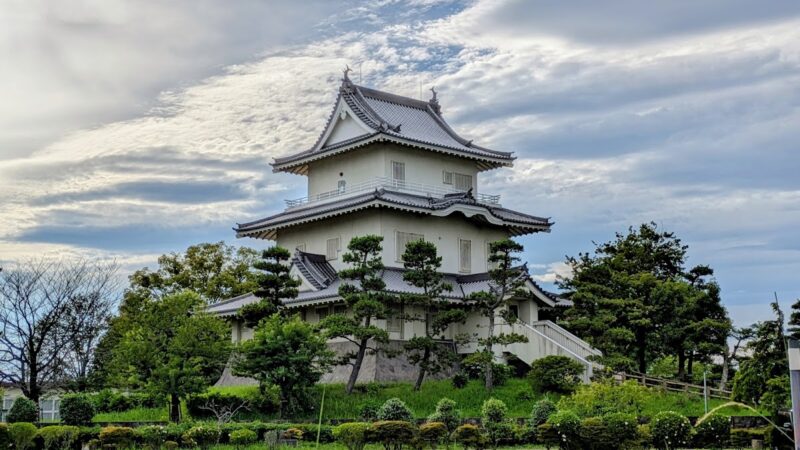
- Current Status: Earthwork Ruins, Mock Castle Tower (Local History Exhibition Room)
- Contact Information: 0480-73-3101 (Kazo City Board of Education)
Opening Hours Information
The following is information regarding the use of the Local History Exhibition Room (inside the mock castle tower).
- Opening Hours: 9:00 AM – 4:30 PM
- Closed Days: Mondays (or the following day if Monday is a public holiday), New Year’s holidays
- Admission Fee: Free
- Parking: 50 spaces (free)
History and Background of Kisai Castle
The history of Kisai Castle strongly reflects the transition period from the medieval to the early modern period in the Kanto region. It was a strategically important location where battles were fought between multiple powerful warlords.
Muromachi Period: First Appearance of Kisai Castle
Kisai Castle first appears in historical records in the first year of Kōshō (1455). In this year, Ashikaga Shigeuji, the Koga Shogun, captured Kisai Castle, which was defended by the Uesugi, Nagao, and Chōbana clans. This military action was part of the Kyōtoku Rebellion (1455-1483) and symbolized the conflict between Ashikaga Shigeuji and the Kanto Kanrei (governor of the Kanto region), the Uesugi clan.
It is clear that Kisai Castle functioned as an important military base in Saitama County, Musashi Province during this period. While there are no clear records regarding the castle’s construction date, it is believed to have existed by the first half of the 15th century.
Sengoku Period: Siege by Uesugi Kenshin
One of the most famous events in the history of Kisai Castle is the siege by Uesugi Kenshin (then known as Uesugi Terutora) in 1563. At this time, Kisai Castle was defended by Oda Sukesaburo, but it fell to Uesugi Kenshin’s fierce attack.
As the Kanto Kanrei (governor of the Kanto region), Uesugi Kenshin repeatedly launched expeditions into the Kanto region to oppose the Hojo clan (the Kanto Campaign), and the capture of Kisai Castle was part of this effort. This siege is recorded as an important battle demonstrating Uesugi Kenshin’s expanding influence in the Kanto region.
Tensho Era: Under the Control of the Hojo Clan
During the Tensho era (1573-1592), Kisai Castle came under the influence of the Later Hojo clan. Local lords, including the Oda clan, maintained the castle under the Hojo’s control. It is believed that Kisai Castle functioned as a northern base for the Hojo clan’s control of the Kanto region during this period.
While Kisai Castle may have been caught in the fighting during Toyotomi Hideyoshi’s siege of Odawara in 1590, detailed records are lacking.
Early Edo Period: Matsudaira Yasushige and the Abandonment of the Castle
In the Edo period, Kisai Castle became the domain of Matsudaira Yasushige, a retainer of Tokugawa Ieyasu. Matsudaira Yasushige was appointed lord of the Kisai Domain (20,000 koku) in 1606 and made Kisai Castle his residence.
However, in 1632, when Matsudaira Yasushige was transferred to Takasaki Domain in Kozuke Province, Kisai Castle was abandoned. From then on, Kisai Castle lost its function as a military facility, and the castle site gradually transformed into farmland and residential areas.
Structure and Layout of Kisai Castle
Kisai Castle was built as a typical flatland castle (swamp castle). Its defensive system, utilizing the surrounding low-lying wetlands, is a distinctive feature.
Characteristics of a Flatland Castle
Kisai Castle was a flatland castle built on flat terrain, utilizing natural rivers and swamps as outer moats. Located in the lowlands of the Kanto Plain, it could not rely on the elevation differences of a mountain castle for defense. Instead, its defensive capabilities were enhanced by the skillful placement of water moats and earthen ramparts.
It is also called a “swamp castle” because the surrounding swamps and wetlands functioned as a natural defensive wall. For attackers, approaching the castle by crossing these wetlands was extremely difficult.
Arrangement of Earthworks and Moats
The remaining earthworks of Kisai Castle still convey a part of the castle’s former defensive system. Earthworks are defensive walls built by piling up earth, and fences or walls were placed on top of them to prevent enemy intrusion.
It is believed that the earthworks of Kisai Castle were arranged to surround the main baileys (kuruwa: sections within the castle), such as the main bailey and the second bailey. Furthermore, moats were dug outside the earthworks, forming a double line of defense.
Structure of the Baileys
While the detailed layout (castle design) of Kisai Castle has not been fully determined, it is known that it consisted of multiple baileys. The second and third baileys were arranged around the central main bailey, each separated by earthworks and moats.
It is presumed that the lord’s residence and important buildings were located in the central part of the castle, while the outer baileys housed the residences of retainers, barracks, and warehouses.
Kisai Castle Earthwork Remains: Existing Structures
Currently, the most important remaining structure of Kisai Castle is the “Kisai Castle Earthwork Remains.” This is protected as a Kazo City designated historical site.
Current Status of the Earthwork Remains
The Kisai Castle Earthwork Remains are located in the southwestern part of the castle and remain in good condition. The earthwork, approximately 3-4 meters high and 50 meters long, provides valuable clues to understanding the scale and structure of the former castle.
Observing the cross-section of the earthwork reveals traces of rammed earth construction (a method of compacting soil in layers), demonstrating the advanced civil engineering technology of the time.
Preservation and Maintenance
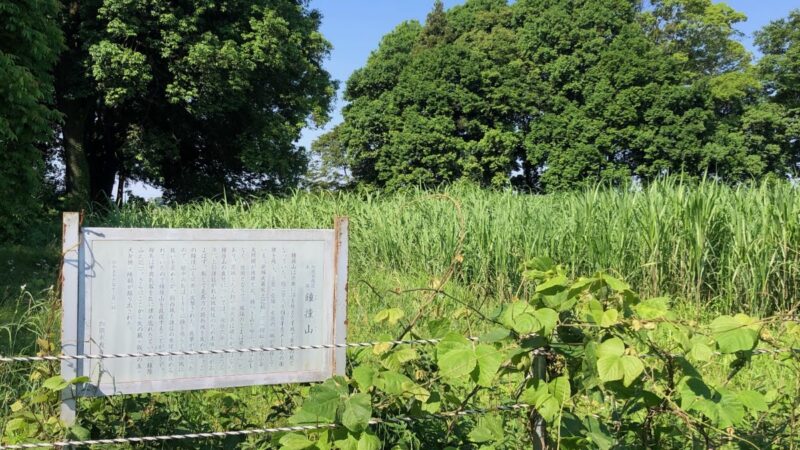
Kazo City is focusing on the preservation and maintenance of the Kisai Castle Earthwork Remains. The area around the earthwork has been developed as a park, and explanatory signs have been installed, allowing visitors to view the earthwork while understanding its historical significance.
Regular grass cutting and reinforcement work on the earthworks are carried out, and efforts continue to preserve this valuable cultural asset for future generations.
Replica Castle Tower and Local History Exhibition Room
One of the biggest attractions of Kisai Castle is the replica castle tower built on the castle site.
Construction History of the Replica Castle Tower
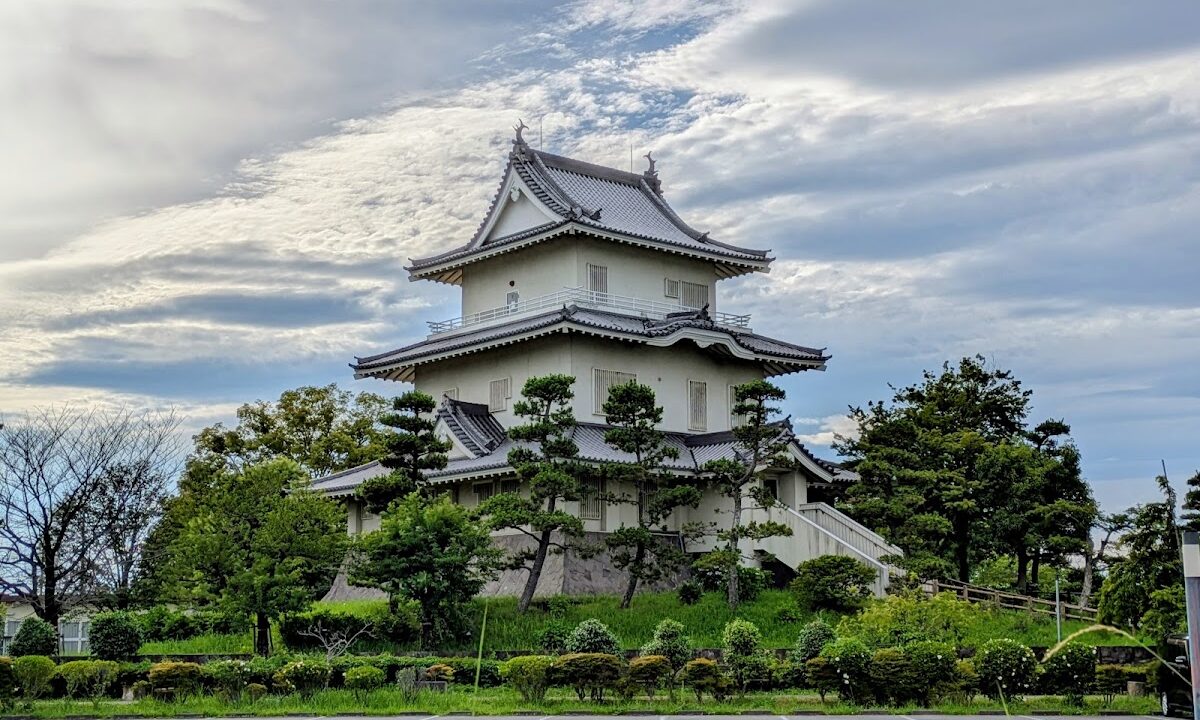
The replica castle tower currently standing on the castle site was constructed in the 1970s as part of regional development and local history education. Since the actual Kisai Castle did not have a castle tower, this is not a historical reconstruction, but rather a “replica” castle tower.
The exterior is a three-story castle tower-style building, characterized by its white walls and black tiled roof. It stands out as a landmark visible from afar and is a symbolic presence in the Kisai area.
Exhibits in the Local History Exhibition Room
The interior of the replica castle tower operates as a local history exhibition room and can be visited free of charge. The exhibits are as follows:
Materials Related to Kisai Castle
- Panel displays explaining the history of Kisai Castle
- Artifacts such as ceramics and roof tiles unearthed during archaeological excavations
- Reconstruction model and layout map of the castle
- Materials related to successive castle lords
History and Culture of the Kisai Region
- History of the Kisai region from ancient times to the modern era
- Folk materials such as farming tools and daily life implements
- Exhibits on local festivals and traditional events
- Introduction of notable local figures
Special Exhibitions
Regular special exhibitions are held, introducing the culture and history of the Kisai region with different themes each season.
Observation Floor
The top floor of the replica castle tower is an observation floor, offering a panoramic view of the town of Kisai. On clear days, you can even see the Nikko mountain range and Mount Tsukuba in the distance, making it a popular spot for visitors.
Excavated Artifacts and Archaeological Discoveries
Several archaeological excavations have been conducted at the Kisai Castle site, resulting in the discovery of valuable artifacts.
Ceramics
The excavated ceramics include Seto and Mino ware, Tokoname ware, and Chinese celadon and white porcelain. The presence of these high-quality ceramics indicates the high standard of living of the castle lord and high-ranking samurai.
Many artifacts date particularly to the late 16th century, which is thought to correspond to the period of Uesugi Kenshin’s siege and the Hojo clan’s rule.
Tiles
Numerous roof tiles used in castle construction have also been excavated. The eaves tiles, both round and flat, feature various patterns, providing clues to the architectural techniques and aesthetic sensibilities of the time.
Armor and Weapons
Fragments of iron swords, arrowheads, and bullets have also been discovered, providing evidence of actual combat. In particular, the possibility of these artifacts being related to Uesugi Kenshin’s siege in 1563 (Eiroku 6) has been suggested.
Daily Life Items
Artifacts illustrating daily life within the castle have been unearthed, including cooking utensils, tableware, writing implements such as inkstones, and coins. These are important materials for reconstructing the specific lifestyles of the people who lived in the castle.
Connections to Beliefs and Folklore
Kisai Castle and its surrounding area retain beliefs and folk traditions related to the castle.
Shrines Related to the Castle
Several shrines exist around Kisai Castle, said to have been dedicated to the castle’s guardian deities. It is believed that the castle lord and his retainers prayed at these shrines for continued military success.
Local Traditions
Various legends and folktales related to the castle are passed down in the Kisai region. Anecdotes about Uesugi Kenshin’s siege, tales of the castle lord’s bravery, and stories of hidden treasures within the castle have been preserved as part of the local oral culture.
Annual Events
Even today, local events and festivals are sometimes held at the castle ruins in the Kisai area, and it continues to play a central role in the local community.
Access Information
Detailed instructions on how to access the Kisai Castle Ruins are provided below.
Access by Public Transportation
By Train and Bus
If using the Tobu Isesaki Line:
- Get off at Kazo Station on the Tobu Isesaki Line.
- From the North Exit, take the Asahi Bus bound for Konosu Station or the Driver’s License Center (approximately 15 minutes).
- Get off at the “Fukushi Center-mae” bus stop and walk for approximately 1 minute.
If using the JR Takasaki Line:
- Get off at Konosu Station on the JR Takasaki Line.
- From the East Exit, take the Asahi Bus bound for Kazo Station (approximately 30 minutes).
- Get off at the “Fukushi Center-mae” bus stop and walk for approximately 1 minute.
Bus Service Information
Asahi Bus operates on weekdays, weekends, and holidays, but the number of buses is limited, so it is recommended to check the timetable in advance. The latest timetable can be found on the official Asahi Bus website or at the Kazo City tourist information center.
Access by Car
Using the Expressway
From the Tohoku Expressway
- Exit the Tohoku Expressway at “Kazo IC”
- Head east on National Route 125 for approximately 6.5 km (approximately 15 minutes)
- Follow the signs to Kisai Castle Ruins
From the Ken-O Expressway
- Exit the Ken-O Expressway at “Shiraoka-Shobu IC”
- Head north on the prefectural road to National Route 125 (approximately 20 minutes)
- Head west on National Route 125 to Kisai Castle Ruins
Parking Information
- Number of Parking Spaces: 50
- Fee: Free
- Operating Hours: 24 hours (however, the opening hours of the local history exhibition room are limited)
- Large Buses: Parking available (advance notice required)
Traffic Information in the Surrounding Area
The area around Kisai Castle Ruins generally has relatively light traffic, but it can get crowded on holidays and during local events. Especially during cherry blossom season and the autumn sightseeing season, visitor numbers increase, so it’s recommended to allow ample time for your visit.
Highlights and Ways to Enjoy Kisai Castle
Here are some highlights and ways to enjoy your visit to Kisai Castle Ruins.
Visiting the Earthwork Remains
The earthwork remains, a designated historical site of Kazo City, are a must-see. You can learn about the castle defense system of the Sengoku period by reading the explanatory signs. While you cannot walk on the earthworks, observing them from the surrounding area allows you to appreciate the high level of castle construction technology of the time.
Visiting the Mock Castle Tower
In the local history exhibition room, you can learn not only about the history of Kisai Castle, but also about the culture and history of the entire Kisai region. The exhibits are clearly organized and enjoyable for both children and adults. The view from the observation floor on the top floor is also not to be missed.
Strolling through the Castle Ruins Park
The area around the castle ruins has been developed into a park, allowing visitors to enjoy the changing seasons. The cherry blossom season in spring is particularly beautiful, making it a popular spot for locals to relax.
Photo Spots
Taking photos with the replica castle tower as a backdrop is popular. The castle tower against a blue sky is especially picturesque. The landscape of the earthworks also has a historical atmosphere and is favored by castle enthusiasts.
Combining with Nearby Tourist Attractions
A visit to the Kisai Castle Ruins takes about 1-2 hours, so combining it with other nearby tourist attractions is recommended.
Tourist Attractions Around Kisai Castle
Here are some nearby spots you might want to visit when you come to the Kisai Castle Ruins.
Tamashiki Shrine
An ancient shrine located about 1km from Kisai Castle, known for its wisteria. It is especially crowded with tourists during the wisteria blooming season in early May.
Kazo Mirai-kan
A science museum in Kazo City, featuring a planetarium and interactive exhibits. Especially recommended for families with children.
Kisai General Park
A vast park equipped with sports facilities, perfect for picnics and walks.
Kitakawabe Roadside Station
A roadside station where you can purchase fresh local produce and specialty products. The restaurant serves dishes made with local ingredients.
Points to Note When Visiting Kisai Castle
Here are some points to note for a comfortable visit to the Kisai Castle ruins.
Checking Opening Hours
The Local History Exhibition Room (mock castle tower) is closed on Mondays and during the New Year holidays. It is recommended to check the opening hours before visiting.
Clothing and Items to Bring
Since some areas around the earthworks are unpaved, comfortable walking shoes are recommended. In summer, the sun is strong, so a hat and sunscreen are also necessary.
Accessibility Information
There is no elevator inside the mock castle tower; movement is via stairs. There are restrictions for wheelchair users, so it is recommended to inquire in advance.
Regarding Photography
Photography may be restricted in some areas within the local history exhibition hall. Please check with staff before taking photos.
Summary: The Charm of Kisai Castle
Kisai Castle is a valuable historical site remaining in Kazo City, Saitama Prefecture. It was the stage for approximately 180 years of history, from its capture by Ashikaga Shigeuji in 1504, to its siege by Uesugi Kenshin in 1563, and its abandonment by Matsudaira Yasushige in 1632.
Currently, the remains of the earthworks are preserved as a Kazo City designated historical site, and in the local history exhibition hall inside the replica castle tower, you can learn about the history of Kisai Castle and the surrounding region. It’s a tourist spot where you can enjoy a variety of aspects, from the structure of a flatland castle utilizing the low-lying wetlands of the Kanto Plain, to the history of battles during the Sengoku period, and the local culture and folklore.
Access is also good; you can reach it by bus from the Tobu Isesaki Line or JR Takasaki Line, and by car, it’s conveniently located about 15 minutes from the Kazo Interchange on the Tohoku Expressway. With free parking and a free admission to the local history exhibition room, it’s an easily accessible destination.
Kisai Castle is recommended for a wide range of people, from those interested in Saitama Prefecture’s history and castle enthusiasts to those looking for a family outing. Why not visit and experience a part of Kanto’s Sengoku period history?