Yui Castle (Kazo City, Saitama Prefecture) Complete Guide | History, Remains, and Access Information
Yui Castle, located in Kazo City, Saitama Prefecture, is a medieval castle associated with the Inomata clan, one of the seven clans of Musashi Province. It was a historical battleground during the Sengoku period in the Kanto region, where battles against Uesugi Kenshin and the Hojo clan took place. This article comprehensively introduces information you should know before visiting Yui Castle, including its history, structure, currently visible remains, and access information.
Overview and Basic Information of Yui Castle
Yui Castle is a flatland castle located in Yuigashima, Kazo City, Saitama Prefecture. Although the area is now being developed into residential land, some remains such as earthworks remain in good condition, conveying the atmosphere of a medieval castle.
Basic Data
- Location: Yuigashima, Kazo City, Saitama Prefecture
- Alternate Name: Yuigashima Castle
- Castle Structure: Flatland Castle
- Construction Period: Details unknown (Medieval period)
- Builder: Said to be Inomata Noritsuna or his descendants
- Main Lords: Inomata clan, samurai under the Hojo clan
- Remains: Traces of earthworks and moats
- Designated Cultural Property: None
Yui Castle functioned as a branch castle of Kisai Castle and played an important role in the power struggles of the Kanto region during the Sengoku period. Although now a residential area, part of the castle ruins is preserved as a valuable heritage site that conveys the history of the region.
History of Yui Castle
The Inomata Clan and the Establishment of Yui Castle
There are various theories regarding the builder of Yui Castle, but it is generally believed to have been built by Inomata Koheiroku Noritsuna, the head of the Inomata clan, one of the seven samurai clans of Musashi Province, or his descendants.
The seven samurai clans of Musashi are a collective term for samurai groups that were active in Musashi Province (present-day Saitama, Tokyo, and parts of Kanagawa prefectures) from the late Heian period to the Kamakura period. The Inomata clan was a powerful family among them and played an active role in the Genpei War. Inomata Noritsuna served Minamoto no Yoritomo and is known as a warrior who distinguished himself in the defeat of the Taira clan and the Oshu War.
The exact date of Yui Castle’s construction is unclear, but it is believed to have been established during the medieval period when the Inomata clan held power in this region. The castle’s location and structure suggest that it functioned as a base for regional control and a defensive facility.
Battles in the Sengoku Period
Yui Castle first appears on the historical stage during the Sengoku period (Warring States period). Of particular note is the attack by Uesugi Kenshin in 1563.
During this period, the Kanto region was embroiled in fierce power struggles between the Later Hojo clan and the Uesugi clan (Nagao Kagetora, later Uesugi Kenshin, who supported Kanto Kanrei Uesugi Norimasa). Yui Castle, as a subsidiary castle of Kisai Castle, was under the control of the Hojo clan and was attacked along with Kisai Castle during Uesugi Kenshin’s Kanto campaign.
Uesugi Kenshin repeatedly launched campaigns in the Kanto region to weaken the Hojo clan’s power, and the 1563 campaign was part of this effort. While the details of the battles Yui Castle experienced are unclear, it is believed that it was subjected to the ravages of war as the surrounding subsidiary castles were successively captured.
Relationship with Kisai Castle
Yui Castle functioned as a subsidiary castle of Kisai Castle. Kisai Castle was a central castle in Kazo City and an important military base during the Sengoku period (Warring States period). Branch castles are small castles positioned around the main castle to defend it, and it is believed that Yui Castle played a part in Kisai Castle’s defense network.
Kisai Castle and Yui Castle were relatively close to each other, suggesting they cooperated in defending the region. Such a network of branch castles was a common defense system in the Kanto region during the Sengoku period.
After the Edo Period
With the end of the Sengoku period and the beginning of the Edo period, Yui Castle is thought to have lost its military role and been abandoned. Subsequently, the castle site was used for farmland and residential areas, and remains so to this day.
Structure and Layout of Yui Castle
Characteristics as a Flatland Castle
Yui Castle was built as a flatland castle. A flatland castle is a castle built on flat land. Compared to mountain castles, it is inferior in terms of defense, but has advantages in terms of habitability and transportation of supplies. In Saitama Prefecture, located in the Kanto Plain, many castles were built as flatland castles or hilltop castles.
Flatland castles were primarily defended by moats and earthen ramparts. Yui Castle was no exception; it is believed to have been surrounded by moats and had earthen ramparts to enhance its defensive capabilities.
Arrangement of Earthen Ramp and Moat
Even today, a portion of the earthen rampart remains in good condition at the Yui Castle site. Earthen ramparts are defensive structures built by piling up earth to prevent enemy intrusion, and were a basic defensive structure in medieval castles.
The earthen ramparts of Yui Castle, judging from their height and size, are appropriate for a small to medium-sized castle. It is presumed that they once surrounded the castle, but most have been lost due to residential development.
Similarly, it is thought that the moat once surrounded the castle, but now only faint traces can be discerned from the topography. There are no clear records as to whether it was a water moat or a dry moat.
Layout of the Enclosures
Regarding the detailed layout (castle design) of Yui Castle, there are no clear historical records, so much of it relies on speculation. However, based on the existing remains and topography, it is believed to have consisted of a central main enclosure and surrounding secondary enclosures.
The main enclosure was the central area where the lord’s residence and important facilities were located, and was the most heavily fortified. The secondary enclosure functioned as an outer enclosure protecting the main enclosure, and is presumed to have housed soldier garrisons and storage facilities for supplies.
Remains Visible Today
Earthworks
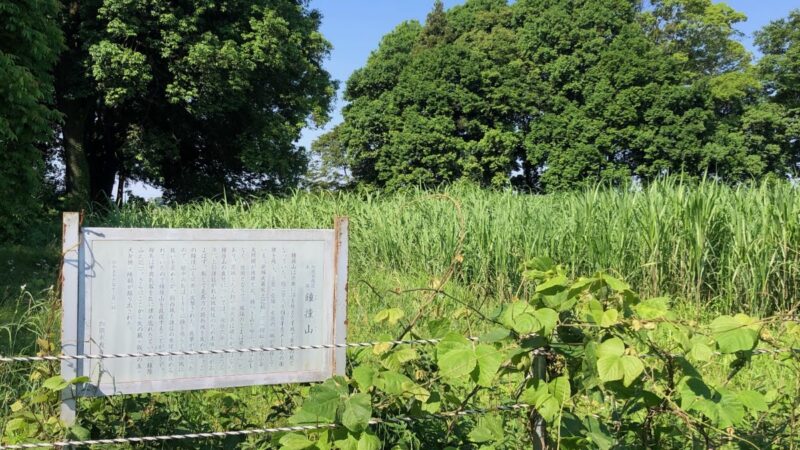
The most noteworthy remains at the Yui Castle site are the earthworks. Even today, some of the earthworks are well-preserved, making them a valuable point of interest for history enthusiasts visiting the castle site.
The earthworks are several meters high and convey the appearance of the defensive facilities of the time. Although some parts are covered with vegetation, the shape of the earthworks is clearly visible, allowing visitors to experience the atmosphere of a medieval castle.
Traces Remaining in the Topography
Due to ongoing residential development, clear remains are limited. However, careful observation reveals topographical undulations and road layouts that suggest the former arrangement of moats and baileys.
The roads around the castle ruins may have followed the layout of the former moats and earthworks. By walking while comparing them with a map, you can imagine the castle’s appearance in its heyday.
Preservation Status of the Castle Ruins
Yui Castle Ruins are not designated as a special cultural property, so large-scale preservation and maintenance work has not been carried out. However, some remains are carefully preserved by local residents, and their historical value is recognized.
Visitors will be walking through a residential area, so consideration for local residents is necessary. Please be careful not to trespass on private property and observe quietly.
Access to Yui Castle
Access by Public Transportation
Yui Castle Ruins are accessible by public transportation, but walking is required from the nearest station.
Nearest Stations: Tobu Isesaki Line “Kazo Station” or “Hanazaki Station”
- From Kazo Station: Approximately 30 minutes on foot (approx. 2.5 km)
- From Hanazaki Station: Approximately 25 minutes on foot (approx. 2 km)
While both stations are within walking distance, the distance is considerable, so it is recommended to allow ample time for your visit. A taxi will get you there in about 10 minutes.
Access by Car
Access by car is also possible.
Nearest Interchange: Tohoku Expressway “Kazo IC”
From Kazo IC, it takes approximately 10 minutes to reach the vicinity of the Yui Castle Ruins. However, there is no dedicated parking lot around the castle ruins, so you will need to use a nearby public facility’s parking lot or find a coin-operated parking lot.
As it is located in a residential area, please avoid street parking and be considerate of the local residents.
Nearby Tourist Attractions
When visiting the Yui Castle Ruins, you can enjoy a more fulfilling historical exploration by also visiting nearby historical sites.
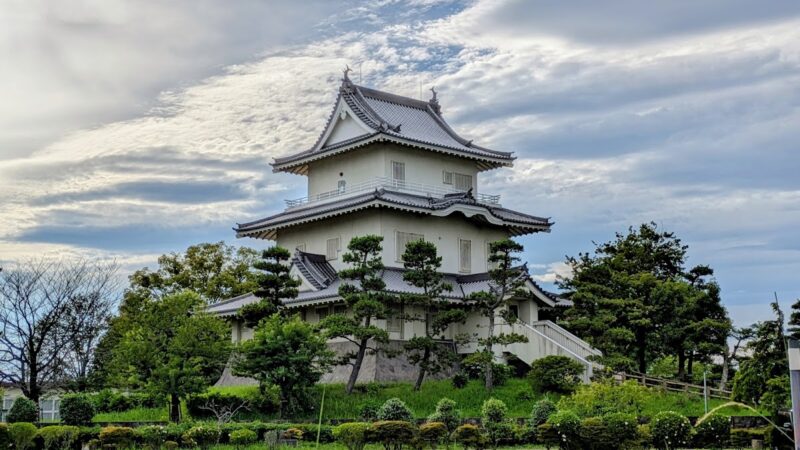
Kisai Castle Ruins: The site of Kisai Castle, the main castle of Yui Castle. Currently, it is maintained as “Kisai Castle Ruins Park,” and a replica castle tower has been erected. A museum where you can learn about the history of Kazo City is also located on the premises.
Kazo City Local History Museum: A facility introducing the history and culture of Kazo City. Materials related to Yui Castle and Kisai Castle are also on display.
Fudogaoka Fudoson Soganji Temple: An ancient temple counted as one of the three great Fudo temples of the Kanto region. Many historical buildings and cultural assets remain.
Highlights and How to Enjoy Yui Castle
Points for a Historical Walk
When visiting the Yui Castle Ruins, paying attention to the following points will allow you to experience history more deeply.
- Observation of Earthworks: Carefully observe the existing earthworks to understand the structure of medieval defensive structures.
- Interpretation of Topography: Imagine the former appearance of the castle based on the surrounding terrain and road layout.
- Understanding the Surrounding Environment: Understand the positional relationship with Kisai Castle and the surrounding geographical features.
Photography Tips
Since the Yui Castle ruins are located within a residential area, consideration for local residents is necessary when taking photographs. Please pay attention to the following points.
- Take care to avoid including private property or houses in your photos.
- Focus your photography on the remains such as earthworks.
- Choose times that won’t disturb residents, such as early morning or evening.
Points to Note When Visiting
- No Trespassing on Private Property: Part of the castle ruins is private property, so do not trespass without permission.
- Consideration for Noise: As it is a residential area, avoid loud conversations and noise.
- Take Your Trash Home: To protect the surrounding environment, be sure to take your trash home with you.
- Season and Weather: The remains are difficult to see in the summer when vegetation is overgrown, so visiting from autumn to spring is recommended.
Yui Castle and the Sengoku Period History of Kanto
Uesugi Kenshin’s Kanto Expedition
Uesugi Kenshin’s Kanto expedition, which gave Yui Castle its place in history, is an important event for understanding the Kanto region during the Sengoku period.
Uesugi Kenshin (then known as Nagao Kagetora) advanced into the Kanto region at the request of Kanto Kanrei Uesugi Norimasa, confronting the Hojo clan. Between 1560 and 1569, Kenshin repeatedly launched expeditions into the Kanto region, threatening the Hojo clan’s sphere of influence.
During his expedition in 1563, he successively captured Hojo castles around Kisai Castle, and Yui Castle also became a target. During this period, Kanto was a fierce battleground where powerful daimyo such as the Uesugi, Hojo, and Takeda clans vied for supremacy, and even small castles like Yui Castle played a strategically important role.
The Hojo Clan’s Rule of Kanto
The Hojo clan (later the Hojo clan) was a Sengoku period daimyo that expanded its power throughout the Kanto region, with Odawara as its base. The Hojo clan skillfully utilized a network of branch castles to efficiently control their vast territory.
Yui Castle also came under the control of the Hojo clan and functioned as a branch castle of Kisai Castle. The Hojo clan efficiently managed their territory by making local lords their vassals and having them defend their castles.
Historical Significance of the Musashi Seven Clans
The Inomata clan, believed to be the builder of Yui Castle, played an important role as one of the Musashi Seven Clans. The other seven clans were the Yokoyama, Noyo, Murayama, Kodama, Tan, and Nishi clans, and these samurai groups played a central role in the development and control of Musashi Province.
The Inomata clan was particularly based in northern Musashi Province (present-day northern Saitama Prefecture), and Yui Castle was located within their sphere of influence. During the Kamakura period, they served Minamoto no Yoritomo and were active as gokenin (vassals), but during the Sengoku period, they became subordinate to various daimyo (feudal lords).
Medieval Castles in Saitama Prefecture and Yui Castle
Characteristics of Castles in Saitama Prefecture
Saitama Prefecture has many remaining medieval castles. Located in the Kanto Plain, it is characterized by a large number of flatland castles and hilltop castles, with relatively few mountain castles.
Representative castles include Oshi Castle (Gyoda City), selected as one of Japan’s 100 Famous Castles, Kawagoe Castle, the only castle in Saitama Prefecture with a surviving main keep, and Kisai Castle.
These castles were the stage for power struggles in the Kanto region during the Sengoku period, and were the battlegrounds for powerful daimyo such as the Uesugi, Hojo, and Takeda clans.
Historical Positioning of Yui Castle
Yui Castle is not a large-scale castle, but it played an important role in regional defense as a subsidiary castle of Kisai Castle. Furthermore, its connection to the Inomata clan, one of the seven clans of Musashi Province, makes it a valuable historical site for understanding the medieval history of Musashi Province.
While the current state of preservation of the remains is limited, the existence of remnants such as earthworks is of great significance in conveying the history of the region.
Things to Know Before Visiting Yui Castle
Recommendations for Pre-Visit Study
Since Yui Castle Ruins are not a large-scale tourist destination, learning about its history and points of interest beforehand will deepen your understanding during your visit.
- Research the Inomata clan and the Musashi Seven Clans
- Learn about Uesugi Kenshin’s Kanto expedition
- Understand the relationship with Kisai Castle
- Grasp the situation in Kanto during the Sengoku period
By visiting with this knowledge, you can glean a great deal of historical information from the limited remains.
Best Season for Visiting
The best season to visit Yui Castle Ruins is from autumn to spring. During this time, the vegetation is less dense, making it easier to observe remnants such as earthworks.
Especially from late autumn to winter, the fallen leaves clearly reveal the topography, making it easier to understand the structure of the former castle. Early spring is also beautiful with its fresh greenery and is suitable for historical walks. During the summer, the vegetation becomes overgrown, making the ruins difficult to see, and there are also many insects, so caution is advised when visiting.
Estimated Time Required
Visiting the Yui Castle ruins itself takes about 30 minutes to an hour. However, if you plan to visit the nearby Kisai Castle ruins or the Kazo City Local History Museum as well, it is recommended to allocate half a day to a full day.
Summary
Yui Castle is a medieval castle remaining in Kazo City, Saitama Prefecture. It has ties to the Inomata clan, one of the seven Musashi clans, and has a history of being attacked by Uesugi Kenshin during the Sengoku period. Although residential development is progressing, the remains such as earthworks are well-preserved, allowing visitors to experience the atmosphere of a medieval castle.
While not a large-scale tourist destination, it is a historical site worth visiting for those interested in the Sengoku period history of the Kanto region or the medieval history of Musashi Province. Visiting it in conjunction with the Kisai Castle ruins and surrounding historical facilities will allow for a more fulfilling historical exploration.
When you visit, please be considerate of the local residents and quietly trace the traces of history. Even within the limited remains, you should be able to feel the spirit of the people who lived during the Sengoku period.