Junō Castle (Saitama Prefecture): A Complete Overview of a Sengoku Period Fortress Built as a Branch Castle of Iwatsuki Castle
Junō Castle, located in Junō-chō, Ōmiya-ku, Saitama City, Saitama Prefecture, was an important branch castle built by the Iwatsuki Ōta clan during the Sengoku period as a defense against the Hōjō clan. Currently, it is maintained as Junō Park and preserved as a Saitama Prefecture designated historical site. This article provides a detailed explanation of Junō Castle’s history, lords, remains, and access methods.
Overview and Basic Information of Junō Castle
Junō Castle was a flatland castle built around 1560 (Eiroku 3) and functioned as a branch castle of Iwatsuki Castle (Iwatsuki Castle). The first lord was Shioda Suketada, the fourth son (or possibly fifth son) of Ōta Sukemasa, and it played an important defensive role against Kawagoe Castle, which was controlled by the Hōjō clan.
Location and Geographical Importance
Junō Castle is located in what is now Junō-chō 2-chome, Ōmiya-ku, Saitama City, approximately 750 meters southeast of Ōmiya-kōen Station on the Tōbu Noda Line. This location, situated between Iwatsuki Castle and Kawagoe Castle, was a strategically important point and was chosen as a frontline defensive base against the sphere of influence of the Hōjō clan.
Built on the edge of the Ōmiya Plateau, Junō Castle was a robust defensive structure that utilized the natural terrain. The surrounding wetlands are thought to have served as a natural moat.
Value as a Saitama Prefecture Designated Historic Site
The Junō Castle ruins were designated a Saitama Prefecture Historic Site on March 21, 1926 (Taisho 15). It is recognized for its academic value as a castle ruin from the Sengoku period and as important historical evidence indicating the sphere of influence of the Iwatsuki-Ōta clan.
History and Background
Background and Purpose of Castle Construction
Around 1560 (Eiroku 3), Ota Sukemasa (Sanrakusai), the lord of Iwatsuki Castle, sought to strengthen his network of branch castles amidst escalating conflict with the Hojo clan. In particular, the construction of Junō Castle was decided upon as a defense against Kawagoe Castle, a key Hojo stronghold.
At that time, the Kanto region was in a complex political situation, caught between the expanding power of the Later Hojo clan and the various forces resisting them. Ota Sukemasa had allied himself with Uesugi Kenshin to oppose the Hojo clan, and the construction of a defense system centered on Iwatsuki Castle was urgently needed. Junō Castle was built as a fortress playing a crucial role in this strategic defense line.
First Lord of the Castle: Ushioda Suketada
Ushioda Suketada, the first lord of the castle, was born as the fourth son (or possibly the fifth son) of Ota Sukemasa and adopted his mother’s surname, “Ushioda.” Suketada was granted land around Omiya and Urawa, and managed his territory from Junō Castle.
The Ushioda clan established control over the surrounding area, centered around Junō Castle. Suketada, a trusted general of his father, Sukemasa, is believed to have contributed to maintaining the power of the Iwatsuki Ōta clan.
The Turmoil of the Sengoku Period and Junō Castle
It is presumed that Junō Castle was caught in several battles between the Eiroku and Tenshō eras. In the struggle for supremacy in the Kanto region involving the Hōjō, Uesugi, and Ōta clans, Junō Castle continued to function as the front line of defense for Iwatsuki Castle.
Ōta Sukemasa was temporarily driven out of Iwatsuki Castle in 1567, but Junō Castle is believed to have remained under the control of the Ōta clan afterward. While detailed records of this period are scarce, the strategic importance of the castle suggests that fierce battles may have taken place.
The Fall of Junō Castle in 1590
In 1590, when Toyotomi Hideyoshi began his siege of Odawara, the fate of Junō Castle changed dramatically. Shioda Suketada and his son, Sukekatsu, sided with the Hōjō clan and holed up in Odawara Castle.
The forces led by Asano Nagamasa, one of Toyotomi’s Five Commissioners, attacked Junō Castle, and the castle fell. It is said that Shioda Suketada and his son, Sukekatsu, who were holed up in Odawara Castle, were killed in battle on April 18th. This fall brought an end to Junō Castle’s approximately 30-year history.
After the siege of Odawara, when Tokugawa Ieyasu entered the Kantō region, Junō Castle was abandoned, ending its military role.
Changes After the Edo Period
After its abandonment, the site of Junō Castle gradually came to be used as farmland and residential area. However, the local community preserved the memory of the castle ruins, and place names such as “Shiroyama” (Castle Mountain) remained even after the Meiji era.
In 1926 (Taisho 15), the historical value of the Junō Castle ruins was officially recognized with the designation of the site as a Saitama Prefecture Historic Site. However, during World War II, anti-aircraft guns were installed on the castle site, and the remains were destroyed. Unfortunately, many valuable remains were lost due to military use during the war.
Castle Structure and Remains
Layout and Defensive Facilities
Junō Castle was built as a flatland castle, characterized by a layout that skillfully utilized the plateau’s topography. It is believed that multiple baileys were arranged around the main enclosure, and that defenses were strengthened by earthworks and dry moats.
Based on archaeological excavations and historical documents, the castle area is estimated to have been approximately 200 meters east-west and 150 meters north-south. It was a relatively large structure for a subsidiary castle, indicating its character as an important military base.
Remaining Structures
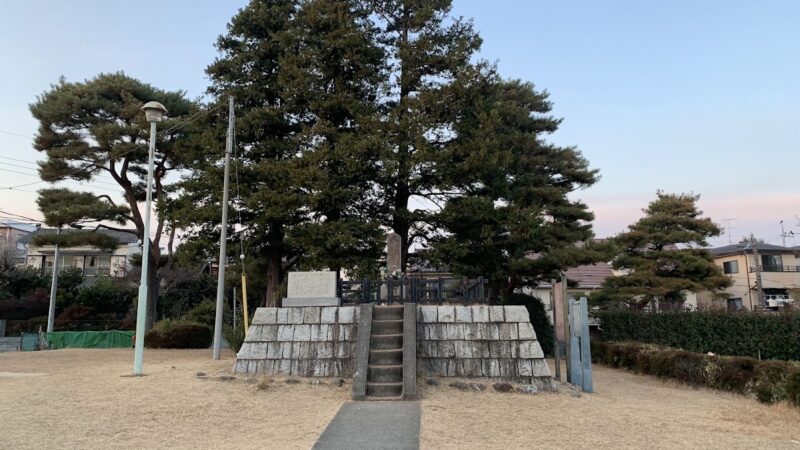
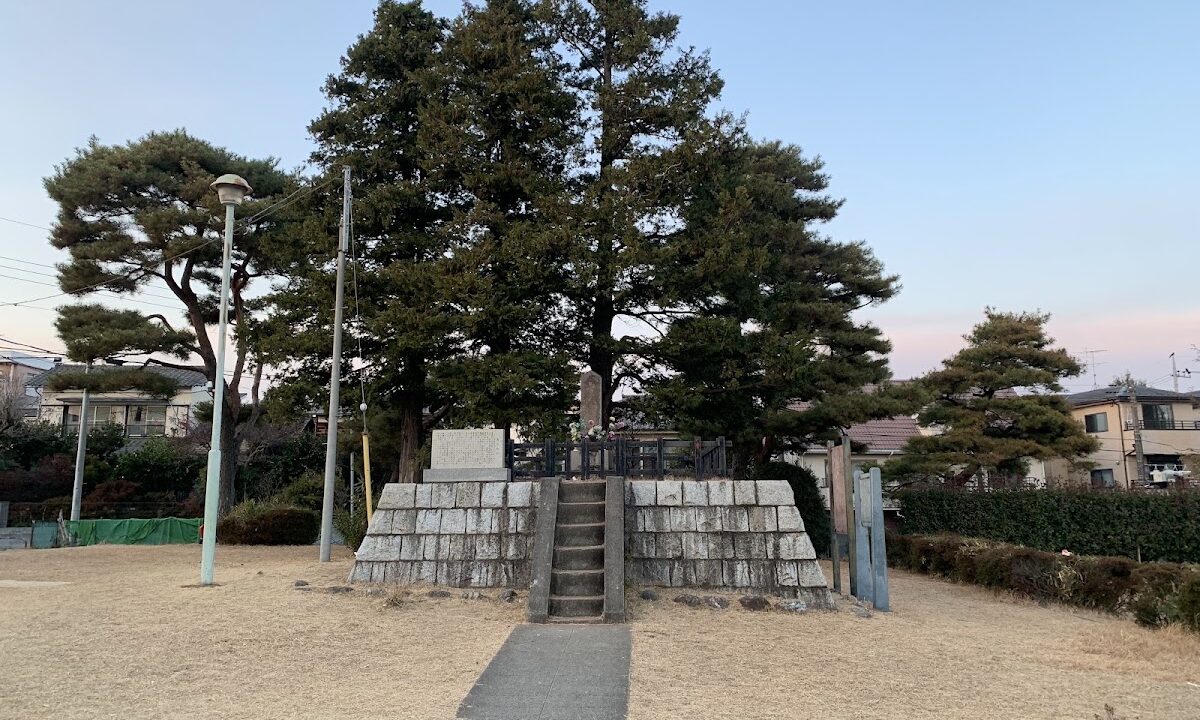
Within the current Junō Park, only a few traces of the earthworks remain. However, due to the installation of anti-aircraft guns during the war and residential development after the war, it is difficult to imagine its former appearance.
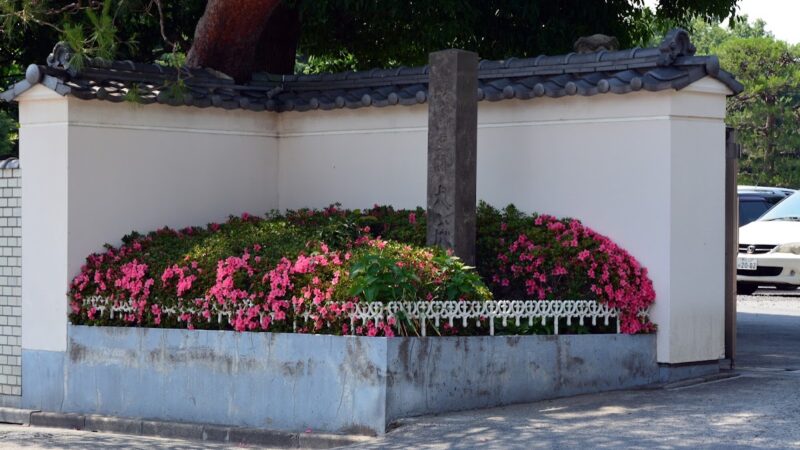
Within the park, there is a stone monument and an explanatory sign marking the castle site, conveying the history of Junō Castle to visitors. The explanatory sign details the castle’s construction date, lord, and the circumstances leading to its abandonment.
Tombstone of Shioda Suketada
Within Junō Park stands the tombstone of Shioda Suketada, the first lord of the castle. This tombstone, erected in memory of Suketada who died in battle at Odawara Castle, is an important historical site that conveys the history of Junō Castle to the present day.
In front of the tombstone, local history enthusiasts and castle fans can be seen reflecting on the life of this Sengoku period warlord.
Nearby Attractions and Related Historical Sites
Omiya Park
Omiya Park, located within walking distance of the Junō Castle ruins, is one of Saitama Prefecture’s leading urban parks. Known for its cherry blossoms, it is bustling with visitors in spring. Within its vast grounds is the Saitama Prefectural Museum of History and Folklore, where you can learn about Saitama’s history.
Hikawa Shrine
Musashi Ichinomiya Hikawa Shrine is an ancient shrine that gave its name to the Omiya area, located approximately 2 kilometers from the Junō Castle ruins. With a history spanning over 2000 years, it is one of the leading shrines in the Kanto region, attracting many worshippers during the New Year’s pilgrimage.
It is said that Ōta Sukemasa also revered Hikawa Shrine during the Sengoku period, making it a place where one can feel its historical connection to Junō Castle.
Iwatsuki Castle Ruins
The Iwatsuki Castle ruins, which were the main castle of Junō Castle, are now maintained as Iwatsuki Castle Ruins Park. Located approximately 8 kilometers from Junō Castle, this site offers views of the remains of a castle that served as a base for Ōta Sukemasa.
Iwatsuki Castle is a larger fortress than Junō Castle, and its earthworks and moats are well-preserved. Visiting both castles together will provide a deeper understanding of the Iwatsuki Ōta clan’s castle network.
Kawagoe Castle Honmaru Palace
Kawagoe Castle, the base of the Hōjō clan that opposed Junō Castle, is a valuable historical site with its surviving Honmaru Palace. Located approximately 15 kilometers from Junō Castle, the Honmaru Palace, built during the Edo period, is designated as a National Important Cultural Property and is one of the few surviving palace buildings in the Kanto region.
Visiting while imagining the confrontation between Kawagoe Castle and Junō Castle during the Sengoku period will make for a more interesting experience.
Access and Visit Information
Access by Train
Nearest Station: Omiya-Koen Station, Tobu Noda Line (Tobu Urban Park Line)
- Transfer to the Tobu Noda Line from JR Omiya Station and get off at Omiya-Koen Station (approx. 3 minutes)
- Approximately 7-10 minutes on foot from Omiya-Koen Station
- Approximately 750 meters southeast from the station exit
Travel Time from Tokyo
- Approximately 30 minutes from JR Shinjuku Station to Omiya Station on the Shonan-Shinjuku Line, then transfer to the Tobu Noda Line at Omiya Station
- One-way fare: Approximately 590 yen
- Total travel time: Approximately 45 minutes
Access by Car
- Approximately 15 minutes from the “Shintoshin-Nishi Exit” of the Shuto Expressway Saitama-Omiya Line
- Approximately 20 minutes from the Tohoku Expressway “Iwatsuki IC”
Parking Information
There is no dedicated parking lot at Junō Park. We recommend using nearby coin-operated parking lots or parking at Ōmiya Park (paid parking) and walking to the park.
Visiting Information
- Admission Fee: Free (Open as a park at all times)
- Visiting Hours: No restrictions (Daytime visits are recommended as it is a park)
- Estimated Time Required: Approximately 15-30 minutes
- Address: 2-167-16 Junō-chō, Ōmiya-ku, Saitama City, Saitama Prefecture
Notes for Visitors
Junō Park is a small park located in a residential area. While there are few remaining structures, explanatory signs and stone monuments confirm that it was once a castle site. Those expecting castle ruins may be disappointed, but it is suitable for a quiet stroll as a historical site.
Photography is permitted, but please be considerate of the surrounding residential area and its residents. Also, since the park is a place of relaxation for local residents, please observe proper etiquette while visiting.
Recommended Courses for Visiting Junō Castle
Half-Day Course: A Historical Walk Through Ōmiya
- Ōmiya-Kōen Station, Tobu Noda Line (Start)
- Experience History at Junō Castle Ruins (Junō Park) (30 minutes)
- Nature Walk at Ōmiya Park (1 hour)
- Learn about Saitama’s History at Saitama Prefectural Museum of History and Folklore (1.5 hours)
- Visit Hikawa Shrine (1 hour)
- JR Ōmiya Station (Goal)
Full-Day Course: A Tour of Castles Associated with the Ōta Clan
- Junō Castle Ruins (Morning)
- Iwatsuki Castle Ruins (Iwatsuki Castle Park) (Early Afternoon)
- Experience Local Culture at the Iwatsuki Doll Museum (Late Afternoon)
If you have a car, you can also visit all three castles: Junō Castle, Iwatsuki Castle, and Kawagoe Castle. This will be a valuable opportunity to experience the power dynamics of the Sengoku period firsthand.
Historical Significance of Junō Castle
Evidence Showing the Scope of the Iwatsuki Ōta Clan’s Power
The existence of Junō Castle is important evidence that the Iwatsuki Ōta clan extended their power to the Ōmiya and Urawa areas. Its function as part of a broader regional control system, rather than simply as a single castle, enhances its historical importance.
Research on Sengoku Period Castle Networks
Junō Castle occupies an important position in castle research as a typical example of a Sengoku daimyo building a network of branch castles centered around their main castle. Its relationship with the main castle, Iwatsuki Castle, and its position relative to the opposing Kawagoe Castle provide clues to understanding military strategies of the Sengoku period.
Value in Local History
Junō Castle is an indispensable part of understanding the history of present-day Ōmiya Ward in Saitama City. As a historical asset that shapes the region’s identity, and as material for local history education, the Junō Castle ruins should be preserved and utilized in the future.
References
The following documents are useful for research on Junō Castle:
- *Saitama Prefecture History*, edited by Saitama Prefecture
- *Shinpen Musashi Fudoki Kō* (New Compilation of the Topography of Musashi Province)
- *Nihon Jōkaku Taikei* (Comprehensive Survey of Japanese Castles), Volume 5 (Shin Jinbutsu Ōraisha)
- *Saitama Castles*, Saitama City Board of Education
- *Ōta Sukemasa and Iwatsuki Castle* (Iwatsuki City History Compilation Office)
- Articles related to Junō Castle in various castle research journals
More detailed materials can be viewed at local libraries and local history museums. The Saitama City Museum, in particular, has a rich collection of exhibits and materials on castles in the city, including Junō Castle.
Summary
Junō Castle was an important branch castle of the Sengoku period located in Ōmiya Ward, Saitama City, Saitama Prefecture. Built around 1560 by Ōta Sukemasa as a subsidiary castle of Iwatsuki Castle, it functioned for approximately 30 years as a defense against the Hōjō clan. The first lord of the castle, Shioda Suketada, was killed in the Siege of Odawara in 1590, and the castle fell and was abandoned.
Currently, it is maintained as Junō Park and preserved as a Saitama Prefecture designated historical site. While few remains of the castle exist, its history can be learned through the explanatory signs and Shioda Suketada’s tombstone.
Its convenient location within walking distance of Ōmiya Park Station makes it ideal for historical walks combined with Ōmiya Park and Hikawa Shrine. As a valuable historical site for understanding the complex political situation in the Kanto region during the Sengoku period and the sphere of influence of the Ōta clan, it is a worthwhile place to visit for castle enthusiasts and history buffs.
This small park, nestled quietly in a residential area, undoubtedly bears the marks of history, where warlords of the Sengoku period once roamed. If you’re interested in the Sengoku history of Saitama Prefecture, be sure to visit it at least once.