Complete Guide to Taiseikan Ruins (Saitama Prefecture): From the Residence of Kaneko Suruga-no-kami to Fumon-in Temple, a Complete Overview of its History and Remains
What are Taiseikan Ruins?: A Muromachi Period Residence Site Remaining in Saitama City, Saitama Prefecture
The Taiseikan Ruins are the remains of a Muromachi period samurai residence located in Taisei-cho, Omiya-ku, Saitama City, Saitama Prefecture. Currently, the site is occupied by Fumon-in Temple, a Soto Zen Buddhist temple, and Taisei Junior High School. It was designated a Saitama City Historic Site and Cultural Property on March 6, 1957.
In medieval Musashi Province, Taiseikan was built as the residence of Kaneko Suruga-no-kami, who ruled this area. Later, it was converted into a Zen hermitage and became the origin of Fumon-in Temple, which continues to this day. As a valuable historical site that conveys the history of the Kaneko clan, which originated from the Murayama clan, one of the seven clans of Musashi Province, it occupies an important position in local historical research.
Basic Information on Taiseikan
Location: 2-402 Taisei-cho, Omiya-ku, Saitama City, Saitama Prefecture (Fumon-in Temple)
Former Province: Musashi Province
Classification/Structure: Residence site, flatland castle
Builder: Kaneko Suruga-no-kami Iemitsu
Construction Period: Muromachi period
Main Lords: Kaneko Suruga-no-kami, Oguri Tadamasa (Edo period)
Designated Cultural Property: Saitama City Designated Historic Site (Designated March 6, 1957)
Remains: Place names (Nishibaba, Kajiya-zutsumi, Ote, etc.), former dry moat remains confirmed
Current Status: Fumon-in Temple (temple), Taisei Junior High School
Access: Bus from JR Omiya Station West Exit, or approximately 20 minutes on foot
History of Taiseikan: Transformation from Kaneko clan residence to Zen hermitage
The Kaneko Clan and the Musashi Seven Clans
To understand the history of Taiseikan, it’s necessary to first know the roots of the Kaneko clan. The Kaneko clan was a branch of the Murayama clan, one of the Musashi Seven Clans. The Musashi Seven Clans are a collective term for the seven samurai groups that wielded power in Musashi Province from the late Heian period to the Kamakura period: the Yokoyama, Inomata, Murayama, Noyo, Nishi, Kodama, and Tan clans.
The Murayama clan was a samurai group based in Murayama, Tama District, Musashi Province (present-day Musashimurayama City, Tokyo), and the Kaneko clan developed as a branch of this group. The Kaneko clan expanded their power from their base in Kaneko-go, Iruma District (present-day Iruma City, Saitama Prefecture), and by the Muromachi period, their territory extended to Taisei and Sachikawa in the Uedaya territory (present-day Sachikawa, Nishi Ward, Saitama City).
Kaneko Suruga-no-kami Iemitsu and the Construction of Taiseikan
Kaneko Suruga-no-kami Iemitsu, who is said to have built Taiseikan, was a samurai who ruled this area during the Muromachi period. While he is referred to by the official title of “Suruga-no-kami,” this was an honorary title bestowed by the imperial court, and he did not actually rule Suruga Province.
Suruga-no-kami established his residence in Taisei, using it as a base to control the surrounding area. A dry moat was dug around the residence as a defensive structure, and place names related to castles, such as Nishibaba, Kajiya-zutsumi, and Ote, remain in front of the gate, indicating that it was not merely a residence, but a samurai residence with certain defensive functions.
1426 (Oei 33): Encounter with Tsukie Masafumi and Remodeling into a Zen Hermitage
The greatest turning point in the history of Taiseikan came in 1426 (Oei 33). In this year, Kaneko Suruga-no-kami encountered Gekko Shobun, a high-ranking Soto Zen priest who was traveling around the Kanto region preaching Buddhism, and became deeply devoted to him.
Gekko Shobun was known as a renowned Soto Zen priest and spread Zen teachings throughout the Kanto region. Suruga-no-kami was deeply impressed by Gekko Shobun’s teachings and decided to convert his own residence into a Zen hermitage, a place for Buddhist practice. This is considered the beginning of the present-day Fumon-in Temple, and the temple’s mountain name, “Taisei-zan,” is derived from this place name.
Edo Period: Restoration and Use by Oguri Tadamasa
In the Edo period, a new development occurred in the history of the Taisei-kan site. It is said that when Oguri Tadamasa, a hatamoto (direct retainer of the shogun), became the lord of this area, he restored the former Taisei-kan and used it as his own residence.
The Oguri family ruled this area for generations, and Fumon-in Temple became the Oguri family’s ancestral temple. Even today, Fumon-in Temple houses the burial grounds of the Oguri family, including the grave of Oguri Tadamasa, a well-known shogunate official during the late Edo period. Oguri Tadamasa served as the shogunate’s accounting magistrate and is remembered in history for his role in promoting modernization policies, such as the construction of the Yokosuka Ironworks.
Remains and Current State of the Taiseikan Site
Historical Traces Remaining at Fumon-in Temple
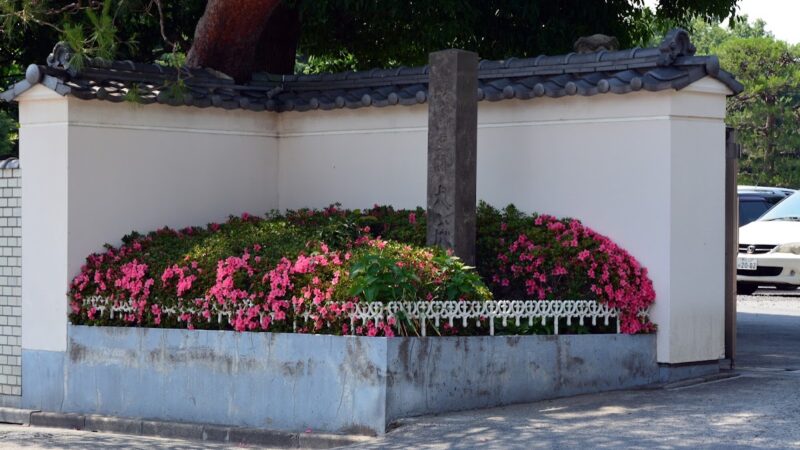
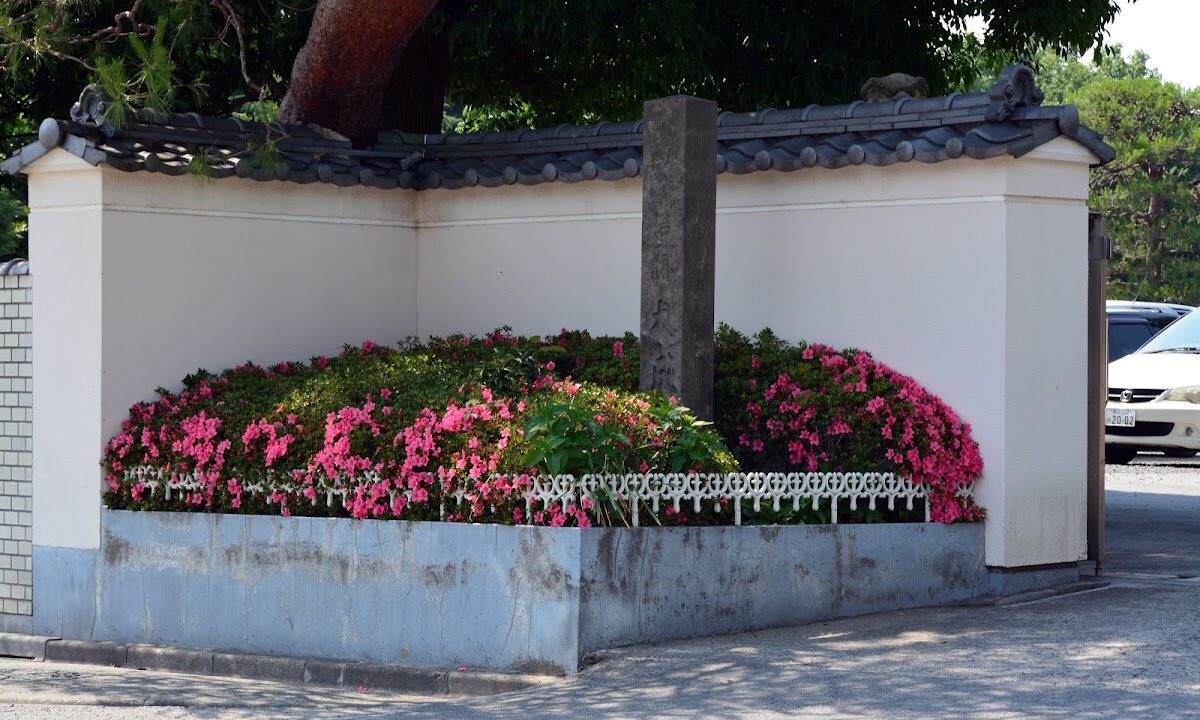
Currently, the central part of the Taiseikan site is the grounds of Fumon-in Temple, a Soto Zen Buddhist temple. A stone monument inscribed with “Taiseikan Site” stands in front of Fumon-in Temple’s main gate, indicating that this is the site of a historical residence.
Within the grounds of Fumon-in Temple are the burial grounds of the Oguri family, preserving the deep connection between this area and the Oguri family from the Edo period. It is a valuable space where one can feel the remnants of a former samurai residence amidst the tranquil atmosphere of a temple.
Remains of a Former Dry Moat
Records indicate that before the construction of Taisei Junior High School, the remains of a dry moat could be seen on this site. A dry moat is a moat that does not hold water and was an important defensive structure in medieval castles. It served to prevent enemy intrusion and clearly define the boundaries of the residence.
Unfortunately, the remains of the dry moat were lost due to construction work associated with the school, but its existence has been confirmed through archaeological records and testimonies from elderly residents. Traces of earthworks from the Muromachi period have also been confirmed, supporting the idea that Taiseikan was not merely a residence, but a samurai residence equipped with defensive functions.
Memories of the Castle Remaining in Place Names
Although most of the remains of Taiseikan have disappeared from the surface, its memory is still etched in the surrounding place names.
Nishibaba: This place name indicates a place where horses were trained and martial arts practiced. It is thought to have been located on the west side of the residence.
Kajiya-zutsumi: This indicates the location where blacksmiths who manufactured weapons and farming tools lived, or where their forge was located. In medieval castles, it was common to employ blacksmiths for the repair and manufacture of weapons.
Ote: This place name signifies the main gate of a castle. It indicates that the main entrance of Taiseikan was located in this direction.
These place names (kona) are valuable clues for inferring the structure and function of the residence that once existed on this site.
Cultural Value of Taiseikan Site
Designation as a City-Designated Historic Site
The Taiseikan Site was designated as a historic site by the then Omiya City (now Saitama City) on March 6, 1957. Following municipal mergers, it is now protected as a Saitama City-designated historic site.
The reasons for its designation are as follows:
- It has high historical value as the remains of a samurai residence from the Muromachi period.
- It is a valuable historical site that shows the activities of the Kaneko clan, one of the seven Musashi clans.
- It has a unique historical history of being converted from a residence to a temple.
- It retains traces of the time in place names and other elements.
- It also conveys Edo period history, such as its connection to the Oguri family.
Importance in the Study of Medieval History of Musashi Province
The Taiseikan site is an important historical site for studying the activities of medieval samurai groups in Musashi Province. It is highly valued from a historical perspective as an example that shows the sphere of influence, lifestyle, and spiritual culture changes of the Kaneko clan, one of the seven Musashi clans, as well as their devotion to Buddhism.
In particular, the case of a samurai residence being converted into a Zen hermitage provides interesting material for considering the relationship between samurai and Zen Buddhism in the Muromachi period. While Zen Buddhism spread among the samurai class from the Kamakura period onward, the act of converting one’s own residence into a temple speaks volumes about the depth of Kaneko Suruga-no-kami’s faith.
Access and Visiting Information for the Taiseikan Site
Transportation Access
Access by Train/Bus:
- From JR Omiya Station West Exit, take the Tobu Bus and get off at “Taisei-cho 3-chome,” then walk for approximately 3 minutes.
- Approximately 20 minutes on foot from JR Omiya Station West Exit.
Access by Car:
- Approximately 10 minutes from the “Shintoshin-Nishi Exit” of the Shuto Expressway Saitama Shintoshin Line.
- Parking: There is parking available for visitors at Fumon-in Temple (limited spaces).
Points of Interest
Stone Monument in Front of Fumon-in Temple Gate: A stone monument marking the site of the Taiseikan site has been erected. It is a good spot for commemorative photos of your visit to the historical site.
Fumon-in Temple Grounds: The temple still functions as a place of worship. Please observe proper etiquette when visiting.
Oguri Family Cemetery: The cemetery of the Oguri family, located within Fumon-in Temple, is a valuable historical site that conveys the history of the Edo period.
Exploring the Surrounding Place Names: By strolling through the surrounding area, where place names such as Nishibaba, Kajiya-zutsumi, and Ote remain, you can imagine the scale of the former residence.
Notes for Visitors
- Fumon-in Temple is a temple that still conducts religious activities. Please observe proper etiquette and visit quietly.
- Photography is permitted on the temple grounds, but consideration is needed if religious services are being held.
- The grounds of Taisei Junior High School are school facilities, and unauthorized entry is prohibited.
- Most of the remains are buried underground or lost, so visible remains are limited.
Related Historical Sites and Tourist Spots in the Surrounding Area
Castle Sites in Saitama City
When visiting the Taisei-kan site, visiting other castle sites in Saitama City will allow you to gain a deeper understanding of the medieval history of Musashi Province.
Junō Castle: A medieval castle site located in Nishi Ward, Saitama City. Like Taiseikan, it is a castle site associated with the Kaneko clan.
Ōwada Jin’ya: An Edo period jin’ya site located in Minuma Ward. It functioned as a base of operations for a hatamoto (direct retainer of the shogun).
Nagata Jin’ya: An jin’ya site located in Iwatsuki Ward. This also conveys the state of local administration during the Edo period.
Railway Museum
Taisei-cho is home to Japan’s leading railway museum. It’s within walking distance of the Taiseikan site, making it ideal for a visit in conjunction with a historical walk. As a facility where you can systematically learn about the history of Japanese railways, it’s a popular spot for families.
Ōmiya Park and Hikawa Shrine
On the way from Ōmiya Station to the Taiseikan site, you’ll find Ōmiya Park and Musashi Ichinomiya Hikawa Shrine. Hikawa Shrine is a shrine that has long been revered as the Ichinomiya (first-ranked shrine) of Musashi Province, and its vast grounds and beautiful shrine buildings are highlights.
The Historical Significance of the Taiseikan Ruins
The Transformation of Samurai Spiritual Culture
The history of the Taiseikan ruins symbolically illustrates the transformation of samurai spiritual culture from the medieval to the early modern period. The fact that Kaneko Suruga-no-kami converted his residence into a Zen hermitage is a concrete example of the deepening of Buddhist faith among the samurai class.
From the Kamakura period onward, Zen Buddhism was widely accepted among samurai. Zen teachings had a high affinity with the spirituality of bushido, and the spiritual discipline through zazen (seated meditation) was also linked to the training of martial arts. Kaneko Suruga-no-kami’s decision can be understood within this historical context.
From a Center of Regional Control to a Place of Worship
The conversion from a residence to a temple has significance beyond a simple change of building use. It suggests a shift in the nature of regional power from military control to spiritual and cultural influence.
By continuing to exist as Fumon-in Temple, Taiseikan is not merely a historical relic, but a “living historical site” that continues to function within the local community. As a temple, it attracts the faith of local people and plays a role in preserving history as the Oguri family’s ancestral temple.
Its Place in Saitama Prefecture’s Medieval History
Saitama Prefecture has many castle ruins, including Kawagoe Castle, but examples like Taiseikan, which transformed from a residence to a temple, are rare, giving it unique value.
Musashi Province, located in the heart of the Kanto region, was a fierce battleground where powerful daimyo of the Sengoku period, such as the Ashikaga, Uesugi, Hojo, and Takeda families, vied for power. In this context, Taiseikan provides valuable clues to understanding how local samurai groups like the Kaneko clan survived and transformed.
Preservation of the Taiseikan Site and Future Challenges
Current State of Preservation
The Taiseikan site is legally protected as a city-designated historical site. However, the majority of the remains are now occupied by Fumon-in Temple and Taisei Junior High School, and archaeological excavations have been limited. Many remains, such as dry moats, were lost during school construction, leaving very few above-ground structures.
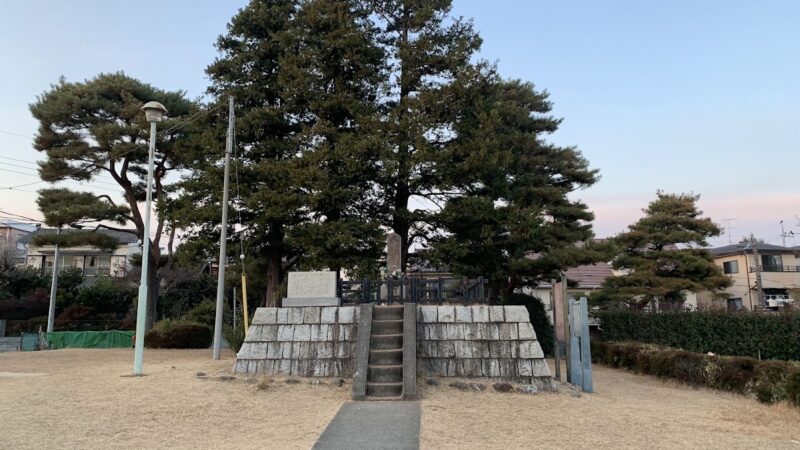
Currently, what can be seen are a stone monument erected in front of the Fumon-in Temple gate, the temple buildings, and the Oguri family burial grounds. Since no remains directly illustrating the former residence remain, visitors must use their imagination.
Preservation and Recording of Place Names
Local place names such as Nishibaba, Kajiya-zutsumi, and Ote are valuable sources of information for inferring the structure of the Taiseikan site. However, these traditional place names are disappearing amidst increasing urbanization. Recording and preserving these place names is crucial for passing on the region’s history to future generations.
History Education and Regional Pride
The Taiseikan site can serve as important teaching material for learning about the region’s history. Incorporating the history of Taiseikan into local school education as part of local history will provide children with an opportunity to develop pride in and affection for their community.
Through its current forms as Fumon-in Temple and Taisei Junior High School, the Taiseikan site serves as a historical site where the past and present are connected, and it is essential that it be carefully preserved in the future.
Summary: The Multilayered History Conveyed by the Taiseikan Site
The Taiseikan site began as the residence of Kaneko Suruga-no-kami, a samurai general of the Muromachi period, then transformed into a Soto Zen hermitage, functioned as the residence and family temple of the Oguri family during the Edo period, and continues to attract local faith as Fumon-in Temple.
This approximately 600-year historical transformation condenses the flow of Japanese history from the medieval to the early modern period and into the present day. A samurai residence, a Zen training hall, a daimyo family’s family temple, and a modern temple and school—all these elements coexist in a multilayered way, giving the Taiseikan site unique historical value.
When you visit Saitama City in Saitama Prefecture, be sure to stop by this tranquil historical site and feel the weight of history that has been passed down through the ages. Standing before the main gate of Fumon-in Temple and contemplating the samurai residence that once stood here, history will emerge not merely as an event of the past, but as a living story that continues into the present.