Complete Guide to Ishido Castle (Saitama Prefecture): Valuable Remains from a Strategic Sengoku Period to the Present Day
What is Ishido Castle?: An Important Sengoku Period Base Remaining in Kitamoto City, Saitama Prefecture
Ishido Castle (Ishito-jo) is a flatland castle located in Ishido-shuku, Kitamoto City, Saitama Prefecture. It is also known as Tenjin-yama Castle or Ashido Fort. Built over 550 years ago during the Muromachi period, around the Chōroku era (1457-1460), this castle is an important historical site that tells the story of the turbulent history of the Sengoku period in the Kanto region.
Designated as a Saitama Prefecture Important Historical Site, Ishido Castle was a flatland castle with a relative height of approximately 6 meters, protected by the natural defenses of the Arakawa River’s low-lying wetlands and deep rice paddies. Although the area is now being developed into residential land, valuable remains such as earthworks, dry moats, and overnight embankments still remain, making it an important resource for studying Sengoku period castle architecture.
The History of Ishido Castle: On the Front Lines of the Power Struggle Between the Uesugi and Hojo Clans
Background of Construction and Early History
The late 15th century, when Ishido Castle was built, was a time of fierce power struggles in the Kanto region between powerful daimyo such as the Uesugi and Hojo clans. It is believed that Fujita Hachiemon, a retainer of the Ogigayatsu Uesugi clan, was the first to establish a base there, and the prevailing theory is that it was built by the Ota clan, whose base was Iwatsuki Castle.
The Ota clan sided with the Uesugi, and Ishido Castle functioned as a fortress on an important defensive line connecting Iwatsuki Castle, Matsuyama Castle, and Kawagoe Castle. This strategic location meant that Ishido Castle was not merely a local fort, but a crucial base that influenced the balance of power in the Kanto region.
The Era of Ota Sukemasa and the Importance of Ishido Castle
There is also a theory that Ishido Castle was the residence of the Ota clan during the time of Ota Sukemasa’s father, Sukeyori. As a crucial castle protecting the western edge of the Iwatsuki domain, the territory of Ota Sukemasa, Ishido Castle played a strategically extremely important role.
It experienced several changes, including Uesugi Kenshin’s advance into Ishido during the siege of Matsuyama Castle in 1563. During this period, Ishido Castle was located on the front lines of the power struggle between the Uesugi and Hojo clans in the Kanto region, and was repeatedly subjected to the ravages of war.
From the Later Hojo Clan to Abandonment
As the Sengoku period progressed, Ishido Castle became a possession of the Later Hojo clan. As the Hojo clan’s power expanded, the castle’s rulers also changed. However, after Toyotomi Hideyoshi’s siege of Odawara in 1590, the Later Hojo clan was destroyed, and Ishido Castle’s historical role came to an end.
In the early Edo period, it was abandoned and subsequently used as farmland and residential land. Nevertheless, the castle’s remains were not completely lost and have been preserved as a valuable historical asset to this day.
Structure and Characteristics of Ishido Castle: A Layout Utilizing Natural Fortifications
Geographical Conditions and Defensive System
The most distinctive feature of Ishido Castle lies in its defensive system, which skillfully utilized its geographical conditions. To the west of the castle lay the low-lying wetlands of the Arakawa River, while deep rice paddies existed to the east and north. This natural fortification made it difficult for large enemy armies to approach.
Although the relative height of approximately 6 meters is not particularly high, combined with the surrounding wetlands, it effectively made the castle extremely difficult to attack. While classified as a hill castle, it possesses a structure closer to a flatland castle, yet its design is characterized by its maximum utilization of the terrain.
Relationship with the Kamakura Road and Ueno Road
Interestingly, the Kamakura Road and Ueno Road ran north-south through the castle. This is not mere coincidence; it is believed to be a strategic location that secured military and economic advantages by controlling a key transportation hub. By incorporating major roads into the castle grounds, the distribution of goods could be managed, and information gathering could be made more efficient.
Arrangement of Existing Remains
At the current Ishido Castle site, each enclosure is now residential and farmland, but the following remains can be confirmed:
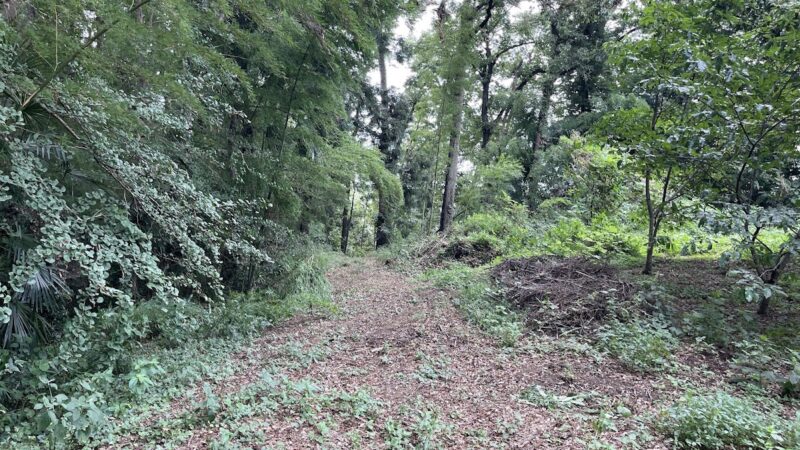
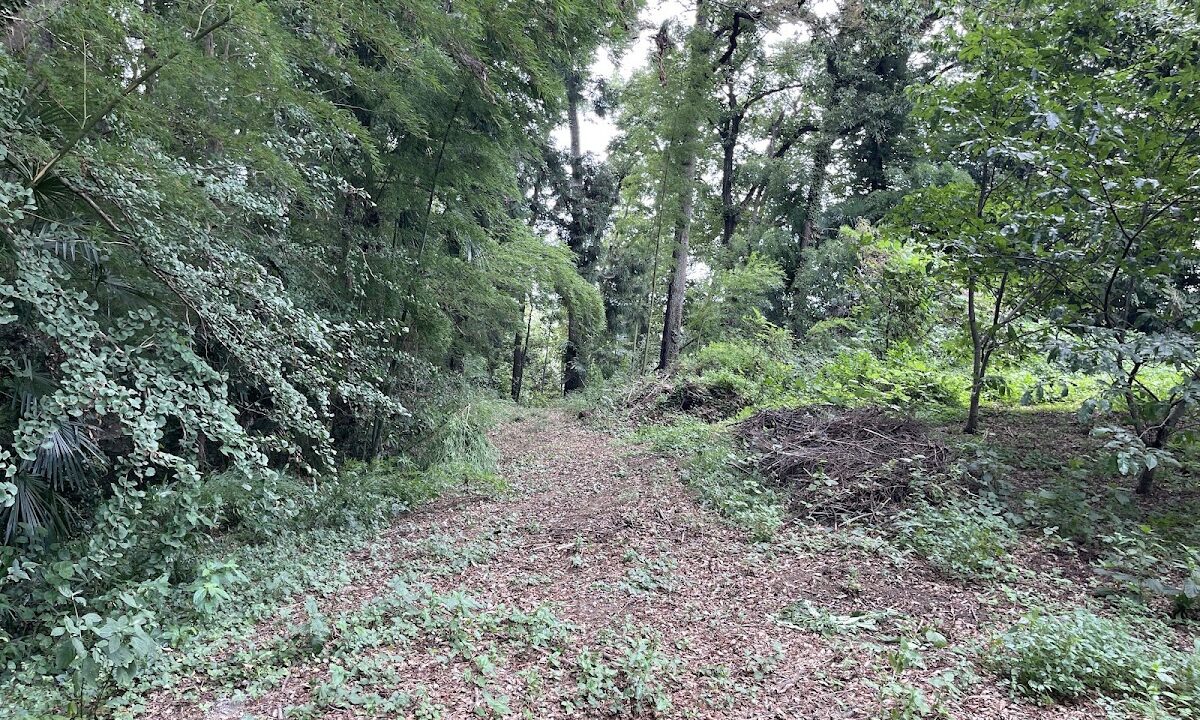
- Earthworks: Parts of the earthworks that functioned as the castle’s defensive line remain, providing valuable information about the castle construction techniques of the time.
- Dry Moats: Remains of dry moats, designed to prevent enemy intrusion, can be seen, offering a glimpse into the castle’s defensive system.
- One-Night Embankment: A particularly noteworthy remains is the earthwork known as the “One-Night Embankment.” This name originates from a legend that it was built in a single night, making it a valuable historical site that illustrates the strengthening of defenses in times of emergency.
While it is difficult to completely restore the castle to its original form due to roads running through the grounds and ongoing residential development, the remaining remains allow us to imagine what the castle looked like during the Sengoku period.
Highlights of Ishido Castle: Must-See Points for History Fans
Information Boards and Historical Site Explanations
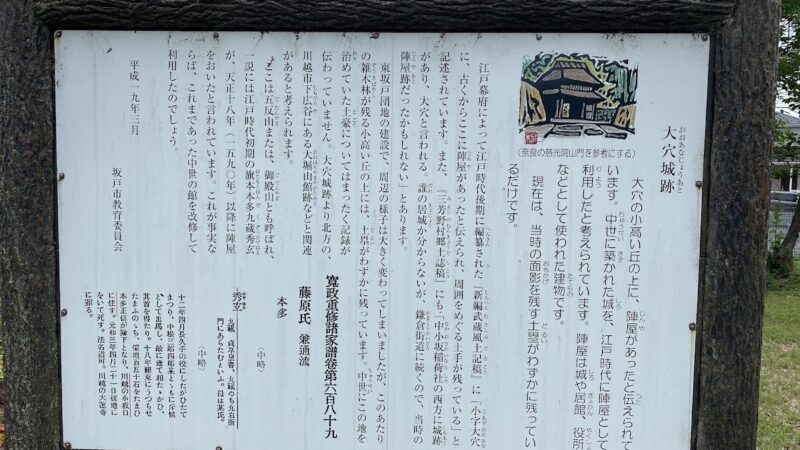
At the Ishido Castle ruins, information boards explaining the historical background and structure of the castle are installed, making it easy for first-time visitors to understand the castle’s history. The boards provide detailed information on the construction date, changes in castle lords, and events of the Sengoku period, making them valuable resources for learning history on-site.
Historical Value of the One-Night Embankment
The One-Night Embankment is particularly interesting among the remains of Ishido Castle. As its name suggests, this earthen embankment, which is said to have been built overnight in an emergency, conveys the tense situation of the Sengoku period. While it would have been impossible to actually complete it in one night, it is an important historical site that illustrates the need to strengthen defensive facilities in a short period of time.
Nature Trails and Surrounding Environment
Nature trails are maintained around the Ishido Castle ruins, allowing visitors to enjoy a historical walk in a peaceful atmosphere. The current landscape, a mix of residential areas and farmland, evokes the image of the castle town of yesteryear. One of the attractions is being able to explore history while enjoying the changing seasons, such as cherry blossoms in spring and autumn leaves in fall.
Photography Tips
When visiting the Ishido Castle Ruins, we recommend taking photos at the following points:
- Cross-section of the earthworks: The remaining earthworks are valuable historical materials that demonstrate the castle-building techniques of the time.
- Shape of the dry moat: Although partially filled in, there are places where the outline of the moat can still be seen.
- Information boards and surrounding scenery: Photos combining information boards that show the historical background with the modern scenery are valuable as historical records.
- Panoramic view of the Ichiyatsumi embankment: Whenever possible, take photos from an angle that shows the entire Ichiyatsumi embankment.
Access Information: How to Get to Ishido Castle Ruins
Location and Basic Information
- Address: 6-chome, Ishido-shuku, Kitamoto City, Saitama Prefecture
- Classification: Hilltop castle (structure similar to a flatland castle)
- Construction Period: Around the Chōroku era of the Muromachi period (1457-1460)
- Year of Abandonment: Completely abandoned in 1590 (Tenshō 18), early Edo period
- Designation: Saitama Prefecture Selected Important Historic Site
Access by Public Transportation
Accessible on foot or by bus from Kitamoto Station on the JR Takasaki Line. It is approximately 2-3 kilometers from the station; allow about 30 minutes on foot. If using the bus, take a bus bound for Ishido-shuku, get off at the nearest bus stop, and it’s a few minutes’ walk from there.
Access by Car
By car, it’s about 10 minutes from the Ken-Ō Expressway Okegawa-Kitamoto Interchange. However, since the area around the castle ruins is a residential area, there is no dedicated parking lot. When visiting, please consider using nearby public parking lots or paid parking, or using public transportation.
Points to Note When Visiting
Since the Ishido Castle ruins are located in an area where residential and agricultural land are mixed, please note the following points when visiting:
- Do not trespass on private property
- Be considerate so as not to interfere with agricultural work
- Always take your trash with you
- Be careful not to damage the ruins
- Be considerate of noise in the residential area
Ishido Castle and the Kanto Castle Network
Relationship with Iwatsuki Castle
Understanding Ishido Castle is essential to understanding its relationship with Iwatsuki Castle (present-day Iwatsuki Ward, Saitama City). Iwatsuki Castle was the base of the Ota clan, and Ishido Castle functioned as an important subsidiary castle protecting its western territory. The two castles are about 15 kilometers apart, and it is thought that they maintained contact and established a defensive system in case of emergencies.
Defense Line with Matsuyama Castle and Kawagoe Castle
Ishido Castle was located on a defense line connecting Iwatsuki Castle, Matsuyama Castle (present-day Higashimatsuyama City), and Kawagoe Castle (present-day Kawagoe City). These four castles served as crucial strongholds protecting the Uesugi sphere of influence, coordinating with each other to prepare for Hojo invasions.
This defense line cleverly utilized the topography of the Kanto Plain, employing rivers such as the Arakawa and Iruma River as natural moats, while strategically controlling key locations. Ishido Castle was located at the western end of this network, playing a role in monitoring invasions from western Musashi Province.
Position in Kanto during the Sengoku Period
During the Sengoku period, the Kanto region was a complex political situation involving three intertwined forces: the Koga Kubo, the Kanto Kanrei Uesugi clan, and the Later Hojo clan. Within this context, Ishido Castle belonged to the sphere of influence of the Ogigayatsu Uesugi clan and their vassal, the Ota clan, and functioned as one of the front lines preventing the Hojo clan’s northward advance.
During the Eiroku era (1558-1570), Uesugi Kenshin campaigned in the Kanto region and engaged in fierce battles with the Hojo clan. Records indicating Uesugi Kenshin’s advance to Ishido during this period suggest that Ishido Castle was a crucial strategic location in the power struggles of the Kanto region.
Value of Ishido Castle as a Cultural Property
Significance as a Saitama Prefecture Designated Important Historical Site
The Ishido Castle ruins are designated as a Saitama Prefecture Designated Important Historical Site, making them an indispensable cultural asset for understanding the prefecture’s history. In today’s era of increasing urbanization, the surviving remains of a Sengoku period castle are extremely valuable, playing an important role in local history education and as a tourist resource.
Importance in Castle Research
Ishido Castle, as a typical example of a Sengoku period hilltop castle, occupies an important position in castle research. In particular, its defensive system utilizing natural terrain, its relationship with roads, and its example of a branch castle network provide valuable data for the study of medieval castles.
The structure of earthworks and dry moats, and the existence of emergency defensive structures like the Ichiya-zutsumi (one-night embankment), provide important clues to understanding the castle-building techniques and tactics of the Sengoku period (Warring States period).
Significance in Local History
Ishido Castle is an indispensable part of the history of Kitamoto City. Ishido-juku, which formed around this castle, developed as a post town during the Edo period and became the economic and cultural center of the region. The name Ishido-juku still remains today, forming part of the region’s identity.
Combining with Nearby Tourist Spots
Historical Spots in Kitamoto City
When visiting the Ishido Castle ruins, we recommend also visiting other historical spots in Kitamoto City. Kitamoto City has many other historical temples, shrines, and historical sites scattered throughout, allowing you to enjoy a full day of historical exploration.
Kitamoto Natural Hot Spring Hana Hotel Kitamoto
After your historical exploration, we recommend relaxing at the Kitamoto Natural Hot Spring Hana Hotel Kitamoto. You can reflect on your day’s castle tour while relaxing in the natural hot springs. Accommodation is also available, making it convenient for visitors from afar. ### Nearby Gourmet Spots
Around the Ishido Castle Ruins, there are numerous restaurants where you can enjoy local cuisine. Experiencing the local food culture between historical walks will make your trip even more fulfilling. Finding Saitama Prefecture’s unique regional dishes or beloved local restaurants is one of the joys of your visit.
Recommended Time to Visit Ishido Castle
Spring Visit: Cherry Blossom Season
Spring, especially the cherry blossom season from late March to early April, is one of the best times to visit the Ishido Castle Ruins. The surrounding cherry tree-lined streets are beautiful, allowing you to enjoy both the historical atmosphere and the beauty of nature. It’s also an ideal season for photography, attracting many history buffs and photography enthusiasts.
Autumn Visit: Autumn Foliage Season
Autumn, especially the autumn foliage season around November, is also a recommended time to visit the Ishido Castle Ruins. The contrast between the colorful trees and the historical remains is beautiful, allowing you to enjoy a historical walk in a peaceful atmosphere. The weather is mild, making it suitable for long walks.
Times to Avoid and Points to Note
Extremely hot summer days and extremely cold winter days are not suitable for prolonged outdoor visits. Also, rainy weather may make viewing the ruins difficult. Please check the weather forecast and prepare appropriate clothing and equipment before visiting.
Preservation of Ishido Castle Ruins and Future Challenges
Balancing Urbanization and Archaeological Site Preservation
The biggest challenge facing Ishido Castle Ruins is balancing urbanization with the preservation of the archaeological site. As residential development progresses, how to preserve these valuable ruins is a crucial issue that the entire community must consider.
Cooperation with Local Residents
The understanding and cooperation of local residents are essential for the preservation of the ruins. Many ruins are located on private land, and much of their preservation is due to the goodwill of the owners. Visitors are expected to show respect for these local efforts and observe proper etiquette during their visit.
Future Prospects
For better preservation and utilization of Ishido Castle Ruins, cooperation from the government, researchers, local residents, and visitors is necessary. Various initiatives are expected, including the installation of appropriate signage, preservation measures for the remains, and improvements to access.
Summary: Ishido Castle Tells the Story of the Sengoku Period in Kanto
Ishido Castle, built over 550 years ago during the Sengoku period, leaves a valuable historical legacy for the modern era. In the Kanto region, where the Uesugi and Hojo clans vied for supremacy, this castle functioned as a crucial base supporting the defensive line of Iwatsuki Castle. It was not merely a local fort, but a strategically important point that influenced the balance of power in Kanto.
Even amidst ongoing residential development, remains such as earthworks, dry moats, and overnight embankments remain, and the site is protected as a Saitama Prefecture-designated important historical site. Ishido Castle condenses important elements for understanding Sengoku period castles, including its defensive system utilizing the natural fortifications of the Arakawa River’s low-lying wetlands and deep rice paddies, its relationship with the Kamakura Road and Ueno Road, and its cooperation with Iwatsuki Castle, Matsuyama Castle, and Kawagoe Castle.
When visiting Kitamoto City, be sure to stop by the Ishido Castle ruins. Read the information boards, explore the remains, and reflect on the Sengoku period in the Kanto region. The historical traces remaining amidst the tranquil atmosphere will surely speak to us. Combining this with nearby tourist attractions and hot springs will make for a fulfilling day of historical exploration.
Through the historical role played by Ishido Castle and the valuable remains that have survived to this day, you can gain a deeper understanding of the history of the Kanto region during the Sengoku period. Experience firsthand the significant role this small castle played in Japanese history.