Inomata Castle (Saitama Prefecture) Complete Guide | A Thorough Explanation from History, Remains, Access, and Visitor Highlights
What is Inomata Castle?
Inomata Castle is a medieval mountain castle located in Inomata, Misato-machi, Kodama-gun, Saitama Prefecture. Built on a mountaintop approximately 305 meters above sea level, it is a full-fledged mountain castle known as the base of the Inomata clan, one of the seven clans of Musashi Province. During the Sengoku period, it functioned as an important branch castle of the Hojo clan, playing a part in the defense network of northern Musashi Province, centered around Hachigata Castle.
Even today, the remains of the castle, such as baileys, earthworks, and moats, are well-preserved, making it a valuable historical site for learning about the structure of medieval mountain castles. The remains of the Inomata clan residence also remain at the foot of the mountain, making it an important group of ruins that allows us to understand the lifestyle of medieval samurai, encompassing both mountain castles and their peaceful residences.
History of Inomata Castle
Establishment and Early History of the Inomata Clan
The Inomata clan was one of the seven Musashi clans, expanding its power in northern Musashi Province from the late Heian period to the Kamakura period. The seven Musashi clans refer to the seven samurai groups: the Yokoyama, Inomata, Murayama, Noyo, Nishi, Kodama, and Tan clans, all of which operated from Musashi Province.
The Inomata clan held power primarily in Kodama County, and the Inomata clan ruled this area for generations. Historical records from the Kamakura period show that samurai of the Inomata clan served as retainers of the shogunate.
Construction of Inomata Castle in the Muromachi Period
The exact date of construction of Inomata Castle is uncertain, but it is believed to have been built during the Muromachi period by Inomata Hyogo-no-kami Nyudo. It is believed that Hyogo Nyudo, the sixth head of the Inomata clan, one of the seven clans of Musashi Province, built a mountain castle in this area and made it his residence.
At that time, Inomata Castle was within the sphere of influence of the Uesugi clan, the Kanto Kanrei (governor of the Kanto region), and it is thought that the Inomata clan, along with other local powerful families, were loyal to the Uesugi. The castle had a typical medieval samurai castle structure, with the fortifications on the mountaintop and the Inomata clan residence, their peaceful residence, at the foot of the mountain.
The Sengoku Period and Subjugation to the Hojo Clan
With the arrival of the Sengoku period (Warring States period), the Kanto region underwent significant changes due to the expansion of the Later Hojo clan’s power. The Inomata clan, too, chose to submit to the Hojo clan during this period. In particular, when Hojo Ujikuni became the lord of Hachigata Castle, Inomata Castle came to be positioned as an important subsidiary castle of Hachigata Castle.
It is believed that Inomata Castle underwent extensive renovations after coming under Hojo control. Many of the remains visible today are presumed to have been constructed during this period. In the defense system of northern Musashi centered around Hachigata Castle, Inomata Castle was an important base for preparing for invasions from the west.
From Inomata Castle, one could see Hachigata Castle in the distance, and the place name Kanetsukido-yama (Bell Tower Mountain) still remains. It is said that a group of bell ringers once resided here, and in times of war, they would ring the bell to warn other castles of danger. This also indicates that Inomata Castle functioned as a center for information dissemination.
The Siege of Odawara and the Abandonment of the Castle
In 1590 (Tensho 18), Toyotomi Hideyoshi’s Siege of Odawara began. The Toyotomi army, besieging Odawara Castle, the stronghold of the Hojo clan, simultaneously captured Hojo-controlled castles throughout the Kanto region.
Hachigata Castle was besieged by a large army led by Maeda Toshiie and Uesugi Kagekatsu, and after fierce fighting, it surrendered. Inomata Castle, a subsidiary castle of Hachigata Castle, is also believed to have been abandoned during the Siege of Odawara. While detailed records of the battles are not available, it is presumed that it lost its strategic value and was abandoned after the fall of Hachigata Castle.
After its abandonment, the Inomata area was incorporated into the new system of rule following Tokugawa Ieyasu’s arrival in the Kanto region. While Inomata Castle as a mountain castle disappeared from the historical stage, the memory of the Inomata clan continued to be passed down in the settlements at the foot of the mountain.
Layout and Remains of Inomata Castle
Basic Structure of the Castle
Inomata Castle is a mountain castle built around the summit of a mountain approximately 305 meters above sea level, with a relative height difference of about 110 meters. It features a multi-enclosure layout with multiple enclosures arranged around the main enclosure at the summit.
The castle’s location offers an excellent vantage point overlooking the surrounding plains, providing superior conditions for both defense and surveillance. The view is particularly open towards Hachigata Castle and Toragaoka Castle, and the topography suggests that it also functioned as a beacon tower.
Main Enclosure and Enclosures
The main enclosure is located on the mountaintop and has a relatively large, flat area. Earthen ramparts surround the main enclosure, enhancing its defensive capabilities. The structure extends from the main enclosure to the surrounding enclosures, forming a tiered defensive line.
Multiple enclosures are arranged around the main enclosure, each thought to have functioned as an independent defensive unit. These enclosures are cleverly positioned, utilizing the terrain and demonstrating the high level of medieval mountain castle construction technology.
Moats and Earthen Ramparts
The moats are particularly noteworthy defensive features of Inomata Castle. Digged to cut off the ridgeline, these moats played a crucial role in preventing enemy incursions. Even today, several clear moats can be seen, allowing us to appreciate the defensive structure of the time.
Earthen ramparts also remain in various places within the castle grounds. The earthen ramparts built along the edge of the enclosure likely served not only as defensive walls but also as building foundations. The height and width of the ramparts indicate that this castle was a full-fledged military facility.
Access Routes and Entrance
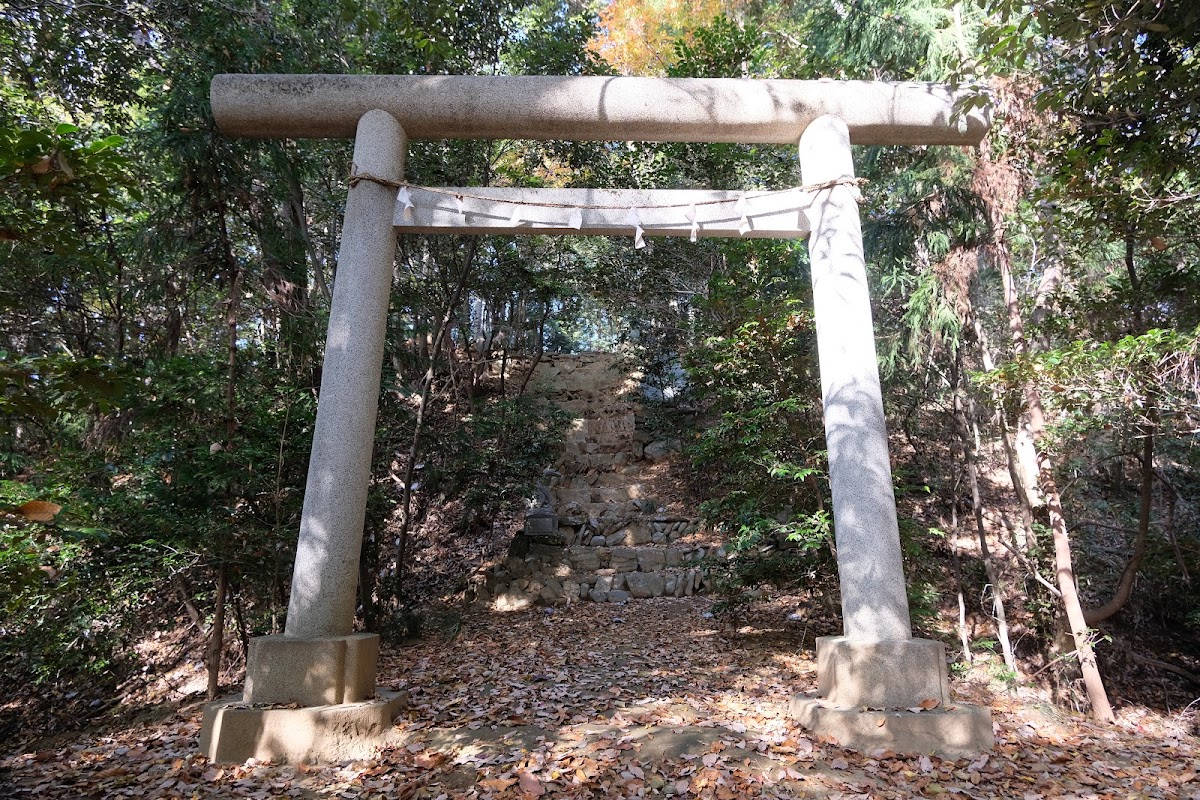
While multiple access routes to the castle are thought to have existed, a hiking trail from the foot of the mountain to the summit is currently maintained. The structure of the entrance (koguchi) at the time is unclear, but the layout of the enclosures suggests that a defensive movement pattern was planned.
Preservation of Remains
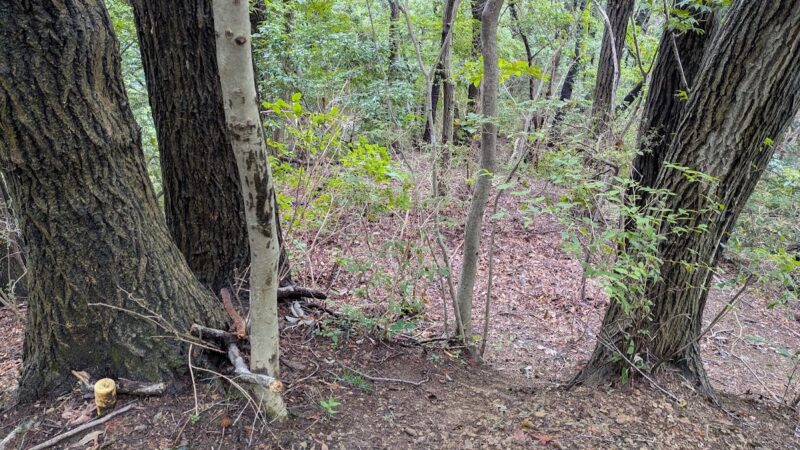
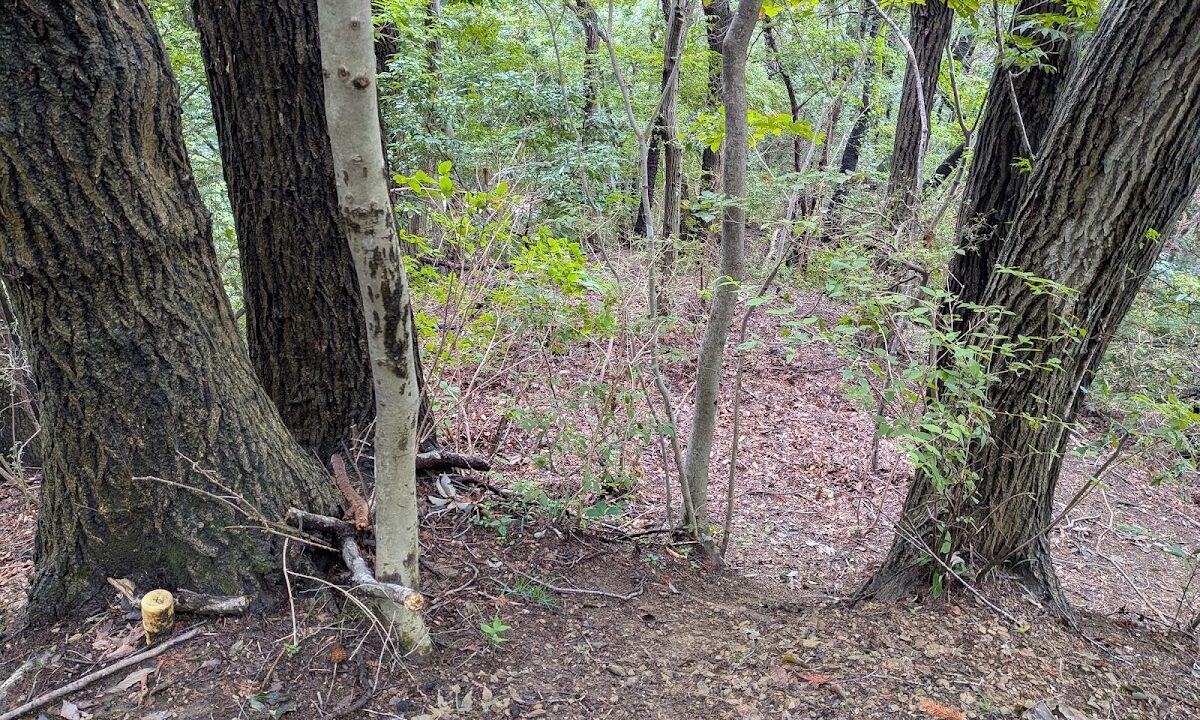
The remains of Inomata Castle are relatively well-preserved, even more than 400 years after its abandonment. In particular, the moats, earthen ramparts, and enclosure shapes are clearly visible, making them valuable resources for studying the structure of medieval mountain castles. However, some areas are covered with vegetation, and depending on the season, it may be difficult to confirm the remains.
Inomata Clan Residence Site
Location and Role of the Residence
The Inomata clan residence is believed to have been located at the foot of Inomata Castle, a mountain castle, near present-day 1500 Inomata, Misato-machi, Kodama-gun, Saitama Prefecture. The “Shinpen Musashi Fudoki-ko” (New Compilation of the Topography of Musashi Province) states, “Besides the castle ruins, in the middle of the village, there is a place called the Kodaira Roku Residence Site,” indicating that it was the site of the Inomata clan’s residence for generations.
Medieval samurai adopted a dual residential style, taking refuge in mountain castles during wartime and living in residences at the foot of the mountains during peacetime. The Inomata clan residence is thought to have functioned precisely as this peacetime residence.
Remains of the Residence
Currently, there are almost no clear remains of the Inomata clan residence, but the extent of the residence can be estimated from the topography and land divisions. Place names such as Domaeyama remain in the surrounding area, giving a glimpse into the former appearance of the residence. It is said that successive heads of the Inomata clan, including Inomata Kohyōroku Noritsuna, Inomata Notonokami Norinao, and Inomata Kuninori, used this residence as their base. Furthermore, the traditional Inomata Hyakuhachi-tō festival still exists, demonstrating the deep roots of the Inomata clan’s legacy in the region.
Access to Inomata Castle
Access by Public Transportation
By Train:
- Get off at Honjō Station on the JR Takasaki Line, then take a taxi for approximately 20 minutes.
- Get off at Tanshō Station on the JR Hachikō Line, then take a taxi for approximately 15 minutes.
Access by public transportation alone is difficult; taking a taxi from the nearest station is the most practical option. Bus routes are also limited, so it is recommended to check transportation options in advance.
Access by Car
Using the Kan-Etsu Expressway:
- Approximately 15 minutes from the Honjo-Kodama Interchange on the Kan-Etsu Expressway
- Approximately 20 minutes from the Hanazono Interchange on the Kan-Etsu Expressway
Access by car is the most convenient. If using a car navigation system, searching for “Inomata, Misato-machi, Kodama-gun, Saitama Prefecture” is recommended.
Parking Information
There is no dedicated parking lot for Inomata Castle, but there are a few parking spaces near the entrance to the castle. However, since this is also a local road, please avoid parking on the street and be considerate of the surrounding residents.
Points of Interest and Estimated Time Required
Visiting Time
For a visit to Inomata Castle, including the ascent and descent, allow approximately 1 to 1.5 hours. If you plan to carefully observe the remains or take photographs, it is recommended to allow about 2 hours.
The path to the castle is well-maintained, but as it is a mountain castle, a certain level of physical fitness is required. In particular, be sure to take proper precautions against the heat in the summer and against the cold in the winter.
Points to Note When Visiting
Clothing and Equipment:
- Comfortable clothing and non-slip shoes (trekking shoes recommended)
- Insect repellent, hat, and drinking water in summer
- Warm clothing in winter
- Be careful as the ground can be slippery in rainy weather
Safety:
- Visiting in a group is safer than visiting alone
- Check cell phone signal strength in advance
- Plan your time carefully to descend before sunset
Manners:
- Do not damage the ruins
- Always take your trash with you
- Do not trespass on private property
- Be considerate of local residents
Photo Opportunities
Inomata Castle offers the following photo opportunities:
- Moat: The clearly remaining moat is an important photographic subject for understanding the defensive structures of a medieval mountain castle
- View from the Main Enclosure: You can see Hachigata Castle and Toragaoka Castle in the distance
- Earthworks: Photographed from an angle that shows the cross-section and height of the earthworks surrounding the enclosure.
- Panoramic view of the enclosure: Photographed to show the size and shape of each enclosure.
When taking photographs, please prioritize the protection of the remains and be careful not to damage the earthworks or enclosure surfaces.
Related Historical Sites in the Surrounding Area
Hachigata Castle
Hachigata Castle, the main castle of Inomata Castle, is a nationally designated historical site located in Yorii-machi, Osato-gun, Saitama Prefecture. Known as the residence of Hojo Ujikuni, it is a large flatland castle built on a cliff between the Arakawa and Fukasawa rivers.
At the Hachigata Castle History Museum, you can learn in detail about the history of Musashi during the Hojo period. When visiting Inomata Castle, we highly recommend visiting Hachigata Castle as well. Visiting both castles will give you a deeper understanding of the relationship between the main castle and its subsidiary castles.
Toragaoka Castle
Toragaoka Castle, like Inomata Castle, is one of the subsidiary castles of Hachigata Castle. From Inomata Castle, you can see Toragaoka Castle in the distance, giving you a real sense of the coordinated system between the subsidiary castles.
Other Castles in Saitama Prefecture
Saitama Prefecture has many remaining medieval castles and residences, including Tanedare Castle, Asami Clan Residence, and Okawara Castle. Visiting these castles will allow you to understand the medieval history of Musashi Province in a more comprehensive way.
Cultural Property Designation Status of Inomata Castle
Currently, Inomata Castle is not designated as a national or prefectural cultural property, but it is recognized as an important historical heritage site of Misato Town. Because the remains are well-preserved, there is a possibility that new insights can be gained through future research.
There is also a movement locally to re-evaluate the historical value of Inomata Castle, and its use as a tourist resource is being considered.
Current Status and Challenges of Inomata Castle Research
Previous Research
Regarding Inomata Castle, surveys and measurements have been conducted by castle researchers, and a layout map has also been created. However, no full-scale archaeological excavation has been conducted, and the construction date and changes in the castle’s structure are currently only estimated based on historical documents and surface observations.
Future Research Topics
- Detailed layout survey and measurement
- Dating based on excavated artifacts
- Documentary research on the relationship between the Inomata clan and the Hojo clan
- Clarification of the relationship with Hachigata Castle
- Clarification of the activities during the Siege of Odawara
It is expected that progress in these studies will clarify the historical position of Inomata Castle and bring new insights to the study of the Sengoku period history of Musashi Province.
Inomata Clan Traditions Remaining in the Region
Inomata Hyakuhachi-to
In the Inomata district of Misato Town, a traditional event called Inomata Hyakuhachi-to is passed down. This event is considered to be related to the Inomata clan and is part of the region’s identity.
Place Names and Legends
In the Inomata area, place names related to the Inomata clan, such as “Kodaira Rokuyashiki” and “Dozenyama,” still remain. These place names are valuable cultural heritage that conveys the memory of the Inomata clan, who once ruled this land.
Various legends about the Inomata clan remain in the local area, passed down from elders to younger generations. This oral culture is also important material for understanding the history of Inomata Castle.
Inomata Castle and the Musashi Seven Clans
What are the Musashi Seven Clans?
The Musashi Seven Clans are a collective term for seven samurai groups that were active in Musashi Province from the late Heian period to the Kamakura period. These include the Yokoyama, Inomata, Murayama, Noyo, Nishi, Kodama, and Tan clans.
These samurai groups are said to have descended from the Kanmu Taira clan and expanded their power as developing lords of Musashi Province. After the establishment of the Kamakura Shogunate, they played an active role as retainers and formed the core of the Kanto samurai groups.
Characteristics of the Inomata Clan
The Inomata Clan held power mainly in Kodama County, with the Inomata clan at its center. Numerous records from the Kamakura period show that Inomata samurai participated in the shogunate’s military actions.
The Inomata samurai participated in important battles such as the Jokyu War and the Mongol invasions, acting with pride as Musashi samurai.
Summary
Inomata Castle is a valuable medieval mountain castle remaining in Misato Town, Saitama Prefecture. It began as the residence of the Inomata clan, one of the seven Musashi clans, and played an important role as a branch castle of the Hojo clan during the Sengoku period. The well-preserved remains, such as moats, earthworks, and baileys, are valuable resources for studying the structure of medieval mountain castles.
This historical site is important for understanding the castle network of the Sengoku period, given its relationship with Hachigata Castle and its function as a communication hub on Kanetsukido Mountain. Visiting it together with the Inomata Clan Residence Ruins at the foot of the mountain will provide a deeper understanding of the lifestyle of medieval samurai.
While access by public transport is somewhat inconvenient, it’s relatively easy to visit by car, being close to an interchange on the Kan-Etsu Expressway. Allow 1 to 2 hours for your visit, and wear comfortable clothing and gear.
By visiting Inomata Castle, you can experience the history of the Musashi Seven Clans, the Hojo clan’s rule during the Sengoku period, and the turning point in history—the Siege of Odawara—through its remains. It’s a historical site you should definitely add to your list of places to visit when touring castles in Saitama Prefecture.