Hanazono Mitake Castle (Saitama Prefecture) Complete Guide: A Thorough Explanation of the History and Remains of the Fujita Clan’s Branch Castle
Hanazono Mitake Castle is a medieval mountain castle located in Yorii-machi, Osato-gun, Saitama Prefecture. As a branch castle of Hanazono Castle, the residence of the Fujita clan who played a significant role in the Sengoku period of Musashi Province, it played a crucial role in its defense. This article comprehensively explains the appeal of the castle ruins, from its historical background and castle structure to its existing remains and a visitor’s guide.
Overview and Location of Hanazono Mitake Castle
Basic Information
Hanazono Mitake Castle is a mountain castle built on the summit of Mount Mitake, at an altitude of 247 meters. It is situated in a strategic location between the Arakawa River and Lake Enryoda, approximately 500 meters northwest of Hanazono Castle. Because of its higher elevation than Hanazono Castle, it is believed to have been built to monitor and defend against attacks from the rear.
Location: Hanazono, Yorii-machi, Osato-gun, Saitama Prefecture
Castle Classification: Mountain Castle
Builder: Fujita clan (estimated)
Relative Height: Approximately 90 meters
Main Remains: Horizontal moat, vertical moat, earthworks, earthen bridge, inner square enclosure
Geographical Importance
The location of Hanazono Mitake Castle indicates a strategically important point in Musashi Province. Situated overlooking the transportation routes of the Arakawa River basin, it functioned as a fort responsible for the rear defense of Hanazono Castle. While the main castle, Hanazono Castle, is located near the plains at the foot of the mountain, Mitake Castle is situated on a steep mountaintop, presumably to have played a role in detecting enemy movements early and preventing surprise attacks from the rear.
History of Hanazono Mitake Castle
The Fujita Clan and Hanazono Castle
To understand the history of Hanazono Mitake Castle, it is necessary to first learn about the Fujita clan and Hanazono Castle. The Fujita clan was a prominent family that served as important retainers of the Yamanouchi Uesugi clan, the Kanto Kanrei (governor of the Kanto region), and their ancestral home was Hanazono Castle. The Fujita clan wielded considerable power in northern Musashi Province and played a crucial role as a political and military cornerstone in the Kanto region during the Sengoku period.
Relationship with the Hojo Clan
In the mid-Sengoku period, the Fujita clan deepened their relationship with the Odawara Hojo clan. Fujita Yasukuni adopted Hojo Ujikuni, the fifth son of Hojo Ujiyasu, and had him inherit the headship of the Fujita clan. Hojo Ujikuni later moved his base to Hachigata Castle, but Hanazono Castle continued to be used as a subsidiary castle. It is believed that Hanazono Mitake Castle was also maintained during this period as part of the defense system of Hanazono Castle.
Lack of Documentary Records
Interestingly, there are no existing clear documentary records concerning Hanazono Mitake Castle. Even the official documents of Yorii Town explicitly state, “No documentary records exist.” However, the form and arrangement of the castle remains leave no doubt that it was a subsidiary castle that functioned at the same time as Hanazono Castle. The lack of documentation may be because Mitake Castle was perceived as part of Hanazono Castle’s defensive facilities rather than as an independent castle.
Period of Abandonment
The exact date of abandonment of Hanazono Mitake Castle is unclear, but it is presumed to have been abandoned along with Hanazono Castle when the Hojo clan was destroyed during Toyotomi Hideyoshi’s Odawara campaign in 1590. Hachigata Castle also fell in this battle, and the castles in northern Musashi Province, which had been under Hojo control, all disappeared from the historical stage.
Castle Structure and Layout
Main Enclosure (Honmaru)
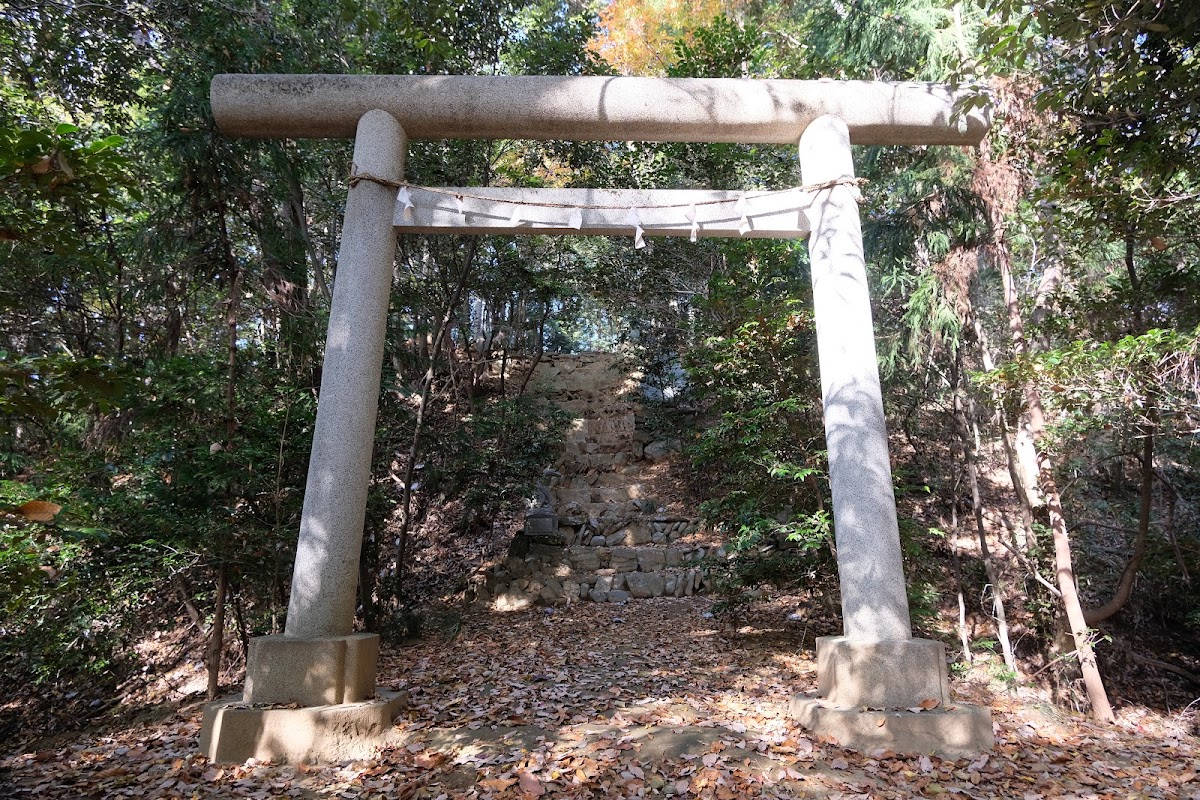
The main enclosure of Hanazono Mitake Castle is located on the summit of Mount Mitake, and currently houses the Mitake Shrine. The main enclosure is a relatively flat, leveled area, providing space for the shrine’s main building. The main enclosure is not particularly large, but it is spacious enough for a mountain castle fort.
The existence of the Ontake Shrine has played an important role in the preservation of the castle ruins. Because it has been maintained as an object of worship, the remains have survived to the present day without being destroyed.
Horizontal and Vertical Moats
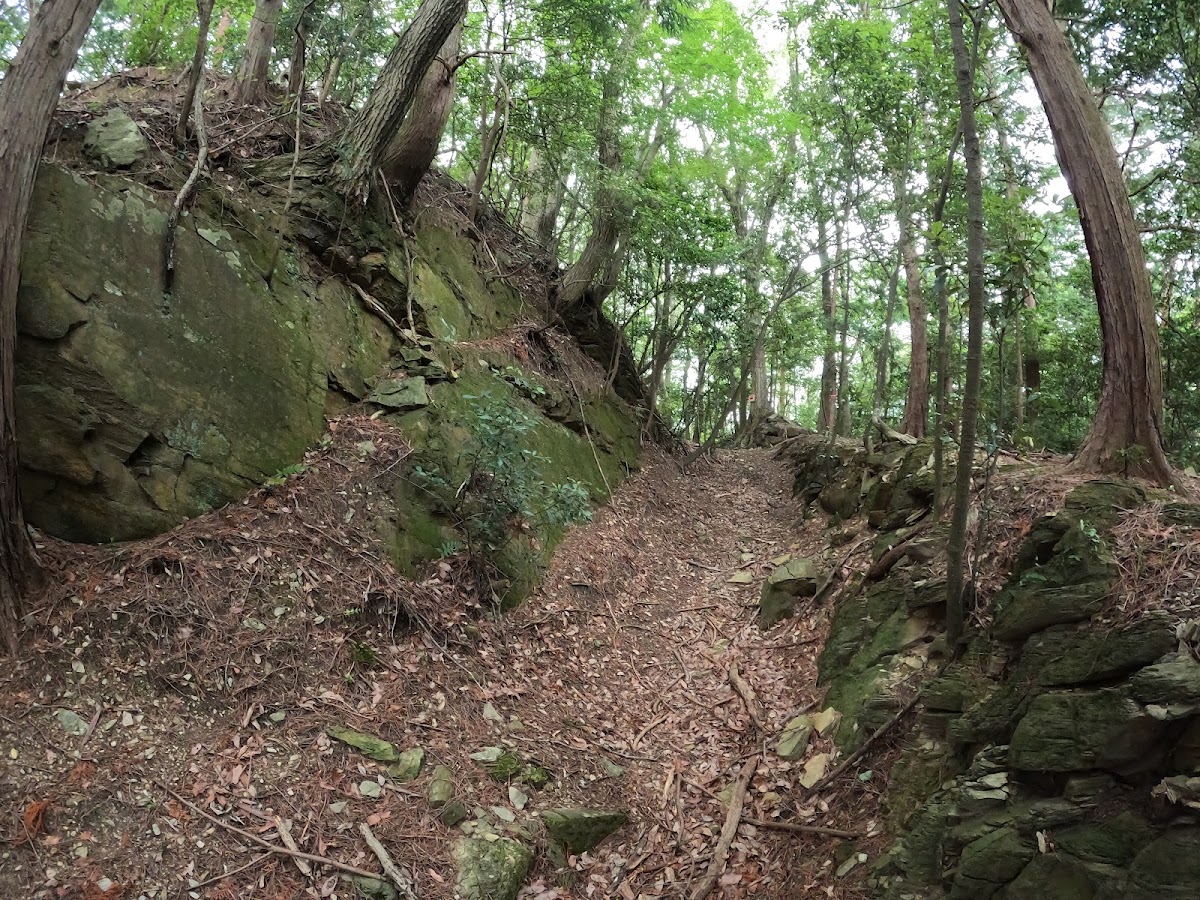
The greatest highlight of Hanazono Ontake Castle is the well-preserved horizontal moat. A clear horizontal moat runs from the southeast to the southwest of the main enclosure. This horizontal moat is thought to have prevented enemy intrusion and also functioned as a movement route within the castle.
Vertical moats have also been confirmed, dug vertically into the mountain slope. Vertical moats are effective in preventing enemies from climbing the slope and are important defensive structures unique to mountain castles. The vertical moats of Hanazono Ontake Castle demonstrate the skillful use of terrain in castle construction techniques of the Sengoku period.
Earthworks and Earthen Bridges
Parts of earthworks remain within the castle grounds, conveying the former defensive line to the present day. Earthen ramparts are earthen walls built by piling up soil, serving to prevent enemy intrusion and also obstructing the view from within the castle.
The earthen bridges crossing the moats are also well-preserved. Earthen bridges are bridges for crossing moats, usually constructed by piling up earth. This structure limits enemy intrusion routes, giving the defenders an advantage. The earthen bridges at Hanazono Mitake Castle are relics that demonstrate the ingenuity of the castle’s layout at the time.
Inner Masugata
The remains of an inner masugata (square enclosure) can also be seen. A masugata is a structure designed to strengthen the defense of a castle gate, luring the enemy into a narrow space for attack. The presence of such sophisticated defensive structures in a subsidiary castle of a mountain castle indicates that Hanazono Mitake Castle was not merely a lookout post, but a full-fledged military facility designed for actual combat.
Characteristics of the Defensive System
Hanazono Mitake Castle’s layout, though small in scale, features an efficient defensive system. By utilizing the natural fortifications of the mountaintop while combining artificial defensive structures such as horizontal moats, vertical moats, earthworks, and square enclosures, this castle was designed to prevent enemy incursions even with a small number of defenders.
This castle was built with the clear purpose of being a “fort to protect the rear” of Hanazono Castle, and its layout is specifically designed for that purpose. It is clear from the remains that it was not an independent castle, but rather a subsidiary castle intended to work in conjunction with Hanazono Castle.
Current Status and Preservation of the Remains
Well-Preserved Remains
The remains of Hanazono Mitake Castle are relatively well-preserved for a medieval mountain castle. In particular, the horizontal moats and earthen bridges are clearly visible, allowing visitors to directly experience the castle structure of the Sengoku period. Partial earthworks also remain, making it possible to imagine the defensive lines of the time.
The presence of the Mitake Shrine on the mountaintop has positively contributed to the preservation of the remains. The well-maintained approach to the castle makes it easy to climb, and the fact that it has been cherished as a place of worship likely contributed to the preservation of the remains.
Evaluation of the Remains
Castle researchers and enthusiasts generally rate the remains at around “★★★☆☆” (3 out of 5). While smaller in scale compared to large mountain castles, the remains are sufficient to understand its function as a subsidiary castle, and it is considered to have high academic value.
Surrounding Environment
A hiking trail is available, with a route starting from beside the main hall of Shorinji Temple, passing near the summit, and descending to Lake Enryoda on the north side. This course starts at Shorinji Temple, famous for its 500 Arhats, allowing for a visit that combines cultural heritage sightseeing with nature walks.
Access and Visiting Guide
Access by Train
Nearest Station: Chichibu Railway, Hakure Station
The castle entrance is accessible on foot from Hakure Station. There is a nursing home near the station, and next to it is the approach to Ontake Shrine. This is the entrance to the castle. It’s about a 10-minute walk from the station to the entrance, and about 20-30 minutes from the entrance to the summit.
Access by Car
Use Prefectural Road 349 (Hanazono Honjo Line). From Toragaoka Castle, return to Prefectural Road 349 where the local products center is located, and continue south along the road until you reach near Hakure Station. You will see a nursing home on the east side. Next to it is the approach to Ontake Shrine.
Parking is limited to a small number of spaces around Shorinji Temple, so we recommend using public transportation.
Castle Ascent Route
- Route starting from Hakure Station: The shortest route is to walk from the station to the entrance next to the nursing home and then ascend the approach to Ontake Shrine.
- Route via Shaolin Temple: After visiting Shaolin Temple, famous for its 500 Arhats, this hiking course leads to the summit from beside the main hall. It combines cultural heritage viewing with exploring the castle ruins.
- Route from Enryoda Lake: There is also a route climbing from the north side, near Enryoda Lake, but it is slightly longer.
Points to Note When Visiting
- Clothing: As it is a mountain castle, comfortable walking shoes and clothing are essential.
- Season: Spring to autumn is the best time to visit. There is a possibility of snow and ice in winter.
- Estimated Time: Approximately 1 hour round trip from the trailhead to the summit. Allow 1.5 to 2 hours including viewing the ruins.
- Toilets: There are no toilets at the summit, so please use the facilities beforehand.
- Hydration: Especially in summer, remember to stay hydrated.
Nearby Attractions
When visiting Hanazono Mitake Castle, we recommend also visiting the following nearby historical sites:
Hanazono Castle: The residence of the Fujita clan. It was the main castle of Hanazono Mitake Castle, and visiting both together provides a comprehensive understanding of the castle’s defensive system.
Shorinji Temple: A temple famous for its 500 Arhats. It also serves as the entrance to Hanazono Mitake Castle.
Hachigata Castle: The base of Hojo Ujikuni. A nationally designated historical site, it retains large-scale castle remains.
Toragaoka Castle: One of Hanazono Castle’s subsidiary castles. Visiting it together with Hanazono Mitake Castle helps understand the castle’s defensive network.
The Charm and Highlights of Hanazono Mitake Castle
A Mountain Castle Evoking Historical Romance
The greatest charm of Hanazono Mitake Castle is that it retains the appearance of a subsidiary castle from the Sengoku period in excellent condition. Although documentary records are scarce, the remains themselves eloquently tell the history of that time. The relative location to the main castle, Hanazono Castle, the ingenuity of its layout, and the placement of its defensive structures allow us to decipher the castle network and defensive strategies of the Sengoku period.
Harmony with Nature
The natural environment of Mount Ontake is also one of its attractions. The view from the summit is magnificent, offering a panoramic view of the Arakawa River basin. You can enjoy the changing seasons, from fresh greenery in spring to vibrant autumn leaves, while exploring the castle ruins. The area is also developed as a hiking trail, making it a place where you can enjoy both historical exploration and nature walks simultaneously.
The Serene Atmosphere of Ontake Shrine
The Ontake Shrine at the summit adds a sacred atmosphere to the castle ruins. The fact that this site, once a fort during the Sengoku period, is now a place of worship cherished by people, allows us to feel the passage of history. Observing the remains from the shrine grounds allows us to appreciate the layered nature of different eras: military and religious facilities.
Value for Castle Research
Hanazono Ontake Castle is a valuable example for the study of subsidiary castles. This site is important for understanding the realities of the Sengoku period, where not only large main castles but also these smaller branch castles cooperated to control the region. Although the scale of the remains is small, their academic value is by no means low.
Hanazono Mitake Castle and the Defense System of Hanazono Castle
Branch Castle Network
Hanazono Mitake Castle played a part in a network of branch castles centered around Hanazono Castle. Branch castles such as Toragaoka Castle were also located around Hanazono Castle, and these worked together to defend the area.
Hanazono Mitake Castle played a particularly important role as a “rear defense.” Because Hanazono Castle was located near the plains at the foot of the mountain, it was vulnerable to attacks from the mountains behind. Mitake Castle was built in a position to complement this weakness, functioning as a fort to monitor enemy movements and defend when necessary.
Communication and Communications
The distance between Hanazono Castle and Hanazono Mitake Castle was approximately 500 meters, allowing for rapid communication via smoke signals and messengers. If enemy approach was detected at Mitake Castle, it could be immediately reported to Hanazono Castle, making it easy for Hanazono Castle to dispatch reinforcements to Mitake Castle. This proximity is thought to have made the coordination between the two castles effective.
Utilization of Elevation Differences
The fact that Hanazono Mitake Castle is located at a higher elevation than Hanazono Castle was strategically important. From higher ground, enemy movements could be observed over a wide area, functioning as an early warning system. Furthermore, higher ground is advantageous for defense, making it easier to repel enemy attacks even with a small force.
Visitor Feedback and Evaluations
Evaluations from Castle Enthusiasts
Castle information websites such as Kojodan (Castle Siege Group) have received various evaluations from castle enthusiasts who have visited Hanazono Mitake Castle. Many visitors praise the good state of preservation of the remains, especially the clarity of the moats and earthen bridges. The manageable difficulty of climbing, with a relative elevation of 90 meters, is also a reason why it is popular with a wide range of people, from beginners to advanced enthusiasts.
Photo Spots
Based on visitor photo submissions, the following points are popular:
- The Ontake Shrine in the main enclosure
- Clearly preserved horizontal moat
- Remains of an earthen bridge
- View from the mountaintop
- Cuts in the vertical moat
These photographs are valuable visual resources that convey the charm of the castle ruins.
Visitor Satisfaction
Overall, Hanazono Ontake Castle receives many positive evaluations, such as “The remains are better than expected,” “Visiting it together with Hanazono Castle deepens understanding,” and “It can be enjoyed like a hike.” On the other hand, there are also requests for improvement, such as “The historical background is difficult to understand due to the lack of documentary materials” and “It would be good if the information boards were more comprehensive.”
Future Preservation and Utilization of Hanazono Ontake Castle
Value as a Historic Site
Hanazono Ontake Castle is not currently designated as a national or prefectural historic site, but it is recognized as a valuable cultural asset of the region as a representative example of a branch castle from the Sengoku period. It is also featured on the official website of Yorii Town and is positioned as a regional historical heritage site.
Preservation Challenges
Preserving mountain castle ruins presents challenges such as natural disasters and overgrown vegetation. In particular, moats and earthworks are at risk of gradually becoming indistinct due to erosion by tree roots and sediment accumulation. Regular maintenance and preservation measures as needed are required.
Potential for Use
Hanazono Mitake Castle has potential for use in historical education and as a tourist resource. Taking advantage of its well-maintained hiking trails, it can be further enhanced as a historical walking route. Installing information boards, creating brochures, and conducting guided tours can convey the charm of the castle ruins to a wider audience.
Collaboration with the Local Community
The development of a wide-area historical tourism route in collaboration with surrounding castle ruins such as Hanazono Castle, Hachigata Castle, and Toragaoka Castle is also anticipated. Setting a theme such as “Touring the Castles of the Fujita and Hojo Clans” could potentially promote the historical appeal of Yorii Town as a whole.
Summary: The Historical Significance of Hanazono Mitake Castle
Hanazono Mitake Castle, though not large in scale, is a valuable historical site that preserves the appearance of a subsidiary castle from the Sengoku period. As a fort protecting the rear of Hanazono Castle, the residence of the Fujita clan, it played a crucial role in the castle’s defense system.
Despite the limitations of limited historical documents, the well-preserved remains such as moats, earthworks, earthen bridges, and vertical trenches eloquently speak to the castle-building techniques and defensive strategies of the time. Its location on the summit of Mount Mitake, its relationship to Hanazono Castle, and its efficient layout all illustrate a part of the Sengoku period castle network.
Accessible on foot from Hakure Station, and with a manageable elevation gain of 90 meters, it offers enjoyment for a wide range of visitors, from beginners to experienced castle enthusiasts. It’s also a well-maintained hiking trail, making it an attractive spot where you can enjoy both historical exploration and nature walks.
By visiting Hanazono Mitake Castle, you can experience a part of the defensive system built by the warlords of the Sengoku period and feel the breath of history. This historical site, a hidden gem in Saitama Prefecture, is a place I hope many people will visit.