Miyazawa Castle (Osaki City): History and Highlights | Visiting Medieval Castle Ruins in Miyagi Prefecture
Miyazawa Castle, located in Furukawa Miyazawa, Osaki City, Miyagi Prefecture, was a flatland castle that existed from the Sengoku period to the early Edo period. Although only a portion of the remains survive today, it is a valuable historical site that conveys the history of the region, offering a glimpse into its past. This article provides a comprehensive explanation of Miyazawa Castle, including its historical background, castle structure, highlights, and access information.
Basic Information on Miyazawa Castle
Location and Geographical Environment
Miyazawa Castle is located in Furukawa Miyazawa, Osaki City, Miyagi Prefecture. Osaki City is located in the northern part of Miyagi Prefecture, approximately 40 kilometers north of Sendai City. It is situated in the center of the Osaki Plain, surrounded by the fertile land of the Egai River (Arao River) basin.
The Osaki region has flourished since ancient times as a transportation hub, and in the Middle Ages, it played a politically and militarily important role as the base of the Osaki clan, the governors of Oshu Province. Miyazawa Castle is also believed to have functioned as one of the defensive strongholds in this region.
Castle Classification and Structure
Classification/Structure: Flatland Castle
Construction Style: Medieval castle primarily composed of earthworks
Keep Structure: None (As it is a medieval castle, there is no keep)
Miyazawa Castle is a typical flatland castle. Unlike mountain castles built on high ground, it had a structure surrounded by earthworks and moats on flat land. Many such flatland castles were built in the Tohoku region during the Sengoku period, functioning as centers of regional control.
Builder and Year of Construction
Builder: Details unknown (estimated to be a samurai under the Osaki clan)
Year of Construction: Sengoku period (estimated late 15th to 16th century)
Former Province: Mutsu Province
Regarding the exact builder and year of construction of Miyazawa Castle, there are no clear historical records, and many details remain unknown. However, it is believed to have been built by a samurai associated with the Osaki clan, who ruled this region. The Osaki clan was a powerful family that held sway in the Tohoku region from the Muromachi period to the Sengoku period, serving as the Oshu Tandai and Oshu Kanrei, and had many branch castles within their territory.
Historical Background of Miyazawa Castle
The Osaki Clan and the Sengoku Period in Oshu
The area where Miyazawa Castle existed was under the control of the Osaki clan from the Muromachi period to the Sengoku period. The Osaki clan was a branch of the Shiba clan and a prestigious family entrusted with governing the Tohoku region as the Oshu Tandai. Their main base was Furukawa Castle (present-day Furukawa, Osaki City), and many subsidiary castles were located in the surrounding area.
Miyazawa Castle is thought to have functioned as part of this network of subsidiary castles, contributing to the defense of their territory and regional control. The Tohoku region during the Sengoku period was a turbulent era where various forces, such as the Date, Mogami, Kasai, and Osaki clans, vied for supremacy.
The Conflict Between Date Masamune and the Osaki Clan
In the latter half of the 16th century, the rising Date Masamune embarked on a campaign to subdue the surrounding forces. The Osaki War, which began in 1584, saw fierce fighting between the Date and Osaki clans. This conflict saw back-and-forth battles, ultimately ending in 1590 with Toyotomi Hideyoshi’s pacification of Oshu.
The Osaki clan was dispossessed of their lands, and the region came under the control of the Date clan. It is presumed that Miyazawa Castle was either abandoned around this time or its role ended within the Date clan’s rule.
After the Edo Period
During the Edo period, this region became part of the Sendai Domain, and Furukawa was developed as a strategic stronghold. Miyazawa Castle ceased to function as a military base, and the castle ruins were used for farmland and settlements. Development continued after the Meiji era, and currently only a portion of the remains remains.
Remains and Highlights of Miyazawa Castle
Existing Remains
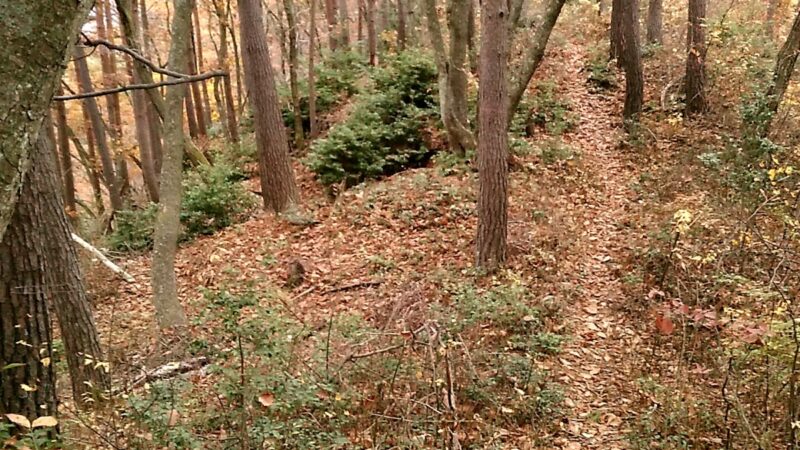
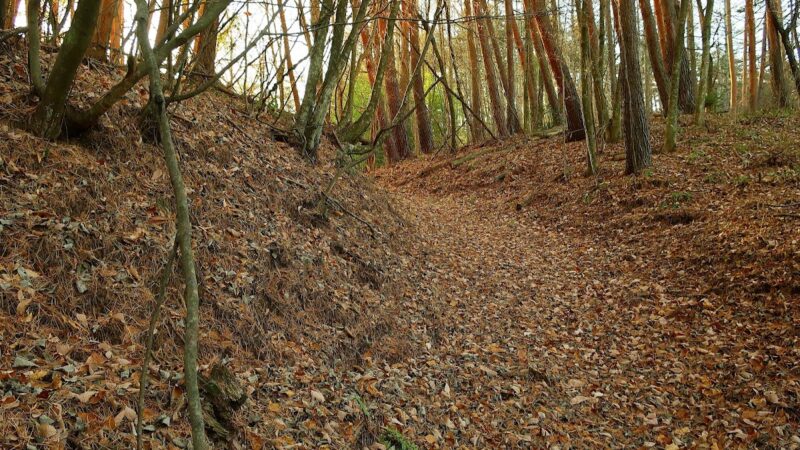
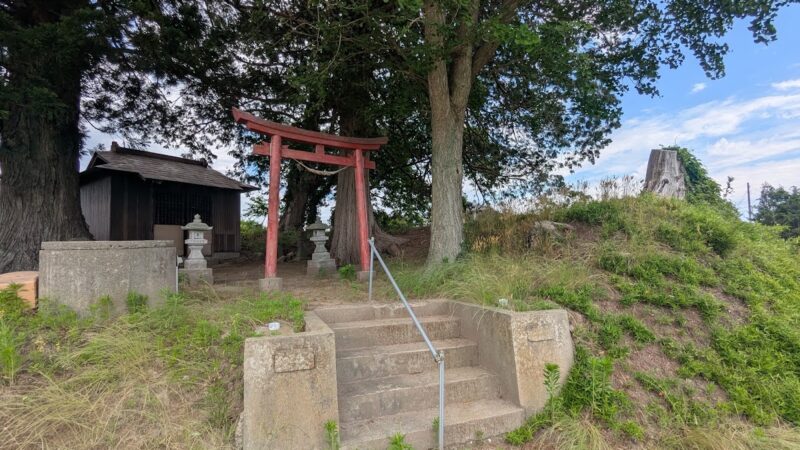
A portion of the earthworks still remains at the Miyazawa Castle site. According to the Castle Wanderings Chronicle, six photographs are recorded, confirming the traces of the earthworks. However, no large-scale stone walls or building remains have been confirmed, and it is characterized by the simple structure typical of medieval castles.
Earthworks played an important role as a defensive structure for the castle, preventing enemy intrusion and clearly defining the boundaries within the castle. From the existing earthworks, it is possible to estimate to some extent the size and layout of the castle at that time. ### Current Status of Castle Ruins
Many castle ruins are currently used as residential or agricultural land, making it difficult to clearly discern the outlines of the castle fortifications. However, the place name “Jōnai” (meaning “within the castle grounds”) remains, indicating that a castle once stood here.
Local efforts are underway to preserve and research the castle ruins, and history enthusiasts and castle researchers sometimes visit. While not a large-scale tourist destination, it has value as a place where one can quietly experience history.
Points to Note When Visiting Miyazawa Castle
When visiting Miyazawa Castle, pay attention to the following points:
- Traces of Earthworks: Imagine the structure of the medieval castle from the faintly remaining earthworks.
- Observation of Topography: Confirm the location conditions as a flatland castle and the surrounding terrain.
- Place Name: Understand the historical background from the place name “Jōnai” (castle grounds).
- Surrounding Environment: Understand the relationship between the castle and the landscape of the Ōsaki Plain.
How to Access Miyazawa Castle
Access by Public Transportation
- Nearest Station: JR Tohoku Main Line/Rikuu East Line “Furukawa Station”
- Distance from Station: Approximately 3 kilometers
- Travel Time: Approximately 10 minutes by taxi, approximately 40 minutes on foot
Furukawa Station is accessible from Sendai Station in approximately 40 minutes on the Tohoku Main Line, or approximately 15 minutes by Shinkansen (bullet train). From the station, it is convenient to take a taxi or rent a bicycle.
Access by Car
- Tohoku Expressway: Approximately 10 minutes from Furukawa Interchange
- National Route 4: Access via prefectural road from Furukawa city center
- Parking: There is no dedicated parking lot, so you will need to use nearby public facilities or find a place where you can park on the street.
Precautions for Visiting
Miyazawa Castle Ruins is not a developed tourist facility, and some parts may be private property. Please note the following when visiting:
- Do not trespass on private property
- Do not damage the ruins
- Take your trash with you
- Respect the lives of local residents
Nearby Castles and Points of Interest
Nearby Castle Ruins
Many castle ruins related to the Osaki and Date clans are scattered around Miyazawa Castle:
Furukawa Castle (approximately 3km): Known as the main castle of the Osaki clan, it is now developed as Furukawa Castle Ruins Park. It is recommended to visit it in conjunction with Miyazawa Castle.
Myōjō Castle (approx. 6.3km): One of the important branch castles of the Ōsaki clan, with relatively well-preserved remains of earthworks and moats.
Nakashinda Castle (approx. 8.2km): Located in Nakashinda-machi, Kami-gun, it functioned as a castle under the control of the Ōsaki clan.
Iwadeyama Castle (approx. 15km): The castle where Date Masamune made his base before building Sendai Castle. Currently, the site is maintained as Iwadeyama Castle Ruins, and a museum is also located there.
Ōsaki City Tourist Spots
In addition to visiting Miyazawa Castle, why not also visit other tourist spots in Ōsaki City?
Naruko Onsen: One of Japan’s leading hot spring resorts, offering a variety of spring qualities. The charm of the historic hot spring town is also a major attraction.
Naruko Gorge: A gorge known for its beautiful autumn foliage, attracting many tourists, especially in the fall.
Kajonuma: A Ramsar Convention-registered wetland, known as a stopover point for migratory birds. Ideal for nature observation.
Sensory Museum: An interactive museum themed around the five senses, offering unique exhibits.
Major Castle Ruins in Miyagi Prefecture
Besides Miyazawa Castle, Miyagi Prefecture has many other castle ruins, each telling a story of Tohoku’s history:
Sendai Castle (Aoba Castle): The main castle of the Sendai Domain, built by Date Masamune. The stone walls and the main gate’s side turret have been restored, and there is an observation deck offering panoramic views of the city.
Taga Castle: An ancient castle and fortification dating from the Nara to Heian periods, designated as a National Special Historic Site.
Shiraishi Castle: The residence of the Katakura clan, a senior retainer of the Date clan; the keep has been restored in wood.
Wakutani Castle: The residence of the Wakutani Date clan; currently developed as Shiroyama Park.
Kakuda Castle: This was the residence of the Ishikawa clan, a branch of the Date clan, and some of the stone walls remain.
Visiting these castle ruins allows for a deeper understanding of Miyagi Prefecture’s history from the medieval to early modern periods.
Historical Value and Future Preservation of Miyazawa Castle
Importance in Local History
Miyazawa Castle is not a large-scale tourist destination, but it is an important historical site for understanding the medieval history of the Osaki region. It provides clues to the Osaki clan’s rule and the state of local communities during the Sengoku period.
In particular, its flatland castle form reflects the tactics and social structure of the time, demonstrating a different defensive philosophy and method of regional governance compared to mountain castles. Such small to medium-sized castle ruins are essential for a multifaceted understanding of regional history.
Challenges of Preservation and Utilization
Small to medium-sized castle ruins like Miyazawa Castle face challenges in preservation and utilization nationwide. Unlike large-scale castle ruins, development as a tourist resource is difficult, and many are on private land, making it difficult to secure the necessary budget and personnel for preservation.
However, from the perspective of local history education and fostering local pride, the value of such familiar historical sites is extremely high. It is hoped that local residents, history enthusiasts, and the government will cooperate in exploring appropriate methods of preservation and utilization.
The Potential of Digital Archives
In modern times, the recording and publication of historical sites using digital technology is progressing. Regarding Miyazawa Castle, digitizing photographs, survey data, and historical documents and making them available online will allow more people to access them.
In particular, using drone aerial photography and 3D scanning technology makes it possible to reveal the overall structure of the castle, which is difficult to discern from the ground. Such efforts are attracting attention as a new form of preservation and utilization of historical sites.
Castle Research and Miyazawa Castle
Perspectives on Medieval Castle Research
Medieval castles like Miyazawa Castle are important research subjects in the study of Japanese castle history. They provide clues to how local powerful families ruled their territories and what kind of defense systems they implemented during the Sengoku period.
Castles in the Tohoku region, in particular, possess characteristics that differ from those in the Kanto and western Japan regions, reflecting regional differences, climatic conditions, and tactical variations. The structure, primarily based on earthen ramparts, was a rational choice in areas where stone was difficult to obtain, and is also thought to have been designed to withstand heavy snowfall in winter.
Potential for Archaeological Excavation
While no full-scale archaeological excavation has been conducted at Miyazawa Castle ruins, future investigations could reveal many new facts. Excavated artifacts would likely shed light on the lifestyle and trade practices of the time, as well as the period of the castle’s use.
In particular, the discovery of ceramics, weapons, and building materials would allow for a more accurate determination of the castle’s character, size, and the period of its abandonment. Such archaeological excavations are extremely valuable for regional historical research.
Significance of Visiting Miyazawa Castle
Experiencing Historical Romance
Miyazawa Castle ruins are not a flashy tourist attraction, but that is precisely why it is a place where one can quietly reflect on history. The faintly remaining earthworks and the place name “Jōnai” (meaning “castle grounds”) allow us to imagine that a castle once stood here, where people lived and battles took place.
While it may not have been the stage for major historical events, it is well worth visiting as a place where you can feel the lives of the local people and the passage of time.
Learning about Local History
Visiting Miyazawa Castle is a great opportunity to learn about the history of the Ōsaki region. From the rule of the Ōsaki clan to the rise of the Date clan and its development as part of the Sendai Domain during the Edo period, this region has undergone transformations that can be considered a microcosm of Tohoku history.
Starting from the castle ruins, you can explore surrounding historical sites and museums to gain a deeper understanding of the region’s history.
The Joys of Castle Tours
There are tens of thousands of castle ruins throughout Japan, each with its own unique character and history. Visiting not only famous castles but also smaller, local castle ruins like Miyazawa Castle is one of the great pleasures of castle touring.
Many castle enthusiasts across Japan aim to visit as many castles as possible, and Miyazawa Castle is definitely worth adding to such a list.
Summary
Miyazawa Castle, located in Furukawa Miyazawa, Osaki City, Miyagi Prefecture, is a historical site that remains only faintly from the Sengoku period (Warring States period), with remnants such as earthworks still standing. It is a valuable historical site that tells the story of this region under the rule of the Osaki clan and holds significant value for understanding the castle culture of medieval Tohoku.
While it is not currently a large-scale tourist destination, it is a place worth visiting for history buffs and castle researchers. Its convenient location near Furukawa Station, along with nearby castles such as Furukawa Castle and Iwadeyama Castle, allows for a deeper understanding of the history of the Osaki region.
When visiting the Miyazawa Castle ruins, pay attention to the remnants of earthworks, the topography, and place names, and reflect on the castle and the lives of the people who once lived here. While not flashy, it is a valuable historical site where you can quietly feel history, and it is a place that should be carefully preserved.