Yuhara Castle (Miyagi Prefecture) Complete Guide: A Thorough Explanation of the Mountain Castle Ruins and History in Shichikashuku
What is Yuhara Castle?
Yuhara Castle (Yuhara-jō) is a Sengoku period mountain castle located in Machiura, Shichikashuku-machi, Katta-gun, Miyagi Prefecture. Also known as Yuhara-kan, Oyakata, and Yunohara-kan, it is currently protected as a town-designated cultural property.
Built on a hill overlooking the post town of Shichikashuku, near the border with Yamagata Prefecture, this castle functioned as an important base controlling a key point on the Ōshū Kaidō (Ōshū Highway). Located on the northern side of Yuhara-Hongō, at the summit of a hill extending from the west, its layout cleverly utilizes the terrain, offering almost panoramic views in all directions.
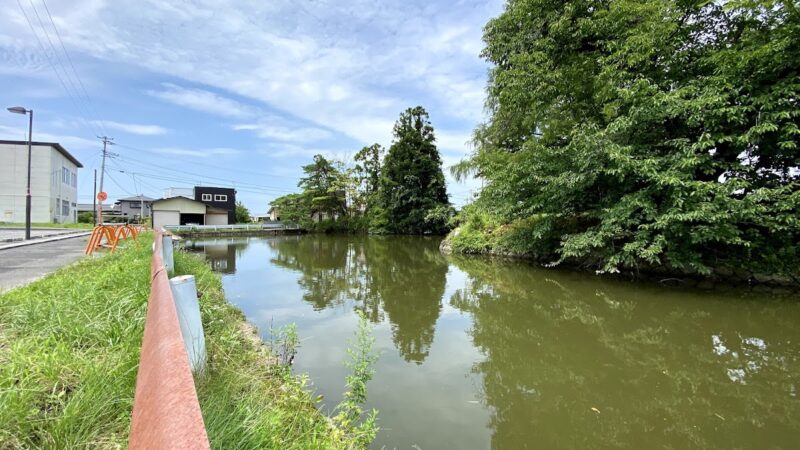
A river flows around the castle, encircling the mountain, forming a natural defensive structure. This geographical advantage is one of the reasons why this castle continued to play an important role from the Sengoku period to the early Edo period.
History of Yuhara Castle
Construction and the Sengoku Period
There are various theories regarding the construction period of Yuhara Castle, but the most widely accepted theory is that it was built by the Date clan during the Sengoku period. The Date clan, in the process of gaining hegemony over Oshu, established key castles in strategic locations within their territory, and Yuhara Castle was one of them.
It is believed that the Yuhara clan, a local powerful family, resided in this area from around the Eisho era (1504-1521). However, with the expansion of the Date clan’s power, it is thought that control of the castle came under their control.
The Date clan dispatched a magistrate from Yonezawa to govern the region and monitor the roads. Given its location near the border with Yamagata Prefecture, it is presumed to have also functioned as a border castle with the Mogami clan.
The Yokoo Clan’s Era
In the Edo period, the Yokoo clan, vassals of the Date family of the Sendai Domain, resided at the castle as its castellan. Specifically, Yokoo Ise Sanemitsu and his successor, Yokoo Ise Motoatsu, are well-known figures.
The Yokoo family, as important retainers of the Sendai Domain, were entrusted with governing this region. Yuhara Castle functioned not only as a military base but also as an administrative center for the Shichikashuku post town, likely monitoring and managing people and goods traveling along the Oshu Kaido road.
Transfer of Territory to the Ishikawa Family
In 1644 (Shoho 1), the territory of Yuhara Castle was transferred to the Ishikawa family. This transfer is thought to be part of a personnel reshuffle within the Sendai Domain, but the Ishikawa family, as important retainers of the Sendai Domain, continued to govern the area.
Throughout the Edo period, as military tensions eased, Yuhara Castle gradually strengthened its character as an administrative center. However, its basic structure as a castle was maintained, and well-preserved remains have survived to this day.
Structure and Layout of Yuhara Castle
Characteristics of a Concentric Mountain Castle
Yuhara Castle is classified as a concentric mountain castle. A concentric castle is a castle structure in which multiple baileys (kuruma) are arranged in a continuous pattern around a central bailey (honmaru).
The castle skillfully utilizes the hilly terrain, with a structure in which terraced baileys are placed on narrow ridges around the central bailey. This arrangement maximizes the use of the limited terrain while achieving a highly defensible castle.
Major Remains
The following remains are well-preserved at Yuhara Castle:
Baileys (Kuruwa)
Within the castle, the honmaru (main bailey), ni-no-maru (second bailey), and other kuruma remain relatively intact. The main bailey is located in the center of the castle, at the highest elevation.
Surrounding the main bailey are baileys such as the East Bailey, Upper Bailey, and Lower Bailey, arranged in a stepped pattern, each functioning as an independent defensive unit. Below the upper enclosure, a long, narrow enclosure called an obi-kuruwa (belt enclosure) can also be seen.
Earthworks
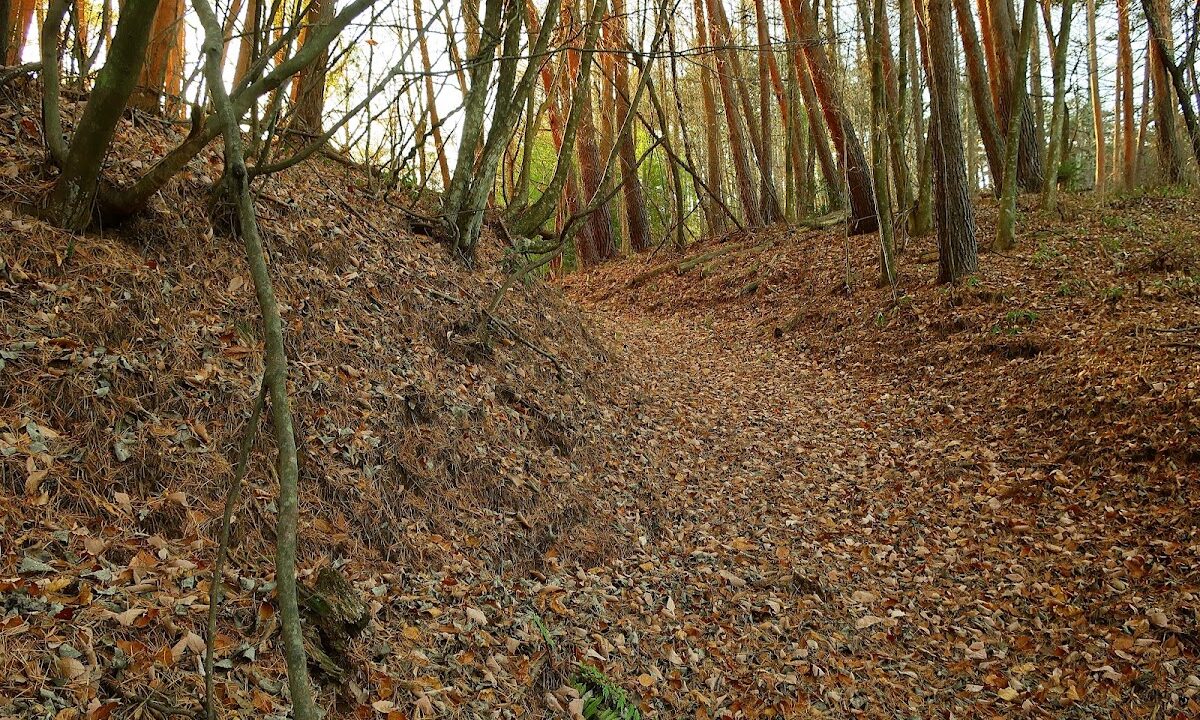
Earthworks were constructed around each enclosure. The earthwork on the east side of the upper enclosure is particularly well-preserved, and the break in the earthwork (the entrance to the gate) can also be observed.
The cliff face of the main enclosure (kirigishi: a slope cut vertically along the edge of the enclosure) is high, showing a design intended to make enemy intrusion difficult.
Dry Moats and Moats
Dry moats were arranged within the castle grounds, serving to demarcate and defend between enclosures. Particularly important are the moats, of which three have been identified within the castle.
The moat between the upper and eastern enclosures is especially large, completely blocking the ridge. This moat limited enemy intrusion routes, making defense easier.
Koguchi (Tiger’s Mouth Entrance)
The koguchi (tiger’s mouth), the entrance to the castle, has also been confirmed. Some parts of the koguchi have stone masonry, suggesting traces of renovations from the early Edo period.
The use of stone masonry is relatively rare for mountain castles in this region, and it is presumed to have served to demonstrate the authority of the castle lord and to provide structural reinforcement.
Relocated Gate
It is said that part of the gate of Yuhara Castle was relocated to another location in later periods. This is an interesting example of the reuse of building materials after the castle’s functionality declined during the Edo period.
Highlights of Yuhara Castle
Castle Ruins Information Board and Marker
An castle ruins information board and marker are installed at the site, providing basic information about the castle’s history and structure. The information board also includes a layout map, which is helpful for understanding the overall picture before visiting.
View from the Main Enclosure
From the main enclosure, you can enjoy a panoramic view of the Shichikashuku post town and see the Oshu Kaido road. The location, offering panoramic views in almost all directions, truly highlights its importance as a military surveillance base.
The view towards the Yamagata Prefecture border is particularly magnificent, clearly demonstrating its role in monitoring the territory of the Mogami clan.
Preservation of the Remains
The greatest appeal of Yuhara Castle lies in the large scale and excellent state of preservation of its remains. Earthworks, moats, and baileys remain clearly visible, making it an excellent site for learning about the structure of a Sengoku period mountain castle.
The depth of the moats and the height of the earthworks, in particular, can be experienced firsthand, allowing one to appreciate the advanced castle-building techniques of the time.
Photo Spots
For a photo gallery-like viewing experience of the castle ruins, the following points are recommended:
- The break in the earthwork on the east side of the upper bailey
- The moat between the upper and eastern baileys
- The high cliff of the main bailey
- The stone wall of the gate
- The appearance of the outer bailey
These remains are ideal for visually understanding the structure of a mountain castle and are also attractive subjects for photography.
Access and Visit Information
Location
Machiura, Shichikashuku-machi, Katta-gun, Miyagi Prefecture
Transportation Access
By Car
- Approximately 40 minutes from the Tohoku Expressway “Shiraishi IC” via National Route 4 and Prefectural Roads
- Approximately 50 minutes from the Yamagata Expressway “Yamagata Zao IC” via National Route 13 and National Route 113
It is within walking distance from the center of Shichikashuku-machi. For parking, we recommend using the town’s public facilities or contacting the Shichikashuku-machi office in advance.
By Public Transportation
Public transportation access is limited. The nearest bus stop is within Shichikashuku-machi, but since the number of buses is limited, it is necessary to check the timetable in advance.
Points to Note During Your Visit
- As this is a mountain castle, comfortable clothing and shoes are essential.
- Don’t forget insect repellent during the summer.
- Visiting may be difficult in winter due to snow.
- To protect the remains, please avoid any actions that could damage the earthworks or moats.
- Please take all your trash with you.
Estimated Visit Time
If you plan to carefully observe the remains, allow 1 to 1.5 hours. Taking photographs or comparing them with the castle layout map may take longer.
Nearby Tourist Information
Attractions in Shichikashuku Town
In addition to visiting Yuhara Castle, Shichikashuku Town offers the following tourist attractions:
Shichikashuku Dam
This is one of the largest dams in Miyagi Prefecture, and the surrounding area is developed as a nature park. The scenery of the dam lake is beautiful in every season, especially during the autumn foliage season.
Sekiyama Road
This ancient road flourished as part of the Oshu Kaido (Oshu Highway), and is dotted with historical streetscapes and sites that retain a historical atmosphere.
Nametsu Great Waterfall
A famous waterfall representative of Shichikashuku Town, this waterfall is beautiful with its two-tiered flow. It is about a 15-minute drive from Yuhara Castle.
Nearby Castle Ruins
For castle enthusiasts, we recommend visiting the following castle ruins as well:
- Furuyakan: The ruins of a medieval manor house near Yuhara Castle
- Hachimankan: Another mountain castle within Shichikashuku Town
- Shiraishi Castle: A modern castle in Shiraishi City with a reconstructed keep
Cultural Property Designation of Yuhara Castle
The Yuhara Castle ruins are protected as a Shichikashuku Town Designated Cultural Property. The town is engaged in preservation activities as an important historical heritage site of the region.
Its value as a cultural property lies in the following points:
- A well-preserved example of a mountain castle structure from the Sengoku period to the early Edo period.
- An important historical site demonstrating the Date clan’s territorial control system.
- A historical site that tells the history of the Oshu Kaido (highway).
- Can be used as a venue for local history education.
Current Status and Challenges of Yuhara Castle Research
Research Progress
Regarding Yuhara Castle, investigations have been conducted by local historians and castle researchers. The creation of layout maps and detailed records of the remains are progressing, and its full scope is gradually becoming clear.
In particular, the layout map by Mr. Yogo is a valuable resource for understanding the castle’s structure. Furthermore, castle information websites such as Kojodan (Castle Enthusiasts’ Group) have accumulated photographs and information from visitors, which are also used as research materials.
Future Challenges
On the other hand, the following challenges remain:
- Determination of Construction Date: Identifying the period of construction by the Date clan
- Changes in Castle Lords: Clarifying the detailed genealogy of those who resided in the castle
- Changes in Castle Function: Differences in its role between the Sengoku and Edo periods
- Relationship with Surrounding Ruins: Connection with Furuyakan and Hachimankan
- Preservation and Utilization Plan: Balancing development as a tourist resource with the protection of the remains
The Charm and Value of Yuhara Castle
Yuhara Castle is one of the best castle sites in Miyagi Prefecture for learning about the structure of mountain castles during the Sengoku period, boasting excellent preservation of its remains.
While it lacks large-scale stone walls or flashy structures like a keep, it offers a sense of the simple strength of an earthen castle and the ingenuity of its layout, which skillfully utilizes the terrain. For castle enthusiasts, it is a valuable field where basic remains such as earthworks, moats, and baileys can be carefully observed.
Furthermore, as a castle site linked to the history of the post town of Nanakashuku, it is an important historical site for understanding local history. As a castle controlling a strategic point on the Oshu Kaido road, it is a fascinating site from the perspective of transportation and logistics history.
Nestled in a quiet mountain town, Yuhara Castle is the perfect place to escape the hustle and bustle and reflect on history. Be sure to visit and experience the atmosphere of a Sengoku period mountain castle.
Summary
Yuhara Castle (Shichikashuku Town, Miyagi Prefecture) is a Sengoku period mountain castle built by the Date clan. During the Edo period, the Yokoo and Ishikawa clans served as castle lords. As a multi-bailey mountain castle, the remains of the baileys, earthworks, moats, and gates are well-preserved and protected as a town-designated cultural property.
Due to its location overlooking a strategic point on the Oshu Kaido road, it played an important military and administrative role. Even today, it remains a valuable historical site where you can learn about the structure of a Sengoku period mountain castle, and is popular with castle enthusiasts and history buffs.
When you visit Shichikashuku Town, be sure to stop by this historic mountain castle and enjoy the ingenuity of the defensive structures built by our ancestors, as well as the beautiful scenery that can be seen from there.