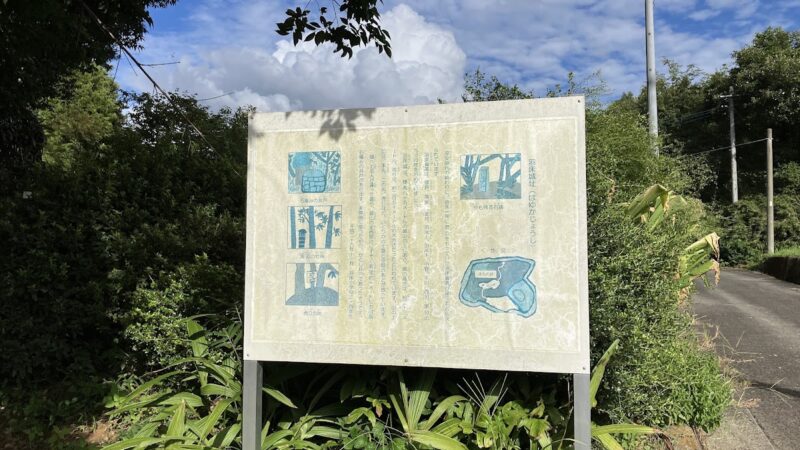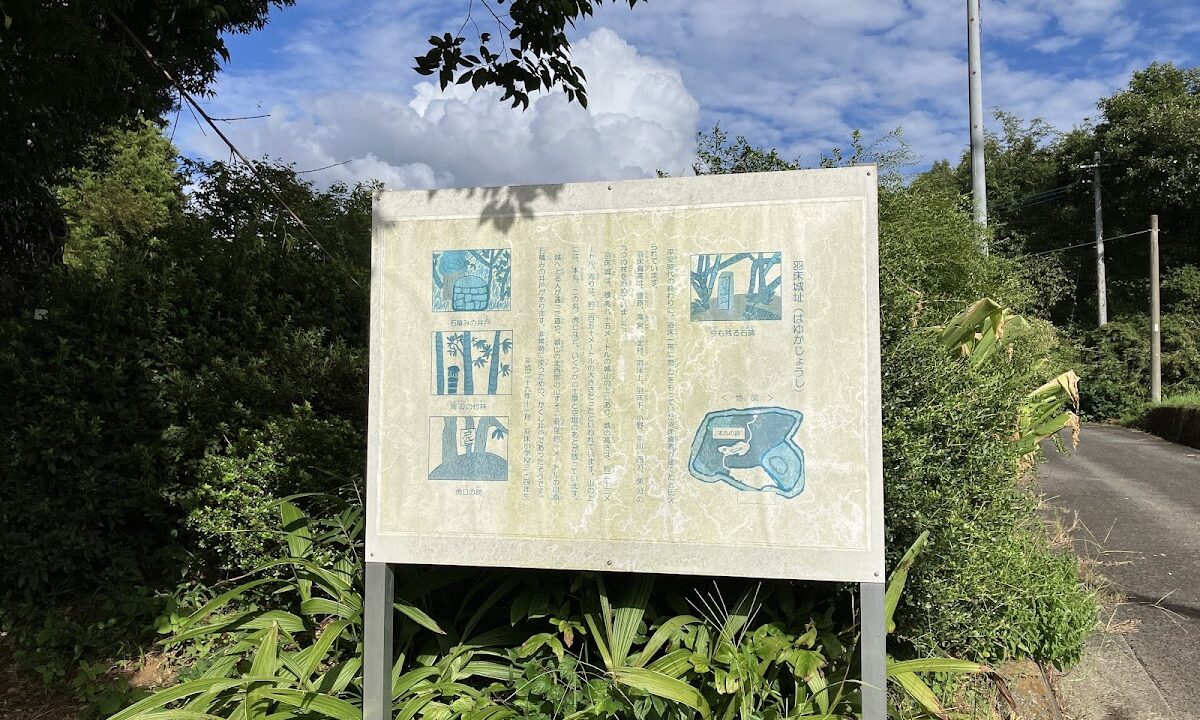
The History and Remains of Hayuka Castle (Ayagawa-cho, Ayauta-gun, Kagawa Prefecture) | A Thorough Explanation of the Residence of the Hayuka Clan, the Main Lineage of the Sanuki Fujiwara Clan
Hayuka Castle, located in Hayukashita, Ayagawa-cho, Ayauta-gun, Kagawa Prefecture, is a flatland castle that served as the ancestral residence of the Hayuka clan, a powerful samurai group in Sanuki Province. As the base of the Hayuka clan, who flourished as the main lineage of the Sanuki Fujiwara Clan, it played a crucial role in the history of medieval Sanuki. This article provides a detailed explanation of Hayuka Castle, from its historical background to existing remains and access information.
Basic Information on Hayuka Castle
Hayuka Castle is a flatland castle built on a hill 82 meters above sea level and 21 meters above ground level. It is located in the present-day Hayukashita, Ayagawa-cho, Ayauta-gun, Kagawa Prefecture, and occupies a strategically important location overlooking the Sanuki Plain.
Castle Data
- Location: Shiroshita, Hayukashita, Ayagawa-cho, Ayauta-gun, Kagawa Prefecture
- Builder: Hayuka Suketaka
- Year of Construction: Jisho era (1177-1181)
- Castle Structure: Hilltop castle
- Elevation: 82 meters
- Relative Height: 21 meters
- Main Lords: Successive generations of the Hayuka clan
- Year of Abandonment: Tensho 14 (1586)
- Existing Remains: Enclosures, earthworks, moats, wells
Origins of the Hayuka Clan and the Sanuki Fujiwara Clan
The Hayuka clan was the main lineage of the Sanuki Fujiwara clan and played a central role in the Fujiwara-related samurai groups in Sanuki Province. Their origins date back to the late Heian period.
The Establishment of Fujiwara no Ienari and the Sanuki Fujiwara Clan
The ancestor of the Hayuka clan was Fujiwara no Ienari, the Nakamikado Chunagon (Middle Counselor). Fujiwara no Ienari was a court official in the late Heian period, and his descendants moved to Sanuki Province and settled there as local officials. Aya no Taifu Akitaka, considered the ancestor of the Sanuki Fujiwara clan, is said to be either Ienari’s son or grandson, and he was based in Aya District, Sanuki Province.
The Establishment of the Hayuka Clan
Akitaka’s son, Suketaka, was appointed as the estate manager of Hayuka Manor, and adopted the surname “Hayaka” from the place name, marking the beginning of the Hayuka clan. Suketaka built Hayuka Castle during the Jisho era (1177-1181), making it the clan’s base. During the time of his son, Shigetaka, the castle was renovated, and the Hayuka clan established itself as the head of the 63 branches of the Sanuki Fujiwara clan, becoming the leading Fujiwara-lineage samurai group in Sanuki Province.
History of Hayuka Castle
The Jōkyū War and the Downfall of the Hayuka Clan
The greatest turning point in the history of the Hayuka clan was the Jōkyū War, which broke out in 1221. In this war, in which Emperor Go-Toba raised an army to overthrow the Kamakura Shogunate, the Hayuka clan sided with the Emperor.
However, the Jōkyū War ended in an overwhelming victory for the Shogunate, and the samurai who sided with the Emperor were severely punished. The Hayuka clan was no exception, losing its position as the main lineage of the Sanuki Fujiwara clan, and its power base was greatly shaken. As a result, the real power of the Sanuki Fujiwara clan shifted to the Kozai clan, based at Katsuga Castle, and the Hayuka clan subsequently came under the influence of the Kozai clan.
From the Nanboku-cho Period to the Sengoku Period
After the Jokyu War, the Hayuka clan continued to exist as a branch of the Sanuki Fujiwara clan, but their power was not as great as it once was. During the Nanboku-cho period, the Hosokawa clan’s control over Sanuki was established, and it is believed that the Hayuka clan also came under the Hosokawa clan’s control.
With the arrival of the Sengoku period, Sanuki Province became the sphere of influence of the Miyoshi clan, and after the death of Oda Nobunaga, it was further invaded by Chosokabe Motochika, who aimed to unify Shikoku.
The End of Hayuka Suketoshi and the Hayuka Clan
The last lord of Hayuka Castle was Hayuka Suketoshi (birth year unknown – 1582). During Suketoshi’s time, the Hayuka clan was plagued by internal conflicts.
In 1578 (Tensho 6), Sukenori fell out with his son-in-law, Kozai Yoshikiyo, and ended up divorcing his daughter. This internal family discord further weakened the Hayuka clan’s power.
In 1582 (Tensho 10), when Chosokabe Motochika’s invasion of Sanuki Province intensified, the Hayuka clan attempted to resist but were forced to surrender in the face of overwhelming military force. Sukenori is believed to have died that year, and the Hayuka clan came under the control of the Chosokabe clan.
Abandonment of Hayuka Castle
In 1585 (Tensho 13), Toyotomi Hideyoshi pacified Shikoku, and Chosokabe Motochika’s domain was reduced to Tosa Province only. Sengoku Hidehisa was appointed to Sanuki Province, but the following year, in 1586, he suffered a crushing defeat at the Battle of Hetsugigawa in Bungo Province and had Sanuki Province confiscated.
Amidst this turmoil, the Hayuka clan was completely destroyed, and Hayuka Castle was abandoned. 1586 is considered the year Hayuka Castle was abandoned. Hayuka Castle, which had functioned as the Hayuka clan’s residence for approximately 400 years, thus disappeared from the stage of history.
Hayuka Castle’s Layout and Remains
Hayuka Castle was built on a low hill with a relative height of 21 meters, but it retains well-preserved remains typical of a medieval castle.
Arrangement of the Enclosures
The central part of Hayuka Castle has a linear layout centered around the main enclosure (honmaru). The main enclosure is located at the highest point of the castle and is surrounded by earthen ramparts. The main enclosure (Honmaru) is not particularly large, but it is spacious enough to function as a residence.
Several baileys are arranged around the main enclosure, forming a stepped defensive line. These baileys are a design feature intended to prevent enemy incursions in stages, a typical structure of medieval mountain castles. Clear cliffs (kirigishi) are provided between each bailey, intended to utilize the difference in elevation for defense.
Earthworks and Moats
A notable defensive feature of Hayuka Castle is its well-preserved earthworks. The earthworks surrounding the main enclosure are still clearly visible today, with a maximum height of approximately 2 meters remaining. Traces of moats can also be seen outside the earthworks, indicating the formation of a double defensive line.
A moat was constructed behind the castle (on the mountain side), preventing enemy incursions from the ridge. This moat remains approximately 3 meters deep today, giving a glimpse into its defensive function at the time.
Wells and Remains of Daily Life
The remains of a well are found within the castle grounds, indicating that water supply was considered during sieges. This well is located near the main keep and can still be seen today as a depression in the ground.
Furthermore, fragments of medieval pottery have been collected from various locations within the castle grounds, supporting the idea that the area was inhabited for a long period.
Preservation of Remains
The remains of Hayuka Castle are still relatively well-preserved, even more than 400 years after its abandonment. The layout of the earthworks and baileys is particularly clear, making it a valuable historical site for understanding the structure of medieval castles. However, some parts have been lost due to later development and weathering, making preservation measures a challenge.
Related Historical Sites Around Hayuka Castle
Hayukakami Castle
Located approximately 700 meters northeast of Hayuka Castle is Hayukakami Castle. This castle, believed to have been located near the Yasaka Shrine in Hayukakami-Imataki, Ayagawa-cho, Ayauta-gun, Kagawa Prefecture, is thought to be a branch castle or the site of a family residence of the Hayuka clan. While its exact relationship to Hayuka Castle is unclear, it is an important archaeological site indicating the Hayuka clan’s sphere of influence.
Castles Related to the Sanuki Fujiwara Clan
Each of the 63 branches of the Sanuki Fujiwara clan had castles and residences throughout Sanuki Province. Shōga Castle, belonging to the Kōzai clan, a powerful family alongside the Hayuka clan, is located in Kinashi-cho, Takamatsu City, and became the center of the Sanuki Fujiwara clan after the Jōkyū War. Furthermore, several other medieval castle sites have been confirmed within Ayagawa-cho, providing clues to the distribution of power among samurai groups at the time.
Access and Visiting Information for Hayuka Castle
Location and Transportation Access
Location: Hayukashita, Ayagawa-cho, Ayauta-gun, Kagawa Prefecture
Public Transportation:
- Approximately 30 minutes by car from JR Takamatsu Station
- Approximately 15 minutes on foot from the Kotoden Bus “Hayaka” bus stop
By Car:
- Approximately 10 minutes from the Takamatsu Expressway “Fuchuko Smart IC”
- Accessible via town roads from Prefectural Road 17
Parking and Ascent Route
Hayaka Castle does not have a dedicated parking lot. Visitors should use nearby street parking spaces (in places that do not cause inconvenience) or access the castle on foot. Since these are also local roads, respectful behavior is required.
The most common ascent route is a relatively gentle slope from the south side of the castle. Because the elevation difference is only 21 meters, even those without much physical strength can reach the main keep in about 15 minutes. However, since the trail is not well-maintained, we recommend wearing comfortable clothing and shoes.
Precautions for Visiting
- Do not enter areas marked “No Entry,” as this may include private property.
- Be careful not to damage the ruins.
- Always take your trash with you.
- Visiting in spring or autumn is recommended, as vegetation is overgrown in summer.
- Avoid visiting alone; visiting in groups is safer.
Historical Significance of Hayuka Castle
Hayaka Castle is an important historical site that tells the story of the rise and fall of medieval samurai groups in Sanuki Province. As the residence of the Hayuka clan, who flourished as the main branch of the Sanuki Fujiwara family, this castle, which continued to function for approximately 400 years, holds historical significance in the following ways:
A Heritage Site Conveying the History of the Sanuki Fujiwara Family
Hayaka Castle is a valuable example showing the process by which Fujiwara-related aristocrats who descended from Kyoto became local lords. This specifically illustrates the characteristics of medieval society, where descendants of central aristocrats settled in the provinces and formed samurai groups.
The Impact of the Jōkyū War
The defeat in the Jōkyū War and the subsequent decline in status illustrate the historical turning point of the Kamakura Shogunate’s establishment of nationwide rule from the perspective of local samurai. The decline of the Hayuka clan and the rise of the Kōzai clan illustrate the significant impact the Jōkyū War had on local society.
Sengoku History of Shikoku
The Chōsokabe clan’s invasion and the Hayuka clan’s downfall during the Tenshō period represent one aspect of the Shikoku unification war. Although small in scale, the history of Hayuka Castle is an important element in understanding the situation in Shikoku at the end of the Sengoku period.
A Typical Example of a Medieval Castle
In terms of remains, Hayuka Castle exhibits the structure of a typical medieval flatland castle in Sanuki Province. Basic defensive facilities such as earthworks, baileys, and moats remain well-preserved, making it a valuable resource for the study of medieval castles.
History of Ayauta District and Surrounding Areas
Ayauta District, where Hayuka Castle is located, was formed in 1899 (Meiji 32) through the merger of Aya District and Uta District. The name “Ayauta” was derived from the first characters of both districts.
In the Middle Ages, this region was within the sphere of influence of the Sanuki Fujiwara clan, and Fujiwara-related samurai groups, including the Hayuka clan, established castles and residences throughout the area. Numerous medieval castle sites, in addition to Hayuka Castle, have been confirmed around Ayagawa Town, providing a glimpse into the samurai society of that time.
The current Ayagawa Town was formed in 2006 (Heisei 18) through the merger of Ayakami Town and Ayaminami Town. Historical sites, including Hayuka Castle, are scattered throughout the town, making it an important area for studying the medieval history of Sanuki.
Summary
Hayuka Castle, located in Ayagawa-cho, Ayauta-gun, Kagawa Prefecture, is a flatland castle that served as the ancestral home of the Hayuka clan, the main branch of the Sanuki Fujiwara family. From its construction during the Jisho era until its abandonment in 1586 (Tensho 14), it functioned as the Hayuka clan’s base for approximately 400 years.
Its history—including defeat in the Jokyu War, internal conflicts during the Sengoku period, and the invasion and downfall of Chosokabe Motochika—symbolizes the rise and fall of local samurai groups in medieval Sanuki. The remaining earthworks, baileys, and moats are valuable historical resources for understanding the structure of medieval castles.
Despite its small size, at an elevation of 82 meters and a relative height of 21 meters, Hayuka Castle played a significant role in the history of Sanuki Province. When visiting Ayagawa-cho, be sure to visit this historic castle site and experience the spirit of the medieval samurai of Sanuki.