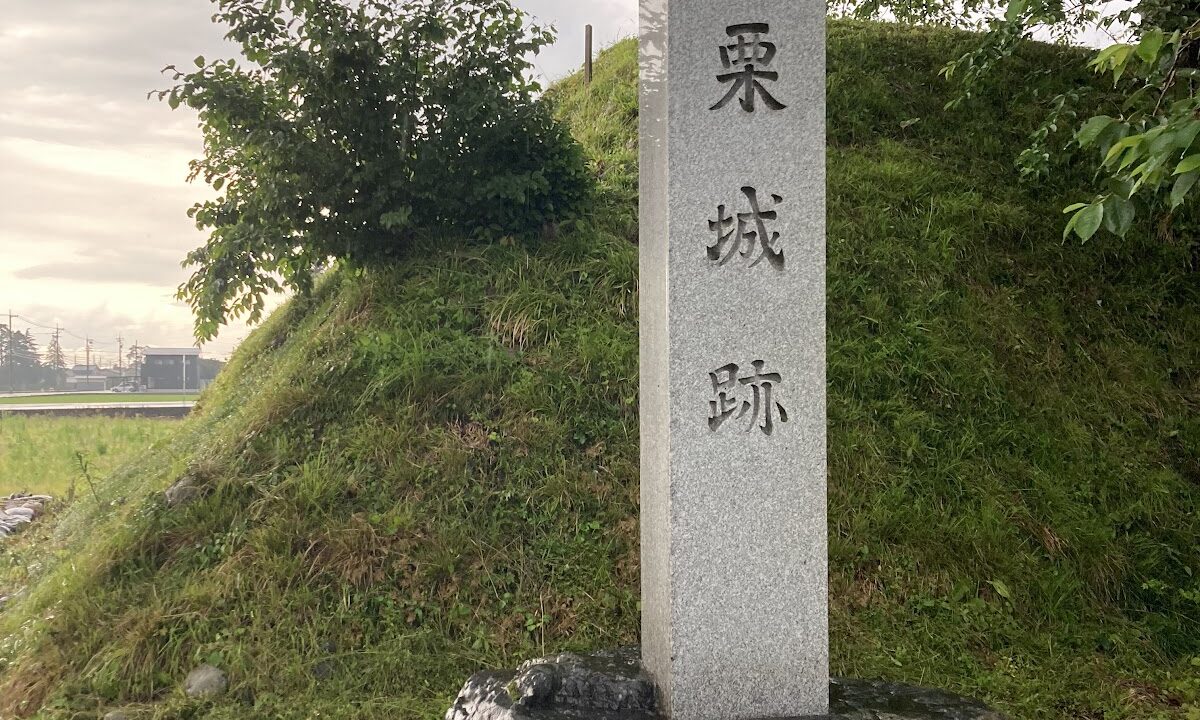
Wakaguri Castle (Tsukuba City, Ibaraki Prefecture) Complete Guide | History, Remains, and Access Information
What is Wakaguri Castle?
Wakaguri Castle is a medieval mountain castle located in Wakaguri, Tsukuba City, Ibaraki Prefecture. Also known as “Oshiro,” it is a multi-bailey castle built on a hill approximately 10-15 meters high, at the tip of a tongue-shaped plateau extending southwest from the east bank of the Yatagawa River.
Currently, the Tsukuba Peony Garden is adjacent to the west side of the castle site, making it a popular tourist destination during the peony blooming season. While parts of the castle site are overgrown with vegetation, the remains such as earthworks and dry moats are well-preserved, making it a valuable historical site for understanding the structure of medieval castles.
History of Wakakuri Castle
Construction and Lord
While there are various theories regarding the construction period and builder of Wakakuri Castle, it is considered certain that it functioned as a branch castle of the Okami clan, who wielded considerable power in southern Hitachi Province during the Sengoku period. The Okami clan was a powerful local family based at Ashitaka Castle (Tsukuba City), and Wakakuri Castle was an important base protecting the northwestern edge of their territory.
Kuribayashi Yoshinaga and the “Kongming of Kanto”
The most famous lord of Wakakuri Castle is Kuribayashi Yoshinaga. He is mentioned in Edo period documents such as the “Tōgoku Tōsen Kenbun Shiki” (Private Records of Eastern Japan’s Battles), and was nicknamed the “Kongming of Kanto” due to his exceptional strategic brilliance. He is believed to have played a crucial role within the Okami clan’s retainers, acting as a military strategist comparable to Zhuge Liang of the Three Kingdoms period in China.
Kuribayashi Yoshinaga was not merely a warrior, but a brilliant strategist and military advisor who supported his lord, the Okami clan. His strategic brilliance was widely known in the Kanto region at the time and has been passed down through generations.
Wakakuri Castle in the Sengoku Period
During the Sengoku period, southern Hitachi Province was a fierce battleground where the forces of the Oda, Tagaya, Yuki, and Later Hojo clans were intricately intertwined. The Okami clan also strived to maintain their power by repeatedly forming alliances and conflicts with these Sengoku daimyo.
Wakakuri Castle was a formidable fortress utilizing the natural moat of the Yatagawa River, and is thought to have functioned as a defensive base against invasions from the north. Given the castle’s location, it is presumed to have played a role in monitoring enemy forces from the Mito and Shimotsuma areas and maintaining communication with the main castle, Ashitaka Castle.
The Castle’s Demise
The Okami clan sided with the Hojo clan during Toyotomi Hideyoshi’s siege of Odawara in 1590, and their territory was confiscated. It is believed that Wakakuri Castle was abandoned around this time. During the Edo period, this area became a direct territory of the shogunate and a territory of hatamoto (direct retainers of the shogun), and its function as a castle was completely lost.
Structure and Remains of Wakakuri Castle
Layout and Structure
Wakakuri Castle is a typical multi-bailey castle utilizing a tongue-shaped plateau jutting out into the Yatagawa River. It has a structure in which multiple baileys (kuruwa) are connected from the tip of the plateau towards the rear, making maximum use of its location with a relative height of 10-15 meters.
In terms of scale, it is a small to medium-sized subsidiary castle, and it is thought to have had a stronger character as a military base in times of emergency rather than a permanent residential facility. The overall layout is estimated to be approximately 100 meters east-west and 80 meters north-south.
Major Remains
Earthworks
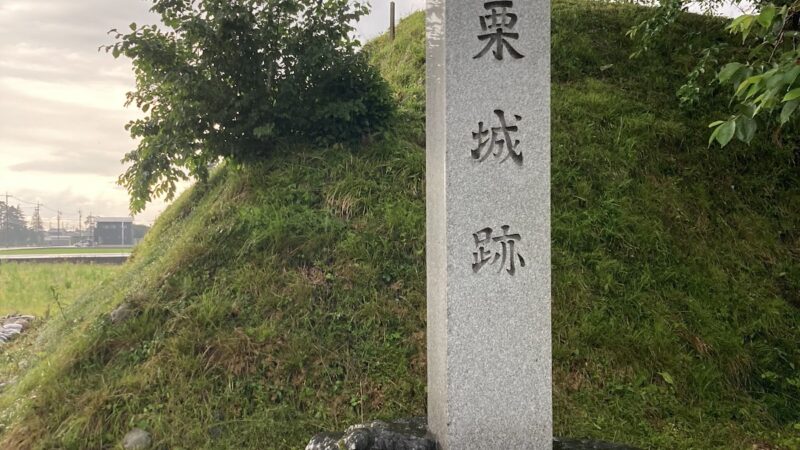
Traces of earthworks can still be seen in several places within the castle grounds. In particular, the earthworks built around the periphery of the baileys functioned as basic defensive structures to prevent enemy intrusion. The current height is about 1-2 meters, but it is possible that it was higher when the castle was built, and that fences or walls were built on top of it.
A detailed examination of the earthwork structure reveals traces of careful construction using the rammed earth method, indicating that it was not just a simple mound of earth, but a planned defensive structure.
Dry Moat
A shallow but wide dry moat can be seen behind the castle to the north. This dry moat was an important defensive line to prevent enemy incursions from the rear, which is connected to the plateau. Although it is now shallow due to burial and weathering, it is estimated that it was a moat about 3-4 meters deep at the time.
The bottom of the dry moat is covered with bushes, but a closer examination reveals that the width of the moat bottom is about 5-7 meters, indicating that it was large enough that enemy soldiers could not easily cross it. Earthworks were built on both sides of the moat, forming a defensive system combining the moat and earthworks.
Enclosure (Kuruwa)
At the tip of the plateau is a flat area that is thought to be the main enclosure, where an Inari shrine is currently enshrined. This main enclosure measures approximately 30 meters east-west and 25 meters north-south, and is believed to have housed the lord’s residence and command post.
Behind the main enclosure (to the north) are the second and third enclosures, arranged in a series of interconnected enclosures, creating a structure that allowed for tiered defense. While it is presumed that there were elevation changes and small moats between each enclosure, some parts are now unclear due to overgrown vegetation and changes in the terrain.
Inari Shrine
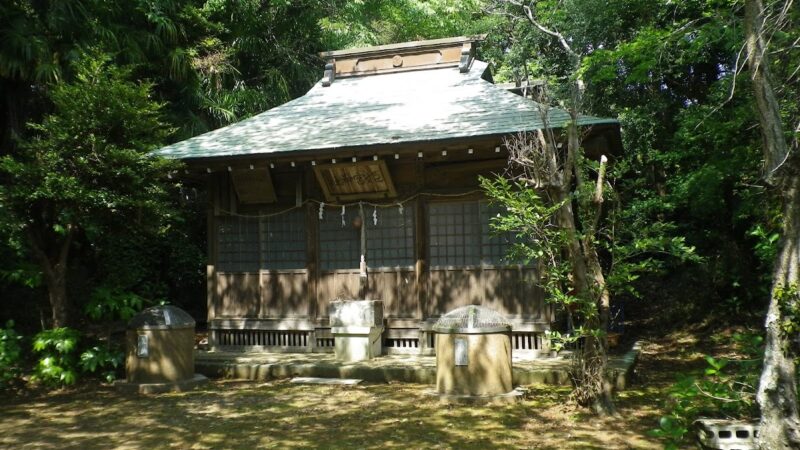
At the tip of the castle site stands an Inari Shrine. This shrine is thought to have originated as a guardian deity of the castle, and its worship has continued by local residents even after the castle’s abandonment. The area around the shrine is relatively sparsely overgrown, making it a landmark for visitors to the castle ruins.
The Inari Shrine’s building, though small, is carefully maintained, reflecting the deep faith of the local people. From the shrine, there is a view towards the Yatagawa River, allowing one to imagine the view from the castle in its heyday.
Highlights and Points of Interest at Wakakuri Castle
Castle Notes (Highlights)
The main highlights when visiting Wakakuri Castle are as follows:
Remains of Earthworks and Dry Moats
The earthworks and dry moats, basic defensive structures of medieval castles, are well-preserved. The dry moat on the north side is particularly wide, allowing you to appreciate the defensive system of the time.
Utilization of the Tongue-Shaped Plateau Topography
You can observe the castle’s layout, which skillfully utilizes the natural topography of a tongue-shaped plateau jutting out into the Yatagawa River. You can truly appreciate its strategic location, surrounded on three sides by lowlands.
Inari Shrine and the Castle’s History
The Inari Shrine, located on the site of the main enclosure, is a valuable reminder of the castle’s history. Understanding the castle’s structure can be gained from the area around the shrine.
Scenery with the Peony Garden
The Tsukuba Peony Garden, located west of the castle ruins, is filled with beautiful peonies in the spring. You can enjoy peony viewing in conjunction with exploring the castle ruins.
Photography Tips
Recommended photography spots at Wakakuri Castle include the view towards the plateau from around the Inari Shrine, locations where you can observe the cross-section of the earthworks, and the panoramic view of the dry moat. The autumn and winter seasons, when the leaves have fallen, are particularly suitable for photography as the shape of the remains is easier to discern.
A panoramic photograph of the castle plateau from the peony garden side is also useful for understanding the castle’s location. The view of the plateau from near Konan Bridge evokes the grandeur of the castle in its heyday.
Access Information
Location
Address: Oshiroyama, Wakakuri, Tsukuba City, Ibaraki Prefecture
Alternate Name: Oshiro (Castle)
Transportation Access
Access by Car
- Approximately 10 minutes from the Yatabe Interchange on the Joban Expressway
- Approximately 15 minutes from the center of Tsukuba City via National Route 408
- The castle ruins are on the plateau immediately to the right after crossing the Konan Bridge
Access by Public Transportation
- Approximately 20 minutes by bus from Tsukuba Station on the Tsukuba Express, then approximately 10 minutes on foot from the nearest bus stop
- Approximately 30 minutes by bus and taxi from Ushiku Station on the JR Joban Line
Parking
You can use the parking lot of the Tsukuba Peony Garden. Parking may be available even outside of the garden’s operating season, but it is recommended to check in advance. The castle ruins are a few minutes’ walk from the parking lot.
Entrance and Route to the Castle
The entrance to the castle is difficult to find, so please be careful. There is a gap in the bushes on the eastern slope of the plateau, north of the Tsukuba Peony Garden, and you can climb from there. Since there is no clearly marked path, you need to proceed carefully, paying attention to your footing.
After climbing from the gap in the bushes, you will reach the Inari Shrine relatively quickly. It is best to aim for the shrine. The climb takes about 10-20 minutes.
Points to Note When Visiting
Clothing and Equipment
Wakakuri Castle Ruins are not a well-maintained tourist area, and there are many areas with dense bushes and weeds. Therefore, the following equipment is recommended:
- Long-sleeved shirt and long pants (for bushwhacking)
- Trekking shoes or athletic shoes
- Work gloves (useful for pushing through bushes)
- Insect repellent spray (spring to autumn)
- Hat (summer)
Best Time to Visit
The best time to visit the castle ruins is from late autumn to early spring (November to March), when the vegetation has withered. During this time, there is less undergrowth, making it easier to observe the ruins. Also, there are fewer insects, making for a more comfortable stroll.
Visiting during the spring peony blooming season (late April to early May) in conjunction with a visit to the peony garden is also recommended, but the castle ruins area may not be suitable for observing the ruins due to the growing weeds.
Visitor Etiquette
- Do not trespass on private property or the peony garden grounds.
- Always take your trash with you.
- Do not damage the ruins or collapse the earthworks.
- Show respect when praying at the Inari Shrine.
- Be considerate of the privacy of local residents when taking photographs.
Nearby Tourist Attractions
Tsukuba Peony Garden
This peony garden is located adjacent to the west side of the Wakakuri Castle ruins. In spring, approximately 800 peony plants bloom. The garden is usually open from late April to mid-May, and you can enjoy various varieties of peonies. It’s an ideal spot to visit in conjunction with a visit to the castle ruins.
Nearby Castles
Yatabe Castle
Located approximately 3km southeast of Wakakuri Castle, Yatabe Castle was the residence of the Yatabe clan, a branch of the Oda clan. Currently, it is the site of Yatabe Elementary School, but remnants such as earthworks remain in the surrounding area.
Mizumori Castle
A medieval castle located in Mizumori, Tsukuba City, west of Wakakuri Castle. It is believed to have functioned concurrently with Wakakuri Castle as part of a group of castles in the Yatagawa River basin.
Oda Castle
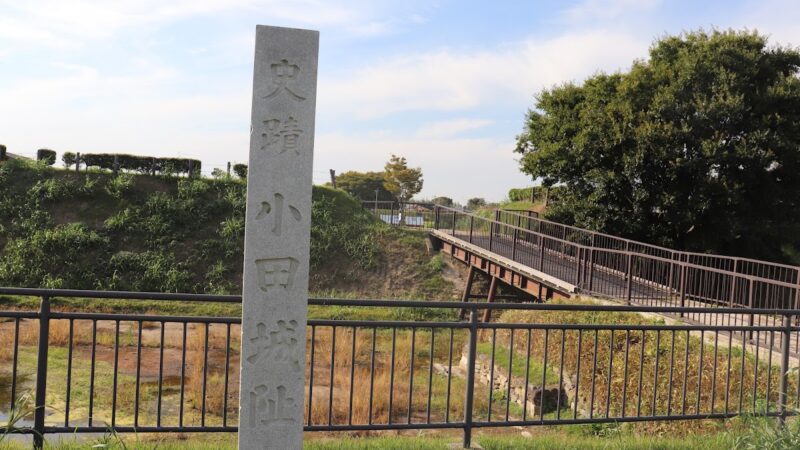
A representative medieval castle in Tsukuba City, designated a National Historic Site. Known as the residence of 15 generations of the Oda clan, it is characterized by its vast castle grounds and well-preserved remains. It is approximately a 20-minute drive from Wakakuri Castle.
Research and Study of Wakakuri Castle
Historical Documents
While historical documents concerning Wakakuri Castle are limited, descriptions of Kuribayashi Yoshinaga can be found in Edo period military chronicles such as the “Togoku Tosen Kenbun Shiki” (Private Record of Eastern Japan’s Battles). There are also brief mentions in local history books such as the “Hitachi no Kuni Shi” (History of Hitachi Province).
In recent years, as part of a cultural property survey by the Tsukuba City Board of Education, surveys and layout maps of Wakakuri Castle have been conducted, revealing the castle’s structure in more detail.
Archaeological Investigation
While no full-scale excavation has been conducted, surface collection has revealed fragments of medieval pottery. Future academic excavations are expected to shed more light on the castle’s usage period and the actual living conditions within its walls.
Wakakuri Castle and the Okami Clan’s Castle Network
Wakakuri Castle played a key role in the Okami clan’s castle network. Centered around the Okami clan’s main castle, Ashitaka Castle, it is believed that Wakakuri Castle, Tegomaru Castle, Shimana Castle, and other branch castles were strategically positioned, coordinating to defend their territories.
Wakakuri Castle’s location, utilizing the natural moat of the Yatagawa River, was strategically important for monitoring invasion routes from the north. It is presumed that communication was maintained between castles using smoke signals, allowing for quick responses to enemy movements.
Summary
Wakakuri Castle is a medieval castle in Tsukuba City, Ibaraki Prefecture, known as the residence of Kuribayashi Yoshinaga, the “Kongming of Kanto.” Utilizing a tongue-shaped plateau on the east bank of the Yatagawa River, the castle features a multi-bailey layout, and remnants such as earthworks and dry moats remain, conveying the appearance of a branch castle of a local powerful family during the Sengoku period.
While the entrance to the castle is difficult to find and some parts are overgrown with bushes, it is a historical site worth visiting for those interested in medieval castles. Visiting it in conjunction with the Tsukuba Peony Garden allows you to enjoy both historical exploration and flower viewing.
Although not widely known nationwide, it is an important castle for understanding the Okami clan’s castle network and a valuable historical site for learning about the Sengoku period history of southern Ibaraki Prefecture. While detailed explanatory signs are not provided, studying the history beforehand will lead to a deeper understanding and appreciation.
By visiting Wakakuri Castle, why not reflect on the lives and strategies of local powerful families during the Sengoku period, and the footsteps of the brilliant strategist known as the “Kongming of Kanto”?