Complete Guide to Shimotsuma Jinya Ruins (Ibaraki Prefecture) | History, Highlights, and Access Information
Located in Shimotsuma City, Ibaraki Prefecture, the Shimotsuma Jinya Ruins are a historical site where the Shimotsuma Domain’s administrative office was located during the Edo period. While currently the site of Ibaraki Prefectural Shimotsuma First High School, the earthworks from that time remain within the grounds of the Shiroyama Inari Shrine, conveying a glimpse of its former glory. This article provides a detailed explanation of the Shimotsuma Jinya Ruins, including its history, highlights, and access methods.
What are the Shimotsuma Jinya Ruins?
The Shimotsuma Jinya Ruins are the site of the administrative office of the Shimotsuma Domain, which existed from the mid-Edo period to the end of the Edo period. It began in 1712 (Shotoku 2) when Inoue Masanaga entered the domain with a 10,000 koku stipend and established a jinya (fortified residence) on the west side of Tatenuma Pond. The Inoue family ruled this area for 14 generations until the Meiji Restoration.
Unlike castles, jinya functioned as relatively small administrative offices for the domain. The Shimotsuma Jinya was one of the important administrative centers in Hitachi Province and flourished as the political and economic center of the region.
Differences from Shimotsuma Castle
The Shimotsuma Jinya is often confused with “Shimotsuma Castle.” Shimotsuma Castle was built by the Tagaya clan in the Middle Ages and was located around the present-day Sunanuma area. On the other hand, the Inoue clan’s Shimotsuma Jinya was located west of Tatenuma, near the present-day Shimotsuma Daiichi High School, and the two are in completely different locations.
Shimotsuma Castle had military functions as a fortress during the Sengoku period, but it was abandoned in the Edo period. Afterward, the Inoue clan established a new jinya, which became the Shimotsuma Jinya.
History of the Shimotsuma Jinya
The Inoue Clan’s Arrival and the Establishment of the Jinya
In 1712 (Shōtoku 2), Inoue Masanaga was transferred from the Yokosuka Domain in Tōtōmi Province and established a 10,000-koku domain in Shimotsuma. This marked the beginning of the Shimotsuma Domain. Masanaga established his encampment on the west side of Tatenuma, making it the base of his domain’s administration.
The Inoue clan served the shogunate as hereditary daimyo and ruled this area for generations. The encampment housed the lord’s residence, government offices, and warehouses, and the surrounding area was lined with samurai residences.
14 Generations of Inoue Rule
The Shimotsuma Domain is a rare example of a domain ruled by the Inoue clan for 14 generations. While many small domains experienced transfers or confiscation of their territories, the Inoue clan maintained stable administration.
Although the domain’s rice yield was small at 10,000 koku, Shimotsuma was a transportation hub utilizing the Kinugawa River, and commerce flourished. The Inoue clan also focused on agricultural development and flood control projects, striving to stabilize the lives of their people.
The Turmoil of the Late Edo Period and the Shinsengumi
During the late Edo period, the Shimotsuma encampment appeared on the historical stage. In 1868, during the Boshin War, Hijikata Toshizo, the vice-commander of the Shinsengumi, visited the Shimotsuma encampment.
Records indicate that Hijikata’s former shogunate forces seized provisions and weapons from the Shimotsuma encampment. This event is known as the “Nagareyama Incident,” the Shinsengumi’s final battle. The encampment at the time was in chaos, caught between the new government forces and the former shogunate forces.
After the Meiji Restoration
After the Meiji Restoration, the Shimotsuma domain was abolished due to the abolition of the feudal domains and the establishment of prefectures, and the Shimotsuma encampment ceased to function. In the early Meiji period, the encampment buildings were demolished, and the site was repurposed for school grounds and other uses.
The current Ibaraki Prefectural Shimotsuma First High School is built on the site of the encampment. While most of the encampment’s remains have been lost, some earthworks remain within the grounds of the Shiroyama Inari Shrine.
Highlights of the Shimotsuma Jinya Site
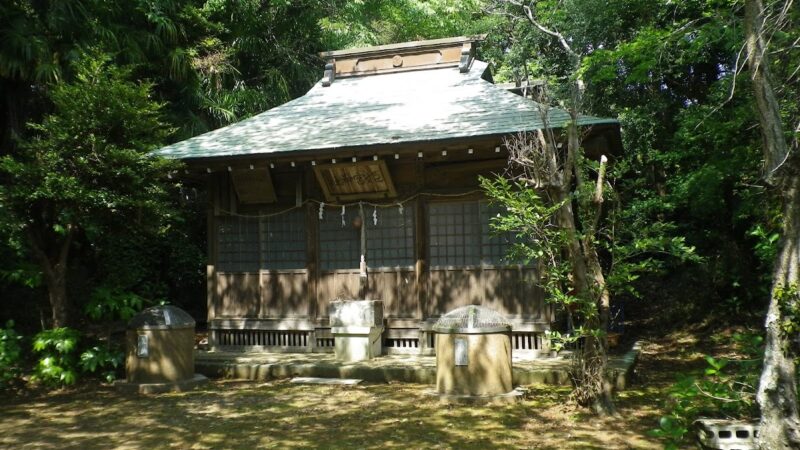
Earthworks of Shiroyama Inari Shrine
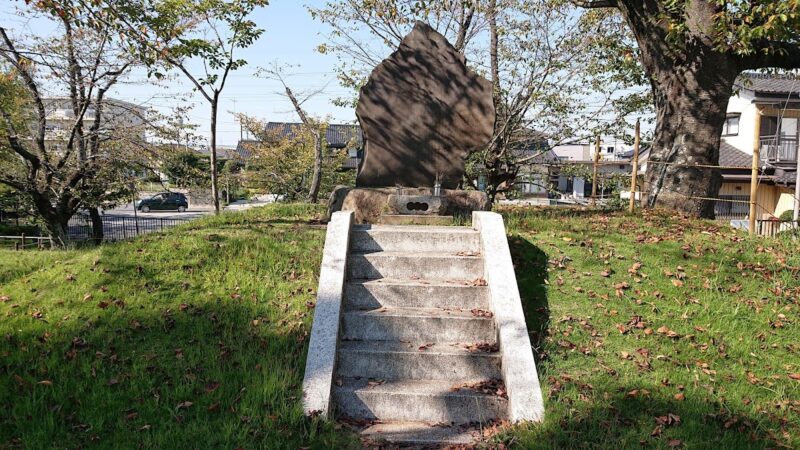
The most important remains at the Shimotsuma Jinya site are the earthworks located within the grounds of Shiroyama Inari Shrine. These earthworks are situated at the northeast corner of the Jinya site and are well-preserved, measuring approximately 3 meters in height and 30 meters in length.
The earthworks were built as a defensive structure for the Jinya and are valuable historical materials for understanding its structure at the time. Thanks to its location within the shrine grounds, it escaped development and has survived to the present day.
Visitors can observe the shape of the earthworks up close and gain a sense of the scale of the Edo-period Jinya. The top of the earthworks is covered with trees, creating a historical atmosphere.
Jinya Park
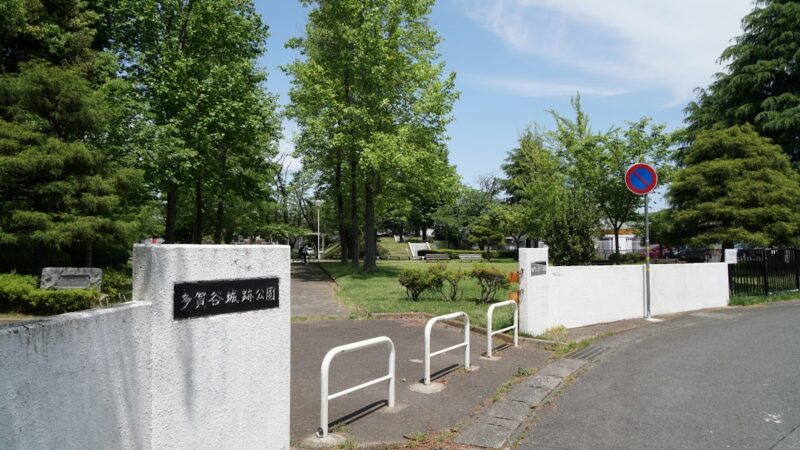
Within the grounds of Shimotsuma Daiichi High School, there is an area called “Jinya Park.” This park was developed to commemorate the location where the Jinya was situated, and an explanatory sign is installed.
The information board details the history of the Shimotsuma Jinya (fortified residence) and the rule of the Inoue clan, allowing visitors to learn about the history of the fort. However, as it is located on high school grounds, consideration for school events and classes is necessary when visiting.
Location in relation to Tate-numa (Sunanuma)
The Shimotsuma Jinya was located west of Tate-numa (present-day Sunanuma). Sunanuma is a beautiful lake that can be considered a symbol of Shimotsuma City, and the surrounding area has been developed into a park.
Understanding the location of the Jinya and Sunanuma allows you to understand the topography and location conditions of the Jinya at the time. Visiting the Jinya site while strolling around Sunanuma is also recommended.
Nearby Historical Buildings
Besides the Jinya site, there are many other historical sights in Shimotsuma City.
Taiho Hachimangu Shrine is known as the oldest Hachimangu shrine in the Kanto region, and is said to have been founded in 701 AD. The main hall, a nationally designated important cultural property, is a Muromachi period building with magnificent carvings.
Shimotsuma Shrine is also a historical shrine, revered by local residents as the guardian shrine of Shimotsuma.
Visiting these historical sites in combination will allow you to gain a deeper understanding of Shimotsuma’s history.
Visitor Guide
Access Methods
Access by Train
- Get off at Shimotsuma Station on the Kanto Railway Joso Line, approximately 15 minutes on foot.
- Head west from Shimotsuma Station towards Shimotsuma Daiichi High School.
Access by Car
- Approximately 30 minutes from the Tanihara IC on the Joban Expressway via National Route 294.
- Approximately 25 minutes from the Sakuragawa Chikusei IC on the Kita-Kanto Expressway via National Routes 50 and 294.
- Parking: Several parking spaces available at Shiroyama Inari Shrine (free).
Visiting Hours and Fees
- Visiting Time: Approximately 15-30 minutes (viewing the earthworks and explanatory signs).
- Admission Fee: Free.
- Visiting Hours: Always open (however, high school grounds are subject to school opening hours).
Notes for Visitors
- Considerations on School Grounds: Since Jinya Park is located on high school grounds, please refrain from entering during class hours or school events. Visiting on weekends, holidays, or during long breaks is recommended.
- Manners for Visiting Shiroyama Inari Shrine: Please worship quietly within the shrine grounds and be careful not to climb on or damage the earthworks.
- Photography: Photography of the ruins is permitted, but please be considerate of the privacy of high school students and local residents.
- Season: Spring to autumn is the best time to visit, but in summer, there are many insects such as mosquitoes, so insect repellent is recommended.
Nearby Tourist Attractions
When visiting Shimotsuma Jinya Ruins, we recommend also visiting the following tourist attractions.
Sunanuma Wide Area Park (5 minutes by car)
- A vast park centered around Sunanuma Lake
- Known as a famous cherry blossom viewing spot, it is bustling with many visitors in spring
- It also has a cycling path and a boat dock, making it popular with families
Taiho Hachimangu Shrine (10 minutes by car)
- The oldest Hachimangu shrine in the Kanto region
- The main hall, a nationally designated important cultural property, is a must-see
- Traditional Yabusame (mounted archery) is performed at the annual festival in September
Michi-no-Eki Shimotsuma (10 minutes by car)
- Sells agricultural products such as pears and melons, specialties of Shimotsuma
- Also has a restaurant where you can enjoy local cuisine
Structure and Scale of Shimotsuma Jinya
Layout of the Jinya
Shimotsuma Jinya had the typical structure of a small feudal domain’s jinya (fortified residence). The lord’s residence was at the center, surrounded by government offices, warehouses, and samurai residences.
The site of the jinya (fortified residence) is estimated to have been approximately 200 meters east-west and 150 meters north-south, roughly corresponding to the current location of Shimotsuma Daiichi High School.
Defensive Facilities
While the jinya did not have full-fledged defensive structures like a castle, it did have earthen ramparts and moats. The earthen rampart remaining at Shiroyama Inari Shrine is part of the defensive line in the northeastern part of the jinya.
Jinya from the mid-Edo period onward were designed with an emphasis on administrative functions rather than military functions, and the Shimotsuma Jinya is no exception.
Arrangement of Samurai Residences
Samurai residences of the domain’s retainers lined the area surrounding the jinya. The size and location of the residences were determined according to rank; high-ranking samurai lived closer to the jinya, while lower-ranking samurai resided on the outskirts.
Some place names and road layouts in the current Shimotsuma city area still show traces of the former samurai residences.
Culture and Industry of Shimotsuma Domain
Domain Administration and People
Shimotsuma Domain was a small domain with a 10,000 koku (unit of rice production) yield, but the Inoue clan implemented sound administration. While based on agriculture, they also encouraged commerce utilizing the Kinugawa River’s water transport.
The domain regularly conducted land surveys to ensure fair taxation. They also focused on flood control projects to ensure the safety of flood-prone areas.
Education and Culture
The Inoue clan was also enthusiastic about education, establishing a domain school to encourage learning among the children of samurai. While centering on Confucianism, practical knowledge acquisition was also emphasized.
Literary activities such as haikai and waka poetry flourished in Shimotsuma, and the lord himself sometimes supported these cultural activities.
Local Products
Agriculture has long been thriving in Shimotsuma, with rice production being particularly important. During the Edo period, cotton and indigo cultivation were also practiced, becoming important sources of income for the domain.
While modern-day Shimotsuma is famous for its pears, cultivation only began in earnest after the Meiji era.
The Shinsengumi and Shimotsuma Jinya
Hijikata Toshizo’s Visit
In 1868, amidst the chaos of the Boshin War, Shinsengumi Vice-Commander Hijikata Toshizo visited Shimotsuma Jinya. At the time, Hijikata was fighting against the new government forces as part of the former shogunate army and was en route to Nagareyama (present-day Nagareyama City, Chiba Prefecture).
Hijikata’s unit is said to have seized provisions and weapons from Shimotsuma Jinya. This incident illustrates the chaotic situation at the time and suggests that the Shimotsuma domain was in a difficult position between the new government forces and the former shogunate forces.
A Holy Site for Shinsengumi Fans
Due to this event, the Shimotsuma Jinya site has become an important historical site for Shinsengumi fans. Many people visit the Shimotsuma Jinya site as part of a journey tracing the footsteps of Hijikata Toshizo.
The explanatory sign at the Shimotsuma Jinya (fortified residence) site also mentions its connection to the Shinsengumi, providing interesting information for those interested in the history of the late Edo period.
Current Status of Shimotsuma Jinya Site
Preservation Status
Currently, most of the remains of the Shimotsuma Jinya site have been lost. Due to urban development since the Meiji era, all the buildings and moats of the Jinya were demolished, and the site is now occupied by Shimotsuma Daiichi High School.
The only remaining structure is the earthen embankment within the grounds of Shiroyama Inari Shrine, which is protected as a valuable cultural asset of the region. Other remains may be buried underground, and future archaeological excavations are anticipated.
Local Initiatives
Shimotsuma City is working to preserve and utilize the region’s historical heritage, including the Jinya site. Efforts are underway to create an environment where visitors can learn about history, such as by installing explanatory signs and creating historical maps.
Local history enthusiast groups are also conducting research on the Jinya site and disseminating information, continuing their activities to pass on the region’s history to future generations.
Future Prospects
The Shimotsuma Jinya Ruins, though small in scale, are a valuable historical site for understanding the realities of an Edo-period jinya (fortified residence). Further research and preservation efforts could reveal even more information.
It is also hoped that it will be utilized as a tourist resource and developed as one of Shimotsuma City’s historical tourism hubs.
Shimotsuma City Historical Walking Tour Model Course
We introduce a half-day course centered around the Shimotsuma Jinya Ruins.
Morning
- Arrive at Shimotsuma Station (9:00)
- Visit Shimotsuma Jinya Ruins and Shiroyama Inari Shrine (9:15-9:45)
- Stroll through Sunanuma Wide Area Park (10:00-11:00)
- Lunch and shopping at Michi-no-Eki Shimotsuma (11:30-12:30)
Afternoon
- Visit Taiho Hachimangu Shrine (13:00-14:00)
- Visit Shimotsuma Shrine (14:30-15:00)
- Return to Shimotsuma Station (15:30)
This course allows you to efficiently visit the main historical spots of Shimotsuma.
Summary
The Shimotsuma Jinya Ruins are the site of the Shimotsuma Domain’s administrative office, ruled by the Inoue clan for 14 generations during the Edo period. While much of the original structure has been lost, the earthworks remaining within the grounds of Shiroyama Inari Shrine convey a glimpse of its former glory.
This historical site is rich in fascinating episodes, including the history of the Shimotsuma Domain, which maintained a stable administration despite its small size, and its involvement with the Shinsengumi during the turbulent Bakumatsu period. Those interested in the history of Ibaraki Prefecture or Edo-period encampments should definitely visit.
Besides the encampment ruins, Shimotsuma City boasts numerous other attractive tourist spots, such as the oldest shrine in the Kanto region, Daibo Hachimangu Shrine, and the beautiful Sunanuma Pond. Why not plan a trip to Shimotsuma to enjoy both historical exploration and nature?