A Complete Guide to the History and Highlights of Oonogo Castle (Joso City, Ibaraki Prefecture)
Oonogo Castle, located in Oonogo-cho, Joso City, Ibaraki Prefecture, is an important medieval castle that served as the stage for battles between the Hojo and Tagaya clans during the Sengoku period. Although the site is now occupied by residential areas and seed shops, some remains showcasing the castle’s former structure still exist. This article provides a detailed explanation of Oonogo Castle’s history, structure, highlights, and access methods.
History of Oonogo Castle
Establishment and Early History of the Castle
Oonogo Castle was built as a flatland castle located in Shimosa Province. While there are no clear records of the castle’s construction date, it is confirmed to have functioned as an important military base during the Sengoku period.
The castle lord is said to have been Akamatsu Iesuke. The Akamatsu clan was a prestigious samurai family based in Harima Province, and it is believed that a branch of the family expanded into the Kanto region and established a castle in this area. Ogo Castle was built in a geographically advantageous location on the left bank of the Higashi-Jinren River, at the southern end of a plateau extending from the north, becoming a base for controlling the surrounding area.
Period of Hojo Clan Rule
During the Tensho era (1573-1592), Ogo Castle was incorporated into the sphere of influence of the Odawara Hojo clan. It is said that during this period, Edo Miyauchi, a Hojo general, was appointed as the castle lord.
The Hojo clan had built a vast power base throughout the Kanto region, and controlled many castles and fortresses in Shimosa Province. Ogo Castle was one of them, becoming an important base in the Hojo clan’s control of Kanto.
Battles with the Tagaya Clan and the Castle’s Fall
Around 1573 (Tensho 1), the Tagaya clan, a powerful daimyo of Hitachi Province, intensified its offensive. The Tagaya clan, based at Shimotsuma Castle, was attempting to expand into northern Shimosa Province.
Ogo Castle, subjected to relentless attacks by the Tagaya clan, fell after a fierce battle. The castle was burned down during this battle, marking the end of Hojo clan rule. While it is believed that Ogo Castle subsequently came under the control of the Tagaya clan, detailed records are lacking.
After Toyotomi Hideyoshi’s siege of Odawara in 1590, the Hojo clan was destroyed, drastically changing the balance of power in the Kanto region. It is believed that Ogo Castle ceased its role as a military base around this time.
Structure and Layout of Ogo Castle
Location and Topography
Ogo Castle is a flatland castle built on the southern edge of a plateau approximately 10 meters high. Its location on the left bank of the Higashi-Jinren River provided favorable water transport and offered a geographical advantage overlooking the surrounding lowlands.
Its location on the southern edge of the plateau, protected on three sides by natural cliffs, provided extremely advantageous defensive conditions. It is presumed that the castle’s layout made maximum use of this terrain.
Main Enclosure (Honmaru)
Currently, the area believed to be the main enclosure is the site of Nakano Seedling Store, and the store area is considered to be the site of the Honmaru. The main enclosure was the central part of the castle, where the lord’s residence and important facilities were located.
Unfortunately, access is restricted as it is now privately owned. However, the shape of the site and the surrounding terrain allow for some estimation of the former enclosure’s extent.
Second Enclosure and Earthen Bridge
The second enclosure was located on the opposite side of the main enclosure. The second enclosure was an important defensive enclosure for the main enclosure, and its entrance can still be seen today.
Of particular note is the earthen bridge connecting the second enclosure to the main enclosure. Earthen bridges are earthen walkways crossing moats and are an important defensive structure of castles. Parts of the earthen bridge at Ogo Castle still remain today, making it a valuable relic that shows the castle’s structure at the time.
Moats and Defensive Structures
Ogo Castle, a flatland castle, enhanced its defensive capabilities with moats. Records indicate that multiple moats were strategically placed, but many have now been filled in.
In some areas, traces of the moats can be seen as depressions in the terrain, providing clues to imagining the scale of the former castle.
Ogo Tenmangu Shrine and Outpost
History of the Tenmangu Shrine
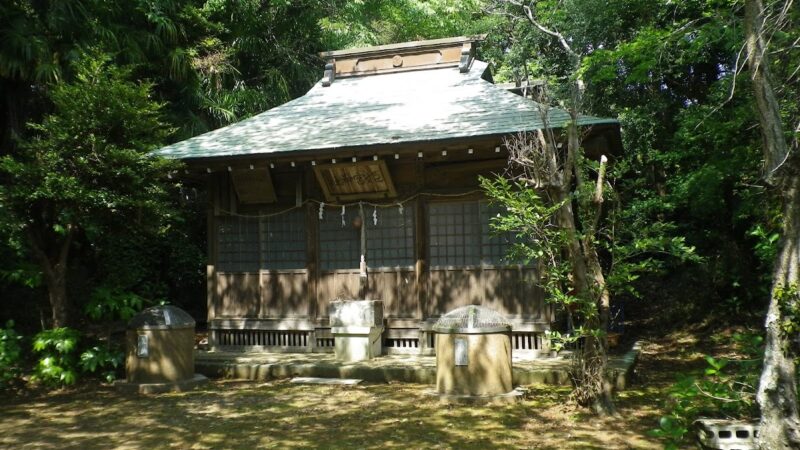
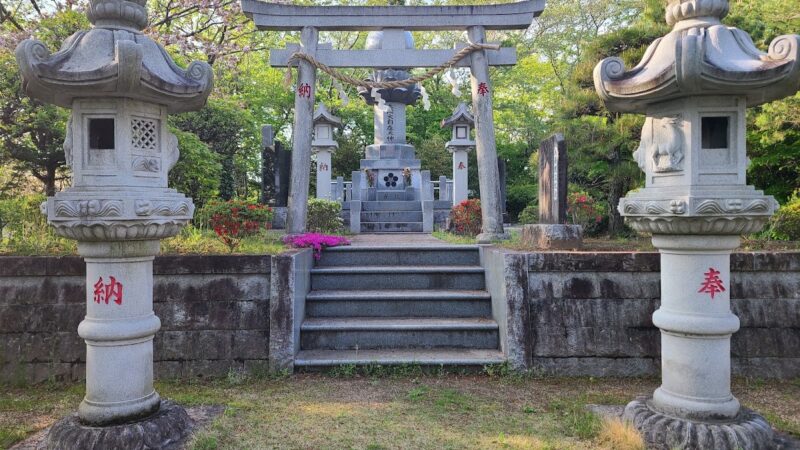
Ogo Tenmangu Shrine is located to the west of Ogo Castle. This shrine is a historically significant shrine, considered one of the “Three Great Tenjin Shrines of Japan,” and enshrines Sugawara no Michizane, the god of learning.
Role as an Outpost
The grounds of Ogo Tenmangu Shrine are said to have once been an outpost of Ogo Castle. An outpost was a subsidiary castle located away from the main castle, intended for the defense of the main castle and monitoring the surrounding area.
According to tradition, a dirt bridge connected the Tenmangu Shrine to the main enclosure of Ogo Castle, indicating that the two formed a unified defensive system. This arrangement expanded the castle’s defensive range and increased flexibility against attacks by providing multiple strongholds.
Cultural Properties
Ogo Tenmangu Shrine houses cultural properties of high historical value. It contains the “Thirty-Six Immortal Poets Painting on Silk,” a designated cultural property of Ibaraki Prefecture, and the “Eleven-Headed Kannon Statue on Silk,” a designated cultural property of Joso City, demonstrating the cultural importance of this region.
Highlights and Points of Interest at Ogo Castle
Remains Visible on-site
The main remains that can be seen when visiting Ogo Castle are as follows:
1. Entrance to the Second Enclosure
While the main enclosure is on private property and inaccessible, the entrance to the second enclosure is open to visitors. From here, one can infer the castle’s structure.
2. Earthen Bridge
A portion of the earthen bridge leading from the second enclosure to the main enclosure remains. It is in relatively good condition for an earthen bridge of a medieval castle, making it a valuable relic for understanding the civil engineering techniques of the time.
3. Topographical Undulations
The castle’s layout, which took advantage of its location on the southern edge of a plateau, can still be seen in the current topography. Walking around the area, you can imagine the former arrangement of the enclosures and the location of the moats.
4. Ogo Tenmangu Shrine
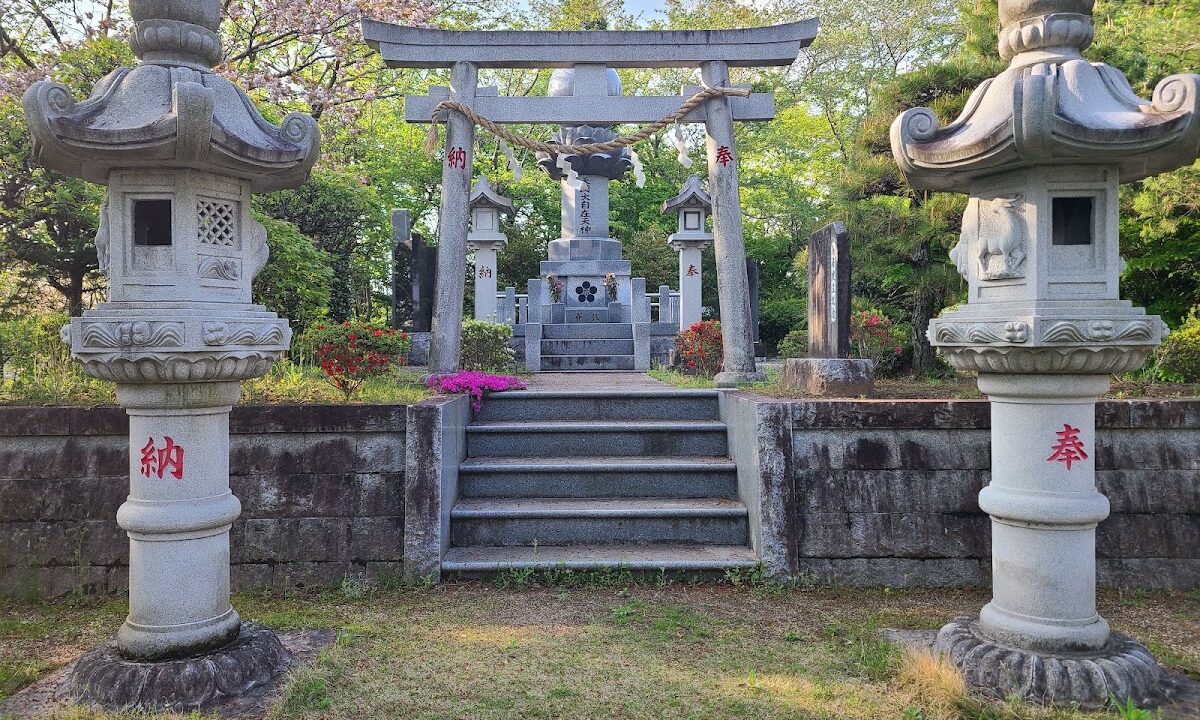
The Tenmangu shrine, considered to be the site of an outpost, is important not only as a castle relic but also as a shrine, and the atmosphere of the grounds evokes the medieval period.
Points to Note When Visiting
When visiting Ogo Castle, please note the following:
- Main Enclosure is Private Property: The main enclosure area, which is part of the Nakano Seedling Store’s property, is off-limits. Please view it from outside the property.
- Preservation Status of Remains: Many remains have been lost, so a clear castle landscape cannot be expected. The main way to enjoy the site is by imagining what it was like in the past based on the topography and remaining earthen bridges.
- Visiting in a residential area: The area around the castle ruins is a residential area, so please be considerate of the residents while visiting.
Recommended Photography Spots
When taking photos at Ogo Castle, the following points are recommended:
- The earthen bridge from the entrance to the second enclosure
- An angle that shows the topography of the southern end of the plateau
- The grounds and surrounding area of Ogo Tenmangu Shrine
- The rural landscape around the castle ruins (you can feel the atmosphere of the former castle town)
Access Information
Location
303-0045 Ogo-cho, Joso City, Ibaraki Prefecture (Uchikune)
Access by Car
From the Tokyo Metropolitan Area
- Approximately 10 minutes from the Ken-O Expressway “Bando IC”
- Approximately 15 minutes from the Ken-O Expressway “Joso IC”
- Use National Route 294 or Prefectural Route 134
Specific Route
Proceed south-southeast on Prefectural Route 134, which crosses between the Bando IC and Joso IC on the Ken-O Expressway. Where the road changes direction to southeast, there is a sign for Ogo Tenmangu Shrine on the north side. It will be easy to find if you use Tenmangu Shrine as a landmark.
Access by Public Transportation
By Train and Bus
- Approximately 15 minutes by taxi from Mitsukaido Station on the Kanto Railway Joso Line
- Due to the limited number of bus services, taking a taxi is the most practical option.
Parking
There is parking space for visitors at Ogo Tenmangu Shrine. It can also be used when visiting the castle ruins, but please keep in mind that visitors have priority.
Estimated Visiting Time
The general visiting time is about 15-30 minutes. If you want to carefully observe the terrain or visit Ogo Tenmangu Shrine as well, it is recommended to allow 45 minutes to 1 hour.
Nearby Castles and Tourist Spots
Castles in Joso City
When visiting Ogo Castle, we recommend also visiting other castle ruins in Joso City:
Sugao Castle
A medieval castle located in Sugao, Joso City. It is about a 20-minute drive from Ogo Castle.
Toyoda Castle (Joso City Regional Exchange Center)
A modern reconstruction of a castle-like building, it functions as a historical museum for Joso City. It is about a 15-minute drive from Ogo Castle.
Nearby Tourist Facilities
Joso City Hall
Located in the city center, you can obtain tourist information here.
Kinugawa and Kokaigawa Riverbanks
Enjoy the rich natural scenery, and depending on the season, you can see flower fields.
Michi-no-Eki Goka
A facility where you can purchase local agricultural products and specialty goods. It is also ideal for taking a break.
Ogo Castle Evaluation and Visitor Reviews
Evaluation by Castle Enthusiasts
Ogo Castle is not a highly-rated castle site considering the state of its remaining structures. Looking at evaluations on castle websites such as Kojodan, the average rating is a low 1.00 stars. This is mainly due to the following reasons:
- Few clear remains
- The main enclosure is on private land and inaccessible
- Lack of information boards and explanatory signs
- Not a typical tourist destination
Still Worth Visiting
However, a low rating doesn’t mean it’s not worth visiting. Ogo Castle has the following attractions:
Historical Significance
As a site where the powerful Hojo and Tagaya clans of the Sengoku period fought, it holds great historical significance.
The Joy of Using Your Imagination
Precisely because there are few clear remains, there’s the enjoyment of imagining its former appearance from the topography and remaining earthen bridges. This is one of the great pleasures of castle research.
Quiet Viewing Environment
Because it’s not a tourist destination, you can observe the castle ruins carefully in a calm environment.
Combining with Ogo Tenmangu Shrine
Visiting it together with the Tenmangu shrine, which is located on the site of an outpost, allows for a better understanding of the overall structure of the castle.
Visitor Comments
The following comments have been received from castle enthusiasts who have actually visited:
- “There are few remains, but the earthen bridge is worth seeing.”
- “It’s interesting that the main enclosure is located on the grounds of a seedling shop.”
- “The castle’s scale could be imagined from its location relative to the Tenmangu shrine.”
- “It would be nice if there were more guidance.”
Castle Culture in Ibaraki Prefecture and the Position of Ogo Castle
Medieval Castles in Ibaraki Prefecture
Ibaraki Prefecture is known as a treasure trove of medieval castles. Over 300 castle ruins have been confirmed within the prefecture, conveying the complex power dynamics of the Sengoku period to this day.
Key Features:
- Regional area spanning Hitachi and Shimōsa Provinces
- Base of powerful daimyo such as the Satake, Yūki, and Tagaya clans
- Border zone between the Hōjō and Satake clans
- Topographical features with many flatland castles
Ōgō Castle in the Shimōsa Province Castle Cluster
Ōgō Castle was located in the northern part of Shimōsa Province, close to the border with Hitachi Province. This geographical location is the reason it became the stage for the struggle between the Hōjō and Tagaya clans (powerful in Hitachi Province).
Castles in Shimōsa Province are characterized by water transport utilizing the Tone River system and flatland castles that take advantage of the flat terrain. Ōgō Castle fits this typical pattern, built at a strategic transportation hub utilizing the Higashi-Niren River.
Current Status and Challenges of Ōgō Castle Research
Limitations of Historical Sources
Primary sources concerning Ōgō Castle are extremely limited. Detailed information about the castle’s history and structure relies primarily on the following sources:
- Local traditions
- Edo period geographical records
- On-site topographical surveys
- Comparative studies with surrounding castles
Potential for Future Research
The following approaches are possible for further understanding of Ogo Castle:
Archaeological Investigation
While difficult due to the main enclosure being on private land, excavation of surrounding areas may yield new insights.
Deepening of Documentary Research
Descriptions of Ogo Castle may be found in historical documents concerning the Hojo and Tagaya clans.
Topographical Survey
Using the latest surveying techniques may reveal traces of lost remains.
Comparative Study
Comparative studies with castles in Shimosa Province from the same period may clarify the characteristics and role of Ogo Castle.
Best Season and Preparation for Visiting
Recommended Season
Spring (March-May)
Mild weather makes it ideal for visiting. The grounds of Ogo Tenmangu Shrine are also beautiful this season.
Autumn (September-November)
Cool and the rural scenery is beautiful. Ideal for strolling around the castle ruins.
Summer/Winter Precautions
In summer, take precautions against the heat; in winter, take precautions against the cold. Especially in summer, don’t forget insect repellent.
Checklist of Items to Bring
- Comfortable walking shoes (some areas are unpaved)
- Camera (for documenting the ruins)
- Map or smartphone (GPS app is convenient)
- Drinks (few vending machines in the area)
- Hat and sunscreen (summer)
- Insect repellent (spring to autumn)
Visitor Etiquette
- Do not trespass on private property
- Be mindful of noise in residential areas
- Always take your trash with you
- Be considerate of agricultural work
- Observe proper etiquette when visiting Ogo Tenmangu Shrine
Summary: The Charm and Value of Ogo Castle
Ogo Castle is a castle site with few clearly defined remains and is not well-developed as a general tourist destination. However, it is a historically significant castle, having been the stage for the power struggle between the Hojo and Tagaya clans in the Kanto region during the Sengoku period.
By visiting the site, you can imagine its former appearance from the few remaining earthen bridges and terrain, and feel the tension of the Sengoku period. Furthermore, its location alongside the Ogo Tenmangu Shrine, a former outpost, provides an excellent opportunity to understand the complex defensive systems of medieval castles.
As part of a tour of castles in Ibaraki Prefecture, or as a field survey for medieval history research, Ogo Castle is a historical site well worth visiting. While not flashy, it’s a valuable place to quietly contemplate history, making it an attractive destination for castle enthusiasts.
When visiting Joso City, be sure to stop by Ogo Castle and experience the atmosphere of the Sengoku period.