Mitsukaido Castle (Ibaraki Prefecture) Complete Guide: A Thorough Explanation of History, Remains, and Access
Mitsukaido Castle was a castle located in the Mitsukaido district of Joso City, Ibaraki Prefecture. Built on a strategic location facing Sugao Marsh, this castle functioned as an important base protecting the border region between Shimosa and Hitachi provinces from the medieval to the early modern period. This article provides a detailed explanation of Mitsukaido Castle’s history, the changes in its lords, the remaining structures, and how to access it.
Basic Information on Mitsukaido Castle
Mitsukaido Castle was a flatland castle located in the Mitsukaido district of Joso City, Ibaraki Prefecture. While the current Joso City was formed in 2006 through the merger of Mitsukaido City and Ishige Town, Mitsukaido Castle was located in the center of the former Mitsukaido City.
Castle Location and Geographical Characteristics
Mitsukaido Castle was built on a plateau facing Sugao Marsh, in an area between the Kinugawa and Kokaigawa rivers. This location was militarily very important and had the following characteristics:
- Key point for water transport: Located in a position to control the Kinugawa River’s water transport, it served as a base for transporting goods.
- Natural stronghold: It had a natural moat called Sugao Marsh, and the terrain was suitable for defense.
- Key point on major roads: It was a transportation hub where major roads such as the Mito Road and the Yawara Road intersected.
- Border castle: It was close to the border between Shimosa Province and Hitachi Province, making it a strategic base connecting the two provinces.
Castle size and structure
Mizukaido Castle was a relatively small castle, but it was characterized by its layout that skillfully utilized the terrain. It is believed that multiple baileys were arranged around the main keep, and that the defenses were strengthened with earthworks and moats.
History of Mizukaido Castle
Castle construction and early history
There are various theories regarding the construction period of Mizukaido Castle, but it is generally believed to have been built between the late 14th and early 15th centuries.
The Soma Clan Era
While much remains unknown about the first lord of the castle, it is believed that the Soma clan ruled this area at one point. The Soma clan was a powerful local family, primarily in Shimosa Province, and the Mitsukaido region was within their sphere of influence.
Mitsukaido Castle in the Sengoku Period
During the Sengoku period (Warring States period), Mitsukaido Castle became the front line of the power struggle between Hitachi Province and Shimosa Province.
The Tagaya Clan’s Rule
In the 16th century, the Tagaya clan came to control this region, including Mitsukaido Castle. The Tagaya clan was a Sengoku daimyo (feudal lord) based at Shimotsuma Castle, expanding their power from southern Hitachi to northern Shimosa.
During the Tagaya clan’s rule, Mitsukaido Castle played the following roles:
- Frontline Base: A crucial strategic point in conflicts with the Hojo and Satake clans.
- Branch Castle Network: Part of a group of branch castles centered around Shimotsuma Castle.
- Economic Hub: A collection point for goods utilizing the Kinugawa River’s water transport.
Relationship with the Oda Clan
The Oda clan, a powerful daimyo of southern Hitachi Province, also held influence in this region at one time. The Oda clan was based at Oda Castle at the foot of Mount Tsukuba and frequently clashed with the Tagaya clan.
Toyotomi Hideyoshi’s Siege of Odawara and Mitsukaido Castle
In 1590 (Tensho 18), Toyotomi Hideyoshi’s Siege of Odawara dramatically altered the power dynamics of the Kanto region.
The Tagaya clan initially belonged to the Hojo clan, but switched allegiance to the Toyotomi side midway through, thus securing their territory. However, there are few historical records detailing the specific situation of Mitsukaido Castle during this period, leaving many points unclear.
Mitsukaido Castle in the Edo Period
After Tokugawa Ieyasu’s Entry into the Kanto Region
When Tokugawa Ieyasu entered the Kanto region in 1590, the Mitsukaido area became either a direct territory of the Tokugawa clan or the territory of a Fudai daimyo (hereditary vassal daimyo).
The Tagaya clan initially held a 30,000 koku domain in Shimotsuma, but when Tagaya Shigezune was dispossessed in 1602 (Keicho 7), the governing system of the region changed.
Abandonment of Mitsukaido Castle
In the early Edo period, many castles were abandoned due to the One Castle Per Province decree (1615). It is believed that Mitsukaido Castle also lost its function as a castle around this time or earlier.
After its abandonment, the area around the castle ruins was used as follows:
- Establishment of a Jinya (fortified residence): It is possible that some areas were used as a magistrate’s office or Jinya.
- Construction of Temples and Shrines: Temples and shrines were built on parts of the castle site.
- Development of the Town: The town continued to function as a castle town, and the town of Mitsukaido developed.
Development of Mitsukaido in the Edo Period
Although the castle was lost, the town of Mitsukaido prospered throughout the Edo period.
- Post Town: Functioned as a post town on the Mito Highway.
- River Port: Became a river port on the Kinugawa River, serving as a center for the collection and distribution of goods.
- Commercial Center: Developed as a commercial center for the surrounding rural areas.
List of Lords of Mitsukaido Castle
The main lords of Mitsukaido Castle, as confirmed throughout its history, are as follows:
Lords of the Castle in the Medieval Period
- Soma Clan (Late 14th to 15th Century?)
- A branch of the Shimosa Soma clan is believed to have ruled this area.
- The exact period and individuals are unknown.
- Tagaya Clan (16th Century)
- The castle came under the control of the Tagaya clan, lords of Shimotsuma Castle.
- It is believed that a castle lord and retainers were stationed there.
Late Sengoku Period to Early Modern Period
- Sugao Clan (Period Unknown)
- A local powerful family that ruled the area around Mitsukaido.
- Possibly acted as a retainer of the Tagaya clan.
Due to limited historical sources, many aspects of the changes in castle lords remain unclear, and further research may reveal new facts.
Remains and Current Status of Mitsukaido Castle
Existing Remains
More than 400 years have passed since Mitsukaido Castle was abandoned, and due to urbanization, very few clear remains remain. However, with careful observation, traces of the castle can be found.
Topographical Undulations
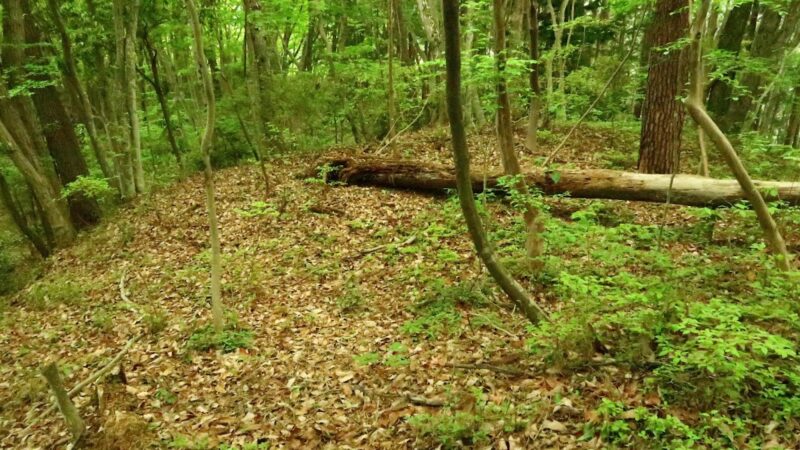
The area where Mizukaido Castle is believed to have stood still retains slight elevation changes and topographical undulations. These may be remnants of baileys or moats.
Traces of Earthworks
Some earthen mounds, thought to be traces of earthworks, remain on the grounds of some private houses and along roadsides. However, few can be definitively identified as castle remains.
Inheritance of Place Names
Place names related to the castle still exist today, providing clues to estimating the castle’s location and size.
- Jōnai: A place name indicating the area where the castle’s main keep was located.
- Baba: A remnant of a place where horses were trained.
- Horinouchi: A place name indicating the area surrounded by a moat.
Historical Sites Around the Castle Ruins
Temples and Shrines
Several temples and shrines, thought to be related to the castle, exist around the Mizukaido Castle ruins.
Hitokotonushi Shrine
- The main guardian shrine of the Mitsukaido area
- Possibly revered as the guardian deity of the castle
- Still maintained as an important local shrine
Soshinji Temple
- A temple with connections to the lord and retainers of Mitsukaido Castle
- Possibly contains stone monuments or explanatory plaques related to the castle within its grounds
Mitsukaido Town
The town of Mitsukaido, which developed as a castle town of Mitsukaido Castle, still retains old townscapes and historical buildings.
- Former Mitsukaido Post Town: Traces of a post town on the Mito Highway
- Merchant Houses: Merchant houses from the Edo to Meiji periods
- River Port Site: The site of a river port on the Kinugawa River
Archaeological Excavations and Research
Regarding Mitsukaido Castle, full-scale archaeological excavations have not yet been sufficiently conducted. If excavations are conducted in the future, such as during urban redevelopment, new insights into the castle’s structure and history may be gained.
In recent years, local historians and researchers have been conducting investigations and studies, and through the analysis of ancient documents and topographical surveys, the true nature of the castle is gradually becoming clearer.
Access and Visiting Information for Mitsukaido Castle
Access Methods
Access by Public Transportation
Using the Kanto Railway Joso Line
- Get off at Mitsukaido Station and walk approximately 10-15 minutes to reach the castle ruins.
- From Tokyo, transfer to the Kanto Railway Joso Line at Moriya Station on the Tsukuba Express.
- Travel time: Approximately 20 minutes from Moriya Station to Mitsukaido Station.
Using Local Buses
- Local buses running within Joso City are also available.
- Several bus routes depart from Mitsukaido Station.
Access by Car
From the Joban Expressway
- Approximately 15 minutes from Tanihara IC
- Approximately 25 minutes from Tsuchiura Kita IC
National Route 294
- A major national highway passing through the Mitsukaido city area.
- Use parking lots at nearby public facilities and shopping streets.
Points to Note During Your Visit
Points to Note When Exploring the Castle Ruins
Since the Mitsukaido Castle Ruins are not clearly developed as a castle park, the following points should be noted when visiting:
- Consideration for Residential Areas: Much of the castle site is now residential or private property. When visiting, please be considerate of residents’ privacy and do not trespass on private property.
- Observation of Topography: Since there are few clearly defined remains, it is important to pay attention to subtle changes such as the undulations of the terrain and traces of earthworks.
- Prior Study: Since there are few detailed explanatory signs at the site, studying the history beforehand will deepen your understanding.
Recommended Sightseeing Route
- Start at Mitsukaido Station
- Stroll through Mitsukaido Town and observe the old townscape
- Walk around the estimated castle site to check the topography
- Visit related temples and shrines such as Hitokotonushi Shrine
- Extend your walk towards Sugao Marsh to get a feel for the castle’s location
Nearby Tourist Spots
Sugao Marsh
- A marsh that functioned as a natural moat for Mitsukaido Castle
- Currently known as a popular spot for birdwatching
- Also famous for its migratory swans
Joso City Community Exchange Center
- A facility where you can learn about the history and culture of Mitsukaido
- Possibly displays materials related to Mitsukaido Castle
Kinugawa Riverbed
- Enjoy the scenery of the Kinugawa River, a key point for water transport
- A cycling path is also available
Best Time to Visit
While it is possible to visit the Mitsukaido Castle ruins throughout the year, the following times are especially recommended.
Spring (March-May)
- Mild weather, ideal for strolling
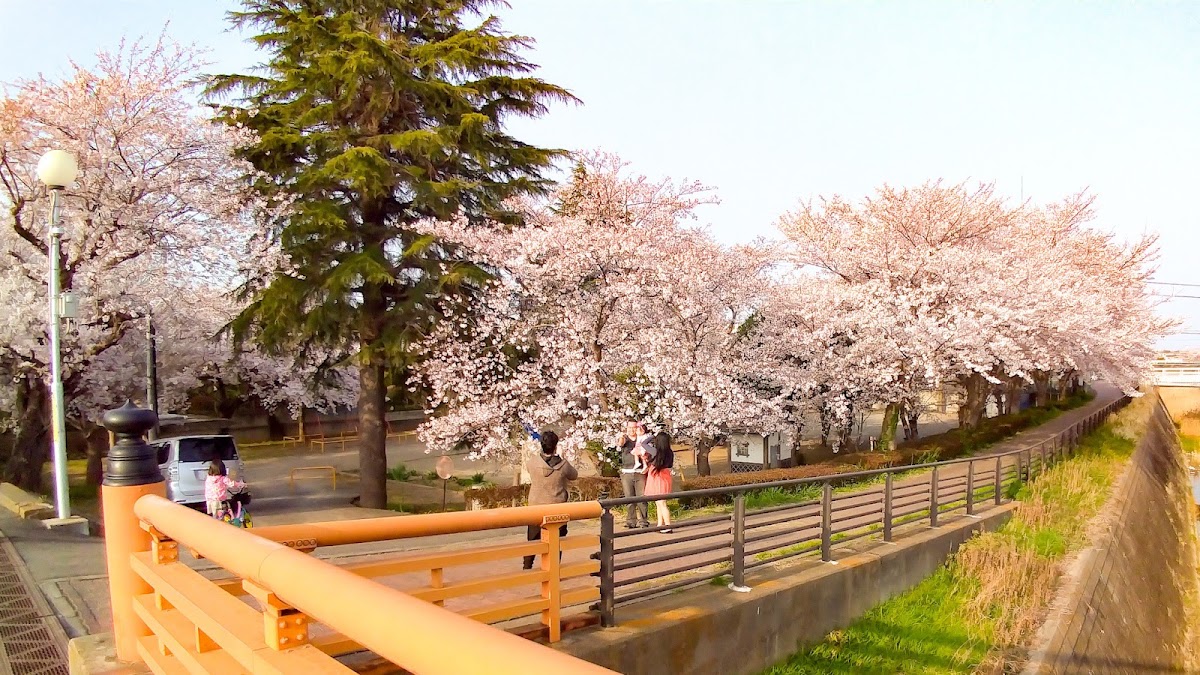
- Enjoy cherry blossom viewing at nearby temples and shrines during the cherry blossom season
Autumn (October-November)
- Beautiful scenery during the autumn foliage season
- Migratory birds can be observed at Sugao Marsh
Winter (December-February)
- Swans migrate to Sugao Marsh during this time
- Enjoy birdwatching in conjunction with visiting the castle ruins
Mizukaido Castle and the Surrounding Castle Network
Mizukaido Castle did not exist in isolation; it was part of a defensive network coordinating with surrounding castles.
Castles of the Tagaya Clan
Shimotsuma Castle (Shimotsuma City, Ibaraki Prefecture)
- The Tagaya clan’s base
- Approximately 15km northwest of Mitsukaido Castle
- The center of the Tagaya clan’s power
Seki Castle (Chikusei City, Ibaraki Prefecture)
- One of the Tagaya clan’s branch castles
- Located north of Mitsukaido Castle
Ishige Castle (Joso City, Ibaraki Prefecture)
- A castle located west of Mitsukaido Castle
- A strategic point along the Kinugawa River
Castles of Rival Forces
Oda Castle (Tsukuba City, Ibaraki Prefecture)
- The Oda clan’s base
- Approximately 20km southeast of Mitsukaido Castle
- In conflict with the Tagaya clan
Yawahara Castle (Tsukubamirai City, Ibaraki Prefecture)
- A castle south of Mitsukaido Castle
- Located on the border between Shimosa and Hitachi provinces
Yuki Castle (Yuki City, Ibaraki Prefecture)
- The Yuki clan’s base
- Approximately 25 km northwest of Mitsukaido Castle
- Castles of powerful daimyo in the Kanto region
Understanding the locational relationship with these castles clarifies the strategic importance of Mitsukaido Castle.
Historical Significance of Mitsukaido Castle
Importance in Regional History
Mitsukaido Castle holds significant importance in regional history in the following ways:
Role as a Border Castle
Located on the border between Hitachi Province and Shimosa Province, it was the front line where the forces of both provinces intersected. Conflicts over control of this region significantly impacted the power dynamics of the Kanto region.
Junction of Water and Land Transportation
Located at the intersection of the Kinugawa River’s water transport and major roads, it was an economic and military base controlling the flow of goods and information. This characteristic supported the development of the town of Mitsukaido even after the castle was abandoned.
Formation of the Local Community
The formation of Mizukaido Castle and its castle town laid the foundation for the urban structure of the present-day Mizukaido district of Joso City. The townscape and street layout that developed as a castle town have been partially preserved to this day.
Position in Castle Research
Mizukaido Castle is an interesting subject for castle research in the following respects:
Castle of a Local Lord
Rather than a large-scale early modern castle, it possesses characteristics of a medieval castle built by a local lord during the Sengoku period (Warring States period). Studying such castles is important for understanding the realities of local communities during the Sengoku period.
Skillful Use of Topography
The castle’s layout, which skillfully utilizes natural topography such as Sugao Marsh and rivers, demonstrates the castle-building techniques of the time, aiming to achieve maximum defensive effectiveness with limited resources.
Transition from Castle to Town
As an example of how a castle developed into a town after losing its function as a fortress, it serves as material for castle town research.
History and Culture of Mizukaido
To understand Mizukaido Castle, it’s important to know the history and culture of the Mizukaido area.
Origin of the Place Name
There are several theories regarding the origin of the place name “Mizukaido.”
- Water Transport Theory: From the fact that it was a key point for river transportation, meaning “the water sea route.”
- Sugao Marsh Theory: From the fact that the large body of water called Sugao Marsh resembled a “water sea.”
- Ancient Place Name Theory: A theory that the name is a corrupted form of an ancient place name.
While the exact origin is unknown, it is certain that the place name has a deep connection to water.
Cultural Properties of Mizukaido
In addition to the castle ruins, many cultural properties exist in the Mizukaido area.
Tangible Cultural Properties
- Old merchant buildings
- Temple and shrine buildings
- Stone structures (signposts, Koshin towers, etc.)
Intangible Cultural Properties
- Traditional festivals
- Folk performing arts
- Traditional crafts
Annual Events in Mitsukaido
Mitsukaido Senhime Festival
- A festival commemorating the history of Mitsukaido
- Parades and various events are held
Hitokotonushi Shrine Grand Festival
- An important local festival
- Portable shrines and floats parade through the town
Visiting during these events will allow you to experience the history and culture of Mitsukaido more deeply.
Resources for Learning about Mitsukaido Castle
The following resources are helpful for learning about Mitsukaido Castle.
Books and Documents
“Medieval Castles and Residences of Ibaraki Prefecture”
- Compiled by the Ibaraki Prefectural Board of Education
- Comprehensively introduces medieval castles in the prefecture
- Includes information on Mitsukaido Castle
“History of Joso City”
- Describes the history of Joso City in detail
- Also details the history of Mitsukaido Castle
“History of Mitsukaido City”
- Compiled by Mitsukaido City before the merger
- Records the history of the region in detail
Internet Resources
Joso City Official Website
- Information on the city’s history and cultural properties
- Also includes tourist information
Ibaraki Prefectural Museum of History
- Information on the history of the prefecture
- Extensive digital archive
Castle Database
- Various castle information sites
- Basic information and photos of Mitsukaido Castle
On-site Information Gathering
Joso City Library
- Houses local history materials
- Materials related to Mitsukaido Castle are also available for viewing
Joso City Community Exchange Center
- Local History Exhibition
- Information can be obtained from staff.
Local History Research Society
- A group that studies the history of Mitsukaido.
- They also hold lectures and tours.
Summary: The Charm of Mitsukaido Castle
Mitsukaido Castle is a castle with almost no clear remains, but that is precisely why it offers the enjoyment of tracing its history by using your imagination.
Characteristics of Mitsukaido Castle
- Strategic Location: An important location at the intersection of the Kinugawa River waterway and the main road.
- Utilization of Natural Topography: A clever layout that uses Sugao Marsh as a natural moat.
- Regional Center: The core of the region that has continued from the medieval period to the early modern period and into the present day.
- Inheritance of the Castle Town: Even though the castle is gone, the town’s functions continue.
How to Enjoy Your Visit
When visiting the Mitsukaido Castle ruins, the following ways to enjoy your visit are recommended.
- Reading the Topography: Imagine the castle’s structure from subtle undulations.
- Walking Through the Town: Stroll while searching for remnants of the castle town.
- Visiting the Waterfront: Experience the castle’s location at Sugao Marsh and Kinugawa River.
- Learning History: Gain a deeper understanding of the region’s history at libraries and museums.
- Talking with Locals: Hear legends and memories from local residents.
Future Prospects
Many aspects of Mitsukaido Castle remain unexplained, and future research may lead to new discoveries.
- Archaeological Excavation: Full-scale investigations are expected during urban redevelopment projects.
- Historical Document Research: Analysis of ancient documents may reveal the castle’s true nature.
- Preservation Activities: Preservation and utilization of the few remaining structures.
- Tourism Resource Development: Utilization as a regional historical resource.
Mitsukaido Castle lacks a magnificent keep or stone walls, but it is an important heritage site that tells the history of the region. By visiting the site and reflecting on the castle that once stood here, you can glimpse the local community from the Sengoku period to the Edo period.
When you visit the Mitsukaido district of Joso City, be sure to delve into the history of Mitsukaido Castle and discover the charm of the town that has grown alongside the castle. The understated yet profound world of Mitsukaido Castle awaits you.