Sugao Castle (Joso City, Ibaraki Prefecture) Complete Guide | History, Remains, and Access Information
What is Sugao Castle?
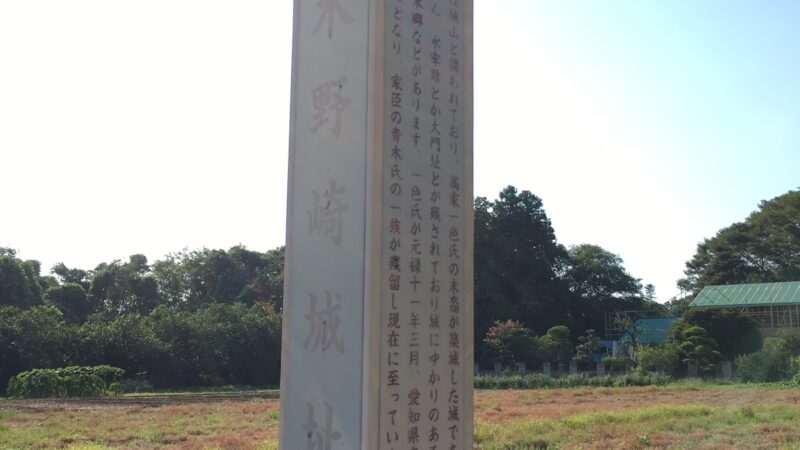
Sugao Castle is a medieval castle located in Sugao-cho, Joso City, Ibaraki Prefecture. Also known as Furuya Castle, it is currently protected as a Joso City designated cultural property. The castle ruins are located around 2396 Sugao-cho, Joso City, Ibaraki Prefecture, and are known as one of the important strongholds in Shimosa Province during the Sengoku period.
This castle is historically known as the residence of Sugao Echizen-no-kami Tanetsada, but it is said to have fallen in 1560 during a battle with the Someya clan of Yumita Castle. Even today, remains such as moats, earthworks, and earthen bridges remain in good condition, making it a valuable historical site for the study of medieval castles.
History of Sugao Castle
The Sugao Clan and the Establishment of the Castle
While there are no precise records regarding the construction date of Sugao Castle, the name of Sugao Echizen-no-kami Tanetsada appears in historical documents as the castle lord. There are various theories regarding the origins of the Sugao clan, but the use of the character “Tane,” a common character used by the Soma clan, in their given name suggests a close relationship with the Soma clan, whose base was Moriya Castle.
Tanesada’s name is recorded in the “Soma Family Alliance Register” (“Soma Documents”), and the “Moriya Town History” cites this to position Tanetsada as a member of the Soma clan. From this, it is highly probable that Sugao Castle functioned as an important branch castle within the Soma clan’s sphere of influence.
The Fall of the Castle in 1560
The most famous event in the history of Sugao Castle is its fall in 1560 (Eiroku 3). According to historical sources such as “Tōgoku Senki Jitsuroku – Yokose Nagauji’s Capture of Sugao Castle” and “Kita Sōma Gunshi,” Sugao Echizen-no-kami Tanetsada was killed in battle against the Someya clan of Yumita Castle during this year.
This battle was rooted in the power struggles within the Shimōsa region at the time. The Eiroku era was a period when the entire Kanto region was embroiled in conflict between the Hōjō clan and the Kantō Kanrei Uesugi clan, and local minor lords were also caught up in the turmoil of the Sengoku period from their own positions.
Relationship with the Yokose Clan
Some historical sources suggest that Sugao Castle was the residence of the Yokose clan. The description in “Tōgoku Senki Jitsuroku” regarding “Yokose Nagauji’s Capture of Sugao Castle” suggests that the Yokose clan captured Sugao Castle, but it is unclear whether the Yokose clan subsequently became the lords of the castle or whether it was handed over to another force.
Influence of the Tagaya Clan
The area surrounding Sugao Castle was incorporated into the sphere of influence of the Tagaya clan, whose base was Shimotsuma Castle, during the late Sengoku period. The Tagaya clan, a branch of the Yuki clan, was a powerful Sengoku daimyo with significant influence from western Shimosa to southern Hitachi, and it has been suggested that Sugao Castle also came under their control.
Structure and Remains of Sugao Castle
Basic Structure of the Castle
Sugao Castle is classified as a flatland castle, characterized by its layout that skillfully utilizes the surrounding terrain. It has a typical medieval castle structure, with multiple enclosures arranged around the main enclosure, separated by moats and earthworks.
While there are various theories regarding the exact extent of the castle grounds, archaeological excavations and topographical observations suggest that, including the currently identifiable remains, it was approximately 200 meters east-west and 150 meters north-south.
Remains of the Main Enclosure
The main enclosure is relatively well-preserved, making it a valuable example in the study of medieval castles. Earthen ramparts surrounded the main enclosure, and some of them still remain today, reaching a height of approximately 2 meters.
An earthen bridge has been confirmed to have been built at the entrance to the main enclosure, creating a structure that combined defensive and passage functions.
Characteristics of the Moat Remains
The most noteworthy remains at Sugao Castle are the moat remains. Excavations have uncovered a unique type of moat called a “unebori” (ridged moat). Unebori are structures with ridge-like elevations at the bottom of the moat, believed to have enhanced the effect of hindering enemy intrusion while also serving a drainage function.
Unebori are a castle construction technique that developed in the late Sengoku period and are particularly common in castles of the Hojo clan. The presence of unebori at Sugao Castle provides an important clue in considering the timing of the castle’s renovations and the lineage of castle construction techniques.
Structure of the Earthen Ramparts
The earthen ramparts remaining throughout the castle grounds formed the core of Sugao Castle’s defensive system. Investigations have revealed that the earthworks were not simply piles of earth, but were strongly constructed using rammed earth techniques.
The height of the earthworks varied depending on the location, but it is estimated that the highest point reached nearly 3 meters from the base. Even today, clear traces of the earthworks can be seen around the main enclosure.
Existence of a Boat Landing
A distinctive feature of Sugao Castle is the existence of a boat landing (funairi). This facility utilized water transport and functioned as a means of transporting supplies to the castle and as an escape route in emergencies.
The area surrounding Sugao Castle is a low-lying wetland, and it is believed that rivers and waterways reached close to the castle during the medieval period. The existence of the boat landing is important evidence that Sugao Castle was a fortress that emphasized water transport.
Arrangement of Enclosures
Multiple enclosures were arranged around the main enclosure. These enclosures are thought to have defended the main enclosure and also served as residences for retainers and garrisons for soldiers.
Current topographical observations suggest that at least three to four enclosures existed, although some may have been lost due to later development.
Highlights of Sugao Castle
Well-Preserved Main Enclosure
The greatest highlight of Sugao Castle is its well-preserved main enclosure. While many medieval castles exist in Ibaraki Prefecture, few castle sites retain such a clearly defined main enclosure.
In the main enclosure, visitors can visually confirm the rises of earthworks and the depressions of moats, experiencing firsthand the structure of a Sengoku period castle.
Remains of Undulating Moats
The undulating moats, confirmed during archaeological excavations, are another important highlight of Sugao Castle. Although currently backfilled, their distinctive structure can be understood from the archaeological records and reports.
The undulating moats demonstrate advanced castle-building techniques of the Sengoku period, indicating that Sugao Castle was not merely a local lord’s residence, but a full-fledged castle with robust defensive capabilities.
Traces of the Earthen Bridge
The traces of the earthen bridge that was located at the entrance to the main enclosure are also an interesting point of interest for castle enthusiasts. The earthen bridge was a bridge made of earth used to cross the moat, functioning as a passageway during normal times and as a strategically important defensive point during wartime.
By observing the topography at the site, it is possible to estimate the location of the earthen bridge.
Surrounding Landscape
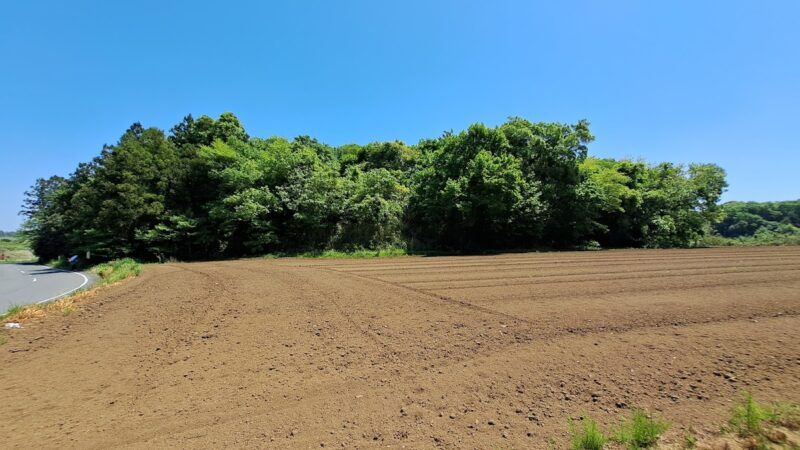
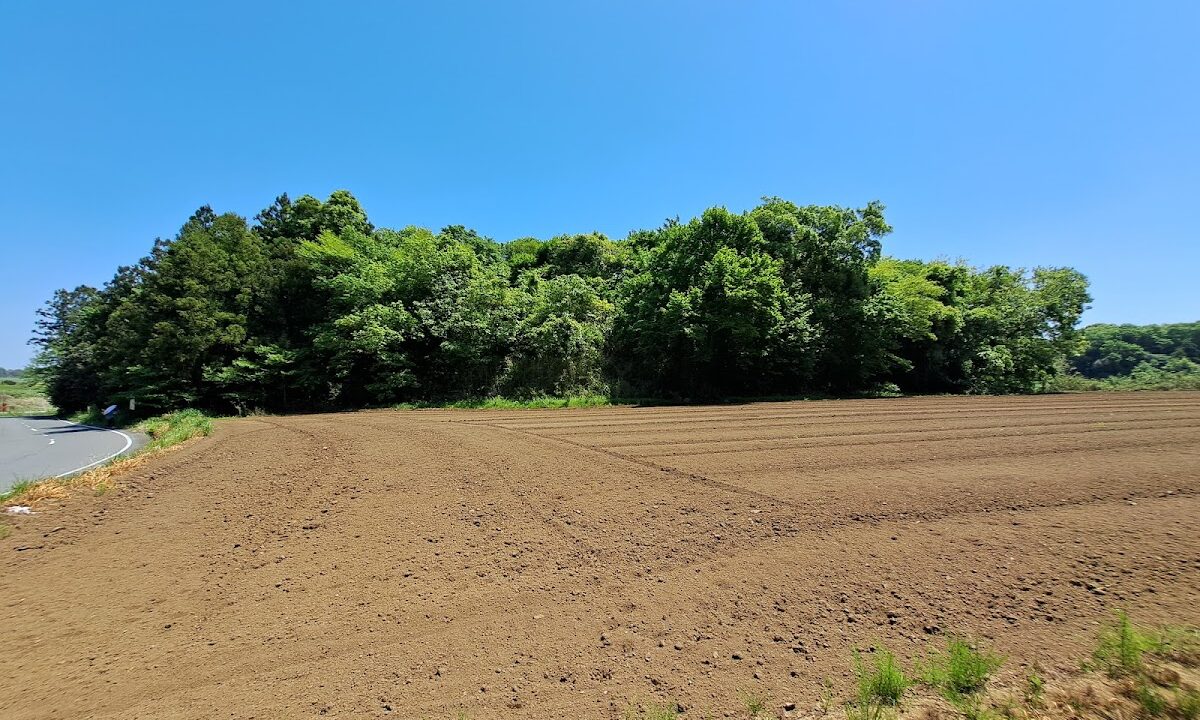
The area around Sugao Castle ruins is still a quiet region with a rural landscape. By strolling around while imagining the topography and environment at the time the castle was built, one can understand why people in the Middle Ages built a castle in this location.
In particular, looking around from the castle ruins, one can sense the topography that was once a low-lying wetland and the traces of rivers that were likely used for water transport.
Sugao Castle and Surrounding Castles
Relationship with Moriya Castle
Understanding Sugao Castle is essential to understanding its relationship with Moriya Castle. Moriya Castle was the stronghold of the Soma clan, and if Sugo Echizen-no-kami Tanezada was a member of the Soma family, then Sugo Castle would have functioned as a subsidiary castle of Moriya Castle.
The distance between the two castles is approximately 15 kilometers, a range that would allow for sufficient cooperation considering medieval military operations. Sugo Castle may have been positioned as a base to protect the southwestern area of Moriya Castle.
Conflict with Yumita Castle
Yumita Castle, which confronted Sugo Castle in the Battle of Eiroku 3 (1560), was the residence of the Someya clan. While there are various theories regarding the exact location of Yumita Castle, it is estimated to have been several kilometers from Sugo Castle.
This conflict between the two castles reflects a power struggle between local minor lords and serves as an example of the complex political situation in the provinces during the Sengoku period.
Shimotsuma Castle and the Tagaya Clan’s Territory
To the north of Sugo Castle lies Shimotsuma Castle, the stronghold of the Tagaya clan. The Tagaya clan, as a branch of the Yuki clan, expanded their power from western Shimosa Province to southern Hitachi Province, and from the Eiroku era onward, they reigned as a powerful daimyo in the region.
After the fall of Sugao Castle, it is highly likely that this region came under the influence of the Tagaya clan, and Sugao Castle may have been reorganized as part of the Tagaya clan’s castle network.
Distance to Yuki Castle
Yuki Castle was the base of the Yuki clan and the largest castle in northern Shimosa Province. The distance between Sugao Castle and Yuki Castle is approximately 20 kilometers, suggesting that the two castles had little direct relationship, but an indirect relationship through the Tagaya clan likely existed.
Results of Archaeological Excavations and Research
Overview of Archaeological Excavations
Multiple archaeological excavations have been conducted at Sugao Castle, and the results have been reported by the Joso City Board of Education. These investigations have revealed the actual state of the castle, which could not be known from historical documents alone.
The discovery of the trenches, in particular, is a significant achievement, providing important clues for understanding the construction techniques and renovation periods of Sugao Castle. Furthermore, the excavated artifacts offer insights into life and battles within the castle.
Excavated Artifacts
The excavation unearthed pottery fragments, earthenware, and iron artifacts. These artifacts primarily date to the mid-16th century, consistent with the historical record of the castle’s fall in Eiroku 3 (1560).
Of particular note are the fragments of iron arrowheads and sword fittings, believed to have been used in battle, providing physical evidence that the castle was indeed a battleground.
Dating Results
Dating of the excavated carbonized material and pottery suggests that Sugao Castle was active from the late 15th century to the mid-16th century. This coincides with the estimated period of activity of the Sugao clan based on historical documents, providing scientific data supporting the castle’s historical transformation.
Access to Sugao Castle
Location
Sugao Castle ruins are located around 2396 Sugao-cho, Joso City, Ibaraki Prefecture. The postal code is 303-0044. While the central part of the castle ruins includes private land, it is possible to view some of the remains from the surrounding roads.
Access by Public Transportation
If using public transportation, the nearest station is Mitsukaido Station on the Kanto Railway Joso Line. It is approximately 6 kilometers from Mitsukaido Station, requiring the use of a bus or taxi.
Kanto Railway buses operate routes towards Sugao, but the number of services is limited, so it is recommended to check the timetable in advance.
Access by Car
Access by car is the most convenient. It is approximately 15 kilometers from the Yawara Interchange on the Joban Expressway, or approximately 10 kilometers from the Joso Interchange on the Ken-O Expressway.
It can be accessed via a prefectural road from National Route 294. However, since there is no dedicated parking lot around the castle ruins, please be considerate of local residents when visiting.
Nearby Facilities
Near Sugao Castle Ruins is Joso Municipal Sugao Elementary School (4711 Sugao-cho, Joso City, Ibaraki Prefecture), which can be used as a landmark. There are also areas with abundant natural beauty, such as Sugao Marsh, which can be visited in conjunction with the castle ruins.
Points to Note When Visiting
Visitor Manners
Much of the Sugao Castle Ruins is on private land, so it is necessary to respect the rights of the landowners when visiting. It is important to avoid trespassing on private land and to limit your visit to areas accessible from public roads.
To protect the remains, any actions that damage the earthworks or moat traces should be strictly avoided. It is also important to observe basic manners, such as taking your trash with you.
Best Time to Visit
While it is possible to visit Sugao Castle Ruins throughout the year, the best time to observe the remains is from autumn to winter. During this time of year, the vegetation withers, making the terrain easier to see and allowing for better identification of the earthworks and moats.
From spring to summer, the vegetation grows densely, making observation of the remains difficult. Also, the ground becomes muddy after rain, so it is recommended to choose a day with good weather.
Estimated Time Required
Visiting the Sugao Castle Ruins generally takes about 30 minutes to 1 hour. If you want to carefully observe the area around the main enclosure and the surrounding terrain, it is advisable to allow 1 hour or more.
Cultural Property Designation of Sugao Castle
The Sugao Castle Ruins are designated as a cultural property by Joso City and are protected as an important historical heritage site of the region. This designation imposes certain restrictions on development activities at the castle site, ensuring the preservation of the remains.
Further research and investigation are expected to lead to its upgrade to a prefectural cultural property or a national historic site. To achieve this, continuous academic research and appropriate preservation management are crucial.
Resources for Learning About Sugao Castle
Basic Literature
Basic literature for learning about Sugao Castle includes “Kita-Soma-gun Shi” (History of Kita-Soma County), “Moriya-cho Shi” (History of Moriya Town), and “Joso-shi Shi” (History of Joso City). These local histories contain descriptions of the history of Sugao Castle and the Sugao clan.
“Togoku Senki Jitsuroku” (Records of the Eastern Provinces War) contains an entry titled “Yokose Nagauji’s Capture of Sugao Castle,” which details the battle of 1560 (Eiroku 3). However, due to its nature as a military chronicle, it may contain parts that differ from historical fact, so it should be read critically.
Archaeological Excavation Reports
The archaeological excavation reports published by the Joso City Board of Education contain detailed records of the excavations and information on excavated artifacts. While these reports are specialized, they are the most reliable sources for understanding the reality of Sugao Castle.
These reports can be viewed at the Joso City Library and the Ibaraki Prefectural Library, among others.
Internet Resources
Castle information websites such as Kojodan (Castle Enthusiast Group) offer accounts and photographs of people who have visited Sugao Castle. This information is useful as preliminary knowledge before actually visiting.
Furthermore, the official website of Joso City publishes information on cultural properties within the city, and you can obtain basic information about Sugao Castle there.
Future Challenges for Sugao Castle
Preservation and Utilization
A future challenge for the Sugao Castle site is how to strike a balance between appropriate preservation and utilization of the remains. It is necessary to protect its value as a cultural property while utilizing it as a resource for local history education and tourism.
Specifically, this could include installing explanatory signs for visitors, developing walking paths, and conducting guided tours. However, these developments must be carried out carefully, without damaging the remains.
Further Research and Study
Many aspects of Sugao Castle remain unclear. In particular, further research is needed regarding the construction period, changes in castle lords, and the use of the castle after its fall.
It is hoped that the history of Sugao Castle will become clearer through continued archaeological excavations and the discovery of new historical documents.
Collaboration with the Local Community
The preservation and utilization of the Sugao Castle ruins require the understanding and cooperation of local residents. Collaboration between local history enthusiasts, cultural property protection groups, and the local government is crucial to protecting and passing on the castle ruins as a source of local pride.
Including Sugao Castle in school education is also significant from the perspective of passing on cultural heritage to future generations.
Summary
Sugao Castle is a valuable medieval castle ruin remaining in Joso City, Ibaraki Prefecture. It is historically significant as the residence of Sugao Echizen-no-kami Tanetsada, and met a dramatic end with its fall in 1560.
The well-preserved earthworks of the main enclosure and the remains such as the trenches discovered during archaeological excavations are valuable cultural heritage that convey the castle-building techniques of the Sengoku period. It is also an important historical site that tells the story of the region’s Sengoku period history, including its relationship with the Soma clan, battles with the Someya clan, and the expansion of the Tagaya clan’s power.
The castle ruins are most easily accessible by car and are located around 2396 Sugao-cho, Joso City. When visiting, please be mindful of respecting private property and observe proper etiquette to appreciate the historical site.
Sugao Castle may not be flashy, but it is a highly valuable historical site for understanding the realities of medieval castles. It is a place that those interested in the Sengoku period history of Ibaraki Prefecture and fans of medieval castles should definitely visit. We hope that further research, appropriate preservation, and utilization will lead to a wider recognition of Sugao Castle’s historical value.