Katano Castle (Ishioka City, Ibaraki Prefecture) Complete Guide: From the Residence of Ota Sukemasa to the History of the Katano Domain
Located in Negoya, Ishioka City, Ibaraki Prefecture, Katano Castle is a historically significant fortress known as the residence of the renowned general Ota Sukemasa (Sanrakusai) during the Sengoku period, and the center of the Katano Domain in the early Edo period. This article comprehensively explains the detailed history of Katano Castle from its construction to its abandonment, the existing remains, and the highlights for visitors.
Overview and Basic Information of Katano Castle
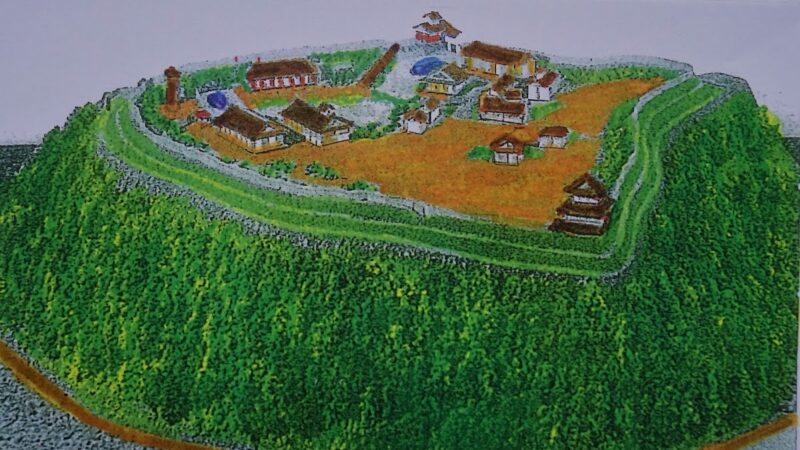
Katano Castle (Katano-jo) was a flatland castle located in Negoya, Ishioka City, Ibaraki Prefecture (formerly Katano, Niihari District, Hitachi Province). Built on a plateau approximately 20 meters high, it was a multi-bailey castle that functioned as an important military base in southern Hitachi Province from the Sengoku period to the early Edo period.
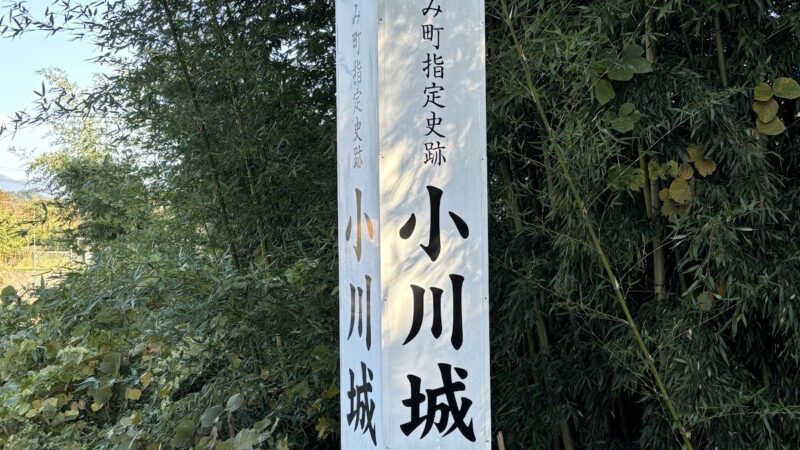
Currently, the Katano Castle ruins are protected as a designated historical site of Ishioka City, and the remains of earthworks and dry moats around the main enclosure are well preserved. An information board and stone monument are located north of the Nanadai Tenjin Shrine, serving as an access point to the castle ruins.
Basic Data of the Castle
- Location: Negoya, Ishioka City, Ibaraki Prefecture
- Castle Structure: Concentric flatland castle, hill castle
- Year of Construction: Traditionally during the Bun’ei era (1264-1275)
- Builder: Traditionally attributed to Hatta Shōgen
- Main Lords: Hatta clan, Ōta Sukemasa, Ishizuka clan, Takigawa clan
- Year of Abandonment: Keichō era (early 17th century)
- Designated Cultural Property: Ishioka City Designated Historic Site
History of Katano Castle: From Construction to Abandonment
Early Medieval Period: Construction by the Hatta Clan
There are various theories regarding the construction of Katano Castle, but the most plausible theory is that it was built around the Bun’ei era (1264-1274) by Hatta Shōgen, a member of the Oda clan. Records show that Hatta Tokiie established his residence in this area in 1271 (Bun’ei 8).
Initially, Katano Castle functioned as a northern defense base for the Oda clan, whose main base was Oda Castle. The Oda clan was a powerful local family in southern Hitachi Province, and Katano Castle is thought to have been an important branch castle protecting the northern edge of their sphere of influence.
Sengoku Period: Ota Sukemasa’s Entry and Development
Katano Castle first appears on the historical stage during the late Sengoku period. Around 1566 (Eiroku 9), Ota Sukemasa (Sanrakusai), a renowned general of the Kanto region, entered the castle as a guest general of Satake Yoshishige.
About Ota Sukemasa
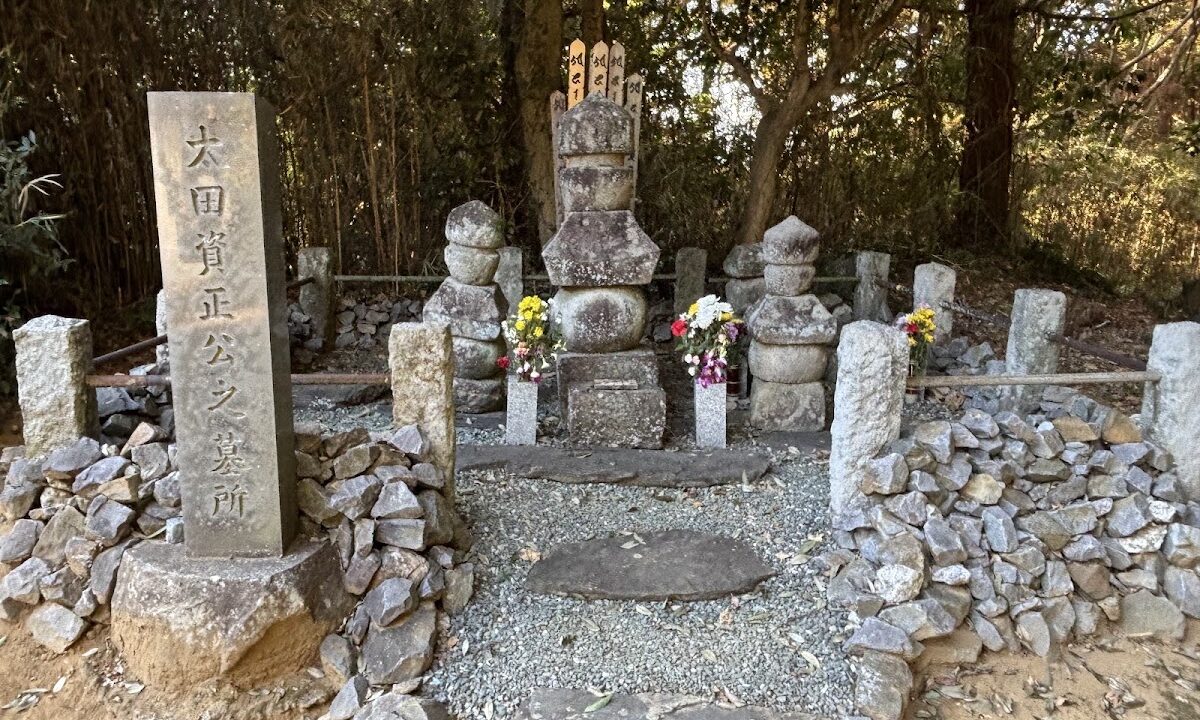
Ota Sukemasa was a samurai warrior who was the great-grandson of Ota Dokan, who built Edo Castle. He served as the lord of Musashi Iwatsuki Castle, but after being defeated in a conflict with the Hojo clan, he fled to Hitachi Province and was welcomed as a guest general by Satake Yoshishige. Sukemasa was a man of great military skill and literary and martial arts prowess, also known by the pseudonym “Sanrakusai.”
As a base for launching attacks against Oda Ujiharu
Satake Yoshishige granted Ota Sukemasa Katano Castle and instructed him to develop it as a base for launching attacks against Oda Ujiharu, the lord of Oda Castle. During this period, the Satake and Oda clans were fiercely opposed to each other for supremacy in Hitachi Province, and Katano Castle became the Satake’s frontline base.
Sukemasa extensively renovated Katano Castle into a practical fortress. He arranged multiple baileys, each isolated by deep dry or water moats, and surrounded the main baileys with earthen ramparts 2-3 meters high. The main gate incorporated the latest castle-building techniques of the time, such as a masugata (square enclosure) and umadashi (outwork).
Battle of Tebaizaka (Eiroku 12, 1569)
In Eiroku 12 (1569), Oda Ujiharu led a large army to attack Katano Castle. Ota Sukemasa and his son, with reinforcements from Makabe Ujimoto of Makabe Castle and Tagaya Shigezune of Tagaya Castle, intercepted the enemy at Tebaizaka at the foot of Mount Tsukuba.
In this Battle of Tebaizaka, Sukemasa and his men decisively defeated the Oda forces, forcing Oda Ujiharu to retreat. This victory demonstrated the strategic importance of Katano Castle and further enhanced Ota Sukemasa’s reputation.
Later Years and Death of Ota Sukemasa
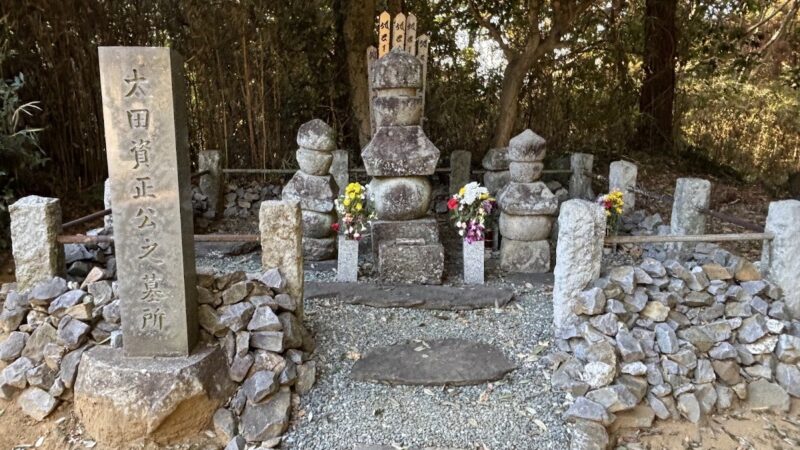
Ota Sukemasa continued to serve the Satake clan, based at Katano Castle, and died there at the age of 70. After Sukemasa’s death, Katano Castle is said to have temporarily come under the control of the Ishizuka clan. Names such as Ishizuka Genichiro Yoshikuni and the Ishizuka clan are recorded, and a connection to Ishizuka Castle has been pointed out.
Early Edo Period: Establishment of Katano Domain and Abandonment of the Castle
Entry of Takigawa Katsutoshi
In 1603 (Keicho 8), with the establishment of the Tokugawa Shogunate, Takigawa Katsutoshi was appointed to Katano Castle with a 20,000 koku stipend, establishing the Katano Domain. The Takigawa clan was a family of Takigawa Kazumasu, a senior retainer of Oda Nobunaga, and a family that served Tokugawa Ieyasu and achieved meritorious service.
With Takigawa Katsutoshi’s entry, Katano Castle changed its character from a military base of the Sengoku period to a residence of a modern daimyo. However, the history of the Katano Domain was short-lived.
Abolition of the Katano Domain and Abandonment of the Castle
Takigawa Katsutoshi’s son, Takigawa Toshimasa, was sickly and died young without leaving an heir. As a result, during the Keicho era, the Katano Domain was abolished, with 18,000 koku of its 20,000 koku domain confiscated, and the remaining 2,000 koku was reduced to the status of a hatamoto (direct retainer of the shogun).
With the abolition of the domain, Katano Castle was also abandoned. Since then, it has lost its function as a castle, and only its remains have survived to this day.
Structure of Katano Castle: A Practical Castle Design
Katano Castle is a multi-bailey hilltop castle with a structure strongly focused on practical combat. Renovations by Ota Sukemasa incorporated the most advanced castle-building techniques of the late Sengoku period.
Main Enclosure (Honmaru) and Enclosure Arrangement
The main enclosure (Honmaru), the center of the castle, is at its core, with multiple enclosures arranged in a continuous pattern. Each enclosure is highly independent, and the design allows for continued defense even if one enclosure falls.
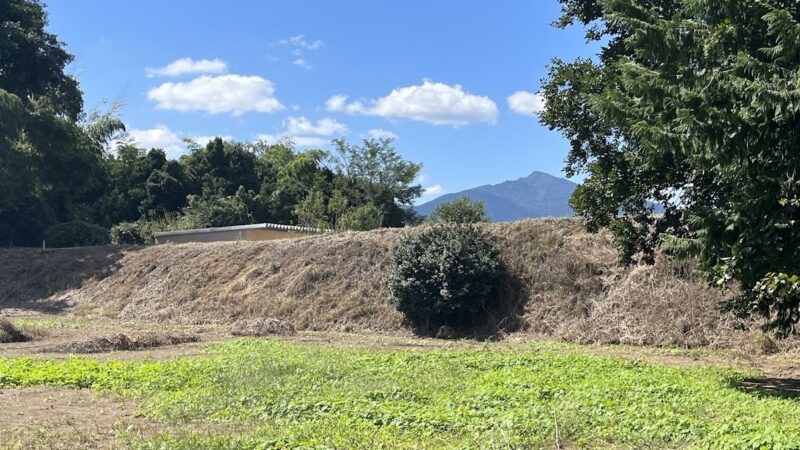
A 2-3 meter high earthen rampart surrounds the main enclosure, enhancing its defensive capabilities. This earthen embankment remains remarkably well-preserved and is one of the most important historical remains of Katano Castle.
Dry and Water Moats
The dry moats separating the baileys were deeply excavated, making enemy intrusion difficult. A particularly large dry moat remains north of the Nanadai Tenjin Shrine, and is now used as a road. An information board and a stone monument are installed along this dry moat.
It is believed that water moats were also constructed in some areas, forming a defensive line utilizing the wetlands.
Moats and Earthen Bridges
Several moats dividing the plateau were also constructed, serving to limit enemy movement. Earthen bridges for crossing the moats remain, serving as important historical remains indicating the flow of movement within the castle.
Defensive Structures at the Main Entrance
A masugata (square enclosure) was constructed at the main entrance (Ote-guchi). A masugata is a defensive structure that lured the enemy into a narrow space for attack from three sides, a defensive technique that became widespread in the late Sengoku period.
Furthermore, a Umadashi (horse enclosure) has also been confirmed. The Umadashi was a small enclosure located in front of the castle gate, functioning as a rally point during attacks and a defensive stronghold.
Design of the Entrances
The entrances to each enclosure were designed with curves to prevent the enemy from advancing directly. This forced the attacking side to change direction, creating a situation advantageous to the defending side.
Highlights of Katano Castle: Visiting Existing Remains
The current Katano Castle site retains well-preserved remains from the Sengoku period to the early Edo period. Here are some of the main highlights that visitors can actually see.
Earthworks around the Main Enclosure
The best-preserved feature is the earthworks surrounding the main enclosure. Earthworks 2-3 meters high and several meters wide surround the enclosure, conveying the appearance of a Sengoku period castle. Walking along the top of the earthworks allows you to experience the view from the watchtower of that time.
Dry Moat North of Nanadai Tenjin Shrine
A large dry moat remains north of Nanadai Tenjin Shrine, and is currently used as a road. The depth and width of this moat give a real sense of the castle’s strong defenses. An information board and a stone monument for Katano Castle are installed along the moat, serving as a starting point for visiting the castle ruins.
Multiple Enclosure Remains
Multiple enclosure remains can be identified, centered around the main enclosure. The topography and elevation differences of each enclosure allow for an understanding of the structure of a multi-enclosure castle. The spatial arrangement between the enclosures is thought to reflect the military strategy of Ota Sukemasa.
Moats and Earthen Bridges
Moats dividing the plateau and earthen bridges used to cross them remain in some areas. These remains are valuable traces indicating the movement routes and defensive lines within the castle.
Stone Monument and Information Board
A stone monument has been erected at the Katano Castle ruins, and an information board briefly explaining the castle’s history is also installed. These are the results of local historical preservation efforts and serve to provide visitors with an overview of the castle.
Access and Visiting Information for Katano Castle
Access Methods
By Public Transportation:
- Approximately 15 minutes by car from JR Joban Line “Ishioka Station”
- If using a bus from Ishioka Station, take the Kantetsu Green Bus towards “Negoya”
By Car:
- Approximately 15 minutes from Joban Expressway “Chiyoda-Ishioka IC”
- Accessible via National Route 355
- Parking: Limited space available around Nanadai Tenjin Shrine (confirmation required)
Notes for Visitors
- Part of the Katano Castle ruins include private land, so please check the permitted areas.
- Access from the north side of Nanadai Tenjin Shrine, where there is an information board and stone monument, is recommended.
- Care must be taken not to damage the earthworks or moats to protect the remains.
- Visiting in spring or autumn is recommended due to overgrown vegetation in summer.
- Comfortable walking shoes and insect repellent will make your visit more enjoyable.
Estimated Visiting Time
For a general tour of the main remains, approximately 30 minutes to 1 hour is a good guideline. If you wish to observe in detail or take photographs, it is advisable to allocate more time.
Nearby Related Historical Sites and Tourist Attractions
When visiting Katano Castle, visiting the surrounding related historical sites will deepen your understanding of the Sengoku period history of Hitachi Province.
Oda Castle Ruins (Tsukuba City)
This was the base of Oda Ujiharu, who was an enemy of Katano Castle. It is a nationally designated historical site, and archaeological excavations and restoration work are underway. Located about 30 minutes by car from Katano Castle, visiting both castles will provide a more comprehensive understanding of the conflict between the Satake and Oda clans.
Ishioka City Local History Museum
This facility offers a comprehensive history of Ishioka City. It also displays materials related to Katano Castle, and visiting before or after your visit will enhance your understanding.
Hitachi Kokubunji Temple and Kokubun-niji Temple Ruins
These are important ancient historical sites located within Ishioka City. They offer insights into Ishioka’s history as the center of Hitachi Province.
Castles Related to the Satake Clan
Ota Castle (Hitachi-Ota City), the base of the Satake clan where Ota Sukemasa served as a guest general, and Kubota Castle (Akita City, the Satake clan’s transfer destination), are also interesting related historical sites.
Historical Significance and Modern Value of Katano Castle
Importance in Sengoku Period History
Katano Castle holds several important significances in the history of the Sengoku period in the Kanto region.
Firstly, as the residence of the renowned general Ota Sukemasa in his later years, it became an important stage in the history of key figures in Kanto’s Sengoku period history. The fact that Sukemasa, a descendant of Ota Dokan (who built Edo Castle), met his end in Hitachi evokes a sense of historical significance.
Secondly, as a strategic base in the conflict between the Satake and Oda clans, it played a crucial role in shaping the power dynamics of southern Hitachi Province. The victory at the Battle of Tebaisaka was a vital step in paving the way for the Satake clan’s unification of Hitachi Province.
Thirdly, it holds high historical value in castle research as an example of late Sengoku period castle construction technology. The renovations by Ota Sukemasa reflect the cutting-edge military technology of the time and are considered a quintessential example of a multi-bailey hilltop castle.
Position in the History of the Domain System in the Early Edo Period
The short-lived existence of the Katano Domain is interesting as an example illustrating the fluidity of daimyo placements during the early Edo period. The arrival and subsequent confiscation of the Takigawa clan symbolizes the process by which the Tokugawa regime solidified its control over the Kanto region.
Importance in Local History
In the history of Ishioka City (formerly Niihari District), Katano Castle is a historical site symbolizing the transition from the medieval to the early modern period. In Ishioka, a historical center since ancient times where the Hitachi Provincial Government was located, Katano Castle is a valuable historical site that concretely conveys the regional history of the Sengoku period.
Preservation and Utilization as a Cultural Property
Katano Castle ruins are protected as a designated historical site of Ishioka City, but their national recognition is not yet high. However, given the well-preserved remains and rich historical background, further research, preservation, and maintenance are expected.
It is important to widely disseminate the value of Katano Castle as a place for local history education and as a place of exploration for castle enthusiasts and history lovers. Creating an environment where visitors can safely and comfortably experience history, such as improving information boards and developing viewing paths, is desirable.
Advice for Castle Enthusiasts Visiting Katano Castle
Points to Consider When Viewing Castles
When visiting Katano Castle, paying attention to the following points will allow you to understand the castle more deeply.
- Height and Thickness of Earthworks: Observe the earthworks around the main enclosure and imagine their defensive capabilities based on their scale.
- Arrangement of Enclosures: Confirm how multiple enclosures are connected and understand the structure of a multi-enclosure castle.
- Depth of Dry Moats: From the scale of the dry moat north of Shichidai Tenjin Shrine, appreciate the ingenuity used to prevent enemy intrusion.
- Utilization of Topography: Observe how the castle was built utilizing the plateau’s terrain.
- View and Line of Sight: Look around from the main enclosure and earthworks and consider which directions were being guarded.
Recommended Photography Spots
- Dry moat north of Shichidai Tenjin Shrine and the information board/stone monument
- Cross-section of earthworks around the main enclosure
- Surrounding scenery viewed from the enclosures
- Remains of moats and earthen bridges
- In the autumn foliage season, enjoy the harmonious scenery of the castle ruins and nature.
Related Books and Information Sources
For those who want to learn more about Katano Castle, the following books and materials are helpful.
- *Illustrated Guide to Castles of Ibaraki*: A specialized book explaining castles in Ibaraki Prefecture with layout diagrams.
- *Medieval Castle Sites of Ibaraki Prefecture*: A comprehensive survey report of medieval castles in the prefecture.
- *Ishioka City History*: Allows you to understand the history of Katano Castle within the context of local history.
- Castle Database Sites such as Kojodan: Allows you to check visitor ratings and photos.
Summary: Rediscovering the Charm of Katano Castle
Katano Castle (Ishioka City, Ibaraki Prefecture) is a historically valuable castle where Ota Sukemasa, a famous Sengoku period general, spent his later years as a guest general, and which became an important base in the conflict between the Satake and Oda clans. In the early Edo period, it became the residence of the Takigawa clan’s Katano Domain, but it was abandoned after a short period.
Even today, the remains of earthworks, dry moats, and baileys around the main enclosure are well preserved, conveying the castle-building techniques of the late Sengoku period. Its structure as a multi-enclosure flatland castle is practical for warfare and is considered to reflect Ota Sukemasa’s strategic thinking. The Katano Castle ruins, protected as a designated historical site by Ishioka City, are a valuable historical space where visitors can feel the spirit of the Sengoku period (Warring States period). Visiting them along with other related historical sites in the area, such as Oda Castle, will allow for a more comprehensive understanding of the Sengoku history of Hitachi Province.
Katano Castle is a historical site worth visiting not only for castle enthusiasts and history buffs, but for anyone interested in local history. Please visit the site and experience the historical romance of the Sengoku period while imagining the view seen by Ota Sukemasa.