Horinouchi Odai Castle (Itako City, Ibaraki Prefecture) Complete Guide | History and Remains of the Satake Clan’s Southern Domination Base
What is Horinouchi Odai Castle?
Horinouchi Odai Castle was a medieval flatland castle located in Horinouchi, Itako City, Ibaraki Prefecture. Also known as “Odai Castle,” it was built in 1591 (Tensho 19), at the end of the Sengoku period, by Satake Yoshinobu, a powerful daimyo of Hitachi Province.
This castle functioned as a military and administrative base for the Satake clan’s control of southern Hitachi Province. Although it lasted for only about 10 years, it played an extremely important role for the Satake clan in their quest to unify Hitachi Province. Currently, most of the castle site is occupied by Itako Municipal Ushibori Junior High School, but some remains from that time still exist.
History of Horinouchi-Ōdai Castle
Background of Construction: The Massacre of the Thirty-Three Southern Castles
The construction of Horinouchi-Ōdai Castle is deeply connected to the expansion of the Satake clan’s power in southern Hitachi Province. In 1590 (Tenshō 18), Satake Yoshinobu, who participated in Toyotomi Hideyoshi’s “Siege of Odawara,” received permission from Hideyoshi to unify Hitachi Province.
The following year, in 1591 (Tenshō 19), Yoshinobu summoned the lords of the “Thirty-Three Southern Castles,” who controlled southern Hitachi, to Ōta Castle (present-day Hitachiōta City) and carried out a daring act of assassination. This incident, known as the “Massacre of the Thirty-Three Southern Castles,” became a crucial turning point in the Satake clan’s unification of Hitachi Province.
Having eliminated the lords, including Shimazaki Yasusada (lord of Shimazaki Castle), who were central figures in the 33 southern castles, Yoshinobu was compelled to establish a new system of control over southern Hitachi Province.
A New Base to Replace Shimazaki Castle
After the execution of the 33 southern castles, Satake Yoshinobu seized Shimazaki Castle. However, this castle was a symbol of the old power structure and was deemed insufficient as a base for the new system of control due to its location. Therefore, Yoshinobu chose the area of Horinouchi in present-day Itako City.
This area was strategically located in southern Hitachi Province and possessed a geographical advantage, allowing access to water transport via Lake Kasumigaura and Lake Kitaura. Yoshinobu built Horinouchi Odai Castle as a replacement for Shimazaki Castle and appointed Onuki Yorihisa as its castellan. Onuki Yorihisa was a senior retainer of the Satake clan and was entrusted with the practical management of the southern region.
The Satake Clan’s Transfer and the Abandonment of the Castle
Horinouchi-Ōdai Castle served as the Satake clan’s southern base for approximately 10 years. During the Battle of Sekigahara in 1600 (Keichō 5), Satake Yoshinobu did not clearly indicate his allegiance to either the Eastern or Western army, leading Tokugawa Ieyasu to judge him as “opportunistic.”
As a result, in 1602 (Keichō 7), the Satake clan was ordered to undergo a significant reduction in territory and transfer, moving from Hitachi Province (540,000 koku) to Akita in Dewa Province (200,000 koku). With this transfer, Horinouchi-Ōdai Castle was abandoned, ending its historical role after just over 10 years.
After the Satake clan’s transfer, southern Hitachi became a direct territory of the Tokugawa clan and a territory of their hatamoto (direct retainers), and the site of Horinouchi-Ōdai Castle was converted into farmland and other uses by local people.
Structure and Layout of Horinouchi-Odai Castle
Location and Topographical Characteristics
Horinouchi-Odai Castle is a flatland castle built on a plateau near Lake Kitaura. This plateau is several meters higher than the surrounding lowlands, functioning as a natural stronghold. The castle was located in a position to control water transport in the Lake Kasumigaura and Lake Kitaura water system, making it a strategically and economically important base.
Due to its nature as a flatland castle, it is believed to have lacked high stone walls or structures like a keep, and was primarily composed of earthworks and moats for defense.
Scale and Structure of the Castle
While a detailed layout map of Horinouchi-Odai Castle does not exist, on-site surveys and topographical analysis suggest the following structure:
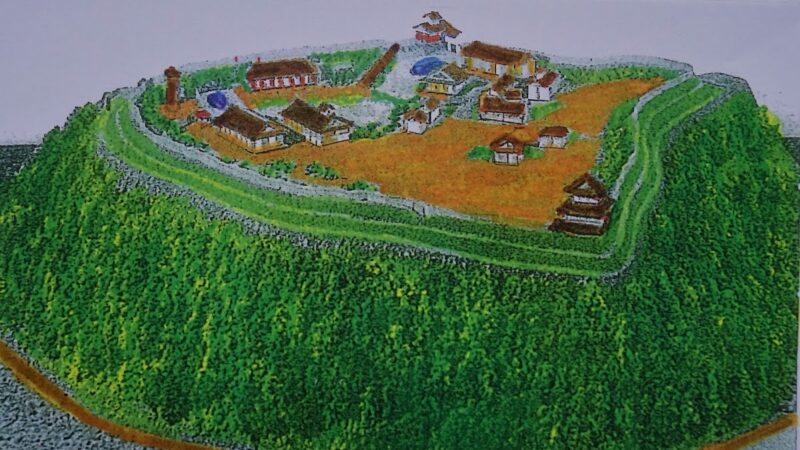
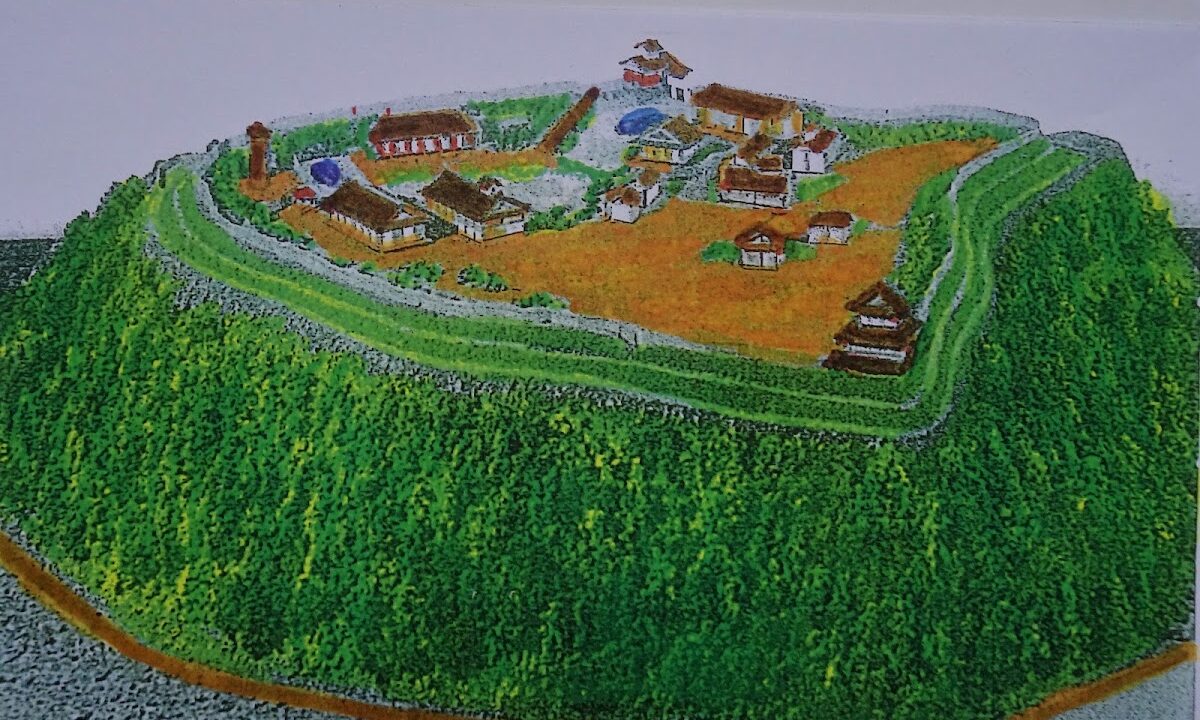
Main Enclosure: The area where the current Ushibori Junior High School building stands is thought to have been the main enclosure (honmaru). The castle lord’s residence and major facilities would have been located here.
Earthworks and Moats: Earthworks surrounded the castle, and moats were dug outside of them. Even today, traces of some earthworks and moats can be seen around the junior high school grounds.
Outposts: Records indicate that Horinouchi-Odai Castle had outposts such as “West Outpost” and “North Outpost.” These functioned as forward positions protecting the main castle.
Characteristics of Satake Clan Castle Architecture
Castles built by the Satake clan share several common characteristics. Horinouchi-Odai Castle is no exception, and it is believed to have been built with practicality in mind, emphasizing a simple yet robust construction.
It is characterized by the extensive use of earthworks rather than stone walls, and relatively shallow and wide moats. This can be said to reflect the geology and tactical philosophy of Hitachi Province. Furthermore, the Satake clan also focused on developing castle towns, and it is possible that the residences of their retainers and merchant districts were located around Horinouchi-Odai Castle.
Current Status of Horinouchi-Odai Castle Ruins
Preservation Status of Ushibori Junior High School and the Castle Ruins
Currently, the central part of the Horinouchi-Odai Castle ruins is occupied by the grounds of Itako Municipal Ushibori Junior High School. Unfortunately, most of the castle remains were lost due to the school’s construction. However, a few traces of the castle can still be seen within and around the school grounds.
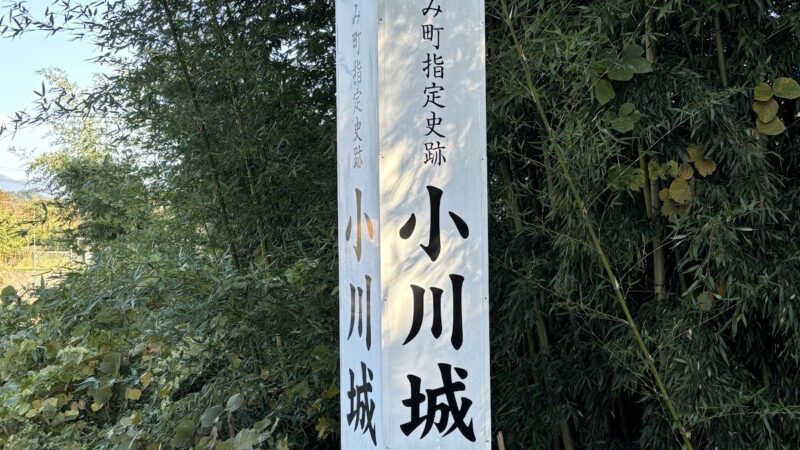
A stone monument marking the “Horinouchi-Odai Castle Ruins” stands to the right of the school’s main gate, indicating that this area was once a castle. The monument is relatively large and placed in an easily accessible location for visitors. Near the monument is an information board explaining the castle’s history, briefly describing the construction by the Satake clan and the execution of the 33 southern castles.
Remaining Remains
Although many remains were lost due to the construction of the junior high school, the following remains partially survive:
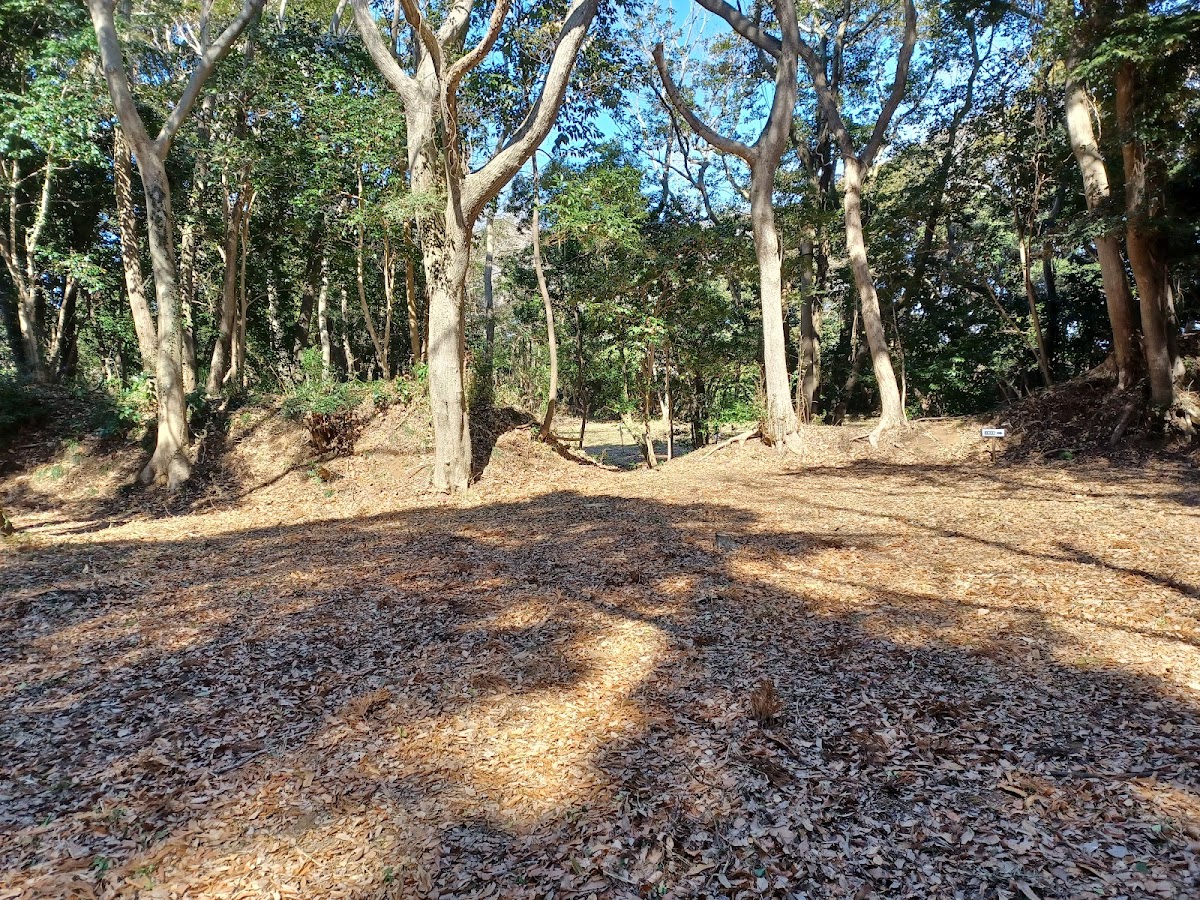
Traces of Earthworks: A slight elevation of earthworks can be seen along the boundary of the junior high school grounds. While not in its complete form, it provides clues to estimating the scale of the defensive structures at the time.
Traces of the Moat: The terrain around the school shows depressions and waterways that appear to be remnants of the former moat. Although these have been filled in or are now used as agricultural waterways, it is possible to estimate the location of the moat from the topography.
Land Division: The surrounding roads and land divisions reflect the land divisions from the castle era. Aerial photographs, for example, vaguely reveal the extent of the former castle grounds.
Points to Note When Visiting
When visiting the Horinouchi Odai Castle Ruins, please note the following:
It is a School Facility: The central part of the castle ruins is an active junior high school. Avoid entering the grounds during class hours, and limit your visit to the stone monument and information board near the school gate. School events may be taking place even on weekends, holidays, and during long breaks.
Preservation Status of Remains: The remaining remains are very limited, and those expecting clearly defined castle structures may be disappointed. Visiting with an understanding of its historical value is recommended.
Photography: Taking photos of monuments and information boards is permitted, but care must be taken to avoid including school facilities or students in the photos.
Access to Horinouchi Odai Castle
Access by Public Transportation
If visiting Horinouchi Odai Castle ruins by public transportation, the nearest station is Itako Station on the JR Kashima Line. However, the castle ruins are approximately 5 kilometers from the station, taking over an hour on foot. Furthermore, there are no bus routes connecting this section, so the following method is more practical:
Rental Bicycle: Rental bicycles are available at the Itako City Tourism Association in front of Itako Station. The fee is 1,000 yen per day, and electric-assist bicycles are also available. By bicycle, you can reach the castle ruins in about 20-30 minutes. Itako City is known as a waterside town and has a flat terrain suitable for cycling, so we recommend visiting the surrounding tourist spots in conjunction with your visit to the castle ruins.
Taxi: You can also take a taxi from Itako Station. The one-way trip takes about 15 minutes and costs around 2,000 yen. It’s a good idea to book your return taxi in advance.
Access by Car
If you are visiting by car, the following routes are convenient:
Higashi-Kanto Expressway: Approximately 10 minutes (about 6 kilometers) from Itako IC
National Route 51: From Kashima or Sawara, take National Route 51 to Prefectural Road 2 (Itako Kaido). Aim for Ushibori Junior High School.
Parking: Ushibori Junior High School has a dedicated parking lot, but it is for school personnel only. There is no public parking for castle ruins visitors, so you will need to use nearby paid parking lots or short-term street parking. However, please be careful not to obstruct traffic when parking on the street.
Address and Map Information
Location: 1009 Horinouchi, Itako City, Ibaraki Prefecture (Ushibori Junior High School, Itako City)
Car Navigation Settings: Search for “Ushibori Junior High School, Itako City, Ibaraki Prefecture” or “1009 Horinouchi, Itako City, Ibaraki Prefecture”
Nearby Related Historical Sites and Tourist Spots
Shimazaki Castle Ruins
If you visit Horinouchi Odai Castle, you should definitely extend your trip to Shimazaki Castle Ruins. Shimazaki Castle was the residence of Shimazaki Yasusada, the leader of the 33 castles of the southern region. After the Shimazaki clan was destroyed by Satake Yoshinobu, it temporarily became a base for the Satake clan.
Although most of the Shimazaki Castle Ruins are now residential land, some earthworks and moats remain, and an information board has been installed. It is about 3 kilometers from Horinouchi Odai Castle, about a 10-minute bicycle ride. Visiting both castles will give you a deeper understanding of the changes in the Satake clan’s control over the southern region.
Itako’s Waterside Scenery
Itako City is a tourist destination known as “Waterside Itako.” The waterfronts of Kitaura and Maekawa offer scenery that evokes the remnants of past water transport. The Maekawa Iris Garden, in particular, is bustling with tourists during the Iris Festival in June.
Enjoying the waterside scenery in conjunction with a tour of castle ruins is a highlight of sightseeing in Itako. Around Itako Station, there are attractions such as the Itako Waterside Iris Garden and the Katozu Twelve Bridges.
Oogami Shrine and Oogami Tumulus Cluster
In the southern part of Itako City are the Oogami Shrine and the Oogami Tumulus Cluster. The Oogami Shrine is an ancient shrine that has long been revered as the second-ranked shrine of Hitachi Province, and a magnificent shrine building remains on its grounds. Numerous keyhole-shaped burial mounds from the Kofun period are scattered around, testifying to the deep history of this region from ancient times.
It is approximately 8 kilometers from the Horinouchi Odai Castle ruins, about a 30-minute bicycle ride.
Kashima Shrine
If you extend your trip a little further, you can visit Kashima Shrine (Kashima City), the Ichinomiya (first-ranked shrine) of Hitachi Province. Kashima Shrine is an ancient shrine that appears in Japanese mythology and is the largest shrine in eastern Japan, dedicated to Takemikazuchi-no-Okami.
It is approximately 15 kilometers from the Horinouchi Odai Castle ruins, about a 20-minute drive. Satake Yoshinobu also deeply revered Kashima Shrine, and his relationship with the shrine was important in his rule of Hitachi Province.
Historical Significance of Horinouchi Odai Castle
The Satake Clan’s Role in the Unification of Hitachi Province
Horinouchi Odai Castle played an important role in the Satake clan’s unification of Hitachi Province. For Satake Yoshinobu, who had seized control of southern Hitachi Province through the drastic measure of eliminating the 33 southern castles, a stable base was essential for governing the region.
Instead of utilizing the existing Shimazaki Castle, he deliberately built a new castle, demonstrating a clear intention to break with the old powers and establish a new order of rule. Horinouchi-Ōdai Castle was not merely a military base, but also a symbol of the Satake clan’s control over the south.
What the Short-Lived Castle’s History Reveals
The history of Horinouchi-Ōdai Castle was short, lasting only a little over 10 years. However, this brevity symbolizes the turbulent period from the late Sengoku period to the early Edo period.
The Satake clan, who unified Hitachi Province under the Toyotomi regime, lost their position due to a misjudgment in the Battle of Sekigahara, a decisive battle for control of Japan. The short history of Horinouchi-Ōdai Castle illustrates the instability of the transition from a Sengoku daimyo to a modern daimyo and the process of establishing the Tokugawa regime.
Place in Local History
In the history of the Itako region, the era of Horinouchi-Odai Castle, though brief, was a significant turning point. This region, previously ruled by local lords such as the Shimazaki clan, came under the direct control of the Satake clan, the leading power in Hitachi Province, resulting in a major shift in its political and economic structure.
After the Satake clan’s transfer, this region became a direct territory of the Tokugawa shogunate and later a territory of hatamoto (direct retainers of the Tokugawa), developing as a key water transport hub throughout the Edo period. The era of Horinouchi-Odai Castle can be considered a valuable example of the transformation of local communities during the transition from the medieval to the early modern period.
Points to Note When Visiting Horinouchi-Odai Castle
Estimated Visit Time
A visit to the Horinouchi-Odai Castle ruins itself can be completed in about 15-20 minutes. If you only need to check the stone monument and information board and observe the surrounding topography, it can be done in a short time. However, if you plan to combine your visit with other nearby attractions such as the Shimazaki Castle ruins or other Itako sights, it’s best to allocate half a day to a full day.
Best Time to Visit
Horinouchi Odai Castle Ruins are an outdoor historical site and are generally open for visits year-round. However, please consider the following points:
Spring (March-May): The weather is mild, making it ideal for cycling. The surrounding scenery is particularly beautiful during cherry blossom season.
Early Summer (June): This coincides with the Itako Iris Festival, allowing visitors to enjoy the scenery of the waterside area. However, it is the rainy season, so rain gear is necessary.
Autumn (September-November): The weather is pleasant, making it suitable for exploring the castle ruins. The surrounding nature is also beautiful during the autumn foliage season.
Summer/Winter: Summer requires precautions against heat and insects, while winter requires precautions against the cold.
Useful Items to Bring
- Camera: To record stone monuments, signposts, and the surrounding terrain.
- Map or Smartphone: You can check your exact location with a GPS app.
- Drinking Water: Essential, especially in summer, to prevent heatstroke.
- Insect Repellent Spray: From spring to autumn.
- Rain Gear: To prepare for changes in weather.
- Historical Materials: Researching the Satake clan and the 33 southern castles beforehand will deepen your understanding.
Summary
Horinouchi Odai Castle played an important role in the history of Hitachi Province at the end of the Sengoku period, as a base for controlling southern Hitachi after Satake Yoshinobu’s execution of the 33 southern castles. Although it existed for only a short period of a little over 10 years, it is a castle that symbolizes the turbulent era of the Satake clan’s unification of Hitachi Province and the subsequent transfers of domains.
Currently, the site is occupied by Itako Municipal Ushibori Junior High School, and while clear remains are limited, its history can be learned through stone monuments and signposts. When visiting Itako City in Ibaraki Prefecture, be sure to visit this historic castle ruin along with the scenic waterside landscape and surrounding historical sites.
By using a rental bicycle from Itako Station, you can efficiently visit not only the Horinouchi Odai Castle ruins but also other nearby historical spots such as the Shimazaki Castle ruins and the Osei Shrine. A journey tracing the footsteps of the Satake clan and experiencing the history of southern Hitachi Province will be a fulfilling experience for castle enthusiasts.