Complete Guide to Ogawa Castle (Ibaraki Prefecture) | A Thorough Explanation of History, Remains, Access, and Surrounding Sightseeing
What is Ogawa Castle?
Ogawa Castle (Ogawa-jo) is a medieval hilltop castle located in Ogawa, Omitama City, Ibaraki Prefecture. Also known as Ogawa Castle or Sonobe Castle, it was one of the important strongholds in Hitachi Province during the Sengoku period.
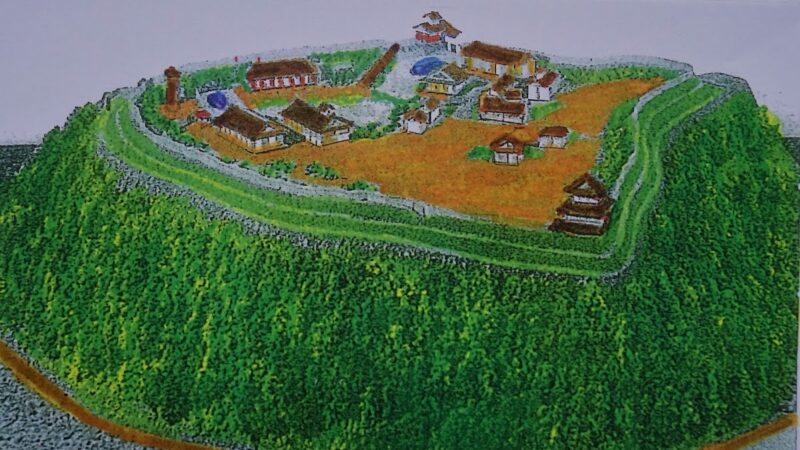
Currently, the area around Ogawa Elementary School corresponds to the former castle grounds, built on a plateau approximately 20m above sea level and 10m above ground level. Known as the residence of Sonobe Kaneyasu, a retainer of Oda Masaharu, it is a valuable historical site that preserves a typical form of medieval castle in Hitachi Province.
History of Ogawa Castle
Construction and the Sonobe Clan
The exact construction date of Ogawa Castle is unclear, but historical records confirm that it functioned as the residence of the Sonobe clan during the mid-Sengoku period. The Sonobe clan was a family that served the Oda clan, a powerful local clan in southern Hitachi Province, and controlled the surrounding area from their base at Ogawa Castle.
Sonobe Kaneyasu is known as a senior retainer of Oda Masaharu, and while residing at Ogawa Castle, he contributed to the expansion of the Oda clan’s power. The Oda clan was in conflict with the Satake clan in southern Hitachi, and Ogawa Castle is thought to have played an important role as one of the front lines of this conflict.
Developments during the Sengoku Period
During the Sengoku period, Hitachi Province became a battleground for the struggle for supremacy between the Satake clan in the north and the Oda clan in the south. The Sonobe clan, based at Ogawa Castle, became vassals of the Oda clan and became involved in this conflict.
In the latter half of the 16th century, the Satake clan’s power gradually expanded, and the Oda clan found themselves at a disadvantage. During the Tensho era (1573-1592), the Satake clan’s unification of Hitachi progressed, and the various castles under the Oda clan’s control came under Satake control one after another. It is presumed that Ogawa Castle also came under the influence of the Satake clan during this process.
Abandoned Castle and Present Day
After Toyotomi Hideyoshi’s siege of Odawara in 1590, Hitachi Province was established under Satake Yoshinobu as a daimyo with a domain of 540,000 koku. During this period, many medieval castles were reorganized and consolidated, and it is believed that Ogawa Castle was also abandoned.
In the Edo period, the castle site was used for farmland and settlements, and after the Meiji Restoration, urbanization progressed, with the construction of Ogawa Elementary School, among other things. Currently, most of the castle remains have been lost, but traces of it remain faintly in the place names and topography.
Structure and Layout of Ogawa Castle
Location and Topography
Ogawa Castle was a flatland castle built on a plateau approximately 20 meters above sea level, with a relative height of about 10 meters from the surrounding plains. This plateau is located in the basin of a river flowing into Lake Kasumigaura, making it a strategically important location controlling a key point for water transport. The castle’s layout, skillfully utilizing the plateau’s topography, clearly demonstrates the characteristics of a medieval castle. It shows ingenuity in maximizing the use of natural terrain to construct effective defensive structures with minimal effort.
Arrangement of Enclosures
Ogawa Castle is presumed to have consisted of multiple enclosures (kuruwa). The main enclosure was located at the highest point of the plateau, surrounded by the second and third enclosures, forming a typical linear enclosure structure.
The current site of Ogawa Elementary School is presumed to be the site of the main enclosure. While much of the remains were lost due to construction during the school building’s construction, the former boundaries of the enclosures can be inferred from the surrounding topography.
Defensive Structures
Regarding moats and earthworks, which are important defensive structures for medieval castles, very little can be confirmed today. However, observations of the topography and micro-topography suggest the possibility of dry moats and trenches being present in the past.
Earthworks are also presumed to have surrounded the enclosures, but their original form has been lost due to years of development. The slight differences in elevation that remain allow us to imagine the former defensive lines. ## Highlights of Ogawa Castle
Existing Remains
Ogawa Castle is currently located on the grounds of Ogawa Elementary School, making it difficult to clearly identify any castle remains. However, observing the surrounding topography provides clues to understanding the location and structure of the medieval castle.
Slight remnants of the original topography can be seen on the edge of the plateau. Furthermore, the layout of surrounding roads and waterways may also reflect traces of the castle era.
Castle Site Monument and Information Boards
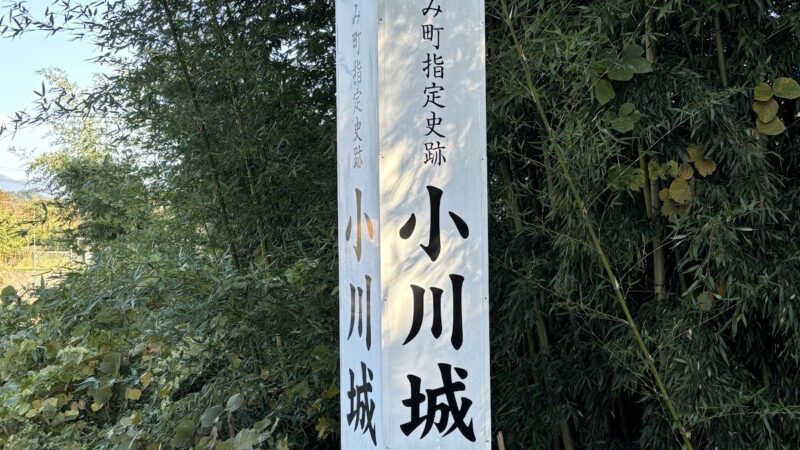
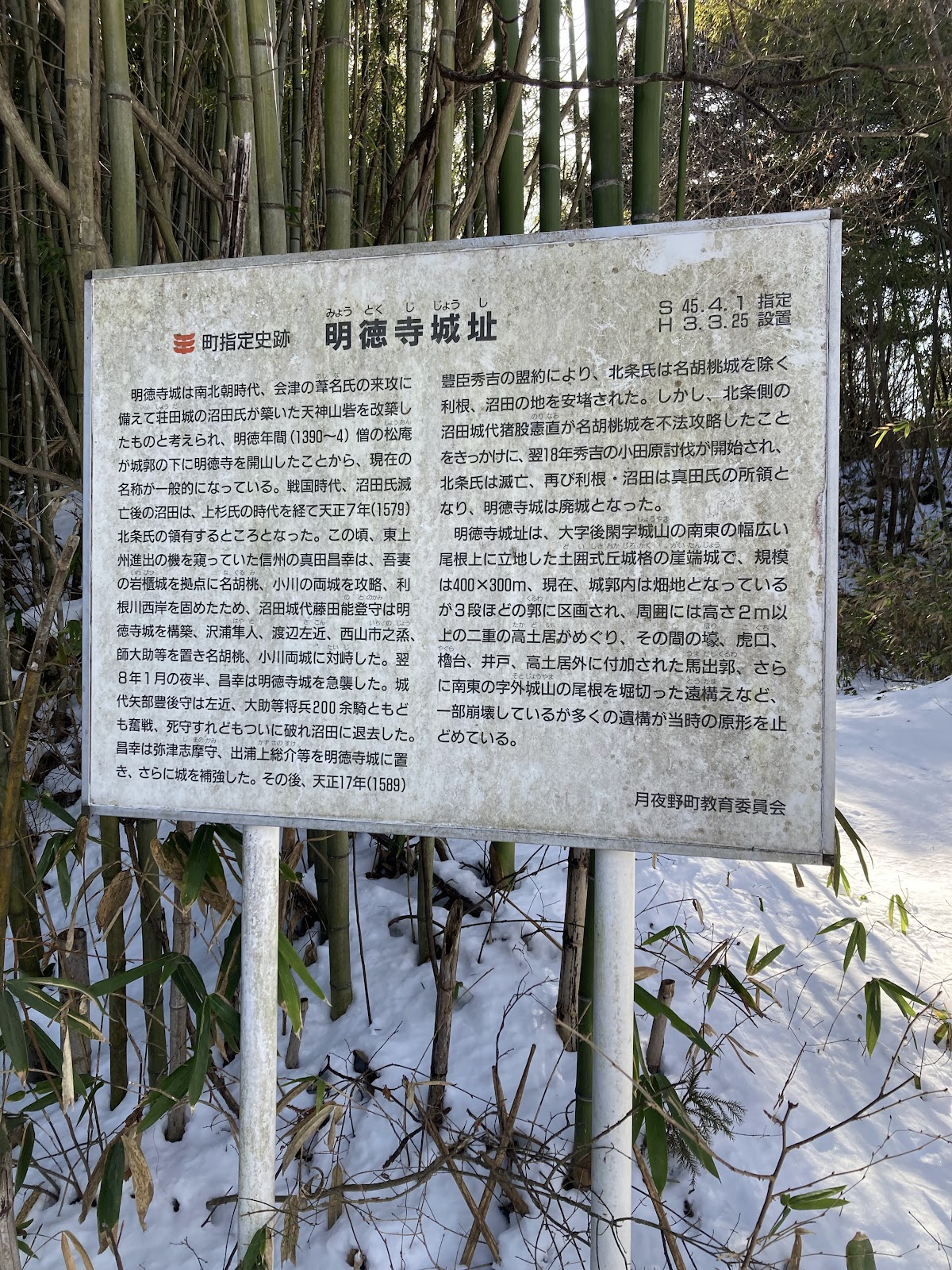
Information boards and signs indicating the Ogawa Castle site are installed around Ogawa Elementary School. These boards provide explanations about the castle’s history and structure, helping visitors deepen their understanding of the site.
There are also explanatory boards installed by local history research groups, providing detailed information about the history of the Sonobe clan and the role of Ogawa Castle.
Surrounding Landscape
From the Ogawa Castle site, you can enjoy a panoramic view of the Hitachi plains. The former lords of this castle must have gazed upon this view while contemplating the management and strategies of their territories.
The surrounding area is a picturesque rural landscape, offering a glimpse into the rural scenery that has continued since the Middle Ages. The view towards Lake Kasumigaura is also excellent, allowing you to appreciate its strategic location as a key point for water transport.
Access to Ogawa Castle
Access by Public Transportation
Nearest Station: JR Joban Line “Ishioka Station” or “Hatori Station”
From Ishioka Station, take the Ibaraki Kotsu bus bound for Ogawa and get off at the “Ogawa Elementary School” bus stop. It’s approximately a 3-minute walk from there. Since bus service is limited, it’s recommended to check the timetable in advance.
Buses also operate from Hatori Station, but access via Ishioka Station is more convenient.
Access by Car
Joban Expressway: Approximately 15 minutes from “Ishioka-Omitama Smart IC” or approximately 20 minutes from “Chiyoda-Ishioka IC”
Kita-Kanto Expressway: Approximately 25 minutes from “Ibaraki-Higashi IC”
The route via National Route 6 and Prefectural Route 118 is easy to understand; setting “Ogawa Elementary School” on your car navigation system is convenient.
Parking Information
There is no dedicated parking lot at Ogawa Castle Ruins. When visiting, please be considerate so as not to disrupt classes at Ogawa Elementary School. If using parking lots at nearby public or commercial facilities, please check the terms of use of each facility.
For short visits, some areas may allow street parking, but please be careful not to inconvenience local residents.
Points to Note During Visits
Visiting Hours
Since Ogawa Castle Ruins are located on the grounds of Ogawa Elementary School, entry during school hours should be avoided. Visits are recommended on weekends or after school hours.
The average visit time is approximately 25 minutes. Because there are few remaining structures, you can easily see everything in about 30 minutes, even with careful observation.
Manners and Consideration
Since the visit takes place on school grounds, please observe the following points:
- Prioritize the safety of the children and avoid disrupting classes.
- Avoid loud conversations and noise.
- Always take your trash with you.
- Unauthorized entry onto private property is strictly prohibited.
- When taking photographs, be considerate of those around you.
Clothing and Equipment
No special equipment is required to visit the castle ruins, but the following preparations are helpful:
- Comfortable walking shoes (sneakers, etc.)
- Seasonal clothing
- Hat, sunscreen, and insect repellent in summer
- Drinks (especially in summer)
- Camera (for documentation)
Nearby Tourist Attractions
Historical Sites in Omitama City
Tamari Jinya Ruins: The remains of an Edo period encampment located in the Tamari district of Omitama City. Although it is from a different era than Ogawa Castle, it is an interesting historical site for understanding the history of the same region.
Sanmaizuka Kofun: A nationally designated historical site, a keyhole-shaped burial mound. It offers insights into the state of Hitachi Province during the Kofun period.
Nearby Castles
Obata Castle (Ibaraki Town): A medieval castle located approximately 15km northeast of Ogawa Castle. Known as a castle associated with the Satake clan, its remains are better preserved than those of Ogawa Castle. It boasts many points of interest, including a complex layout of baileys and deep moats.
Fuchu Castle (Ishioka City): The site of a castle in Ishioka City, where the Hitachi Provincial Government was located. It flourished as the residence of the Daijo clan.
Tsuchiura Castle (Tsuchiura City): A flatland castle located in the center of Tsuchiura City. Turrets and gates have been restored, and a museum is also located on the premises.
Sightseeing around Lake Kasumigaura
Omitama City is close to Lake Kasumigaura, offering beautiful lakeside scenery. Leisure facilities such as Kasumigaura Comprehensive Park and Kasumigaura Fureai Land are also abundant.
Cycling paths are well-maintained, and the “Rinrin Road,” a popular cycling route around Lake Kasumigaura, is a favorite.
Ogawa Castle and the Medieval History of Hitachi Province
The Sengoku Period of Hitachi Province
During the Sengoku period, Hitachi Province was in a complex situation with the Satake clan in the north and the Oda and Edo clans in the south vying for power. The Sonobe clan, based at Ogawa Castle, played a key role in this conflict as powerful vassals of the Oda clan.
The Satake clan gradually expanded its power, and by the Tensho era, it controlled most of Hitachi Province. In this process, many small and medium-sized local clans either became subordinate to the Satake clan or were destroyed.
The Oda and Sonobe Clans
The Oda clan was a prestigious family descended from the Hitachi Taira clan, and their base was Oda Castle (Tsukuba City). At its peak, it controlled a large area of southern Hitachi, but gradually lost power due to conflicts with the Satake clan.
The Sonobe clan, as senior retainers of the Oda clan, played a crucial military role. Ogawa Castle served as their base, a strategic point protecting the northeastern part of the Oda clan’s sphere of influence.
Characteristics of a Medieval Castle
Medieval hilltop castles like Ogawa Castle are characterized by their simple structure, lacking stone walls or keeps. Earthen ramparts and moats were the primary defensive structures, and the castle’s defenses were enhanced by skillfully utilizing the terrain.
These castles served as bases during battles and, in peacetime, functioned as the lord’s residence. They played an important role in the local community as centers of politics and economy.
Current Status and Challenges of Ogawa Castle Research
Status of Archaeological Excavations
No full-scale archaeological excavations have been conducted at the Ogawa Castle site. Because the site is occupied by Ogawa Elementary School, large-scale excavations are difficult.
While there are records of artifacts being unearthed during past school building construction, systematic investigations have not been carried out, and many aspects of the castle’s detailed structure remain unknown.
Historical Documents
Historical documents concerning Ogawa Castle are limited. They only appear fragmentarily in documents related to the Sonobe and Oda clans, and the castle’s construction date and detailed history remain unclear.
Research by local historians and ancient documents preserved in nearby temples and shrines are gradually unraveling its history.
Future Preservation and Utilization
The preservation and utilization of the Ogawa Castle ruins is a crucial issue as a regional historical heritage site. Currently, very few remains exist, so efforts are focused on improving information boards and promoting local history.
In Omitama City, efforts are underway to utilize the city’s historical heritage as tourist resources, and the Ogawa Castle ruins are positioned as part of this initiative.
Significance of Visiting Ogawa Castle
Deepening Understanding of Medieval History
Visiting the Ogawa Castle ruins is a valuable opportunity to experience the medieval history of Hitachi Province firsthand. It allows one to imagine the simple yet practical appearance of a medieval castle, distinct from the opulent castles of the early modern period.
Observing the topography and imagining the castle’s former appearance deepens our understanding of history.
Local History and Culture
Ogawa Castle is a symbol of local history. The lives of the local people, including the Sonobe clan, revolved around this castle.
Visiting the castle ruins will increase your interest in local history and culture, and deepen your affection for your hometown.
The Joys of Castle Tours
Numerous castle ruins remain throughout Japan, each with its own unique characteristics. Even castle ruins with few remaining structures, like Ogawa Castle, offer a unique charm to castle tours.
Using your imagination to envision its former glory is a valuable experience that evokes a sense of historical romance. Comparing it to nearby castles with remaining structures, such as Obata Castle, will lead to a deeper understanding.
Resources and Information on Ogawa Castle
Books and Documents
For those who want to learn more about Ogawa Castle, the following resources are helpful:
- *Medieval Castles of Ibaraki Prefecture* (Ibaraki Prefectural Board of Education)
- *Comprehensive Survey of Japanese Castles, Volume 4: Ibaraki, Tochigi, and Gunma* (Shin Jinbutsu Oraisha)
- *History of Omitama City* (Omitama City History Compilation Committee)
- Publications by local history research societies
Online Information
Websites such as Kojodan and Jōkaku Hōrōki (Castle Attack Group and Castle Wanderings) feature photos and impressions from visitors. These are useful for gathering information before a visit.
The official Omitama City website also provides information on historical sites within the city.
Local Museums
Libraries and museums within Omitama City offer exhibits and materials related to local history. Visiting these facilities is recommended for detailed information about Ogawa Castle.
Summary
Ogawa Castle (Omitama City, Ibaraki Prefecture) is a medieval hilltop castle built by the Sonobe clan and is an important historical site that tells the story of the Sengoku period in Hitachi Province. Currently, the site is occupied by Ogawa Elementary School, and no clear remains are left, but its former appearance can be imagined from the topography and surrounding environment.
Built on a plateau 20m above sea level with a relative height of 10m, the castle served as the residence of Sonobe Kaneyasu, a vassal of the Oda clan, and was located on the front lines of the conflict with the Satake clan. It is believed to have been abandoned during the Satake clan’s unification of Hitachi Province in the Tensho era.
When visiting, it is recommended to be considerate of the school facilities and choose times such as weekends or after school. The average visit time is about 25 minutes, and combining it with sightseeing at nearby Obata Castle or Lake Kasumigaura will allow for a fulfilling historical exploration.
Access is by bus from Ishioka Station on the JR Joban Line, or by car from various interchanges on the Joban Expressway. Although few remains exist, this site is a valuable historical site for understanding the medieval history of Hitachi Province and is well worth a visit for castle enthusiasts and history buffs.