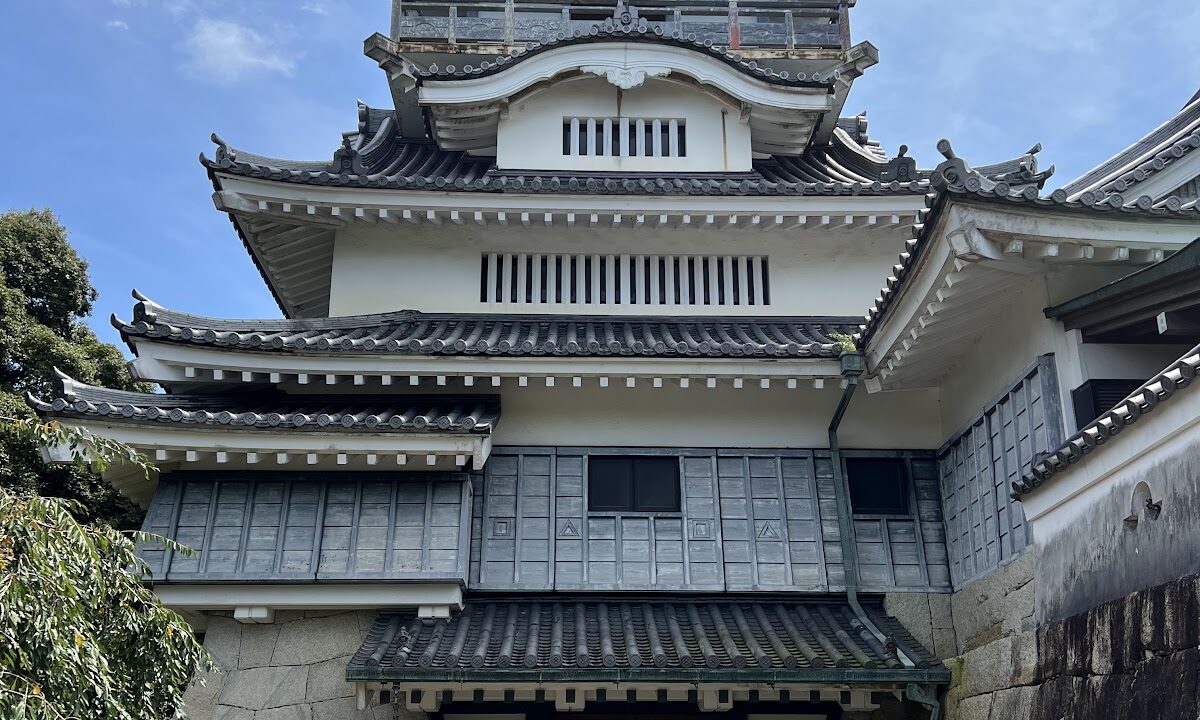
Yamao Castle (Ibaraki Prefecture) – The History and Remains of a Mountain Castle in Hitachi Province Built by the Onozaki Clan
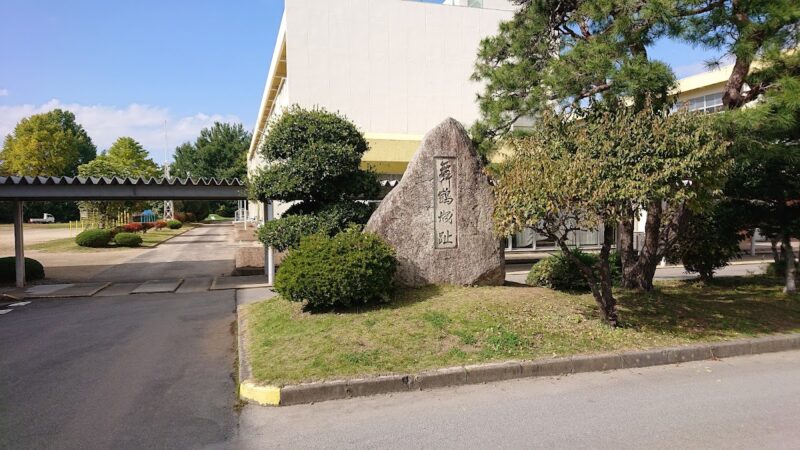
Located in Tomobe, Juo-cho, Hitachi City, Ibaraki Prefecture, Yamao Castle was a mountain castle that played an important role in medieval Hitachi Province. Currently the site of Juo Junior High School, much of the main enclosure’s remains have been lost, but traces of earthworks and moats from that time can still be seen along the southwestern ridge. This article provides a detailed explanation of this little-known Hitachi mountain castle, including its history, the lineage of the Onozaki clan who built it, existing remains, and visitor information.
Basic Information on Yamao Castle
Location: Shindate, Tomobe, Juo-cho, Hitachi City, Ibaraki Prefecture
Alternate Name: Shindate Castle
Castle Structure: Mountain Castle (Hill Castle)
Elevation: Approximately 62m (Relative Height Approximately 50m)
Construction Period: Around 1371 (Oan 4)
Builder: Onozaki Michiharu
Main Lord: Onozaki Clan
Remains: Earthworks, moats, bailey remains
Current Status: Juo Junior High School, residential area
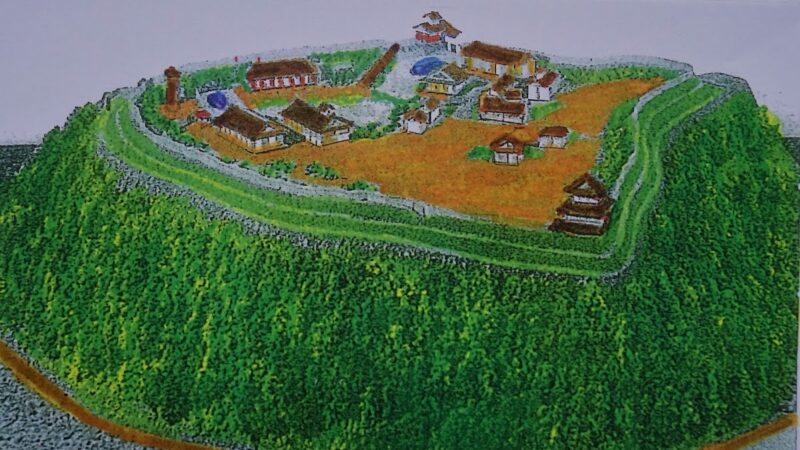
Yamao Castle is a medieval mountain castle located in Juo-cho, Hitachi City, in northern Ibaraki Prefecture. It was built on a hill where Juo Junior High School currently stands. A typical mountain castle utilizing a hill with an elevation of approximately 62 meters and a relative height of approximately 50 meters, it functioned as one of the power bases of the Onozaki clan in northern Hitachi Province.
The History of Yamao Castle and the Onozaki Clan
Background of the Castle’s Construction and the Genealogy of the Onozaki Clan
Yamao Castle is said to have been built around 1371 by Onozaki Michiharu. The Onozaki clan was a powerful family that ruled the northern part of Hitachi Province and had close ties to a branch of the Satake clan. They were an important force in northern Hitachi Province from the Nanboku-cho period to the Sengoku period.
While the Onozaki clan’s base is believed to be around Hitachiota, the Juo-cho area where Yamao Castle is located is close to the border between Hitachi Province and Mutsu Province (later Iwaki Province), making it an important base for northward expansion and defense. Due to this geographical characteristic, it is thought that Yamao Castle functioned as a branch castle of the Onozaki clan, or as the residence of a branch family of the clan.
Yamao Castle in the Sengoku Period
With the arrival of the Sengoku period, the Satake clan’s influence expanded in Hitachi Province, and the Onozaki clan also came under the influence of the Satake clan. The area around Yamao Castle also came under the influence of the Satake clan, and it is presumed to have played an important role in the Satake clan’s unification of Hitachi Province.
Many mountain castles were built in northern Ibaraki Prefecture, and Yamao Castle was one of them, becoming a stage for power struggles among local clans. It is believed that Yamao Castle survived throughout the medieval period, influenced by the actions of surrounding daimyo such as the Satake, Iwaki, and Soma clans.
Abandonment and Aftermath
The exact date of Yamao Castle’s abandonment is unclear, but after Toyotomi Hideyoshi’s siege of Odawara in 1590, the Satake clan unified Hitachi Province. Furthermore, when the Satake clan was transferred to Akita in Dewa Province in 1602, many branch castles were abandoned. It is presumed that Yamao Castle also lost its function as a castle around this time.
During the Edo period, it became part of the Mito Domain, and the castle ruins were used for farmland and settlements. Development continued after the Meiji era, and with the construction of Juo Junior High School during the Showa period, many of the remains of the main enclosure were lost.
Layout and Structure of Yamao Castle
Structure of the Main Enclosure
The main enclosure of Yamao Castle is now the site of Juo Junior High School, and most of the remains have been lost due to the construction of the school buildings and grounds. However, judging from the topography, it is thought that the main enclosure was created by leveling the top of a hill, with multiple enclosures arranged around it.
The size of the main enclosure is unknown, but it is estimated to have been of medium size for a medieval mountain castle. From the main enclosure, one could see the surrounding plains and coastline, suggesting that it functioned as a military observation post.
Existing Remains
Currently, the remains of Yamao Castle can mainly be confirmed along the ridge extending to the southwest. A transmission tower stands on this ridge, and traces of earthworks and moats remain around it.
Earthworks: Traces of earthworks can be seen along the ridge. They are approximately 1-2 meters high and, although weathered, are clearly artificial structures.
Moat: Traces of a moat, cut across the ridge, remain. While shallow, it is clear that it functioned as a defensive structure blocking the ridge.
Enclosure Remains: Terraces are visible on the ridge, suggesting the possibility of small enclosures. However, there are few clearly leveled areas, making it difficult to distinguish them from the natural terrain in some parts.
Characteristics of Mountain Castles in Ibaraki Prefecture
Yamao Castle exhibits typical characteristics of medieval mountain castles commonly found in Ibaraki Prefecture. Unlike the stone-walled castles of western Japan, mountain castles in the Kanto region generally feature structures primarily composed of earthworks and moats.
Ibaraki Prefecture boasts numerous famous castles, including Mito Castle, Tsuchiura Castle, and Kasama Castle, which are among Japan’s Top 100 Castles and the Continued Top 100 Castles. However, it also contains many smaller mountain castles like Yamao Castle, which are crucial for understanding the region’s history. Kasama Castle, in particular, is known as a rare stone-walled castle in the Kanto region, while earthen castles like Yamao Castle represent a valuable historical site that reflects the mainstream style of castle construction in Kanto.
Relationship with Surrounding Castles
Castle Network in Northern Hitachi Province
Several medieval castles existed around Juo-cho, Hitachi City, where Yamao Castle is located. Representative examples include Tomobe Castle, Kushigata Castle, and Ogitsu Castle. These castles are thought to have cooperated with each other, forming a defense network in northern Hitachi Province.
Tomobe Castle: Located near Yamao Castle, it is also considered to be a castle associated with the Onozaki clan.
Kushigata Castle: A mountain castle built on another hill within Hitachi City, it has a similar structure to Yamao Castle.
Ogitsu Castle: Located in Ogitsu-cho, Hitachi City, this castle served as a coastal defense base.
It is presumed that these castles functioned as bases for independent local clans before the Satake clan’s unification of Hitachi Province, and as a group of branch castles of the Satake clan after unification.
Relationship with Mito Castle
Mito Castle, a representative castle of Ibaraki Prefecture, flourished during the Edo period as the residence of the Mito Tokugawa family, one of the three main branches of the Tokugawa family. Mito Castle is also selected as one of Japan’s 100 Famous Castles and is the most famous castle in Ibaraki Prefecture. Its location is San-no-maru, Mito City, Ibaraki Prefecture, and historical sites such as the Kodokan remain there today.
While Yamao Castle and Mito Castle have little direct connection, both were castle ruins within the Mito Domain during the Edo period and were under the domain’s control. Mito Castle was the political and cultural center, while medieval mountain castles like Yamao Castle had already been abandoned, making them contrasting figures.
Current Status and Visiting Information for Yamao Castle
Access Methods
Public Transportation:
- Approximately 20 minutes on foot from JR Joban Line “Juo Station”
- Take the Hitachi Electric Railway bus from Juo Station and get off at the “Juo Junior High School” bus stop, then a short walk.
By Car:
- Approximately 10 minutes from Joban Expressway “Hitachi Kita IC”
- Parking: Since Juo Junior High School is a school facility, please use nearby public parking lots or be careful when parking on the street.
Precautions When Visiting
The Yamao Castle ruins are currently located on the grounds of Juo Junior High School, so access to the main enclosure is restricted. Please note the following points when visiting:
- Entry onto School Grounds: Please refrain from entering the grounds during class hours or school events. It is recommended to contact the school in advance if you wish to visit.
- Locations Where Remains Can Be Confirmed: The area around the transmission tower on the southwest ridge is relatively easy to access, and traces of earthworks and moats can be confirmed. However, since some areas may be private property or forest, caution is necessary when entering.
- Safety Considerations: Some areas in the forest have uneven terrain, so please wear appropriate clothing and shoes.
- Protection of Remains: The remaining remains are valuable historical heritage. Please refrain from damaging the earthworks or excavating without permission.
Nearby Tourist Attractions
When visiting Yamao Castle, we recommend also visiting nearby historical sites and tourist attractions:
Juo Panorama Park: A park located about 10 minutes by car from Yamao Castle, featuring an observation deck with panoramic views of the Pacific Ocean.
Hitachi City Local History Museum: A museum where you can learn about the history and culture of Hitachi City, exhibiting materials related to local castles, including Yamao Castle.
Sukegawa Coastal Defense Castle Ruins: A coastal defense castle built during the late Edo period. While from a different era than Yamao Castle, it is an interesting historical site for understanding the history of castles in Hitachi City.
Castle Tour in Ibaraki Prefecture and Yamao Castle
Major Castles in Ibaraki Prefecture
Ibaraki Prefecture boasts a diverse range of castles, from nationally renowned castles to smaller castle ruins like Yamao Castle that tell the history of the region.
Mito Castle (One of Japan’s Top 100 Castles): Located in San-no-maru, Mito City, Ibaraki Prefecture, it was the residence of the Mito Tokugawa family, one of the three main branches of the Tokugawa clan. It is characterized by its large earthworks and dry moats.
Tsuchiura Castle (Continued One of Japan’s Top 100 Castles): Located in the center of Tsuchiura City, Ibaraki Prefecture, it is a flatland castle also known as “Kamejo” (Turtle Castle). It is a beautiful castle surrounded by a water moat.
Kasama Castle (Continued One of Japan’s Top 100 Castles): Located in Kasama, Kasama City, Ibaraki Prefecture, it is a mountain castle with stone walls, a rarity in the Kanto region. It flourished as the residence of the Kasama clan.
Sakasai Castle: A castle where you can experience the appearance of a medieval castle, with its restored turret gate and earthworks being a highlight. Compared to these more famous castles, Yamao Castle may be smaller in scale and less well-known, but it is valuable as a precious historical site that tells the history of the Onozaki clan, a powerful local family.
Suggested Castle Tour Routes
When touring castles in northern Ibaraki Prefecture, we suggest an efficient route including Yamao Castle:
Day Trip Course:
- Yamao Castle (Juo-cho, Hitachi City) – Visit in the morning
- Tomobe Castle and Kushigata Castle (Hitachi City) – Castles surrounding Yamao Castle
- Sukegawa Coastal Defense Castle Ruins (Hitachi City) – Coastal defense facilities from the late Edo period
- Hitachi City Local History Museum – Learn about local history
1-Night, 2-Day Course:
Day 1: Yamao Castle and castle tours in Hitachi City
Day 2: Visit major castles such as Mito Castle and Kasama Castle
Historical Significance of Yamao Castle
Position in Medieval Hitachi Province
Yamao Castle is an important historical site that shows the reality of regional control in northern Hitachi Province during the medieval period. Although not a large-scale castle, it is a valuable example for understanding how local powerful families maintained their power and built defensive systems.
From the medieval period to the Sengoku period, Hitachi Province was a complex region dominated by numerous powerful clans, including the Satake, Oda, Yuki, and Edo clans, resulting in a complex interplay of power dynamics. Small mountain castles like Yamao Castle were built at the boundaries and strategic points of these clans’ territories, functioning as centers of regional control.
Value as an Earthen Castle
Yamao Castle is an “earthen castle,” primarily constructed of earthworks and moats, without the use of stone walls. Many medieval castles in the Kanto region are of this type, possessing a different technology and aesthetic compared to the stone-walled castles of western Japan.
While earthen castles tend to be perceived as less impressive than stone-walled castles, they are highly sophisticated structures showcasing the pinnacle of civil engineering technology. Clever use of the terrain and ingenuity to maximize defensive effectiveness with minimal effort are evident throughout. The earthworks and moats of Yamao Castle are valuable relics that convey this medieval castle-building technique to the present day.
As a Historical Source for Local History Research
While documentary sources concerning Yamao Castle are limited, archaeological surveys and topographical analyses can provide a wealth of information. Further, more comprehensive academic research could potentially yield new insights into the sphere of influence of the Onozaki clan and the history of northern Hitachi Province during the medieval period.
Preservation and Utilization of Yamao Castle
Current Challenges
The Yamao Castle site is now occupied by Juo Junior High School, and the remains of the main enclosure have already been lost. The remaining structures are gradually becoming indistinct due to weathering and overgrown vegetation. Recognition as a historical site is also low, and efforts toward preservation and utilization are insufficient.
Future Preservation and Utilization Possibilities
To preserve and utilize Yamao Castle as a local historical resource, the following initiatives can be considered:
- Survey of Remains: Accurately survey and record the remaining earthworks and moats.
- Installation of Information Boards: Install information boards explaining the location and history of the castle ruins to provide information to visitors.
- Utilization in Local Education: Use as teaching material for local history in local schools.
- Development of Walking Paths: Develop minimal walking paths to allow safe viewing of the remains.
- Digital Archiving: Record the remains as digital data using 3D surveying and drone photography.
These initiatives will enable the transmission of Yamao Castle’s historical value to future generations and its utilization as a local cultural resource.
Summary
Yamao Castle is a medieval mountain castle located in Juo-cho, Hitachi City, Ibaraki Prefecture, and is said to have been built around 1371 by Onozaki Michiharu. Currently the site of Juo Junior High School, much of the main citadel’s remains have been lost, but traces of earthworks and trenches remain along the southwestern ridge.
Although not widely known nationwide, it is a valuable historical site that reveals the realities of regional governance in northern Hitachi Province during the medieval period, and is an important remains that conveys the techniques of earthen castles characteristic of the Kanto region. Visiting it along with other famous castles in Ibaraki Prefecture, such as Mito Castle, Tsuchiura Castle, and Kasama Castle, will allow you to gain a deeper understanding of Ibaraki Prefecture’s diverse castle culture.
When visiting Yamao Castle, please be mindful of the school facilities and take care when viewing the remaining remains. This small mountain castle quietly continues to convey the lives of people in the medieval period and the weight of history.