Complete Guide to Hitachiota Castle (Ibaraki Prefecture) | History and Highlights of the Seven Famous Castles of the Kanto Region, Flourished as the Base of the Satake Clan
What is Ota Castle? | A Historically Significant Castle Representing Ibaraki Prefecture
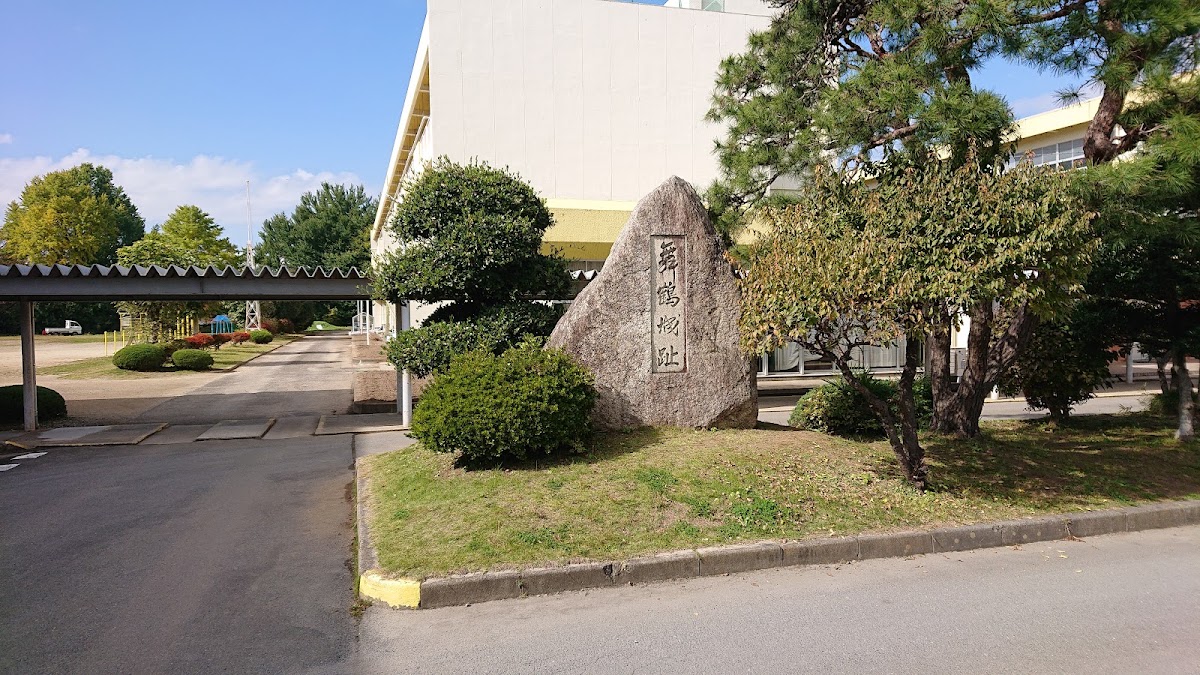
Ota Castle (Ōta-jō) was a Japanese castle located in Hitachiota City, Ibaraki Prefecture. During the Sengoku period, it flourished as the base of the Satake clan, who unified Hitachi Province. It is situated on a hill approximately 1.7 km north of JR Hitachiota Station, and the main enclosure is believed to have existed around the present-day Ota Elementary School.
This castle, counted as one of the Seven Famous Castles of the Kanto Region, is also known as Satake Castle, Maizuru Castle, and Seiryū Castle, each name having a deep historical significance. For approximately 400 years, from the late Heian period to the end of the Sengoku period, it functioned as the residence of the Satake clan, playing a crucial role as the political and military center of Hitachi Province.
Basic Information about Ota Castle
Location and Setting
Location: 151 Nakajo-cho, Hitachiota City, Ibaraki Prefecture (Ota Elementary School)
Former Province Name: Hitachi Province
Elevation: On a plateau approximately 38 meters high
Classification/Structure: Hilltop Castle
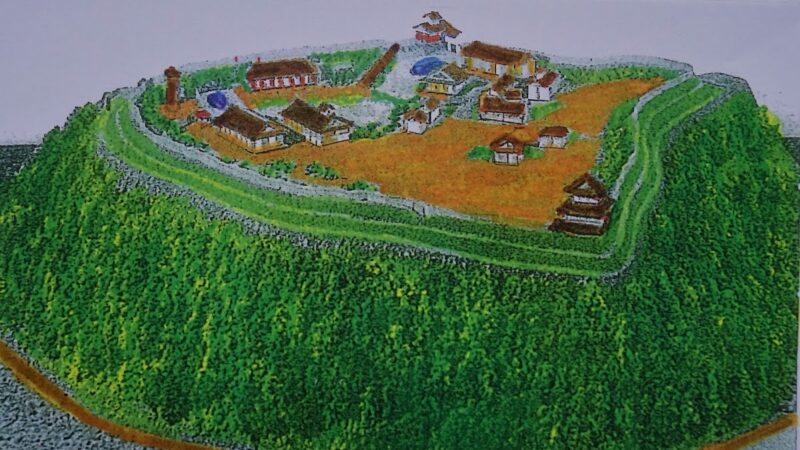
Ota Castle was built on the tip of a plateau between the Kuji River and the Satogawa River, making it a strategically important location that skillfully utilized the natural terrain. It boasted a vast castle area extending approximately 600 meters east-west and 400 meters north-south, functioning as a natural fortress surrounded by deep valleys.
Origin of Common Names and Alternative Names
Satake Castle: Because it was the long-standing residence of the Satake clan
Maizuru Castle: Because the castle’s shape resembled a dancing crane
Seiryu Castle: Because of the topography based on the Four Symbols of Feng Shui
Among these alternative names, “Maizuru Castle” is particularly commonly used, expressing the castle’s elegant appearance. ## History and Background of Ota Castle
From Construction to the Entry of the Satake Clan (Heian Period)
Ota Castle is believed to have been built around 1109 (Tenjin 2). It is said that Fujiwara no Michinobu, a fourth-generation descendant of Fujiwara no Hidesato, entered Ota-go from Shimotsuke Province and built the castle, calling himself Ota Daibu Michinobu.
The descendants of Fujiwara no Michinobu adopted the name Ota and ruled this area. However, around 1154 (Kyuju 1) at the end of the Heian period, Satake Takayoshi, a descendant of the Minamoto clan, seized the castle from its lord, Fujiwara no Michimori (Ota no Michimori). This event marked the beginning of the long relationship between the Satake clan and Ota Castle.
The Satake Clan’s Base (Kamakura to Muromachi Periods)
The Satake clan was a prestigious branch of the Seiwa Genji clan, descended from Shinra Saburo Yoshimitsu. They expanded their power from their base in northern Hitachi Province. With Ota Castle as their residence, the Satake clan served as retainers of the Kamakura Shogunate, and during the Muromachi period, they cooperated with the Kanto Kanrei (governor of the Kanto region), the Uesugi clan, establishing themselves as powerful warlords in Hitachi Province.
During this period, Ota Castle developed not only as a military base but also as the political and economic center of the Satake clan. A castle town formed, attracting merchants and artisans, and it became a central city in northern Hitachi Province.
Prosperity and Expansion during the Sengoku Period
Entering the Sengoku period, the Satake clan reached its peak during the reign of the 18th head of the family, Satake Yoshishige, following the 15th head, Satake Yoshishun, and the 16th head, Yoshiatsu. Satake Yoshishige was a renowned general feared as “Oni Yoshishige” (Demon Yoshishige) and “Bando Taro” (Taro of Bando). During his time, the Satake clan almost unified Hitachi Province and expanded their power to Shimotsuke and southern Mutsu Provinces.
It is believed that Ota Castle underwent extensive renovations during this period. Recent archaeological excavations have uncovered large moat remains not shown in early modern maps, revealing that Ota Castle during the Sengoku period was a much stronger fortress than previously thought.
Yoshishige’s son, Satake Yoshinobu, served Toyotomi Hideyoshi. Although he took an ambiguous stance during the Battle of Sekigahara, he was granted a territory of 540,000 koku in Hitachi Province by Tokugawa Ieyasu. However, in 1602, Yoshinobu moved his base to Mito Castle, and Ota Castle ceased to function as the Satake clan’s residence.
Changes Since the Edo Period
Afterward, in 1602 (Keicho 7), Satake Yoshinobu was ordered to relocate to Akita in Dewa Province, and the Satake clan was transferred to Akita. For a time, a retainer of the Tokugawa clan occupied Ota Castle, but it was abandoned in 1615 (Genna 1) due to the “One Castle Per Province” decree.
After its abandonment, much of the castle site was converted into farmland and residential land, and since the Meiji era, it has been used as school grounds. The current Ota Elementary School stands on the site of the former main enclosure due to this historical background.
Structure and Layout of Ota Castle
Basic Structure of the Castle
Ota Castle is a typical flatland castle, characterized by its layout that makes maximum use of the plateau terrain. The main enclosure, the center of the castle, was located at the highest point, and the second and third enclosures radiated outwards from it.
Main Enclosure Structure:
- Main Enclosure: The central area where the lord’s residence and government offices were located (present-day Ota Elementary School)
- Second Enclosure: The defensive line surrounding the main enclosure
- Third Enclosure: The outer enclosure, the residential area for retainers
- Outer Enclosure: A wide defensive area including the castle town
Characteristics of Defensive Facilities
Ota Castle’s defensive facilities skillfully utilized the natural terrain. Deep valleys ran along the edge of the plateau, functioning as natural moats. Furthermore, artificial moats and earthworks were combined to construct a robust defensive network.
Recent archaeological excavations have uncovered the remains of a large moat, over 15 meters wide and over 5 meters deep. This is a structure not depicted in Edo period maps, illustrating how strong Ota Castle was during the Sengoku period.
Major Defensive Structures:
- Dry Moat: Multiple large dry moats surrounded the castle.
- Earthwork: Earthworks several meters high were constructed around each enclosure.
- Tiger’s Mouth: Complexly structured gates were installed at entrances.
- Cut-off Embankment: Defensive walls created by vertically cutting the edge of the plateau.
Formation of the Castle Town
A planned castle town was formed around Ota Castle under the rule of the Satake clan. Merchant districts, temple and shrine districts, and samurai districts were clearly separated, and merchants and artisans concentrated along the main roads.
The castle town developed around the main roads extending east and west, forming the foundation of the current Hitachiota City center. Many temples were concentrated in the temple district, which also functioned as a defensive base.
Current Ota Castle Ruins and Remains
Remaining Remains
Several remains that evoke the castle’s former appearance remain at the current Ota Castle site. However, since the main enclosure is part of the Ota Elementary School grounds, public access is restricted.
Main Remaining Structures:
- Part of the Earthwork: Traces of the earthwork remain in various places within the castle grounds.
- Moat Remains: Although buried, the remains of the moat can be identified as a topographical feature.
- Enclosure Terrace: The enclosure’s boundaries can be recognized as terraces on the plateau.
- Cut Slope: Remains as a steep slope on the edge of the plateau.
Results of the Excavation Survey
The excavation survey conducted by the Hitachiota City Board of Education has yielded important results in revealing the true nature of Ota Castle. In particular, surveys conducted since the Heisei era have confirmed the existence of large-scale defensive facilities that were previously unknown.
Excavated artifacts include ceramics, weapons, and daily necessities from the medieval to early modern periods, revealing aspects of life within the castle and the realities of trade. In particular, the discovery of Chinese ceramics and pottery from various parts of Japan indicates the extensive trade network of the Satake clan.
Access and Visiting the Castle Ruins
Access Methods:
- Train: Approximately 20 minutes on foot or 5 minutes by car from Hitachi-Ota Station on the JR Suigun Line.
- Car: Approximately 30 minutes via National Route 349 from Naka IC on the Joban Expressway.
- Parking: Public parking is available nearby.
The central part of the castle ruins is located on the grounds of Ota Elementary School, so visits should be avoided during school hours. You are free to explore the surrounding earthworks, moat remains, and remnants of the castle town.
The Relationship Between Ota Castle and the Satake Clan
The Genealogy of the Satake Clan and Ota Castle
The Satake clan, a prestigious branch of the Seiwa Genji clan, ruled the northern part of Hitachi Province for approximately 450 years, from the late Heian period to the end of the Sengoku period. Ota Castle, their base, can be said to be the history of the Satake clan itself.
Successive heads of the Satake clan resided at Ota Castle and extended their rule over Hitachi Province from there. Especially during the Sengoku period, when Satake Yoshishige and his son Yoshinobu were based at Ota Castle, they achieved the unification of Hitachi Province and grew into one of the most powerful daimyo in the Kanto region.
Evaluation as one of the Seven Famous Castles of Kanto
Ota Castle is counted as one of the “Seven Famous Castles of Kanto.” The Seven Famous Castles of Kanto are a selection of representative castles in the Kanto region, and besides Ota Castle, Odawara Castle, Kawagoe Castle, Kanayama Castle, Karasawayama Castle, Utsunomiya Castle, and Maebashi Castle are often mentioned (this may vary depending on the selection criteria and era).
This evaluation is given from a comprehensive perspective, considering Ota Castle’s military importance, the skillful layout of its fortifications, and its status as the base of the powerful daimyo, the Satake clan.
Historical Spots Around Ota Castle
Satake-ji Temple (Kitamuki Kannon)
Satake-ji Temple, known as the family temple of the Satake clan, is located approximately 2 km northwest of Ota Castle. Founded by Sakanoue no Tamuramaro, the main hall is designated as a National Important Cultural Property. It prospered under the patronage of the Satake clan and continues to attract many visitors today.
Nishiyama-so (Mito Kōmon’s Retirement Residence)
Located approximately 4km north of the Ōta Castle ruins, Nishiyama-so was the retirement residence where Tokugawa Mitsukuni (Mito Kōmon), the second lord of the Mito domain, spent his later years. The simple thatched-roof building and beautiful garden remain, and it is designated as a National Historic Site.
Hitachi Ōta City Local History Museum
Within walking distance of the Ōta Castle ruins, the local history museum exhibits materials related to Ōta Castle and the Satake clan. Through a reconstructed model of the castle, excavated artifacts, and ancient documents, visitors can learn about the history of Ōta Castle in detail.
Old Townscape
In the area that developed as a castle town of Ōta Castle, the Edo period town layout and old townhouses still remain. The Kujiragaoka district, in particular, preserves a charming townscape, making it ideal for strolling.
Cultural Value and Preservation Activities of Ota Castle
Value as a Historic Site
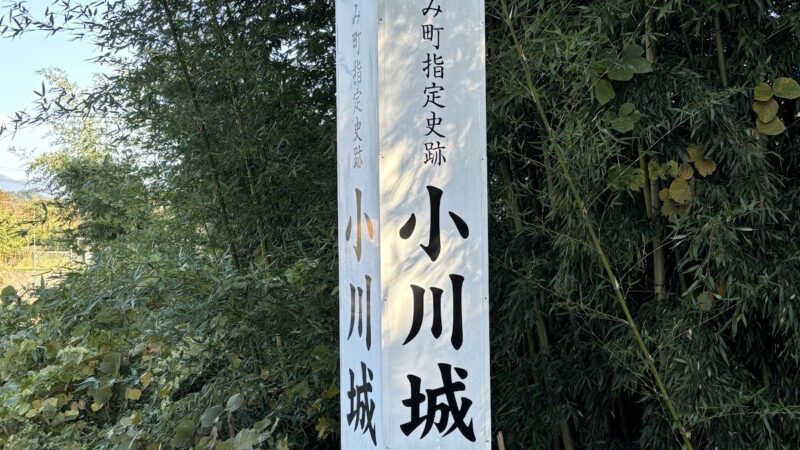
Ota Castle ruins are protected as a designated historical site of Ibaraki Prefecture. As the political and military center of Hitachi Province during the Sengoku period, and as the base of the powerful daimyo Satake clan, it is a historically extremely important site.
Recent archaeological excavations have revealed previously unknown aspects of the castle, increasing its academic value.
Efforts for Preservation and Utilization
Hitachiota City is working towards the preservation and utilization of Ota Castle ruins. Continuous archaeological excavations, preservation and maintenance of the remains, and installation of information boards are being carried out, with ongoing efforts to pass on its value as a historical heritage to future generations.
Furthermore, history lectures for citizens and guided tours of the castle ruins are being held, aiming to utilize it for local history education and as a tourist resource.
Points to Note When Visiting Ota Castle
Precautions When Visiting
The central part of the Ota Castle ruins is located on the grounds of Ota Elementary School, so consideration for school activities is necessary when visiting. It is recommended to avoid entering the school grounds during class time and focus on exploring the surrounding ruins.
Since the remains such as earthworks and moat remnants are scattered throughout the town, obtaining information from the local history museum beforehand will deepen your understanding.
Enjoying the Seasons
The area around the Ota Castle ruins shows different faces throughout the four seasons. Cherry blossoms bloom in spring, and the autumn leaves are beautiful, allowing you to enjoy historical walks and nature appreciation simultaneously.
In particular, the old town area, which retains the atmosphere of a castle town, changes its charm with each season, offering new discoveries with every visit.
Summary | The Historical Significance of Hitachiota Castle
Hitachiota Castle is a historically significant castle that served as the base of the Satake clan for approximately 400 years, from the late Heian period to the end of the Sengoku period. One of the seven most famous castles in the Kanto region, its fortifications, skillfully utilizing the natural terrain, possessed a robust structure and played a crucial role as the political and military center of Hitachi Province.
Although much of the castle site is now urbanized, the remaining remains and the results of archaeological excavations evoke its former glory. Ota Castle, which tells the story of the Satake clan’s glory and the history of Hitachi Province, continues to attract many history enthusiasts as a representative historical heritage of Ibaraki Prefecture.
When visiting Hitachiota City, be sure to explore the Ota Castle ruins and surrounding historical sites to experience the atmosphere of the Sengoku period. Combining a stroll with a visit to the local history museum will allow you to gain a deeper understanding of Ota Castle’s history and charm.