Motomiya Castle (Fukushima Prefecture) Complete Guide | A Sengoku Period Fortress Composed of Three Residences and the Site of the Battle of Hitotoribashi
What is Motomiya Castle?
Motomiya Castle is a hilltop castle located in Motomiya-Tatenokoshi, Motomiya City, Fukushima Prefecture. It is a collective name for three residences: Kanokoda Residence, Atago Residence, and Sugamori Residence. Built on the hilly area on the left bank of the Abukuma River, this castle functioned as the residence of the Kanokoda clan (Motomiya clan), a branch of the Nihonmatsu Hatakeyama clan, during the Sengoku period. It is particularly known as the base of operations for Date Masamune during the “Battle of Hitotoribashi” in 1585.
Currently, the area where Motomiya Elementary School, Atago Shrine, and Adatara Shrine stand is the castle site, and part of it has been developed into Nishiyama Park. Located in a strategically important transportation hub in central Fukushima Prefecture, near the heart of Motomiya City, where the Tohoku Expressway, National Route 4, and the JR Tohoku Main Line run north-south, it’s a place where historical exploration blends seamlessly with modern convenience.
History of Motomiya Castle
Construction and the Rule of the Kanokoda Clan
Motomiya Castle was built by Hatakeyama Mitsuaki, a member of the Hatakeyama clan, who were lords of Nihonmatsu Castle. Mitsuaki adopted the name Kanokoda (Motomiya) and developed Motomiya Castle as a base for controlling the area. The Kanokoda clan used this castle as their residence for generations, and it functioned as an important branch castle of the Nihonmatsu Hatakeyama clan.
The name Motomiya has long flourished as a transportation hub in the Abukuma River basin, and the castle’s layout maximizes this geographical advantage. The structure, with its three independent yet interconnected residences, reflects the defensive strategies of the time.
The Battle of Hitotoribashi and Date Masamune
The most significant event in which Motomiya Castle appears on the historical stage is the “Battle of Hitotoribashi” which took place on November 17, 1585 (Tensho 13). This battle was a large-scale conflict in which a coalition army of approximately 30,000 men, led by Satake Yoshishige, challenged Date Masamune, who was rapidly expanding his power, against an anti-Date coalition army (including the Satake, Ashina, Iwaki, Shirakawa Yuki, Nikaido, Ishikawa, and Soma clans).
Date Masamune faced this coalition army with approximately 7,000 to 8,000 troops, using Motomiya Castle as a forward base. Masamune’s army fought fiercely at Hitotoribashi (near present-day Motomiya City), and despite being outnumbered, avoided a catastrophic defeat thanks to the valiant efforts of his senior retainer, Oniniwa Sagetsusai, and the retreat of the Satake army. This battle cemented Motomiya Castle’s place in history as a crucial stage demonstrating Date Masamune’s military talent.
From the Late Sengoku Period to the Early Modern Period
Even after the Battle of Hitotoribashi, Motomiya Castle remained within the Date clan’s sphere of influence. However, due to Toyotomi Hideyoshi’s pacification of Oshu and the redistribution of daimyo during the Edo period, its military importance gradually declined. During the Edo period, it lost its function as a castle, and the site was repurposed as a shrine and settlement.
To this day, much of the castle site is used for residential development or school grounds, but the topography and some remaining structures allow us to imagine its former appearance.
The Structure of Motomiya Castle and Three Residences
Kanokoda Residence
Kanokoda Residence is located on the northeastern ridge of Sugamoriyama (Sugayama) and is the central residence from which the Kanokoda clan’s name originates. Currently, traces of it remain in the hilly area northeast of Adatara Shrine. This fortified residence is believed to have functioned as the main citadel and housed the lord of the castle.
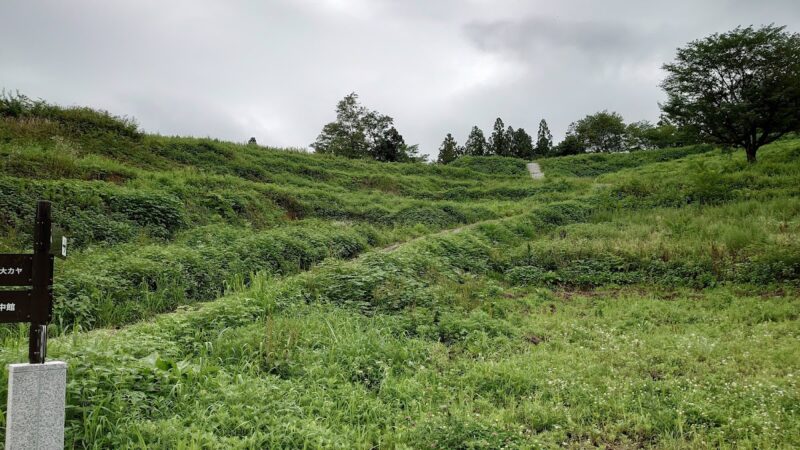
Its layout cleverly utilized the terrain, employing the Abukuma River as a natural moat to strengthen defenses against enemies from the east. While the area is now residential and farmland, and few clear remains exist, the extent of the fortified residence can be inferred from the topography.
Atago Fortified Residence
Atago Fortified Residence was located on a hill where Motomiya Elementary School and Atago Shrine now stand. Situated relatively low within Motomiya Castle, it is presumed to have served as a peacetime administrative center and supply base.
Some traces of earthworks and moats remain around Atago Shrine, and the area, now a park, allows visitors to experience the original topography while strolling. The grounds of Motomiya Elementary School are also part of the former fortified residence site, and records indicate that some remains were discovered during the school’s construction.
Sugamori-tate (Sugamori Residence)
Sugamori-tate refers to the area around Adatara Shrine on Sugamori Mountain (Sugayama) and the surrounding Nishiyama Park to the northwest. This residence is the highest of the three residences and is believed to have functioned as a lookout post and a fortified outpost.
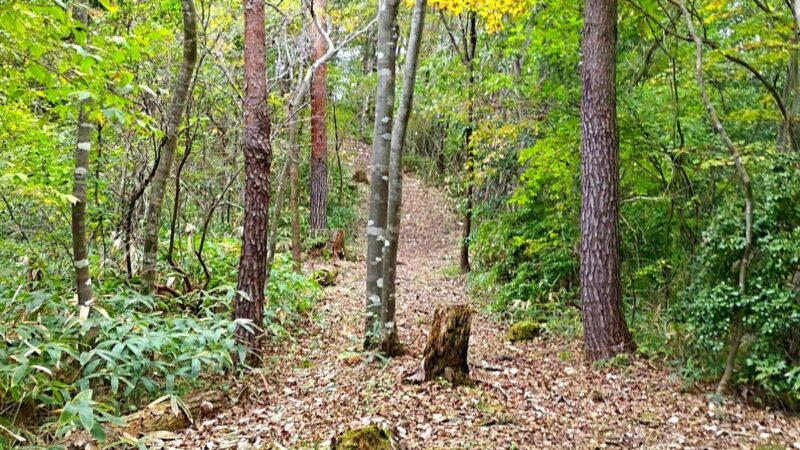
Within the grounds of Adatara Shrine, earthen mounds and flat areas remain, and in the area developed as Nishiyama Park, you can explore the castle ruins while walking along the promenade. The excellent views, overlooking the Abukuma River basin and the city of Motomiya, highlight its importance as a military surveillance base.
Highlights of Motomiya Castle
Adatara Shrine
Adatara Shrine, situated on the site of Sugamori-tate, is an important spot that conveys the history of Motomiya Castle. The shrine grounds retain topographical features that appear to be castle remains, and you can feel the defensive structure of the time as you ascend the approach to the shrine. The flat area around the shrine building is presumed to have been the center of the residence, allowing you to reflect on the Sengoku period in a quiet atmosphere. ### Around Atago Shrine
Atago Shrine, built on the site of the former Atago Castle, and its surroundings are relatively easy to access for exploring castle ruins. In the park surrounding the shrine, you can observe earthen ramparts and stepped terrain, and explanatory signs are also installed, making it easy for first-time visitors to understand the castle’s layout.
Nishiyama Park
Nishiyama Park, a park developed from a part of the former Sugamori Castle, is a place of relaxation for local residents. Walking along the park’s paths, you can experience the castle’s structure utilizing the natural terrain, and the view from the hilltop, in particular, gives a real sense of its military importance at the time. It’s also a popular spot for cherry blossom viewing during the season, allowing you to enjoy history and nature simultaneously.
Hitotoribashi Battlefield
Located southeast of Motomiya Castle, the area around Hitotoribashi is the site of a fierce battle between Date Masamune and the combined forces of Satake and Ashina. Although the bridge has since been rebuilt, stone monuments and information boards remain in the area, allowing visitors to learn about the battle at the time. Visiting Motomiya Castle in conjunction with the Battle of Hitotoribashi will allow you to gain a deeper understanding of the overall picture.
About Motomiya City
Overview of Motomiya City
Motomiya City, Fukushima Prefecture, is a city with a population of approximately 30,000 located in the central part of Fukushima Prefecture. It was formed on January 1, 2007, through the merger of Motomiya Town and Shirasawa Village. While it is the smallest city in Fukushima Prefecture in terms of area and population, it has received high praise, including being ranked No. 1 in Fukushima Prefecture’s “Livability Ranking” for 11 consecutive years, due to its convenient transportation and excellent living environment.
Transportation Access
Motomiya City is a major transportation hub in Fukushima Prefecture, with the Tohoku Expressway, National Route 4, and the JR Tohoku Main Line running north-south through it. Access is excellent, with Fukushima Station approximately 15 minutes away and Koriyama Station approximately 20 minutes away from JR Motomiya Station. The presence of the Motomiya Interchange on the Tohoku Expressway also makes travel by car convenient.
Industry and Tourism
Motomiya City is one of Fukushima Prefecture’s leading inland industrial areas, with a thriving manufacturing industry. On the other hand, blessed with the natural beauty of the Adatara Mountain foothills, agriculture is also an important industry. In terms of tourism, in addition to the Motomiya Castle ruins, there are famous spots such as Iwakakuyama Mountain and Janohana Amusement Park. It is also known as the birthplace of vocalist Hisao Ito.
Access to Motomiya Castle
Access by Public Transportation
The nearest station is JR Tohoku Main Line “Motomiya Station”. It’s about a 15-20 minute walk from the station to the central part of the castle ruins (Atago Shrine and Adatara Shrine). Exit the station and head east; the castle ruins are located on the hilly area beyond the Abukuma River. If using the train, it takes about 20 minutes by local train from Fukushima Station or Koriyama Station to Motomiya Station.
Access by Car
It’s about 5 minutes from the Tohoku Expressway “Motomiya Interchange,” and easily accessible from National Route 4. There are small parking spaces around Atago Shrine and Adatara Shrine, but since the number of spaces is limited, using the Nishiyama Park parking lot is also an option. For car navigation, searching for “Motomiya City Motomiya Tatenokoshi,” “Adatara Shrine,” or “Atago Shrine” is convenient.
Points for Exploring the Castle Ruins
Motomiya Castle consists of three buildings scattered over a wide area, so it takes about 1-2 hours to visit them all on foot. We recommend wearing comfortable shoes and clothing appropriate for the season. Especially around Adatara Shrine at Sugamori Manor, there are slopes and stairs, so adjust your sightseeing route according to your physical condition.
Nearby Tourist Spots
Nihonmatsu Castle
Located about 10km north of Motomiya Castle, Nihonmatsu Castle was the base of the Hatakeyama clan and has a deep connection to Motomiya Castle. It is one of Japan’s 100 Famous Castles and boasts many attractions, including stone walls, a reconstructed Minowa Gate, and views from the castle tower base. Visiting this site in conjunction with Motomiya Castle allows you to experience the sphere of influence of the Hatakeyama clan.
Adachigahara Furusato Village
Located north of Motomiya City, near the border with Nihonmatsu City, this tourist facility features exhibits themed around the legend of the Adachigahara demon hag, as well as relocated historical buildings such as samurai residences and farmhouses. It’s an ideal spot to learn about the lifestyle and culture of the Sengoku period, and perfect to combine with a tour of the castle ruins.
Iwakakuyama Mountain
Iwakakuyama Mountain, towering over the northern part of Motomiya City, is known for its unique rock formations and panoramic views. From the summit, you can enjoy a sweeping view of Mount Adatara and the Abukuma River basin, as well as a bird’s-eye view of the area where Motomiya Castle once stood. The hiking trails are well-maintained, making it suitable for a light hike.
Janohana Amusement Park
Located in the southern part of Motomiya City, this garden is a famous spot for flowers, offering enjoyment of seasonal blooms. It attracts many tourists, especially during the wisteria and azalea seasons. It’s a recommended spot to enjoy nature in between historical walks.
Preservation Status and Future of Motomiya Castle
While much of the Motomiya Castle site has been lost due to residential development and the construction of public facilities, traces of its former glory remain in the topography, some earthworks, and the shrine grounds. In recent years, local history enthusiasts and the local government have been conducting research and preservation activities, including the installation of explanatory signs and the creation of guide maps.
Motomiya City, while receiving high marks in “livability rankings,” is also focusing on utilizing its historical resources, seeking a balance between the protection of cultural properties, including the Motomiya Castle site, and tourism. Further research and development will likely make it a place where more people can experience the history of the Sengoku period.
Points to Note When Visiting Motomiya Castle
Condition of the Remains
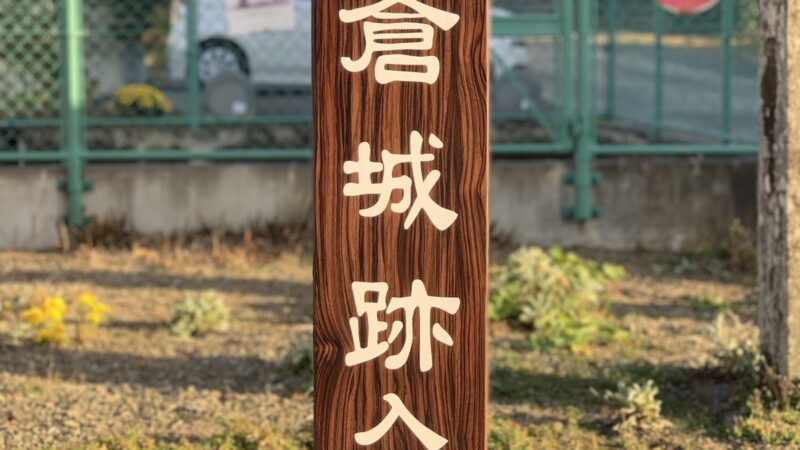
Motomiya Castle does not have clearly defined stone walls or buildings remaining; it is primarily a castle site where visitors can observe traces of the topography and earthworks. Learning about the castle’s structure and history beforehand will enhance the experience. We recommend preparing by consulting castle information websites such as Kojodan or related books.
Consideration for Private Property
Since parts of the castle ruins are private property and residential areas, it is necessary to respect the permitted areas and be considerate of the surrounding residents. Focus your visit on publicly accessible areas such as shrine grounds and parks.
Season and Time of Day
Spring to autumn is the best time to visit the castle ruins, especially during cherry blossom season and autumn foliage season, when the scenery is particularly beautiful. In summer, take precautions against insects, and in winter, be careful of snow and icy roads. If you plan to visit the shrine as well, it is best to visit during daylight hours.
Books and Information Sources Related to Motomiya Castle
For those who want to learn more about Motomiya Castle, the following resources are available:
- “Medieval Castle Sites in Fukushima Prefecture”: This is a castle survey report published by the Fukushima Prefectural Board of Education, containing detailed survey results of Motomiya Castle.
- “Research on the Date Clan, a Sengoku Daimyo”: This provides a detailed account of Date Masamune and the Battle of Hitotoribashi, helping to understand the military role of Motomiya Castle.
- Kojodan (kojodan.jp): A website that collects information on castles throughout Japan, featuring extensive visit records, photos, and evaluations of Motomiya Castle.
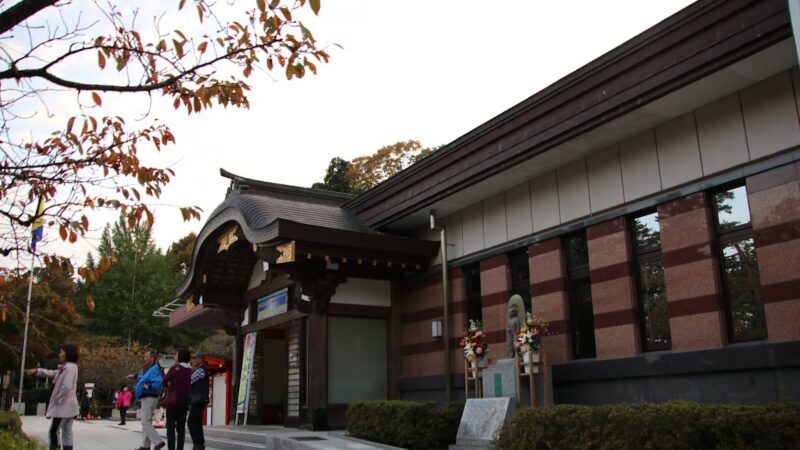
- Motomiya City Historical and Folk Museum: A facility exhibiting the history and culture of Motomiya City, housing materials related to Motomiya Castle.
Summary
Motomiya Castle was an important base during the Sengoku period, composed of three buildings, and is a historically valuable castle site, particularly as it was used by Date Masamune as a base during the Battle of Hitotoribashi. Although urbanization is progressing, you can still experience the topography and atmosphere of the past at places like Adatara Shrine, Atago Shrine, and Nishiyama Park.
Its excellent accessibility, being within walking distance of JR Motomiya Station, and its ease of combining with nearby Nihonmatsu Castle and other tourist spots, make it an essential place for a castle site tour in Fukushima Prefecture. It is especially recommended for those interested in the history of the Tohoku region during the Sengoku period, and for fans of Date Masamune.
Motomiya City is an attractive city that consistently receives high ratings in livability rankings. Why not enjoy a trip to discover the region’s charms while exploring its history?