
Kadōno Castle (Iwaki City, Fukushima Prefecture) Complete Guide | History, Highlights, and Access Information
What is Kadōno Castle?
Kadōno Castle is a medieval mountain castle located in Kadōno, Tōno-machi, Iwaki City, Fukushima Prefecture. Also known as “Yashiomi Castle,” it was named this because eight beaches of the Pacific Ocean could be seen from its observation deck. It is a full-fledged mountain castle built on a mountaintop approximately 220 meters above sea level, with a relative height of approximately 110 meters.
Known as the residence of the Kadōno clan, who ruled this region during the Sengoku period, it is a typical example of a medieval castle in Mutsu Province (present-day Fukushima Prefecture) and is attracting attention from castle researchers. The remains of earthworks, stone walls, baileys, moats, and gates are well-preserved, and the main bailey is designated as a city historical site, boasting one of the largest scales and best-preserved castle ruins in Iwaki City.
The castle ruins are currently maintained as a walking course of approximately 3 kilometers, making it a historical walking spot where people of all ages can enjoy the topography and vegetation while exploring the remains.
History of Kamitono Castle
Origins and Construction of the Kamitono Clan
The Kamitono clan is related to the prestigious Oyama clan of Shimotsuke Province (present-day Tochigi Prefecture). It is said that during the Kamakura period, Oyama Tomomasa was appointed as the jitō (land steward) of Kikuta-shō (the area around present-day Iwaki City), and his family settled in the area and adopted the name Kamitono.
While there are no clear records regarding the construction period of Kamitono Castle, it is estimated to have been built during the Sengoku period (Warring States period). Based on the castle’s layout (design) and the arrangement of defensive facilities, it is believed to have been developed as a full-fledged mountain castle in the first half to mid-16th century.
Relationship with the Iwaki Clan
The Kamitono clan served as vassals of the Iwaki clan and were one of the powerful local lords in the Iwaki region. The Iwaki clan was known as a Sengoku daimyo (feudal lord) of southern Mutsu Province, and the Kamitono clan was entrusted with governing this region under their rule. Kamitono Castle is thought to have functioned as one of the important branch castles within the Iwaki clan’s sphere of influence.
Trends during the Sengoku Period
During the Sengoku period, this region was repeatedly embroiled in conflicts with surrounding forces such as the Satake and Date clans of Hitachi Province. Kamitono Castle was strategically located on a key point overlooking the Pacific Ocean, and its location, offering a wide-ranging view from its watchtower, was militarily important.
The castle’s structure reveals numerous ingenious features designed to effectively prevent enemy incursions, indicating that robust defensive facilities were constructed with actual combat in mind.
The Castle’s Demise
There are no clear records of when Kamitono Castle was abandoned, but it is believed to have ceased use by the early Edo period, after Toyotomi Hideyoshi’s pacification of Oshu (1590). It is presumed that, like many medieval mountain castles, it was abandoned due to the transition to early modern castles and the influence of the Tokugawa Shogunate’s “One Castle Per Province” decree.
Structure and Layout of Kamitono Castle
Overall Layout
Kamitono Castle is a typical mountain castle, with multiple baileys arranged in a stepped fashion around the main bailey at the mountaintop. The castle grounds, spanning approximately 3 kilometers, skillfully utilize the natural terrain while combining it with artificial defensive structures.
The approach to the castle is via a mountain trail that begins behind the grounds of the Hachiman Shrine, and this approach is believed to have been the main road (the path to the front entrance) in its heyday.
Main Bailey (Honmaru)
The main bailey, the heart of the castle, is built at the highest point of the mountaintop. It is presumed that the lord’s residence and command post were located here, and it boasts a highly defensive structure surrounded by earthen ramparts. From the main bailey, there are panoramic views of the surrounding area, including a view of the Pacific Ocean.
An explanatory sign is installed in the main bailey, where visitors can learn about the castle’s history and structure. ### Enclosures
Several enclosures (flat sections) are arranged around the main enclosure. These functioned as garrisons for samurai and soldiers, storage areas for supplies, and defensive strongholds during battles. Each enclosure is demarcated by earthworks and moats, forming a tiered defensive line.
The elevation differences and arrangement of the enclosures reveal tactical intentions, limiting enemy incursion routes and creating a structure that facilitates interception.
Earthworks and Stone Walls
Earthworks remain throughout the castle, with particularly high earthworks visible around the main enclosure. These earthworks served to prevent enemy incursions and acted as defensive walls against arrows and gunfire.
Traces of stone walls can also be seen in some areas. While not entirely constructed of stone, it is evident that stone was used to reinforce important sections. Stone walls are rare among medieval mountain castles in Fukushima Prefecture, making them a distinctive feature of Kamitono Castle.
Moats and Entrances
Multiple moats cutting across the ridge serve as crucial defensive structures to prevent enemy intrusion. The deep moats attest to the castle’s strong defensive capabilities in its heyday.
The entrances (koguchi) feature structures such as masugata (square enclosures) to make enemy entry difficult. The ability to clearly observe the various defensive layouts is a major attraction of Kamitono Castle.
Well and Gate Remains
Well remains have been found within the castle grounds, indicating that water supply was considered during sieges. Remains of gates and bridges also exist, providing clues to the structure of the castle’s entrances.
Watchtower (Origin of the Name “Yashiomi”)
From the watchtower, arguably the castle’s most distinctive feature, one can see eight beaches of the Pacific Ocean. This excellent view gave rise to the castle’s nickname, “Yashiomi Castle.” The watchtower served as both a military facility for monitoring enemy movements and a symbolic location offering a panoramic view of the territory.
On a clear day, you can see all the way to the Pacific Ocean horizon, making it a popular viewpoint for visitors even today.
Highlights of Kamitono Castle
Well-Preserved Ruins
The greatest highlight of Kamitono Castle is the well-preserved structure of this Sengoku period mountain castle. Earthworks, baileys, and moats are clearly visible, allowing visitors to experience the castle-building techniques and defensive philosophies of the time. For castle enthusiasts, it’s a valuable spot to actually walk around and appreciate the ingenuity of the castle’s layout.
Approach from Hachiman Shrine
Access to the castle ruins starts from Hachiman Shrine. The route, passing through the shrine grounds and climbing the mountain path behind it, evokes the atmosphere of the main approach road of yesteryear. The shrine itself is a historical building and worth visiting along with a pilgrimage.
Fusion of Nature and History
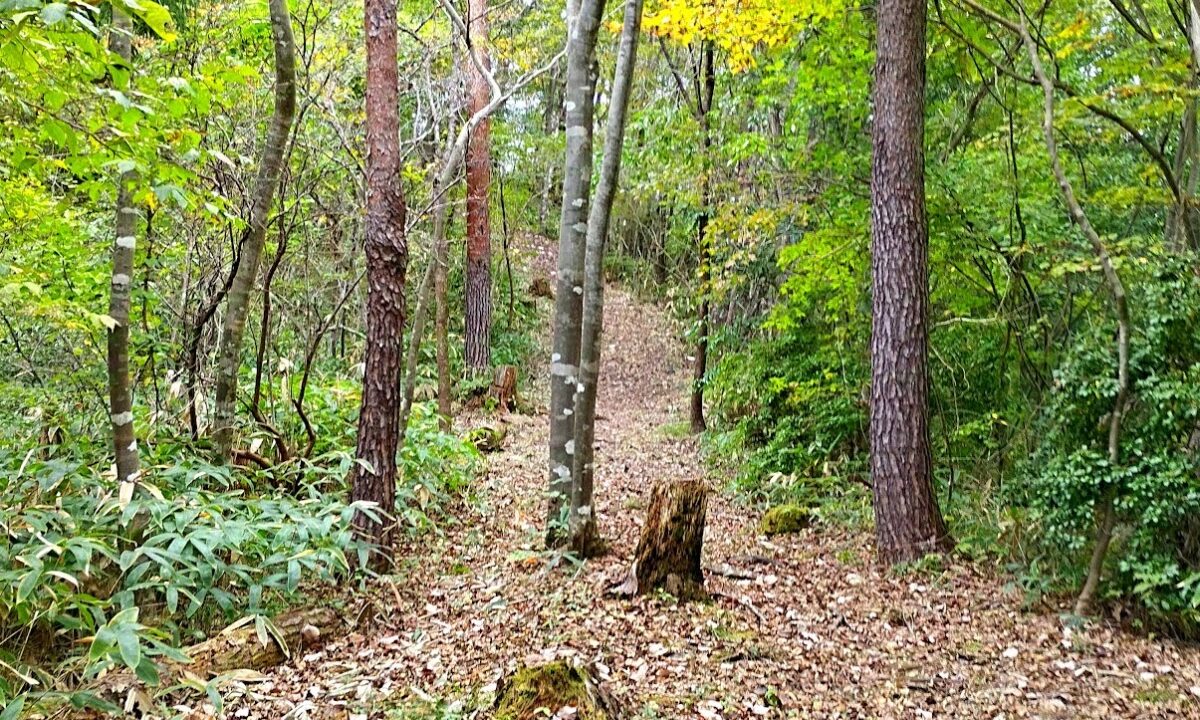
The approximately 3-kilometer walking course is designed to allow visitors to enjoy nature while exploring the castle ruins. You can observe the vegetation throughout the four seasons, with beautiful scenery created by the fresh greenery in spring and the vibrant autumn leaves. Its appeal lies in the fact that you can enjoy both historical walks and hiking at the same time.
Stunning Views
The view from the observation deck is breathtaking. The expansive view overlooking the Pacific Ocean inspires the imagination, making you wonder if the castle lords of the Sengoku period also gazed upon this same landscape. It’s also a popular spot for photography.
Value as a City Historic Site
The main enclosure, designated as a city historical site by Iwaki City, demonstrates its high historical value. It also has significant educational importance for learning about local history and is used as a site for local history studies by elementary and junior high schools.
Related Nearby Spots
Weeping Cherry Tree at Suwa Shrine
In the Kamitono district is Suwa Shrine, which boasts a magnificent weeping cherry tree on its grounds. In spring, it blooms beautifully, making it a popular spot for visitors who combine a stroll through the castle ruins with a visit to the shrine.
Natural Habitat of Akaya-shio Azaleas in Mimori Valley
The nearby Mimori Valley is home to a natural habitat of Akaya-shio (a type of azalea). This spot, offering beautiful natural scenery along with the azaleas, is recommended as part of a sightseeing route combined with a visit to Kamitono Castle.
Kamitono Community Center
The Kamitono Community Center is a local information hub where you can obtain materials and information about Kamitono Castle. Visiting beforehand to gain some background knowledge will make your castle ruins exploration more fulfilling.
Other Castle Ruins in Iwaki City
Besides Kamitono Castle, several other medieval castles remain in Iwaki City, including Sodetono Castle, Yashio Castle, and Fushimi Yashiomi Castle. Those who enjoy visiting castle ruins can create a historical exploration route visiting these castle sites.
Access Information
Location
Address: Honmachi, Kamitono, Tono-machi, Iwaki City, Fukushima Prefecture
Access by Public Transportation
Kamitono Castle is located in a mountainous area, making access by public transportation somewhat inconvenient. The nearest station is Yumoto Station on the JR Joban Line, but it is approximately 8.8 kilometers away in a straight line, requiring the use of a bus or taxi from the station.
Nearest Station: JR Joban Line, Yumoto Station (approximately 8.8km in a straight line)
It takes about 20 minutes by taxi from Yumoto Station. If using the bus, take an Iwaki City bus towards Kamitono and walk from the nearest bus stop. However, since the number of buses is limited, it is recommended to check the timetable in advance.
Access by Car
Access by car is the most convenient.
Joban Expressway: Approximately 15 minutes from Iwaki-Yumoto Interchange
Setting “Kamitono Community Center” or “Hachiman Shrine (Kamitono, Tono-machi, Iwaki City)” as your destination on your car navigation system will make it easier to find.
Parking
There is parking space near Hachiman Shrine, but there is no large dedicated parking lot. You may be able to use the parking lot at the Kamitono Community Center, but it is recommended to check in advance. Please avoid street parking and be considerate of local residents.
During peak seasons and on weekends, parking spaces may be limited, so it is advisable to visit earlier in the day or consider visiting on a weekday.
Clothing and Equipment for Your Visit
Since Kamitono Castle is a mountain castle, the following equipment is recommended:
- Comfortable walking shoes: Trekking shoes or athletic shoes are essential as you will be walking on mountain trails.
- Comfortable clothing: Choose comfortable clothing appropriate for the season.
- Drinking water: Bring plenty of water, especially in summer, to prevent heatstroke.
- Insect repellent: There can be many insects from spring to autumn.
- Hat: Effective for sun protection.
- Rain gear: As the weather in this mountainous area can change quickly, it’s a good idea to have portable rain gear.
Estimated Visiting Time
Allow an average of 1 to 1.5 hours to explore the castle ruins. If you want to carefully observe the remains and enjoy taking photographs, we recommend allowing about 2 hours.
If you plan to complete the entire 3-kilometer course, it’s best to allow at least 2 hours, including rest breaks.
Precautions for Visiting
Safety Management
- As this is a mountain castle, there are areas with unstable footing. Particular caution is needed during and after rain, as these areas become slippery.
- There are steep slopes and cliffs, so keep a close eye on children, especially if you are visiting alone.
- Visiting in a group is safer than visiting alone.
- Checking your cell phone signal strength beforehand is recommended.
Manners and Rules
- To protect the historical site, please be considerate and refrain from damaging the remains or climbing on the earthworks.
- Please take all your trash with you.
- Hachiman Shrine is a place of worship for the local community. Please observe proper etiquette when visiting.
- The surrounding area is residential. Please be considerate and avoid making noise or causing other disturbances.
- Collecting plants or capturing animals is prohibited.
Best Time to Visit
Kamitono Castle is open year-round, but the following times are especially recommended:
- Spring (April-May): The fresh greenery is beautiful, the weather is mild, and it’s ideal for a stroll. The weeping cherry blossoms at Suwa Shrine are also in full bloom.
- Autumn (October-November): The autumn leaves are beautiful, and the clear views offer a wonderful landscape to enjoy.
- Summer (June-August): The greenery is lush, allowing you to fully enjoy nature, but heat and insect repellent measures are essential.
- Winter (December-March): There is a possibility of snow and ice, so caution is needed when visiting. However, there is also the advantage that the fallen leaves make it easier to observe the ruins.
Reviews and Ratings of Kamitono Castle
On a community site for castle enthusiasts, Kamitono Castle has received a high rating of 3.83 out of 5 points from 38 reviewers. Visitors have shared the following comments:
- “The remains are well-preserved, and the structure of a Sengoku period mountain castle is clearly visible.”
- “The view from the observation deck is magnificent. I was moved by the panoramic view of the Pacific Ocean.”
- “The approximately 3-kilometer course provides moderate exercise, allowing me to enjoy both historical sightseeing and hiking at the same time.”
- “The earthworks and moats are clearly visible, allowing you to appreciate the ingenuity of the castle’s layout.”
- “Access is somewhat inconvenient, but that makes it a hidden gem where you can quietly enjoy the site.”
The average visit time is approximately 1 hour and 13 minutes, indicating that many visitors take their time to carefully observe the remains. It is also a popular spot for photography, and many photos are shared on social media.
Historical Value and Research of Kamitono Castle
Position in Medieval Castle Research
Kamitono Castle is attracting attention from castle researchers as a typical example of a medieval mountain castle in Fukushima Prefecture. It is considered to have high academic value, particularly in the following respects:
- Clearness of the Layout: Defensive structures such as earthworks, moats, and gates remain well-preserved, making it a valuable resource for studying castle construction techniques of the Sengoku period.
- Center of Regional Control: As the residence of a local lord under the control of the Iwaki clan, it provides clues to understanding the regional power structure of the medieval period.
- Strategic View: The wide-ranging view from the observation post is a good example of the importance of surveillance functions in medieval castles.
Significance in Local History
Kamitono Castle is indispensable when discussing the medieval history of the Iwaki region. It may have been the stage for various historical events, such as the expansion of the Oyama clan into eastern Japan, the expansion of the Iwaki clan’s power, and regional conflicts during the Sengoku period.
Locally, it is continuously being investigated as a subject of local history research, and new discoveries and insights are expected.
Preservation and Utilization
Iwaki City has designated Kamitono Castle as an important cultural property and is carrying out appropriate preservation and management. At the same time, efforts are being made to utilize the site as a tourist and educational resource, with the development of walking trails and the installation of explanatory signs underway.
Further research, study, and preservation/utilization efforts are expected for this historical site.
Summary
Kamitono Castle (Yashiomi Castle) is a Sengoku period mountain castle remaining in Iwaki City, Fukushima Prefecture, and was the residence of the Kamitono clan, a branch of the Oyama clan. It is a full-fledged mountain castle built on a mountaintop approximately 220 meters above sea level, and its remains, including earthworks, stone walls, baileys, moats, and gates, are well-preserved.
From the observation deck, you can see eight beaches of the Pacific Ocean, which is the origin of its alternative name, “Yashiomi Castle” (meaning “eight beaches visible”). The approximately 3-kilometer walking course is recommended not only for history enthusiasts but also for those who want to enjoy nature walks.
Access is convenient by car; it is about a 20-minute taxi ride from JR Yumoto Station and about 15 minutes from the Iwaki Yumoto Interchange on the Joban Expressway. For your visit, comfortable shoes and clothing are essential, and you should allow 1 to 2 hours for your visit.
Kamitono Castle, designated as a historical site in Iwaki City, is a valuable historical relic where you can learn about the structure of a medieval castle, and it is an indispensable spot for exploring the history of Fukushima Prefecture. Be sure to visit and experience the atmosphere of the Sengoku period.
.png)