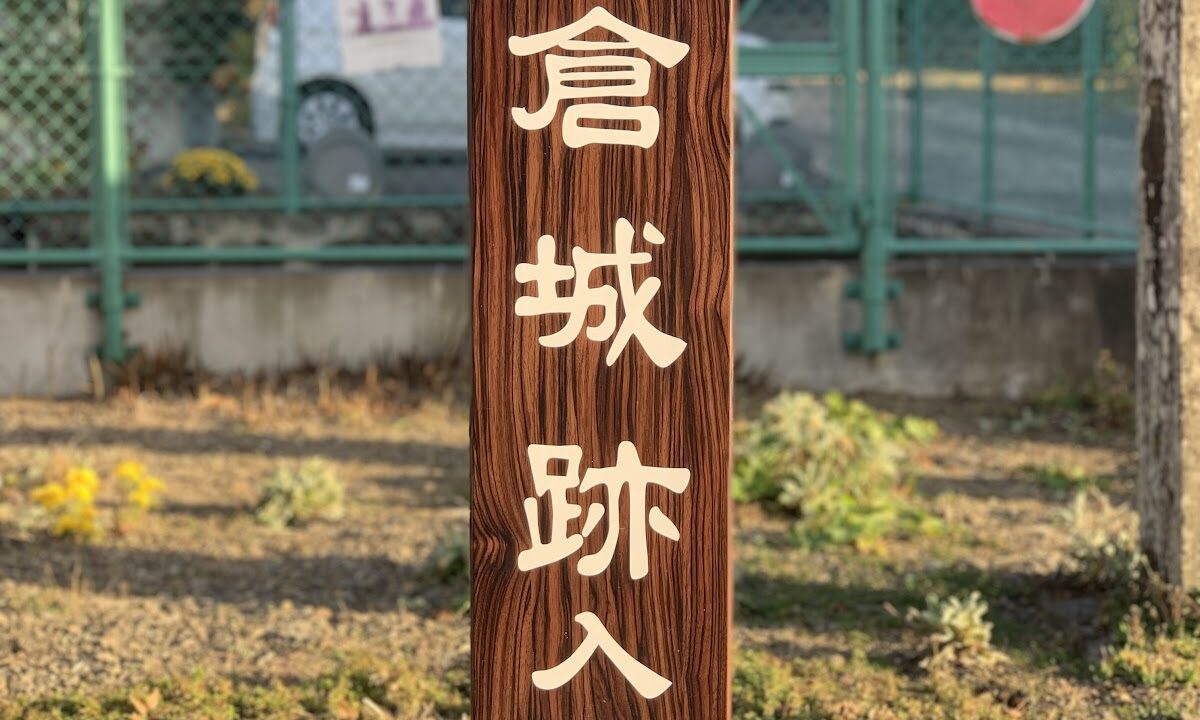
Takakura Castle (Fukushima Prefecture) Complete Guide: A Thorough Explanation of the Two Castle Ruins in Koriyama City and Hirono Town
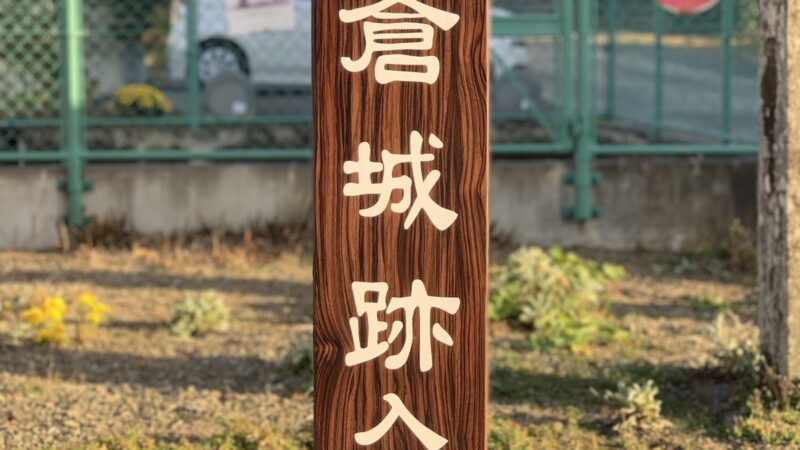
There are two castle ruins in Fukushima Prefecture named “Takakura Castle.” One is Takakura Castle (Mutsu Province) in Hiwada-cho, Koriyama City, and the other is Takakurayama Castle in Hirono Town. Both castles functioned as important bases during the Sengoku period, and valuable remains still exist today. This article provides a detailed explanation of these two Takakura Castles, from their historical background to their highlights and access methods.
Overview and History of Takakura Castle (Koriyama City)
Basic Information
Takakura Castle (Takakura-jo) is a mountain castle located in Takakura, Hiwada-cho, Koriyama City, Fukushima Prefecture. Also known as Takakura-kan and Matsumine Castle, it was built on the northern end of an isolated hill between the Abukuma River and the Iogawa River. The castle mountain is approximately 340 meters above sea level, with a relative height of approximately 100-110 meters, situated in a strategic location overlooking the surrounding area.
Construction of the Castle and the Hatakeyama Clan
The exact construction date is unclear, but it is believed that in the mid-15th century, Hatakeyama Masayasu, who lost a succession dispute within the Nihonmatsu clan (Nihonmatsu Hatakeyama clan), moved to Takakura and built the castle. Masayasu later adopted the name Takakura and made this his base.
The Nihonmatsu clan was a powerful local lord that held influence in the Nakadori region of Mutsu Province from the Muromachi period to the Sengoku period. However, due to internal conflict over succession, Masayasu was forced to leave his base and chose Takakura Castle as his new location.
Relationship with the Tamura Clan
During the time of Hatakeyama Ujiaki, the Takakura clan became vassals of Tamura Kiyoaki. The Tamura clan was a Sengoku daimyo based at Miharu Castle and wielded influence in the Koriyama area. The Takakura clan attempted to maintain their power by temporarily becoming a subordinate of the Tamura clan, but eventually achieved independence.
Takakura Castle during the time of Date Masamune
Takakura Castle subsequently came under the control of Date Masamune. As the Date clan expanded its power in southern Oshu, Takakura Castle became a crucial strategic base.
Of particular note is its role in the Battle of Hitotoribashi in 1585 and the Battle of Koriyama in 1589. In these battles, Takakura Castle was used as an important base for the Date forces.
In the Battle of Hitotoribashi, Date Masamune clashed with the combined forces of Satake Yoshishige and Ashina Yoshihiro. It is believed that Takakura Castle functioned as a rear support base for the Date army during this battle. In the Battle of Koriyama, it was used as a front-line base when Date Masamune attacked the Nikaido clan, lords of Sukagawa Castle.
Abandoned Castle
While there are no clear records regarding the exact date of Takakura Castle’s abandonment, it is estimated to have been abandoned either after Toyotomi Hideyoshi’s pacification of Oshu, when Date Masamune was transferred from Yonezawa to Iwadeyama, or during the early Edo period.
Structure and Remains of Takakura Castle (Koriyama City)
Characteristics of the Castle Layout
Takakura Castle is a typical mountain castle built on Mount Takakura, with a relative height of approximately 100 meters. It has a structure with multiple baileys arranged in a stepped pattern around the main bailey (honkuruwa).
The central part of the main bailey is an oval shape, approximately 70 meters in length and 30-40 meters in width, and was surrounded by four layers of outer baileys. This multi-layered structure was designed to enhance defensive capabilities and efficiently deploy troops.
Earthworks and Stone Masonry
Earthworks remain around the main bailey, and the southern earthwork, in particular, is large in scale, suggesting the possibility that a watchtower once stood there. The earthen ramparts not only prevented enemy intrusion but also ensured visibility from within the castle and served as footholds for firing arrows and guns.
Near the main gate, stonework, believed to be a stone wall, can be seen. Since examples of stone walls are relatively rare in medieval mountain castles in the Tohoku region, this stonework is considered one of the distinctive features of Takakura Castle.
Current Preservation Status
Although no buildings remain, the remains such as baileys and earthen ramparts are preserved in relatively good condition. Because it is a forested area, appropriate equipment and preparation are necessary for a visit, but it is a valuable historical site where you can experience the atmosphere of a Sengoku period mountain castle.
Overview and History of Takakurayama Castle (Hirono Town)
Basic Information
Takakurayama Castle is a mountain castle located in Hirono Town, Futaba District, Fukushima Prefecture. It is located north of Iwaki City, about 1 kilometer southwest of the center of Hirono Town. The entire ridge-like mountain, extending from the west towards the Pacific Ocean, constitutes the castle grounds.
The Iwaki and Igari Clans
Takakurayama Castle is believed to have been built by Igari Chikugo-no-kami Takakiyo, a senior retainer of the Iwaki clan. The Iwaki clan was a powerful daimyo family that ruled the Iwaki region during the Sengoku period, and the Igari clan were their influential vassals.
The Iwaki clan held power from Hitachi Province to southern Mutsu Province, and during the Sengoku period, they engaged in conflicts with surrounding daimyo. The Igari clan was an important family supporting the Iwaki clan’s military strength, and was entrusted with the defense of various castles.
Conflict with the Soma Clan
In 1534, the Iwaki clan lost Tomioka Castle and Naraha Castle, among others, due to an invasion by the Soma clan. The Soma clan was a powerful daimyo family in Mutsu Province and repeatedly invaded Iwaki territory to expand their own domain.
Later, a peace agreement was reached between the two clans, and the lands of Hirono, Hisanohama, and Yotsukura were returned to the Iwaki clan, but Tomioka and Naraha became Soma territory. Following this peace agreement, it is believed that the Iwaki clan built (or extensively renovated) Takakurayama Castle as a frontline base against the Soma clan.
Strategic Location
Takakurayama Castle was located near the border with the Soma territory, making it an important base for monitoring the Soma clan’s movements and preparing for invasions. Its location on a hill overlooking the Pacific Ocean made it suitable for gathering information from sea routes and monitoring the coastal road.
Structure and Remains of Takakurayama Castle (Hirono Town)
Layout
Takakurayama Castle is a mountain castle utilizing the entire ridge, with a layout that skillfully makes use of the natural terrain. Multiple baileys are arranged using the undulations of the ridge to enhance its defensive capabilities.
Current State
While there is less detailed information on the state of the remains compared to Takakura Castle in Koriyama City, it is believed that the basic structure of the mountain castle remains. Hirono Town was affected by the Great East Japan Earthquake and the Fukushima Daiichi Nuclear Power Plant accident, so it is recommended to check the latest information regarding the maintenance status of the castle ruins.
Comparison of the Two Takakura Castles
Similarities
Both castles were mountain castles built during the Sengoku period (Warring States period) and served as important military bases in their respective regions. Both were built by retainers of powerful daimyo (feudal lords) and functioned as the front line of territorial defense.
Differences
Takakura Castle in Koriyama City became important as a strategic base in the Nakadori region, stemming from an internal conflict within the Nihonmatsu clan and continuing through the succession of rulers to the Tamura and Date clans. On the other hand, Takakurayama Castle in Hirono Town was built as a frontline base in the conflict between the Iwaki and Soma clans, daimyo of the Hamadori region.
Geographically, Takakura Castle in Koriyama City is located on an isolated hill inland, while Takakurayama Castle in Hirono Town is situated on a ridge closer to the Pacific Ocean.
Access Information
Access to Takakura Castle (Koriyama City)
By Train
- Approximately 20-30 minutes on foot from JR Tohoku Main Line “Iogawa Station”
- From the station, you will pass through a residential area and head towards the foot of the mountain to reach the castle ruins.
By Car
- Approximately 15 minutes from Tohoku Expressway “Koriyama Interchange”
- There is no parking lot, so you will need to park in a safe location nearby.
Location
Takakurakan Higashi, Hiwada-cho, Koriyama City, Fukushima Prefecture
Access to Takakurayama Castle (Hirono Town)
By Train
- Approximately 10-15 minutes on foot or by taxi from JR Joban Line “Hirono Station”
By Car
- Approximately 5 minutes from Joban Expressway “Hirono Interchange”
- There may be parking spaces near the castle entrance, but prior confirmation is recommended.
Location
Hirono Town, Futaba District, Fukushima Prefecture
Notes for Visitors
Equipment and Preparation
Both castles are mountain castles, so appropriate equipment for mountain climbing is necessary.
- Comfortable walking shoes (trekking shoes recommended)
- Long-sleeved shirt and long pants (for protection against bushes and insects)
- Drinking water
- Map and GPS device
- Bear bell (for protection against wild animals)
Season and Weather
- Spring to autumn is the best time to visit, but bushes may become dense in the summer.
- Avoid visiting during or after rain, as the ground can become slippery.
- In winter, snowfall may make climbing difficult.
Special Circumstances of Hirono Town
Hirono Town was affected by the Great East Japan Earthquake and the nuclear accident. While the evacuation order has now been lifted, it is recommended to check the latest information before visiting.
Nearby Tourist Spots
Around Koriyama City
Nihonmatsu Castle
The base of the Nihonmatsu clan, who were involved in the construction of Takakura Castle. One of Japan’s 100 Famous Castles, its highlights include the stone walls and the reconstructed Minowa Gate. Approximately 30 minutes by car from Koriyama City.
Miharu Castle
The base of the Tamura clan. It was the residence of Tamura Kiyosuke, to whom the Takakura clan temporarily served. Approximately 40 minutes by car from Koriyama City.
Sukagawa Castle
The residence of the Nikaido clan, which was attacked by Date Masamune during the Battle of Koriyama. Approximately 20 minutes by car from Koriyama City.
Around Hirono Town
Castle Ruins in Iwaki City
There are several castle ruins related to the Iwaki clan, including Iwaki-Taira Castle and Iino-Taira Castle.
Hamakaido Road
An Edo-period road, offering a historical atmosphere.
Historical Significance of Takakura Castle
Reflecting the Situation in Tohoku During the Sengoku Period
The two Takakura Castles each reflect the complex power relationships in the Tohoku region during the Sengoku period. Takakura Castle in Koriyama City tells the story of the Date clan’s expansion of power in the Nakadori region, while Takakurayama Castle in Hirono Town reflects the conflict between the Iwaki and Soma clans in the Hamadori region.
Centers for Regional Control
Both castles functioned not merely as military facilities, but as centers for regional control. The castle lords and their retainers resided in the castle towns, controlling the surrounding farmers and collecting taxes.
Transition Period from Mountain Castles to Flatland Castles
The late Sengoku period and early Edo period, when Takakura Castle was active, was a transition period from mountain castles to flatland castles. After Toyotomi Hideyoshi’s unification of Japan, many daimyo built new castles on the plains, making them political and economic centers. The abandonment of Takakura Castle can be understood within this historical context.
Value in Castle Research
A Typical Example of a Medieval Mountain Castle in the Tohoku Region
Takakura Castle in Koriyama City, in particular, boasts remarkably well-preserved remains, making it a valuable resource for studying the structure of medieval mountain castles in the Tohoku region. Clues to the castle-building techniques of the time remain, including the layout of the baileys, the structure of the earthworks, and the stonework techniques.
Comparison of Documents and Remains
Both castles have records in historical documents, and comparing these documents with the on-site remains allows for a more accurate historical picture. This is especially important for examining their roles in specific battles such as the Battle of Hitotoribashi and the Battle of Koriyama.
Significance of Visiting Takakura Castle
Experiencing Historical Romance
Visiting Takakura Castle allows you to feel the tension of the Sengoku period and the era in which the castle lords lived. Climbing the rugged terrain characteristic of mountain castles will give you a real sense of the hardships and ingenuity of the people of that time.
Learning about Local History
Fukushima Prefecture’s history is richly interwoven not only with famous daimyo like the Date and Uesugi clans, but also with many other warlords such as the Takakura, Igari, Iwaki, and Soma clans. Through Takakura Castle, you can learn about the diverse history of the region.
Connecting with Nature
Visiting a mountain castle is not only an opportunity for historical exploration, but also for connecting with nature. You can refresh your mind and body amidst Fukushima Prefecture’s abundant nature.
Summary
The two Takakura Castles in Fukushima Prefecture, each with different historical backgrounds, functioned as important military bases in the Tohoku region during the Sengoku period. Takakura Castle in Koriyama City was utilized as a strategic stronghold in the Nakadori region during the transition of rule from the Hatakeyama to the Date clan, while Takakurayama Castle in Hirono Town was built as a frontline base during the conflict between the Iwaki and Soma clans.
Although both castles are now forested areas, remnants such as baileys and earthworks remain, allowing you to experience the atmosphere of the Sengoku period. While proper equipment and preparation are necessary for a visit, these historical sites are well worth visiting for history buffs and castle enthusiasts.
When visiting Fukushima Prefecture, be sure to stop by Takakura Castle and reflect on the history of the Tohoku region during the Sengoku period. A deeper understanding of the region’s history will allow you to appreciate the charm of Fukushima Prefecture even more.