History and Remains of Kurigasawa Castle (Matsudo City, Chiba Prefecture) – From the Takagi Clan’s Residence to a Branch Castle of Kogane Castle
What is Kurigasawa Castle?
Kurigasawa Castle was a medieval castle located in Kitanochi, Kurigasawa, Matsudo City, Chiba Prefecture, and extending to Tonouchi, Negiuchi, and Koganehara in the same city. It is believed to have functioned from the late Muromachi period through the Sengoku and Azuchi-Momoyama periods, and is historically significant as an important base for the Takagi clan, who ruled this region.
The current site of Kurigasawa Castle has been developed into a residential area centered around Matsudo Municipal Negiuchi Junior High School and Eucalyptus Traffic Park, making it extremely difficult to confirm any remains from that time. However, its historical background and strategic importance place it in the history of castles in Chiba Prefecture.
Location and Geographical Characteristics of Kurigasawa Castle
Kurigasawa Castle was located in the present-day Koganehara area of Matsudo City, Chiba Prefecture. This region occupies a corner of the Shimosa Plateau and is characterized by a undulating topography with numerous valleys (yachi) in the surrounding area.
The castle’s location is thought to have been chosen considering the transportation routes and surrounding terrain of the time. Its placement, utilizing the natural fortifications of the plateau, is a typical feature of medieval castles and is presumed to have ensured a defensive advantage.
The present-day Kurigazawa district of Matsudo City (postal code 270-0022) is a residential area accessible from Tokiwadaira Station and Goko Station on the Shin-Keisei Line. While it is difficult to find traces of the former castle, its name remains as a reminder.
History of the Takagi Clan and Kurigazawa Castle
Rise of the Takagi Clan and its Early Base
Kurigazawa Castle is known as the early residence of the Takagi clan, who ruled the Kogane territory of Shimosa Province. The Takagi clan was a branch of the Chiba clan and established their power in this region during the late Muromachi period.
The fact that the Takagi clan initially established their base at Kurigazawa Castle indicates its strategically important location within the Kogane domain at the time. It is believed that the Takagi clan, as lords of the castle, exerted influence over the surrounding area and made it the center of their territorial management.
Relocation to Negiuchi Castle
As the Takagi clan’s power expanded, their base moved from Kurigazawa Castle to Negiuchi Castle. Negiuchi Castle was located near Kurigazawa Castle and is thought to have been developed as a larger fortress.
This relocation reflects the Takagi clan’s growing power and strengthened territorial control. They likely needed to move their headquarters to a more suitable location to efficiently govern their larger territory.
The Kogane Castle Era and its Role as a Branch Castle
The Takagi clan’s base further moved to Kogane Castle. Kogane Castle developed into a powerful fortress in Shimosa Province and became a symbol of the Takagi clan’s power.
Kurigazawa Castle is believed to have continued to play an important role as a branch castle of Kogane Castle. It is believed that Kurigazawa Castle functioned as a frontline base to defend the main castle, Kogane Castle, or as a regional base for governing the territory. As a subsidiary castle, Kurigazawa Castle played a part in the castle network centered around Kogane Castle, supporting the regional control system.
Structure and Remains of Kurigazawa Castle
Scale and Structure of the Castle
Regarding the detailed structure of Kurigazawa Castle, since almost all existing remains have been lost, we must rely on inferences from historical documents and topography.
As a medieval castle, it is presumed that defensive structures such as earthworks and moats were constructed. The castle’s layout likely utilized the plateau terrain, with multiple baileys arranged around the main enclosure.
Regarding the castle’s size, as it was the early residence of the Takagi clan, it is thought to have had a certain size, but it was likely smaller than the later Negiuchi Castle and Kogane Castle.
Current Status of the Remains
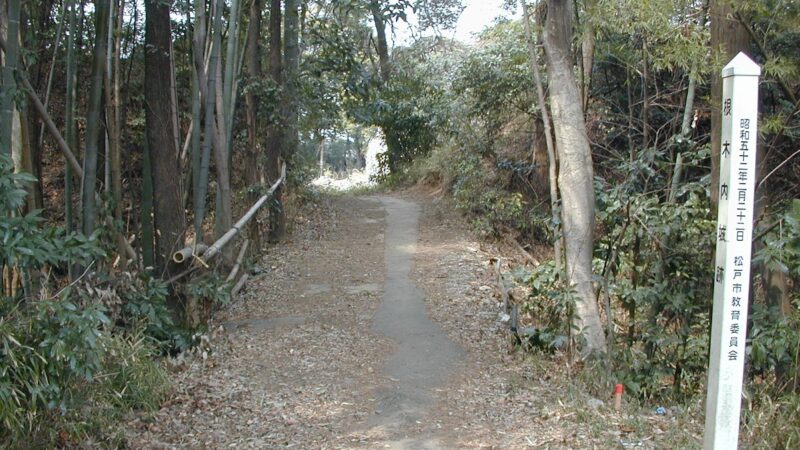
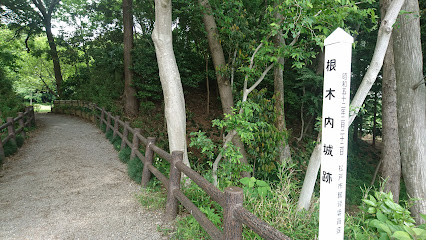
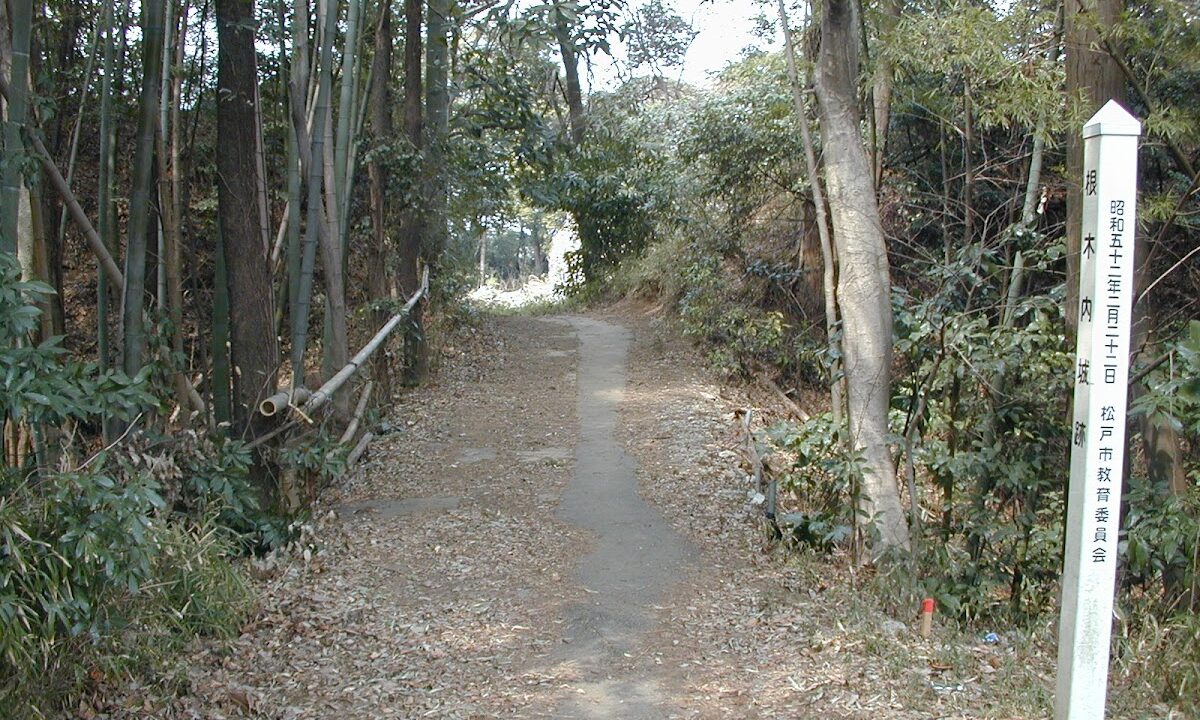
Currently, the Kurigazawa Castle site is completely urbanized, with the land being used for Matsudo Municipal Negiuchi Junior High School, Yukari Traffic Park, and surrounding residential areas. Due to land leveling accompanying development, remains such as earthworks and moats have been completely lost, making it virtually impossible to confirm any traces of the castle on the surface.
Records of archaeological excavations are limited, and detailed information about the castle’s specific structure and scale has not been fully elucidated. This is a challenge faced by many medieval castles, raising the difficult issue of balancing urban development and the preservation of historical heritage.
The Position of Kurigazawa Castle in Chiba Prefecture
Significance in the History of Castles in Chiba Prefecture
Chiba Prefecture has numerous medieval castles, each playing an important role in the history of the region. Among them, Kurigazawa Castle, as the early base of the powerful Takagi clan, is indispensable for understanding the history of the Kogane domain.
Representative castles in Chiba Prefecture include Sakura Castle, Hon-Sakura Castle, Otaki Castle, Kururi Castle, Sekiyado Castle, Tateyama Castle, and Chiba Castle. While Kurigazawa Castle may be smaller in scale and less well-known compared to these, its importance in regional history is undeniable.
The Castle Network of the Kogane Domain
Kurigazawa Castle functioned as part of a castle network within the Kogane domain, which was ruled by the Takagi clan. This network included Kurigazawa Castle, as well as Negiuchi Castle and Kogane Castle, all working together to control their territories.
Such castle networks were essential systems for feudal lords during the Sengoku period to efficiently govern their territories and defend against external enemies. Understanding the history of Kurigazawa Castle is crucial to understanding the medieval history of this entire region.
Access to Kurigazawa Castle and Local Information
Access to the Current Castle Ruins
The Kurigazawa Castle ruins are located around 1-chome, Koganehara, Matsudo City, Chiba Prefecture. The nearest stations are Tokiwadaira Station or Gokō Station on the Shin-Keisei Line, and the site is accessible on foot or by bus from the station.
The specific location is around Matsudo Municipal Negiuchi Junior High School (1-24-1 Koganehara, Matsudo City) and Eucalyptus Traffic Park. However, since these are used as educational facilities and a park, visitors must abide by the facility’s rules and be considerate of local residents.
Points to Note When Visiting
As mentioned above, no remains of Kurigazawa Castle exist. Because there is no maintenance work or information boards for the castle site, it is difficult for history enthusiasts to visually experience the castle’s layout.
When visiting, it is recommended to check the location using maps and historical documents beforehand and explore the surrounding area while imagining the former castle grounds. Since Negiuchi Junior High School is an educational facility, entry to the grounds during class hours should be avoided.
Current Status and Challenges of Kurigazawa Castle Research
Limitations of Documentary Sources
Documentary sources concerning Kurigazawa Castle are limited, leaving many aspects of the castle’s detailed history and structure unclear. Fragmentary descriptions can only be found in local historical materials and ancient documents, and systematic research is insufficient.
Research on the Takagi clan also largely focuses on Kogane Castle, resulting in relatively low attention being paid to Kurigazawa Castle, their initial base.
The Need for Archaeological Investigation
Given that the castle site is now completely urbanized, conducting archaeological excavations is difficult. However, there remains the possibility of accidentally discovering remains and artifacts during development work in the surrounding area.
By seizing such opportunities and conducting appropriate investigations, new insights into the true nature of Kurigazawa Castle could be gained. Continued interest and research activities by local historians and community researchers are crucial.
Kurigazawa Castle and Local History Education
Utilization in Local History Education
Kurigazawa Castle can be a valuable teaching material for learning the local history of Matsudo City. Even though the remains have been lost, learning about its historical background and the social conditions of the time can deepen understanding of the local area.
Local schools, including Matsudo Municipal Negiuchi Junior High School, can incorporate the history of Kurigazawa Castle as part of their local history education, providing students with an opportunity to understand the historical depth of their own region.
Formation of Local Identity
Local historical heritage plays an important role in forming the identity of the people who live there. By knowing about historical sites like Kurigazawa Castle, residents can deepen their pride and attachment to their region.
Efforts to preserve local history and pass it on to future generations are essential for maintaining cultural richness.
Comparison with Other Castles in Chiba Prefecture
To understand Kurigazawa Castle, it is effective to compare it with other castles in Chiba Prefecture.
Sakura Castle is a modern castle built during the Edo period as the residence of a fudai daimyo (hereditary feudal lord), and its characteristics differ significantly from medieval castles like Kurigazawa Castle. Sakura Castle has well-preserved remains such as stone walls and a keep base, and has been developed into a castle park.
Hon-Sakura Castle is a medieval castle that flourished as the base of the Chiba clan. Its remains, such as earthworks and dry moats, are well-preserved, and it is designated as a national historic site. As a castle from the same period as Kurigazawa Castle, it is a subject of comparative research.
Otaki Castle is a castle known as a powerful castle in the Boso Peninsula. Currently, a replica keep has been built, and it is used as a museum.
Kogane Castle is a castle that became the base of the Takagi clan after Kurigazawa Castle, and the relationship between the two castles is close. While much of Kogane Castle’s remains have been lost due to urbanization, some earthworks remain.
Comparing these castles will clarify the characteristics and historical position of Kurigazawa Castle.
Significance of Kurigazawa Castle in Medieval Castle Research
Research on the Transition of Lords’ Residences
The Takagi clan’s relocation of their base from Kurigazawa Castle to Negiuchi Castle, and then to Kogane Castle, is a prime example of the pattern of power expansion and residence changes among medieval lords. The process of lords moving their residences to larger, more strategically advantageous locations as their power expanded is a phenomenon observed in other regions as well.
Studying these changes in residences provides a deeper understanding of the power structure and territorial control of lords in medieval society.
Research on Branch Castle Networks
The fact that Kurigazawa Castle functioned as a branch castle of Kogane Castle is also important in the study of castle networks during the Sengoku period. The question of how main castles and branch castles cooperated to achieve overall defense and governance of their territories is a crucial theme in castle history research.
By clarifying the role of branch castles like Kurigazawa Castle, we can gain insight into the realities of domain management by Sengoku daimyo.
Balancing Preservation and Development
The case of Kurigazawa Castle raises a difficult challenge facing modern society: balancing the preservation of historical heritage with urban development.
Due to rapid urbanization since the period of high economic growth, many medieval castles have been swallowed up by the wave of urbanization, and their remains have been lost. Kurigazawa Castle is one such example, and today it is difficult even to imagine its original appearance.
On the other hand, urban development and the improvement of residents’ lives are also important values. How to balance the preservation of historical heritage with development is a challenge that the entire community must consider.
In future urban planning, it will be important to consider thorough investigation and documentation before development, and to preserve as many remains as possible. For remains that have already been lost, alternative forms of historical transmission are needed, such as restoration using digital technology and providing information through the installation of signboards and explanatory panels.
Summary
Kurigazawa Castle was a medieval castle located in Matsudo City, Chiba Prefecture, and holds a historically important position as the early residence of the Takagi clan. Kurigazawa Castle functioned from the late Muromachi period through the Sengoku period, and as the Takagi clan’s power expanded, its role shifted from an initial residence to a subsidiary castle.
Currently, the castle site is completely urbanized, and no remains can be seen, but its historical significance remains. Learning about the history of Kurigazawa Castle is crucial for understanding the medieval history of the Kogane domain, the activities of the Takagi clan, and the overall history of castles in Chiba Prefecture.
Now that the remains are gone, it is our responsibility to pass on the memory of Kurigazawa Castle to future generations through documentary research and local history education. Cultivating an interest in local history and a respect for local cultural heritage will lead to the formation of a richer community.
Besides Kurigazawa Castle, Chiba Prefecture has many other castles, each with its own unique history. By visiting these castles and experiencing their history, we can feel closer to the lives of our ancestors.