Complete Guide to Tsubaki Castle (Sosa City, Chiba Prefecture) | History and Remains of a Medieval Castle Built on the Shore of Lake Tsubaki
Tsubaki Castle, located in Tsubaki, Sosa City, Chiba Prefecture, is a medieval castle built on the southwestern corner of Lake Tsubaki, a vast lake that once stretched across the northeastern part of the Boso Peninsula. Over 1500 castles have been identified in Chiba Prefecture, and Tsubaki Castle stands out for its unique location.
This article comprehensively explains information about Tsubaki Castle, including its historical background, characteristics as a castle, its relationship with Lake Tsubaki, the current state of its remains, and even information on castle stamps.
Basic Information and Location of Tsubaki Castle
Location and Geographical Characteristics
Tsubaki Castle was located in Tsubaki, Sosa City, Chiba Prefecture (Postal Code: 289-2102). The current city of Sōsa is located in the northeastern part of Chiba Prefecture, approximately 40 kilometers from Chiba City, the prefectural capital.
The most distinctive feature of Tsubaki Castle lies in its location. The castle was built on a plateau jutting out from the southwestern corner of Tsubaki Lake. Tsubaki Lake was a massive lake that existed until its reclamation in the early Edo period (Kanbun era, 1661-1673). It stretched across what are now Tōshō Town, Asahi City, and Sōsa City, and was the largest lake on the Bōsō Peninsula, measuring approximately 12 km east-west and 4 km north-south.
Historical Importance of Tsubaki Lake
From the medieval to the early modern period, Tsubaki Lake functioned as an important waterway in the northeastern part of the Bōsō Peninsula. The lake connected to the Tone River system and flourished as a key point for the transport of goods and people. Because Tsubaki Castle was built on a plateau overlooking Tsubaki Lake, it is believed to have played a strategic role in monitoring and controlling water traffic.
In the early Edo period, Tsubakiumi was reclaimed as land through a large-scale land reclamation project. This large-scale reclamation project has resulted in a vast area of rice paddies, and there is no trace of the former lake. However, traces of it remain in the topography and place names, making the existence of Tsubakiumi an essential element in understanding the location of Tsubaki Castle.
History and Lords of Tsubaki Castle
Construction Period and Changes in Lords
Regarding the construction period and lords of Tsubaki Castle, many details remain unknown due to limited historical records. However, like many medieval castles in Chiba Prefecture, it is estimated to have been built and used from the late Heian period to the Sengoku period.
The northeastern part of Chiba Prefecture was a region ruled by the Chiba clan and their relatives during the medieval period, and it is highly likely that Tsubaki Castle was also under the influence of the Chiba clan. The Chiba clan was a powerful family that established its influence in Shimosa Province at the end of the Heian period, and built many branch castles throughout the Boso Peninsula from the Kamakura period to the Sengoku period.
In addition to Tsubaki Castle, the Sōsa region had several other castles, including Sōsa Castle, Shinjo, Takubo Castle, and Nagaoka Castle. It is believed that these castles worked in conjunction with each other to establish a regional control system.
Connection to the Kokubun Clan
The existence of the Kokubun Clan is crucial when discussing the medieval history of the Sōsa region. The Kokubun Clan was a branch of the Chiba Clan and built its power base around Kokubunji Temple in Shimōsa Province. It is presumed that Tsubaki Castle was also under the control of the Kokubun Clan at one point, and it may have functioned as a management base for water transport utilizing Tsubaki Bay.
During the Sengoku period, the Bōsō Peninsula was incorporated into the sphere of influence of the Odawara Hōjō clan, and many local lords became subordinate to the Hōjō clan. It is believed that Tsubaki Castle was also under the influence of the Hojo clan during this period. However, after Toyotomi Hideyoshi’s siege of Odawara in 1590, the Hojo clan was destroyed, and many castles on the Boso Peninsula were abandoned. It is highly likely that Tsubaki Castle was also abandoned around this time.
Castle Structure and Remains of Tsubaki Castle
Castle Area and Layout
Tsubaki Castle is a hilltop castle built on a plateau jutting out into the southwestern corner of Tsubaki Lake. By utilizing the tip of the plateau, it formed a natural stronghold surrounded by the lake on three sides. This location served a defensive function, monitoring and controlling water traffic while preventing enemy incursions.
Regarding the detailed extent of the castle area, accurate reconstruction is difficult due to significant changes in the topography caused by land reclamation of Tsubaki Lake. However, attempts to estimate the size and structure of the castle from the current topography, place names, and the few remaining remains are ongoing.
Current Status of Remains
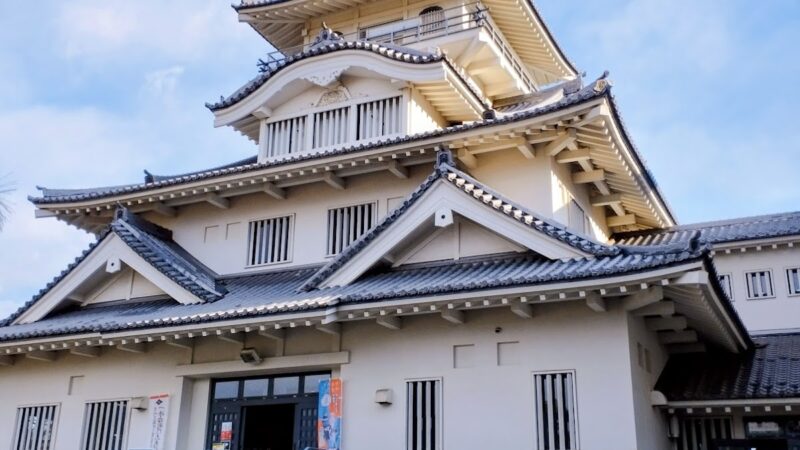
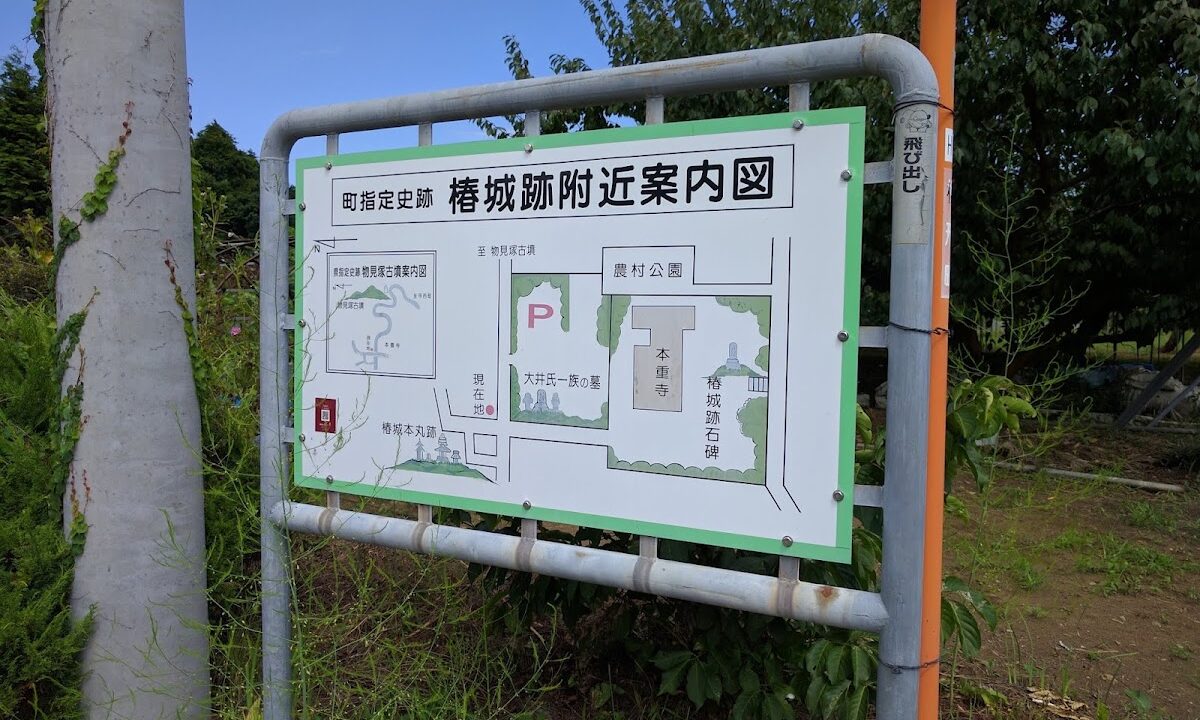
Due to land reclamation in Tsubakiumi and long-term agricultural use, much of the remains of Tsubaki Castle have been lost. Currently, it is difficult to confirm clear castle remains. However, investigations by local researchers and castle enthusiasts have confirmed slight topographical undulations and traces of earthworks.
Chiba Prefecture is known as one of Japan’s leading castle prefectures, with over 1500 castles confirmed within the prefecture. However, like Tsubaki Castle, many of these lack clear remains. This is mainly because many castles in Chiba Prefecture were flatland castles or hill castles, lacking permanent structures such as stone walls, and the topography has been altered by long-term agricultural use.
Relationship with Surrounding Castles
Tsubaki Castle functioned as part of a castle network in the Sōsa region. The following castles existed in the surrounding area, and it is believed that they were interconnected.
- Sōsa Castle: The central castle of the Sōsa region
- Shinjo Castle: One of the main castles in Sōsa City
- Takubo Castle: A castle located near Tsubaki Castle
- Nagaoka Castle: A castle around Tsubakiumi
These castles are presumed to have shared the role of defending and managing the water transport routes centered around Tsubakiumi.
Characteristics of Castles in Chiba Prefecture and the Position of Tsubaki Castle
Distribution of Castles in Chiba Prefecture
Chiba Prefecture is one of the most densely populated areas for castles in Japan. According to a survey by the Chiba Castle Preservation and Utilization Association, over 1500 castles have been confirmed within the prefecture, which is an extremely high density even by national standards.
The characteristics of castles in Chiba Prefecture are as follows:
- Medieval castles are dominant: Castles from the late Heian period to the Sengoku period make up the majority.
- Earth castles are predominant: There are few early modern castles with stone walls; most are composed of earthworks and moats.
- Many castles are related to the Chiba clan: Castles built by the Chiba clan and their relatives are distributed throughout the prefecture.
- Various levels of remaining structures: The situation varies from castles with clearly visible remains to those where even traces are difficult to confirm.
The Uniqueness of Tsubaki Castle
Tsubaki Castle is a unique existence among the castles of Chiba Prefecture. Its most distinctive feature is its location facing the large lake, Tsubakiumi. As a castle located at a key point for water transportation, it is thought to have played a role not only in military functions but also as a center for logistics and economic management.
Although it is difficult to appreciate the uniqueness of its location today due to land reclamation of Tsubakiumi, it must have once formed a distinctive landscape as a castle overlooking the lake. Such waterside castles are rare even within Chiba Prefecture, and this contributes to the historical value of Tsubaki Castle.
Tsubaki Castle’s Gojoin (Castle Stamp) and Visiting Information
About Gojoin
In recent years, Gojoin (castle stamps) have become popular as a new way to enjoy castle tours. A Gojoin is like a certificate that can be purchased as a memento of visiting a castle, and each castle has its own unique design.
The Tsubaki Castle Gojoin was planned with the involvement of the Chiba Castle Preservation and Utilization Association, and designed by its vice-representative, Yamashiro Girl Mutsumi. The Tsubaki Castle Gojoin is sold at the following locations:
- Sosa Tourism and Local Products Center Sō no Sato
- Other designated sales locations in Sōsa City
The design of the Gojoin reflects the historical background of Tsubaki Castle and its relationship with Tsubaki Sea, making it a valuable item for collectors.
Access to Tsubaki Castle
Tsubaki Castle ruins are located in the Tsubaki area of Sōsa City, Chiba Prefecture. While there isn’t a clearly designated castle ruins park, it is possible to visit the area surrounding the castle ruins.
Access Methods:
- By Car: Approximately 1 hour from Chiba City via National Route 126
- By Public Transportation: Take a bus or taxi from Yokaichiba Station on the JR Sobu Main Line.
When visiting, it is important to be considerate of the surrounding residential and agricultural areas and respect the lives of the local residents.
Nearby Tourist Attractions
When visiting Tsubaki Castle, we recommend also visiting tourist attractions in Sōsa City and the surrounding area:
- Sōsa Tourism and Local Products Center Sō-no-Sato: You can obtain local products and tourist information for Sōsa City.
- Tsubakiumi Reclamation Area: A rice paddy area where you can experience the vastness of the former Tsubakiumi.
- Other Castles in Sōsa City: Visit nearby castles such as Sōsa Castle and Shinjo Castle.
- Iitaka-ji Temple (Iitaka Danrin): A historical building that flourished as a center of learning for the Nichiren sect.
Comparison with Major Castles in Chiba Prefecture
To understand Tsubaki Castle, it is also beneficial to compare it with other major castles in Chiba Prefecture.
Kururi Castle (Kimitsu City)
Kururi Castle is a mountain castle located in Kimitsu City and is one of the representative castles of Chiba Prefecture. During the Sengoku period, it played an important role as the residence of the Satomi clan. Currently, a replica keep has been erected, and the site is maintained as a castle park. Compared to Tsubaki Castle, Kururi Castle differs significantly in that its remains as a mountain castle are well-preserved, and it is also well-maintained as a tourist destination.
Otaki Castle (Otaki Town, Isumi District)
Otaki Castle is located in Otaki Town, Isumi District, and was an important castle from the Sengoku period to the Edo period. Currently, a replica keep is used as a prefectural museum. Otaki Castle also has the characteristics of a modern castle, and the remains such as stone walls are well-preserved, which distinguishes it from Tsubaki Castle, a medieval castle.
Sakura Castle (Sakura City)
Sakura Castle is an Edo period castle located in Sakura City, with well-preserved remains such as earthworks and moats. Currently, it is maintained as Sakura Castle Ruins Park, and the National Museum of Japanese History is adjacent to it. As a modern castle, Sakura Castle differs in era and structure from medieval castles like Tsubaki Castle, but it is an important castle representing Chiba Prefecture.
The History of the Tsubakiumi Reclamation Project and its Impact on Tsubaki Castle
Overview of the Tsubakiumi Reclamation Project
The Tsubakiumi reclamation project was a large-scale civil engineering project carried out during the Kanbun era (1661-1673) in the early Edo period. This project transformed a vast lake, approximately 12 km east-west and 4 km north-south, into land, creating a vast area of rice paddies.
The project is believed to have been spearheaded by a man named Someya Gen’emon. This project developed thousands of hectares of new rice fields, dramatically increasing the region’s agricultural productivity.
The Impact of Reclamation on Tsubaki Castle
The Tsubakiumi reclamation project is an important event in understanding the historical value of Tsubaki Castle. The land reclamation project had the following impacts:
- Loss of unique location: The castle’s distinctive feature of being situated on a lake was lost.
- Destruction and alteration of remains: Many castle remains were lost due to conversion to farmland.
- Difficulty in understanding historical context: The strategic importance of Tsubaki Castle is difficult to grasp from the current topography.
On the other hand, the new rice fields created by the reclamation project greatly contributed to the development of the region, forming the foundation of present-day Sōsa City. It can be said that the history of Tsubaki Castle and the history of Tsubakiumi land reclamation are two sides of the same coin.
Research and preservation activities of Tsubaki Castle
Activities of the Chiba Castle Preservation and Utilization Association
The Chiba Castle Preservation and Utilization Association is an organization dedicated to the investigation, research, preservation, and utilization of castles in Chiba Prefecture. The association engages in a wide range of activities, including creating a database of over 1500 castles in the prefecture, developing castle maps, and planning castle stamps.
Regarding Tsubaki Castle, the association also conducts research and disseminates information, playing a role in widely conveying the historical value of Tsubaki Castle.
Future Challenges and Prospects
The following challenges exist regarding the preservation and utilization of Tsubaki Castle:
- Detailed Investigation of Remains: Accurate identification of remaining remains
- Excavation of Historical Materials: Clarification of the castle lord and construction period
- Clarification of Relationship with Tsubaki Sea: Research on its connection to water transportation
- Utilization as a Regional Resource: Examination of methods for utilization in tourism and education
By addressing these challenges, the historical value of Tsubaki Castle will become clearer, and the possibility of utilizing it as a regional cultural resource will expand.
History and Culture of Sōsa City
Overview of Sōsa City
Sōsa City is a city located in the northeastern part of Chiba Prefecture, formed in 2006 through the merger of Yōkaichiba City and Noei Town. With a population of approximately 35,000, Sōsa is nationally known as a production area for ornamental trees and seedlings, boasting the largest cultivation area in Japan.
The city name “Sōsa” is an ancient place name, appearing in the *Manyōshū* (Collection of Ten Thousand Leaves), a historically significant name. From ancient to medieval times, this region developed as an important area of Shimōsa Province.
Medieval History of the Sōsa Region
During the medieval period, the Sōsa region was under the control of the Chiba clan. Multiple castles were built within the region, coordinating with each other to establish a system of regional control. Tsubaki Castle is thought to have played an important role as part of this network.
During the Sengoku period (Warring States period), the Bōsō Peninsula came under the influence of the Odawara Hōjō clan, and the Sōsa region also fell under their influence. After Toyotomi Hideyoshi’s conquest of Odawara in 1590, when Tokugawa Ieyasu entered the Kantō region, the Sōsa region was incorporated under the control of the Tokugawa clan.
Summary: The Historical Significance of Tsubaki Castle
Tsubaki Castle, located in Sōsa City, Chiba Prefecture, is a medieval castle built on the southwestern corner of the former Tsubakiumi Lake, a massive lake that once existed. Within the unique geographical environment of Tsubakiumi Lake, it played a crucial role as a key point for water transportation.
The reclamation of Tsubakiumi Lake in the early Edo period drastically altered the castle’s location, and many remains were lost. However, the history of Tsubaki Castle provides important clues for understanding the medieval history of Chiba Prefecture, particularly the water transportation and regional governance centered around Tsubakiumi Lake.
Currently, activities such as the Chiba Castle Preservation and Utilization Association are promoting the investigation, research, preservation, and utilization of castles in Chiba Prefecture, including Tsubaki Castle. Interest in Tsubaki Castle is also growing through initiatives such as the issuance of castle stamps.
Visiting Tsubaki Castle offers more than just a glimpse of castle ruins; it provides an opportunity to experience the history of the former Tsubakiumi Lake, a massive Edo-period project of land reclamation, and the history of the Bōsō Peninsula during the transition from the medieval to the early modern period. Please take the opportunity to learn about the history of Tsubaki Castle, which plays a part in Chiba Prefecture’s rich castle culture.