Negiuchi Castle, Matsudo City, Chiba Prefecture – A Complete Guide to the Historical Park with Remains from the Sengoku Period
What is Negiuchi Castle?
Negiuchi Castle was a medieval castle located in Negiuchi, Matsudo City, Chiba Prefecture. Currently, it is maintained as Negiuchi Historical Park, a historical spot that preserves valuable remains from the Sengoku period. Easily accessible from central Tokyo, it is a popular spot for history enthusiasts and local residents alike, offering a chance to easily experience the atmosphere of a medieval castle.
Located in the northeastern part of Matsudo City, this castle served as an important base for the Takagi clan in Shimosa Province. The castle’s layout, skillfully utilizing the plateau terrain, still retains many typical characteristics of medieval castles, with defensive structures such as dry moats, earthworks, and earthen bridges well-preserved.
History of Negiuchi Castle
Construction History and Date
There are several theories regarding the construction date of Negiuchi Castle. The most widely accepted theory is that Takagi Tanetada built the castle in 1462 (Kanshō 3). However, there is also a tradition that Takagi Taneyoshi built it in 1508 (Eishō 5), so the exact construction date remains uncertain.
Furthermore, there is a theory that the Hara clan built the castle. While there is a general consensus on the mid-15th century as the approximate timeframe, the detailed circumstances remain a historical mystery. The existence of these multiple theories is thought to be a result of limited historical records and a complex interplay of oral traditions.
As the Takagi Clan’s Base
Negiuchi Castle functioned as the Takagi clan’s base until Kogane Castle was built in 1537 (Tenbun 6). During this period, Negiuchi Castle was the Takagi clan’s political and military center in Shimōsa Province and played an important role as a base for controlling the surrounding region.
The Takagi clan was a branch of the Chiba clan and a powerful Sengoku period daimyo who ruled the region known as the Kogane domain. Using Negiuchi Castle as their base, they managed their surrounding territories and conducted military operations, solidifying their power base in Shimosa Province.
The Battle with Ota Dokan
A notable event in the history of Negiuchi Castle is the attack by Ota Dokan. Ota Dokan is known as a renowned general who served the Kanto Kanrei Uesugi clan and is also famous as the builder of Edo Castle.
The background to Dokan’s attack on Negiuchi Castle was the complex political situation in the Kanto region at the time. This battle was a major test for Negiuchi Castle, but detailed records of the castle’s fate are not available. However, this fact indicates that Negiuchi Castle was a militarily important base.
Relocation to Kogane Castle
In 1537 (Tenbun 6), the Takagi clan built a new castle, Kogane Castle, and moved their base there. This relocation marked the end of Negiuchi Castle’s role as the Takagi clan’s main castle.
Possible reasons for the relocation to Kogane Castle include securing a larger castle area, its strategic location at a transportation hub, and its defensive advantages. However, it has been suggested that Negiuchi Castle was not completely abandoned, but continued to function as a subsidiary castle of Kogane Castle or as a base for monitoring the highway.
Subsequent Changes
While there are few clear records of how Negiuchi Castle was used after the relocation to Kogane Castle, it is believed to have played a role in the defense network of the Kogane domain. In particular, given that the old Mito Highway ran through the castle grounds, it is highly likely that it played a role in monitoring the highway and defending Kogane Castle and Kogane-juku (Kogane post town).
With the end of the Sengoku period (Warring States period), Negiuchi Castle lost its function as a military facility and was eventually used as farmland and residential land. However, its topographical features and some of its remains continued to exist until modern times, leading to the development of the current historical park.
Structure and Layout of Negiuchi Castle
Location and Utilization of Topography
Negiuchi Castle is a flatland castle built on a plateau. By skillfully utilizing the natural topography of the plateau, a defensive design was implemented to make enemy intrusion difficult. This location is a typical choice for medieval castles, allowing for defense using the difference in elevation.
The area surrounding the castle is relatively flat, and the castle on the plateau offered a panoramic view of the surroundings. This good visibility was an important factor in detecting enemy movements early.
Arrangement of Enclosures
Negiuchi Castle is believed to have had more than six enclosures (kuruwa). Enclosures are flat areas within the castle grounds, each containing buildings and facilities, serving a defensive role.
One of these baileys is preserved in the current Negiuchi Historical Park, allowing us to imagine the scale of the castle at that time. The arrangement of multiple baileys created a multi-layered defensive structure, designed so that even if the enemy breached one bailey, they could be stopped at the next line of defense.
Characteristics of the Dry Moat
The most prominent remains of Negiuchi Castle are the dry moats. A dry moat is a moat that does not hold water; its deep digging served as a defensive structure to physically prevent enemy intrusion.
The dry moat remaining in Negiuchi Historical Park is impressive in its depth and width, demonstrating the advanced civil engineering technology of the time. The moat’s cross-section is V-shaped or U-shaped, with a narrow bottom and steep slopes. This shape made it extremely difficult for enemy soldiers to cross the moat, and enemies who entered the moat became easy targets.
The scale of the dry moat clearly demonstrates that this castle functioned as a full-fledged military facility. Even today, you can experience the depth of the moat, making it a valuable learning resource for studying the defensive principles of medieval castles.
Structure of Earthworks
Earthworks are defensive walls built by piling up earth. It is believed that the earthworks of Negiuchi Castle were constructed using the soil excavated when the dry moats were dug.
The earthworks were built along the edges of the baileys and served to protect the castle from enemy arrows and firearms. It is also possible that fences or walls were built on top of the earthworks, further enhancing their defensive capabilities.
Although the existing earthworks are lower than they were in the past, their shape and arrangement allow us to discern the defensive lines of the time. There is a clear difference in elevation between the inside and outside of the earthworks, and this difference in elevation played a crucial role in defense.
Role of Earthen Bridges
Earthen bridges are bridge-like passages built by leaving earth to cross dry moats. Remains of earthen bridges also exist at Negiuchi Castle, and they were used for movement between baileys and for entering and exiting the castle. The earthen bridge was an important structure that limited movement within the castle. When attacking the castle, enemies were inevitably forced to pass through the earthen bridge, allowing for concentrated defense. Furthermore, in emergencies, the earthen bridge could be destroyed to completely block enemy incursions.
The earthen bridge that remains today is an important historical site for understanding the layout techniques of medieval castles.
Development as Negiuchi Historical Park
History of Park Development
The Negiuchi Castle ruins were developed as Negiuchi Historical Park in 2006. In Matsudo City, which is undergoing urbanization, the park was developed to preserve valuable historical heritage and provide a place where citizens can experience history and nature.
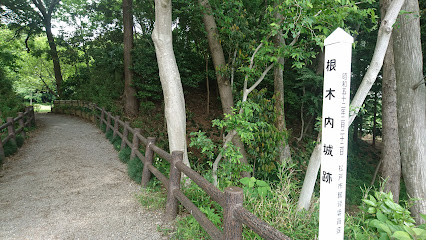
In developing the park, the preservation of the remains was the top priority, while also ensuring the safety of visitors. The installation of explanatory signs and the development of walking paths have made it possible for even those unfamiliar with history to enjoy the castle ruins.
Preserved Historical Structures
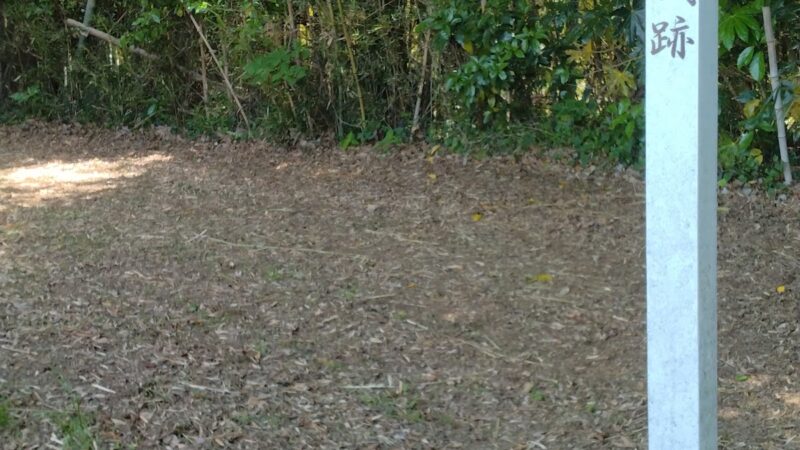
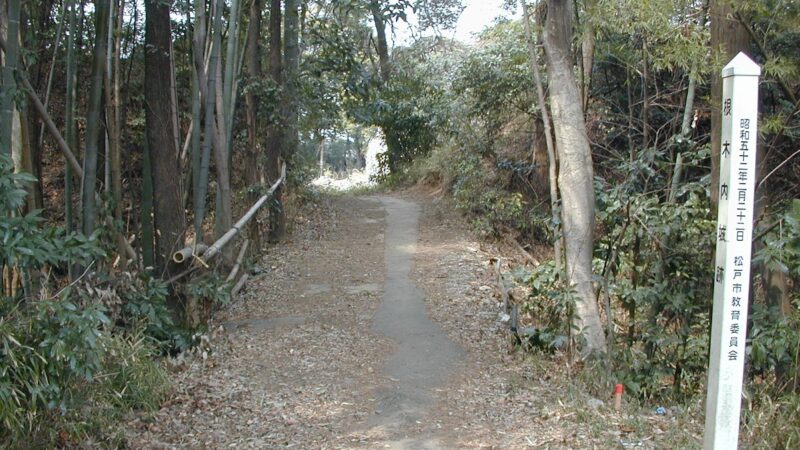
At Negiuchi Historical Park, three major historical structures—a dry moat, earthworks, and an earthen bridge—are well-preserved. These are valuable cultural assets that convey the appearance of a Sengoku period castle to the present day, and visiting the site allows you to experience their scale and structure firsthand.
It is rare to find medieval castle remains of this scale in a developed urban area, and they are highly valued as a historical asset of Matsudo City. The remains are properly managed, and maintenance work such as grass cutting is carried out regularly.
Park Facilities
Negiuchi Historical Park has a parking lot with space for several cars, making it accessible by car. There are also restrooms within the park, allowing visitors to explore at their leisure.
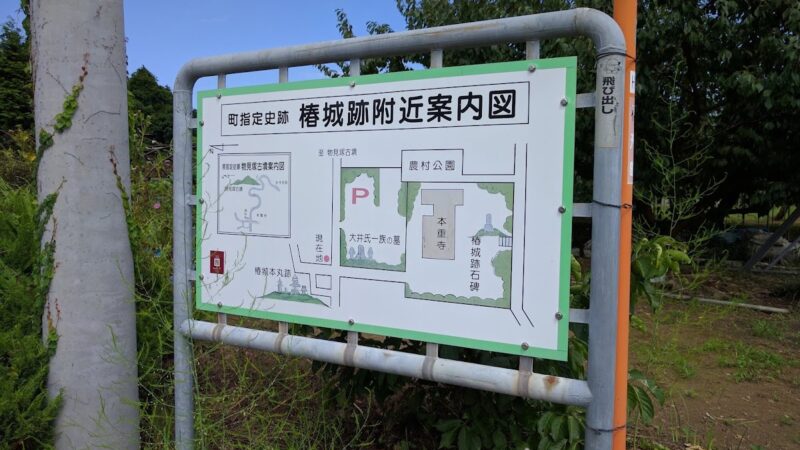
Information boards and guide signs are placed at key locations, allowing visitors to learn about the history of Negiuchi Castle and the highlights of the remains. These signs are written in Japanese and are also used as a place for local history education.
The park is designed for free exploration and is used by local residents not only for historical exploration but also for nature observation and walks. ## Access and Visiting Information
Access by Public Transportation
The nearest station to Negiuchi Historical Park is Kita-Kogane Station on the JR Joban Line. It’s approximately a 10-minute walk from Kita-Kogane Station, making it easily accessible.
The route from the station to the park is a quiet one, passing through a residential area, allowing you to enjoy the scenery of Matsudo City along the way. Signposts are also installed, so even first-time visitors should be able to arrive without getting lost.
Access by Car
If traveling by car, National Route 6 runs along the northwestern edge of the Negiuchi area, making it conveniently accessible from major roads. Furthermore, the old Mito Highway runs east-west through the center of the area, adding to its historical significance.
While the park has its own parking lot, spaces are limited, and it may be full on holidays. Consider using public transportation.
Points to Note During Your Visit
When visiting Negiuchi Historical Park, paying attention to the following points will allow you to enjoy the castle ruins more deeply:
- Depth of the Dry Moat: Not only can you look down from the top of the moat, but if possible, descend to the bottom to truly appreciate its depth and defensive capabilities.
- Height of the Earthworks: Observe the earthworks from both the inside and outside to confirm the difference in elevation.
- Structure of the Earthen Bridge: Observe how the earthen bridge crosses the dry moat, and note its width and shape.
- Size of the Enclosures: Walk along the flat areas of the preserved enclosures and imagine the castle’s layout at the time.
- Surrounding Topography: Walking around the perimeter of the park and observing its plateau location will help you understand the reasons for selecting this site for construction.
Precautions During Your Visit
- The ruins are valuable cultural assets. Please be careful not to damage the earthworks or moats.
- Be careful as slopes become slippery during and after rain.
- Take proper insect repellent measures in summer and warm clothing in winter.
- Please take all your trash with you and help keep the park clean.
Relationship between Negiuchi Castle and Kogane Castle
Castle Network in the Kogane Domain
Negiuchi Castle functioned as part of a castle network in the region known as the Kogane Domain. The Kogane Domain was ruled by the Takagi clan, and multiple castles cooperated to form a defensive system.
Kogane Castle played a central role as the main castle, with Negiuchi Castle and other surrounding castles positioned as subsidiary castles. This multi-layered defense system ensured the safety of the entire domain.
Base for Monitoring Highways
One of Negiuchi Castle’s important roles was monitoring highways. Because the old Mito Highway runs through the castle grounds, it is believed that Negiuchi Castle held a strategic position in monitoring people and goods traveling along this highway, as well as defending Kogane Castle and Kogane-juku.
Highways were vital arteries for logistics and information, and securing monitoring points along them was extremely important for domain management. Negiuchi Castle played this role, contributing to the defense system of the Kogane domain.
Comparison of Structural Characteristics of Both Castles
Kogane Castle, having been built later than Negiuchi Castle, had a larger and more complex layout. On the other hand, Negiuchi Castle, while relatively compact, was a practical fortress equipped with robust defensive structures.
Both castles share the common characteristic of being flatland castles built on plateaus, reflecting the castle-building philosophy of the Takagi clan. They also share a common defensive structure primarily consisting of dry moats and earthen ramparts, exhibiting a typical form of medieval castles that did not utilize stone walls.
History and Culture of the Negiuchi Area
Origin of the Place Name
There are several theories regarding the origin of the place name “Negiuchi,” but it has been suggested that it may be related to the topography and vegetation. “Negi” is thought to refer to the roots of trees, or to a specific tree species, while “uchi” is interpreted as meaning inside or deep within.
Place names are a part of a region’s identity, passed down through a long history, and the name Negiuchi is evidence that people have lived in this area since ancient times.
Connection to the Old Mito Highway
The Old Mito Highway, which runs east-west through the center of the Negiuchi area, is the old route of the Mito Highway, one of the five major highways developed during the Edo period. This highway was an important transportation route connecting Edo (Tokyo) and Mito, and many travelers and goods passed through it.
It is believed that this road was an ancient road before it was developed as a highway during the time Negiuchi Castle was built, but it undoubtedly already functioned as an important transportation route. The fact that the castle was built along this road indicates its strategic importance as a transportation hub.
Modern Negiuchi District
The present-day Negiuchi district is a residential area located in the northeastern part of Matsudo City. National Route 6 runs along the northwestern edge of the district, and its good access to the city center has made it a popular commuter town.
However, the existence of Negiuchi Historical Park preserves the area’s historical identity and contributes to fostering a sense of history among residents. It can be said to be an attractive area where ancient history and modern life coexist.
Historical Value of Negiuchi Castle
Significance in Medieval Castle Research
Negiuchi Castle occupies an important position in castle research as a typical example of a medieval castle in the Kanto region. The castle’s structure, built solely with civil engineering techniques without the use of stone walls, is valuable material for understanding the castle construction techniques of the Sengoku period.
In particular, the well-preserved dry moats and earthworks are highly valued by researchers and castle enthusiasts as relics that concretely demonstrate the defensive thinking and civil engineering techniques of the time. ### Importance in Local History
Negiuchi Castle is indispensable for understanding the history of Matsudo City and Shimosa Province. As the base of the Takagi clan, it played a central role in recounting the medieval history of this region and forms the core of the region’s historical identity.
Historical events related to Negiuchi Castle, such as the battle with Ota Dokan and the relocation to Kogane Castle, are also important elements for understanding the Sengoku period history of the Kanto region as a whole.
Utilization as an Educational Resource
Negiuchi Historical Park is actively utilized as a place for local history education. It serves as a stage for various educational activities, including local history studies in schools and history lectures in lifelong learning.
Experiential learning, where visitors can actually see and touch the remains, provides a deeper understanding that cannot be obtained from books or videos alone. It can be said to be a valuable educational resource that can inspire children to take pride in the history of their region.
Nearby Historical Spots
Kogane Castle Ruins
When visiting Negiuchi Castle, we highly recommend also visiting the Kogane Castle Ruins. Kogane Castle, built as a successor to Negiuchi Castle, boasts larger-scale castle remains, and comparing the two castles allows for an understanding of the changes in the Takagi clan’s castle management.
Kogane Castle is now a park, where visitors can see remains such as dry moats and earthworks.
Matsudo City Museum
The Matsudo City Museum features exhibits on Negiuchi Castle and Kogane Castle, allowing visitors to learn more about the castles’ history through excavated artifacts and detailed explanations.
Regular historical commentaries by curators are also held, providing an opportunity to learn about Negiuchi Castle and Kogane Castle from an expert’s perspective.
Hondoji Temple
Near Kita-Kogane Station, Hondoji Temple is a renowned Nichiren Buddhist temple, particularly famous for its hydrangeas and autumn foliage. A temple that flourished during the same period as Negiuchi Castle, it is an interesting spot for understanding medieval religious culture.
Tips for Enjoying Negiuchi Castle
Photography Tips
The remains of Negiuchi Castle are excellent subjects for photography. The following angles are especially recommended:
- An angle looking down on the dry moat from above: This conveys the depth and scale of the moat.
- A frontal shot of the earthen bridge: This captures the structure of the bridge and the dry moats on both sides in a single frame.
- A cross-section of the earthen rampart: Photograph it in a way that shows the difference in elevation.
- A panoramic view of the bailey: A wide-angle lens can express the size of the bailey.
Because the vegetation changes with the seasons, you can enjoy the ever-changing scenery: the fresh green of spring, the deep green of summer, the autumn foliage, and the bare trees of winter.
Historical Walking Courses
Starting from Negiuchi Historical Park, you can set up the following historical walking courses:
- Kita-Kogane Station → Negiuchi Historical Park → Walk along the Old Mito Highway → Hondoji Temple → Kita-Kogane Station (Estimated time: approx. 2-3 hours)
- Negiuchi Historical Park → Kogane Castle Ruins → Matsudo City Museum (Estimated time: approx. half a day)
If you have more time, you can combine both courses to enjoy a full-day trip exploring the history of Matsudo.
Seasonal Highlights
Spring: The fresh greenery is beautiful, and the outlines of the ruins are clearly visible. The weather is pleasant, making it ideal for a walk.
Summer: Covered in deep green, the atmosphere of the medieval castle is further enhanced. However, precautions against the heat and insects are necessary.
Autumn: The autumn leaves are beautiful, making it the perfect season for photography. The weather is mild, making it a pleasant time for sightseeing.
Winter: The structure of the ruins can be observed more clearly due to the fallen leaves. The air is clear and the visibility is excellent.
Summary
Negiuchi Castle is a valuable medieval castle ruin remaining in Matsudo City, Chiba Prefecture. Built in the 15th century by the Takagi clan, it served as their base until their relocation to Kogane Castle. Even today, defensive structures such as dry moats, earthworks, and earthen bridges are well-preserved.
The castle ruins, now developed as Negiuchi Historical Park, are easily accessible from central Tokyo, yet offer a rare opportunity to fully experience the atmosphere of a Sengoku period castle. It’s worth visiting for history buffs, those interested in local history, and families looking for a stroll.
Negiuchi Castle was the stage for a historical event—a battle against Ota Dokan—and a strategic base that played a key role in the castle network of the Kogane domain. Its remains, as historical witnesses that convey the wisdom and technology of the medieval people and the turbulent times, will undoubtedly continue to be carefully preserved.
Negiuchi Castle was also the stage for a historical event—a battle with Ota Dokan—and played a crucial role in the castle network of the Kogane domain. Take advantage of its convenient location, just a 10-minute walk from JR Kita-Kogane Station, and be sure to visit. By actually experiencing the depth of the dry moat, walking along the earthworks, and feeling the vastness of the enclosures, you’ll have a chance to encounter living history in a way that you can’t get from textbooks or photographs.