Complete Guide to Makuwari Castle (Chiba Prefecture): The History and Present State of the Castle of Makuwari Yasutane, Who Destroyed the Main Branch of the Chiba Clan
Makuwari Castle was a Japanese castle located in Makuhari-cho, Hanamigawa-ku, Chiba City, Chiba Prefecture. This castle, which gave its name to the present-day Makuhari area, is known as an important historical legacy symbolizing the rise and fall of the Chiba clan. Built on a tongue-shaped plateau between the Hanamigawa and Hamada Rivers, the castle’s remains have unfortunately disappeared due to modern development, but its historical value and story continue to fascinate many castle enthusiasts and history lovers.
Overview
Basic Castle Information
Makuwari Castle was a flatland castle located in Shimosa Province (present-day Makuhari-cho, Hanamigawa-ku, Chiba City, Chiba Prefecture). Its castle structure is considered a multi-bailey flatland castle, skillfully utilizing the natural fortified terrain between the two rivers, the Hanamigawa and Hamada Rivers.
Basic Data:
- Location: Makuhari-cho, Hanamigawa-ku, Chiba City, Chiba Prefecture
- Alternate Name: Makuhari Castle
- Castle Structure: Concentric Hilltop Castle
- Builder: Osuga Tanenobu
- Year of Construction: Jisho 4 (1180)
- Main Lords: Osuga clan, Makari clan, Chiba clan
- Year of Abandonment: Tenbun era (around 1532-1555)
- Remains: Vanished (no longer exists due to residential development)
- Elevation: Approximately 15 meters
Geographical Features and Location Conditions
The plateau on which Makari Castle was built is located on a tongue-shaped plateau sandwiched between two rivers, the Hanamigawa and the Hamada River. This terrain was extremely advantageous for defense, forming a natural fortress surrounded on three sides by rivers and lowlands. The plateau is approximately 15 meters above sea level, and its southern side is believed to have directly faced Tokyo Bay before the Edo period, making it a strategic point for maritime traffic.
This area was formerly known as Sugahara, Osuga-sho, Chiba County, and was called Makuwari Village from the Edo period onward. The current place name, Makuhari, is thought to be a variation of “Makuwari.” Legends suggest that the castle grounds occupied a large area on the plateau, indicating that it was a considerably large fortress.
Current Situation
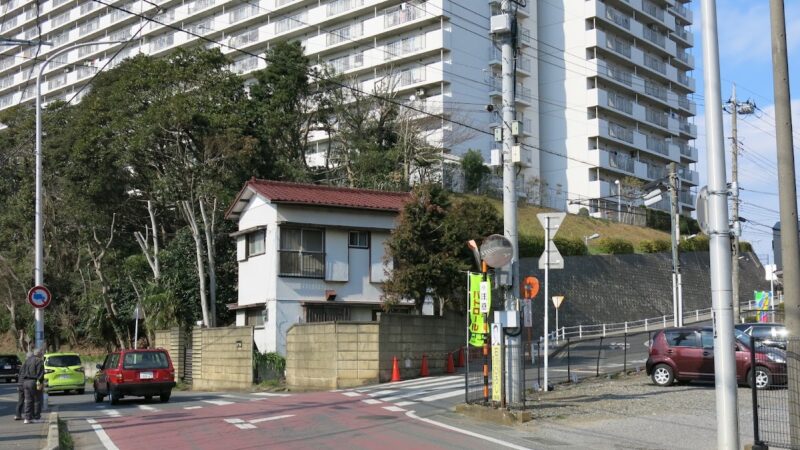
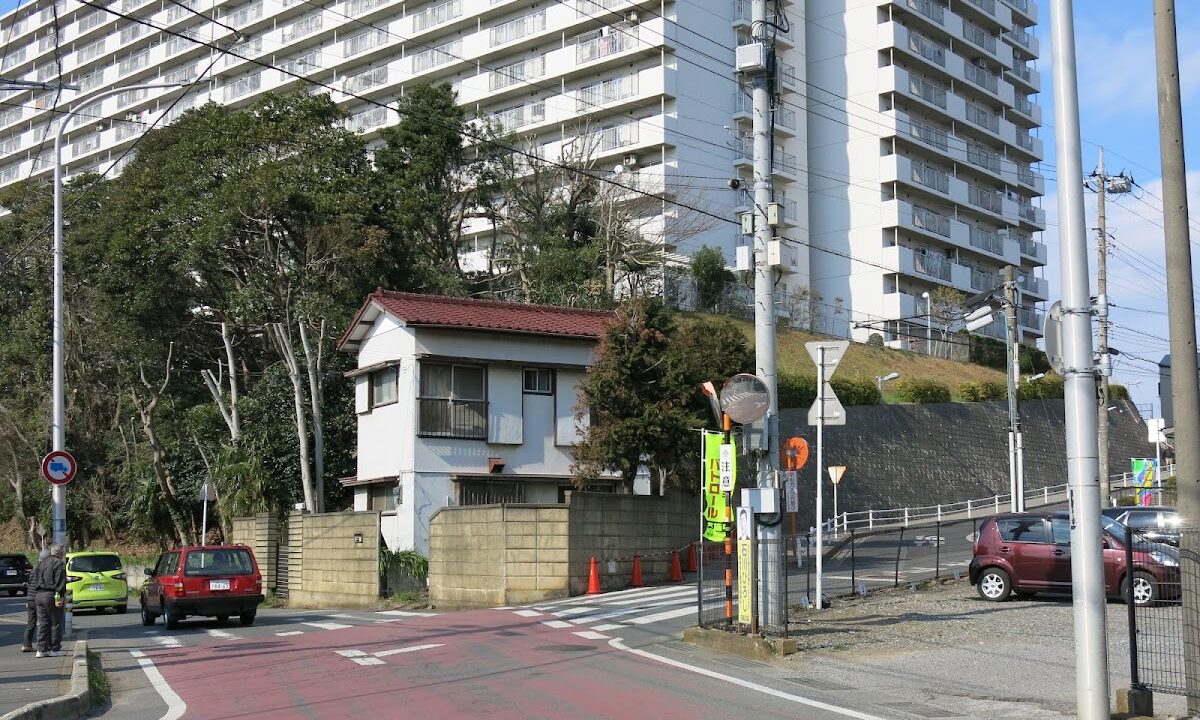
Unfortunately, the remains of Makuwari Castle have completely disappeared due to rapid urban development since the 1960s. Currently, a large high-rise residential complex, “Makuhari House,” and its parking lot are constructed in the center of the castle site, making it impossible to see any castle remains such as moats or earthworks. The inverted triangular plateau located south of the Keiyo Expressway corresponds to the former castle grounds, but since there are no signs or information boards, it is difficult to imagine its former appearance.
However, on the hillside of the castle ruins stands the Dainichido temple, which is said to have once been an independent temple. The area around this Dainichido temple is a place where one can still sense the castle’s history.
History and Background
Jisho Era: Construction by Osuga Tanenobu
The history of Makari Castle begins in 1180 (Jisho 4), when it was built by Osuga Tanenobu, the fourth son of Chiba Tsunetane. Chiba Tsunetane was a powerful warrior who played an important role in Minamoto no Yoritomo’s uprising, and for his achievements, he was granted a vast territory in Shimosa Province.
Osuga Tanenobu was granted territory in Osuga-sho Hongō by his father, Chiba Tsunetane, and built a castle there. Tanenobu later expanded his power into Hanyu District (present-day Narita City area) and became the ancestor of the Osuga clan. Makari Castle served as the base of the Osuga clan and an important stronghold for the Chiba family in Shimosa Province.
Kamakura Period to Early Muromachi Period: The Era of the Osuga Clan
Throughout the Kamakura period, Makari Castle remained the residence of the Osuga clan. As a powerful branch family of the Chiba clan, the Osuga clan held an important position in the governing structure of Shimosa Province. During this period, the castle primarily served as a base for regional control, and large-scale military tensions were relatively infrequent.
Entering the Muromachi period, the Kanto region became embroiled in complex political situations, including the conflict between the Kamakura Shogun and the Kanto Kanrei Uesugi clan, and the establishment of the Koga Shogun. The Chiba clan, too, repeatedly formed alliances and conflicts with various forces amidst this turmoil.
Late Muromachi Period: The Rise of Makari Yasutane and the Downfall of the Main Chiba Family
The most dramatic turning point in the history of Makari Castle was the era of Makari Yasutane in the late Muromachi period. Makari Yasutane was born as an illegitimate son of the Chiba clan. He was initially adopted by the Hitachi Daijō clan, but later divorced and returned to the Chiba clan, making Makari Castle his residence.
The Kyōtoku Rebellion, which began in 1454, plunged the Kanto region into a long period of warfare. Amidst this chaos, power struggles within the Chiba clan intensified. Makari Yasutane expanded his power during the time of Chiba Mitsutane and eventually rebelled against the main Chiba family.
Conflict with the Main Chiba Family:
The conflict between Makari Yasutane and the main Chiba family escalated beyond a simple power struggle into a serious internal conflict. Yasutane allied himself with Ashikaga Shigeuji, the Koga Shogun, and confronted the Uesugi clan, who supported the main Chiba family. This conflict, known as the “Chiba Clan’s Internal Conflict,” had a significant impact on the political situation in Shimōsa Province.
Ultimately, Makari Yasutane succeeded in capturing Hon-Sakura Castle, the stronghold of the Chiba clan’s main branch, and destroying it. This made Yasutane the head of the Chiba clan, and the Makari lineage became the dominant branch. This dramatic rise to power is a significant turning point in the history of the Chiba clan, symbolizing the arrival of the Sengoku period (Warring States period).
Sengoku Period: As a Base for the Chiba Clan
After Makari Yasutane seized real power within the Chiba clan, their main base moved to Hon-Sakura Castle. However, Makari Castle continued to function as an important branch castle of the Chiba clan. It is said that Chiba Tanetomi resided there during the Sengoku period, contributing to the Chiba clan’s maintenance of power in Shimosa Province.
However, as the Sengoku period progressed, the Chiba clan gradually fell under the influence of the Hojo clan. During the Eiroku era (1558-1570), the Chiba clan effectively came under the control of the Hojo clan, and their military actions were incorporated into the Hojo’s strategy.
Abandonment of the Castle and its Aftermath
There are various theories regarding when Makari Castle was abandoned, but the most widely accepted theory is that it was abandoned during the Tenbun era (around 1532-1555). This is thought to be because the Chiba clan’s base completely shifted to Hon-Sakura Castle, leading to a decline in Makari Castle’s military importance.
Subsequently, during Toyotomi Hideyoshi’s siege of Odawara in 1590, the Chiba clan, who had been loyal to the Hojo, was destroyed, and the governing structure of Shimosa Province changed dramatically. In the Edo period, this region became a direct territory of the shogunate and a territory of hatamoto (direct retainers of the shogun), and the site of Makari Castle was used for farmland.
Castle Structure and Defensive System
Layout and Arrangement of Enclosures
Makari Castle was built as a multi-enclosure flatland castle. A multi-enclosure castle is a castle structure in which multiple enclosures are arranged in a straight or winding pattern, and is often adopted in locations with terrain constraints. In the case of Makari Castle, it is presumed that the castle made maximum use of the tongue-shaped plateau terrain, with enclosures arranged in a chain from the tip of the plateau towards the interior.
While the specific number and arrangement of enclosures are unknown due to the complete disappearance of the remains, traditions and historical documents indicate that the castle area was extensive on the plateau. It is thought that the main enclosure was at the center, followed by the second and third enclosures, each separated by moats and earthworks.
Defense Utilizing Natural Terrain
Makari Castle’s greatest defensive strength lay in its location. The tongue-shaped plateau, sandwiched between the Hanamigawa and Hamadagawa rivers, was a formidable fortress protected on three sides by natural moats. The plateau was approximately 15 meters high, and the difference in elevation between it and the lowlands below enhanced its defensive capabilities.
The south side faced Tokyo Bay before the Edo period, giving it an advantageous position against attacks from the sea. Furthermore, its convenient location for monitoring maritime traffic and transporting supplies suggests it was an important base not only militarily but also economically.
Water Resources and Living Infrastructure
A stable water source is essential for maintaining a castle, and since Makari Castle was situated between two rivers, the Hanamigawa and Hamadagawa, it is thought that securing water was not a problem. It is also highly likely that wells were dug within the castle grounds, reducing the risk of water shortage during sieges.
The flat land on the plateau was suitable for arranging living spaces, warehouses, stables, and other facilities, allowing for the permanent stationing of a reasonably sized army.
Genealogy of the Makari and Chiba Clans
Establishment of Chiba Tsunetane and the Osuga Clan
To understand the history of Makari Castle, it is important to know the genealogy of the Chiba clan. The Chiba clan was a prestigious family descended from the Kanmu Taira clan, and expanded its power from its base in Shimosa Province from the late Heian period.
Chiba Tsunetane (1118-1201) provided important support when Minamoto no Yoritomo raised an army and distinguished himself in the Jisho-Juei War (Genpei War). He was granted the title of “Chiba-no-suke” by Yoritomo and established his control over Shimosa Province.
Tsunetane had six sons, and he divided the territory among them to expand the Chiba clan’s power. His fourth son, Osuga Tanenobu, was given Osuga Manor, built Makari Castle, and became the ancestor of the Osuga clan. In this way, the Chiba clan established a system to rule the entire Shimosa Province by placing branch families in various locations. ### The Establishment and Development of the Makari Clan
As time passed, the Osuga clan began to call themselves the “Makari clan.” As the place name Makari became established, the castle’s name, “Makari Castle,” also became widely known.
The Makari clan, as a powerful branch family of the Chiba clan, maintained its influence from the Kamakura period to the Muromachi period. In particular, Makari Yasutane in the late Muromachi period played a central role in the power struggles within the Chiba clan, ultimately destroying the main Chiba family and becoming the head of the Chiba clan himself—a classic example of gekokujo (overthrowing one’s superior) in the Sengoku period.
Makari Yasutane and the Internal Conflict of the Chiba Clan
Makari Yasutane (dates of birth and death unknown, active in the mid-15th century) is one of the most important figures in the history of the Chiba clan. Yasutane was born as an illegitimate son of the Chiba clan, but was once adopted by the Hitachi Daijo clan. However, he divorced his wife and returned to the Chiba clan, establishing his power base at Makari Castle.
Yasutane’s Ambition:
Yasutane allied himself with Ashikaga Shigeuji, the Koga Shogun, and opposed the Uesugi clan, the Kanto Kanrei (governor of the Kanto region), who were supported by the main Chiba family. This conflict was not merely a difference in foreign policy, but also involved a struggle for leadership within the Chiba clan. Yasutane believed he was the rightful leader of the Chiba clan and challenged the main family.
Yasutane possessed exceptional military talent and gradually expanded his power. Ultimately, he succeeded in capturing Hon-Sakura Castle, the main base of the Chiba family, and destroying them. This made Yasutane the head of the Chiba clan, and the Makari branch became the dominant branch of the Chiba clan.
This event is a notable example in Japanese history as a classic example of “gekokujo” (overthrowing one’s superiors) from the late Muromachi period to the Sengoku period. The fierce power struggles within blood-related families symbolized the arrival of the Sengoku period (Warring States period).
Historical Background of Makuhari Castle and its Surroundings
Chiba Clan’s Rule in Shimosa Province
Shimosa Province encompasses the region from northern Chiba Prefecture to southwestern Ibaraki Prefecture, and was ruled by the Chiba clan from the late Heian period. The Chiba clan was based around Ichikawa, where the provincial capital of Shimosa Province was located, and later moved their base to Sakura (Moto-Sakura).
The Chiba clan’s system of rule was based on the “Soryo system,” which involved placing branch families of the clan in various locations. The Makuhari clan played a part in this, being entrusted with the control of the Tokyo Bay coastal region. This region was a crucial point for maritime traffic and was economically and militarily important.
Makuhari Region in the Middle Ages
The area where Makuhari Castle was located had been inhabited since ancient times, with agriculture and fishing being practiced there. The location facing Tokyo Bay offered advantages in acquiring seafood and maritime traffic, making it an economically prosperous region.
Medieval documents record it as “Ōsuga-shō,” indicating its organization as a manor. The Ōsuga clan (Makari clan) ruled this manor, and Makari Castle functioned as a base for manorial control.
Shimōsa Province in the Sengoku Period
With the arrival of the Sengoku period, Shimōsa Province found itself in a complex political situation. Multiple forces, including the Koga Kubō, the Kantō Kanrei Uesugi clan, and later the Odawara Hōjō clan, vied for supremacy. The Chiba clan needed to balance diplomacy and military affairs to survive.
Ultimately, the Chiba clan came under the control of the Hōjō clan, playing a key role in the Hōjō’s control of the Kantō region. However, in 1590, during Toyotomi Hideyoshi’s siege of Odawara, they met their end along with the Hōjō clan.
Information on Spots Around Makari Castle
Historical Heritage of the Makuhari Area
Although the remains of Makari Castle have disappeared, several historical sites remain in the surrounding area.
Dainichido Temple:
Located on the hillside of the castle ruins, Dainichido Temple is said to have once been an independent temple. While its connection to Makari Castle is unclear, it may have functioned as a place of worship for the castle town. It is still cherished by the local people today, and a faint trace of its former glory can be felt.
Around Makuhari Hongo:
The area around Makuhari Hongo Station was the center of the former Makari Village, and traces of the old highway remain. This is a valuable area where one can imagine the village structure of the Edo period.
Castles Related to the Chiba Clan
When visiting Makari Castle, visiting other castles related to the Chiba clan will allow for a deeper understanding of the Chiba clan’s history.
Hon-Sakura Castle (Shisui Town, Sakura City):
This castle flourished as the base of the Chiba clan and is designated a national historic site. It was captured by Makari Yasutane and is closely related to the history of Makari Castle. The remains, such as earthworks and moats, are still well-preserved, allowing visitors to learn about the castle structure of the Sengoku period.
Chiba Castle (Chuo Ward, Chiba City):
This castle is considered the birthplace of the Chiba clan and is now developed as Inohana Park. The Chiba City Local History Museum is located here, where visitors can learn more about the history of the Chiba clan.
Inohana Castle (Chuo Ward, Chiba City):
Also known as Chiba Castle, this was the early base of the Chiba clan. It is now a park and a symbolic place in the history of Chiba City.
Modern Makuhari Area
The area around the Makari Castle ruins has developed into a residential area, but a short distance away lies Makuhari New City, where you can enjoy a modern urban landscape. It is an interesting area where history and modernity coexist. Makuhari Messe:
Makuhari Messe, known as an international exhibition center, is located on the Tokyo Bay coast, once overlooked by Makari Castle. Experiencing modern Makuhari after visiting the historical site is also worthwhile.
Practical Information for Visiting Makari Castle
Access Methods
Public Transportation:
- Approximately 15 minutes on foot from JR Sobu Line “Makuhari Hongo Station”
- Approximately 15 minutes on foot from Keisei Electric Railway Chiba Line “Keisei Makuhari Hongo Station”
By Car:
- Approximately 5 minutes from Keiyo Expressway “Makuhari IC”
- There is no dedicated parking lot, but there are coin-operated parking lots nearby.
Notes for Visitors
The site of Makari Castle is currently occupied by residential areas and apartment buildings, and no remains of the castle exist. Please note the following points when visiting:
- Respect for Private Property: The castle ruins are on private property, so please avoid trespassing.
- Lack of Signage: There are no signs or information boards indicating the castle ruins, so it is recommended to check the location beforehand.
- Estimated Time Required: As there are no remaining structures, 30 minutes is sufficient for a visit.
- Attire: No special equipment is required, but comfortable walking shoes are recommended as you will be walking around the area.
Recommended Visiting Courses
Since visiting Makari Castle alone takes too little time, we recommend combining it with visits to other historical sites in the area:
Half-Day Course:
- Makari Castle Ruins (30 mins)
- Dainichido Temple (15 mins)
- Stroll around Makuhari Hongo (30 mins)
- Chiba Castle (Inohana Park) (1 hour)
Full-Day Course:
- Makari Castle Ruins (30 mins)
- Hon-Sakura Castle (2 hours)
- Chiba Castle and Chiba City Local History Museum (2 hours)
Reference Materials and Learning Resources
For those who wish to learn more about Makari Castle, the following resources may be helpful:
Books:
- *History of Chiba Prefecture* (Yamakawa Publishing)
- *Studies on the Chiba Clan* (Various research books)
- *Comprehensive Survey of Japanese Castles*, Volume 6 (Shin Jinbutsu Oraisha)
Museums:
- Chiba City Local History Museum: Features detailed exhibits on the history of the Chiba clan
- National Museum of Japanese History (Sakura City): Provides insights into the history of the Kanto region during the Middle Ages
Lessons from the Sengoku Period as Told by Makari Castle
The history of Makari Castle symbolizes the complex power structure of the Sengoku period and the fierce power struggles within the clan. Makari Yasutane’s overthrow of the main Chiba family is a typical example of the arrival of the Sengoku period, where ability was valued more than blood ties.
However, it’s also important to note that this internal conflict weakened the Chiba clan as a whole, ultimately leading to their subjugation to the Hojo clan and their eventual downfall at the hands of Toyotomi Hideyoshi. The lesson that internal conflict leads to the decline of an entire organization is a universal theme that remains relevant even today.
Although the physical remains of Makari Castle have been lost, the story it tells still speaks volumes to us. Walking through the peaceful streets of Makuhari today, reflecting on the turbulent history that once unfolded here is one of the joys of learning history.
Summary
Makari Castle was a flatland castle located in Makuhari-cho, Hanamigawa-ku, Chiba City, Chiba Prefecture. It was built in 1180 by Osuga Tanenobu, the fourth son of Chiba Tsunetane. Situated on a tongue-shaped plateau between the Hanamigawa and Hamadagawa rivers, it was a naturally fortified location and served as an important base for the Chiba clan.
The most noteworthy event in the castle’s history is the dramatic overthrow of the Chiba clan’s main family by Makari Yasutane in the late Muromachi period. Yasutane allied himself with the Koga Shogunate and opposed the Chiba clan, ultimately capturing Hon-Sakura Castle and destroying the main family, becoming the head of the Chiba clan himself. This upheaval symbolizes the arrival of the Sengoku period (Warring States period) and marks a crucial turning point in the history of the Chiba clan.
Currently, the castle’s remains have been completely destroyed by development, and high-rise condominiums now stand on the site. However, its historical significance remains, and it is remembered by many history enthusiasts as an important historical site that tells the story of the rise and fall of the Chiba clan.
Learning the history of Makari Castle provides a valuable opportunity to deepen our understanding of the complex political situation in the Kanto region from the medieval to the Sengoku period, the power structure of samurai society, and the fierce power struggles within the clan. Even though the remains are gone, its story still speaks to us.