Honno Castle Ruins Complete Guide | The History of Kurokuma Daizen-no-suke Kageyoshi and the Remains of a Sengoku Period Mountain Castle in Mobara City
Honno Castle, located in Honno, Mobara City, Chiba Prefecture, is a valuable mountain castle ruin that still conveys the atmosphere of the Sengoku period. As a formidable fortress that skillfully utilized the terrain of the Boso Peninsula, it played an important role as a branch castle of the Satomi clan. Even today, the remains of a medieval mountain castle, such as cut-out walls, slits, and escape tunnels, are well-preserved, attracting attention from castle enthusiasts and history buffs.
This article comprehensively explains everything you need to know before visiting Honno Castle, from its historical background to specific points of interest and access methods.
History and Construction Background of Honno Castle
Construction during the Kyoroku Era and the Kurokuma Clan
Honno Castle is a mountain castle said to have been constructed in Kyoroku 2 (1529). While there are various theories about the builder, it is known that Kurokuma Daizen-no-suke Kageyoshi resided there. Kurokuma Kageyoshi was a powerful warlord who ruled over 24 villages from his base in Honno during the Eiroku era (1558-1570), wielding great military influence in the region.
The first half of the 16th century, when Honno Castle was built, was a time when the Boso Peninsula was embroiled in fierce power struggles among Sengoku daimyo (feudal lords). The Satomi, Hojo, and Takeda clans (not the Awa Takeda, but the Chonan Takeda of Kazusa) were constantly engaged in complex alliances and conflicts.
Role as a Branch Castle of the Boshu Satomi Clan
Honno Castle functioned as a branch castle of the Boshu Satomi clan. The Satomi clan was a Sengoku daimyo based in Awa Province (present-day southern Chiba Prefecture), and had expanded their influence into southern Kazusa Province. Honno Castle was a crucial northern defensive stronghold, particularly important for preparing for invasions by the Chonan Takeda clan.
According to military chronicles, Kurokuma Kageyoshi, in order to counter the threat of the Chonan Takeda clan, strengthened his defenses by placing subsidiary forts such as Sayadome Fort and Danjo Fort around Honno Castle. These forts formed part of the defense system centered on Honno Castle.
Turmoil and Fall of Honno Castle during the Eiroku Era
The Second Battle of Kōnodai in 1564 (Eiroku 7) dramatically changed the fate of Honno Castle. In this battle, the Satomi clan was defeated by the Hojo clan, and their influence in Bōsō declined. In response to this change in circumstances, Sakai Taneharu (or possibly Sakai Yasuharu, according to one theory) the lord of Toke Castle, defected from the Satomi clan.
Sakai Taneharu approached the Hojo clan and launched a surprise attack on Honno Castle, a Satomi stronghold. Honno Castle, which boasted of its strong fortifications, fell in this attack. It is said that the castle lord, Kurokuma Daizen-no-suke Kageyoshi, was killed in this battle.
Sakai Clan Rule and Abandonment
After the castle’s fall, Honno Castle came under the control of the Toke Sakai clan. However, when the Hojo clan was defeated by Toyotomi Hideyoshi in the Siege of Odawara in 1590, the era of the Sengoku daimyo of Boso came to an end.
When Tokugawa Ieyasu entered the Kanto region, Honno became a Tokugawa clan hatamoto fief. It is believed that Honno Castle, having finished its role as a military base during the Sengoku period, was abandoned around this time. Interestingly, there is a legend that in 1580, Sakai Yasuharu, the lord of Toke Castle, founded Renpuku-ji Temple to mourn the death of Kurokuma Kageyoshi, whom he had killed, demonstrating the samurai’s respect for an enemy general.
Structure and Features of Honno Castle
A Fortified Design Utilizing the Topography
Honno Castle is a mountain castle that skillfully utilizes the topography of the Boso Hills. Although not particularly high in elevation, it was built on a natural stronghold surrounded by steep slopes and deep valleys. The castle was constructed by excavating the tuffaceous bedrock characteristic of the Boso Peninsula, boasting strong defensive capabilities.
The castle grounds unfolded on a hill called Honjoyama, with multiple baileys arranged in a stepped pattern. Even today, sections known as Honjo Site, Nakajo Site, and Shimojo Site can be identified, attesting to the large scale of the castle.
Characteristic Defensive Structures
The most distinctive feature of Honno Castle is the large number of well-preserved remains of a medieval mountain castle.
Fukurobasama (a type of narrow, enclosed opening) is a representative structure of Honno Castle. This terrain at the entrance to the castle is a clever design, intended to lure enemies into a narrow passage and attack from above, showcasing the defensive techniques of the Sengoku period. The clearly defined, bag-like depressions in the terrain allow visitors to experience its impressive scale.
Cut-out cliffs are artificial cliffs carved into the bedrock at a near-vertical angle. A technique designed to hinder enemy intrusion, multiple examples can be found at Honno Castle. This is an important historical site demonstrating the bedrock excavation techniques characteristic of mountain castles in the Boso Peninsula.
Escape tunnels are passages believed to have been used as communication routes within the castle or as emergency escape routes. While parts have collapsed, traces of their former existence can still be followed.
Beacon tower ruins are the remains of a facility used to transmit information to surrounding forts and castles by raising smoke signals in emergencies. This indicates that Honno Castle was part of a larger, regional defense network.
Arrangement of Enclosures and Earthworks
At the center of the castle was the main enclosure (honmaru), surrounded by the second and third enclosures. Each enclosure was demarcated by earthworks, and it is believed that some areas also had moats. Even today, the arrangement of the enclosures can be discerned from the undulations of the terrain, allowing one to appreciate the ingenuity of the castle’s layout.
Highlights and Visiting Guide to Honno Castle Ruins
Approach from Renfuku-ji Temple
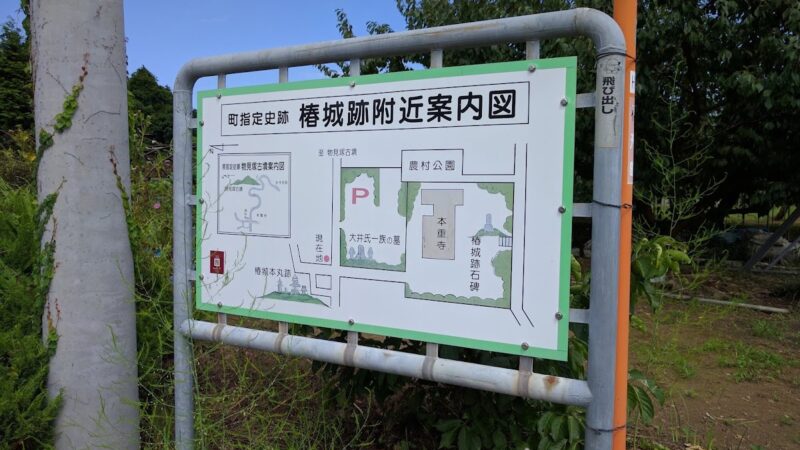
The easiest route to visit Honno Castle Ruins is to start from Renfuku-ji Temple. Renfuku-ji Temple is a Nichiren Buddhist temple, and as mentioned earlier, it is said to have been founded by Sakai Koji to commemorate Kurokuma Kageyoshi. Signposts indicating the way to Honno Castle Ruins are installed within the temple grounds, making it easy for first-time visitors to reach the castle ruins without getting lost.
Renfuku-ji Temple itself is a historical temple deeply connected to the history of Honno Castle. When visiting, it’s recommended to first stop by Renfuku-ji Temple to reflect on the castle’s history before ascending to the castle.
Experiencing the Ascent Route and the **Bag-shaped Path**
The ascent route from Renfuku-ji Temple to the castle ruins retains traces of the former main approach. Along the way, you’ll pass through a distinctive geographical feature called a bag-shaped path. The narrow passage, with sheer cliffs on both sides, gives you the feeling of being trapped in a “bag,” allowing you to truly appreciate the disadvantageous position soldiers faced attacking this castle during the Sengoku period.
After passing through the bag-shaped path, the view opens up, and you reach the main part of the castle. This dramatic change in terrain is the essence of Honno Castle’s defensive design.
Views and Observation of Remains at the Main Castle Site
Upon reaching the main castle site (main enclosure), you can overlook the surrounding terrain. Imagining Kurokuma Kageyoshi watching over the 24 villages from this very spot evokes a sense of historical romance.
Around the main enclosure, you can observe traces of excavated walls and raised earthworks. In particular, the traces of excavation into the bedrock reveal manual labor, different from modern construction, offering a valuable opportunity to experience the castle-building techniques of the Sengoku period firsthand.
Exploring the Nakajo and Shimojo Castle Sites
Following the ridge from the main castle site, you’ll find the remains of the Nakajo and Shimojo castles. These functioned as secondary defensive strongholds protecting the main castle. There’s a certain enjoyment in deciphering the layout of the castles from the topography, and it’s an important point for understanding the overall structure of the castle.
Surrounding Subsidiary Castle Sites
If you have time, visiting the sites of the Sayatome and Danjo forts, which formed part of Honno Castle’s defensive system, will give you a more comprehensive understanding of Honno Castle’s strategic positioning. However, these fort sites have few signs, so prior research is necessary.
Access and Visiting Information
Access by Public Transportation
Honno Station on the JR Sotobo Line is the nearest station. It’s about a 10-minute walk from the station to Renfuku-ji Temple, and then another 15-20 minutes on foot to the main part of the castle ruins. Since you can reach the main castle ruins in about 30 minutes from the station, it’s easily accessible by public transportation.
While express trains do not stop at Honno Station, local trains run regularly. From Tokyo, transfer to the Sotobo Line at Chiba Station; the journey takes about an hour.
Access by Car
By car, it’s about a 15-minute drive from the Mobara-Chonan Interchange on the Ken-O Expressway. There is some parking space around Renfuku-ji Temple, but consideration is needed when using the temple grounds. On busy holidays, it is recommended to use nearby public parking lots.
Setting “Renfuku-ji Temple” (Honno, Mobara City) as your destination in your car navigation system is convenient.
Access by Car ### Important Points for Visitors
Honno Castle Ruins are designated as a historical site by the city, but they are not a well-maintained tourist area. Please keep the following points in mind when visiting:
- Clothing: Since you will be walking on mountain paths, athletic shoes or trekking shoes are essential.
- Season: In summer, vegetation grows thick, making it difficult to see the ruins. Visiting from autumn to spring is recommended.
- Insect Repellent: Especially from spring to autumn, bring insect repellent spray.
- Rainy Weather: The ground can become slippery, so it is safer to avoid visiting during rainy weather or immediately after rain.
- Time Required: If you want to explore thoroughly, allow about 1.5 to 2 hours.
Best Season for Visiting
Winter, from November to March is the most suitable time to visit. The ruins are easier to see due to fallen leaves, and there are fewer insects, making for a more comfortable exploration. Especially during the autumn foliage season (late November to early December), you can enjoy both historical exploration and the beauty of nature at the same time.
The Charms of Honno Castle and the Honno Area of Mobara City
Historical Background of the Honno District of Mobara City
The Honno district is located in the southwestern part of Mobara City and has flourished since ancient times as a transportation hub on the Boso Peninsula. One theory suggests that the name “Honno” originates from the fact that this area was once a collection point for tax payments.
Currently, the Honno district is home to the Honno Branch Office (1741-1 Honno, Mobara City, Honooka-kan 1st floor), which serves as a base for administrative services. It is a historically rich area while also offering modern conveniences.
Nearby Historical Spots
When visiting the Honno Castle ruins, exploring the surrounding historical spots will allow you to gain a deeper understanding of the region’s history.
Renpuku-ji Temple, as mentioned above, is a temple closely related to the history of Honno Castle. Historical materials and legends related to Kurokuma Kageyoshi remain on the temple grounds. Mobara City is dotted with other historical sites from the Sengoku period, and for castle enthusiasts, Mobara Castle Ruins are particularly interesting spots. Visiting them together with Honno Castle will provide a more comprehensive understanding of the Sengoku period history of the Boso Peninsula.
Tourism and Nature in Mobara City
Mobara City is located almost in the center of Chiba Prefecture, with the lush greenery of the Boso Hills to the west and the vast Kujukuri Plain to the east, making it a naturally rich area. The average annual temperature is a mild 15℃, making it pleasant to visit, and you can enjoy nature walks in addition to historical exploration.
Mobara City is also focusing on promoting tourism under the slogan “Mobara Travel Weather,” and Honno Castle Ruins are positioned as an important historical tourism resource for the city. The official website of the Mobara City Tourism Association provides detailed information on tourist spots in the city, including Honno Castle Ruins.
Cultural Value of Honno Castle Ruins
Protection as a City-Designated Historic Site
Honno Castle Ruins are protected as a Mobara City-Designated Historic Site. Specifically, it is designated as the “Renpukuji Historic Site,” and its distinguishing feature is that it is preserved as an integral part of the temple.
Examples of medieval mountain castle remains so well-preserved are rare even within Chiba Prefecture. The Honno Castle ruins, with their integrated defensive structures such as cut-out walls, snares, and escape tunnels, are invaluable resources for studying castle construction techniques of the Sengoku period.
Positioning within the Boso Mountain Castle Group
While numerous medieval castles existed on the Boso Peninsula, many have been lost due to development or their remains are unclear. The Honno Castle ruins are highly regarded academically as a typical example of a mountain castle utilizing the unique rock excavation techniques of the Boso Peninsula.
In particular, the remains of the snares are noteworthy as a characteristic defensive structure of Boso mountain castles and are considered important by castle researchers. Studying it together with surrounding castles such as Toke Castle and Otaki Castle provides clues to understanding the development of castle construction techniques in Boso during the Sengoku period.
How to Enjoy Your Visit to Honno Castle
A Castle Stroll Filled with Historical Romance
The greatest charm of Honno Castle ruins is the opportunity to feel the spirit of the Sengoku period firsthand. The “untouched remains,” which haven’t been overly restored, actually stimulate the imagination.
When passing through the narrow passages, try to imagine the perspectives of both the attackers and defenders. You can feel the tension of the attackers navigating the narrow passages and the advantage of the defenders looking down from above. Standing before the cut walls, you’ll be amazed by the effort of the people of the Sengoku period who carved out such a large section of bedrock by hand.
Photography Tips
Honno Castle ruins are also a great spot for photography. The following points are recommended:
- Bag-shaped slit: A composition that takes advantage of the unique terrain with narrow gaps on both sides.
- Cut-out wall: Capturing the power of vertically cut bedrock.
- View from the main castle site: A panoramic photograph overlooking the surrounding terrain.
- Earthwork undulations: An overhead composition that reveals the layout of the baileys.
In winter, when the leaves have fallen, the remains are clearly visible, and in summer, when the greenery is lush, you can take beautiful photographs that contrast nature with the remains.
How to enjoy it as a castle enthusiast
If you are a castle enthusiast, you can enjoy Honno Castle from the following perspectives:
- Decoding the Layout: Bring a topographic map and decipher the layout of the baileys and defensive lines.
- Comparison with Other Castles: Compare the defensive design with surrounding castles such as Toke Castle.
- Observation of Construction Techniques: Carefully observe the traces of the unique rock excavation techniques of the Boso Peninsula.
- Consideration of Historical Background: Consider the role of Honno Castle within the larger historical context of the conflict between the Satomi and Hojo clans.
To Deepen Your Understanding of Honno Castle’s History
Related Historical Events
Understanding the following historical events will deepen your understanding of Honno Castle’s history.
Second Battle of Kōnodai (1564): A battle in which the Satomi and Hojo clans clashed at Kōnodai in Shimōsa Province (present-day Ichikawa City, Chiba Prefecture). The Satomi clan’s defeat shifted the balance of power in the Boso Peninsula and became a contributing factor to the fall of Honno Castle.
The Siege of Odawara (1590): An event that marked the end of the Sengoku period in the Kanto region, following Toyotomi Hideyoshi’s attack on the Hojo clan. As a result, Honno Castle also ceased to function as a Sengoku castle.
Related Figures
Kurokuma Daizen-no-suke Kageyoshi: A samurai who ruled 24 villages as the lord of Honno Castle. While many details of his life are unknown, it is certain that he wielded considerable power in this area during the Eiroku era.
Sakai Taneharu (Yasuji): Lord of Toke Castle. He approached the Hojo clan and captured Honno Castle. Afterwards, he is said to have founded Renfuku-ji Temple to mourn the death of his enemy general, Kurokuma Kageyoshi, an episode that demonstrates his samurai compassion.
Satomi Yoshitaka and Satomi Yoshihiro: Heads of the Boshu Satomi clan. He was the head of the Satomi clan during the period when Honno Castle functioned as a subsidiary castle, and he engaged in conflicts with the Hojo clan.
References and Information Sources
For those who wish to learn more about Honno Castle, the following information sources are helpful:
- Cultural property-related materials published by the Mobara City Board of Education
- Research books on castles in Chiba Prefecture (e.g., “Medieval Castles of Chiba Prefecture”)
- Historical books on the Boso Peninsula during the Sengoku period
- Research reports from castle research groups
Furthermore, castle information websites such as “Kojodan” and “Nippon Jiro Meguri” feature reviews and photos from people who have actually visited, which are useful for gathering information before visiting.
Summary: The Charm and Significance of Visiting Honno Castle Ruins
Honno Castle Ruins are a valuable mountain castle ruin from the Sengoku period located in Honno, Mobara City, Chiba Prefecture. Built in 1529, Honno Castle served as the residence of Kurokuma Daizen-no-suke Kageyoshi, governing 24 villages and playing an important role as a branch castle of the Boshu Satomi clan.
Following the turmoil following the Battle of Kōnodai in 1564, it was captured by Sakai Taneharu, lord of Toke Castle, and ultimately abandoned in 1590. However, its remains are still well-preserved.
With its characteristic medieval mountain castle defensive features such as bag-shaped slits, cut-out walls, escape tunnels, and beacon tower remains, Honno Castle ruins are a representative historical site of Boso mountain castles and a must-see spot for castle enthusiasts and history buffs.
Its convenient location, accessible on foot from JR Honno Station, and clear directions starting from Renfuku-ji Temple, make it easy for first-time visitors to explore.
At Honno Castle Ruins, you can experience the history of Boso during the Sengoku period and learn about the castle-building techniques of our ancestors. When you visit Mobara City, be sure to stop by this historical site. Amidst the changing seasons, a precious experience awaits you, transporting you back in time to the Sengoku period of over 450 years ago.