Complete Guide to Matsugasaki Castle Ruins (Kashiwa City) | Thorough Explanation of Sengoku Period Remains and Highlights
What is Matsugasaki Castle Ruins?
Matsugasaki Castle Ruins are the remains of a medieval castle from the Sengoku period (late 15th to early 16th century) located in Matsugasaki, Kashiwa City, Chiba Prefecture. It is situated on the tip of a plateau overlooking Lake Teganuma, approximately 500 meters northwest of Kita-Kashiwa Station on the JR Joban Line, about a 15-minute walk.
Designated as a Kashiwa City Designated Cultural Property (Historic Site) on July 1, 2004, this castle site is known as a particularly well-preserved and valuable cultural property among the approximately 1000 medieval castle ruins confirmed in Chiba Prefecture. Even today, remains such as earthworks, dry moats, baileys, gates, and earthen bridges retain their original appearance, making it a valuable historical site where you can experience the structure of a Sengoku period castle.
Geographical Features and Location
The plateau on which Matsugasaki Castle was built was strategically located, controlling the waterways of Lake Teganuma. This location was militarily crucial, ideal for monitoring water transport and controlling the surrounding area. The castle’s layout, skillfully utilizing the topography of the plateau’s edge, demonstrates typical medieval castle construction techniques.
The current Matsugasaki Castle site stands quietly in a forest north of the former Asahi Soft Drinks factory site, north of the facility now occupied by a logistics warehouse. In the rapidly urbanizing city of Kashiwa, the fact that a castle site hundreds of years old remains in such good condition is truly miraculous.
History and Lords of Matsugasaki Castle
Background and Period of Construction
The construction period of Matsugasaki Castle is estimated to be sometime between the late 15th and early 16th centuries during the Sengoku period, but the exact date is unclear. This period was a time of turmoil in the Kanto region, when local lords built castles and fortifications for defense.
Lord and Ruler Relationship
Regarding the lord of Matsugasaki Castle, the prevailing theory is that it was built by the Sōsa clan, but there are no reliable historical records, so it remains uncertain. The Sōsa clan was a medieval samurai group based in Sōsa County, Shimōsa Province (present-day Sōsa City, Chiba Prefecture), and it is possible that they extended their influence to this region.
During the Sengoku period, it is presumed that the castle was incorporated under the control of the Takagi clan, lords of Kogane Castle, due to its strategic location controlling the waterways of Lake Teganuma. Kogane Castle was a large fortress located in present-day Kogane, Matsudo City, and the Takagi clan was a powerful Sengoku daimyo who controlled the northwestern part of Shimōsa Province. Matsugasaki Castle is thought to have been part of the Takagi clan’s castle network centered around Kogane Castle.
Abandonment and Aftermath
It is unclear when Matsugasaki Castle was abandoned, but it is thought to have ended its military role with the end of the Sengoku period. From the Edo period onward, the area was used for farmland and forests, resulting in the relatively good preservation of the castle ruins.
Archaeological Excavation and Cultural Property Designation
Archaeological Excavation in 2002-2003
A full-scale archaeological excavation was conducted at Matsugasaki Castle ruins from 2002 to 2003. This excavation was carried out by the Kashiwa City Board of Education with the aim of preserving and utilizing the castle ruins.
The following important remains were confirmed as a result of the excavation:
- Earthwork: Defensive structure surrounding the main enclosure
- Dry Moat: A moat designed to prevent enemy intrusion
- Enclosure: The main enclosure and surrounding lower enclosures, each partitioned into a rectangular area
- Tiger’s Mouth: The entrance to the castle
- Earthen Bridge: A bridge used to cross the dry moat
- Watchtower Base: A watchtower believed to have been repurposed from a burial mound
The scientific confirmation that these remains are preserved in their original state has revealed the historical value of the Matsugasaki Castle ruins.
Designation as a Kashiwa City Designated Cultural Property
Following the results of the excavation, the Matsugasaki Castle ruins were officially designated as a Kashiwa City Designated Cultural Property (Historic Site) on July 1, 2004. This means that legal protection measures have been taken, and it has been decided that the site will be preserved for the future.
As one of the few remaining medieval castle ruins in the surrounding area, it plays a vital role in conveying the history of the region.
Castle Structure and Highlights of the Remains
Structure of the Main Enclosure (Honmaru)
The main enclosure (honmaru), the heart of Matsugasaki Castle, has a square, single-enclosure layout. This is a relatively simple structure centered around a single square enclosure. The main enclosure was heavily protected by earthworks and dry moats, demonstrating the basic defensive system of castles during the Sengoku period.
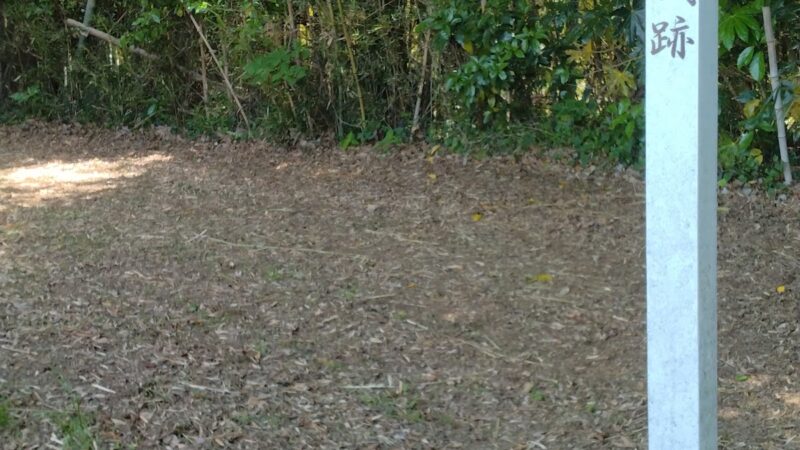
The size of the main enclosure is standard for a medieval castle, and it is thought to have functioned as the lord’s residence or a garrison for soldiers. Even today, the rises of the earthworks and the flat surfaces of the enclosures can be clearly seen.
Earthworks and Dry Moats
The most impressive remains at Matsugasaki Castle are the earthworks and dry moats surrounding the main enclosure. The earthworks were defensive structures built by piling up earth to prevent enemy intrusion, and it is presumed that fences or walls were erected on top of them.
A dry moat is a moat dug outside an earthen rampart, and is a “dry moat” that does not hold water. In medieval castles in the Kanto region, dry moats were common because they were often built on plateaus where water was scarce. The dry moats of Matsugasaki Castle also skillfully utilize the plateau’s topography.
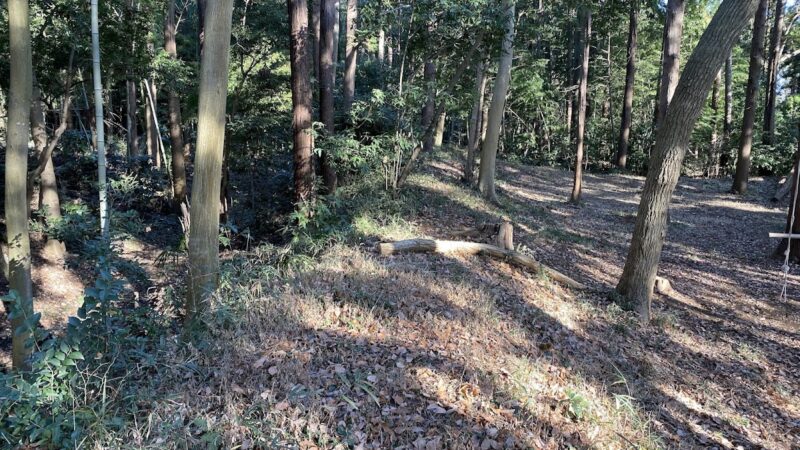
At the site, the elevation of the earthen ramparts and the depth of the dry moats are still clearly visible, allowing visitors to experience the defensive system of the time.
Lower Enclosures and Castle Layout
A wide lower enclosure (koshikuruwa) is arranged around the main enclosure. These lower enclosures were built at a lower level than the main enclosure and served to reinforce defenses and as a place to station soldiers.
The lower enclosures of Matsugasaki Castle spread out to surround the main enclosure and are built utilizing the slope of the plateau. This layout demonstrates the high level of medieval castle construction technology that maximized the use of limited terrain.
Turret Base Repurposed from a Burial Mound
One of the distinctive remains at Matsugasaki Castle is the turret base located at the eastern end of the outer bailey. This turret base is believed to have been repurposed from a burial mound.
The reuse of burial mounds built during the Kofun period as watchtowers or turret bases during the construction of castles in the Sengoku period is a common phenomenon in medieval castles in the Kanto region. At Matsugasaki Castle, it is presumed that the existing elevation of the burial mound was utilized to efficiently construct a lookout post.
From this turret base, a wide view of Lake Teganuma was possible, suggesting it served a military surveillance function.
Entrance and Earthen Bridge
A koguchi (gate) is an important facility serving as an entrance to a castle. At Matsugasaki Castle, the location of a koguchi has been confirmed through archaeological excavations. Because koguchis are a weak point in defense, they usually had complex structures designed to prevent easy intrusion.
A dobashi is a structure made by leaving earth to cross a dry moat. A dobashi has also been confirmed near the entrance to Matsugasaki Castle, indicating its use for entering and exiting the castle.
Access and Visiting Information
Access by Train
Nearest Station: JR Joban Line, Kita-Kashiwa Station
Matsugasaki Castle Ruins are approximately a 15-minute walk from Kita-Kashiwa Station. Exit the north exit of the station and head northwest. After passing through a residential area, you will find a path leading to the castle ruins north of a logistics warehouse.
Access by Bus
From JR Joban Line Kita-Kashiwa Station, take the Kita-Kashiwa Life Town Loop Bus and get off at the “Takenodai” bus stop. It’s approximately a 5-minute walk from there. Using the bus shortens the distance from the station and makes access more convenient.
Location and Map Information
Address: 457-1 Koshimaki, Matsugasaki, Kashiwa City, Chiba Prefecture 277-0835
Matsugasaki Castle Ruins are located relatively close to National Route 16. They are also accessible from the vicinity of the border between Oyamadai and Toyofuta. However, since the castle ruins are located in a forest, it is recommended to check the location on a map beforehand if you are visiting for the first time.
Notes for Visitors
Matsugasaki Castle Ruins are preserved as a historical site, but are generally open to visitors. However, please note the following:
- Do not enter the earthworks or dry moats to avoid damaging the remains.
- Always take your trash with you.
- As it is located in a forest, insect repellent is necessary during the summer.
- Be careful as the ground can be slippery during and after rain.
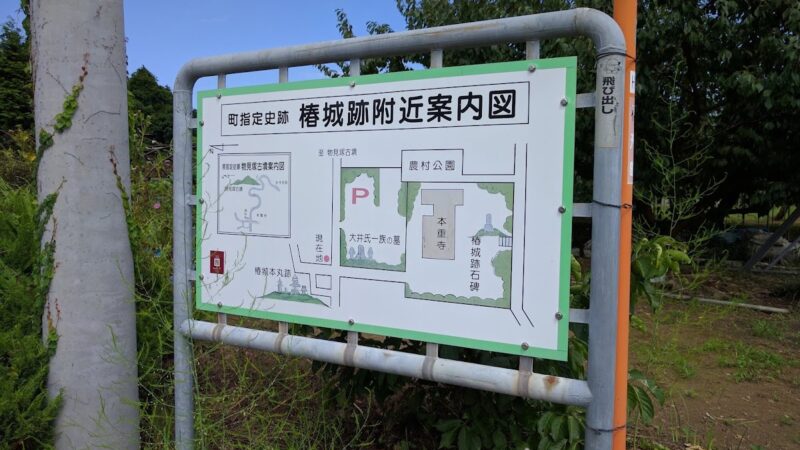
- Refer to the information boards and explanatory signs to confirm the location of the remains while visiting.
Seasons and Highlights of Matsugasaki Castle Ruins
Spring at Matsugasaki Castle Ruins
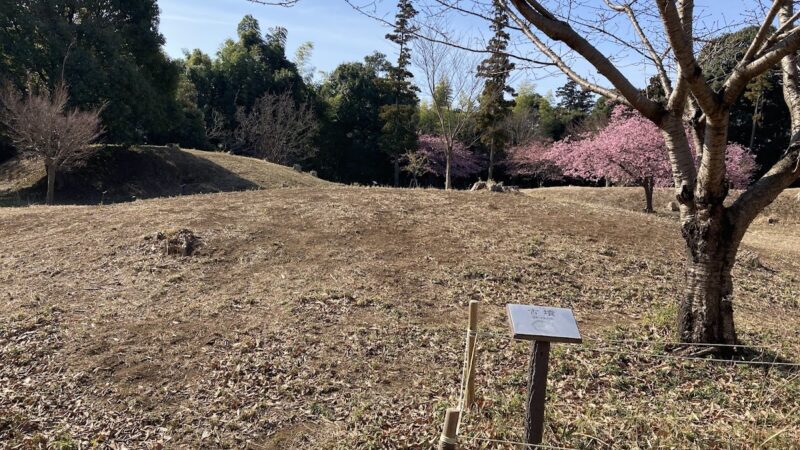
Matsugasaki Castle Ruins is actually a little-known cherry blossom viewing spot. In particular, Kawazu cherry trees are planted there, and they bloom with beautiful pink flowers in early spring.
Kawazu cherry trees are a variety that blooms earlier than the usual Somei Yoshino cherry trees, and their best viewing period is from late February to early March. The combination of a Sengoku period castle ruin and early-blooming cherry blossoms makes it a popular spot not only for history buffs but also for photography enthusiasts.
Spring at Matsugasaki Castle Ruins is a beautiful season for strolling, with the contrast between fresh greenery and cherry blossoms being stunning.
Summer Greenery and Autumn Foliage
In summer, Matsugasaki Castle Ruins are enveloped in deep green. The forest is relatively cool, making it comfortable to stroll even in midsummer. However, there are many insects such as mosquitoes, so the use of insect repellent is recommended.
In autumn, the surrounding trees change color, allowing visitors to enjoy the autumn foliage. The fallen leaves scattered on the earthworks and dry moats evoke the atmosphere of the Sengoku period even more strongly.
Winter Silence
Winter at Matsugasaki Castle Ruins is a season when the shape of the remains can be observed more clearly due to the fallen leaves. The structure of the earthworks and dry moats is clearly visible, making it an ideal time for castle research and photography.
Nearby Historical Spots
Teganuma Lake and Teganuma Park
Teganuma Lake, which can be seen from Matsugasaki Castle Ruins, is now known as a lake rich in nature. At Teganuma Park, you can enjoy strolling along the lakeside and bird watching. By viewing Lake Teganuma, which functioned as an important waterway during the Sengoku period, you can truly appreciate its geographical importance at the time.
Takada Wild Bird Park
In the Matsugasaki area is Takada Wild Bird Park. This park, which preserves the natural environment of northern Kashiwa City, allows you to observe many wild birds. It’s recommended to enjoy a nature walk in conjunction with a visit to the Matsugasaki Castle ruins.
Kogane Castle Ruins
The Kogane Castle ruins, believed to have controlled Matsugasaki Castle, are located in Kogane, Matsudo City. This is also an important castle site from the Sengoku period and was the base of the Takagi clan. Visiting both Matsugasaki Castle ruins and Kogane Castle ruins will give you a deeper understanding of the castle network of Shimosa Province during the Sengoku period.
Preservation and Utilization of Matsugasaki Castle Ruins
Local Preservation Activities
The Matsugasaki Castle ruins are not only protected by the government as a Kashiwa City designated cultural property, but are also preserved by local residents. Regular cleaning and grass cutting maintain the remains in good condition.
Educational Use and Tours
Matsugasaki Castle Ruins are also used as a site for local history education. Regular local history lessons for elementary and junior high schools in Kashiwa City, as well as tours by history enthusiasts, are held there, making it a valuable place to learn about local history.
Maintenance and Information Boards
Within the castle ruins, paths have been maintained for easy exploration, and information boards have been installed at major remains. These boards contain explanations of the remains and the castle’s history, making them easy to understand even for first-time visitors.
Value as a Medieval Castle
Comparison with Medieval Castle Ruins in Chiba Prefecture
Approximately 1,000 medieval castle ruins have been identified in Chiba Prefecture, but many have been destroyed by development or their remains are unclear. Examples like Matsugasaki Castle Ruins, where major remains such as earthworks, dry moats, and baileys remain clearly visible, are rare.
In particular, the fact that the remains have been scientifically confirmed through archaeological excavations and that it has been designated a cultural property makes it a historical site of high academic value.
Evidence of Regional Control in the Sengoku Period
Matsugasaki Castle ruins are an important historical site that demonstrates the reality of regional control in Shimosa Province during the Sengoku period. Built at a strategic point controlling the Teganuma waterway, and functioning as part of a castle network centered around Kogane Castle, it provides valuable information for understanding the military strategies and regional control methods of the time.
Cultural Continuity Through the Reuse of Burial Mounds
The reuse of burial mounds as watchtower bases demonstrates the continuity of land use from the Kofun period to the Sengoku period. This is an interesting example for considering cultural and geographical continuity in Japanese history.
Visitor Feedback and Evaluations
The following are some of the evaluations received from castle enthusiasts and history lovers who have visited Matsugasaki Castle Ruins:
- “It’s rare to find such a well-preserved medieval castle in an urban area.”
- “The earthworks and dry moats are clearly visible, providing a good understanding of the castle structure of the Sengoku period.”
- “The Kawazu cherry blossoms in spring are beautiful, allowing visitors to enjoy history and nature at the same time.”
- “It’s easily accessible and a convenient place to visit.”
- “The information boards are comprehensive, making it easy for beginners to understand.”
On the other hand, some have commented that “this historical site should be more widely known” and “further development and information dissemination are desired,” expressing hope for future utilization.
Summary
Matsugasaki Castle Ruins is a valuable medieval castle site from the Sengoku period remaining in Kashiwa City, Chiba Prefecture. Its location on a plateau overlooking Lake Teganuma, well-preserved remains such as earthworks and dry moats, and a turret base converted from a burial mound make it a historical site rich in points of interest.
With its convenient location just a 15-minute walk from JR Kita-Kashiwa Station, and the added charm of the Kawazu cherry blossoms in spring, Matsugasaki Castle Ruins is a beloved place of relaxation not only for history buffs but also for local residents.
Having received scientific and legal protection through archaeological excavations in 2002-2003 and designation as a Kashiwa City cultural property in 2004, Matsugasaki Castle Ruins will continue to be preserved and utilized as an important historical heritage site for the region.
We wholeheartedly recommend a visit to Matsugasaki Castle Ruins for anyone interested in the history of Shimosa Province during the Sengoku period, those who want to learn about the structure of medieval castles firsthand, or those who simply want to reflect on history in a quiet forest setting.