Wakayama Castle (Shunan City, Yamaguchi Prefecture) Complete Guide: The Main Castle Site of the Sue Clan and the Charm of a Medieval Mountain Castle
What is Wakayama Castle?: A Representative Medieval Mountain Castle of Suo Province
Wakayama Castle is a medieval mountain castle built on Wakayama, a 217-meter-high mountain spanning Fukugawa and Yoichi in Shunan City, Yamaguchi Prefecture. It was the main castle of successive generations of the Sue clan, known as important retainers of the Ouchi clan, a powerful daimyo family. As a valuable historical site that conveys the turmoil of the Sengoku period, it is designated as a Yamaguchi Prefecture designated cultural property (historic site).
The most distinctive feature of Wakayama Castle is its structure, known as a “renkaku-shiki jogaku” (a type of interconnected castle), built along the ridgeline extending approximately 450 meters east to west from the mountaintop. This form exhibits typical characteristics of medieval mountain castles and holds significant value in castle research.
Location and Strategic Importance of Wakayama Castle
Wakayama, where Wakayama Castle was built, was located at a crucial transportation hub in Suo Province. The location, overlooking the Sanyo Road and offering unobstructed views of the Seto Inland Sea, was extremely important both militarily and economically. It is believed that the Sue clan established their base here not only as a defensive stronghold, but also as a symbol of their power base in Suo Province.
History of Wakayama Castle: The Glory and Downfall of the Sue Clan
Construction History and the Rise of the Sue Clan
Wakayama Castle is thought to have been built around 1470 (Bunmei 2). The builder is believed to be Sue Hiromori, and this period was a time when the Ouchi clan, as shugo daimyo (provincial governors), controlled Suo and Nagato provinces and was further expanding their power. The Sue clan were relatives of the Ouchi clan and a prestigious family that had served as their important retainers for generations.
The Sue clan used Wakayama Castle as their main castle, arranging related facilities such as storehouses around it, making it the base for managing their territory. It is presumed that the foot of the mountain was lined with the residences of their retainers, creating a town-like appearance. ### The Era of Sue Harukata and the Major Renovation
The most important figure in the history of Wakayama Castle is Sue Harukata. As a senior retainer of the Ouchi clan, Harukata wielded immense power, and it is said that in 1550, before attacking his lord, Ouchi Yoshitaka, he carried out a major renovation of Wakayama Castle.
This major renovation was not merely a strengthening of defensive structures, but also a demonstration of Harukata’s ambition and power. Many of the castle remains visible today are thought to be the result of this renovation. In 1551, Harukata defeated Ouchi Yoshitaka in the Dainei-ji Incident, becoming the de facto ruler of Suo Province.
The Battle of Itsukushima and the Fall of Wakayama Castle
Sue Harukata’s glory did not last long. On October 1, 1555, Harukata suffered a crushing defeat at the Battle of Itsukushima against Mori Motonari of Aki Province, and committed suicide. This defeat sealed the fate of the Sue clan.
After the Battle of Itsukushima, Wakayama Castle was defended by Sue Nagafusa, son of Harukata, but it fell to an attack by Mori Motonari. In 1555, Wakayama Castle was destroyed by the Mori army, marking the end of its history as the main castle of the Sue clan. With this fall, the Sue clan perished, and Wakayama Castle was abandoned.
Structure and Highlights of Wakayama Castle’s Remains
Characteristics of a Concentric Castle
Wakayama Castle is built in a style called a “concentric castle.” This structure centers around the main keep at the mountaintop, with smaller enclosures (kuruwa) such as the second and third baileys arranged in a series along the ridge. Multiple enclosures are arranged in a stepped fashion along the ridge extending east and west from the mountaintop at an altitude of 217 meters.
This structure limited enemy incursion routes and allowed for gradual defense at each enclosure. This castle is a typical example of a medieval mountain castle and a valuable case study for understanding the castle-building techniques of the Sengoku period.
Layout of the Main Enclosure and Major Baileys
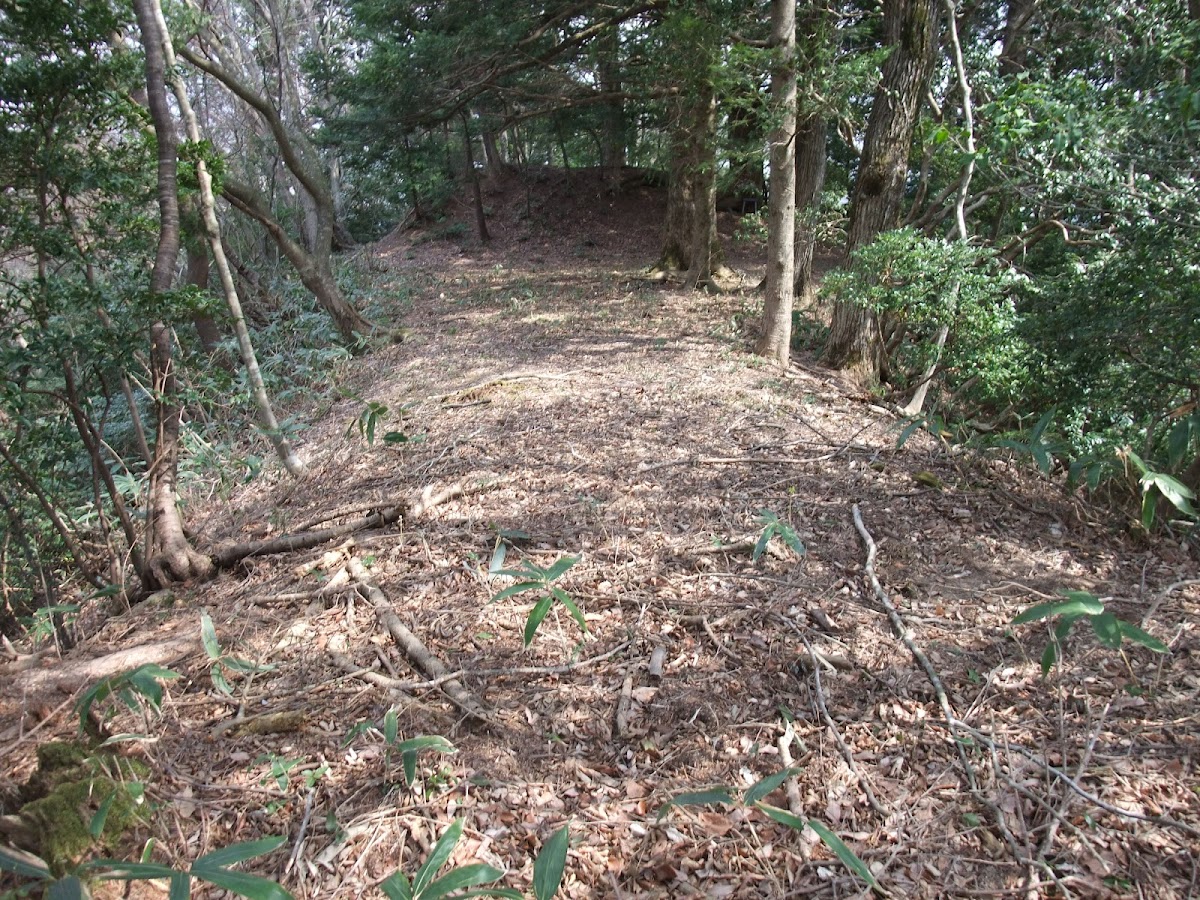
The main enclosure (Honmaru) of Wakayama Castle is located on the mountaintop at an altitude of 217 meters. From the Honmaru, one can see a panoramic view of the surrounding terrain, and it functioned as a military command post. Remnants of earthworks remain around the Honmaru, showing traces of the former defensive structures.
The second and third baileys (Ninokuruwa and Sannomaru) are located along the east-west ridges from the Honmaru, and it is currently possible to drive to the vicinity of the Ninokuruwa and Sannomaru. This easy access is a major advantage when visiting Wakayama Castle.
Remains of Stone Walls and Earthworks
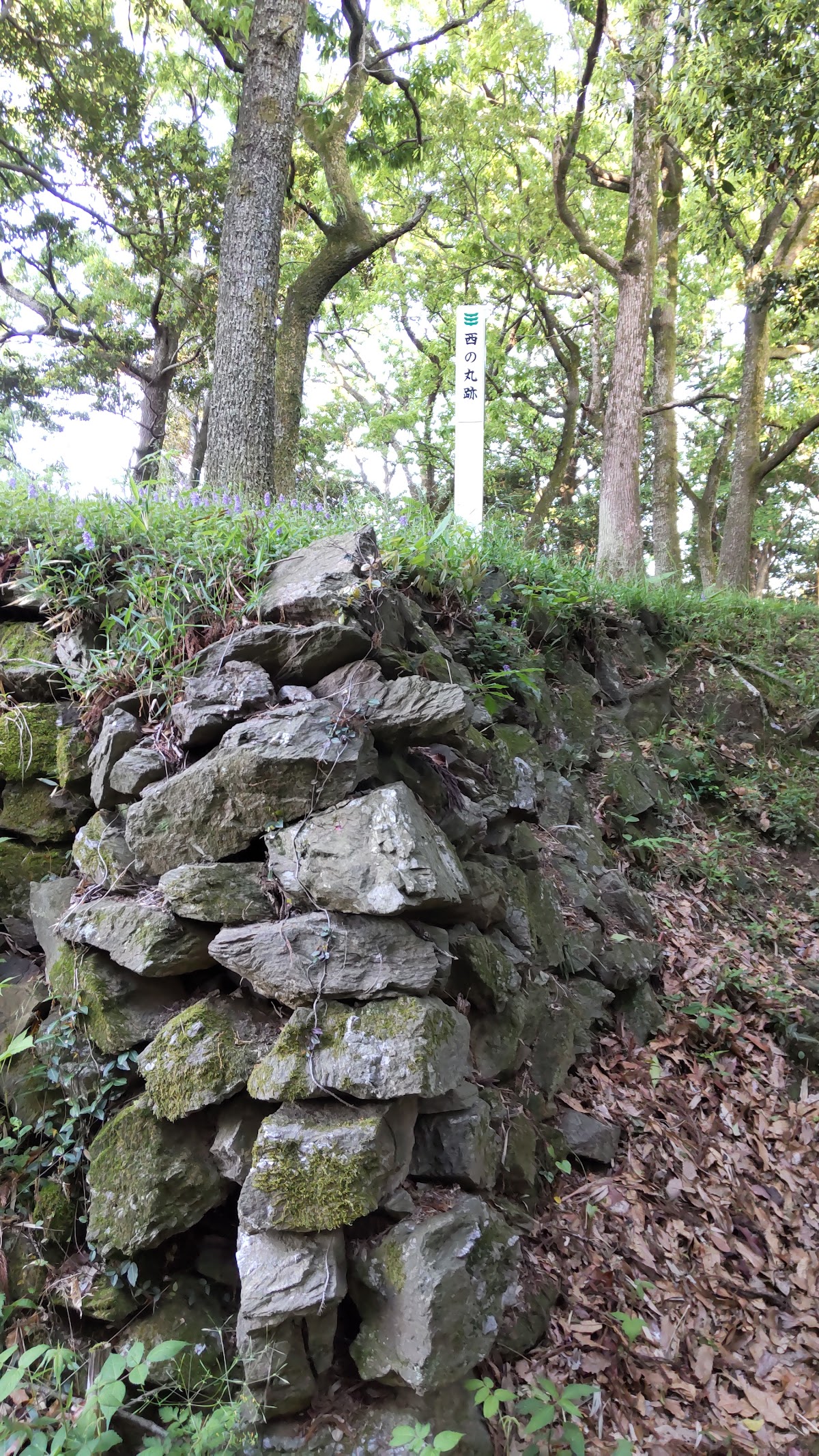
Wakayama Castle has relatively well-preserved stone walls and earthworks for a medieval mountain castle. In particular, the earthworks around the Honmaru are thought to have been constructed during a major renovation by Sue Harukata, and are important remains that demonstrate the castle-building techniques of the time.
While some parts of the stone walls have been altered in later periods, the technique of stacking natural stones, known as “nozurazumi,” is employed, clearly demonstrating the characteristics of medieval castles.
Moats and Ridge-Shaped Vertical Moats
The moats and ridge-shaped vertical moats are noteworthy defensive features of Wakayama Castle. Moats are dry moats dug to cut across ridges, serving to prevent enemy incursions.
Ridge-shaped vertical moats are defensive structures where multiple vertical moats are dug parallel to each other on a slope. Traces of ridge-shaped vertical moats have been confirmed at Wakayama Castle, providing valuable evidence of the introduction of castle construction techniques from the late Sengoku period. It is highly likely that these remains were added during the major renovations by Sue Harukata.
Platforms and Storehouse Sites
Several flat areas called “dandoko” (platforms) have been identified at the foot of the mountain. These are believed to be the locations of facilities such as vassal residences and storehouses. Storehouses were important facilities for storing and managing goods, supporting the economic base of the Sue clan.
Even today, by observing the topography, it is possible to infer the former layout of these facilities, providing clues to a three-dimensional understanding of the structure of medieval castles.
Access to Wakayama Castle and the Ascent Route
Transportation Access
The nearest station to Wakayama Castle is Fukugawa Station on the JR Sanyo Main Line. It’s about a 20-minute walk from Fukugawa Station to the trailhead. If traveling by car, it’s about a 15-minute drive from the Tokuyama-Higashi Interchange on the Sanyo Expressway to the trailhead.
A road is maintained up to the vicinity of the second and third baileys, making it possible to drive up. Therefore, even those who are not confident in their physical fitness or have limited time can visit the castle ruins relatively easily.
Sue’s Path: A Historic Ascent Route
The path formerly used by the Sue clan’s vassals to ascend to the castle is known locally as “Sue’s Path.” This path has been recognized for its historical value and was selected in 2004 as one of the “500 Most Beautiful Walking Paths in Japan” by the Japan Walking Association.
Walking along the Pottery Path allows you to experience the same path taken by warlords of the Sengoku period and gain a deeper understanding of Wakayama Castle’s history. Information boards are installed along the path, making it an ideal course for historical exploration.
Precautions When Visiting the Castle
Since Wakayama Castle is a mountain castle, appropriate equipment is necessary for the climb. Prepare comfortable walking shoes, drinking water, and clothing suitable for the season. Insect repellent is especially important during the summer.
When viewing the ruins, please be careful not to damage the stone walls or earthworks, and cooperate in the preservation of cultural properties. Also, please avoid venturing off the designated hiking trails, as it is dangerous.
Castle Stamp and Surrounding Tourist Information
How to Obtain a Castle Stamp
The castle stamp for Wakayama Castle can be purchased at the Shunan City Tourist Information Center “Machi no Port” near JR Tokuyama Station. It is also available at the Shunan Chamber of Commerce and Industry, located near Shin-Nanyo Station. The castle stamp is a valuable souvenir for castle enthusiasts, allowing you to preserve the memory of your visit.
Related Historical Sites in Shunan City
When visiting Wakayama Castle, we recommend exploring other historical spots in Shunan City. Historical sites, temples, and shrines related to the Ouchi and Sue clans are scattered throughout the area, allowing you to gain a comprehensive understanding of the history of Suo Province during the Sengoku period.
The Shunan City Tourist Information Center provides detailed tourist information and brochures, so please utilize them when planning your sightseeing efficiently.
The Cultural Value of Wakayama Castle
Importance as a Prefectural Designated Cultural Property
Wakayama Castle ruins are designated as a Yamaguchi Prefecture designated cultural property (historic site), officially recognizing their historical and academic value. The main reason for this designation is the well-preserved remains that exhibit the typical form of a medieval mountain castle.
The structure of the multi-bailey castle, defensive facilities such as stone walls and earthworks, and remains such as the ridged vertical moats are valuable resources for studying castle construction techniques and military strategies of the Sengoku period. Furthermore, as the main castle of the Sue clan, it is important for conveying the history of their rise and fall.
Efforts for Preservation and Utilization
Shunan City is actively working on the preservation and utilization of Wakayama Castle ruins. In addition to continuously conducting research on the remains, efforts are being made to create an environment where visitors can easily learn about history, such as installing explanatory signs and improving hiking trails.
The effort to have the “Pottery Path” selected as one of the “500 Most Beautiful Walking Paths in Japan” is part of an initiative to balance the utilization of cultural properties with regional development. Efforts continue to enhance its appeal as a tourist resource while preserving its value as a cultural property.
The Sue and Ouchi Clans: Historical Background Surrounding Wakayama Castle
The Relationship Between the Ouchi and Sue Clans
To understand the history of Wakayama Castle, it is essential to know the relationship between the Ouchi and Sue clans. The Ouchi clan, as the shugo daimyo (provincial governor) of Suo and Nagato provinces, built a powerful force in western Chugoku region from the Muromachi period to the Sengoku period.
The Sue clan were relatives of the Ouchi clan and a prestigious family that served as their important retainers for generations. They supported the Ouchi clan in both military and political matters, and during the time of Sue Harukata, they gained such power that they effectively held real power. Wakayama Castle was a symbol of the Sue clan’s power.
The Dainei-ji Incident and Sue Harukata’s Ambition
In 1551, Sue Harukata rebelled against his lord, Ouchi Yoshitaka, and forced Yoshitaka to commit suicide in the Dainei-ji Incident. This incident stemmed from the conflict between Yoshitaka’s civilian policies and Harukata’s military faction.
Harukata supported Ouchi Yoshinaga, Yoshitaka’s adopted son, and established a system in which he held real power. Wakayama Castle is thought to have played a crucial role as Harukata’s power base during this period. The major renovations in 1540 were likely part of the preparations for realizing this ambition.
Confrontation with Mori Motonari and Downfall
Sue Harukata’s ambition was thwarted by the formidable presence of Mori Motonari. The Battle of Itsukushima in 1555 became a decisive battle that determined the hegemony of the Chugoku region. Despite possessing overwhelming military strength, Harukata was defeated by Motonari’s skillful tactics and committed suicide.
This defeat led to the rapid collapse of the Sue clan’s power, and Wakayama Castle also fell to the Mori army. Mori Motonari then subdued the remaining forces of the Ouchi clan, bringing Suo and Nagato under his control. The fall of Wakayama Castle was a symbolic event of the shift in power during the Sengoku period.
Wakayama Castle: Points of Interest and How to Enjoy It
Recommended Sightseeing Route for Beginners
For first-time visitors to Wakayama Castle, we recommend driving up to the vicinity of the second and third baileys and then heading towards the main bailey. This route minimizes physical strain while efficiently viewing the main remains.
Around the main bailey, you can enjoy the remains of earthworks, stone walls, and scenic views. Read the explanatory signs to learn about the history of the Sue clan and the structure of the castle. If you have time, try to find traces of moats and ridged vertical trenches.
Points for History Fans to Explore
Those familiar with castles and history can have a deeper experience by walking the “Pottery Path” to the castle. Walking the same path as the warlords of the past will allow you to feel the atmosphere of the Sengoku period firsthand.
When observing the remains, pay attention to the construction of the stone walls and earthworks. By comparing the parts that appear to have been added during Sue Harukata’s major renovation with the earlier parts, you can understand the changes in castle construction techniques.
Also, while enjoying the view from the main keep, realize that this castle was a strategic point overlooking the Sanyo Road and the Seto Inland Sea. Connecting the topography with history will give you a deeper understanding of Wakayama Castle’s importance.
Recommended Photography Spots
Wakayama Castle is also a great spot for photography. The view from the main keep offers a spectacular panoramic view of Shunan city and the Seto Inland Sea. Especially on a clear day, you can see distant islands.
The remains such as stone walls and earthworks are also subjects for taking historically atmospheric photographs. Photographing in dappled sunlight creates a fantastical atmosphere. Depending on the season, the contrast between the fresh greenery or autumn leaves and the historical ruins also makes for beautiful photographs.
Things to Know Before Visiting Wakayama Castle
Best Time to Visit
Wakayama Castle is accessible year-round, but the best times to visit are spring (late March to May) and autumn (October to November). The weather is mild during these periods, making it ideal for hiking. The fresh greenery and autumn leaves are also beautiful, allowing you to enjoy the harmony between nature and historical ruins.
Summer (June to August) is hot and insect-heavy, so adequate precautions are necessary. While Yamaguchi Prefecture is relatively mild in winter (December to February), it can get cold near the summit, so be sure to dress warmly.
Estimated Time Required
If you drive up to the vicinity of the second and third baileys and hike to the main bailey and back, the time required is approximately 1 to 1.5 hours. If you plan to hike to the castle via the “Pottery Path,” allow approximately 2-3 hours for the round trip.
If you wish to carefully observe the ruins or enjoy taking photographs, please allow additional time. If you plan to visit surrounding historical sites as well, we recommend allocating about half a day.
Accommodation and Dining in Shunan City
Shunan City offers a variety of accommodations, from business hotels to hot spring inns. The area around JR Tokuyama Station is a convenient base for accommodation, and the nearby tourist information center makes it ideal for gathering information.
For dining, there are numerous restaurants where you can enjoy Shunan City’s local cuisine and fresh seafood from the Seto Inland Sea. Enjoy dishes made with local ingredients to further enrich your travel memories.
Summary: The Charm and Significance of Visiting Wakayama Castle
Wakayama Castle flourished as the main castle of the Sue clan, a senior retainer of the Ouchi clan, and is a historically important mountain castle that witnessed the ambitions and setbacks of Sue Harukata. Built on Wakayama Mountain at an altitude of 217 meters, the Wakayama Castle complex exhibits a typical form of medieval mountain castle, with well-preserved remains including stone walls, earthworks, moats, and rows of vertical trenches.
Protected as a Yamaguchi Prefecture designated cultural property, the Wakayama Castle ruins are a valuable historical site that conveys the history of Suo Province during the Sengoku period. Convenient access by car to the second and third baileys, along with the historical “Tō no Michi” (Pottery Path), makes it enjoyable for visitors of all levels.
Visiting Wakayama Castle is more than just sightseeing; it offers a multifaceted opportunity for historical learning, covering the life of the Sengoku warlord Sue Harukata, the conflict between the Ōuchi and Mōri clans, and the construction techniques of medieval mountain castles. When visiting Shūnan City, be sure to climb Wakayama Castle and experience the spirit of the Sengoku period.
Obtaining a castle stamp, enjoying the beautiful views, and observing the remains will allow you to fully appreciate the charm of Wakayama Castle. For history buffs and hiking enthusiasts alike, Wakayama Castle is a wonderful spot well worth a visit.