Fujikakeyama Castle (Yamaguchi Prefecture) Complete Guide: A Thorough Explanation of the Suo Mountain Castle Ruins and History
What is Fujikakeyama Castle?
Fujikakeyama Castle is a medieval mountain castle located in Kanoue, Shunan City, Yamaguchi Prefecture. Also known as “Kurakakeyama Castle,” it functioned as an important military base in Suo Province. Built near the summit of a mountain approximately 510 meters above sea level, this castle is known as a highly defensible mountain castle that utilized the rugged terrain with a relative height of approximately 130 meters.
Even today, the remains of the castle, such as the baileys, earthworks, and moats, are well-preserved, making it a valuable historical site that conveys the typical structure of a medieval mountain castle. Among the many castle ruins remaining in Yamaguchi Prefecture, its relatively good state of preservation attracts attention from castle enthusiasts and history lovers.
History of Fujikakeyama Castle
Background and Period of Construction
While there are no clear records regarding the exact construction date of Fujikakeyama Castle, it is believed to have been built as a base for regional control in Suo Province during the Sengoku period. Suo Province was under the control of the Ouchi clan, and the mountain castles in this region played a crucial role in maintaining the Ouchi clan’s sphere of influence.
The Kanoue area of Shunan City is located at a strategic point connecting the Yamaguchi Basin and the Seto Inland Sea coast, making it a militarily and economically important location. It is presumed that Fujikakeyama Castle utilized these geographical conditions to function as a base for monitoring roads and controlling the territory.
Fujikakeyama Castle during the Ouchi Clan Era
The Ouchi clan, who ruled Suo Province, flourished as one of the leading Sengoku daimyo in western Japan from the 15th to the 16th centuries. Fujikakeyama Castle is also believed to have played an important role in governing the surrounding region as part of the Ouchi clan’s castle network.
The Ouchi clan, based in Yamaguchi, controlled a vast territory centered on Suo and Nagato Provinces. To maintain their rule, the Ouchi clan established branch castles and forts throughout their territory, placing powerful vassals in their positions. Fujikakeyama Castle was likely one of these branch castles, and it’s highly probable that a powerful local lord or vassal served as its lord.
The Turmoil of the Sengoku Period and the Role of Castles
In 1551, when Ouchi Yoshitaka committed suicide due to a rebellion by his vassal Sue Harukata, Suo Province fell into great turmoil. This internal conflict within the Ouchi clan eventually led to the rise of the Mori clan.
After Mori Motonari defeated Sue Harukata in the Battle of Itsukushima in 1555, Suo Province gradually came under the control of the Mori clan. While detailed records of Fujikakeyama Castle’s role during this process are lacking, it’s likely that the castle’s military importance changed as the Mori clan established control over Suo Province.
History of the Castle’s Abandonment
With the arrival of the Edo period, many mountain castles were abandoned due to the Tokugawa Shogunate’s “One Castle Per Province” decree (1615). It is presumed that Fujikakeyama Castle also lost its function as a military facility around this time and was abandoned.
In the peaceful Edo period, flatland castles and encampments closer to the political and economic centers became more important than mountain castles with superior defenses. Amidst these changes, Fujikakeyama Castle disappeared from the forefront of history.
Layout and Structure of Fujikakeyama Castle
Overall Layout
Fujikakeyama Castle is a typical mountain castle built around the summit of a mountain approximately 510 meters above sea level. It has a linear layout with multiple enclosures arranged in a stepped pattern around the main enclosure. It skillfully utilizes the mountaintop terrain, combining natural ruggedness with artificial defensive structures.
The castle grounds are relatively compact, with the main remains concentrated within a radius of approximately 100 meters around the main enclosure. This suggests that it was not a large castle permanently stationed with many soldiers, but rather a strong refuge and observation post in times of emergency.
Characteristics of the Main Enclosure
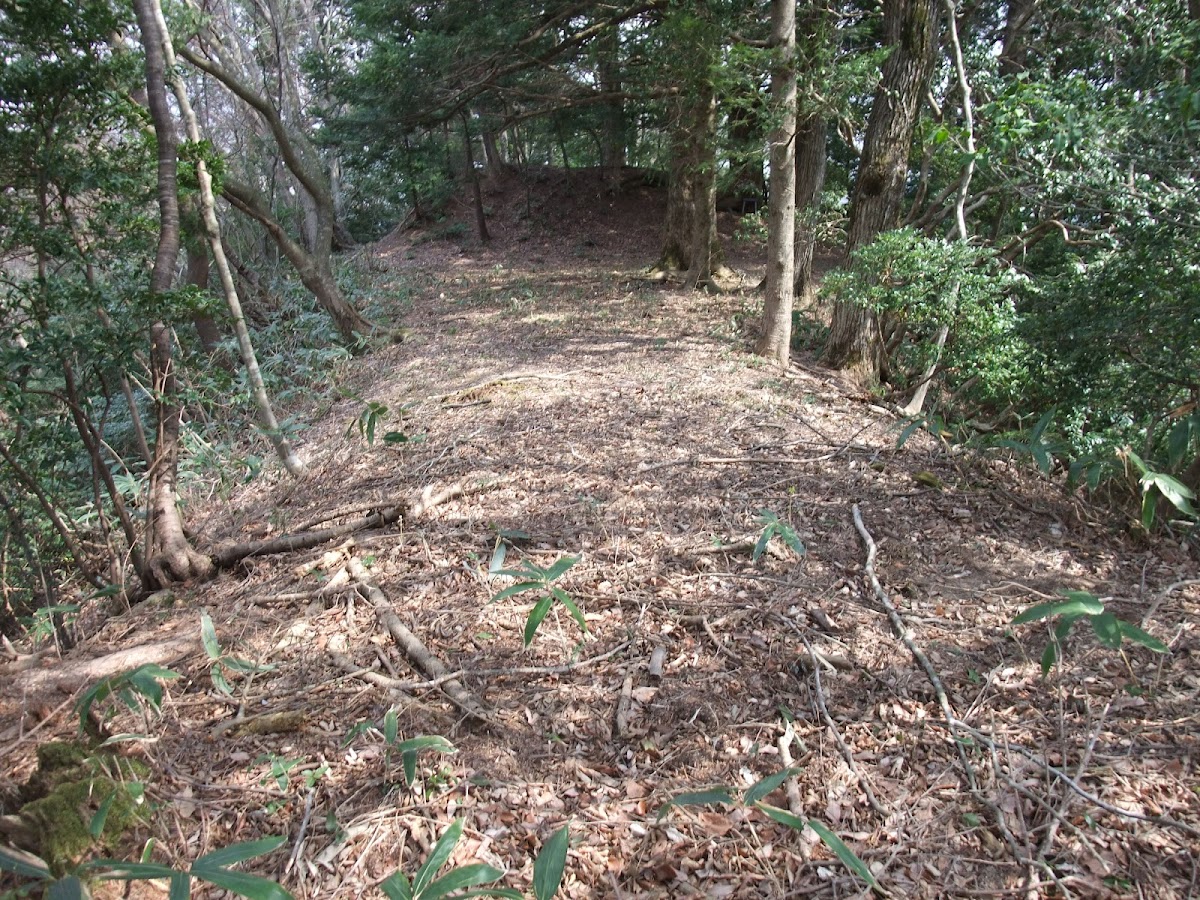
The main enclosure is located at the highest point of the mountaintop and is a rectangular, flat area approximately 30 meters east-west and 20 meters north-south. Traces of earthworks are visible around the perimeter, indicating that defensive structures once surrounded it.
From the main enclosure, one can see a wide expanse of the surrounding mountains and valleys, making it an ideal location for military observation. On clear days, the view extends as far as the Seto Inland Sea, providing an excellent vantage point for monitoring the movements of people traveling along the road.
Arrangement and Characteristics of the Enclosures
Several enclosures are arranged around the main enclosure. In particular, clearly defined terraced enclosures can be seen on the east and south sides of the main enclosure, suggesting they functioned as defensive fortifications.
Each enclosure is smaller than the main enclosure, and many are belt-shaped enclosures approximately 10 meters wide. These enclosures may have served not only as defensive positions but also as troop garrisons and storage areas for supplies.
Remains of Earthworks
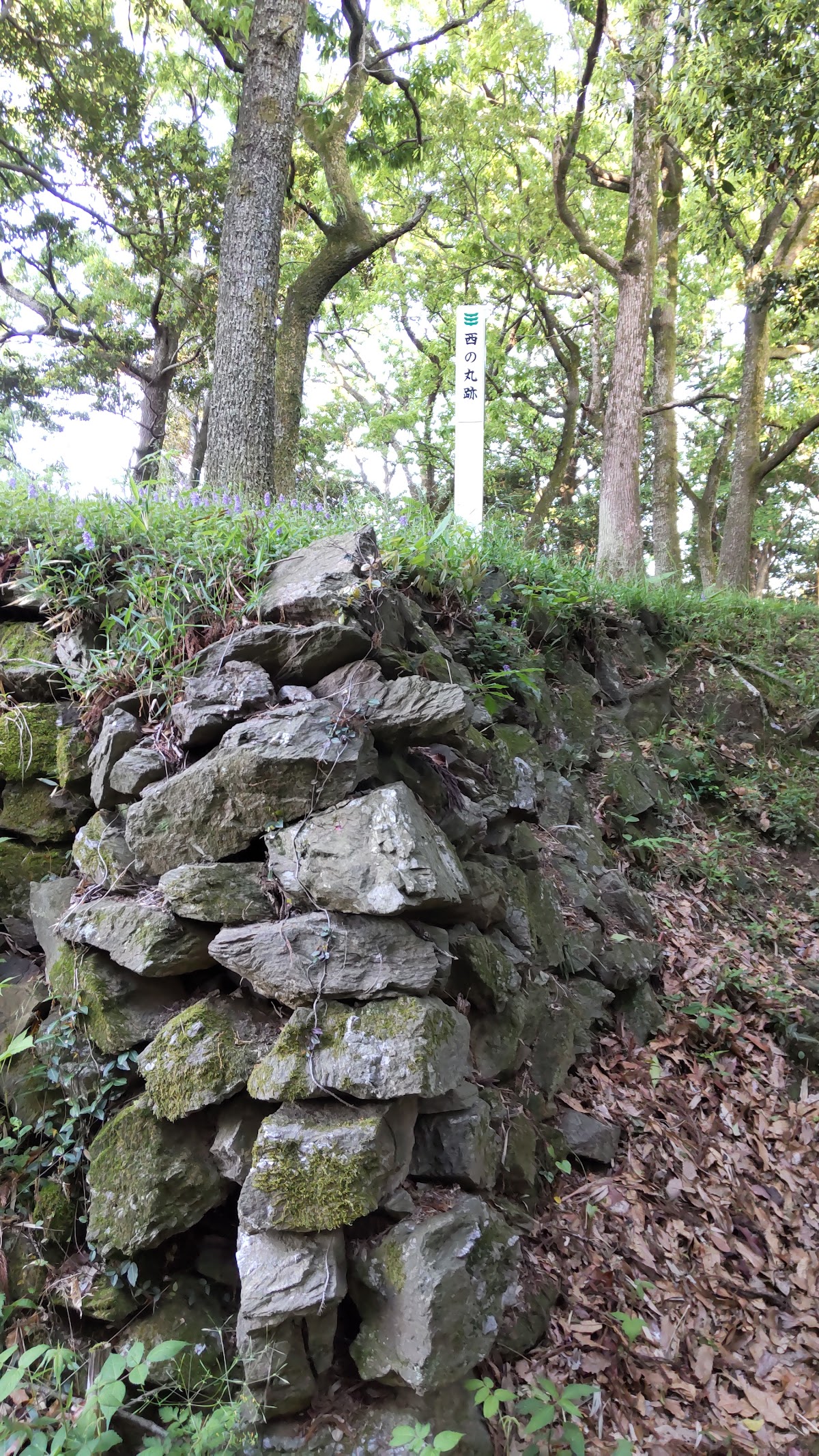
A distinctive feature of Fujikakeyama Castle is the presence of earthworks. Partially remaining earthworks, approximately 1-2 meters high, surround the main enclosure, conveying the appearance of the defensive facilities at the time.
The earthworks served to prevent enemy intrusion and also functioned as a barrier against arrows and stones. In the Suo region, stone walls were uncommon for mountain castles; earthworks were the primary defensive feature. Fujikakeyama Castle’s structure reflects this regional characteristic.
Moats and Defensive Facilities
Moats, an important defensive feature of mountain castles, are also present in multiple locations at Fujikakeyama Castle. Moats are facilities that strengthen defenses by artificially cutting through ridges, blocking enemy intrusion routes.
A particularly clear moat can be seen on the north side of the main enclosure, measuring approximately 3-4 meters in depth. This moat effectively prevents enemy approaches from the north.
Ascent Route and Entrance
It is presumed that the ascent route to the castle extended from the southwest side of the mountain. Traces of the mountain path remain today, and it is highly likely that this was the main ascent route at the time.
While clear remains of the entrance (koguchi) are difficult to confirm, the layout of the enclosures and the topography suggest that the approach route to the main enclosure was designed with curves to enhance its defensiveness.
Highlights of Fujikakeyama Castle’s Remains
Well-Preserved Enclosures
The greatest highlight of Fujikakeyama Castle is its relatively well-preserved enclosures. The stepped arrangement of enclosures centered around the main enclosure can be clearly seen by visiting the site.
Although the flat surfaces of each enclosure are covered with vegetation, the steps and cut slopes (artificially carved slopes) remain clearly visible, making it a valuable resource for understanding the structure of medieval mountain castles. In particular, the difference in elevation between the main enclosure and the second enclosure is over 3 meters, allowing you to truly appreciate its function as a defensive structure.
Traces of Earthworks
The earthworks remaining around the main enclosure are one of the important highlights of Fujikakeyama Castle. Although not preserved in their complete form, clear elevations of the earthworks can be seen on the north and east sides.
The earthworks are currently about 1 to 1.5 meters high, but it is presumed that they were even higher when the castle was built. It is possible that fences or walls were built on top of the earthworks, allowing us to imagine what the defensive structure looked like at the time.
The Impressive Moat
The moat on the north side is one of the most impressive remains of Fujikakeyama Castle. This moat, approximately 3 to 4 meters deep and 5 to 6 meters wide, completely cuts through the ridge, demonstrating the advanced civil engineering technology of the time.
The steep slopes on both sides of the moat make it extremely difficult for enemies to cross. Seeing this moat in person allows you to experience the reality of medieval castle defense. ### The Magnificent View
Apart from its function as a military facility, the view from Fujikakeyama Castle is a major attraction. From the main enclosure, you can see the city of Shunan and the surrounding mountains, and on clear days, you can even see as far as the Seto Inland Sea.
This excellent view also underscores the castle’s function as a surveillance base. Its location, which allowed for monitoring the movement of roads and the surrounding area, enhanced the castle’s strategic value.
Suo Province and Mountain Castle Culture
Historical Background of Suo Province
Suo Province was the former name of the province corresponding to the eastern part of present-day Yamaguchi Prefecture, and was an important region from ancient to medieval times. Facing the Seto Inland Sea and located at a crucial transportation hub connecting Kyoto and Kyushu, it was considered politically and militarily important.
Especially in the medieval period, the Ouchi clan established their base there, and Suo Province prospered as one of the leading cultural and economic centers in western Japan. The Ouchi clan amassed immense wealth through trade with the Ming Dynasty and formed a cultural sphere known as “Western Kyoto,” actively incorporating Kyoto’s culture.
Characteristics of Suo Mountain Castles
Numerous mountain castles were built in Suo Province, but most of them used very little stonework, instead relying primarily on earthen ramparts and trenches. This reflects the difficulty in obtaining stone and the unique characteristics of regional castle construction techniques.
Fujikakeyama Castle also exhibits these typical characteristics of mountain castles in the Suo region, making it an important example for understanding the region’s castle culture. The technique of constructing defensive structures by piling up and leveling earth was a traditional castle construction method cultivated in this region for many years.
Major Mountain Castles in Yamaguchi Prefecture
Besides Fujikakeyama Castle, many other mountain castle ruins remain in Yamaguchi Prefecture. Takamine Castle in Yamaguchi City, Shizukiyama Castle in Hagi City, Yokoyama Castle in Iwakuni City, and others are scattered throughout the prefecture, each playing an important role in its respective region.
These mountain castles are valuable historical sites for understanding the realities of regional control during the Sengoku period and the military technology of the time. Fujikakeyama Castle, as one of these Yamaguchi Prefecture mountain castles, is an important cultural asset that conveys the history of the region to the present day.
Access and Visiting Information
Location and Basic Information
Location: Shirogane, Kanoue, Shunan City, Yamaguchi Prefecture
Castle Type: Mountain Castle
Construction Period: Sengoku Period (Estimated)
Elevation: Approximately 510 meters
Relative Height: Approximately 130 meters
Main Remains: Enclosures, earthworks, moats
Access by Car
It’s about a 15-minute drive from the Kano Interchange on the Sanyo Expressway. While the trailhead is accessible by regular vehicles, some sections of the road are narrow, so driving requires caution.
Parking space is limited around the trailhead, so if you are visiting with multiple vehicles, it is recommended to check parking locations in advance.
Access by Public Transportation
If using public transportation, you will need to take a bus from Tokuyama Station or Hofu Station on the JR Sanyo Main Line, but there are limited bus routes that go directly to the trailhead. Since you will need to walk from the nearest bus stop, we recommend checking the detailed route in advance.
Points to Note When Visiting Fujikakeyama Castle
The following points should be noted when visiting Fujikakeyama Castle:
- Mountaineering Equipment: This is a serious mountain climb with an elevation difference of 130 meters, so hiking boots and comfortable clothing are essential.
- Estimated Time: Allow approximately 30-40 minutes one way from the trailhead to the main enclosure. The round trip will take approximately 1.5-2 hours.
- Season and Weather: In summer, vegetation can be overgrown, making it difficult to see the remains. Visiting from autumn to spring is recommended. Also, avoid visiting during or after rain, as the ground can be slippery.
- Safety Measures: Avoid climbing alone; visiting with multiple people is recommended. Check the cell phone signal strength in advance.
- Manners: Since you may be passing through private property, please be considerate of local residents. Always take your trash with you.
Estimated Visit Time
For a visit to the castle ruins, allow approximately 2-3 hours, including hiking time. If you plan to carefully observe the remains around the main enclosure and take photographs, it is recommended to allow even more time.
Attractions Around Fujikakeyama Castle
Historical Spots in Shunan City
When visiting Fujikakeyama Castle, it is recommended to also visit other historical spots in Shunan City.
Kano Townscape: The Kano district retains the atmosphere of a castle town, with old townhouses and temples scattered throughout.
Shunan City Museum of Art: The museum features exhibits on local history and culture, allowing you to learn about the history of Suo Province.
Nearby Castle Ruins
Many other castle ruins remain in Yamaguchi Prefecture. Visiting them in conjunction with Fujikakeyama Castle will allow you to gain a deeper understanding of the castle culture of Suo Province. Takamine Castle (Yamaguchi City): A large mountain castle known as the stronghold of the Ouchi clan.
Wakayama Castle (Shunan City): Another mountain castle located within Shunan City, relatively easily accessible.
Local Hot Springs and Cuisine
After exploring the castle ruins, we recommend relaxing at a hot spring facility in Shunan City. You can also enjoy fresh seafood from the Seto Inland Sea and local cuisine from the Suo region.
Research and Study of Fujikakeyama Castle
History of Academic Research
Research on Fujikakeyama Castle has been conducted by local historians and castle researchers. The castle’s structure is gradually becoming clearer through the creation of layout maps and surveys of remains.
However, large-scale archaeological excavations have not been conducted, and many aspects of the castle’s detailed history and period of use remain unknown. Further research may reveal new facts.
Relationship with Historical Documents
Clear historical documents concerning Fujikakeyama Castle are extremely limited. Because there are very few records of the castle’s name or lord, its history is mainly inferred from the analysis of the remains and the history of the surrounding area.
This scarcity of historical materials may suggest that Fujikakeyama Castle was a regional subsidiary castle and not the site of a major battle.
Challenges of Preservation and Utilization
While the remains of Fujikakeyama Castle are relatively well-preserved, they are at risk of being lost due to weathering and overgrown vegetation without proper preservation and management.
As a valuable cultural asset of the region, the challenge for the future is how to proceed with the preservation and utilization of the remains. Creating an environment where visitors can safely visit, such as by installing information boards and maintaining hiking trails, is also important.
The Charm and Value of Fujikakeyama Castle
Historical Value
Fujikakeyama Castle is a valuable historical site that shows the reality of regional control in Suo Province during the Sengoku period. Although not a large-scale castle, it is a typical example of a mountain castle built by a powerful local figure, and is an important resource for understanding the social structure and military system of the time.
Educational Value
Fujikakeyama Castle, with its relatively well-preserved remains, serves as an excellent teaching tool for learning about the structure of medieval mountain castles. Visiting the site allows you to gain practical knowledge that cannot be learned from textbooks, such as the layout of the baileys, the structure of the earthworks, and the function of the moats.
Value as a Tourism Resource
Amidst the continuing boom in mountain castles, attention is being drawn to regional mountain castles like Fujikakeyama Castle. With proper maintenance and information dissemination, it has the potential to become a tourist resource that attracts history enthusiasts and castle fans.
Summary
Fujikakeyama Castle is a Sengoku period mountain castle located in Shunan City, Yamaguchi Prefecture, and is an important historical site for understanding the regional governance of Suo Province. It features a multi-bailey layout centered around the main bailey, and remains such as earthworks and moats are well-preserved.
Built on a mountaintop at an altitude of 510 meters, this castle is a full-fledged mountain castle with a relative height of 130 meters. While climbing requires considerable preparation, the sense of accomplishment and magnificent views await visitors upon reaching the top. Although there are few written records and many aspects of its detailed history remain unclear, the ruins offer a wealth of information. Fujikakeyama Castle, which strongly retains the characteristics of the mountain castle culture of the Suo region, is a historical site well worth visiting for castle enthusiasts.
When visiting Yamaguchi Prefecture, why not take a trip to this little-known mountain castle and immerse yourself in the historical romance of the medieval period? With appropriate equipment and sufficient time, your visit will surely become an unforgettable memory of exploring castle ruins.