Complete Guide to Mitsuodake Castle (Yamaguchi Prefecture): A Thorough Explanation of the History and Remains of this Steep Mountain Castle in Shunan City
Mitsuodake Castle, located in Shunan City, Yamaguchi Prefecture, is a medieval mountain castle built on Shiroyama (Mitsuogatake), a 318.8m-high mountain on the west bank of the Shimada River. Its rugged mountain scenery, extensive remains, and mysterious history continue to fascinate castle enthusiasts. This article provides comprehensive information useful for visiting Mitsuodake Castle, including its history, structure, highlights, and access methods.
Basic Information on Mitsuodake Castle
Common Names and Alternate Names
Mitsuodake Castle is also written as Mitsuogatake Castle and Mitsuodake Castle, and is locally known as Shiroyama (Castle Mountain). These alternative names originate from the name of the mountain on which the castle was built, and the spelling may vary depending on the document.
Location and Former Province
Location: Hirosue, Komatsubara, Shunan City, Yamaguchi Prefecture (also known as Suehiro)
Former Province: Suo Province
Located north of the Hirosue settlement in Kumage-cho, Shunan City, it is characterized by its mountainous shape rising north from Teishoji Temple, across the Sanyo Expressway. Situated near the border of the former Kumage and Kuga districts, it held a strategic position controlling a key transportation hub.
Classification and Structure
Classification: Mountain Castle
Elevation: 318.8m (Relative height approximately 300m)
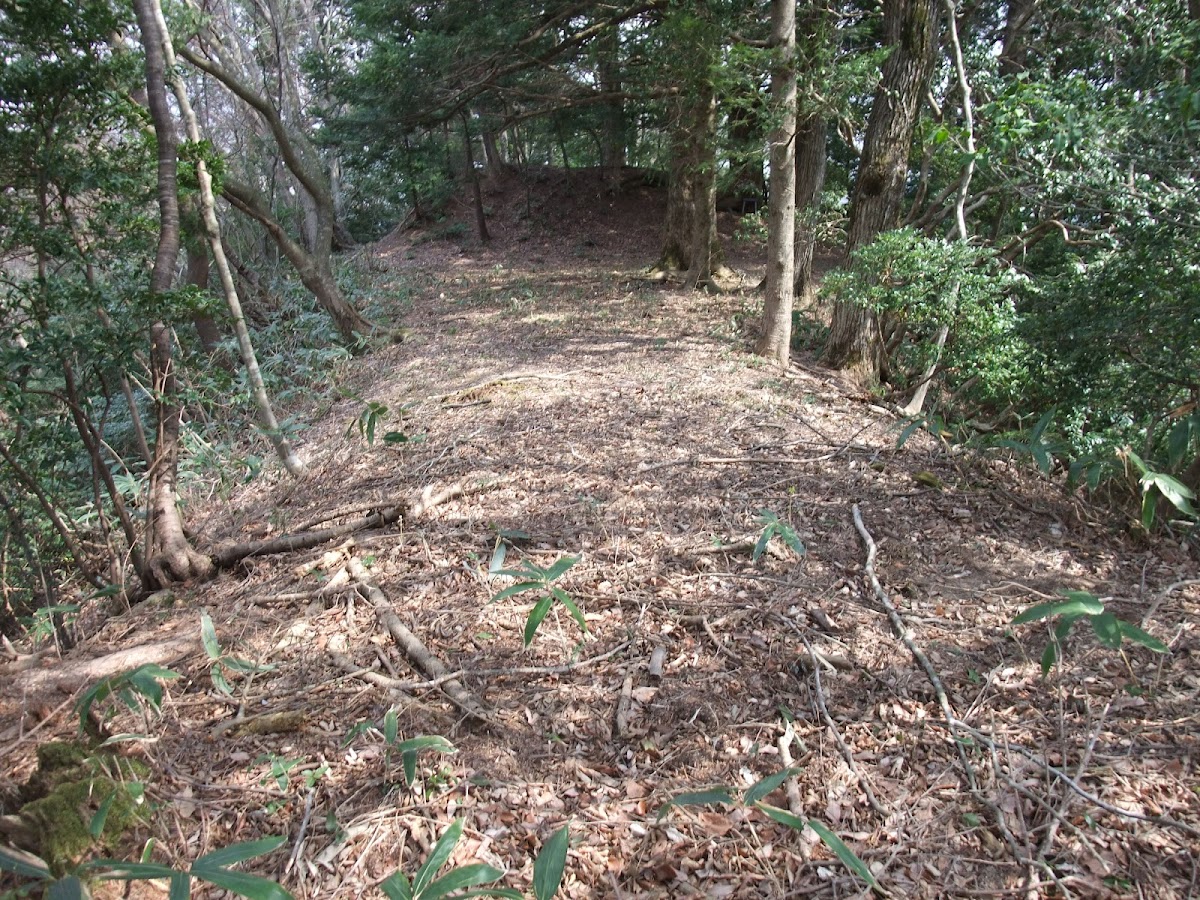
Main Remains: Enclosures, stone walls, earthworks, moats, vertical moats, wells, cliffs
Keep Structure: None (As it is a medieval mountain castle, there is no keep)
Mitsugatake Castle is a typical medieval mountain castle, with a complex layout consisting of a group of enclosures mainly running north-south from the mountaintop, a group of enclosures extending from the east to the northeast, and a group of enclosures extending to the south.
Builder and Year of Construction
Builder: Unknown
Year of Construction: Muromachi period (details unknown)
Main Lords: Ouchi clan retainer, Amano Motomasa (after the Battle of Sekigahara)
Although there are no clear records regarding the construction of Mitsugatake Castle, it is believed to have been built during the Muromachi period within the sphere of influence of the Ouchi clan. Many details of the castle’s history remain unknown, which is one of the factors that enhances its mystique.
History of Mikyu-dake Castle
Medieval Period: The Ouchi Clan Era
Mikyu-dake Castle is presumed to have functioned during the time of the Ouchi clan, who ruled Suo Province. The Shimada River basin was an important transportation route connecting the inland and coastal areas of Suo Province, and it is highly likely that the castle was built to monitor and defend this region.
The Ouchi clan was a Sengoku daimyo who expanded their power in western Chugoku region, centered on Suo and Nagato provinces, and governed their territory by establishing many branch castles. Mikyu-dake Castle is thought to have functioned as one of these branch castles, but due to a lack of historical documents, details regarding the specific lord and role of the castle remain unclear.
From the Sengoku Period to the Battle of Sekigahara
After the fall of the Ouchi clan, Suo Province came under the control of the Mori clan. While there are no clear records regarding the activities of Mikyu-dake Castle during the Mori clan’s rule, the remains of the mountain castle suggest that it was used in some form until the Sengoku period.
Based on the castle’s location and layout, it has been suggested that powerful local lords or vassals of the Mori clan may have resided there, but there is no conclusive evidence. It is presumed that Mikyu-dake Castle functioned as a base for regional defense during this period.
After Sekigahara: Amano Motomasa’s Entry
The only period in Mikyu-dake Castle’s history that is clearly recorded is after the Battle of Sekigahara. After the Mori clan’s territory was reduced to the two provinces of Suo and Nagato, Amano Motomasa entered Mikyu-dake Castle with a stipend of 3220 koku.
During this period, the mountain castle portion existed as a fortress from before Sekigahara, while the residential portion at the foot of the mountain was developed after Sekigahara. The current grounds of Teisho-ji Temple are believed to be the site of the former residence, indicating that it functioned as a castle with a dual structure: a mountain castle and a residence at the foot of the mountain.
While the exact period of the Amano clan’s presence and the date of its abandonment are unknown, it is thought that the mountain castle portion ceased to be used due to the “One Castle Per Province” decree in the early Edo period.
Structure and Remains of Mikyu-dake Castle
Characteristics of the Layout
Mikyu-dake Castle has a complex layout centered around the summit of Shiroyama Mountain (elevation 318.8m), with multiple groups of enclosures extending in various directions. The main components are as follows:
- Main Enclosures at the Summit: Enclosures arranged primarily along a north-south axis
- Enclosures from the East to the Northeast: A continuous defensive line along the ridge
- Enclosures to the South: Defending the southern approach
This multi-directional arrangement of enclosures indicates a defensive system designed to accommodate multiple access routes to the castle, allowing for various intrusion routes from the surrounding area.
Main Enclosure (Honmaru)
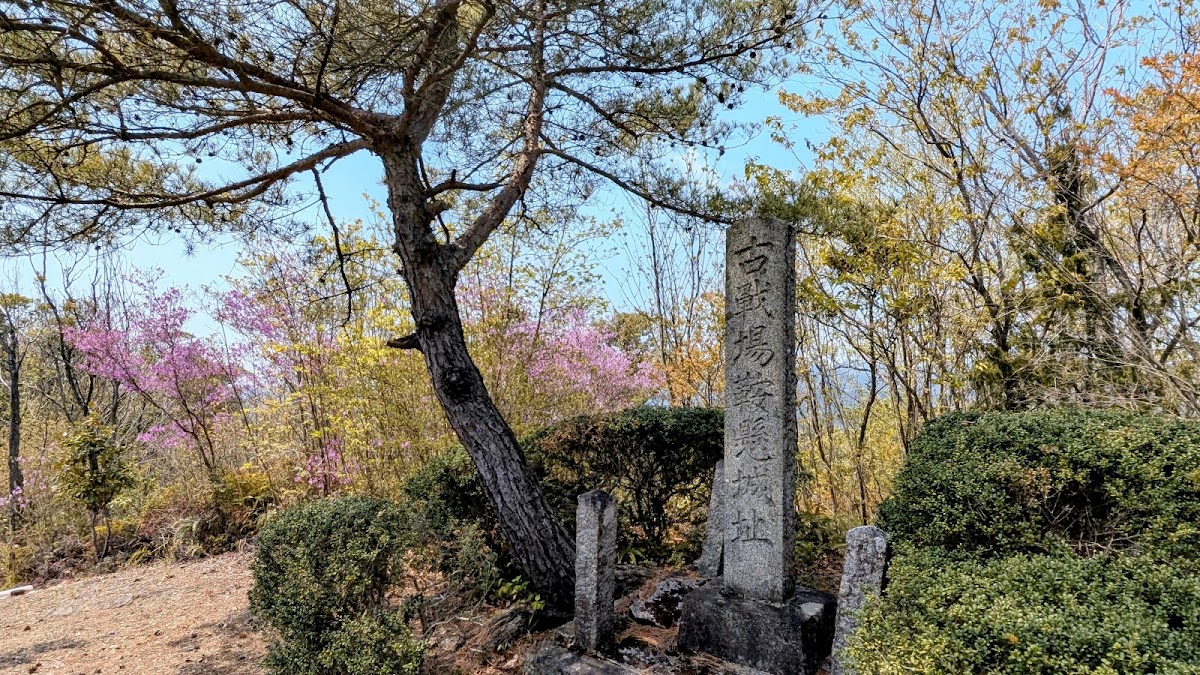
Located at the mountaintop, the main enclosure is the central part of the castle, marked by a triangulation point. Built on a higher level than the surrounding area, it indicates that the entire castle was overseen from this location. From the main enclosure, panoramic views of the surrounding area unfold, overlooking the Shimada River basin and the old Sanyo Road.
Clear cliffs are visible around the main enclosure, a design feature intended to hinder enemy intrusion.
Stone Walls and Stone Masonry
One of the most distinctive features of Mikyu-dake Castle is the stone masonry scattered throughout. Since stone walls were relatively uncommon in medieval mountain castles, these masonry structures are important relics that demonstrate the castle’s status and construction techniques.
The stone masonry was used to reinforce the edges of the enclosures and cliffs, and in some places, the technique of rough-hewn stone masonry can be seen. While there is debate about when these masonry structures were built, it is believed they were constructed during the Sengoku period to the early Edo period.
Moats and Vertical Moats
Multiple moats (horikiri) have been identified, blocking the ridge, with particularly clear moats remaining on the western ridge. These served to prevent enemy intrusion and clearly demarcate the castle grounds.
Vertical moats (tatebori) branching off from the moats have also been identified, functioning as defensive structures to stop enemies climbing the slopes. These vertical moats extend downwards along the terrain, forming an effective defensive line.
Earthworks and Steep Slopes
Earthworks (horikiri) were constructed around the enclosures, enhancing their defensive capabilities. These earthworks were built using mounds of earth and served to protect castle soldiers from enemy arrows and firearms.
Steep slopes (kirigis) (artificial steep slopes) are also seen in many places, demonstrating ingenuity in modifying the natural terrain to enhance defensive capabilities. The height of the steep slopes varies depending on the location, but in some places they reach several meters, making them difficult to climb.
Well Remains
Securing a water source was a matter of life and death for mountain castles, and well remains are still found at Mikyu-dake Castle. Considering a siege, this well undoubtedly served as the castle’s lifeline. Even today, traces of the well can be seen as a depression.
Foothill Residence (Teishoji Temple)
The foothill residence, believed to have been developed after the Battle of Sekigahara, is estimated to have been located within the current Teishoji Temple grounds. It is thought that this area was used as a living space during peacetime, and that during wartime, the castle would take refuge in the fortified area on the mountaintop.
While topographical alterations related to the residence can be observed around Teishoji Temple, clear remains may have been lost due to the construction of the temple.
Access to Mikyu-dake Castle
Using Public Transportation
Nearest Station: JR Gantoku Line, Yonekawa Station
Upon alighting at Yonekawa Station, you can see the castle mountain in the distance. From the station to the castle ruins, follow these routes:
- Head west on Prefectural Road 144.
- At the fork with Prefectural Road 142, turn diagonally right onto Prefectural Road 142.
- The road narrows and you continue to ascend gently.
- The mountainside becomes your left; look for the maintenance road for the power lines just before the city border of Shunan.
- Enter the mountain from the maintenance road for the power lines.
The distance from the station to the trailhead is considerable on foot, so plan accordingly and allow ample time.
If using a car
If using a private car, use Prefectural Road 142 (the old Sanyo Road). Near the border between Kumage and Kuga districts, the maintenance road for the power lines serves as a landmark for the trailhead. However, there is no designated parking space, so you will need to park in a safe place on the shoulder of the road.
You can also access the trailhead via the prefectural road from the Kumage IC or Tokuyama-Higashi IC on the Sanyo Expressway, but in either case, you will be navigating winding mountain roads to the trailhead.
Ascent Route
The most common route involves entering the mountain from the power line maintenance road and climbing along the ridge. Since it’s a steep climb with an elevation difference of approximately 300m, the following equipment and preparations are necessary:
- Hiking Boots: Non-slip soles are recommended
- Long-sleeved Shirt and Long Pants: For bushwhacking and insect bite protection
- Gloves: Necessary for gripping rocks and branches
- Drinking Water: Carry a sufficient amount
- Map and Compass (GPS): To prevent getting lost
- Bear Bell: For protection against wild animals
The round trip to the castle should take approximately 3-4 hours, requiring physical fitness and hiking experience. It is recommended to avoid climbing alone and to visit in a group.
Highlights of Mikyu-dake Castle
1. View from Heike-ga-jo
From a point called Heike-ga-jo on the way to the castle, you can overlook the surrounding mountains and the Shimada River basin. Climbing further from here, castle remains gradually begin to appear.
2. Moat on the West Ridge
The moat on the west ridge is one of the most clearly preserved defensive structures of Mikyu-dake Castle. The deeply V-shaped moat is a valuable point where you can experience the defensive techniques of a medieval mountain castle.
3. Stone Walls in Various Locations
The stone walls scattered throughout the castle are a major highlight of Mikyu-dake Castle. As an example of the use of stone walls in a medieval mountain castle, it is an important structure for castle research. The moss-covered stone walls evoke a sense of history.
4. Main Enclosure and Triangulation Point
A triangulation point is installed in the main enclosure at the summit, allowing you to truly appreciate that this is the highest point of the castle. By observing the cliffs and the arrangement of the enclosures around the main enclosure, you can learn about the structure of a medieval castle.
5. Complex Arrangement of Enclosures
The complex arrangement of enclosures, extending in multiple directions (north-south, east, and northeast), demonstrates the skillful layout of Mikyu-dake Castle. Visiting each enclosure offers the pleasure of deciphering the castle builder’s defensive philosophy.
Related Spots in the Surrounding Area
Teisho-ji Temple
Teisho-ji Temple, believed to be the site of the residence at the foot of Mikyu-dake Castle, is a must-visit spot when visiting the castle ruins. Viewing the castle mountain from the temple grounds helps to understand the positional relationship between the mountain castle and the residence.
Medieval Ruins in the Shimada River Basin
Other medieval ruins are scattered throughout the Shimada River basin. Visiting these in conjunction with Mikyu-dake Castle will provide a deeper understanding of the region’s medieval history.
Other Castles in Shunan City
Other castles, such as Tokuyama Castle, exist within Shunan City. If you have time, a castle tour visiting multiple castle ruins is highly recommended.
Important Points When Visiting Mikyudake Castle
Difficulty of the Climb
Mikyudake Castle is a full-fledged mountain castle with a relative elevation of 300m, and the difficulty of the climb is intermediate or higher. It will be a challenging course for those who do not exercise regularly or have no climbing experience.
Season and Weather
- Recommended Time: Autumn to Spring (October to April). It is wise to avoid summer due to dense undergrowth and numerous insects.
- Weather to Avoid: The ground is slippery and dangerous during rainy weather or immediately after rain.
- Winter: Refrain from climbing the castle if there is snow.
Safety Measures
- Avoid climbing alone; always visit with multiple people.
- Inform family or friends of your climbing plans.
- Do not rely too heavily on cell phone reception, as it may be out of range.
- Allow ample time to descend before sunset.
- Be aware of wild animals (wild boars, venomous snakes, etc.).
Manners
- Do not damage the ruins or collapse the stone walls.
- Always take your trash with you.
- Be considerate of landowners when passing through private property.
- No open fires.
Cultural Property Designation Status of Mikyu-dake Castle
Mikyu-dake Castle ruins are included in the Yamaguchi Prefecture Comprehensive Survey of Medieval Castle Sites and are investigated and recorded as one of 217 medieval castle sites located in the former Suo Province. This survey has provided detailed records of the castle’s layout and remains, preserving them as valuable historical materials.
While it is not currently designated as a national or prefectural historical site, it is recognized as an important castle with well-preserved remains of a medieval mountain castle.
Research on Mikyudake Castle and Future Challenges
Unraveling the Castle’s History
The greatest mystery surrounding Mikyudake Castle is the lack of detailed historical records. Basic information such as the builder, successive lords, and records of specific battles is scarce in historical documents, making further research necessary.
It is hoped that the castle’s history will gradually be revealed through local traditions, research on surrounding historical materials, and archaeological excavations.
Preservation of Remains
Currently, the remains of Mikyudake Castle are preserved in relatively good condition. However, because it is located in a mountainous area untouched by human hands, natural collapse and vegetation erosion are possible. Regular surveys and preservation measures are necessary to pass on valuable stonework and other remains to future generations.
Utilization and Dissemination
To let more people know about the charm of Mikyudake Castle, improving access, installing information boards, and creating brochures would be effective. However, excessive restoration could potentially detract from the atmosphere of the mountain castle, so a balance between preservation and utilization is crucial.
Summary: The Charm of Mikyu-dake Castle
Mikyu-dake Castle is a fascinating medieval mountain castle with a rich collection of remains, despite its mysterious existence due to the lack of detailed castle history. Its rugged mountain profile at an altitude of 318.8m, complex layout, remaining stonework in various places, and clearly defined moats offer plenty to see.
Climbing the castle requires considerable physical strength and preparation, but the sense of accomplishment upon reaching the summit and the joy of observing medieval castle construction techniques up close are well worth the effort.
If you have the opportunity to visit Shunan City in Yamaguchi Prefecture, be sure to challenge yourself by climbing Mikyu-dake Castle. You will be able to fully enjoy the romance of history, the beauty of nature, and the true essence of exploring a mountain castle.
For castle enthusiasts, mountain climbing aficionados, and history buffs alike, Mikyu-dake Castle is a hidden gem well worth a visit. Experience the charm of this medieval mountain castle while taking safety precautions into consideration.