Complete Guide to Kurakakeyama Castle (Yamaguchi Prefecture): The Full Story of Mori Motonari’s Strategy in Suo Province and the Battle of Kurakake
What is Kurakakeyama Castle?: A Practical Mountain Castle Built at a Strategic Point in Suo Province
Kurakakeyama Castle is a Sengoku period mountain castle built on Kurakakeyama Mountain, 240 meters above sea level, located in Kurakake, Kuga-cho, Iwakuni City, Yamaguchi Prefecture. Also known as Kurakake Castle, Kurakakeyama Castle, and Kurakakeyama Castle, it played a crucial role as a strategic point in Kuga District, Suo Province.
Currently, Kurakakeyama Mountain is located at the northern edge of the Kusei Basin, offering an excellent vantage point overlooking the entire basin from its summit. Utilizing the steep terrain with a relative elevation of approximately 160 meters, it is a practical mountain castle and a valuable historical site that conveys the tense situation of the Sengoku period.
Location and Geographical Importance of Kurakakeyama Castle
Kurakakeyama Castle was located at a crucial transportation hub in Suo Province. Its proximity to the Sanyo Road, and the fact that the Sanyo Shinkansen and Sanyo Expressway now pass beneath the castle, demonstrates its consistent importance as a transportation point from ancient times to the present day.
Surrounding the castle were Rengeyama Castle of the Sugi clan to the north and Seta Castle of the Ogata clan to the south, forming part of the defensive line within the Ouchi clan’s sphere of influence. This geographical arrangement highlights its strategic importance in the later Battle of Kurakake.
History of Kurakakeyama Castle: A Turning Point from the Ouchi Clan to the Mori Clan
Construction and the Castle Lord, the Sugi Clan
The exact construction date of Kurakakeyama Castle is unknown, but it functioned as the residence of the Sugi clan, vassals of the Ouchi clan. The castle lord known was Sugi Takayasu, who, along with his father Sugi Sosan (also known as Sugi Sadayasu), served as a senior retainer of the Ouchi clan and was involved in the governance of Suo Province.
The Sugi clan were powerful local lords serving the Ouchi clan, and controlled the entire Kuga district. It is believed that they had a residence in Yatsuhara to the east during peacetime, and that Kurakakeyama Castle functioned as a fortified outpost during wartime.
The Battle of Itsukushima and the Downfall of the Ouchi Clan
The fate of Kurakakeyama Castle was sealed by the Battle of Itsukushima, fought on October 1, 1555. In this battle, Mori Motonari, who vied for supremacy in the Chugoku region, killed Sue Harukata, who held real power within the Ouchi clan, effectively leading to the collapse of the Ouchi clan’s power.
Following his victory at the Battle of Itsukushima, Mori Motonari began his invasion of the two provinces of Suo and Nagato. This military operation is known as the “Bōchō Campaign,” and Kurakakeyama Castle became its first target.
Battle of Kurakake: The Beginning of the Mori Clan’s Bōchō Campaign
On October 27, 1555 (some sources say November 14), the Mori army, led by Mori Motonari, attacked Kurakakeyama Castle. This battle is recorded in history as the “Battle of Kurakake” or “Battle of Kurakake Castle.”
The Course of the Battle and Sugi Takayasu’s Response
After the Battle of Itsukushima, Mori Motonari issued a surrender ultimatum to Sugi Takayasu. Initially, Sugi Takayasu is said to have shown a willingness to comply. However, the situation changed dramatically when Sugimori Takayasu, the lord of Rengeyama Castle, accused Mori Motonari of colluding with the Ouchi clan and Sugi Takayasu.
Upon receiving this accusation, Mori Motonari decided he could not trust Sugi Takayasu and decided to attack Kurakakeyama Castle. Sugi Takayasu and his father, Sugi Sosan, were forced to barricade themselves in Kurakakeyama Castle and face the Mori army.
Disparity in Military Strength and the Course of the Battle
According to the “Kurakake Battle Chronicle,” the Sugi army, led by Sugi Takayasu and Sugi Sosan, numbered approximately 2,600 men, while the Mori army, led by Mori Motonari, Kikkawa Motoharu, and Kobayakawa Takakage, numbered approximately 7,000—a vast difference in military strength.
Despite their small numbers, the Sugi army fought well and successfully defended against the Mori army’s attacks. However, Mori Motonari employed clever tactics. The Mori army feigned an invasion of Yamaguchi to distract the Sugi army, while actually deploying troops to Rengeyama Castle and launching a surprise attack from the rear in the early morning.
This surprise attack resulted in the deaths of Sugi Takayasu and Sugi Sosan, who were killed by Ogata Motoyasu, and the fall of Kurakakeyama Castle. Many members of the Sugi clan lost their lives in this battle, marking the successful beginning of the Mori clan’s conquest of Suo and Nagato provinces.
Kurakakeyama Castle After its Fall
After its fall in the Battle of Kurakake, Kurakakeyama Castle is believed to have been abandoned. The Mori clan brought Suo and Nagato under their control, expanding their power from Yamaguchi. Kurakakeyama Castle ceased to function as a military base and disappeared from the stage of history.
Structure and Layout of Kurakakeyama Castle
Basic Structure of the Castle
Kurakakeyama Castle is a typical mountain castle built on the ridge of Mount Kurakake, which is 240 meters above sea level. The main keep (Honmaru) is located at the highest point on the south side, and the second bailey (Ninmaru) extends north from there, creating a series of interconnected baileys.
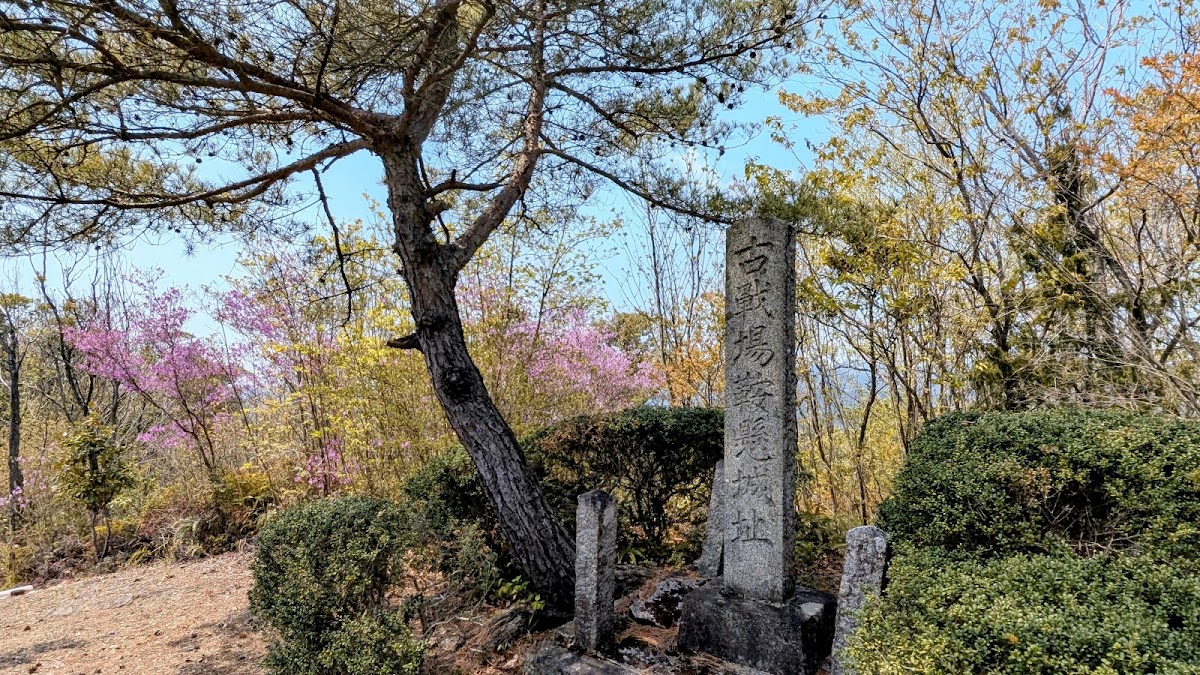
The Honmaru currently has an observation deck, indicating its function as the central part of the castle. A stone monument marking the “Kurakakeyama Castle Battlefield” stands in the second bailey, commemorating the site of fierce battles.
Current Status of Remains
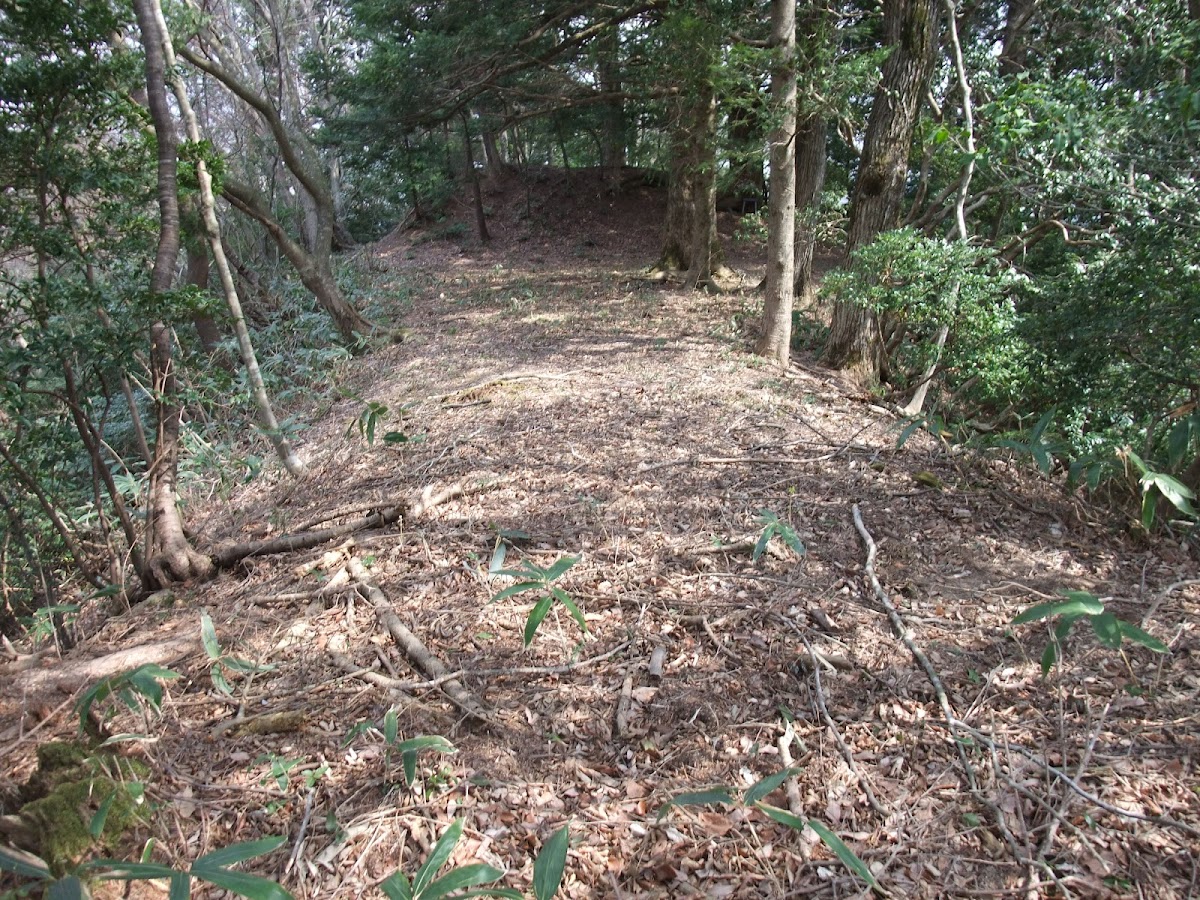
Currently, the remains of baileys (kuruwa) remain at Kurakakeyama Castle. While clear remains such as stone walls and moats are difficult to identify, the skillful use of the terrain in the layout of the baileys suggests that it was a robust mountain castle designed with actual combat in mind.
At the southeastern foot of the castle, the “Thousand-Man Mound” and “Four-Man Mound,” memorials to soldiers who died in the Battle of Kurakake, remain, making them valuable historical sites that convey the traces of the fierce battle.
Defensive Structures and Tactical Features
Kurakakeyama Castle is characterized by its defensive design that makes maximum use of the steep terrain. The elevation difference of 160 meters posed a significant obstacle for the attacking side, and the structure allowed for effective defense even with a small number of defenders.
From the mountaintop, a wide view of the surrounding area was possible, offering the advantage of early detection of enemy movements. This excellent view can still be appreciated from the current observation deck.
Highlights and Guide to Visiting Kurakakeyama Castle
Main Enclosure Site (Observation Deck)
The biggest highlight of Kurakakeyama Castle is the observation deck located on the site of the main enclosure. From here, you can enjoy a panoramic view of the Kusei Basin, and on clear days, you can see the Sanyo Shinkansen and the Sanyo Expressway. The view from the observation deck is magnificent, allowing you to truly appreciate the strategic importance of this location during the Sengoku period. As you gaze upon the surrounding mountains and the expansive basin, you can imagine the scenery that Sugiyama Takayasu must have seen.
Second Bailey Ruins and Monument
Descending north from the main bailey, you’ll find the ruins of the second bailey, where a monument marking the “Ancient Battlefield of Kurakake Castle” stands. This monument was erected to pass on the story of the Battle of Kurakake to future generations, and it evokes a sense of history in visitors.
The area around the second bailey is relatively flat, suggesting its function as a castle.
Thousand-Man Mound and Four-Man Mound
At the southeastern foot of the castle, mounds remain commemorating the soldiers who died in the Battle of Kurakake. The “Thousand-Man Mound” is believed to be a place where many fallen soldiers were buried together, while the “Four-Man Mound” is thought to be the burial site of specific generals and important retainers.
These mounds are valuable historical sites that tell the story of how fierce the Battle of Kurakake was. When visiting, we recommend quietly offering a prayer and reflecting on those who perished in the Sengoku period.
Forest Clearing and Hiking Trail
The western hiking trail of Mt. Kurakake features a forest clearing with a parking lot and restrooms. From here, a well-maintained mountain path of approximately 317 meters leads to the summit observation deck, a walk of about 10-15 minutes.
The hiking trail is relatively gentle, making it safe even for beginner hikers. It’s a valuable spot where you can enjoy the changing seasons while experiencing the history of the Sengoku period.
Access and Visit Information
Location
Address: Kurakake, Kuga-cho, Iwakuni City, Yamaguchi Prefecture
Access by Car
- Approximately 10 minutes from the Sanyo Expressway “Kuga Interchange”
- Approximately 20 minutes from the center of Iwakuni City via National Route 2
- Parking available (free) in the wooded area at the western trailhead entrance
Access by Public Transportation
- Approximately 30 minutes on foot from JR Sanyo Main Line “Kuga Station” (to the trailhead)
- Approximately 10 minutes by taxi from Kuga Station
Climbing Time and Estimated Time Required
- From the trailhead to the summit: Approximately 10-15 minutes on foot
- Castle ruins viewing time: Approximately 30 minutes to 1 hour
- Total time required: Approximately 1 hour to 1 hour 30 minutes
Notes for Visitors
- As it is a mountain castle, comfortable clothing and broken-in shoes are recommended for visitors.
- Insect repellent is recommended in summer, and warm clothing in winter.
- It is recommended to prepare drinking water in advance.
- Toilets are located in the forest clearing, so please use them before climbing the castle.
Kurakake Castle Festival: A local event that conveys history to the present day
The “Kurakake Castle Festival” is held every November. This event features a reenactment of the Battle of Kurakake, allowing visitors to experience the atmosphere of the Sengoku period.
The performance, in which local people don armor and recreate the battle of the time, is breathtaking. It’s an event that can be enjoyed not only by history buffs but also by families, offering a valuable opportunity to feel closer to the history of Kurakakeyama Castle.
Related Historical Sites and Tourist Spots in the Surrounding Area
Rengeyama Castle
Located north of Kurakakeyama Castle, it was the residence of the Sugimori clan. During the Battle of Kurakake, it served as a base for the Mori army and a foothold for the attack on Kurakakeyama Castle. Visiting both castles will give you a deeper understanding of the overall picture of the Battle of Kurakake.
Seta Castle
Located south of Kurakakeyama Castle, this was the residence of the Ogata clan. Ogata Motoyasu is known as the warrior who killed Sugi Takayasu in the Battle of Kurakake.
Iwakuni Castle
Iwakuni Castle, a representative tourist spot in Iwakuni City, was built in the early Edo period. Visiting it along with Kintaikyo Bridge allows you to feel the flow of history from the Sengoku period to the Edo period.
Kintaikyo Bridge
A beautiful wooden arch bridge, counted as one of Japan’s three most famous bridges. It is a central spot for Iwakuni sightseeing, and we recommend visiting it in conjunction with a visit to Kurakakeyama Castle.
Historical Significance of Kurakakeyama Castle
The First Step of the Mori Clan’s Unification of the Chugoku Region
The Battle of Kurakake was an important battle in the process by which Mori Motonari became the ruler of the Chugoku region. After defeating Sue Harukata at the Battle of Itsukushima, conquering Suo and Nagato, the strongholds of the Ouchi clan, was essential for the expansion of the Mori clan’s power.
The capture of Kurakakeyama Castle symbolized the success of this conquest of Suo and Nagato, and became a turning point in establishing the Mori clan’s firm position as a Sengoku daimyo.
Changes in the Regional Power Structure of the Sengoku Period
The Battle of Kurakake also symbolizes the process of the collapse of the Ouchi clan, a powerful shugo daimyo, and the rise of the Mori clan, a Sengoku daimyo. Through this battle, the local lords of Suo Province were forced to submit to the Mori clan, and the power structure of the Chugoku region changed dramatically.
The demise of powerful local lords like the Sugi clan illustrates the harshness of meritocracy in the Sengoku period.
Significance in Tactical History
The tactic of “diversionary tactics and surprise attacks” employed by Mori Motonari was brilliantly successful in the Battle of Kurakake. The tactic of feigning an advance towards Yamaguchi while actually attacking from the rear using Rengeyama Castle as a base demonstrates Motonari’s military talent.
This tactical success influenced the later military operations of the Mori clan and contributed to his reputation as “Motonari the Strategist.”
Significance of Visiting Kurakakeyama Castle
Kurakakeyama Castle is not a castle with flashy stone walls or a keep. However, it conveys the appearance of a practical mountain castle from the Sengoku period and is a valuable historical site where you can experience the turning point in history when Mori Motonari unified the Chugoku region.
The view from the mountaintop is magnificent, allowing you to relive the scenery that Sugiyama Takayasu saw in his final moments. The Senjinzuka and Shininzuka mounds quietly convey the harshness of the Sengoku period and the lives of the people who lived through it.
The well-maintained hiking trails and easy access make it an attractive destination even for history novices. For those interested in the history of the Sengoku period, fans of Mori Motonari, and those who enjoy exploring mountain castles, this is a must-visit spot.
Summary: The Sengoku Period as Told by Kurakakeyama Castle
Kurakakeyama Castle is a mountain castle that was the stage for the Battle of Kurakake in 1555, a historical turning point. It is the place where Sugiyama Takayasu, a senior retainer of the Ouchi clan, fought valiantly against Mori Motonari’s large army, and it is also a memorable site where the Mori clan’s conquest of Suo and Nagato began.
Currently, an observation deck and monument have been built, making it a spot where you can enjoy nature while learning about history. The fact that modern transportation networks such as the Sanyo Shinkansen and Sanyo Expressway pass below the castle speaks to the importance of this area as a transportation hub from ancient times to the present day.
At the Kurakake Castle Festival held every year, you can see how the local people cherish and pass on history. Kurakakeyama Castle, as a valuable cultural heritage site that conveys the history of the Sengoku period to the present day, will continue to tell the lessons of history to many people for years to come.
When you visit Yamaguchi Prefecture, be sure to stop by Kurakakeyama Castle and experience the atmosphere of the Sengoku period. The view from the mountaintop and the weight of history etched into it will surely be a memorable experience.