Complete Guide to Okawachi Castle (Mie Prefecture): The Formidable Fortress of the Ise Provincial Governor That Even Oda Nobunaga Couldn’t Conquer
What is Okawachi Castle?
Okawachi Castle is a medieval mountain castle located on Shiroyama, Okawachi-cho, Matsusaka City, Mie Prefecture. Built on the tip of a hill approximately 110 meters above sea level, it is known as a natural stronghold, with the Sakauchi River flowing to the east, the Yazu River to the north, and deep valleys surrounding it to the south and west.
Also known as “Okawachi Gosho,” it functioned as an important base for the Kitabatake clan, the provincial governors of Ise Province. The castle grounds cover approximately 300 meters square and have a solid structure with multiple baileys arranged around the main keep. Its most notable feature is its history of withstanding a siege against Oda Nobunaga’s large army for over a month in 1569.
Currently preserved as a castle ruin, the remains of earthworks and moats are well-preserved, making it a valuable historical site that conveys the appearance of a mountain castle from the Sengoku period.
History of Okouchi Castle
Construction History and the Kitabatake Clan
Okouchi Castle is believed to have been built in 1415 (Oei 22) by Kitabatake Mitsumasa, the governor of Ise Province. After the unification of the Northern and Southern Courts, in order to oppose the Muromachi Shogunate, which was breaking the peace treaty, Kitabatake Mitsumasa stationed his younger brother, Akimasa, in this area to prepare for attacks from the Northern Court.
The Kitabatake clan was a powerful noble family of the Southern Court that established its influence in Ise Province, with Tage as its base. Okouchi Castle served as a branch castle, a defensive base for the northern Ise region. Akimasa’s descendants resided in this castle for generations, and it continued to function as an important base for the Kitabatake clan, even being called “Okouchi Gosho” (Okouchi Palace). ### The Battle of Ōkōchi Castle: The Struggle Against Oda Nobunaga
Ōkōchi Castle first appeared on the historical stage in 1569. When Oda Nobunaga, aiming for the unification of Japan, began his invasion of southern Ise Province, Kitabatake Tomonori, the governor of Ise Province, moved from his base in Taki to Ōkōchi Castle, deciding to use it as his final defensive stronghold to confront Nobunaga’s army.
Nobunaga besieged Ōkōchi Castle with an army said to number around 50,000, but the castle’s strong defenses and the valiant efforts of the Kitabatake army prevented it from easily falling. The siege lasted for over a month, and Nobunaga’s army suffered heavy losses.
Ultimately, Nobunaga abandoned a direct assault and opted for a peace settlement. The condition was that his second son, Chasenmaru (later Oda Nobuo), would be adopted into the Kitabatake family, and the family headship would be transferred to him. Tomonori accepted this, and a peace agreement was reached in October of Eiroku 12 (1569).
Although the Kitabatake clan formally survived as a result of this peace agreement, they effectively came under the control of the Oda family. Later, in Tensho 4 (1576), Tomonori was assassinated on the orders of Nobuo, and the Kitabatake clan effectively perished.
Abandonment of the Castle and its Aftermath
After the fall of the Kitabatake clan, Okouchi Castle was temporarily placed under the control of Oda Nobuo. However, when Nobuo moved to Tamaru Castle, the military importance of Okouchi Castle declined. It is believed to have been abandoned during the Tensho era.
During the Edo period, the castle ruins remained in the region, and have been preserved locally since the Meiji era. Currently, it is maintained as a historical site by Matsusaka City and is a place visited by castle enthusiasts and history lovers.
Structure and Layout of Okouchi Castle
Location and Natural Fortifications
The most distinctive feature of Okouchi Castle lies in its location. Built on the tip of a hill approximately 110 meters above sea level and 50 meters above sea level, this natural fortress is surrounded on three sides by rivers and deep valleys.
The Sakauchi River flows to the east, and the Yazu River flows to the north. These two rivers merge northeast of the castle, forming a natural moat. Deep valleys cut into the south and west sides, making it difficult for enemies to approach. Therefore, the number of effective attack points was limited, making it possible to defend the castle with a small force.
Castle Grounds and Main Enclosures
The castle grounds cover an area of approximately 300 meters square, with multiple enclosures. The central area is the Honmaru, where the main keep was located. Around the Honmaru, other enclosures such as the Ninomaru and Sannomaru are arranged concentrically, forming a multi-layered defensive structure.
A flat area called a Baba (horse training ground) has also been identified within the castle grounds, which is thought to have been used for military training and horse management. It is also presumed that residential areas for castle soldiers and storage facilities for supplies were also established.
Defensive Structures: Moats and Earthworks
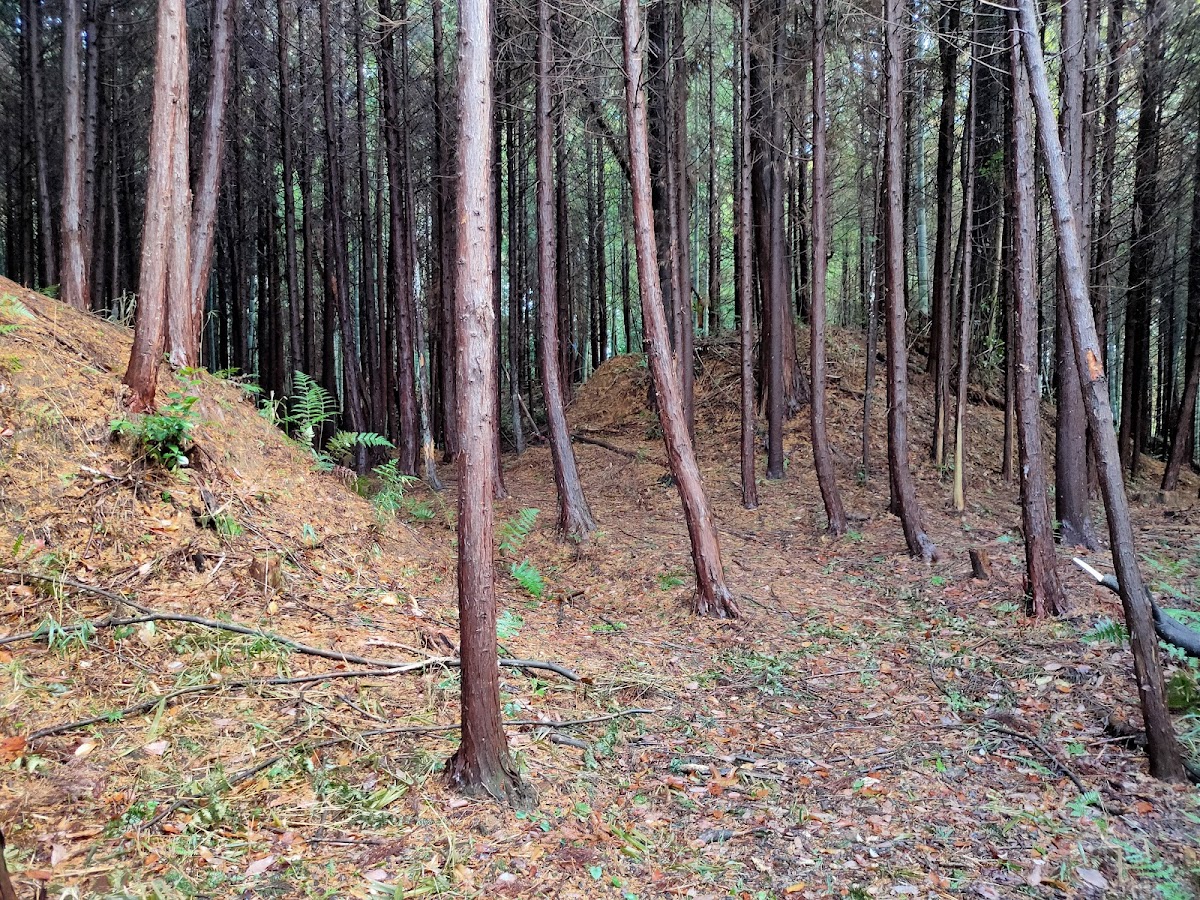
Ōkōchi Castle features numerous defensive structures characteristic of mountain castles. Particularly important are the moats (horikiri). Moats are dry moats dug to cut across ridges, serving to prevent enemy intrusion. Multiple moats have been identified at Ōkōchi Castle, and their remains can still be seen today.
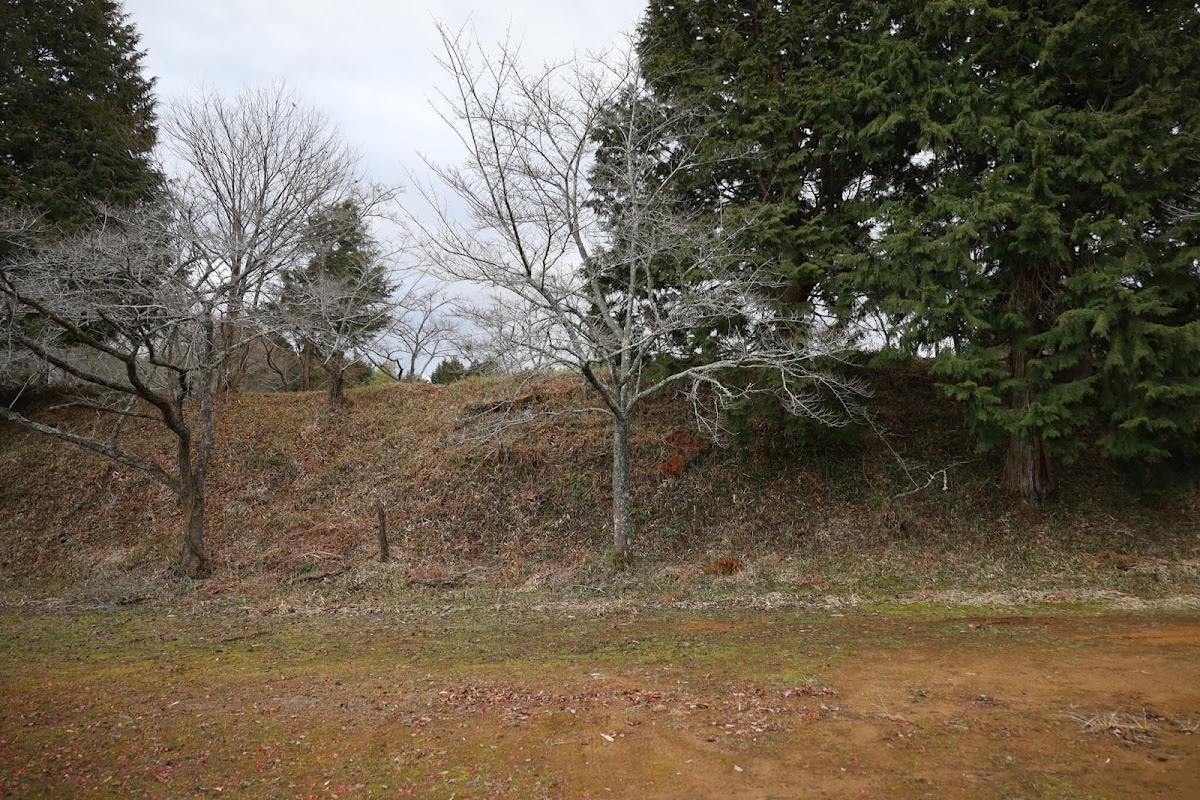
Earthworks were also constructed throughout the castle. Earthworks are earthen walls built by piling up earth, enhancing defensive capabilities and clearly defining the boundaries of the baileys. The earthworks at Ōkōchi Castle are well-preserved, making them valuable resources for understanding the technology of the time.
Entrance Gates and Ascent Routes
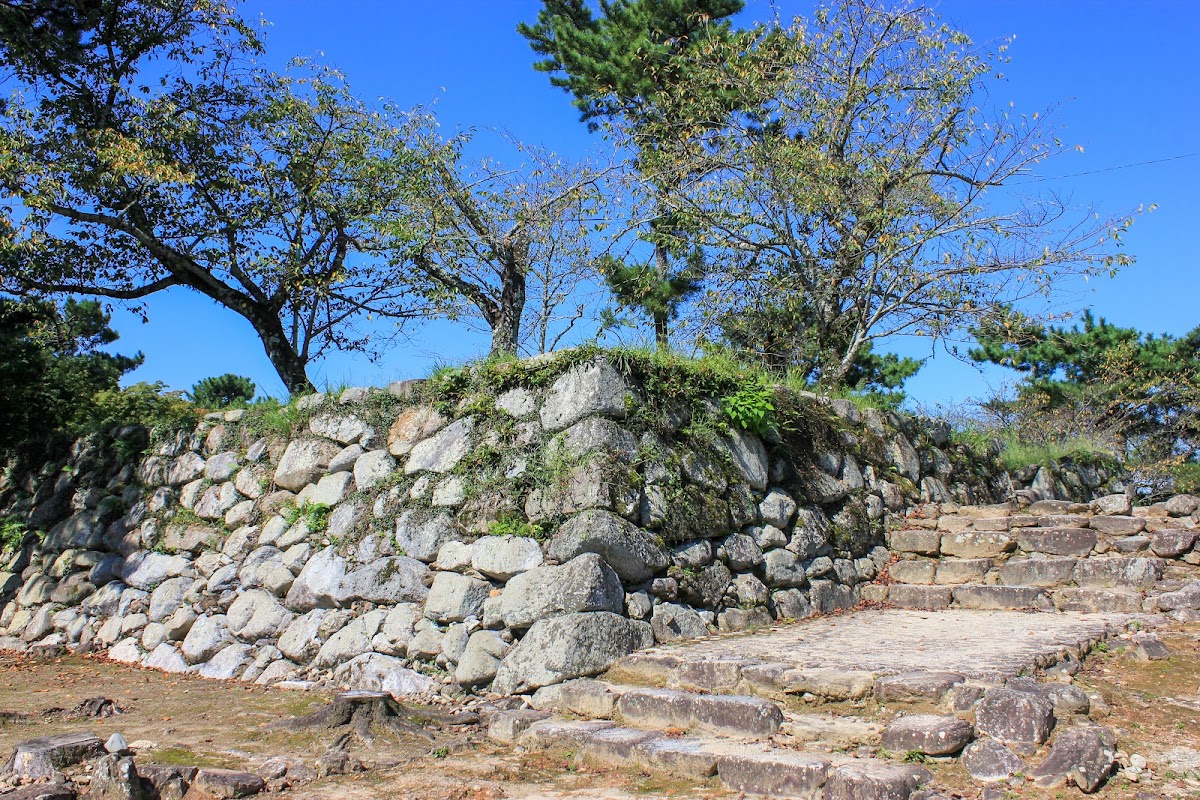
The entrance gates (koguchi) to the castle are the most important defensive structures. Ōkōchi Castle is believed to have had multiple entrance gates, each protected by earthworks and stone masonry.
It is presumed that there were two routes to the castle: one utilizing the ridgeline and another ascending from the valley. These paths were intentionally winding, a design intended to slow down the enemy’s advance.
Highlights of Okouchi Castle
Main Enclosure Site
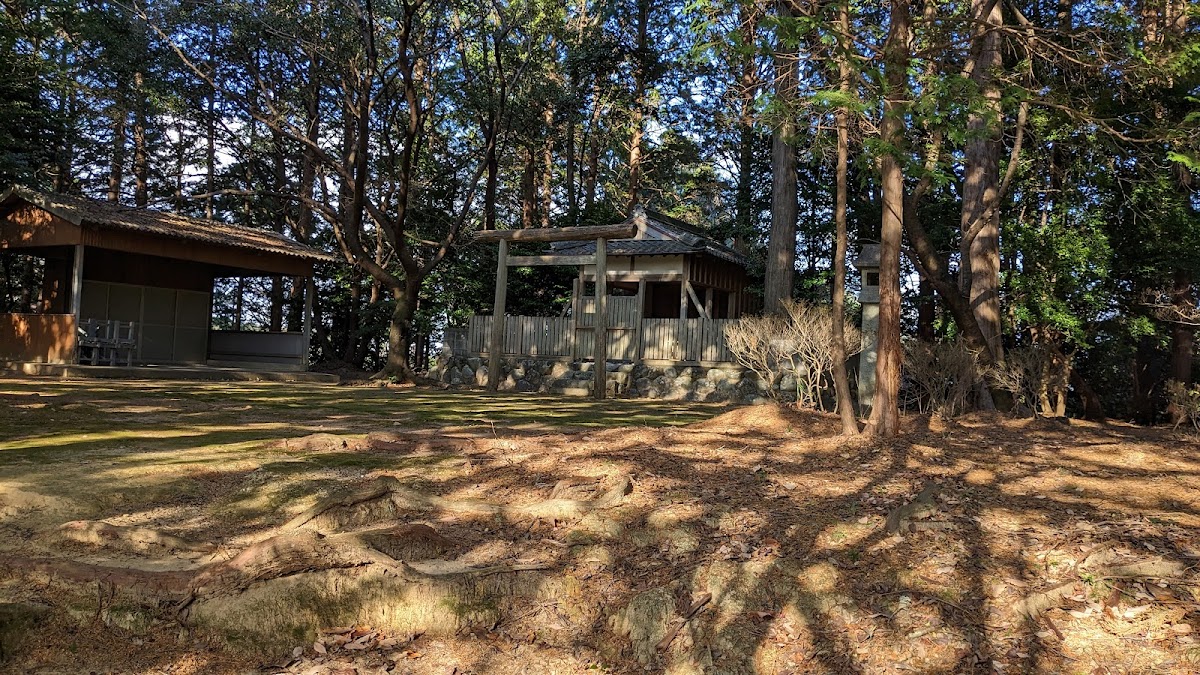
The main enclosure site, the heart of the castle, still retains a relatively flat terrain. From here, one can enjoy a panoramic view of the surrounding landscape, appreciating the castle’s advantageous location. The main enclosure is believed to have housed the lord’s residence and other important facilities.
Remnants of earthworks remain around the main enclosure, allowing us to imagine the defensive structure of the time. Stone foundations are also scattered throughout, indicating the presence of buildings.
Remains of the Moat
One of the most impressive remains of Okouchi Castle is the moat. The moat located behind the main enclosure (south side) is particularly large, reaching several meters in depth. Seeing this moat demonstrates the castle’s formidable defenses.
The moat was not simply a ditch, but also had earthen ramparts built on both sides to enhance its defensive capabilities. It is still possible to walk across it today, making it a valuable place to experience the perspective of the castle’s soldiers at the time.
Earthen Ramparts and Enclosures
The earthen ramparts remaining throughout the castle grounds are one of the highlights of Okouchi Castle. The ramparts around the main keep, in particular, are well-preserved, with earthen walls approximately 2-3 meters high. You can walk along the top of the ramparts, experiencing the view from the watchtowers of the time.
Enclosures (kuruwa) are flat areas within the castle grounds, used as garrisons for soldiers and storage for supplies. At Okouchi Castle, multiple enclosures are arranged in a stepped pattern, allowing visitors to imagine the role of each while exploring.
Views and Natural Landscapes
The views from Okouchi Castle are another attraction. From the main keep, you can see the city of Matsusaka and the surrounding mountains, and on clear days, you can even see as far as Ise Bay. This view speaks to the castle’s strategically advantageous location.
Furthermore, the castle ruins are surrounded by a rich natural environment, allowing visitors to enjoy the scenery of each season. The fresh greenery in spring and the vibrant autumn foliage are particularly beautiful, making it a popular hiking destination.
Information Boards and Explanation Boards
Several information boards and explanation boards are installed within the castle ruins, allowing visitors to learn about the castle’s history and structure. The information board near the entrance to the castle grounds, in particular, includes a map of the castle and an overview of its history, making it easy to understand even for first-time visitors.
Explanation boards are also located near the main remains, providing detailed information about the role and characteristics of each structure. Referring to these information boards while exploring will allow you to appreciate the castle’s charm more deeply.
Visitor Guide: Access and Visiting Information
Location
Address: Shiroyama, Okawachi-cho, Matsusaka City, Mie Prefecture
Okawachi Castle Ruins are located in Okawachi-cho, in the southern part of Matsusaka City. It is approximately a 20-minute drive from the city center.
Access Method
Access by Car
Access by car is the most convenient.
- From Matsusaka IC on the Ise Expressway: Approximately 20 minutes
- Via National Route 166: Head south on National Route 166 from Matsusaka city center and follow the signs.
There is a parking lot near the castle ruins entrance with space for several cars. However, space is limited, so caution is advised during busy times.
Access by Public Transportation
Access by public transportation is limited.
- From JR/Kintetsu Matsusaka Station: Take a Mie Kotsu bus and get off at the “Okouchi” bus stop, then walk for approximately 20 minutes.
Since buses are infrequent, it is recommended to check the timetable in advance. Taking a taxi is also an option.
Visiting Hours and Estimated Time Required
- Visiting Hours: Free (24 hours)
- Recommended Time Required: 45 minutes to 1 hour 30 minutes
The castle ruins are always open and can be visited at any time. However, it is safer to avoid visiting at night or in the early morning. If you plan to explore thoroughly, allow at least an hour.
Admission Fee
Free
Visiting the Okouchi Castle Ruins is free.
Notes for Visitors
- Watch Your Step: As it is a mountain castle, there are areas with uneven footing. We recommend wearing comfortable shoes.
- Clothing: In summer, insect repellent is necessary; in winter, warm clothing is required. Long sleeves and long pants are recommended.
- Drinking Water: There are no vending machines or shops within the castle ruins. Please prepare your own drinking water beforehand.
- Toilets: There are no toilets within the castle ruins. We recommend using the restroom beforehand.
- Weather: The ground can become slippery in rainy weather, so please refrain from visiting or exercise extreme caution.
Photography
Photography is permitted within the castle ruins. The remains of the earthworks and moats, and the view from the main keep, are particularly popular photo spots. Regarding drone use, please be considerate of surrounding residents and confirm legal regulations before using them.
Nearby Tourist Attractions
Matsusaka Castle Ruins
A representative castle ruin of Matsusaka City, this is a modern castle built by Gamo Ujisato. The stone walls remain beautifully intact, and it is also known as a famous cherry blossom viewing spot. It is about a 20-minute drive from Okouchi Castle, and visiting both is recommended.
Tamaru Castle Ruins
This castle was the residence of Oda Nobuo and has historical ties to Okouchi Castle. The stone walls and castle tower base remain, making it an impressive castle ruin. It is about a 30-minute drive from Okouchi Castle.
Kitabatake Shrine and Kiriyama Castle Ruins
Kitabatake Shrine, located in Misugi-cho, Tsu City, was the base of the Kitabatake clan. Behind it, on Mount Kiriyama, are the ruins of Kiriyama Castle, where you can learn more about the history of the Kitabatake clan. It is about a 40-minute drive from Okouchi Castle.
Matsusaka City Historical and Folk Museum
This museum offers a glimpse into the history of Matsusaka, including exhibits related to Okouchi Castle. Visiting before or after your castle ruins visit will deepen your understanding.
Matsusaka Beef Restaurants
Matsusaka is the home of Matsusaka beef. After visiting the castle ruins, it’s a good idea to enjoy authentic Matsusaka beef at a local yakiniku or sukiyaki restaurant.
Okouchi Castle Ratings and Reviews
Ratings from Castle Enthusiasts
Okouchi Castle is highly regarded among castle enthusiasts. According to data from Kojodan (a castle-building website), the average rating is ★★★☆☆ (3.00), with 236 visitors. The evaluation points are as follows:
- Preservation of Remains: Earthworks and moats are well-preserved, allowing for an understanding of the structure of a medieval mountain castle.
- Historical Value: The stage for an important historical event: a battle with Oda Nobunaga.
- Natural Environment: A quiet and nature-rich environment, allowing for a leisurely visit.
On the other hand, there are also the following opinions:
- Access is somewhat inconvenient.
- While there are information boards, more detailed explanations would be desirable.
- There are few prominent remains such as stone walls.
Visitor Feedback
The following comments have been received from people who have actually visited:
- “You can feel the historical romance of a castle that Oda Nobunaga could not capture.”
- “I was surprised by the scale of the moats. You can really feel the high level of defense at the time.”
- “A quiet and peaceful atmosphere. You can slowly reflect on history.”
- “The view is wonderful, and it was also enjoyable as a hike.”
Significance of Visiting Okouchi Castle
As a Place for Historical Learning
Ōkōchi Castle is an important site for learning about the history of Ise Province during the Sengoku period. Many historical themes can be considered, such as the role of the Kitabatake clan as governors of Ise Province, Oda Nobunaga’s process of unifying Japan, and the fate of local powers during the transition from the medieval to the early modern period.
In particular, the fact that Nobunaga could not capture the castle by force and chose to make peace speaks volumes about the castle’s strength and the Kitabatake clan’s resistance. Learning this history firsthand provides a deeper understanding than textbooks can offer.
Research on Castle Architecture
This is a valuable site for learning about the structure of medieval mountain castles firsthand. You can experience the castle-building techniques of the time, such as the skillful use of natural terrain in the layout, the defensive systems using earthworks and moats, and the arrangement of baileys.
In particular, the skillful selection of the site, utilizing rivers and valleys as natural moats, can only be truly appreciated by visiting the site. This is an extremely valuable experience for studying castle architecture.
Connecting with Nature
Okouchi Castle Ruins are attractive not only for historical exploration but also as a place for nature walks. You can enjoy a healing time that you can’t find in the city, with seasonal plants, the chirping of wild birds, and the quiet forest air.
In terms of enjoying both history and nature, Okouchi Castle is a place worth visiting for a wide range of people.
Summary: The Charm of Okouchi Castle
Okouchi Castle is a masterpiece of medieval mountain castle remaining in Matsusaka City, Mie Prefecture. Built by the Kitabatake clan, this castle, which has a history of repelling Oda Nobunaga’s large army, conveys the strong structure that utilizes the natural fortifications and the tense history of the Sengoku period.
The remains such as earthworks and moats are well preserved, allowing you to learn about the castle-building techniques of the time. Furthermore, the view from the main keep is magnificent, allowing you to appreciate the castle’s excellent location.
Access is somewhat inconvenient, but this is precisely why it offers a quiet and peaceful atmosphere for sightseeing, which is one of its charms. This spot is recommended not only for castle enthusiasts, but also for history buffs and hiking lovers.
The rise and fall of the Kitabatake clan, the provincial governors of Ise Province, the ambitions and strategies of Oda Nobunaga, and a turning point in history from the medieval to the early modern period—by visiting Okouchi Castle, you can feel the spirit of these historical events firsthand. When you visit Mie Prefecture, be sure to stop by the ruins of Okouchi Castle.