Sakuramachi Chūjōjō Castle (Nabari City, Mie Prefecture): A Thorough Explanation of the History and Remains of a Small Mountain Castle in Iga
What is Sakuramachi Chūjōjō Castle?
Sakuramachi Chūjōjō Castle is a Sengoku period (Warring States period) flatland castle located in Uchiyama, Shimo-Kowada, Nabari City, Mie Prefecture. Also known as “Sakuramachi-kan,” it was built on a hill approximately 230 meters above sea level and 20 meters above ground level. While a small castle typical of the Iga region, it features a highly defensible structure with thick earthworks and dry moats.
Currently, the remains are preserved within the forest, making it a hidden historical site visited by castle enthusiasts and history buffs. Along with the adjacent Takigawa Castle, it occupies an important position in the history of the Sengoku period in Iga Province.
History of Sakuramachi Chujo Castle
Background of Construction and Iga in the Sengoku Period
While there are no clear records of when Sakuramachi Chujo Castle was built, it is believed to have been constructed by local lords and regional samurai of the Iga region during the mid-to-late Sengoku period. Iga Province possessed a unique samurai culture and was a region dotted with small castles and residences.
During the Tensho era (1573-1592), Oda Nobunaga’s invasion of Iga Province marked a major turning point. In particular, the Tensho Iga Rebellion (1579, 1581) saw fierce battles between the Oda army led by Oda Nobuo (Kitabatake Nobuo) and the local samurai of Iga. Sakuramachi Chujo Castle likely played a role as a defensive stronghold during this period of tension.
Castle Lord and Related Figures
The name “Chūjō Castle” suggests that a samurai holding some kind of rank (Chūjō) was involved. However, historical records are scarce regarding the specific castle lord, so nothing definitive is known. Many local lords, including the Hattori and Niki clans, held sway in the Iga region, and it is thought that Sakuramachi Chūjō Castle was a base for one of these regional powers.
After the Tenshō Iga Rebellion, Iga Province became a direct territory of Oda Nobunaga. Later, during the era of Toyotomi Hideyoshi, and after the Battle of Sekigahara, the Tsutsui and then Tōdō clans ruled Iga. It is presumed that smaller castles like Sakuramachi Chūjō Castle were abandoned during this process.
Abandonment and Aftermath
In the Edo period, policies such as the “One Castle Per Province” decree led to the abandonment of castles other than major ones. Sakuramachi Chūjō Castle was no exception, and it is likely that it had already fallen into disuse by the early 17th century. Since then, the castle site has reverted to forest, and after many years, it remains so to this day.
Structure and Layout of Sakuramachi Chujo Castle
Overall Layout
Sakuramachi Chujo Castle is a relatively small castle, centered around the main enclosure (honmaru). Compared to the neighboring Takigawa Castle, the scale of the baileys is extremely small, but the thickness of the earthworks is remarkable, indicating a design that prioritized defense.
The castle’s entrance (koguchi) opens to the south, and dry moats surround the other three sides (east, west, and north). In particular, the north side has a double defensive line, with an earthwork and another dry moat, a structure designed to prepare for attacks from the most dangerous direction.
Characteristics of the Earthworks
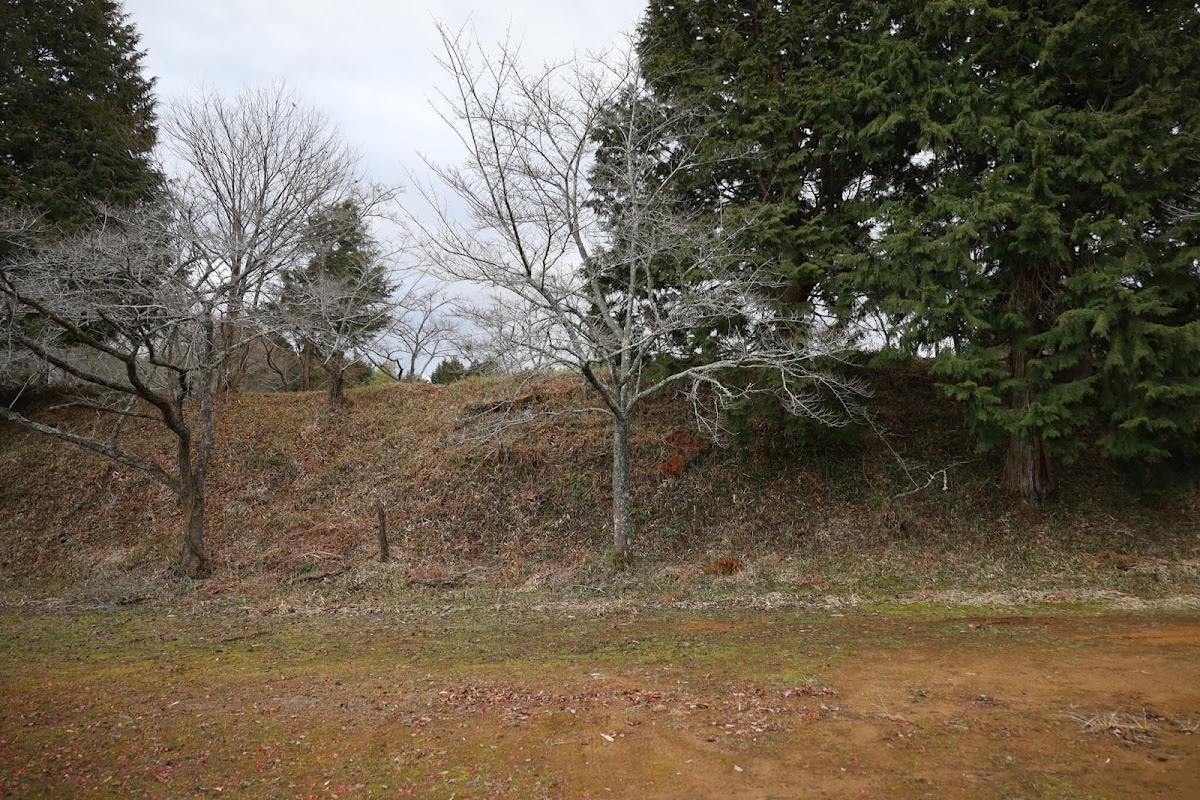
The most distinctive feature of Sakuramachi Chujo Castle is its thick earthworks. Despite being a small castle, the height and width of the earthworks are considerable, indicating the immense effort required for its construction. The earthworks are arranged to surround the main enclosure, and are particularly well-preserved on the north and west sides.
The earthworks were constructed using the “cut-and-fill” method, a technique common to mountain castles in the Iga region, where soil was excavated from the natural ground and piled up. Even today, earthworks approximately 2-3 meters high can be seen, allowing us to imagine their former appearance.
Dry Moat Arrangement
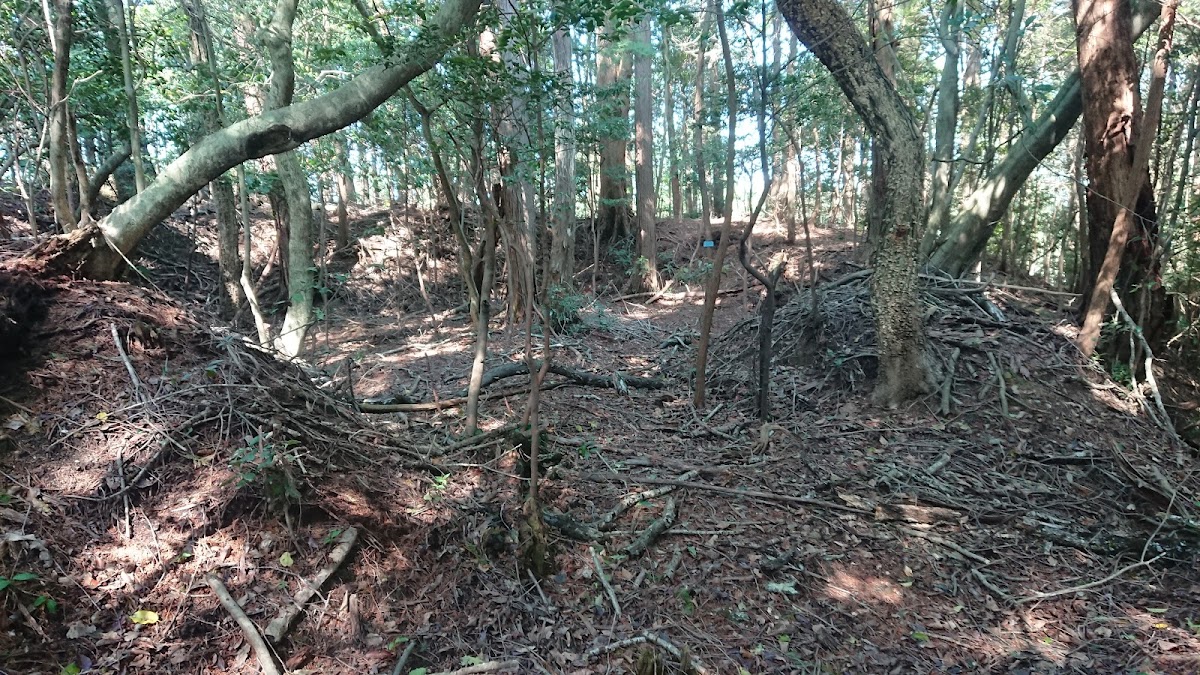
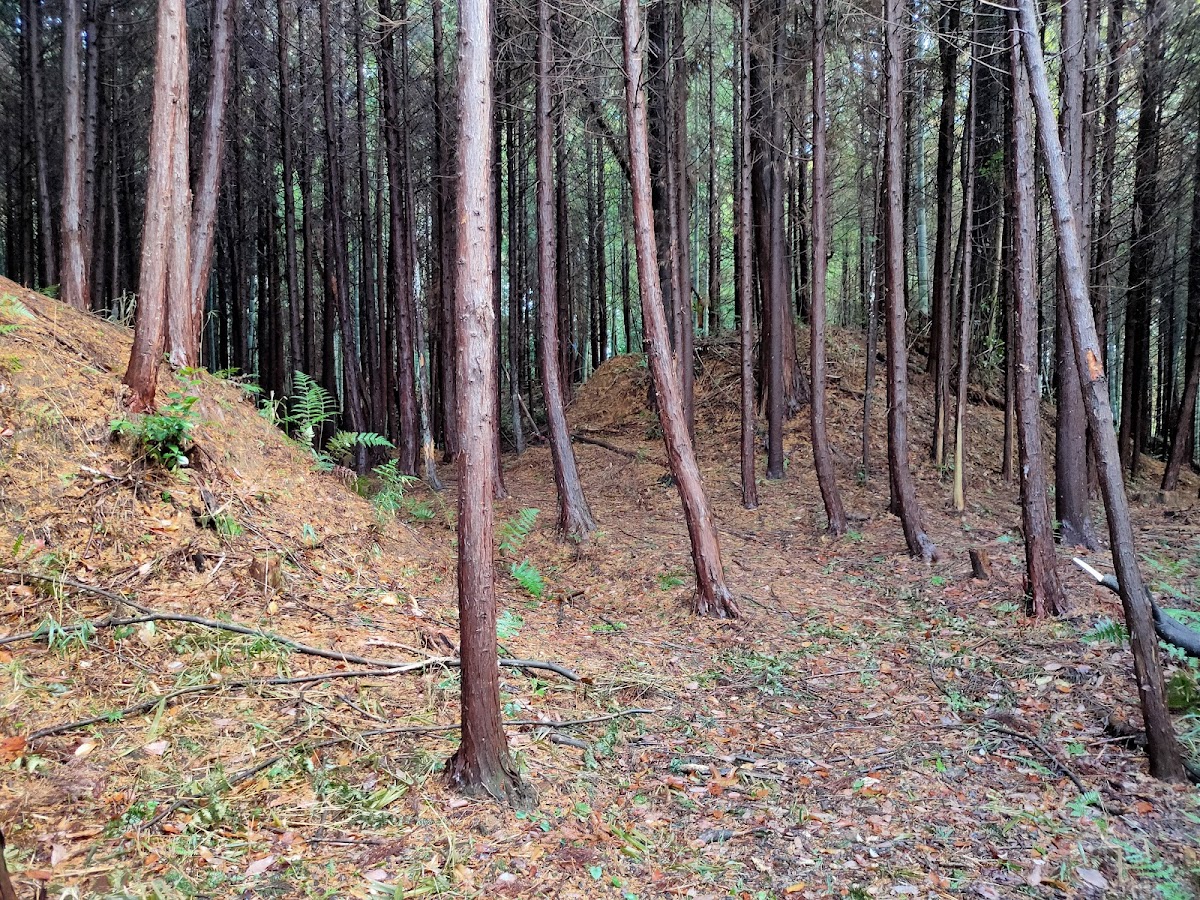
The dry moats surround the castle on three sides—east, west, and north—and serve as a crucial defensive feature. Their depth varies, but the deepest parts are estimated to be around 3-4 meters. The bottom of the dry moats is relatively flat, functioning as an obstacle to prevent enemy intrusion.
The double dry moat on the north side clearly demonstrates the castle’s defensive philosophy, indicating particular vigilance against threats from the north. This may reflect topographical factors or the political and military situation at the time.
Enclosure Structure
The main enclosure is relatively small, approximately 30 meters east-west and 20 meters north-south. It is thought to have served more as an emergency shelter or watchtower than as a residence. The interior of the enclosure is relatively flat, suggesting the possibility of simple buildings being constructed there.
While the existence of secondary enclosures and lower enclosures is not clear, the topography around the main enclosure reveals several flat areas, which may have functioned as auxiliary enclosures.
Highlights and Remains of Sakuramachi Chujo Castle
Existing Remains
The following remains can be observed at Sakuramachi Chujo Castle:
- Earthwork: A thick earthwork surrounding the main enclosure remains in good condition.
- Dry Moat: A dry moat surrounds the castle on three sides, with the double dry moat on the north side being particularly clear.
- Enclosure: The flat area of the main enclosure is visible.
- Gate: Topography near the southern entrance.
These remains are located within a grove of trees, making them easier to observe during the winter when the leaves have fallen.
Castle Notes: Visitor Evaluations and Impressions
Castle websites such as Kojodan have received various comments from enthusiasts who have visited Sakuramachi Chujo Castle. The average rating is around ★★☆☆☆ (2.00), and the castle ruins are compact, requiring only about 15 minutes to visit. With relatively few visitors, it’s a hidden gem of a historical site where you can quietly observe the remains.
Visitors have commented, “I was surprised by the thickness of the earthworks,” “Despite its small size, the defensive structure is solid,” and “Visiting it together with Takigawa Castle deepens understanding.”
Photography Tips
When visiting Sakuramachi Chujo Castle, here are some photography tips:
- Photographing the main enclosure’s earthworks from a low angle emphasizes their height and thickness.
- The angle of looking up at the earthworks from the bottom of the dry moat is also impressive.
- The double dry moat on the north side is an important relic that shows the characteristics of this castle, so be sure to record it.
- In winter, the leaves have fallen from the trees, making the relics easier to see and suitable for photography.
Access to Sakuramachi Chujo Castle
Location
Address: Uchiyama, Shimo-Kowada, Nabari City, Mie Prefecture
Access by Public Transportation
The nearest stations are “Mihata Station” or “Kikyogaoka Station” on the Kintetsu Osaka Line.
- From Mihata Station: Approximately 40-50 minutes on foot
- From Kikyogaoka Station: Approximately 45-55 minutes on foot
Since it is a distance from either station, you may want to consider taking a taxi if using public transportation.
Access by Car
- Approximately 30 minutes from the Hari Interchange on the Meihan Expressway
- Approximately 35 minutes from the Ueno Interchange on the Meihan Expressway
There is no dedicated parking lot around the castle ruins, but you can park in wide areas on the roadside. However, please be considerate of local residents.
Map and Navigation
Searching for “Sakuramachi Chujo Castle” on car navigation systems or smartphone map apps may not yield results. It is recommended to set “Shimo-Kowada, Nabari City, Mie Prefecture” as your destination and refer to topographic maps and castle-related information on-site.
Visiting Precautions and Guide
Clothing and Equipment
- Long-sleeved shirt and long pants are essential as you will be walking through the forest.
- Trekking shoes or hiking boots are recommended.
- Bring insect repellent in summer and warm clothing in winter.
- Always bring drinking water.
Best Time to Visit
- Recommended Time: November to March (The ruins are easier to see when the leaves have fallen).
- Time to Avoid: June to September (The vegetation is dense and there are many insects).
Estimated Time Required
- Visiting only the castle ruins: 15-30 minutes
- Visiting including nearby Takigawa Castle, etc.: 1-2 hours
Manners and Rules
- Be considerate of locals as you may pass through private property.
- Always take your trash with you.
- Do not damage the ruins or dig up the soil.
- No open fires.
Nearby Castle Ruins and Tourist Spots
Takigawa Castle
This castle ruin is adjacent to Sakuramachi Chujo Castle, and visiting them together is recommended. Its baileys are larger in scale than Sakuramachi Chujo Castle, and comparing their contrasting structures allows for an understanding of the diversity of Iga castles.
Major Castle Ruins in Nabari City
- Nabari Jinya: Site of the Todo family’s jinya (fortified residence) from the Edo period
- Abo Castle: A mountain castle in western Nabari City
Representative Castles of the Iga Region
The Iga region of Mie Prefecture has many castle ruins, and visiting them together with Sakuramachi Chujo Castle will allow for a deeper understanding of Iga’s castle culture:
- Iga Ueno Castle: A representative example of a modern castle built by Todo Takatora (Ueno Marunouchi, Iga City)
- Kashiwabara Castle: An important base in Iga Province
Furthermore, other major castles in Mie Prefecture include Matsusaka Castle (Matsusaka City), Tsu Castle (Tsu City), and Tamaru Castle (Tamaki Town).
Nabari City Tourist Information
Nabari City sightseeing spots you can visit between castle ruin tours:
- Akame 48 Waterfalls: A scenic spot selected as one of Japan’s Top 100 Waterfalls
- Nabari City Local History Museum: A facility where you can learn about the local history
- Shorenji Lake: A leisure spot centered around a dam lake
Sakuramachi Chujo Castle and Iga Castle Culture
Characteristics of Iga Castles
Iga Province castles have the following characteristics:
- Many small mountain castles: Rather than residences of daimyo (feudal lords), they were bases for local samurai
- Earth castles are predominant: Few castles have stone walls; they are composed of earthworks and dry moats
- Densely located: Numerous castles are built in a small area
- Emphasis on defense: Structures that prioritize defense over habitability
Sakuramachi Chujo Castle is a castle ruin that typically exhibits these characteristics and is a valuable example for understanding Iga castle culture.
Local Lords and Castles of Iga Province
During the Sengoku period, Iga Province lacked a powerful daimyo (feudal lord), and numerous local lords (jizamurai) independently governed their territories. They formed a coalition known as the “Iga Sōkoku Ikki” (Iga General Uprising) to resist external enemies.
Sakuramachi Chūjō Castle is thought to have been built by one of these local lords, and it is presumed to have functioned as a residence in peacetime and a defensive base during wartime.
Current Status of Research and Preservation
Academic Research
Detailed archaeological excavations and academic research on Sakuramachi Chūjō Castle are limited. Research has primarily relied on surveys and records by castle researchers and local history enthusiasts. Due to the scarcity of historical documents, many historical details remain unclear.
Future research, including investigations of historical documents in the surrounding area and comparative studies with other Iga castle sites, may clarify the historical position of Sakuramachi Chūjō Castle.
Preservation Status
Currently, the Sakuramachi Chujo Castle ruins are not under any special protective measures, and the remains are preserved in a natural state within the forest. Fortunately, because it has not been targeted by large-scale development, the earthworks and dry moats remain in relatively good condition.
However, weathering and the effects of tree growth are unavoidable over time, and some kind of preservation measures may be necessary in the future.
Related Books and Reference Materials
References for learning about Sakuramachi Chujo Castle and castles in Iga:
General Public Books
- *Castles of Mie Prefecture* (Kyodo Publishing)
- *Castles and Castle Towns of Iga* (Iga City Board of Education)
- *Comprehensive Survey of Japanese Castles, Volume 10: Mie, Nara, and Wakayama* (Shin Jinbutsu Oraisha)
Websites
- Kojodan: A community site for castle enthusiasts, rich in visit records and photographs
- Jokaku Hourouki: A site comprehensively introducing castle ruins throughout Japan
- Nippon Shiro Meguri: A castle information site linked to a smartphone app
Maps and Survey Maps
- Topographic maps from the Geospatial Information Authority of Japan (1:25000)
- Castle layout maps by castle researchers (published in various castle-related books)
The Significance of Visiting Sakuramachi Chujo Castle
Compared to famous castles like Iga Ueno Castle, Sakuramachi Chujo Castle is small in scale and less well-known. However, this small castle site holds the traces of the lives and battles of the Iga local lords during the Sengoku period.
While it lacks large stone walls or a keep, you can feel the wisdom and effort of the people of that time in its cleverly utilized terrain, labor-intensive earthworks, and dry moats designed to deter enemy intrusion.
The true appeal of castle visits isn’t limited to famous castles. It is in these small, local castle ruins that the diversity and depth of Japanese castle culture are hidden. If you have the opportunity to visit Nabari City in Mie Prefecture, be sure to visit Sakuramachi Chujo Castle and feel the spirit of the Sengoku period in the quiet mountain forest.
Summary
Sakuramachi Chujo Castle (Shimo-Kowada, Nabari City, Mie Prefecture) is a small flatland castle built on a hill approximately 230 meters above sea level. Also known as “Sakuramachi-kan,” it is believed to have functioned as a castle for the Iga local lords during the Sengoku period.
Main Features:
- Defensive structure with thick earthworks and dry moats surrounding on three sides
- Double earthworks and dry moats on the north side
- Small main enclosure (approximately 30m x 20m)
- Comparison with the adjacent Takigawa Castle
Access:
- Location: Uchiyama, Shimo-Kowada, Nabari City, Mie Prefecture
- Nearest Station: Kintetsu Osaka Line “Mihata Station” or “Kikyogaoka Station”
- Estimated Visit Time: 15-30 minutes
Sakuramachi Chujo Castle is a valuable historical site for understanding the castle culture of the Iga region. Although it hasn’t been developed into a major tourist destination, it’s precisely because of this that it’s a place where you can quietly contemplate history, making it a worthwhile castle site for castle enthusiasts to visit.