Takigawa Castle (Nabari City, Mie Prefecture) Complete Guide: One of the Largest Single-Enclosure Castles in Mie Prefecture, Built During the Tensho Iga Rebellion
What is Takigawa Castle?
Takigawa Castle is a Sengoku period castle located in Shimo-Kowada, Nabari City, Mie Prefecture. It is known as a fortified camp built in 1581 during the Second Tensho Iga Rebellion by Takigawa Katsutoshi (Takigawa Saburobei), a retainer of Oda Nobuo (Kitabatake Nobuo).
The castle’s most distinctive feature is its size, being the largest single-enclosure castle in Mie Prefecture. The main enclosure, approximately 70 meters square on each side, is about four times the size of a typical square enclosure, making it remarkably large in the Iga region. Even today, remnants such as earthworks and dry moats remain well-preserved, making it a valuable historical site that conveys the appearance of a Sengoku period fortified camp.
History of Takigawa Castle
The Tensho Iga Rebellion and the Construction of the Castle
The construction of Takigawa Castle is rooted in Oda Nobunaga’s conquest of Iga Province. In 1581 (Tensho 9), Oda Nobunaga launched the Second Tensho Iga Rebellion, with his son, Oda Nobuo, as the commander-in-chief. The previous year, in 1579 (Tensho 7), Oda Nobuo’s unilateral attack on Iga had failed due to fierce resistance from the Iga forces.
Following this failure, Oda Nobunaga mobilized a large army and devised a plan to completely conquer Iga Province. It was during this time that Takigawa Katsutoshi, a retainer of Oda Nobuo, built Takigawa Castle as a base for the conquest of southern Iga. The castle was built on a hill approximately 20 meters high and functioned as a garrison for a large army.
The Person of Takigawa Katsuyoshi
Takigawa Katsuyoshi, the lord of Takigawa Castle, has a name that might suggest a connection to Takigawa Kazumasu, but in reality, there was no blood relation. Katsuyoshi was the son-in-law of Takigawa Kazumasu, and it is believed that Kazumasu permitted him to use the Takigawa surname. He served Oda Nobuo and played a crucial role in the conquest of Iga.
Takigawa Katsuyoshi was in charge of the conquest of southern Iga during the Second Tensho Iga Rebellion, and successfully brought the region under control. The castle is thought to have functioned not only as a military base but also as a center of control for southern Iga after the rebellion.
The Role of the Castle and its Abandonment
During the Tensho Iga Rebellion, Takigawa Castle functioned as an important front-line base for the Oda army. The vast main enclosure was large enough to accommodate a large number of soldiers, and it is presumed to have functioned effectively as a base for the conquest of Iga.
However, after the Iga Rebellion ended and Iga Province came under the control of the Oda clan, it is believed that Takigawa Castle was soon abandoned. Due to its short lifespan, no permanent stone walls or other structures were built, and it remained an earthen fortress. This short history, conversely, preserves the pure appearance of a Sengoku period encampment castle.
Castle Structure and Characteristics
Scale as a Single-Enclosure Castle
The most distinctive feature of Takigawa Castle is its sheer size. The main enclosure is a square approximately 70 meters on each side (some sources say 80 meters), covering an area of over 4,900 square meters. This is about four times the size of a typical square single-enclosure castle, making it the largest single-enclosure castle in Mie Prefecture.
This vast space enabled the large-scale deployment of troops during the Tensho Iga Rebellion. The Iga invasion force mobilized by Oda Nobunaga is said to have numbered in the tens of thousands, and Takigawa Castle is thought to have functioned as an important supply base playing a vital role in that force.
Earthworks and Dry Moats
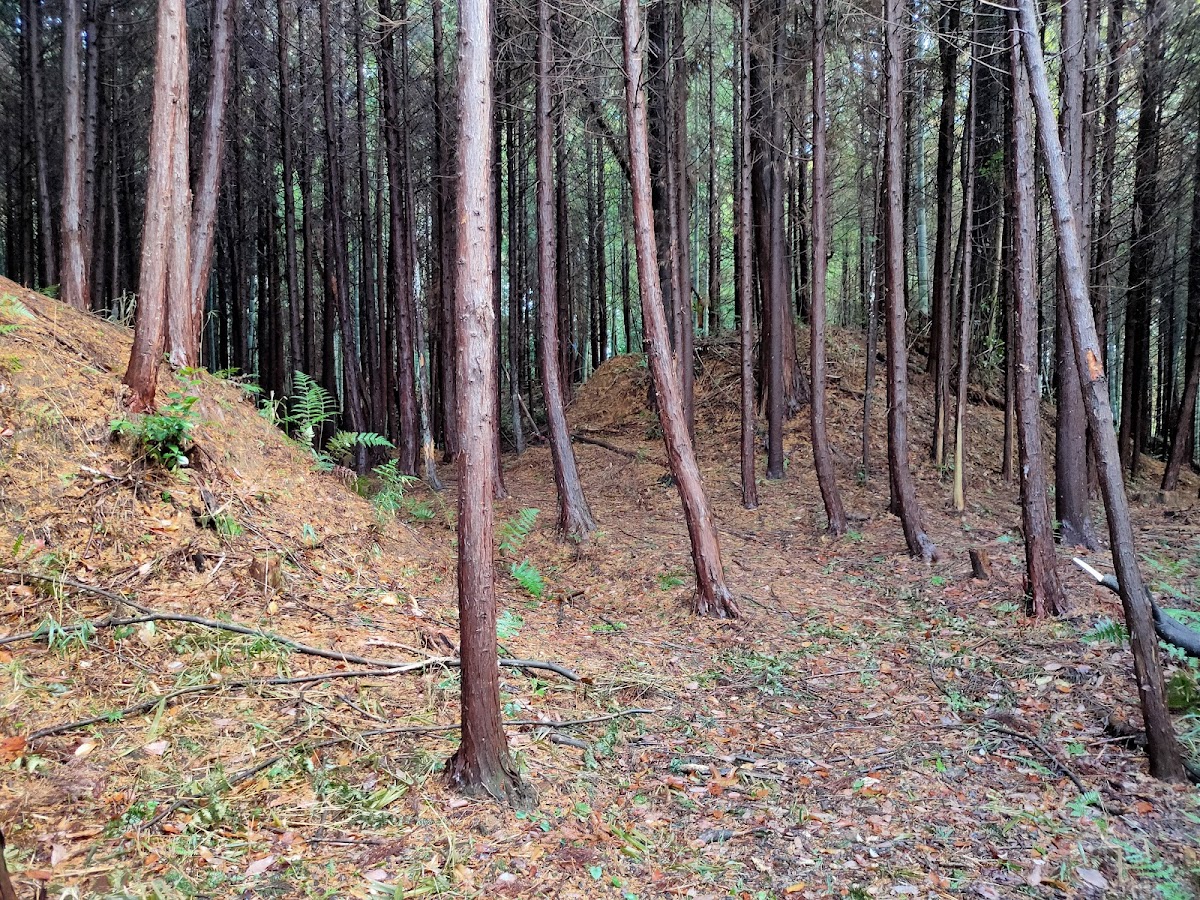
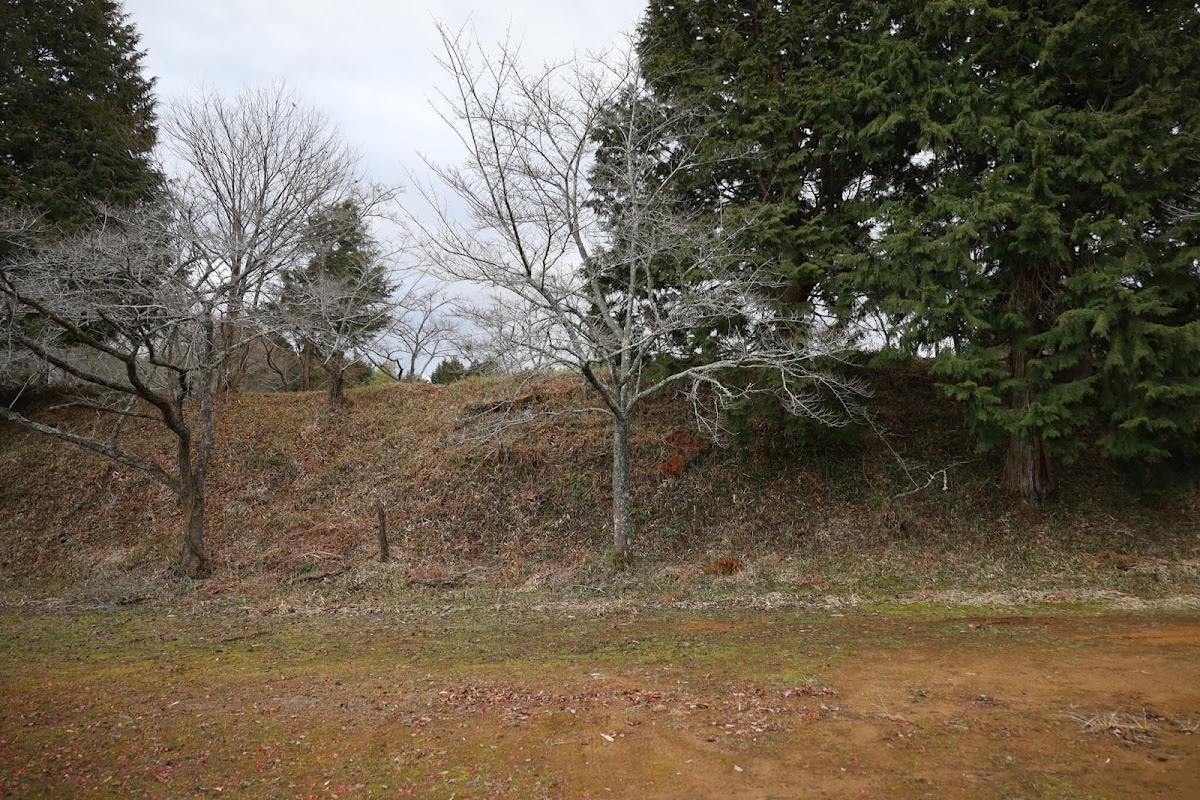
A clear earthwork still surrounds the main enclosure. This earthwork is built to encircle the castle on all four sides, exhibiting a typical structure known as the “four-sided earthwork type.” While the height of the earthworks varies in location, they are of sufficient size to serve as a defensive structure.
Outside the earthworks are dry moats. These moats, in conjunction with the earthworks, played a role in enhancing the castle’s defensive capabilities. Traces of the moats can still be seen today, making them important remains for understanding the defensive structure of the time.
Current State
The interior of the main enclosure is currently maintained as a sports field, preserving a flat terrain. This use as a sports field actually enhances the sense of the main enclosure’s vastness. The surrounding earthworks and dry moats are relatively well preserved, allowing for observation of the castle’s remains.
The castle ruins, located on the summit known as Shiroyama, utilize the surrounding terrain, taking advantage of its geographical advantage on a hill approximately 20 meters high.
Highlights of Takigawa Castle
Largest Main Enclosure in the Prefecture
The biggest highlight of Takigawa Castle is undoubtedly its vast main enclosure. Measuring approximately 70 meters on each side, its size is truly impressive when you stand there. The flat, well-maintained grounds evoke the image of numerous soldiers stationed here during the Sengoku period.
Compared to other castles in the Iga region, its scale is remarkable. While not the largest in the entire country, its uniqueness becomes apparent when understood within its regional context.
Clearly Remaining Earthworks
The earthworks surrounding the main enclosure are another important highlight of Takigawa Castle. While the state of preservation varies depending on the location, the earthworks as a whole largely retain the original structure. Walking along the earthen ramparts allows you to experience the castle’s defensive structure and layout.
From the ramparts, you can look down on the interior of the main enclosure, providing an ideal viewpoint for understanding the castle’s overall layout. Furthermore, you can observe its relationship with the dry moat located outside the ramparts, making it a valuable learning resource for studying Sengoku period castle construction techniques.
Characteristics as a Camp Fortress
Takigawa Castle was not built as a permanent residence, but as a camp for military operations. Therefore, permanent structures such as stone walls are absent, and it remains a complete earthen fortress. This, conversely, makes it a prime example of a pure Sengoku period camp fortress.
The appearance of a camp fortress, built and serving its purpose for a short period, is important material for understanding Sengoku period castle construction techniques and military strategies. Takigawa Castle is a valuable historical site with such historical significance.
Access and Visiting Information
Location
Takigawa Castle is located in Shimo-Kowada, Nabari City, Mie Prefecture. Located south of Nabari city center, in the southern part of the Iga region.
Access
Using Public Transportation
The nearest station is Nabari Station on the Kintetsu Osaka Line. Since it’s a bit of a distance from the station, taking a taxi is recommended. There are also bus routes, but the number of services is limited, so it’s advisable to check the timetable in advance.
Using a Car
Access is possible via National Route 165 from the Hari Interchange or Ueno Interchange on the Meihan Expressway. Parking is available around the castle ruins, but caution is advised when the grounds are in use.
Precautions During Visits
Since the main enclosure is used as a sports field, consideration is needed when sports activities are taking place. When visiting around the earthworks and moats, please be careful of your footing and avoid damaging the remains.
While the castle ruins are generally open to visitors, some areas may be private property or managed land, so please observe proper etiquette.
Surrounding Castles and Historical Sites
Castles of the Iga Region
The Iga region, where Takigawa Castle is located, is home to numerous castles. In particular, castles associated with the Tensho Iga Rebellion, such as Kashiwabara Castle and Maruyama Castle, are well-known. Visiting these castles together will provide a deeper understanding of the overall picture of the Tensho Iga Rebellion.
Kashiwabara Castle is known as the castle where Oda Nobuo’s headquarters were located and was a central base during the Tensho Iga Rebellion. Maruyama Castle was also an important castle from the same period, and visiting these castles will allow you to grasp the Oda army’s strategy for conquering Iga in a multifaceted way.
Historical Resources of Nabari City
Besides Takigawa Castle, Nabari City boasts abundant historical resources. It is a region where you can experience diverse history, including historical sites related to Iga ninjas and traces of ancient roads.
Nabari city center also has museums and facilities exhibiting local history materials, where you can learn more about the historical background of Takigawa Castle. By utilizing these facilities in conjunction with a visit to the castle ruins, a more fulfilling historical exploration becomes possible.
The Historical Significance of the Tensho Iga Rebellion and Takigawa Castle
Oda Nobunaga’s Conquest of Iga
The Tensho Iga Rebellion is positioned as part of Oda Nobunaga’s unification of Japan. Iga Province was governed by a unique system of local samurai (kokujin), and was a region beyond the reach of the Oda regime. The Iga clan, in particular, was known as a fighting group skilled in ninjutsu, and their military power was not to be underestimated.
The failure of the first Iga campaign was a humiliating event for the Oda family, and Oda Nobunaga prepared thoroughly for the second attack. He adopted a strategy of simultaneously invading from multiple directions, proceeding with the conquest by completely surrounding Iga Province.
A Base for the Conquest of Southern Iga
Takigawa Castle played a crucial role as a base in the Southern Iga region during this large-scale Iga conquest operation. It is believed that the troops led by Takigawa Katsutoshi used this castle as a base to advance their conquest of southern Iga.
The sheer size of the castle suggests the size of the troops stationed here. The vast main enclosure, capable of accommodating a large army, can be considered a symbolic relic of the Oda army’s strategy of overwhelming force.
As a Base for Iga Control
After the end of the Tensho Iga Rebellion, Takigawa Castle is thought to have functioned as a base for controlling southern Iga. Under the Oda regime’s control of Iga, castles strategically placed throughout the region were important administrative and military strongholds.
However, the period during which Takigawa Castle functioned as a base of control seems to have been relatively short. After the death of Oda Nobunaga in the Honnoji Incident (1582), the political situation changed dramatically, and the system of control in the Iga region also shifted. Therefore, it is presumed that Takigawa Castle was abandoned shortly thereafter.
Value in Castle Research
A Valuable Example of Camp Fort Research
Takigawa Castle provides a valuable case study for the study of camp forts during the Sengoku period. Unlike permanent residences, camp forts were often built quickly for military operations and abandoned afterward.
Takigawa Castle has a relatively clear history from construction to abandonment, and its remains are well-preserved. Therefore, it is an important resource for studying how camp forts were built and what functions they served during the Sengoku period.
One of the Largest Single-Enclosure Castles in the Region
The sheer size of this single-enclosure castle is also a significant point for research. The main enclosure, approximately four times the area of a typical single-enclosure castle, indicates that it was built for a specific purpose.
This scale provides clues to understanding the scale of the Oda army’s operations and logistical system during the Tensho Iga Rebellion. The need for a castle capable of accommodating a large army reflects the nature of warfare at that time.
Earthen Castle Construction Techniques
Takigawa Castle is entirely constructed of earth; no stone structures such as stone walls are visible. This was a choice made under the constraints of building the castle in a short period of time, and it also demonstrates one aspect of the castle construction techniques of the time.
The defensive system using earthen ramparts and dry moats was a technique widely used from the medieval period to the Sengoku period. By closely observing the structure of the earthen ramparts and moats at Takigawa Castle, we can understand the level of earthen castle construction techniques in the late 16th century.
Significance of Visiting Takigawa Castle
Feeling the Spirit of the Sengoku Period
Visiting Takigawa Castle allows you to stand on the site of a Sengoku period battle. In 1581, numerous samurai gathered here to participate in the historic military operation of the Iga campaign.
Standing in the vast main enclosure, it’s easy to imagine the figures of the soldiers of that time. By imagining the scene of encampments being set up, weapons and food stockpiled, and strategy meetings being held, you can feel history more closely.
Deepening Understanding of Local History
Takigawa Castle is an indispensable historical site for understanding the history of the Iga region. The Tensho Iga Rebellion was a major turning point for the Iga region and had a profound impact on its subsequent history.
Visiting the castle ruins allows you to not only learn about the structure of the castle but also to touch upon a part of the history that the Iga region has experienced. Takigawa Castle holds significant meaning as a place where local history and national history intersect.
Attraction for Castle Enthusiasts
For castle enthusiasts, Takigawa Castle is one of the castle ruins that should not be missed. Its characteristic as the largest single-enclosure castle in Mie Prefecture is sufficient reason to include it on your castle-visiting list.
The well-preserved earthworks, moats, and vast main enclosure serve as excellent learning materials for studying castle structure. Furthermore, its clear historical background of the Tensho Iga Rebellion enhances its value as a castle ruin.
Summary
Takigawa Castle is a fortified camp built in 1581 during the Second Tensho Iga Rebellion by Takigawa Katsutoshi, a retainer of Oda Nobukatsu. Located in Shimo-Kowada, Nabari City, Mie Prefecture, it boasts the largest single-enclosure castle structure in Mie Prefecture.
The vast main enclosure, approximately 70 meters square on each side, surrounded by earthworks and dry moats, is a valuable historical site that conveys the appearance of a fortified camp from the Sengoku period. Although the castle was built and served its purpose for a short period, its sheer size speaks to its importance in the Oda army’s conquest of Iga.
Currently, the interior of the main enclosure is used as a sports field, but the surrounding earthworks and moats are relatively well-preserved and open to visitors. Takigawa Castle is a historical site of significant value for understanding the history of the Iga region and for studying fortified camps from the Sengoku period.
Takigawa Castle, the site of the historical event known as the Tensho Iga Rebellion, is a fascinating castle ruin that allows visitors to feel the spirit of the Sengoku period.