Complete Guide to the History and Highlights of Matsusaka Castle | A Thorough Explanation of the Beauty of the Stone Walls and the Castle Structure
What is Matsusaka Castle?
Matsusaka Castle (also written as Matsusaka Castle) is a Japanese castle ruin located in Tonomachi, Matsusaka City, Mie Prefecture. Built on the isolated hill “Yoihonomori” at an altitude of 38 meters, it is a flatland castle designated as a national historic site and selected as one of Japan’s 100 Famous Castles.
While the main keep and other structures no longer exist, the magnificent stone walls built by the Anō-shū still remain, conveying the technology and beauty of castle architecture from the Sengoku period to the Edo period. The castle ruins have been developed into Matsusaka Park, and are popular with many citizens and tourists throughout the seasons, known for their cherry blossoms, wisteria, and ginkgo trees.
History of Matsusaka Castle
Construction by Gamō Ujisato
The history of Matsusaka Castle begins in 1584 (Tenshō 12). Gamo Ujisato, who received approximately 123,000 koku of land in southern Ise from Toyotomi Hideyoshi, initially took up residence in Matsugashima Castle. However, judging that Matsugashima Castle was too close to Ise Bay to develop a castle town, Ujisato decided to build a new castle about 2.5 kilometers south at Shigomori.
In 1588, Ujisato worked day and night to complete the castle, finishing Matsusaka Castle in an astonishingly short three years. Ujisato was a renowned general from Omi Province and was skilled in developing castle towns. The name Matsusaka is said to have been given by Ujisato in honor of “Matsugashima,” a place in Hino, Gamo District, Omi Province, his hometown.
Stone Wall Construction and the Anō-shū
For the construction of Matsusaka Castle’s stone walls, a group of stonemasons specializing in stonework, known as the Anō-shū, was summoned from Omi Province. The Anō-shū were a group of skilled craftsmen known for their work on the stone walls of Enryaku-ji Temple on Mount Hiei. They specialized in a construction method called “nozurazumi,” which utilizes natural stones in their original state.
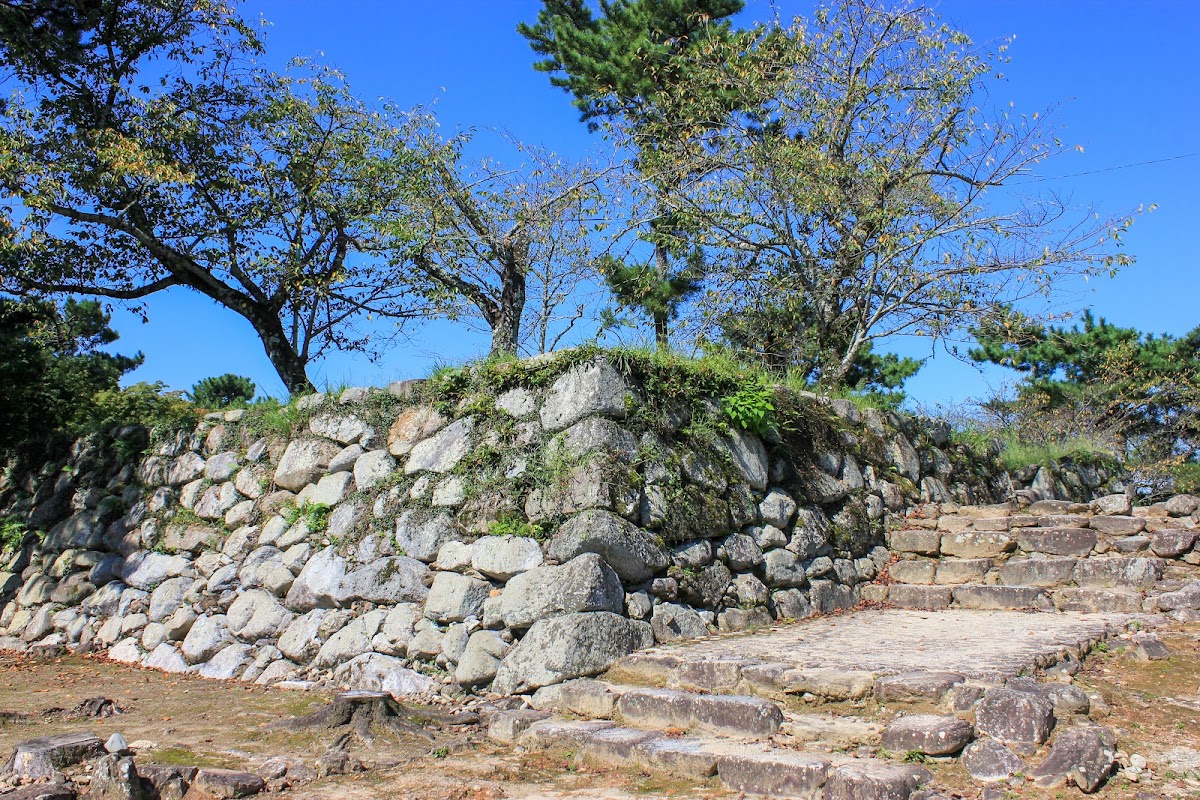
The original stone walls of Matsusaka Castle were based on this nozurazumi method, skillfully combining unprocessed natural stones to create strong and beautiful walls. Later, during Edo period restorations, more advanced techniques such as “uchikomi-hagi” and “sangi-zumi” were also employed.
Successive Lords and Changes in the Castle
Gamō Ujisato was transferred to Aizu in 1595. Afterward, Matsusaka Castle was ruled by lords such as Hattori Kazutada and Furuta Shigekatsu. From 1619 onward, it became a branch castle of the Kishū Domain, and a castle governor was appointed.
Throughout the Edo period, Matsusaka Castle functioned as an important base for the Kishu Domain, but its keep is believed to have been lost during the Kanbun era (1661-1673). After the Meiji Restoration, the castle’s structures were demolished under the castle demolition decree, but the stone walls were spared and have been preserved to this day.
In February 2011, the Matsusaka Castle ruins were designated a national historic site, officially recognizing its historical and cultural value.
Matsusaka Castle’s Layout
Matsusaka Castle has a layout known as a tiered-style flatland castle. A tiered-style castle places the main keep at the highest point, with other enclosures such as the second and third baileys arranged in a stepped fashion around it. This structure enhanced defensive capabilities and allowed for efficient castle management.
The castle covered a total area of approximately 33,000 square meters, and its moats extended for approximately 2 kilometers, making it a large-scale fortress. Even today, the overall layout of the castle grounds can be discerned from the stone walls and topography.
Arrangement of the Main Enclosures
Matsusaka Castle was composed of the following enclosures:
- Honmaru: The central enclosure located at the highest point of the castle grounds
- Kitaimaru: An enclosure located north of the Honmaru
- Ninmaru: An enclosure located east of the Honmaru
- Inkyomaru: An enclosure located south of the Ninmaru
- Sannomaru: An enclosure forming the outer perimeter of the castle
These enclosures were separated by stone walls and moats and connected by koguchi (gateways). In particular, masugata koguchi (square-shaped gateways) were installed at the site of the Nakagomon Gate, demonstrating a clever design to prevent enemy intrusion.
Overview of Matsusaka Castle Ruins
Honmaru Site
The Honmaru was located at the highest point of the castle grounds and had a two-tiered structure. Situated at an altitude of approximately 38 meters, it was built in a prime location overlooking the castle town.
(1) Site of the Upper Main Enclosure
The upper main enclosure is the site where a three-story keep once stood. While the exact size of the keep is unknown, it is presumed to have been a magnificent structure befitting the residence of a daimyo with a 120,000 koku domain.
Adjacent to the keep was a lookout tower, and diagonally across to the eastern corner was the Golden Room Tower. These towers were connected by a network of long, barrack-like buildings called Tamon. The Tamon served both as defensive structures and as storage for weapons and supplies.
(2) Site of the Lookout Tower and Keep
From the site of the lookout tower, one can still enjoy a panoramic view of Matsusaka city. The stone walls of the keep site are particularly high, conveying its imposing presence to this day. The stone walls of the upper main enclosure are the best preserved example of the Nozurazumi (rough-stone masonry) technique, allowing one to appreciate the power and beauty of natural stone.
Kitaimaru Site
Located north of the main keep, Kitaimaru was an important defensive enclosure. While there are several theories about the origin of the name “Kitai,” the most likely explanation is that it means “northern outwork.” The beauty of the stone walls can be enjoyed from here as well.
Ninomaru Site
Ninomaru was a vast enclosure located east of the main keep, believed to have housed the lord’s residence and administrative buildings. Currently, it is a plaza and a popular cherry blossom viewing spot. In spring, it is bustling with many cherry blossom viewers, and nighttime illuminations are also held.
Inkyomaru Site
Inkyomaru was an enclosure located south of Ninomaru, and as its name suggests, it is believed to have been the residence of the retired lord and his retainers. It is a relatively quiet place, a tranquil space surrounded by stone walls.
Sannomaru Site
Sannomaru formed the outer perimeter of the castle, and housed the residences of the retainers and samurai residences. Part of the current Matsusaka city area corresponds to the former San-no-maru (third bailey).
Matsusaka Castle’s Stone Walls
The greatest highlight of Matsusaka Castle is undoubtedly its magnificent stone walls. Boasting one of the largest scales in Japan, these walls possess a truly spectacular presence.
The Technique of Nozurazumi (Wild Stone Masonry)
The original stone walls of Matsusaka Castle were built using the Nozurazumi technique by the Anō-shū (a group of stonemasons). Nozurazumi is a technique of stacking natural stones with minimal processing. While it may appear haphazard at first glance, it actually requires highly advanced skill and experience.
By carefully considering the shape and center of gravity of the stones and arranging them to interlock, a strong and well-draining stone wall is created. The Nozurazumi stone walls of Matsusaka Castle remain intact even after more than 400 years, proving the high level of skill involved.
“Uchikomi-hagi” and “Sangi-zumi”
In sections restored during the Edo period, more advanced construction methods such as “uchikomi-hagi” and “sangi-zumi” were employed.
Uchikomi-hagi is a technique where the surface of the stones is flattened, reducing the gaps between them. This results in a more orderly and beautiful appearance than “nozurazumi” (rough stone masonry), and also improves strength.
Sangi-zumi is a technique used at the corners of stone walls, where rectangular stones are interlocked to increase the strength of the corners. These techniques were used differently in the stone walls of Matsusaka Castle throughout different eras, offering the pleasure of deciphering the history of the stone walls.
Height and Impression of the Stone Walls
The stone walls of Matsusaka Castle reach heights of over 10 meters in some places. The stone walls around the main keep are particularly impressive, and looking up from below is overwhelming. The moss-covered stone walls evoke a sense of history and stir up a sense of historical romance.
Matsusaka City and Matsusaka Castle
Development as a Castle Town
Gamo Ujisato built Matsusaka Castle and simultaneously developed a systematic castle town. By attracting merchants, establishing markets, and improving roads, Matsusaka developed into the economic and cultural center of the Ise region.
In particular, Matsusaka produced many wealthy merchants known as “Matsusaka merchants.” During the Edo period, it became nationally known as a production area for Matsusaka cotton and Matsusaka beef. Even today, Matsusaka City is renowned nationwide as a “meat town,” with Matsusaka beef brand famed throughout the country.
Traces of a Castle Town
From the Matsusaka Castle ruins, you can enjoy a panoramic view of the townscape that retains the atmosphere of a castle town. Around the castle, there are facilities where you can learn about Matsusaka’s history, such as the Motoori Norinaga Memorial Museum and the Historical and Folk Museum.
Walking through the town, you can find streets with old merchant houses and storehouses, giving you a sense of the Edo period. When visiting Matsusaka Castle, we recommend enjoying not only the castle ruins but also a stroll through the surrounding castle town.
Gojoban Yashiki (Castle Guard Residence)
One of the must-see attractions at Matsusaka Castle is the Gojoban Yashiki (Castle Guard Residence), located very close to the castle ruins.
What is the Gojoban Yashiki?
The Gojoban Yashiki is a samurai residence built by the Kishu Domain as housing for the samurai responsible for guarding Matsusaka Castle. Built in 1863, it still retains almost its original appearance.
The row of buildings, neatly lined up on both sides of the cobblestone path, is a valuable historical site that conveys the atmosphere of Edo-period samurai residences. It is designated as a National Important Cultural Property as a rare example of samurai residences nationwide.
The Current Gojoban Yashiki
Amazingly, the Gojoban Yashiki is a “living cultural property” that is still inhabited today. Descendants of the castle guards still live in the former residence, and parts of it are open to the public for viewing.
Inside the open residence, you can catch a glimpse of the lifestyle of samurai during the Edo period. Tatami-floored rooms, hearths, and storage areas for weapons are recreated to reflect the way of life at the time.
When visiting Matsusaka Castle ruins, we highly recommend also visiting the castle guard residence. Seeing the castle ruins and the samurai residence together will give you a deeper understanding of Matsusaka’s history.
Matsusaka Castle in the Seasons
Matsusaka Castle ruins show various expressions throughout the four seasons.
Spring Cherry Blossoms
Matsusaka Castle ruins are known as a famous cherry blossom viewing spot. Approximately 300 Somei Yoshino cherry trees are planted, and in early April, the cherry blossoms in full bloom adorn the stone walls. During cherry blossom season, the trees are illuminated at night, allowing you to enjoy the magical sight of cherry blossoms after dark.
The contrast between the stone walls and cherry blossoms is breathtaking, attracting many photography enthusiasts and tourists. The sea of cherry blossoms viewed from the main keep ruins is truly a spectacular sight.
Early Summer Wisteria
In May, the wisteria blossoms are in full bloom. Wisteria trellises are set up within the castle grounds, and the sight of the elegantly hanging purple wisteria flowers offers a different kind of beauty than the cherry blossoms of spring.
Autumn Ginkgo
In autumn, the golden leaves of the ginkgo trees are magnificent. The contrast between the gray of the stone walls and the golden color of the ginkgo leaves creates a beauty unique to autumn. The best time to see them is from mid to late November.
Winter Silence
Winter at Matsusaka Castle ruins is less crowded with tourists, making it the perfect season to quietly reflect on history. Sometimes, you can even see the snow-covered stone walls, possessing a dignified beauty.
Access and Tourist Information
Access Methods
Access by Train
- Approximately 15 minutes on foot from Matsusaka Station on the JR Kisei Main Line and Kintetsu Yamada Line
- Approximately 1 kilometer west of Matsusaka Station
Access by Car
- Approximately 15 minutes from Matsusaka IC on the Ise Expressway
- Parking: Matsusaka City Parking (free) is available
Opening Hours and Admission Fee
- Opening Hours: Always open (24 hours)
- Admission Fee: Free
- Location: Tonomachi, Matsusaka City, Mie Prefecture
Nearby Facilities
- Motoori Norinaga Memorial Museum: A museum introducing the achievements of the scholar of Japanese classics, Motoori Norinaga
- Matsusaka City Historical and Folk Museum: A facility where you can learn about the history and culture of Matsusaka
- Gojoban Yashiki: A short walk away
- Matsusaka Merchant’s House: A facility introducing the history of Matsusaka merchants
Sightseeing Tips
Allow about 1 to 1.5 hours for a visit to Matsusaka Castle Ruins. Time will fly by as you carefully observe the stone walls and explore the various enclosures.
We recommend wearing comfortable shoes. The castle grounds are hilly and have many stone steps, so sneakers are ideal.
The Matsusaka City Tourism Association offers guided tours; for more detailed information, it’s a good idea to inquire in advance.
Matsusaka Castle’s Cultural Value
One of Japan’s Top 100 Castles
Matsusaka Castle is one of Japan’s Top 100 Castles (No. 48) selected by the Japan Castle Association. This means it has been recognized as a representative castle of Japan from the perspectives of historical value, architectural value, and aesthetics.
A stamp rally visiting the Top 100 Castles is also popular, and you can get a stamp at Matsusaka Castle (located in the Motoori Norinaga Memorial Museum).
National Historic Site
On February 7, 2011, Matsusaka Castle Ruins were designated a National Historic Site. This designation ensures its preservation and utilization as an important historical heritage site recognized by the government.
With this designation, planned preservation and repair of the stone walls and archaeological excavations are expected to be carried out, ensuring the protection of Matsusaka Castle Ruins for future generations.
Academic Value
Matsusaka Castle is a valuable historical site that demonstrates the evolution of castle architecture from the Sengoku period to the Edo period. Many important elements for castle research remain, including the development of stone wall techniques from rough-hewn stonework to fitted stonework, the terraced layout, and defensive facilities such as masugata koguchi (square-shaped gate).
In recent years, surveys using the latest technologies, such as laser surveying, have been conducted, and new discoveries are expected.
Summary
Matsusaka Castle is a famous castle built by Gamo Ujisato, one of the most renowned generals of the Sengoku period, and its magnificent stone walls still convey its grandeur today. Matsusaka Castle offers countless attractions, from the Anō-shū’s rough-stone construction techniques and the terraced layout of the castle grounds to the arrangement of the main keep, second bailey, and other enclosures.
As a nationally designated historic site and one of Japan’s Top 100 Castles, its value is widely recognized, making it a symbolic landmark of Matsusaka City. From the castle ruins, you can enjoy a panoramic view of the townscape that retains the atmosphere of the castle town, and the surrounding area is full of facilities where you can learn about history, such as the Gojoban Yashiki (castle guard residence) and the Motoori Norinaga Memorial Museum.
Matsusaka Castle ruins show different faces in each of the four seasons, offering new discoveries with every visit. The cherry blossom season, wisteria season, and ginkgo season are all beautiful in their own way, creating a space where historical romance and natural beauty harmonize.
When you visit Mie Prefecture, be sure to visit Matsusaka Castle ruins. Listening to the voices of history spoken by the stone walls, you will be able to experience the history and culture of Matsusaka that has continued since the Sengoku period. A trip enjoying historical exploration along with Matsusaka beef cuisine will surely be an unforgettable memory.