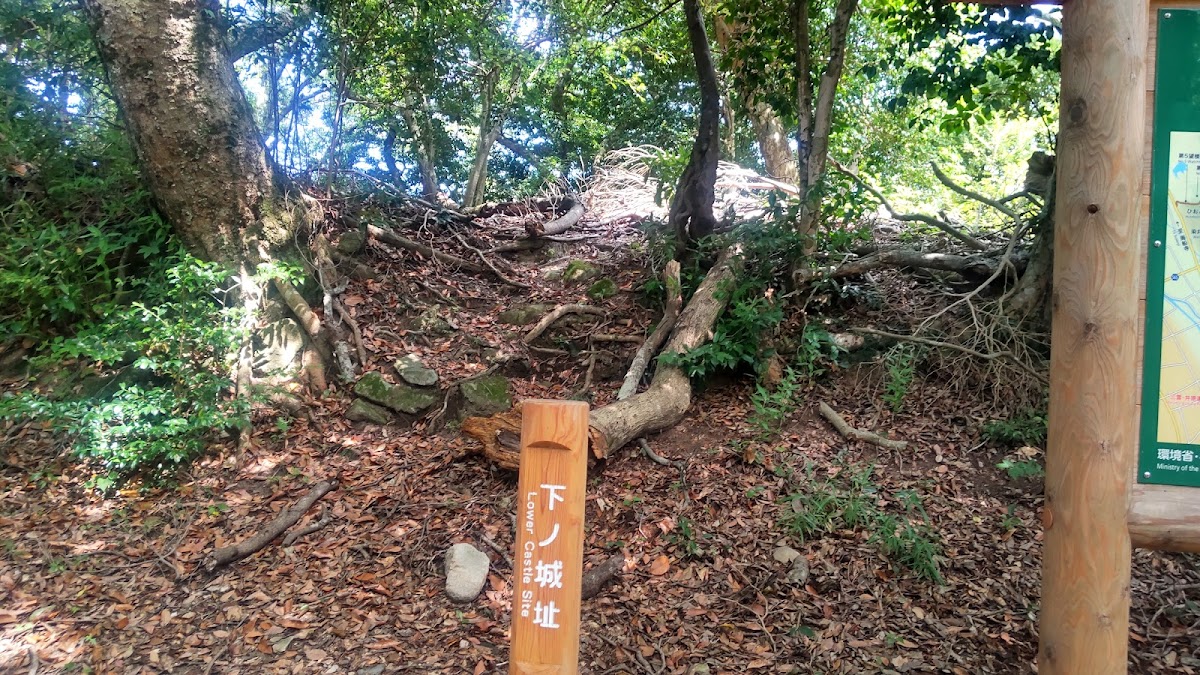
Matsuo Castle (Fukuoka Prefecture, Toho Village) Complete Guide: A Thorough Explanation of the History and Highlights of Kuroda Rokutan Castle
Located in the Koishiwara district of Toho Village, Asakura District, Fukuoka Prefecture, the Matsuo Castle ruins are a valuable mountain castle site that conveys the history from the Sengoku period to the early Edo period. Designated as a Fukuoka Prefecture historical site, the remains, such as stone walls and moats, are well-preserved. This article comprehensively explains everything you need to know before visiting, from the historical background of Matsuo Castle to specific highlights and access methods.
Historical Background of Matsuo Castle
Sengoku Period: The Era of the Hojuyama Clan
The origins of Matsuo Castle date back to the Sengoku period. It is said to have been the residence of Hojuyama Yamashiro-no-kami, a vassal of the Akizuki clan, who ruled this region. For the Hojuyama clan, who controlled the Koishiwara area, this castle, built on a mountaintop at an altitude of 510 meters, played an important role as a base for governing their territory.
Historical Background of Matsuo Castle
Sengoku Period: The Era of the Hojuyama Clan
The origins of Matsuo Castle date back to the Sengoku period. It is said to have been the residence of Hojuyama Yamashiro-no-kami, a vassal of the Akizuki clan, who ruled this region. For the Hojuyama clan, who controlled the Koishiwara area, this castle, built on a mountaintop at an altitude of 510 meters, played an important role as a base for controlling their territory. During the Sengoku period, Matsuo Castle is believed to have functioned as a strategic point for monitoring the surrounding region and protecting the territory. Given its geographical location near the border between Fukuoka and Oita prefectures, it is presumed to have also served as a border defense point.
Kuroda Nagamasa’s Development of the Six Chikuzen Castles
Matsuo Castle first appears prominently on the historical stage after the Battle of Sekigahara in 1600. For his achievements in this battle, Kuroda Nagamasa was transferred from Nakatsu in Buzen Province to Fukuoka in Chikuzen Province with a domain of 523,000 koku.
In 1601, Kuroda Nagamasa strengthened the border defenses of Chikuzen Province by developing six branch castles known as the Six Chikuzen Castles. Matsuo Castle, as one of these castles, once again became important as a defense against the Hosokawa clan, who ruled the neighboring Buzen Province.
The six castles of Chikuzen Province consisted of the following six castles:
- Matsuo Castle (Toho Village) – Defense of the Buzen border
- Takatoriyama Castle (Nogata City) – Defense of the Buzen border
- Masutomi Castle (Kama City) – Defense of the Bungo border
- Wakamatsu Castle (Wakamatsu Ward, Kitakyushu City) – Maritime defense
- Okuma Castle (Itoshima City) – Defense of the Hizen border
- Sagura Castle (Chikushino City) – Defense of the Hizen border
These castles formed a defense network centered around Fukuoka Castle, playing a role in protecting the safety of Chikuzen Province.
Castle Lord: Nakama (Kuroda) Rokuroemon
After the castle’s reconstruction by Kuroda Nagamasa, Nakama (Kuroda) Rokuroemon, a senior retainer of the Kuroda family, was appointed as the lord of Matsuo Castle. Nakama was known as a hereditary retainer of the Kuroda family and was a trusted figure, entrusted with the important task of border defense.
Nakama Rokuroemon was responsible for monitoring the border with the Buzen Kokura Domain, maintaining security in the surrounding area, and managing the castle as a military base in times of emergency. Governing the mountainous Koishiwara region was undoubtedly not easy, but it was a crucial task that depended on the prestige of the Kuroda family.
The One Castle Per Province Decree and Castle Abolition
In 1615, the Edo Shogunate issued the One Castle Per Province Decree. This decree ordered each domain to demolish castles other than their main residence, and Matsuo Castle was no exception.
The One Castle Per Province Decree was a policy aimed at limiting the military power of daimyo and establishing the shogunate-domain system. In Chikuzen Province, only Fukuoka Castle was allowed to remain, and all branch castles, including the six Chikuzen castles, were abolished. However, the strategic value of Matsuo Castle, an important outpost protecting the border with the Buzen Kokura Domain, is believed to have continued to be recognized even after its abolition. After the castle was abandoned, the buildings were demolished, but the stone walls and other civil engineering structures such as moats remained. The fact that these remains have been preserved in such good condition to this day is because the area was spared from large-scale development afterward.
Structure and Layout of Matsuo Castle
Overall Size and Layout
Matsuo Castle is a mountain castle built on a mountaintop at an altitude of 510 meters, measuring approximately 60 meters east-west and 20 meters north-south. The castle grounds have a two-tiered structure from east to west, and are characterized by their sturdy construction surrounded by square stone walls.
While relatively compact for a mountain castle, this indicates that Matsuo Castle was not designed for large-scale sieges, but rather prioritized border surveillance and its function as an emergency base.
Features of the Stone Walls
One of the greatest highlights of Matsuo Castle is its well-preserved stone walls. The rough-hewn stone walls, a testament to the castle construction techniques of the Keicho period, surround the entire castle grounds.
The height of the stone walls varies depending on the location, but the highest points are approximately 3 to 4 meters. The stones used are locally quarried granite and andesite, and the technique of stacking natural stones as they are can be seen. This technique is characteristic of the period when Kuroda Nagamasa built the castle.
Observing the construction of the stone walls, it can be seen that relatively large stones were used at the corners, while smaller stones were combined on the sides to ensure stability. The fact that it remains intact even after more than 400 years speaks to the high level of stonemasonry skill of the time.
Structure of the Entrance (Koguchi)
A koguchi (entrance) approximately 4 meters wide is located on the west side of the castle. The koguchi is the main gate of the castle and one of the most important defensive structures.
The koguchi of Matsuo Castle is a sturdy structure reinforced with stone walls on both sides, making it easy to prevent enemy intrusion. There is a flat space in front of the koguchi, designed to restrict enemy movement and allow for effective attacks from within the castle.
Observing the castle gate on-site reveals the particularly meticulous construction of the stone walls, demonstrating its importance as a fortified structure. Furthermore, the clever use of the surrounding terrain in the defensive line reveals the tactical thinking of the castle’s builder.
Turret Base and Foundation Stone Remains
A turret base has been identified on the east side of the castle. Turret bases are foundations for buildings such as watchtowers and armories, and were positioned on high ground to offer a panoramic view.
From the turret base of Matsuo Castle, a wide view towards the Buzen border could be seen, suggesting it was a crucial facility for detecting enemy movements early. The foundation of the turret base remains clearly visible today, allowing us to estimate the size of the building at the time.
In addition, the remains of foundation stone buildings have been confirmed within the castle grounds. Foundation stones are stones used to support building pillars, and their arrangement allows us to estimate the layout and size of the building. At Matsuo Castle, multiple foundation stones remain in their original positions, suggesting the presence of the lord’s residence or barracks.
Defensive System Using Moats and Vertical Ditches
A notable feature of Matsuo Castle’s defensive structures is the triple moat system located on the eastern ridge. A moat is a dry ditch dug to cut across a ridge, a crucial defensive structure designed to prevent enemy intrusion.
Each of the triple moats is approximately 3-5 meters deep, effectively blocking enemies attacking along the ridge. The moat closest to the castle is the deepest, clearly demonstrating the concept of multi-layered defense.
In addition, ridged vertical ditches have been identified on the castle’s slopes. Vertical ditches are dug vertically along slopes, serving to prevent enemies from climbing the incline. Ridged vertical ditches, arranged in parallel, allow for a wider area of defense.
These trenches and vertical moats remain clearly visible as part of the topography even today, making them valuable resources for learning about castle construction techniques from the Sengoku period.
Highlights and Points to Note When Visiting Matsuo Castle
Well-Preserved Remains
The greatest appeal of Matsuo Castle is that, as a Fukuoka Prefecture designated historical site, its remains are preserved in remarkably good condition. Almost all the major elements that constitute a castle from the Sengoku period to the early Edo period, such as stone walls, trenches, vertical moats, gates, and watchtower bases, can be seen on-site.
Compared to Takatoriyama Castle, another of the six Chikuzen castles, Matsuo Castle has better-preserved remains and more comprehensive information boards, making it an easily accessible historical site even for first-time visitors to mountain castles.
Points to Observe the Stone Walls
When visiting Matsuo Castle, be sure to carefully observe the stone walls. While the rough-hewn stone walls may appear haphazardly constructed, they actually employ a highly sophisticated technique of carefully selecting and arranging stones of varying shapes and sizes to ensure they interlock.
Particularly noteworthy are:
- Arrangement of corner stones: Larger stones are used at the corners of the castle to stabilize the structure.
- Combination of stones: Stones of various sizes are combined to fill gaps and increase strength.
- Drainage design: Drainage holes are provided at the bottom of the stone walls to prevent rainwater accumulation.
Understanding these technical features will change your perspective on the stone walls and allow you to appreciate the castle more deeply.
Stunning Views
From Matsuo Castle, located on a mountaintop at an altitude of 510 meters, you can enjoy panoramic views of the town of Koishiwara and the surrounding mountains. The view from the former watchtower site is particularly magnificent, allowing you to imagine the castle’s former lords monitoring the border from this vantage point.
On clear days, you can see as far as the Buzen border, giving you a real sense of why Matsuo Castle was chosen as a border surveillance base. In spring, with its fresh greenery, and in autumn, with its vibrant foliage, you can enjoy the beautiful scenery where the castle ruins harmonize with the surrounding nature.
Quality of Information Boards and Explanations
Matsuo Castle has several information boards explaining its history and structure. These boards are designed with easy-to-understand text and diagrams, allowing even first-time visitors to grasp the castle’s overview.
Main Information Board Contents:
- Historical Changes of Matsuo Castle
- Castle Layout and Location of Major Facilities
- Matsuo Castle’s Role as one of the Six Outlying Castles of Chikuzen
- Explanation of Highlights of the Remains
By reading these information boards while exploring, the mere stone and earthen remains come alive as living history.
Time and Difficulty of Climbing the Castle
Climbing Matsuo Castle from the entrance to the ruins is relatively easy, with little distance or elevation change, and can be completed in less than 10 minutes. Although it’s a mountain trail, it’s well-maintained, so no special climbing equipment is necessary.
Difficulty: Beginner (suitable for families)
Estimated Time: 30 minutes to 1 hour round trip (including sightseeing time)
Recommended Equipment: Comfortable walking shoes, drinks, insect repellent in summer
For sightseeing at the castle ruins, allow 30 minutes to 1 hour if you want to carefully observe the remains. Including time for photography and enjoying the view, we recommend allocating 1 to 1.5 hours for your visit.
Access Information
Access by Car
The most convenient way to access Matsuo Castle is by car.
From Fukuoka City:
- Fukuoka Urban Expressway → Kyushu Expressway → Oita Expressway, exit at “Haki IC”
- Approximately 25 minutes from Haki IC via National Routes 386 and 500
- Total travel time: Approximately 1 hour 30 minutes
From Oita:
- Oita Expressway, exit at “Hita IC”
- Approximately 30 minutes via National Routes 211 and 500
Car Navigation Settings:
- Address: Near 524-11, Koishihara, Toho-mura, Asakura-gun, Fukuoka Prefecture
- Landmark: From the Koishihara intersection, turn onto Prefectural Road 500 and proceed straight; you will see signs for the entrance.
Parking Information
Near the entrance to Matsuo Castle, there is a public housing parking lot with approximately 20 parking spaces. Parking is free.
Parking Features:
- Paved, flat parking lot
- Less than a 1-minute walk to the castle entrance
- Use the nearby public restrooms
To reach the castle entrance from the parking lot, you will pass through public housing. There are signs, so you won’t get lost.
Access by Public Transportation
Due to limited bus service, it is recommended to check the timetable in advance.
Using Nishitetsu Bus:
- Take the bus bound for “Koishiwara” from Nishitetsu Amagi Station
- Get off at the “Koishiwara” bus stop and walk for approximately 10 minutes
- Due to the limited bus service, it is necessary to check the return time in advance.
If using public transportation, it is efficient to plan your visit in conjunction with sightseeing in Toho Village. A sightseeing plan combining it with a tour of Koishiwara ware pottery kilns is recommended.
Best Time to Visit
Matsuo Castle is open year-round, but the best way to enjoy it varies depending on the season.
Spring (March-May):
- Beautiful fresh greenery and mild weather
- Pollen allergy sufferers should take precautions
Summer (June-August):
- Lush greenery and cool mountain castles make it ideal for escaping the summer heat
- Insect repellent and hydration are essential
- Be careful as the ground can be slippery on rainy days
Autumn (September-November):
- Beautiful autumn foliage; the best season to visit
- Stable weather, perfect for photography
Winter (December-February):
- Clear air and excellent views
- Climbing the castle may be difficult during snowfall
- Warm clothing is necessary
Nearby Tourist Spots
Koishiwara Pottery Kiln Tour
Toho Village is famous as a production area for Koishiwara pottery, a nationally designated traditional craft. When visiting Matsuo Castle, be sure to tour the Koishiwara pottery kilns.
Koishiwara ware is characterized by its unique decorative techniques such as tobikanna (flying plane) and hakeme (brushstroke), and is popular as everyday tableware. Approximately 50 kilns are scattered throughout the area, each producing distinctive works.
Many kilns also offer direct sales, allowing visitors to enjoy the pleasure of choosing pottery while speaking directly with the artists. Some kilns also offer pottery experiences, allowing you to create your own original piece.
Takatori Pottery Village
Alongside Koishiwara ware, Takatori ware is another representative pottery of Toho Village. Takatori ware is a highly regarded type of pottery that developed as tea ceremony pottery, and has a history of flourishing as the official kiln of the Kuroda clan.
There are also several Takatori ware kilns, which preserve traditional techniques while also producing modern works. Focusing on tea ceremony utensils, they also produce vases and tableware, possessing a different charm from Koishiwara ware.
Iwaya Campsite
For those who want to enjoy nature, Iwaya Campsite is recommended. Located along the clear waters of the Ohigawa River, this area offers opportunities for camping and barbecues. River activities are also possible in the summer, making it a popular spot for families.
Terraced Rice Fields
Toho Village boasts beautiful terraced rice fields. The terraced rice fields in the Take district, in particular, have been selected as one of “Japan’s Top 100 Terraced Rice Fields,” offering stunning scenery throughout the seasons.
Historical Value and Cultural Significance
Value as a Fukuoka Prefecture Designated Historic Site
Matsuo Castle Ruins are designated as a Fukuoka Prefecture Historic Site and are protected as a cultural property. This designation indicates that Matsuo Castle is an important historical site for understanding the history of Fukuoka Prefecture.
Reasons for Designation:
- Important Historical Site Demonstrating the Kuroda Clan’s Border Defense Policy: As one of the six Chikuzen outlying castles, it reveals the reality of Kuroda Nagamasa’s domain management.
- Excellent Preservation of Remains: Major remains such as stone walls, moats, and vertical trenches are almost completely intact.
- Value in the History of Castle Construction Technology: A valuable example demonstrating castle construction technology from the Keicho period.
- Important Witness to Local History: Tells the story of the historical changes in the Koishiwara region.
Positioning within the Six Chikuzen Outlying Castles
Among the six Chikuzen outlying castles, Matsuo Castle played a particularly important role in the defense of the Buzen border. The neighboring Kokura Domain was a large domain ruled by the Hosokawa clan (later the Ogasawara clan), and therefore required constant vigilance.
Matsuo Castle is thought to have functioned not merely as a military facility, but also as an intelligence gathering base in the border region, a monitoring base for strategic transportation hubs, and a center for regional governance. As a castle with such multifaceted roles, it held an important position among the six Chikuzen outlying castles.
Archaeological Survey Results
Multiple archaeological surveys have been conducted at Matsuo Castle. These surveys have revealed aspects of the castle that could not be understood from historical documents alone.
Main findings from the surveys:
- Arrangement and scale of foundation stone buildings
- Construction period and techniques of stone walls
- Period of use of the castle as seen from excavated artifacts
- Condition at the time of abandonment
These survey results provide valuable data for castle research nationwide and offer important information for understanding castles from the Sengoku period to the early Edo period.
Advice for Visitors
Points to Note During Your Visit
When visiting Matsuo Castle, please note the following:
- Safety of Footwear: Since you will be walking on mountain paths, please wear comfortable shoes such as sneakers.
- Weather Check: The ground can become slippery in rainy weather, so please check the weather forecast before visiting.
- Insect Repellent: There are many insects, especially in summer, so we recommend using insect repellent spray and wearing long sleeves.
- Hydration: Especially in summer, please bring water and replenish fluids frequently.
- Take Your Trash Home: To keep the historical site beautiful, please be sure to take your trash home with you.
Photography Tips
Photography is permitted at Matsuo Castle, but here are some tips for taking better photos:
- Photographing the Stone Walls: The morning light beautifully showcases the texture of the stone walls.
- Photographing the View: A wide-angle lens will allow you to capture the entire view from the turret base ruins.
- Photographing the Ruins: Changing the angle of your photos will help you better understand the depth of the moats and trenches.
- Seasonal Scenery: We recommend photographing the castle ruins in combination with the fresh greenery of spring or the autumn foliage.
For a Deeper Learning Experience
For those who wish to learn more about Matsuo Castle, we recommend the following methods:
- Contacting the Toho Village Office: The Hometown Promotion Division (0946-72-2312) provides materials and information about Matsuo Castle.
- Local History Research Groups: Local history research groups regularly hold tours and lectures.
- Viewing Related Books: Books about castles in Fukuoka Prefecture contain detailed descriptions of Matsuo Castle.
- Visiting Other Six End Castles of Chikuzen: Visiting other six end castles, such as Takatoriyama Castle, will give you a comprehensive understanding of the Kuroda clan’s defense strategy.
Interaction with the Community
Toho Village is a community that warmly welcomes tourists. When visiting Matsuo Castle, interacting with the locals is one of the highlights. At the Koishiwara ware pottery kilns, the artists will kindly explain their works, and you can enjoy dishes made with local ingredients at local restaurants.
Besides Koishiwara ware and Takatori ware, local specialties include wild vegetables, river fish, and local sake. These can be purchased at roadside stations and other locations, making them excellent souvenirs.
Summary
Matsuo Castle in Toho Village, Fukuoka Prefecture, is a valuable mountain castle ruin that conveys the history from the Sengoku period to the early Edo period. As one of the six Chikuzen castles built by Kuroda Nagamasa, it played an important role in defending the border with Buzen Province.
The main remains of the castle, such as stone walls, moats, vertical trenches, gates, and watchtower bases, are well-preserved and the site is designated as a Fukuoka Prefecture Historic Site. The climb to the castle is relatively easy, making it a recommended historical site even for first-time visitors to mountain castles.
A visit to Matsuo Castle is more than just a historical site tour; it’s an opportunity to comprehensively enjoy the charms of Toho Village, including a tour of Koishiwara ware pottery kilns and beautiful natural scenery. It’s a must-visit spot for anyone interested in Fukuoka Prefecture’s history, castle enthusiasts, and those who want to enjoy a landscape where nature and history harmonize.
Why not experience a part of the history of the Fukuoka Domain, built by Kuroda Kanbei and his son Nagamasa, at Matsuo Castle? Touching the stone walls, over 400 years old, and reflecting on the lives of the people who lived there will surely be a memorable experience.