Takasu Castle (Fukuoka Prefecture) | A Complete Guide to the Harada Clan’s Mountain Castle: From Construction to Abandonment
What is Takasu Castle?
Takasu Castle is a medieval mountain castle built on the summit of Mt. Takasu, 416 meters above sea level, in Takasu, Itoshima City, Fukuoka Prefecture. Also known as Takasuyama Castle or Harada Castle, it was built in 1249 by Harada Tanetsugu and his son Harada Taneyori of the Harada clan.
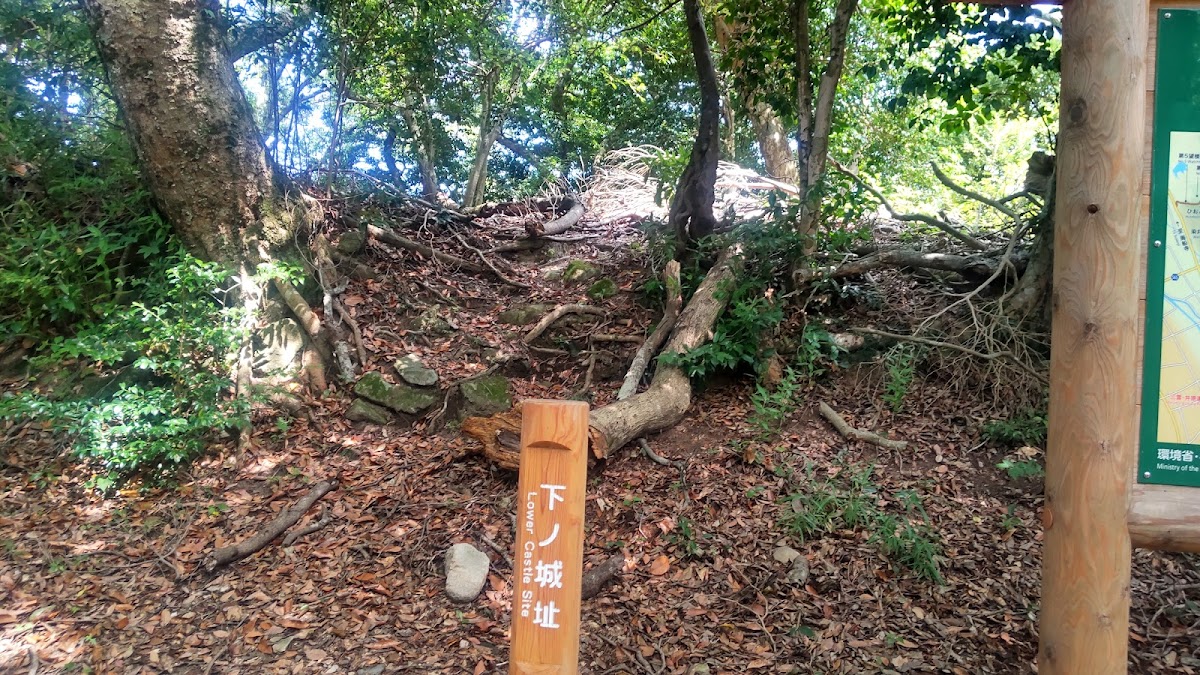
This castle was built utilizing the remains of the ancient mountain castle, Ito Castle, and was a strategically important base with two main groups of enclosures on the summit of Mt. Takasu: Kami-no-jo (main castle) and Shimo-no-jo (lower castle). The Harada clan resided there for approximately 340 years, and it functioned as an important mountain castle in Chikuzen Province, but it was abandoned in 1587 during Toyotomi Hideyoshi’s Kyushu campaign.
Even today, the remains of stone walls, earthworks, baileys, and ridged trenches are well-preserved, making it a valuable historical site for understanding the structure of medieval mountain castles.
History of Takaso Castle
Construction and the Rise of the Harada Clan
In 1249 (Kencho 1), Harada Tanetsugu and his son Harada Taneyori built a castle on Mount Takaso. The Harada clan was a family descended from Okura Haruzane, who distinguished himself in the Fujiwara Sumitomo Rebellion, and had their base in Ito District, Chikuzen Province, since the late Heian period.
The background to the Harada clan’s construction of Takaso Castle was the establishment of local control by samurai groups during the Kamakura period. It is believed that a strategic decision was made to utilize the remains of the ancient mountain castle, Ito Castle, to reduce the labor required for construction while making use of existing defensive facilities.
Offense and Defense in the Medieval Period
From the Nanboku-cho period to the Muromachi period, Takaso Castle functioned as an important military base in Kyushu. A document from Bunwa 2 (1353) mentions “Harada Castle,” indicating that it was definitely functioning as a castle at that time.
During the Muromachi period, fierce battles were fought between the Harada clan and the Shōni clan, who wielded considerable power as the Kyushu Tandai (governor of Kyushu). Although the Shōni clan seized Takaso Castle for a time, the Harada clan, with the assistance of the Ōuchi clan, successfully recaptured it. During this period, the Harada clan forged a close relationship with the Ōuchi clan and maintained their influence in Chikuzen Province.
Changes in the Sengoku Period
With the arrival of the Sengoku period, Kyushu became a battleground for powerful daimyo such as the Ōtomo, Ōuchi, Ryūzōji, and Shimazu clans. The Harada clan also sought to survive amidst this turmoil, sometimes siding with the Ōuchi clan and sometimes with the Ōtomo clan, maintaining their power with Takaso Castle as their base.
During the Eiroku era (1558-1570), as the Mori clan expanded its power into northern Kyushu, the Harada clan also forged relations with the Mori. Harada Takatane, the castle lord during this period, ensured the Harada clan’s survival through complex diplomatic strategies.
Toyotomi Hideyoshi’s Kyushu Campaign and the Castle’s Abandonment
In 1587 (Tensho 15), Toyotomi Hideyoshi launched his Kyushu campaign. The castle lord at the time was Harada Nobutane, but resistance against Hideyoshi’s overwhelming forces proved difficult.
After forcing the Shimazu clan to surrender during the Kyushu campaign, Hideyoshi drastically altered the distribution of daimyo throughout Kyushu. Harada Nobutane’s territory was confiscated, and Takaso Castle was abandoned. This marked the end of the Harada clan’s approximately 340-year rule over Takaso Castle.
After the castle’s abandonment, the Kuroda clan took control of Chikuzen Province, and Fukuoka Castle was built as their new base. Takaso Castle lost its military role and subsequently became overgrown with forest.
Structure and Remains of Takaso Castle
Layout and Enclosure Arrangement
Takaso Castle is a typical medieval mountain castle, consisting of multiple enclosures centered around the summit of Mount Takaso. The main structure is as follows:
Upper Enclosure (Main Enclosure): Located at the highest point of Mount Takaso, this is the main enclosure and the central part of the castle. It is presumed that the lord’s residence was located here, and a strong defensive structure, fortified with earthworks and stone walls, was constructed around it. Even today, the remains of the stonework are well-preserved, making it a valuable resource for understanding the stonework techniques of medieval mountain castles.
Lower Enclosure: Located below Upper Enclosure, this is a group of secondary enclosures believed to have contained living spaces and supply facilities. Multiple enclosures are arranged in a stepped pattern, each separated by earthworks.
Baileys on the Southeast Ridge: To strengthen the castle’s defenses, multiple baileys were constructed on the ridge extending southeast. These functioned as forward positions to prevent enemy incursions.
Characteristics of Defensive Structures
The defensive structures of Takaso Castle represent a culmination of medieval mountain castle technology.
Ridge-shaped Vertical Ditches: A group of ridge-shaped vertical ditches is constructed on the northern slope. This defensive structure, effective in hindering enemy lateral movement and dividing attacks, is an important relic demonstrating the evolution of castle construction technology during the Sengoku period.
Stone Walls and Stone Masonry: Stone-masonry baileys were found on the northern slope of Kami-no-jo Castle, providing protection with stone walls. While the use of stone walls was limited in medieval mountain castles, they were used in important areas of Takaso Castle, demonstrating the high level of castle construction technology of the Harada clan.
Earthworks and Entrances: Each enclosure is demarcated by earthworks, and the entrances (koguchi) are also defended by earthworks. The entrances are cleverly designed to prevent enemy intrusion, featuring a winding structure.
Relationship with Ito Castle
Koso Castle was built utilizing the remains of the ancient mountain castle, Ito Castle. Ito Castle was a Korean-style mountain castle built during the reign of Emperor Tenji (late 7th century) to prepare for invasions from the continent, and was a large-scale defensive facility surrounding the entire Koso Mountain.
The Harada clan was able to efficiently construct Koso Castle by reusing parts of Ito Castle, particularly the flat areas and stone walls at the mountaintop. Even today, parts of the earthworks and stone walls of Ito Castle are mixed with the remains of Koso Castle, making it a very interesting example for understanding the changes in castle architecture from ancient to medieval times.
Highlights of Takaso Castle
Remains of Stone Walls and Earthworks
The greatest highlight of Takaso Castle is its well-preserved stone walls and earthworks. In particular, the stone walls around Kami-no-jo are unusual for a medieval mountain castle, being constructed using the nozurazumi technique with relatively large stones.
The height of the stone walls varies depending on the location, but the highest point is about 3 meters, conveying the imposing presence of the time. The earthworks are also well-preserved, demarcating each enclosure, providing important clues to understanding the castle’s layout.
Ridge-shaped Vertical Moats
The ridge-shaped vertical moats on the northern slope are valuable remains demonstrating the defensive techniques of the Sengoku period. Multiple vertical moats are arranged in parallel, effectively preventing lateral movement of the enemy.
The unevenness of the vertical moats can be clearly observed at the site, allowing visitors to appreciate the high level of castle construction technology of the time. The ridged vertical moats are a defensive feature found in mountain castles from the Sengoku period throughout Japan, but those at Koso Castle are remarkably well-preserved and hold significant research value.
View
The view from the summit of Mount Koso is another major attraction of Koso Castle. On a clear day, you can enjoy a 360-degree panoramic view of the entire Itoshima Peninsula, the Genkai Sea, Fukuoka city, and the Seburi mountain range.
This view is not only aesthetically pleasing, but also demonstrates the strategically important location of Koso Castle. It offers a clear view of the Itoshima Peninsula, a key point for maritime traffic, revealing its advantageous position for early detection of enemy movements.
Access and Castle Climbing Guide
Access Methods
Using Public Transportation
- Approximately 40 minutes on foot from JR Chikuzen-Takada Station or Hatae Station on the Chikuhi Line to reach the trailhead.
- Approximately 20 minutes on foot from the Koso bus stop on the Itoshima City Community Bus to the trailhead.
Using a Car
- Approximately 40 minutes from central Fukuoka City via National Route 202.
- Parking available near Koso Shrine (a few cars).
- Address: Koso, Itoshima City, Fukuoka Prefecture
Climbing Route
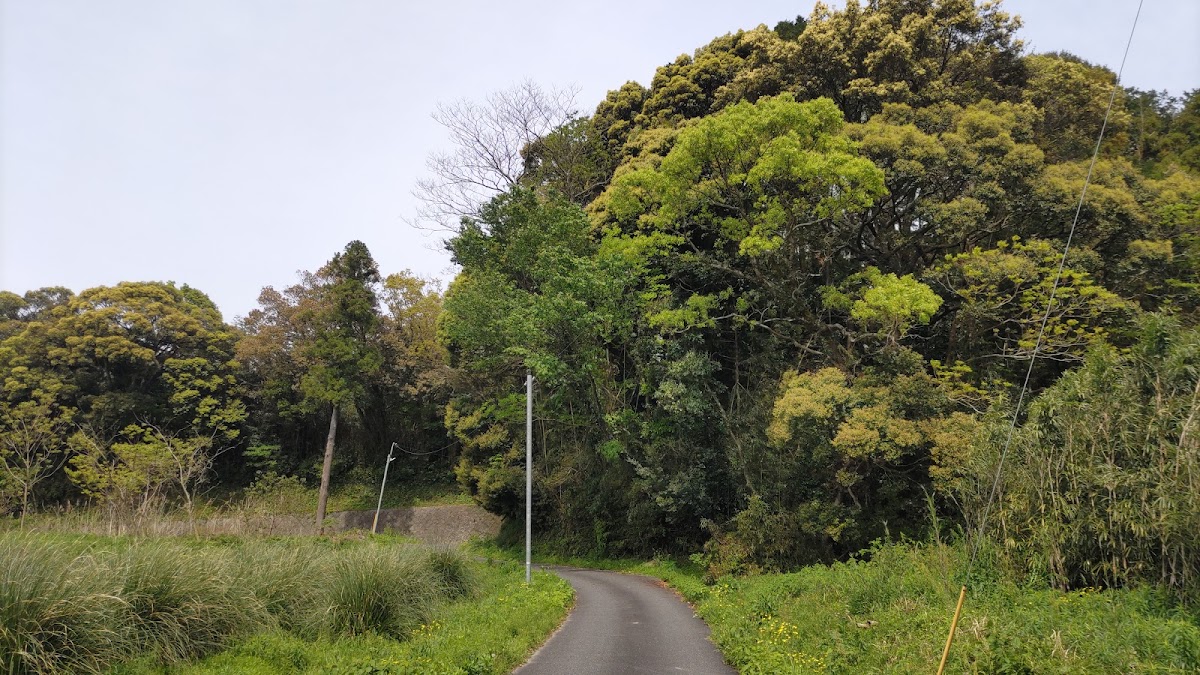
There are several routes to climb Koso Castle, but the most common is the route from Koso Shrine.
- Koso Shrine Route (Estimated time: 40-50 minutes)
- A standard route starting from Koso Shrine via a mountain trail.
- The trail is well-maintained, but caution is needed as there are steep sections.
- Along the way, you can observe the remains of baileys and earthworks.
- Route via Ito Castle Ruins (Estimated time: 60 minutes)
- A route leading to Koso Castle while viewing the remains of Ito Castle.
- Allows for comparison of the differences between ancient and medieval mountain castles.
Precautions for Climbing
- Clothing and Equipment: Hiking boots or non-slip athletic shoes and comfortable clothing are essential. In summer, bring insect repellent, a hat, and plenty of drinking water.
- Estimated Time: Allow approximately 2-3 hours round trip. It will take longer if you plan to thoroughly explore the ruins.
- Weather: It is recommended to avoid climbing during or after rain, as the trail can become slippery.
- Mobile Phone: Cell phone reception may be poor near the summit.
- Toilets: There are no toilets near the trailhead, so it is recommended to use the restroom beforehand.
Nearby Tourist Attractions
Ito Castle Ruins
An ancient mountain castle closely related to Koso Castle. Built in the late 7th century, this Korean-style mountain castle is designated a National Special Historic Site. Approximately 4 kilometers of earthworks and stone walls surrounding the entire Koso Mountain remain, making it a valuable historical site for understanding ancient castle construction techniques.
Koso Shrine
Located at the trailhead of Koso Castle, this shrine has been revered as the tutelary deity of the Harada clan. The shrine grounds contain historical materials and explanatory signs related to the Harada clan, allowing visitors to learn about the history of Koso Castle.
Itokuni Historical Museum
A museum located in Itoshima City, this museum features extensive exhibits on the Yayoi period’s Itokuni. Materials related to Koso Castle and Ito Castle are also on display, allowing visitors to comprehensively learn about the history of Itoshima.
Itoshima Coastline
The Itoshima Peninsula is known for its beautiful coastline, featuring scenic spots such as the Meotoiwa (Married Couple Rocks) of Futamigaura and Keya no Omon. Visiting these locations before or after climbing to Koso Castle allows you to enjoy both the nature and history of Itoshima.
Cultural Property Designation and Preservation Activities of Koso Castle
Koso Castle is designated as a historical site by Itoshima City, and efforts are underway to preserve and utilize its remains. In recent years, hiking trails have been improved and explanatory signs installed, creating a safe environment for visitors.
Local history enthusiasts and preservation societies regularly mow the grass and maintain the remains, keeping them in good condition. Furthermore, the Itoshima City Board of Education continues to conduct archaeological excavations, advancing the understanding of Koso Castle’s true nature.
Historical Significance of Koso Castle and the Harada Clan
Koso Castle holds significant historical importance as a castle of a local samurai group in medieval Kyushu. The Harada clan was based at Takaso Castle for approximately 340 years and played an active role as a powerful samurai in western Chikuzen Province.
The history of the Harada clan symbolizes the rise and fall of local samurai from the Kamakura period to the Sengoku period. Maintaining relations with the central government while continuously exerting influence as a regional power makes the Harada clan’s history an important case study for understanding Japanese medieval history.
Furthermore, Takaso Castle, built using the remains of the ancient mountain castle Ito Castle, is a valuable example of the transformation of castles from ancient to medieval times. It occupies an important position in castle history research because it allows us to understand how ancient defensive structures were repurposed for medieval mountain castles.
Summary
Takaso Castle is a medieval mountain castle built on Mount Takaso in Itoshima City, Fukuoka Prefecture, and is a historically important castle that served as the residence of the Harada clan for approximately 340 years. Built in 1249 by Harada Tanetsugu and his son Taneyori, it functioned as a strategic mountain castle utilizing the remains of the ancient Ito Castle.
Even today, the remains of the stone walls, earthworks, and rows of vertical trenches are well-preserved, making it a valuable historical site for learning about the structure of medieval mountain castles. The view from the summit of Mt. Koso is also magnificent, making it an attractive spot where you can enjoy both history and nature.
The round trip to the castle takes about 2-3 hours, but you can safely visit it via a well-maintained hiking trail. This historical site is recommended for a wide range of people, including those interested in the history of Itoshima, castle enthusiasts, and hiking lovers.