Asahi Castle (Buzen City, Fukuoka Prefecture) Complete Guide | History, Highlights, and Access Information for Japan’s Last Castle
Asahi Castle, located in Senzoku, Buzen City, Fukuoka Prefecture, is an extremely unique presence in the history of Japanese castles. Built in 1870, shortly after the Meiji Restoration, it is known as “the last castle built in Japanese history.” Also known as Senzoku Jinya, Senzoku Asahi Castle, and Senzoku Castle, this castle, though short-lived (just over a year), is a valuable historical site symbolizing the turbulent period from the end of the Edo period to the Meiji Restoration.
Historical Background of Asahi Castle
Circumstances Leading to its Construction
The construction of Asahi Castle is closely related to the political changes from the end of the Edo period to the Meiji Restoration. The Kokura Domain was a powerful domain in Buzen Province, and the Nitta Domain existed as a branch domain. Following the return of the domains to the Emperor in 1869, Ogasawara Sadamasa, the lord of the Nitta Domain, was appointed governor of the Senzoku Domain.
Following this personnel change, Ogasawara Sadamasa decided to construct a new domain office in Chizuka. Relocating from the previous base of the Nitta Domain, construction of Asahi Castle (Chizuka Jinya) began in 1870 (Meiji 3).
Ogasawara Sadamasa and the Chizuka Domain
Ogasawara Sadamasa was the lord of the Nitta Domain, a branch domain of the Kokura Domain. Due to the new government’s policy of the return of land and people to the Emperor, his position changed from lord to governor, but he continued to govern the Chizuka Domain.
The Chizuka Domain, as a branch domain of the Kokura Domain, controlled a part of Buzen Province. It is believed that the relocation of the domain office to Chizuka aimed to improve the efficiency of territorial management and demonstrate submission to the new government.
A Castle Abandoned in Just Over a Year
The history of Asahi Castle was extremely short. Although built in 1870 (Meiji 3), Asahi Castle was abandoned in July 1871 (Meiji 4) due to the abolition of the feudal domains and the establishment of prefectures. This abdication, occurring just over a year after its construction, is an unprecedented event in the history of Japanese castles.
With the abolition of the feudal domains, all feudal domains were reorganized into prefectures, and feudal lords and governors were ordered to relocate to Tokyo. Ogasawara Sadamasa also moved to Tokyo, and Asahi Castle rapidly came to an end.
Its Position as Japan’s Last Castle
Uniqueness in Castle History
The reason Asahi Castle is called “Japan’s last castle” lies in the timing of its construction. 1870 (Meiji 3) was after the fall of the Edo shogunate and the establishment of the Meiji government. Building a new castle or fortified residence at this time was extremely unusual.
Generally speaking, in Japan, the construction of new castles was strictly restricted after the “One Castle Per Province” decree (1615) in the early Edo period. By the end of the Edo period, the military value of castles had declined, and after the Meiji Restoration, many castles were demolished due to the castle demolition decree.
Constructed within this historical context, Asahi Castle holds significant importance in the study of castle history as the last example of traditional castle architecture.
Character as a Jinya (Fortified Residence)
Asahi Castle is formally classified as a “Jinya.” A Jinya is a facility that functioned as the administrative office of a relatively small domain, characterized by its simple structure without a keep or high stone walls.
The Senzoku Jinya (Asahi Castle) was not a large-scale castle, but rather a practical facility built to fulfill the administrative functions of the domain. Considering the context of the early Meiji period, it is thought to have had a stronger character as an administrative facility than a military one.
Structure and Scale of Asahi Castle
Layout and Arrangement
Asahi Castle is a flatland castle built on a plain in Chizuka, Buzen City, Fukuoka Prefecture. While a detailed layout map does not exist, it is presumed to have possessed the minimum necessary facilities for a jinya (fortified residence).
Based on the structure of a typical jinya, the following facilities are thought to have existed:
- Palace: The residence and administrative space of the domain governor
- Offices: Various offices responsible for the administration of the domain
- Row Houses: Refugees and living quarters for samurai
- Warehouse: Storehouses for storing tribute rice and other supplies
- Gate: The gate serving as the entrance to the jinya
Presence of Stone Walls
Some stone walls remain at the Asahi Castle site. This indicates that it had a relatively solid structure for a jinya. Stone walls are an important element of castle architecture, and their presence suggests that Asahi Castle was not merely a residence, but a facility with a certain level of defensive function.
The remaining stone walls are valuable historical relics for understanding the castle construction techniques of the time. They are also attracting attention from castle researchers as examples of early Meiji-era stonework techniques.
Site Size
Due to its nature as a branch domain of the Kokura domain, the Senzoku domain did not possess a particularly large territory. Therefore, it is estimated that the site size of Asahi Castle was small compared to the castles of larger domains.
The site size of a jinya (fortified residence) was generally several thousand to 10,000 tsubo (approximately 3,650 to 33,000 square meters), depending on the size of the domain. Asahi Castle is thought to have been within this range, but due to a lack of historical records, the exact site size remains unknown.
Highlights of Asahi Castle
Existing Stone Walls
The biggest highlight when visiting the Asahi Castle ruins is the stone walls that still remain today. Built in 1870 (Meiji 3), the stone walls retain their original appearance even after more than 150 years.
The construction methods of the stone walls reflect the techniques of the late Edo period to the early Meiji period, making them valuable historical documents for understanding the evolution of castle architecture. By observing the size and stacking methods of the stones, one can experience the castle-building techniques of the time.
Relationship with Senzoku Hachiman Shrine
Senzoku Hachiman Shrine is located near the Asahi Castle ruins. This shrine was a center of local faith and is thought to have had a deep connection with Asahi Castle.
Castles and shrines have had a close relationship throughout Japanese history. Feudal lords and samurai prayed at shrines for military success and peace within their territories, and shrines generally received the patronage of the domain. It is presumed that a similar relationship existed between Asahi Castle and Senzoku Hachiman Shrine.
Atmosphere of the Castle Ruins
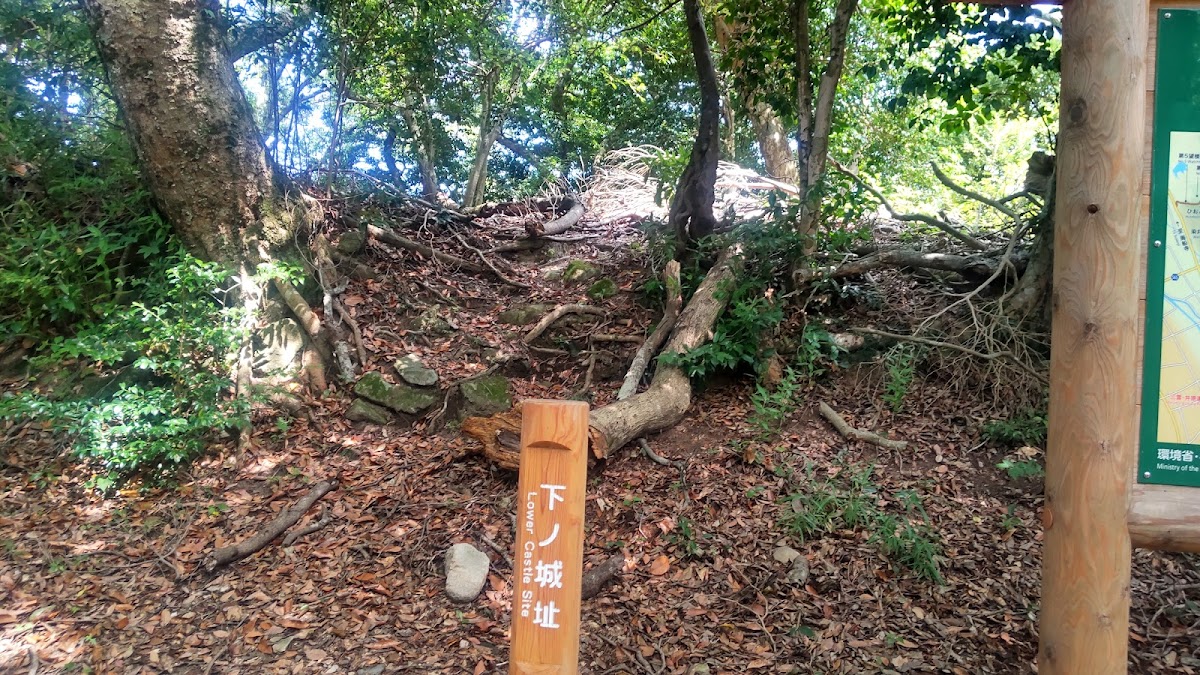
While very few of the original structures remain at the current Asahi Castle ruins, the atmosphere of the castle can still be felt from the stone walls and topography.
The castle ruins, nestled in a quiet residential area, evoke the image of the central functions of the domain that once resided here. Although it lasted only a little over a year, the historical traces of the domain’s administration in this area still remain.
Historical Value as Japan’s Last Castle
The greatest value of Asahi Castle lies in its historical position as “Japan’s last castle.” The fact that the history of Japanese castle architecture, which had continued for several centuries, ended here evokes a sense of historical romance.
Why was a new castle built during the turbulent era of the Meiji Restoration, and why was it abandoned after only one year? The history of Asahi Castle, as a story symbolizing the tumultuous period from the end of the Edo period to the Meiji era, allows visitors to truly feel the turning point in history.
Access to Asahi Castle
Location
Address: Chizuka, Buzen City, Fukuoka Prefecture (Oaza Chizuka)
Asahi Castle ruins are located in the urban area of Buzen City, surrounded by residential areas. The exact address may vary depending on the state of development of the historical site, but using Chizuka Hachiman Shrine as a landmark will make it easier to find.
Access by Public Transportation
Nearest Station: JR Nippo Main Line, Ujima Station
From Ujima Station to Asahi Castle Ruins, the following access methods are available:
- Walking: Approximately 20-30 minutes
- Taxi: Approximately 5-10 minutes
- Bus: Buzen City Community Bus and other services may be available (please check service status)
Ujima Station is one of Buzen City’s main stations, accessible from Kokura and Oita. The route from the station to the castle ruins is relatively flat, but it is a considerable distance, so it is recommended to allow ample time if walking.
Access by Car
Access from Major Roads:
- Higashi-Kyushu Expressway: Approximately 10-15 minutes from Buzen IC
- National Route 10: From Buzen city center towards the Chizuka area
Regarding parking, there may not be a dedicated parking lot for the castle ruins, so you will need to use the parking lot at Chizuka Hachiman Shrine or other nearby public parking lots. We recommend checking with the Buzen City Tourism Association or other relevant organizations before your visit.
Nearby Tourist Attractions
When visiting Asahi Castle, combining your visit with other tourist attractions in Buzen City and the surrounding area will enhance your historical exploration.
Tourist Spots in Buzen City:
- Mount Kubotei: A sacred site of mountain worship known as a sacred place for Shugendo (mountain asceticism).
- Buzen Kokubunji Temple Ruins: The ruins of a Kokubunji temple from the Nara period, a nationally designated historic site.
- Ujima Port: Enjoy the atmosphere of a port town facing the Buzen Sea.
Castles in the Surrounding Area:
- Nakatsu Castle: A castle associated with Kuroda Kanbei, located in Nakatsu City, Oita Prefecture (approximately 20 minutes from Nakatsu Station).
- Kokura Castle: A representative castle in Kitakyushu City, Fukuoka Prefecture (right next to Kokura Station).
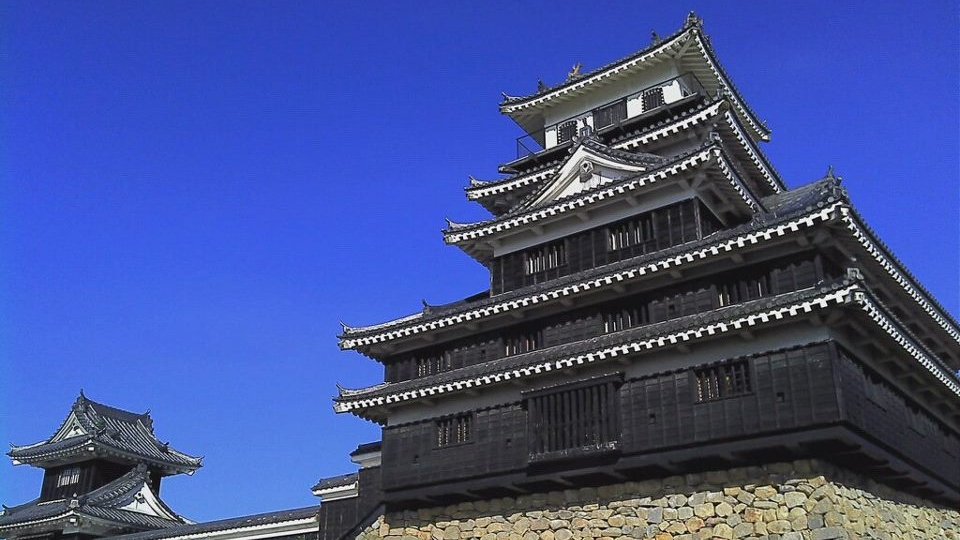
Nakatsu Castle was the residence of the Nakatsu Domain, adjacent to the Kokura Domain, the main domain of Asahi Castle. Visiting both Asahi Castle and Nakatsu Castle will allow you to gain a deeper understanding of the domain’s history in this region.
Preservation Status and Current Status of Asahi Castle
Historic Site Designation Status
Currently, Asahi Castle Ruins do not appear to be designated as a national or prefectural historic site. However, its historical value as “Japan’s last castle” is widely recognized, and it is considered a valuable cultural asset of the region.
While there may be information boards and explanatory signs installed by Buzen City, it is currently not developed as a large-scale historical park.
Status of Remains
More than 150 years have passed since its construction, and the remains of Asahi Castle are limited. The main remains are as follows:
- Stone Walls: Parts remain, conveying the castle-building techniques of the time.
- Traces of Enclosures: The layout of the encampment can be inferred from the topography.
- Moat Traces: Although not clear, traces may remain in the topography.
Regarding the buildings, they were dismantled after the castle was abandoned and no longer exist. The fact that it was only used for a little over a year is thought to be one reason why the buildings were not preserved.
Regional Positioning
Asahi Castle ruins are one of the important historical sites in telling the history of Buzen City. It is used in local history education and local history research as a site symbolizing the transition period from the end of the Edo period to the Meiji era. For local history enthusiasts and castle fans, Asahi Castle is a valuable site with a unique history as “Japan’s last castle.” While not widely known nationwide, it is a noteworthy site among those interested in castle history.
Points to Note When Visiting Asahi Castle
Precautions During Visit
When visiting the Asahi Castle ruins, please note the following:
- Respect for Private Property: Part of the castle ruins may be private property. Please do not enter restricted areas.
- Protection of Remains: Remains such as stone walls are valuable cultural assets. Please be careful not to climb on them or move stones.
- Respect for the Surrounding Environment: As it is located in a residential area, please be considerate of nearby residents by avoiding noise and illegal parking.
- Safety Management: Some areas are not well-maintained, so please watch your step while visiting.
Best Time to Visit
As Asahi Castle Ruins is an outdoor historical site, the following times are best for visiting:
- Spring (March-May): Mild weather, ideal for strolling
- Autumn (October-November): Cool, comfortable season for historical exploration
- Winter (December-February): Relatively mild Buzen climate makes it possible to visit even in winter
Summer (June-September) is hot and humid, so precautions against heatstroke are necessary. Also, the rainy season may cause slippery conditions.
Estimated Time Required
Please use the following as a guideline for the time required to visit Asahi Castle Ruins:
- Castle Ruins Only: Approximately 30 minutes to 1 hour
- Including Senzoku Hachiman Shrine: Approximately 1 hour to 1 hour 30 minutes
- Including a Stroll Through the Surrounding Area: Approximately 2 hours
Since the castle is not large, even a thorough visit should be sufficient in about 1 hour. If you plan to explore the surrounding historical environment, it would be advisable to allocate a little more time.
Materials and Research on Asahi Castle
References
For those who wish to learn more about Asahi Castle, the following materials may be helpful:
- Local History Records: Descriptions of Asahi Castle can be found in the Buzen City History, Fukuoka Prefecture History, etc.
- Books on Castles: Asahi Castle is introduced as the “last castle” in a book that comprehensively covers Japanese castles.
- Materials Related to the Ogasawara Clan: It is mentioned as part of the activities of a branch domain in a document dealing with the history of the Ogasawara clan of the Kokura Domain.
Research Challenges
Many aspects of Asahi Castle remain unclear:
- Detailed Layout Map: Since an accurate layout map does not exist, restoration research is a challenge.
- Structure of Buildings: Details of what kind of buildings existed are unknown.
- History of Construction: Detailed research into the political background is needed to understand why a new encampment was necessary in the early Meiji period.
- Changes After the Castle’s Abandonment: Research into how the facilities were disposed of and how the land was used after the castle was abandoned is also lacking.
Future discoveries of historical materials and archaeological investigations are expected to shed more light on the true nature of Asahi Castle.
Historical Background of the Buzen Region
History of Buzen Province
Buzen Province (Buzen no kuni) was the former name of a province spanning the eastern part of present-day Fukuoka Prefecture and the northern part of Oita Prefecture. It flourished as a transportation hub from ancient times and became the stage for power struggles between clans such as the Otomo and Mori during the medieval period.
During the Edo period, several domains, centered around the Kokura Domain, divided the territory, and the Chizuka area, where Asahi Castle was located, was under the control of the Kokura Domain.
The Kokura Domain and its Branch Domain System
The Kokura Domain was the central domain of Buzen Province, with the Ogasawara clan serving as its lords. In addition to its main domain, the Kokura Domain had several branch domains, one of which was the Nitta Domain (later the Chizuka Domain).
The branch domain system was a system designed to promote the prosperity of the family and improve the efficiency of domain management by distributing land to the lord’s family. However, with the abolition of the domain system itself during the Meiji Restoration, branch domains also disappeared along with the main domains.
Meiji Restoration and the Abolition of Domains and Establishment of Prefectures
The Meiji Restoration was a major event that fundamentally transformed Japan’s political and social system. With the return of land and people to the Emperor in 1869 (Meiji 2), the lords became domain governors, formally returning land and people to the Emperor.
However, in reality, the former lords continued to govern as domain governors, so the actual situation of the domains remained largely unchanged. Therefore, Ogasawara Sadamasa was able to build a new administrative office as the governor of the Senzoku Domain.
However, with the abolition of domains and establishment of prefectures in 1871 (Meiji 4), all domains throughout the country were completely abolished and integrated into the prefectural system. Due to this policy, Asahi Castle met its fate of being abandoned after only a little over a year.
Summary: The Historical Significance of Asahi Castle
Located in Senzoku, Buzen City, Fukuoka Prefecture, Asahi Castle occupies a unique position in the history of castles as “Japan’s last castle,” built in 1870 (Meiji 3). This fortified residence, built by Ogasawara Sadamasa, the lord of the Senzoku domain (a branch of the Kokura domain), was born amidst the great upheaval of the Meiji Restoration and disappeared after just over a year due to the abolition of the feudal domains and establishment of prefectures—a truly phantom castle.
Although only a portion of the stone walls remains today, its existence conveys the moment when the history of Japanese castle architecture, which had lasted for several centuries, came to an end. While not a large-scale tourist destination, it is a valuable historical site that quietly tells the story of a turning point in history, making it a worthwhile place for castle enthusiasts and history buffs to visit.
When visiting Buzen City, why not take a visit to “Japan’s last castle” and reflect on the flow of time from the turbulent end of the Edo period to the Meiji era? Asahi Castle’s short but impressive history will allow us to truly feel the significance of a major turning point in history.