.png)
Masutomi Castle (Fukuoka Prefecture) Complete Guide: The History and Highlights of a Mountain Castle that Flourished as a Strategic Point of the Kuroda Six Castles
What is Masutomi Castle?
Masutomi Castle is a mountain castle built on a mountain approximately 190 meters above sea level in Nakamasu, Kama City, Fukuoka Prefecture. Also known as Osumi Castle, it played an important role from the Sengoku period to the early Edo period as a strategic point connecting the Hita Highway and the Nagasaki Highway.
Currently, it is maintained as the Kaho Masutomi Castle Nature Park, a valuable historical site that conveys the atmosphere of the Sengoku period. As one of the Kuroda Six Castles, Masutomi Castle held an important position in the defense system of the Fukuoka Domain, and its large size and well-preserved state have earned it high praise among mountain castle enthusiasts and history lovers.
History of Masutomi Castle
From Construction to the Ouchi Clan Era
Masutomi Castle is said to have been built during the Eikyo era (1429-1441) by Ouchi Morimi. The Ouchi clan was a powerful daimyo (feudal lord) based in Suo Province (present-day Yamaguchi Prefecture). As they expanded their influence into northern Kyushu, they built a castle in the strategically important Osumi region.
This area was a strategically important location where the routes connecting Chikuzen, Buzen, and Hizen Provinces intersected, and was destined to become a focal point of power struggles in Kyushu. The Ouchi clan strengthened their influence in Chikuzen Province using Masutomi Castle as their base.
Battles in the Sengoku Period
With the arrival of the Sengoku period (Warring States period), Masutomi Castle became the stage for fierce battles for supremacy in Kyushu. Powerful daimyo from Kyushu and the Chugoku region, including the Ouchi, Otomo, and Mori clans, fiercely competed for this strategic location.
Around the Eiroku period (circa 1560), Mori Motonari, who became the ruler of the Chugoku region, acquired Masutomi Castle and appointed Sugi Tadashige as its castle guard. The Mori clan, in their efforts to expand into Kyushu, considered Masutomi Castle a crucial base.
Later, towards the end of the Sengoku period, it came under the control of the Akizuki clan, a powerful local lord of Chikuzen Province. The Akizuki clan established their base at Koshoyama Castle and used Masutomi Castle as one of their subsidiary castles. Records indicate that Akizuki Tanezane used Masutomi Castle as his retirement castle and utilized it as a base for expanding his territory.
Toyotomi Hideyoshi’s Conquest of Kyushu and the “One-Night Castle Legend”
In 1587, when Toyotomi Hideyoshi conquered Kyushu, a turning point in history arrived for Masutomi Castle. During Hideyoshi’s Kyushu campaign, the “One-Night Castle Legend” arose at Masutomi Castle.
According to this legend, Hideyoshi’s army used a clever tactic to make it appear as if they had built the castle overnight, forcing the Akizuki clan to surrender. While it’s likely they actually utilized the existing Masutomi Castle, this episode is recounted as an example of Hideyoshi’s masterful psychological warfare. Following this conquest of Kyushu, the Akizuki clan surrendered, and Chikuzen Province was granted to Kuroda Kanbei (Josui).
The Kuroda Era and the Six Outer Castle System
In 1600, after the Battle of Sekigahara, Kuroda Nagamasa was granted Chikuzen Province with a 520,000 koku domain, establishing the Fukuoka Domain. Masutomi Castle then played a crucial role as one of the “Six Outer Castles of the Kuroda Clan.”
The Six Outer Castles of the Kuroda Clan were six branch castles that formed the core of the defense system centered around Fukuoka Castle. Besides Masutomi Castle, these included Takatori Castle, Matsuo Castle, Ito Castle, Saraya Castle, and Wakamatsu Castle. These castles functioned as key points for the Fukuoka Domain’s territorial control and defense.
The first lord of Masutomi Castle was Goto Matabei (Goto Mototsugu), a brave general known as one of the Kuroda Twenty-Four Knights, who was appointed with a stipend of 16,000 koku. Goto Matabei was known as a particularly brave warrior among the Kuroda retainers, and is a figure still fresh in people’s memories, having been portrayed by Takashi Tsukamoto in the historical drama “Gunshi Kanbei” and by Sho Aikawa in “Sanada Maru.”
However, in 1611, Goto Matabei left the Kuroda family and fought on the Toyotomi side in the Siege of Osaka. Afterward, Mori Tomonobu (Mori Tahei), also one of the Kuroda Twenty-Four Knights, became the lord of Masutomi Castle. Mori Tomonobu is famous for the anecdote of “Drink, drink the sake!” sung in the “Kuroda-bushi” folk song.
Abandonment and Present State
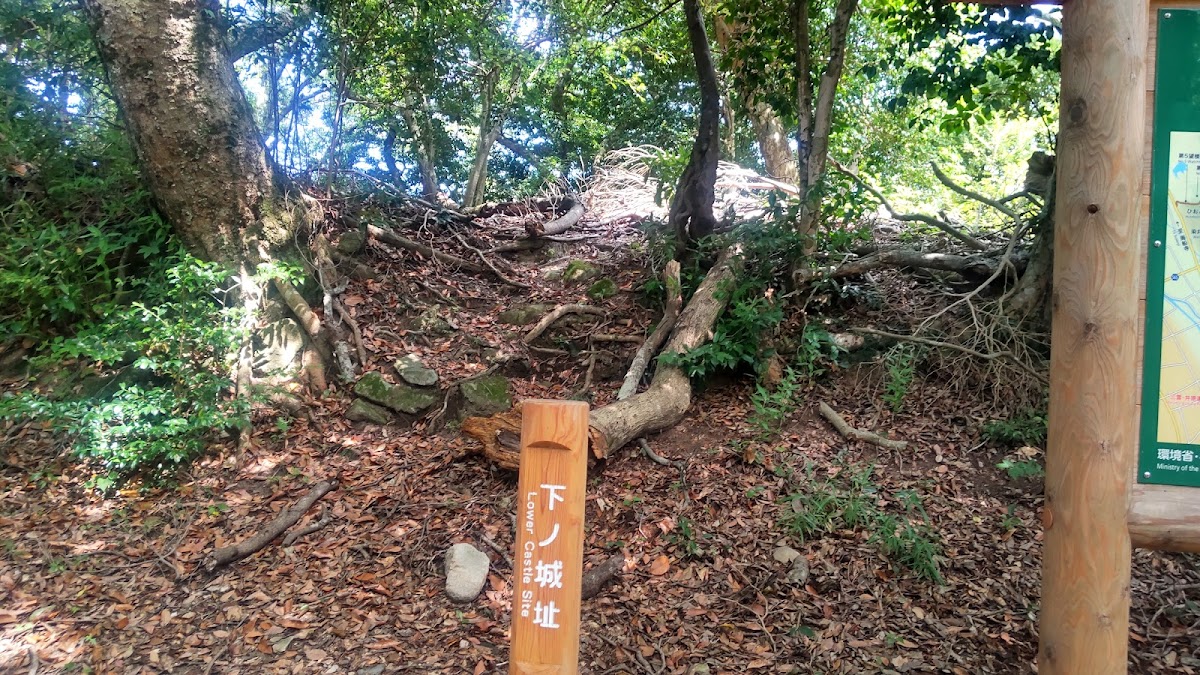
In 1615, when the Edo Shogunate issued the “One Castle Per Province” decree, Masutomi Castle was abandoned. However, even after its demolition, the remains such as the stone walls, baileys, and moats remained in good condition and continue to exist to this day.
Currently, the Masutomi Castle ruins are maintained as the Kaho Masutomi Castle Nature Park, with citizen volunteers carrying out maintenance such as grass cutting and maple tree planting. Every year from the end of October to the beginning of November, the “One-Night Castle” event is held, and the site is cherished as a local historical heritage.
Masutomi Castle’s Layout and Structure
Overall Scale and Arrangement
Masutomi Castle is a large mountain castle built around the summit of a mountain 188 meters above sea level (relative height approximately 150 meters). Its scale is particularly large among the Kuroda Rokutan Castles, and visitors are often surprised by its “immense size, beyond their imagination.”
The castle grounds are centered around the main keep at the mountaintop, with multiple baileys arranged in stages, and defensive facilities deployed along the ridges and valleys. It is such a vast castle complex that it takes more than two hours to traverse the entire site.
Main Keep and Surroundings
The main keep is located at the mountaintop, and a relatively large, flat area is secured there. From here, you can see a panoramic view of the Kama town area and surrounding roads, making it clear that this was an ideal location for monitoring a strategic transportation hub.
The area around the main keep is particularly well-maintained, and the remains are in good condition. Parts of the stone walls remain, offering a glimpse into the castle-building techniques of the time.
Defensive Facilities
Masutomi Castle features various facilities designed to enhance its defensive capabilities as a mountain castle.
Vertical moats are moats dug along the slopes, serving to prevent lateral movement of the enemy and limiting attack routes. Multiple vertical moats have been identified at Masutomi Castle, and their scale and placement indicate the use of advanced castle-building techniques.
Dry moats separated the baileys, forming defensive lines. The deep dry moats physically hindered enemy intrusion and also served as a base for counterattacks by the defenders.
The remains of the rear gate (back gate) also remain, providing valuable information about the structure of the castle’s entrances.
Characteristics of the Stone Walls
The stone walls of Masutomi Castle are an important historical site that demonstrates the evolution of castle construction techniques from the Sengoku period to the early Edo period. Many sections feature natural stone masonry, reflecting the technological level of the time.
The remains, including those in a state of decay, are well-preserved, making it a historical site of high value from the perspective of castle research.
Importance as a Transportation Hub
Intersection of Highways
The Osumi area where Masutomi Castle was built was a crucial intersection of the Hita Highway and the Nagasaki Highway. The Hita Highway connected Chikuzen Province and Bungo Province (present-day Oita Prefecture), while the Nagasaki Highway was a major highway connecting Kyushu and Honshu, resulting in a bustling flow of people and goods.
Controlling this area meant economic and military superiority in northern Kyushu, and therefore Masutomi Castle became the target of fierce battles.
Military Value
Masutomi Castle, situated on a mountaintop approximately 190 meters above sea level, offered a panoramic view of the surrounding area, making it an extremely important military base. Its strategic location allowed for early detection of enemy movements and communication with allies, and it also functioned as a base for military deployments to the surrounding region.
The Kuroda clan’s emphasis on Masutomi Castle as one of the six key castles in their governance of the Fukuoka Domain stemmed from their full recognition of its military and strategic value.
Kuroda Kanbei and Nagamasa and Masutomi Castle
Kuroda Kanbei (Josui)’s Kyushu Governing Plan
Kuroda Kanbei (Josui) contributed to the pacification of Kyushu as a military strategist for Toyotomi Hideyoshi, and later, he conducted his own military operations in Kyushu during the Battle of Sekigahara. Kanbei’s strategic vision deeply understood the importance of controlling strategically important transportation hubs.
When Kanbei spent his later years in Fukuoka, and his son Nagamasa became the lord of the Fukuoka Domain, Masutomi Castle came to occupy a crucial position in his governing plan.
Kuroda Nagamasa’s Six-Castle System
Kuroda Nagamasa, inheriting the teachings of his father, Kanbei, established a governing system for the 520,000-koku Fukuoka Domain. At its core was the Six-Castle System.
Nagamasa positioned six branch castles at key locations within his territory, centered around Fukuoka Castle, appointing powerful retainers as castle lords. He stationed Goto Matabei and Mori Tomonobu, two of Kuroda’s 24 elite warriors, at Masutomi Castle, entrusting them with the defense and governance of eastern Chikuzen Province.
This system was an excellent integration of military and civil administration, preventing enemy invasions while maintaining order and administrative functions within the territory.
Goto Matabei and Masutomi Castle
Goto Matabei (Goto Mototsugu) was a particularly brave and renowned warrior among the Kuroda retainers. He served the Kuroda family from the time of their time in Harima Province (present-day Hyogo Prefecture), achieving numerous military successes.
In 1600, Goto Matabei was appointed the first lord of Masutomi Castle and was granted a high stipend of 16,000 koku, demonstrating the deep trust placed in him by Nagamasa. However, in 1611, due to a conflict with Nagamasa, he left the Kuroda family and subsequently fought as a general on the Toyotomi side during the Siege of Osaka, where he was killed in battle.
Goto Matabei’s life embodies the glory and tragedy of a Sengoku period warlord, and his time at Masutomi Castle is a chapter in his turbulent life.
Mori Tomonobu (Mori Tahei) and Masutomi Castle
After Goto Matabei’s departure, Mori Tomonobu (Mori Tahei) became the lord of Masutomi Castle. Mori Tomonobu is famous for the anecdote sung in the “Kuroda-bushi” folk song: “Drink, drink, if you drink enough to swallow this spear, the finest in all of Japan, then you are a true Kuroda warrior.”
The legend of him swallowing the famous spear “Nihongo” from Fukushima Masanori is widely known as a testament to Mori Tomonobu’s bold character. As the lord of Masutomi Castle, Tomonobu dedicated himself to governing the region and served as a senior retainer of the Kuroda clan.
Masutomi Castle Highlights and Walking Guide
Access and Parking
Masutomi Castle is approximately a 10-minute drive from the city center of Kama. It is maintained as the Kaho Masutomi Castle Nature Park and has ample parking.
If using public transportation, you can take a bus or taxi from Katsuragawa Station or Iizuka Station on the JR Chikuhō Main Line. Access to the castle entrance is most convenient by car.
Castle Ascent Route
From the parking lot to the main keep, you can walk up along a well-maintained road. However, if you plan to explore the entire castle grounds, you will be walking on mountain trails, so appropriate clothing and shoes for hiking are necessary.
The estimated time required is approximately one hour for a round trip to the main keep, and two hours or more if you plan to explore the entire area.
View from the Main Keep
The view from the main keep is one of the greatest highlights of Masutomi Castle. You can see the entire town of Kama, and on a clear day, you can even see the mountains of Chikuhō in the distance. The castle lords of the Sengoku period must have contemplated the management of their territories while gazing at this view.
The view of the roads spreading out below gives you a real sense of why this area was considered a strategic transportation hub.
Points to Observe the Remains
At Masutomi Castle, you can observe the following remains:
- Stone Walls: The stone walls remaining around the main keep are valuable resources for understanding the castle construction techniques of the time.
- Enclosures: Multiple tiered flat areas functioned as spaces for defense and habitation.
- Vertical Moats: Vertical moats carved into the slopes are important for understanding the defensive system of the mountain castle.
- Dry Moats: Dry moats separating the enclosures remain clearly visible.
- Rear Gate Remains: Remains indicating the structure of the rear gate can be confirmed.
The state of preservation of the remains, including those in a ruined state, is good, making it an ideal field for learning about the structure of a mountain castle.
Seasonal Attractions
Masutomi Castle also offers the opportunity to enjoy nature in every season.
Spring is beautiful with fresh greenery, and you can enjoy a stroll in the refreshing air.
Summer is lush with greenery, and the shade of the trees provides coolness, but insect repellent is necessary.
Autumn is the season of autumn leaves, and the maple trees planted by citizen volunteers change color, presenting a particularly beautiful landscape. The period from late October to early November, coinciding with the “One-Night Castle” event, is the time of year when the most people visit.
Winter offers clear air and excellent views, making it an ideal season for observing the ruins.
Masutomi Castle and Surrounding Historical Sites
Kuroda Six Castles Tour
When visiting Masutomi Castle, visiting the other six Kuroda castles in conjunction will provide a deeper understanding of the Fukuoka Domain’s defense system.
- Takatori Castle: Located in Higashi-ku, Fukuoka City, a strategic point overlooking Hakata Bay.
- Matsuo Castle: Located in Jonan-ku, Fukuoka City, protecting the west of Fukuoka Castle.
- Ito Castle: Located in Itoshima City, a castle utilizing an ancient mountain fort.
- Sawara Castle: Located in Sawara-ku, protecting the southwest of Fukuoka Castle.
- Wakamatsu Castle: Located in Wakamatsu-ku, Kitakyushu City, a strategic point for maritime traffic.
Visiting these castles will allow you to gain a comprehensive understanding of Kuroda Nagamasa’s strategic thinking and the governing system of the Fukuoka Domain.
Koshoyama Castle
Near Masutomi Castle lies Koshoyama Castle, the former base of the Akizuki clan. Considering the relationship during the time when the Akizuki clan used Masutomi Castle as a subsidiary castle, visiting both Koshoyama Castle and Masutomi Castle will provide a deeper understanding of the power dynamics of Chikuzen Province during the Sengoku period.
History and Culture of Kama City
Besides Masutomi Castle, Kama City boasts many other historical and cultural resources. The local history museum offers materials on regional history and Masutomi Castle, which will be helpful for learning before and after your visit.
Points to Note When Visiting Masutomi Castle
Clothing and Equipment
The following equipment is recommended for exploring the mountain castle:
- Hiking boots or trekking shoes: Non-slip shoes are necessary for walking on mountain trails.
- Long-sleeved shirt and long pants: To protect yourself from bushes and insects.
- Hat: To protect your head from the sun and branches. – Gloves: Useful for gripping rocks and tree branches.
- Drinking Water: Sufficient hydration is especially necessary during the summer.
- Towel: For wiping away sweat.
- Insect Repellent Spray: Particularly necessary from spring to autumn.
Safety Precautions
- Avoid Solo Activities: Visit in groups whenever possible.
- Check the Weather: The ground can become slippery during and after rain, so refrain from visiting or exercise extreme caution.
- Allow Ample Time: Plan your time carefully to descend before sunset.
- Cell Phone Signal: Signal strength can be weak in some mountainous areas, so inform family members of your destination beforehand.
Manners and Rules
- Protect Historical Structures: Do not climb on or damage historical structures such as stone walls and enclosures.
- Take Your Trash Home: To protect the natural environment, always take your trash home. – No Plant Collection: Collecting plants within the park is prohibited.
- No Open Fires: To prevent forest fires, the use of open fires is strictly prohibited.
Historical Value and Future Preservation of Masutomi Castle
Value as a Historic Site
Masutomi Castle possesses high historical value in the following respects:
- Exhibits the Kyushu Situation during the Sengoku Period: As a castle involved with various forces that shaped the Sengoku history of Kyushu, such as the Ouchi, Otomo, Mori, and Akizuki clans, it is an important historical site that tells the story of the political and military situation at the time.
- Exhibits the Kuroda Clan’s Governing System: As one of the six Kuroda castles, it is a valuable example that concretely illustrates the defense and governance system of the Fukuoka Domain.
- Learn about Mountain Castle Structures: The well-preserved remains serve as valuable teaching materials for learning about the construction techniques and structures of mountain castles from the Sengoku period to the early Edo period.
- Regional Historical Identity: As a symbol of Kama City’s history, it plays a crucial role in shaping the region’s identity.
Preservation Activities and Citizen Participation
Currently, citizen volunteers play a significant role in the preservation and utilization of Masutomi Castle. Regular grass cutting, cleaning, and maple tree planting are carried out, continuing efforts to pass on the historical site to future generations.
The annual “One-Night Castle” event is an important opportunity to connect local residents with the historical site, and is a meaningful activity in terms of historical education and tourism promotion.
Future Challenges and Prospects
The future preservation and utilization of Masutomi Castle presents the following challenges and prospects:
Challenges:
- Further investigation of the remains and promotion of academic research
- Maintenance and management of aging facilities
- Ensuring visitor safety and improving convenience
- Enhancing explanatory signs and guides to convey the value of the historical site
Prospects:
- Efforts toward designation as a National Historic Site
- Information dissemination utilizing digital technology (VR, AR, etc.)
- Development of educational programs and collaboration with school education
- Further utilization as a tourist resource
- Development of a wide-area tourist route visiting the six Kuroda castles
Summary
Masutomi Castle, located in Kama City, Fukuoka Prefecture, is a valuable mountain castle that conveys the history from the Sengoku period to the early Edo period. Built as a strategic transportation hub, it is a castle of extremely high historical value, as it was involved with various forces that colored the history of Kyushu, including the Ouchi, Mori, Akizuki, and Kuroda clans.
Masutomi Castle, one of the six Kuroda castles, served as the lordship of renowned generals such as Goto Matabei and Mori Tomonobu, and is an important historical site for understanding the governing system of the Fukuoka Domain. Built on a mountaintop approximately 190 meters above sea level, this large castle complex retains many well-preserved structures, including stone walls, baileys, vertical moats, and dry moats, making it an ideal site for studying the structure and defensive systems of mountain castles.
Currently, Masutomi Castle is maintained as the Kaho Masutomi Castle Nature Park, and with the cooperation of citizen volunteers, it is carefully preserved as a local historical heritage site. It is a valuable place where you can enjoy the changing seasons while feeling the remnants of the Sengoku period.
For those interested in the history of Fukuoka Prefecture, mountain castle enthusiasts, and those who enjoy nature walks, Masutomi Castle is a fascinating spot well worth visiting. Why not visit this historical stage while reflecting on the strategic acumen of Kuroda Kanbei and Nagamasa, and the exploits of Goto Matabei and Mori Tomonobu?
Masutomi Castle played a vital role as a transportation hub and as one of the six Kuroda castles. Its history and remains vividly convey to us the state of Kyushu during the transition from the Sengoku period to the Edo period. As a precious cultural heritage to be passed on to future generations, Masutomi Castle will continue to be loved and protected by many people.