Kurosaki Castle (Fukuoka Prefecture) Complete Guide: A Thorough Explanation of the History and Highlights of the Six Kuroda Castles
What is Kurosaki Castle?: A Border Strategy as One of the Six Chikuzen Castles
Kurosaki Castle is a modern castle located in Kurosaki, Yahata-Nishi Ward, Kitakyushu City, Fukuoka Prefecture. Built near the summit of what is now Shiroyama Green Park (Dohakusan), this castle played an important role as one of the “Six Chikuzen Castles (Kuroda Six Castles)” built by Kuroda Nagamasa, who received 520,000 koku of land in Chikuzen Province after the Battle of Sekigahara, for border defense.
Shiroyama is also known as “Dohakusan” and is located on a hill approximately 70 meters above sea level. It once also served as a coastal castle facing Dokai Bay, and was a strategically important location protecting the border with Buzen Province (present-day eastern Fukuoka Prefecture to northern Oita Prefecture).
History of Kurosaki Castle: From Construction to Abandonment
The Battle of Sekigahara and Kuroda Nagamasa’s Entry into Chikuzen
In 1600 (Keicho 5), Kuroda Nagamasa, who distinguished himself in the Battle of Sekigahara on the Eastern Army’s side, was rewarded with 520,000 koku of land in Chikuzen Province. This was a significant increase from his previous 120,000 koku in Nakatsu, Buzen Province, and Nagamasa felt compelled to establish a system of control over Chikuzen Province.
Starting in 1601 (Keicho 6), Nagamasa began construction of Fukuoka Castle (Fukuoka City). Simultaneously, to strengthen the border defense system, he built six outlying castles by 1610 (Keicho 15). These are the castles known as the “Six Outlying Castles of Chikuzen” or “Six Outlying Castles of Kuroda.”
Structure and Role of the Six Edge Castles of Chikuzen Province
The six edge castles built by Kuroda Nagamasa are as follows:
- Kurosaki Castle: Guarded the border with Buzen Province (Yahata-Nishi Ward, Kitakyushu City)
- Wakamatsu Castle (Nakajima Castle): Guarded a key point for maritime traffic (Wakamatsu Ward, Kitakyushu City)
- Okuma Castle: Guarded the border with Chikugo Province (Asakura City, Fukuoka Prefecture)
- Takatori Castle: Guarded the border with Hizen Province (Nogata City, Fukuoka Prefecture)
- Koishiwara Castle: Guarded the border with Bungo Province (Toho Village, Asakura District, Fukuoka Prefecture)
- Matera Castle: Guarded the border with Bungo Province (Kama City, Fukuoka Prefecture)
These edge castles formed a defensive network centered around Fukuoka Castle, playing a role in preparing for invasions from neighboring provinces.
Construction Period of Kurosaki Castle
There are two theories regarding the construction period of Kurosaki Castle: one suggests it was around 1602 (Keicho 7), and the other suggests it was completed in 1604 (Keicho 9). In any case, it is believed that construction proceeded in parallel with the construction of Fukuoka Castle and was completed by 1610 (Keicho 15).
Abolition due to the “One Castle Per Province” Decree of the Genna Era
Kurosaki Castle had a short lifespan. In 1615 (Genna 1), the Edo Shogunate issued the “One Castle Per Province” Decree, ordering each domain to demolish castles other than their own. As a result of this order, Kurosaki Castle was abandoned just over 10 years after its construction.
After its abandonment, it is said that the castle’s stone walls were repurposed around 1738 (Genbun 3) for the construction of riverbanks for new land reclamation. Therefore, very few remains of the castle exist today.
Lord Inoue Norifusa (Suō): A Loyal Retainer of the Kuroda Twenty-Four Knights
Biography of Inoue Norifusa
The lord of Kurosaki Castle was Inoue Suō Norifusa. Inoue Norifusa was a senior retainer of the Kuroda family, counted among the “Kuroda Twenty-Four Knights,” and a loyal retainer who served Kuroda Kanbei and his son Nagamasa for many years.
As lord of Kurosaki Castle, Inoue Norifusa was granted a stipend of 20,000 koku and was tasked with the important duty of guarding the border with Buzen Province.
Loyalty in the Arioka Castle Imprisonment Incident
A particularly famous episode demonstrating Inoue Norifusa’s loyalty is the Araki Murashige rebellion incident of 1578. Kuroda Kanbei, who served Oda Nobunaga, went to Arioka Castle (Itami City, Hyogo Prefecture) to persuade the rebellious Araki Murashige, but was instead imprisoned.
At this time, it is said that Inoue Yukifusa secretly infiltrated Arioka Castle, visited and encouraged his lord, Kanbei, who was imprisoned in a dungeon. This act is recounted to this day as a demonstration of his deep loyalty to his lord.
The Inoue Family After the Castle’s Demolition
Even after Kurosaki Castle was demolished due to the “One Castle Per Province” decree, the Inoue family continued as important retainers of the Kuroda clan. Inoue Yukifusa’s descendants served the Kuroda family for generations, preserving the family name until the end of the Edo period.
Structure and Layout of Kurosaki Castle
Castle Location and Topography
Kurosaki Castle was built on the mountaintop and slopes of Mt. Doboku (Shiroyama), which is approximately 70 meters above sea level. The northern side of the mountain faced Dokai Bay, and since the coastline extended further inland at the time, it is thought to have also had characteristics of a coastal castle.
The Nagasaki Highway passed through the southern side, making it a strategically important transportation hub. This location was strategically advantageous, allowing for surveillance of the Buzen Province area from both sea and land routes.
Castle Size and Structure
Regarding the detailed structure of Kurosaki Castle, there are few clear records, partly because the stone walls were reused after the castle was abandoned. However, it is certain that it had a certain size of fortifications as an outlying castle with a lord of 20,000 koku.
It is presumed to have been a multi-bailey mountain castle with the main keep at the mountaintop and other baileys such as the second and third baileys arranged on the mountainside. Records clearly show the use of stone walls, giving it the appearance of a modern castle.
Function as a Coastal Castle
At the time of its construction, the coastline of Dokai Bay was closer to the castle mountain than it is today, and the castle faced the sea. Therefore, it is thought that Kurosaki Castle functioned as a coastal castle, capable of defending against attacks not only from land but also from sea.
It’s possible that, in conjunction with Wakamatsu Castle (Nakajima Castle), it also played a role in monitoring and managing maritime traffic in the Dokai Bay area.
Current Kurosaki Castle Site: Shiroyama Green Park
Park Development
Currently, the Kurosaki Castle site has been developed as “Shiroyama Green Park,” a place of relaxation for citizens. Walking paths are maintained within the park, allowing for easy strolls.
Near the summit, there is an observation area offering views of Kitakyushu city, Dokai Bay, and Mt. Sarakura. It’s also known as a cherry blossom viewing spot, attracting many visitors in spring.
Remaining Structures
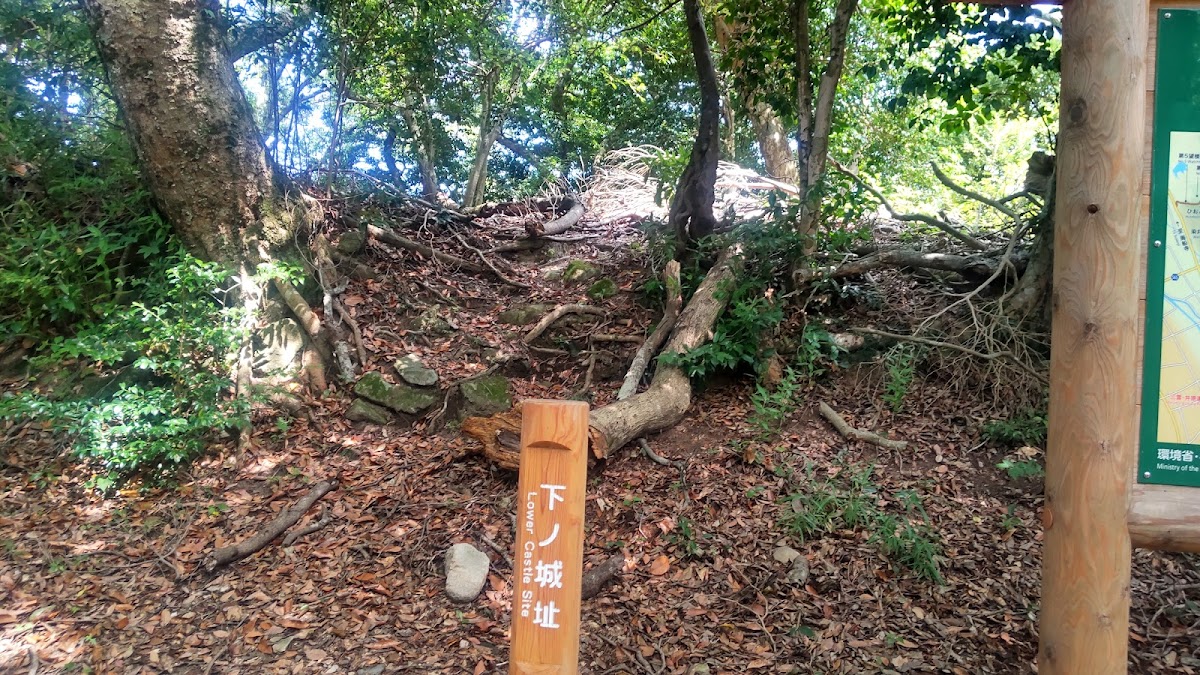
Unfortunately, very few clear remains of Kurosaki Castle remain. Because the stone walls have been repurposed, it’s difficult to imagine its former appearance. However, flat areas believed to be the remains of baileys can be seen on the mountaintop, allowing us to sense traces of the castle’s fortifications.
Within the park, there are explanatory signs about Kurosaki Castle, where you can learn about the castle’s history and its role as one of the six Kuroda castles.
Castle Site Monument and Memorials
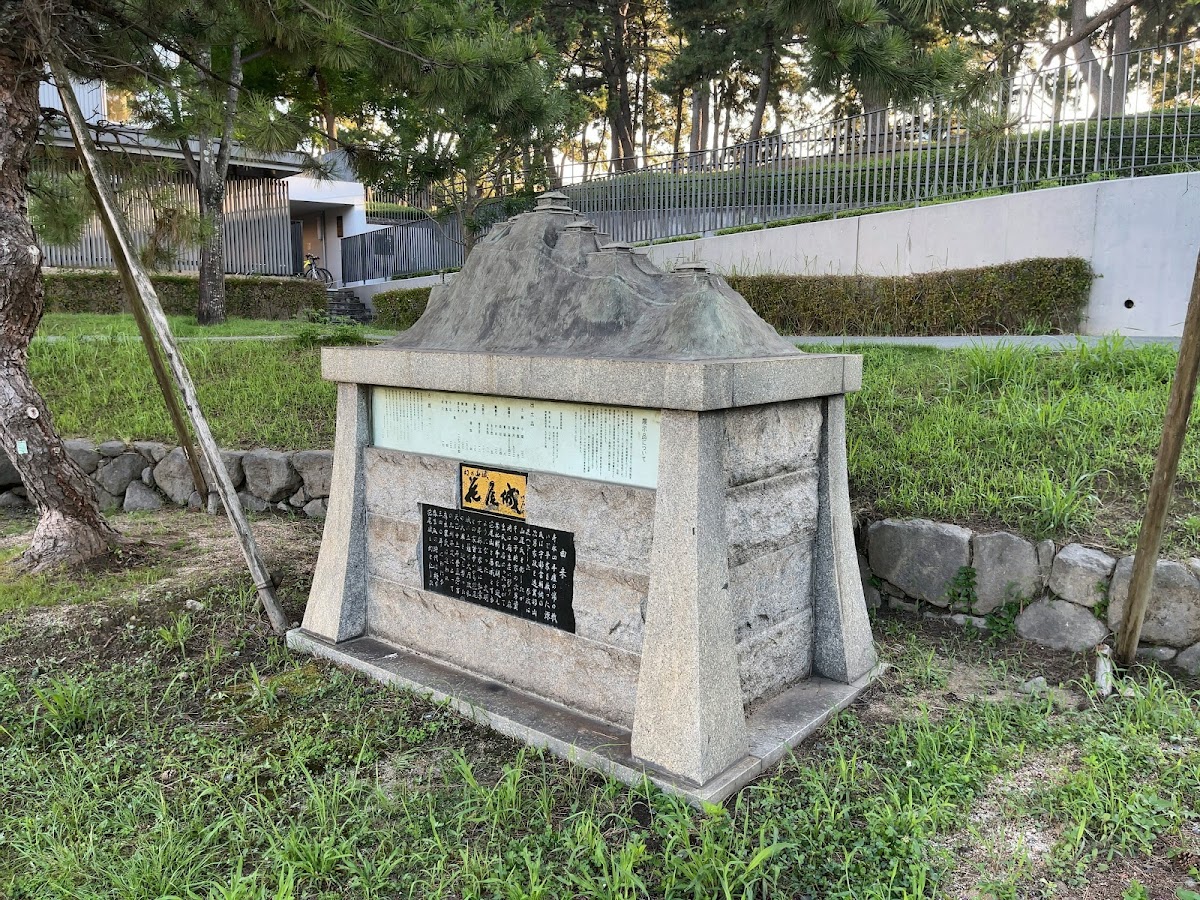
Within the park, there is a monument marking the site of Kurosaki Castle. Memorials commemorating the history of Kurosaki are also installed, and these are carefully preserved as local historical heritage.
Kurosaki’s History and the Nagasaki Kaido
Development as a Post Town
After the abandonment of Kurosaki Castle, Kurosaki developed as a post town on the Nagasaki Kaido. The Nagasaki Kaido was an important highway during the Edo period, running from Kokura to Nagasaki, and Kurosaki was one of its main post towns.
As a thriving post town, Kurosaki was lined with inns and honjin (main inns), bustling with travelers. Records show that the head of the Dutch trading post also passed through this highway on his journey to Edo.
Kurosaki in the Modern Era
After the Meiji Restoration, Kurosaki rapidly developed as an industrial city with the construction of the Yawata Steel Works. Since the establishment of Kitakyushu City in 1963, Yahata-Nishi Ward has become the central hub of commercial and business functions, and continues to be a key city in western Kitakyushu.
Access Information: How to Get to Kurosaki Castle Ruins
Access by Public Transportation
From JR Kagoshima Main Line/Chikuhō Main Line “Kurosaki Station”
- Approximately 15-20 minutes on foot
- Head northeast from the station, pass through the residential area, and reach Shiroyama Ryokuchi Park.
Using Nishitetsu Bus
- Take any bus from Kurosaki Station bus stop and get off at “Yashikimachi” bus stop, then approximately 5 minutes on foot.
Access by Car
From Kitakyushu Urban Expressway “Kurosaki Interchange”
- Approximately 5 minutes
Parking Information
- There is no dedicated parking lot at Shiroyama Ryokuchi Park.
- We recommend using nearby coin parking lots or accessing on foot.
- There are several paid parking lots around Kurosaki Station.
Location
Near 1-chome, Yashiki, Yahata Nishi-ku, Kitakyushu City, Fukuoka Prefecture 806-0028
Visiting Information
- Opening Hours: Open at all times as it is a park (nighttime visits are not recommended)
- Admission Fee: Free
- Estimated Time Required: Approximately 30 minutes to 1 hour
Nearby Tourist Attractions
Mt. Sarakura
Located approximately 5km northeast of Kurosaki Castle Ruins, Mt. Sarakura (elevation 622m) is a scenic spot counted as one of the “New Three Great Night Views of Japan.” You can reach the summit by cable car and slope car, offering panoramic views of Kitakyushu city and the Kanmon Strait.
Kurosaki Post Town Ruins
Around Kurosaki Station, there are numerous historical sites that retain the atmosphere of the former Kurosaki post town on the Nagasaki Highway. Enjoy a stroll through the old townscape and historical sites along the highway.
Wakamatsu Castle Ruins (Nakajima Castle Ruins)
Wakamatsu Castle Ruins, also one of the six Kuroda castles, is located approximately 20 minutes by car from Kurosaki. This is the site of a former sea castle facing Dokai Bay, now developed as a park.
Museum of Natural History & Human History
The Kitakyushu Municipal Museum of Natural History & Human History (Natural History & Human History Museum) offers opportunities to learn about the history and nature of the Kitakyushu region. There are also exhibits on the history of the area, including Kurosaki Castle.
Historical Significance of Kurosaki Castle
Kuroda Family’s Domain Management Strategy
Kurosaki Castle is an important historical site for understanding Kuroda Nagamasa’s domain management strategy. The arrangement of the six castles demonstrates a rational defense system that focused on protecting the borders with neighboring provinces.
In particular, Kurosaki Castle, located on the border with Buzen Province, is thought to have served as a defense against invasions from the Nakatsu area of Buzen, which was once ruled by the Kuroda family. It played a crucial role as the front line protecting the border between Buzen Province, ruled by the Hosokawa family, and Chikuzen Province, ruled by the Kuroda family.
The One Castle Per Province Decree and the Control of Daimyo in the Early Modern Period
The short history of Kurosaki Castle symbolizes the strengthening of the Edo Shogunate’s control over daimyo (feudal lords). The One Castle Per Province Decree was a policy aimed at stabilizing the shogunate system by reducing the military power of daimyo and decreasing the number of castles that could serve as bases for rebellion.
The Kuroda family obeyed the Shogunate’s orders and abolished all six of their castles. This demonstrated their subservience to the Shogunate, even though they were an outside daimyo.
Transition from Coastal Castle to Post Town
The transition from Kurosaki Castle to Kurosaki-juku (Kurosaki Post Town) symbolizes the social changes from the Sengoku period to the Edo period. Kurosaki’s history, which changed its character from a military stronghold to a transportation and commercial hub, shows the changing role of cities in an era of peace.
Points to Note When Visiting Kurosaki Castle
Best Season for Visiting
Spring (Late March to Early April): The cherry blossom season is recommended. Shiroyama Ryokuchi Park is known as a famous cherry blossom viewing spot, where you can enjoy cherry blossoms while strolling through the castle ruins.
Autumn (October-November): The autumn foliage is also beautiful, and the mild weather makes it ideal for walks.
Winter (December-February): The air is clear, offering excellent views of Kitakyushu city and the surrounding mountains.
Clothing and Items to Bring
- Comfortable walking shoes (sneakers, etc.) are recommended as you will be walking on mountain trails.
- Bring a hat, drinks, and insect repellent in summer.
- Take precautions against the cold in winter.
- Bring a camera (recommended for taking photos of the scenery from observation points).
Estimated Time Required
- Visiting only the castle ruins: 30 minutes to 1 hour
- Strolling including nearby Nagasaki Kaido historical sites: 2 to 3 hours
- Including sightseeing in the surrounding area such as Mt. Sarakura: Half a day to a full day
Summary: The Charm and Value of Kurosaki Castle
Although very few remains of Kurosaki Castle exist, it is a castle site with many historical significances, including Kuroda Nagamasa’s domain management strategy, the activities of Inoue Yukifusa, a loyal retainer of Kuroda’s Twenty-Four Knights, and the changes in early modern castles due to the One Castle Per Province Decree.
Currently, it is a popular recreational area for citizens, known as Shiroyama Green Park, and is easily accessible. When visiting Kitakyushu City, why not stop by the Kurosaki Castle ruins and reflect on the history of this outlying castle that once guarded the border?
By visiting the historical sites along the Nagasaki Kaido road around Kurosaki Station, and the ruins of Wakamatsu Castle (another of the six Kuroda outlying castles), you can gain a deeper understanding of the Kuroda family’s rule over Chikuzen and the history of the Kitakyushu region.
While Fukuoka Prefecture has many castle ruins, including Fukuoka Castle, Kokura Castle, and Kurume Castle, learning about the history of outlying castles like Kurosaki Castle provides a more comprehensive understanding of how daimyo managed their territories during the transition from the Sengoku period to the Edo period. It’s a historical site well worth visiting for history buffs and castle enthusiasts.