Hanaoka Castle (Fukuoka Prefecture) Complete Guide | Exploring the Aso Clan’s Residence and Sengoku Period History
What is Hanaoka Castle?
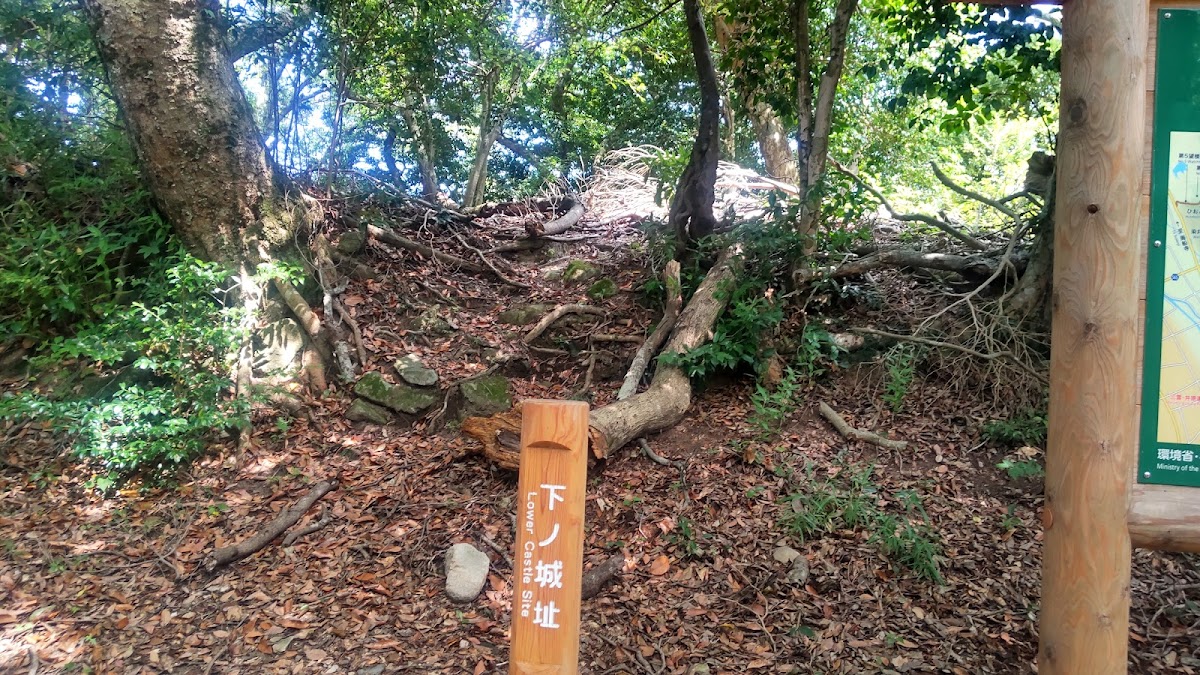
Hanaoka Castle is a mountain castle built on Mount Hanaoka (elevation 351 meters) in Yahata-Nishi Ward, Kitakyushu City, Fukuoka Prefecture. For approximately 400 years, from the Kamakura period to the Sengoku period, it played an important role as the residence of the Aso clan, who ruled this region. Currently, it is maintained as “Hanaoka Castle Park,” a valuable historical site where many remains can be seen, including the remains of the main keep, second bailey, third bailey, stone walls, moats, vertical trenches, and well remains.
A distinctive feature of Hanaoka Castle is the series of baileys arranged in a linear fashion along the ridge extending east and west from the mountaintop. The structure, with baileys clearly demarcated by moats from the west turret base to the east turret base, preserves a typical layout of a medieval mountain castle.
History of Hanaoka Castle
Construction and the Establishment of the Aso Clan
There are various theories regarding the construction date of Hanaoka Castle, but it is generally believed to have been built in 1194 (Kenkyu 5) or 1196 (Kenkyu 7) by Utsunomiya Shigenari, a member of the Utsunomiya clan of Shimotsuke Province. The Utsunomiya clan was granted Onga District in Chikuzen Province during the Kamakura period. After Shigenari moved there and built Yamaga Castle, his family built Hanaoka Castle and adopted the name Aso.
The Aso clan, with Hanaoka Castle as their base, controlled the entire Onga District and expanded their power as a powerful local clan. They maintained a significant presence as an important force in the region from the Kamakura period through the Nanboku-cho period and the Muromachi period.
Relationship with the Ouchi Clan and Succession Disputes
During the Eikyo era (1429-1441), the Aso clan became subordinates of the Ouchi clan of Suo Province and operated under their influence. However, in 1478, a dispute over succession arose within the Aso clan. When a power struggle erupted between Aso Ienobu and Aso Hiroie, Ouchi Masahiro intervened.
Ouchi Masahiro attacked Aso Ienobu, who was holed up in Hanaoka Castle, but Ienobu’s fierce resistance resulted in a three-year siege. Ultimately, the Ouchi army was unable to capture Hanaoka Castle, and a peace treaty was concluded. As a result of this treaty, Ienobu received Onga Manor and retreated to Oka Castle, while Hiroie became the lord of Hanaoka Castle. This three-year siege is known as an episode demonstrating the formidable strength of Hanaoka Castle.
Turmoil of the Sengoku Period
After the fall of the Ouchi clan, Hanaoka Castle became a target of conflict between the Mori and Otomo clans. The castle lord at the time, Aso Takazane, was a vassal of the Mori clan. During this period, the Mori and Otomo clans were fiercely opposed in northern Kyushu, and Hanaoka Castle was caught in the middle of this conflict.
During the time of Takazane’s son, Aso Ieuji, the situation in Kyushu changed dramatically. In 1586, when Toyotomi Hideyoshi’s Kyushu campaign began, Ieuji followed Kuroda Yoshitaka (Kanbei), who was dispatched as a military supervisor, and surrendered Hanaoka Castle. This decision allowed the Aso clan to escape the ravages of war, but they were subsequently transferred to Chikugo Province.
Abandonment and Aftermath
After the Aso clan’s transfer, Hanaoka Castle became part of Kobayakawa Takakage’s territory, but it was abandoned due to its diminished strategic value. Hanaoka Castle, which had functioned as the Aso clan’s residence for approximately 400 years, thus closed its historical chapter.
After the Edo period, Hanaoka Castle was largely forgotten, but from the Meiji era onward, it began to be re-evaluated as a regional historical heritage site. Currently, it is protected as a historical site by Kitakyushu City and is a valuable cultural asset that conveys the history of the region.
Structure of Hanaoka Castle
Layout and Enclosure Arrangement
Hanaoka Castle is a mountain castle with a series of enclosures arranged along a ridge extending east and west, centered on the summit of Mt. Hanaoka (351 meters above sea level). According to the on-site information board, the enclosures are arranged from west to east as follows:
West Turret Platform – Located at the western end of the castle, it was an important base responsible for monitoring and defending the western area.
Fourth Enclosure – An enclosure located east of the West Turret Platform, with a relatively large flat area.
Third Enclosure – An enclosure on the way to the main enclosure, functioning as one of the defensive lines.
Second Enclosure – An important enclosure adjacent to the west side of the main enclosure, and the front line of defense for the main enclosure.
Main Enclosure – The central part of the castle located on the summit of Mt. Hanaoka, believed to have housed the lord’s residence and command post. Outpost – A fortified enclosure positioned to jut out from the east side of the main enclosure, responsible for eastern defense.
Horse Training Ground – A flat area believed to have been used for training and gathering warhorses.
Eastern Turret Platform – Located at the eastern end of the castle, it served as a base for monitoring and defending the east.
These enclosures are clearly demarcated by moats, demonstrating a design that enhanced defensive capabilities by restricting movement between them.
Defensive Structures
Numerous defensive structures characteristic of medieval mountain castles can be found at Hanaoka Castle.
Moats – Dry moats separating enclosures, preventing enemy intrusion and allowing each enclosure to function as an independent defensive base. Multiple moats can be found at Hanaoka Castle, and the moats around the main enclosure are particularly large, indicating their crucial defensive position.
Vertical Moats – Moats dug along slopes, preventing attacks from the enemy’s flanks and also functioning as rainwater drainage channels. Several rows of ridged vertical trenches have been identified on the northern slope.
Stone Walls and Stone Fortifications – Stone walls and stone fortifications were built along the edges of the baileys and at important locations. Remnants of the stone walls remain in various places, offering insights into the castle-building techniques of the time.
Wells – Several wells were dug within the castle grounds in preparation for a siege. Traces of old wells can still be seen today, providing evidence of the water source that sustained the castle during its three-year siege.
Preservation of Remains
Because Hanaoka Castle avoided large-scale development after its abandonment, the remains of this medieval mountain castle are preserved in relatively good condition. The shape of the baileys, the arrangement of the trenches, and parts of the stone walls are clearly visible, making them valuable resources for understanding the castle’s layout.
In particular, the remains around the main keep are well-preserved, making them excellent teaching materials for learning about the structure of mountain castles. Because walking paths are maintained, visitors can safely view the ruins, making it a popular spot not only for castle enthusiasts but also for the general public interested in history.
Highlights of Hanaoka Castle
Main Enclosure Ruins
Located on the summit of Mount Hanaoka, the main enclosure (honmaru) is the central part of Hanaoka Castle and its most important highlight. From the 351-meter-high summit, you can enjoy a panoramic view of the Onga River basin and the city of Kitakyushu, allowing you to imagine the castle lord overlooking his territory from this spot during the Sengoku period.
The main enclosure has a relatively large, flat area, believed to have been the location of the lord’s residence and command post. Currently, it has been developed into a park with benches, allowing visitors to enjoy the scenery while taking a break.
Large Moat
A large moat remains between the main enclosure and the second enclosure (ninomaru), a relic that demonstrates the high level of Hanaoka Castle’s defenses. This moat, several meters deep, functioned as a strong barrier to prevent enemy intrusion. Its shape can still be clearly seen today, making it a valuable resource for learning about the defensive techniques of medieval mountain castles. ### Stone Wall Remains
Stone wall remains are found throughout Hanaoka Castle. In particular, stone walls were built along the edges of the baileys and important defensive lines, and parts of them can still be seen today. These stone walls, which demonstrate medieval stonework techniques, provide important clues to understanding castle construction techniques of the Sengoku period.
Observing the construction method of the stone walls reveals the use of the “nozurazumi” technique, which skillfully combines natural stones. This technique was widely used during the Sengoku period, and Hanaoka Castle is no exception.
Ancient Well Remains
Several well remains have been identified within the castle grounds, and the ancient well near the main keep is particularly well-preserved. This well was the castle’s lifeline, providing water that sustained the three-year siege. Although currently surrounded by a fence for safety, its depth and structure can still be observed.
Ancient Well Remains
The presence of a well indicates that Hanaoka Castle was equipped with facilities capable of withstanding a prolonged siege, and is considered one of the reasons why Aso Ienobu was able to withstand attacks from the Ouchi army for three years.
Vertical Moats
Several rows of vertical moats remain on the northern slope, allowing observation of defensive structures unique to mountain castles. These moats were strategically placed to obstruct the enemy’s advance up the slope and to enable flanking attacks.
The vertical moats are still clearly visible as part of the terrain, demonstrating the advanced castle-building techniques of the Sengoku period.
East and West Turret Platforms
The turret platforms located at the east and west ends of the castle were important bases for surveillance and defense. From these platforms, one could overlook the roads and surrounding areas in the east and west directions, playing a role in detecting enemy movements early.
Currently, they are also popular viewpoints, offering views of Kitakyushu city and the surrounding mountains.
Access Information
Access by Public Transportation
Nearest Station: JR Kagoshima Main Line “Kurosaki Station”
From Kurosaki Station, take the Nishitetsu Bus. Get off at the “Hanao Nishi Tozanguchi” bus stop and hike up the trail from there. It takes approximately 40-50 minutes to walk from the trailhead to the main keep.
Since bus service is limited, it is recommended to check the timetable in advance. Also, plan your visit time considering the return bus schedule.
Access by Car
Parking: Free parking is available near the entrance to Hanao Castle Park. Since parking is limited, early arrival is recommended, especially on holidays.
Car Navigation Settings: Searching for “Hanaoyama Castle Park” or “Kumade, Yahata Nishi-ku, Kitakyushu City” will guide you to the vicinity of the trailhead.
It is approximately 20 minutes from the Kyushu Expressway “Yahata IC” and approximately 15 minutes from the Kitakyushu Urban Expressway “Kurosaki IC”.
Hiking Route
The hiking trail to Hanaoka Castle is well-maintained and relatively safe. However, as it is a mountain castle, a certain level of physical fitness and equipment is required.
Estimated Time: Approximately 40-50 minutes on foot from the trailhead to the main keep.
Difficulty: Intermediate (Caution advised for those unfamiliar with mountain trails)
Recommended Equipment: Athletic shoes or trekking shoes, drinking water, towel, hat, insect repellent (summer)
The hiking trail has signposts, so getting lost is unlikely, but be careful as the ground can become slippery in rainy weather or after rain.
Precautions for Visiting
Clothing and Equipment
As Hanaoka Castle is a mountain castle, appropriate clothing and equipment are necessary for visiting.
- Shoes: Please wear athletic shoes or trekking shoes. Sandals and high heels are dangerous.
- Clothing: Choose comfortable clothing; long sleeves and long pants are recommended (to prevent insect bites).
- Items to bring: Drinking water, towel, hat, insect repellent spray, basic first-aid kit
Safety Precautions
- While fences may be installed around some remains such as stone walls and well ruins, there are also areas without fences. Please watch your step while visiting.
- The ground can become slippery during and after rain, so extra caution is necessary.
- In summer, please remember to stay hydrated to prevent heatstroke.
- In winter, the sun sets early, so please plan your visit with ample time.
Visitor Etiquette
- Hanaoka Castle Ruins are a valuable cultural asset. Please do not damage the remains or take any stones.
- Please take all your trash with you.
- The use of fire is strictly prohibited.
- The collection of plants is prohibited.
Nearby Attractions
Kurosaki Castle
Like Hanaoka Castle, this castle is associated with the Aso clan and was located near Kurosaki Station. Although few remains today, this castle is historically significant as it is the origin of the place name Kurosaki.
Kitakyushu City Yahata Nishi Library
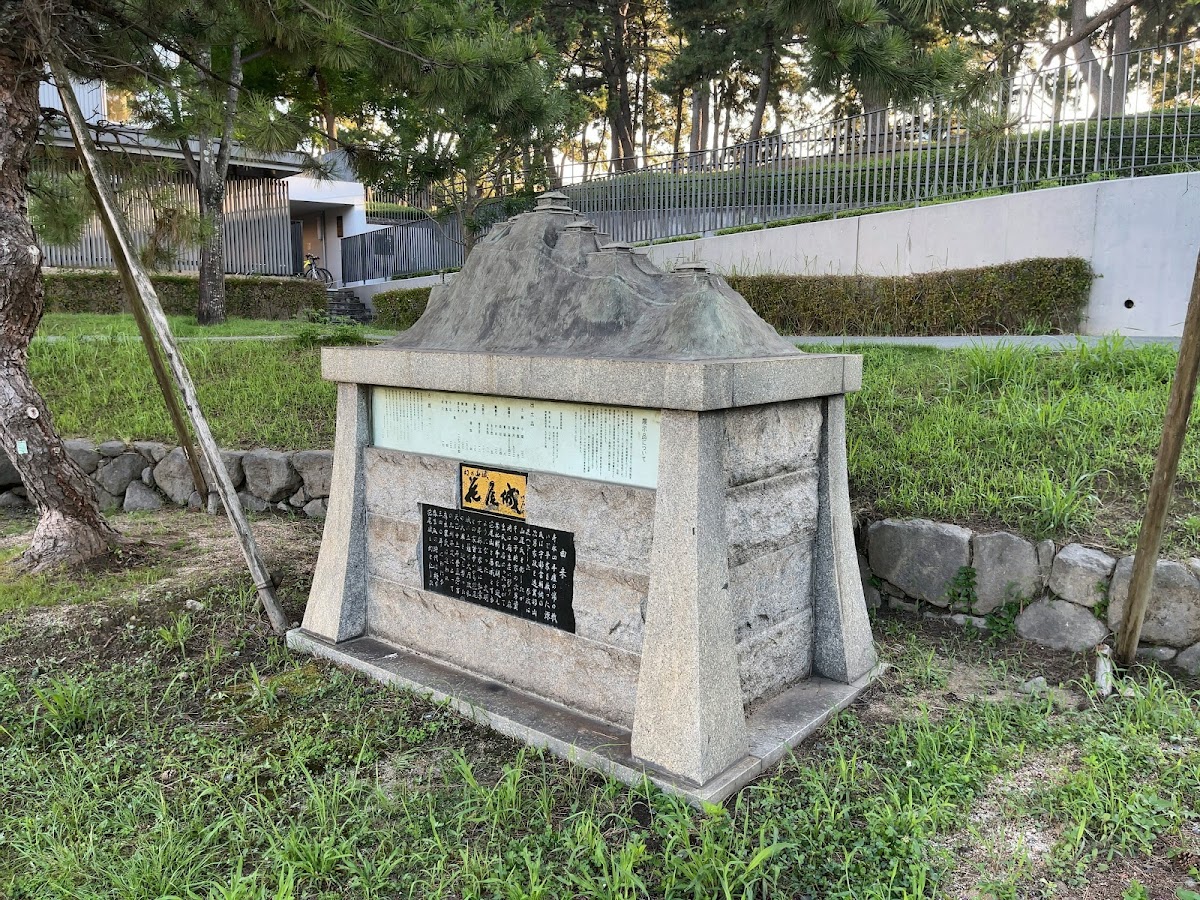
A model of Hanaoka Castle, formerly located in front of Kurosaki Station, has been relocated to the front of the library. Viewing this model before actually visiting Hanaoka Castle allows you to visualize the castle’s overall structure.
Yamaga Castle
This was the first castle built by the Utsunomiya clan and, like Hanaoka Castle, was under the control of the Aso clan. Visiting both Hanaoka Castle and Yamaga Castle provides a deeper understanding of the Aso clan’s rule over their territory.
Historical Significance of Hanaoka Castle
Strategic Importance in Northern Kyushu
Hanaoka Castle was strategically located at a key point overlooking the Onga River basin, making it a strategically important castle controlling a vital transportation hub in northern Kyushu. Onga County has been a vital transportation and logistics center since ancient times, and controlling this area meant having influence over the surrounding regions.
The Aso clan’s ability to rule this area for approximately 400 years was due to the formidable strength of Hanaoka Castle and its strategically important location.
A Typical Example of a Medieval Mountain Castle
Hanaoka Castle possesses a typical structure of a medieval mountain castle, with features such as a multi-bailey layout, moats, vertical trenches, and stone walls, making it a valuable example for studying Sengoku period castle construction techniques. Its ability to withstand a three-year siege, in particular, demonstrates its high defensive strength and occupies an important position in castle research.
Importance in Regional History
The history of Hanaoka Castle and the Aso clan is indispensable for understanding the history of the Northern Kyushu region from the medieval to the Sengoku period. Its relationships with Sengoku daimyo such as the Ouchi, Mori, Otomo, and Toyotomi clans reflect the changing political situation in Kyushu.
Furthermore, the descendants of the Aso clan later played active roles in Chikugo Province and other regions, and their descendants still exist in various places today, making it an important example of regional historical continuity.
The Four Seasons of Hanao Castle
Spring (March-May)
Spring is the perfect season to visit Hanao Castle. Cherry trees are planted along the hiking trails, and you can enjoy cherry blossom viewing in early April. The fresh greenery is also beautiful, and you can enjoy exploring the castle ruins in a refreshing climate.
Summer (June-August)
Summer is a season of lush greenery and forest bathing, but the high temperatures and humidity make heatstroke prevention essential. Visiting during the cooler hours of early morning or evening is recommended. Don’t forget insect repellent.
Autumn (September-November)
Autumn, with its beautiful autumn foliage, is another excellent season to visit Hanao Castle, along with spring. From late October to early November, the entire mountain is ablaze with color, offering stunning scenery. The climate is mild, making it ideal for hiking.
Winter (December to February)
Winter offers clear air and particularly beautiful views from the mountaintop. However, sunset is early, so plan accordingly. Also, be sure to dress warmly due to the low temperatures.
Summary
Hanao Castle is a valuable medieval mountain castle ruin remaining in Kitakyushu City, Fukuoka Prefecture. It boasts a history of approximately 400 years as the residence of the Aso clan, and the story of its three-year siege speaks volumes about its formidable defenses. Currently, it is maintained as Hanaoyama Castle Park, where visitors can see many remains, including the main keep, moats, stone walls, and well ruins.
From the 351-meter-high mountaintop, you can enjoy a panoramic view of Kitakyushu city, experiencing the perspective of a castle lord during the Sengoku period. While the hiking trails are well-maintained, appropriate equipment and physical fitness are necessary as it is a mountain castle. Hanao Castle, with its seasonal beauty including cherry blossoms in spring and autumn foliage, is a recommended spot not only for history buffs but also for nature lovers.
Hanaoka Castle offers a unique opportunity to learn about the medieval history of the Kitakyushu region and experience the structure of a Sengoku period mountain castle firsthand. Be sure to visit and feel its history and charm for yourself.