Complete Guide to Kiso-Fukushima Castle | History, Highlights, and Access Information for Mountain Castle Ruins in Kiso County
What is Kiso-Fukushima Castle?
Kiso-Fukushima Castle is a Sengoku period mountain castle located in Fukushima, Kiso-machi, Kiso-gun, Nagano Prefecture. Also known as “Mukaijiro,” it is known as a formidable fortress built on a steep mountaintop at an altitude of 1050m (relative height approximately 250m) overlooking the Kiso Valley.
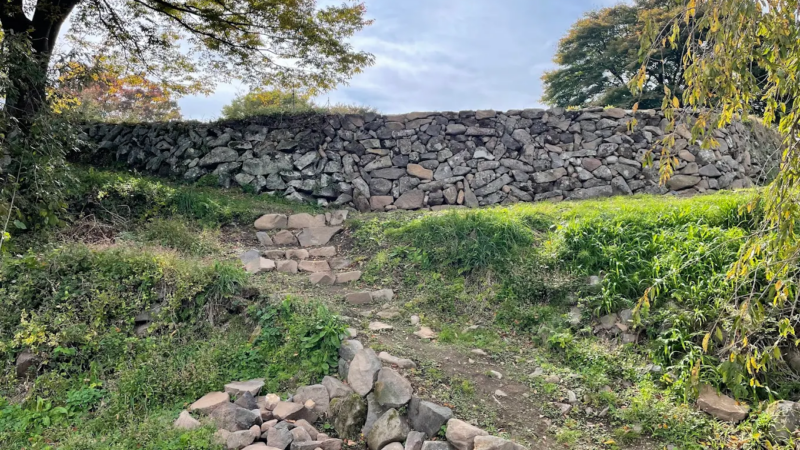
This mountain castle, built by the Kiso clan who ruled the Kiso region of Shinano Province (present-day Nagano Prefecture) as a final defensive base in times of emergency, still retains well-preserved remains such as baileys, earthworks, moats, and vertical trenches, and is designated as a historical site by Kiso Town. Located approximately 1.3-1.5km in a straight line from Kiso-Fukushima Station, and with a well-maintained nature trail leading to the castle, it is a popular spot for history enthusiasts and hiking lovers.
History of Kiso-Fukushima Castle
Background of Construction and the Kiso Clan
Kiso-Fukushima Castle is believed to have been built during the Tenbun era (1532-1555). The builder was Kiso Yoshiyasu, the 18th head of the Kiso clan. The Kiso clan was a prestigious family descended from the Seiwa Genji clan and were local lords who ruled the Kiso Valley from the Kamakura period.
With the arrival of the Sengoku period (Warring States period), the Kiso Valley came to occupy an important strategic position between the Takeda clan of Kai Province and the various forces of Shinano Province. Kiso Yoshiyasu initially resided at Kaminodan Castle (Kaminodan-jo) on the opposite bank of the Kiso River, but built Kiso-Fukushima Castle as a more fortified outpost in preparation for Takeda Shingen’s invasion of Shinano.
The Relationship Between Kiso Yoshiyasu and the Takeda Clan
Initially, Kiso Yoshiyasu resisted Takeda Shingen along with various forces in Shinano Province. However, faced with the Takeda clan’s overwhelming military power, he ultimately surrendered and chose to become a subordinate. This decision allowed the Kiso clan to maintain control of the Kiso Valley.
Kiso Yoshimasa (19th head of the clan), who succeeded Yoshiyasu, also utilized Kiso Fukushima Castle as an important base. Yoshimasa had served the Takeda clan during the time of Takeda Katsuyori, but in 1582, during Oda Nobunaga’s invasion of Kai Province, he betrayed the Takeda clan and defected to the Oda side. This “defection of Kiso Yoshimasa” is recorded in history as a crucial event that triggered the downfall of the Takeda clan.
After the Honnoji Incident and the Transfer of the Kiso Clan
After the Honnoji Incident (1582), Kiso Yoshimasa became a vassal of Tokugawa Ieyasu and continued to control the Kiso Valley. However, after Toyotomi Hideyoshi’s siege of Odawara in 1590, the Kiso clan was transferred to Achito in Shimosa Province (present-day Chiba Prefecture) with a stipend of 10,000 koku.
Later, in 1600, during the time of Kiso Yoshitoshi, the Kiso clan was dispossessed of their domain for the crime of murdering his uncle, Kiso Yoshitoyo, and the Kiso clan as a Sengoku daimyo disappeared from the historical stage. Kiso Fukushima Castle is also believed to have been abandoned around 1598.
Edo Period and Beyond
After the abandonment of Kiso Fukushima Castle, the Kiso Valley became a direct territory of the Edo shogunate (tenryo), and a checkpoint and magistrate’s office were established in Kiso Fukushima. The town of Kiso Fukushima, which developed as a key point on the Nakasendo road, prospered as a post town with the former mountain castle as its backdrop.
The castle ruins are affectionately known as “Shiroyama” (Castle Mountain) by locals and are now maintained as a nature trail.
Structure and Layout of Kiso-Fukushima Castle
Location and Topography
Kiso-Fukushima Castle is a typical mountain castle built on the summit of a steep mountain on the east bank of the Kiso River. Its location, at an altitude of 1050m and a relative height of approximately 250m from the foot of the mountain, makes it an extremely difficult fortress to attack.
The western side of the castle faces a sheer cliff overlooking the Kiso River, functioning as a natural stronghold. A ridge extends from the east to the south, and multiple defensive structures were built to prevent intrusion from this side.
Major Remains
Main Enclosure (Honmaru)
The main enclosure, located at the mountaintop, is the central facility of Kiso-Fukushima Castle. A relatively flat enclosure is formed here, and it is believed that the lord’s residence and command post were located here. The shape of the flat area can still be clearly seen today.
Enclosure Groups
Several enclosures are arranged in a stepped pattern around the main enclosure. These enclosures are presumed to have functioned as defensive positions, as well as serving as troop encampments and supply storage areas. A distinctive feature is the three-dimensional defensive structure utilizing the elevation differences between the enclosures.
Earthworks
Earthworks were built around the perimeter of each enclosure, and some remain clearly visible today. These earthworks prevented enemy intrusion and also functioned as firing positions for arrows and firearms.
Moats
Moats, constructed to cut across the ridgeline, are important defensive structures that blocked enemy intrusion routes. Multiple moats have been identified at Kiso-Fukushima Castle, with particularly clear moats remaining on the eastern ridgeline.
Vertical Moats
Several vertical moats, excavated vertically into the slopes, have also been identified. Vertical moats restrict the movement of enemies climbing the slopes and make lateral movement difficult. The vertical moats at Kiso-Fukushima Castle are skillfully positioned, utilizing the natural terrain.
Character as a Fortified Castle
Kiso-Fukushima Castle functioned as a fortified castle for Kaminodan Castle, the primary residence during peacetime. It is believed that during peacetime, administrative affairs were conducted at Kaminodan Castle at the foot of the mountain, while in times of conflict, Kiso-Fukushima Castle on the mountaintop was used for siege.
This type of fortified castle structure is a common characteristic of mountain castles from the Sengoku period, prioritizing defense over habitability.
Highlights of Kiso-Fukushima Castle
Stone Monuments and Information Boards
Stone monuments and information boards are installed at the castle entrance and ruins, allowing visitors to learn about the castle’s history and structure. The stone monuments at the castle ruins, in particular, are important monuments that convey the fact that a strong mountain castle once stood here.
Preservation of Remains
The greatest highlight of Kiso-Fukushima Castle is its well-preserved remains. Basic defensive structures of a mountain castle, such as baileys, earthworks, moats, and vertical trenches, remain, retaining their original appearance from the time of construction.
The moats, in particular, are clearly defined in depth and width, showcasing the advanced civil engineering techniques of the Sengoku period. Furthermore, the layout of the baileys reveals the skillful use of the limited mountaintop terrain.
View
The view from the 1050m-high summit is breathtaking. You can see the entire Kiso Valley, the Kiso River, the townscape of Kiso-Fukushima, and the surrounding mountains.
This view is one of the reasons Kiso-Fukushima Castle was chosen as a fortified stronghold. Its location, allowing for distant monitoring of enemy movements and control of the entire Kiso Valley, was militarily crucial. On clear days, you can even see the Central Alps and Mount Ontake in the distance.
Shiroyama Nature Trail
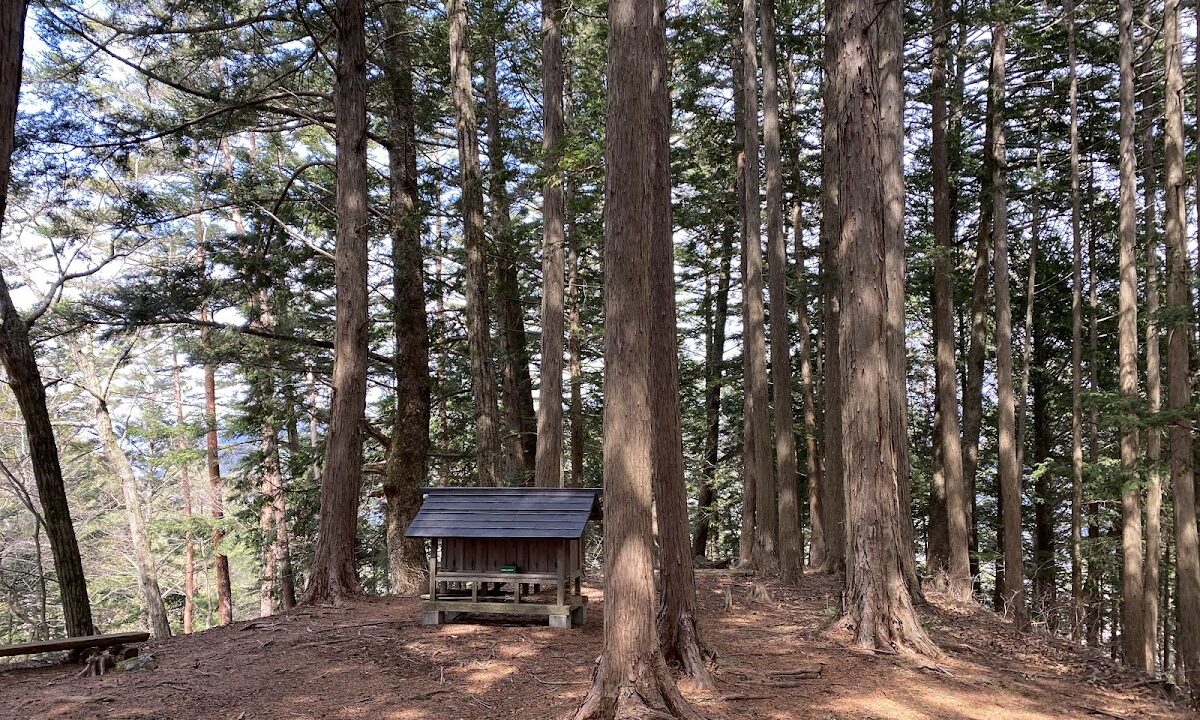
The path leading to the castle ruins is maintained as the “Shiroyama Nature Trail,” a course where you can enjoy both historical exploration and nature observation. Along the walking path, the rich natural beauty of Kiso unfolds, allowing you to observe plants and wild birds that change with the seasons.
With its fresh greenery in spring, deep green in summer, vibrant autumn leaves, and snowy landscapes in winter, Shiroyama (Castle Mountain) displays a different face with each season, offering new discoveries with every visit.
Relationship with Kaminodan Castle
When visiting Kiso-Fukushima Castle, we recommend also visiting the ruins of Kaminodan Castle. Located across the Kiso River, Kaminodan Castle functioned as a residence during peacetime, and its relative location to Kiso-Fukushima Castle provides insight into the Kiso clan’s castle network.
The ruins of Kaminodan Castle are easily accessible, about a 5-minute walk from Kiso-Fukushima Station. Visiting both castles will provide a deeper understanding of the Kiso clan’s castle strategy.
Visitor Guide & Access Information
Basic Information
- Location: Fukushima Castle Mountain, Kiso-machi, Kiso-gun, Nagano Prefecture
- Castle Classification: Mountain Castle
- Construction Period: Tenbun era (1532-1555)
- Builder: Kiso Yoshiyasu
- Main Lord: Kiso clan
- Year of Abandonment: Around Keicho 3 (1598)
- Remains: Enclosures, earthworks, moats, vertical moats
- Designated Cultural Property: Kiso Town Designated Historic Site
- Visiting Time: Approximately 1 hour 30 minutes to 2 hours
- Admission Fee: Free
- Open to Visitors: Year-round (however, be careful of snow in winter)
Access by Train
The nearest station is Kiso-Fukushima Station on the JR Chuo Main Line. It takes approximately 15-20 minutes on foot from the station to the castle ruins entrance.
- From Tokyo: Approximately 3 hours by the Chuo Main Line Limited Express “Shinano”
- From Nagoya: Approximately 2 hours by the Chuo Main Line Limited Express “Shinano”
- From Matsumoto: Approximately 1 hour 30 minutes by Chuo Main Line local train
Access by Car
If using the Chuo Expressway, the following interchanges are convenient:
- From Ina IC: Approximately 1 hour via National Route 361 and National Route 19
- From Nakatsugawa IC: Approximately 1 hour via National Route 19
Parking
There are several public parking lots in the town of Kiso-Fukushima. While there is no dedicated parking lot near the castle trail entrance, nearby parking lots are available. For details, please contact the Kiso Town Tourism Association.
Castle Ascent Route
The Shiroyama Nature Trail is well-maintained, and it takes approximately 40-60 minutes to walk from the trailhead to the castle ruins at the summit. While the trail is relatively well-maintained, it is a mountain path with an elevation difference of approximately 250m, so the following equipment and preparations are recommended:
- Clothing: Comfortable clothing, long sleeves and long pants recommended
- Shoes: Trekking shoes or athletic shoes
- Items to Bring: Drinking water, towel, rain gear, map
- Best Time of Year: Spring to autumn is ideal. Caution regarding snow and ice in winter
Points to Note When Visiting
- Physical Fitness Required (Mountain Castle): This involves a 250m elevation gain, so a certain level of physical fitness is necessary.
- Watch Your Step: The ground becomes slippery after rain, so caution is advised.
- Beware of Bears: Bear sightings have been reported in the Kiso region, so carrying a bear bell is recommended.
- Insect Repellent: In summer, there are many insects, so insect repellent spray is recommended.
- Cell Phone Signal: Signal reception can be unstable in mountainous areas.
Nearby Tourist Attractions
Kaminodan Castle Ruins
Located approximately a 5-minute walk from Kiso-Fukushima Station, Kaminodan Castle Ruins was the peacetime residence of Kiso-Fukushima Castle. Visiting both Kiso-Fukushima Castle and Kaminodan Castle together will help you understand the Kiso clan’s castle system.
Kiso-Fukushima Checkpoint Ruins
This is the site of the Kiso-Fukushima Checkpoint, which functioned as an important checkpoint on the Nakasendo road during the Edo period. A reconstructed checkpoint building and a museum are located here, allowing visitors to learn about the history of transportation during the Edo period.
Kōzenji Temple
This ancient temple is known for its connection to Kiso Yoshinaka. It also has deep ties to the Kiso clan, and numerous historical cultural artifacts are preserved within its grounds.
Post Towns of the Kiso Road
Around Kiso-Fukushima, there are many post towns that retain the atmosphere of the Edo period, such as Tsumago-juku and Narai-juku. You can enjoy a historical stroll along the Kiso Road in conjunction with a visit to Kiso-Fukushima Castle.
Mount Ontake
Mount Ontake, a sacred mountain representative of the Kiso Valley, has been an object of worship since ancient times. The trailhead to Mount Ontake is accessible from Kiso-Fukushima.
Tips for Enjoying Kiso Fukushima Castle
Historical Preparation
Learning about the history of the Kiso clan and the situation in Shinano during the Sengoku period before your visit will allow you to enjoy your visit to the castle ruins more deeply. In particular, knowing about Kiso Yoshimasa’s defection from the Takeda clan and his relationship with Kiso Yoshinaka will help you understand the historical importance of the Kiso Valley.
Photography Tips
- Panoramic View of the Enclosures: The layout of the enclosures viewed from the main enclosure.
- Cross-section of the Moat: The impressive depth of the moat.
- View: The scenery of the Kiso Valley from the mountaintop.
- Details of the Remains: Details of the earthworks and vertical moats.
- Seasonal Scenery: The changing nature of the castle mountain with each season.
Recommended Time to Visit
- Spring (April-May): Beautiful fresh greenery and mild weather.
- Autumn (October-November): Stunning autumn foliage and excellent views.
- Summer (June-September): Dense greenery, insect repellent necessary.
- Winter (December-March): Snow and ice make it suitable for experienced visitors.
Estimated Time Required
- Climbing Only: Approximately 2 hours round trip.
- Thorough Exploration: 2.5-3 hours.
- Combined Tour with Kaminodan Castle: 3.5-4 hours
- Including Surrounding Area Sightseeing: Half a day to a full day
Historical Significance of Kiso-Fukushima Castle
Symbol of Kiso Valley Domination
Kiso-Fukushima Castle is a symbolic fortress representing the Kiso clan’s dominance of the Kiso Valley. Controlling a strategic point along the Kiso River, this castle served not only as a military stronghold but also as a symbol of the Kiso clan’s authority.
Between the Takeda and Oda Clans
During the Sengoku period, the Kiso Valley was located on the border between the spheres of influence of the Takeda clan of Kai Province and the Oda clan of Owari and Mino Provinces. Kiso-Fukushima Castle played a crucial role as a strategic base for the Kiso clan, who sought survival in the midst of these two major powers.
Kiso Yoshimasa’s defection from the Takeda clan was a decisive event that hastened the downfall of Takeda Katsuyori and greatly influenced the subsequent unification of Japan. Kiso-Fukushima Castle was also the stage for this historical turning point.
Valuable Resources for Mountain Castle Research
Kiso-Fukushima Castle is a valuable historical site that well preserves the characteristics of a mountain castle from the Sengoku period. Basic defensive structures such as baileys, earthworks, moats, and vertical trenches are well-preserved, making it an important resource for mountain castle research.
In particular, its clear character as a fortified castle makes it a highly valuable site for understanding the castle system of the Sengoku period.
Resources and Research on Kiso-Fukushima Castle
Related Books
The following books offer insights into Kiso-Fukushima Castle and the history of the Kiso clan:
- “Medieval Castle Sites in Nagano Prefecture” (Nagano Prefectural Board of Education)
- “Mountain Castles and Residences of Shinano” series
- “History and Culture of the Kiso Valley”
- “Research on the Sengoku Daimyo Kiso Clan”
Historical Materials of Kiso Town
Materials related to Kiso-Fukushima Castle can be viewed at the Kiso Town Hall and the Kiso Town Local History Museum. The Kiso Town History also contains detailed descriptions and is recommended for those who wish to learn more.
On-site Information Boards and Guides
Information boards are installed at the castle ruins and along the approach to the castle, allowing visitors to learn about the castle’s history and structure on-site. These boards were created by local history researchers and the board of education, making them a reliable source of information.
Summary
Kiso-Fukushima Castle is a valuable Sengoku period mountain castle site remaining in Kiso-machi, Kiso-gun, Nagano Prefecture. Built by Kiso Yoshiyasu, the 18th head of the Kiso clan, the castle is situated on a steep mountaintop at an altitude of 1050m and a relative height of 250m, offering a superb location overlooking the Kiso Valley.
The remains, such as baileys, earthworks, moats, and vertical trenches, are well-preserved, making it an important historical site that conveys the appearance of a Sengoku period mountain castle. The approach to the castle, which has been developed as a nature trail, is a popular course that allows visitors to enjoy both historical walks and nature observation.
It is relatively easy to access from Kiso-Fukushima Station, and there are many other historical sights in the surrounding area, such as the ruins of Kaminodan Castle, the Kiso-Fukushima checkpoint, and Kōzenji Temple. Visiting Kiso Fukushima Castle in conjunction with a tour of the Kiso Road post towns will allow you to experience the rich history and culture of the Kiso Valley.
Kiso Fukushima Castle tells the story of the Kiso clan’s glory during the Sengoku period and the strategies of a local lord who survived amidst the powerful Takeda and Oda clans. Visiting its ruins will allow you to feel the spirit of the Sengoku period in a way that textbooks cannot.
When visiting the Kiso Valley, be sure to visit the Kiso Fukushima Castle ruins and enjoy the history and nature of Kiso.
Frequently Asked Questions (FAQ)
Q1: Is a reservation required to visit Kiso Fukushima Castle?
A1: No reservation is required. The Kiso Fukushima Castle ruins are open to the public year-round, and admission is free. However, since it is a mountain castle, preparation for hiking is necessary.
Q2: Can beginners climb the castle?
A2: It is possible to climb the castle if you have a certain level of physical fitness. The climb involves ascending a mountain path with an elevation difference of approximately 250m, taking about 40-60 minutes. Please prepare athletic shoes or trekking shoes and drinking water, and climb at a comfortable pace.
Q3: What is the difference between Kiso-Fukushima Castle and Kaminodan Castle?
A3: Kaminodan Castle was the residence during peacetime, while Kiso-Fukushima Castle was a fortified outpost during times of emergency. Kaminodan Castle was located at the foot of the mountain, in a relatively easily accessible location, and served as a base for conducting administrative affairs. On the other hand, Kiso-Fukushima Castle was a fortified stronghold on the mountaintop, a defensive castle designed for holding out during enemy attacks.
Q4: Can I visit in winter?
A4: Due to snow and ice in winter, climbing the castle is only recommended for experienced climbers. For safety reasons, we recommend visiting from spring to autumn.
Q5: Can I see Mount Ontake from Kiso-Fukushima Castle?
A5: If the weather is good, you can see Mount Ontake from the mountaintop. The panoramic view of the Kiso Valley is one of the major attractions of Kiso-Fukushima Castle.
Q6: Are there guided tours?
A6: There are no regularly scheduled guided tours, but it may be possible to arrange a guide by contacting the Kiso Town Tourism Association. We recommend checking in advance.
Q7: Are there restaurants or rest areas nearby?
A7: There are no facilities at the castle ruins themselves, but there are many restaurants and rest areas in the town of Kiso-Fukushima. You can eat or rest in Kiso-Fukushima before or after visiting the castle.
Q8: Is there a castle stamp for Kiso-Fukushima Castle?
A8: For information on the official castle stamp for Kiso-Fukushima Castle, please contact the Kiso Town Tourism Association or a local tourist information center. Recently, it has become more common for mountain castles to issue castle stamps.